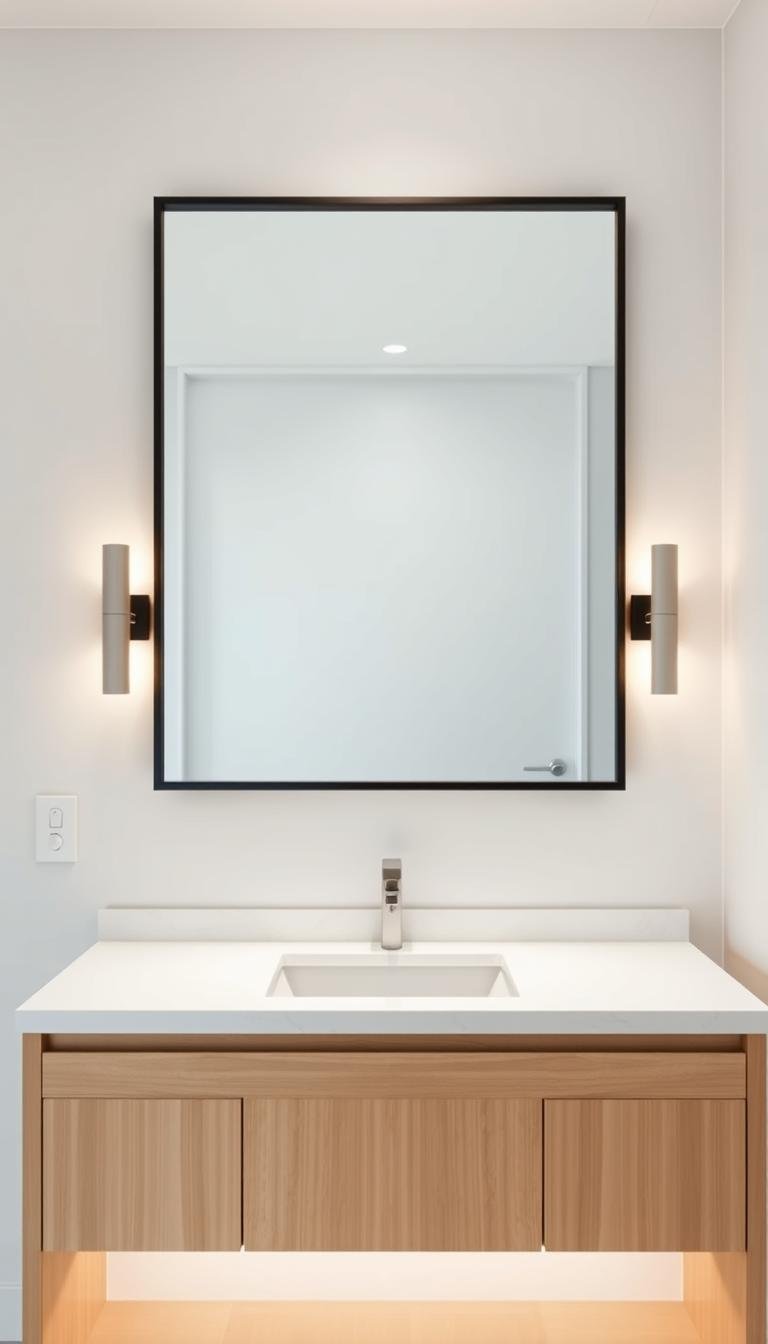
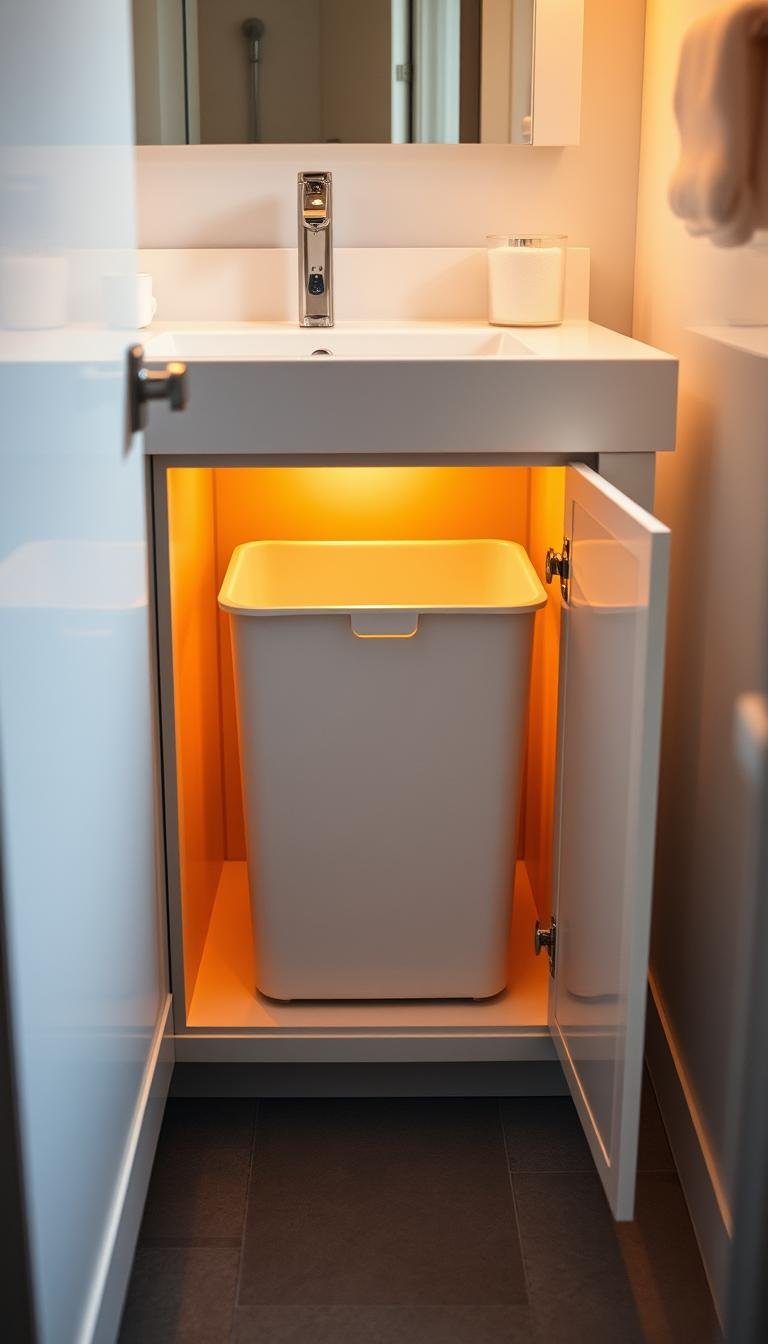
A hidden hamper can fit inside a bathroom vanity if the cabinet has enough clear volume, the plumbing stays fully accessible, and the pull-out hardware is rated for the actual loaded weight. The simplest approach is a removable bin or washable fabric liner mounted in a purpose-built or retrofitted pull-out frame.
Before buying hardware, measure the cabinet carefully and check every obstruction: trap, shutoff valves, supply lines, drawer runners, door hinges, electrical items and any service access that must remain reachable.
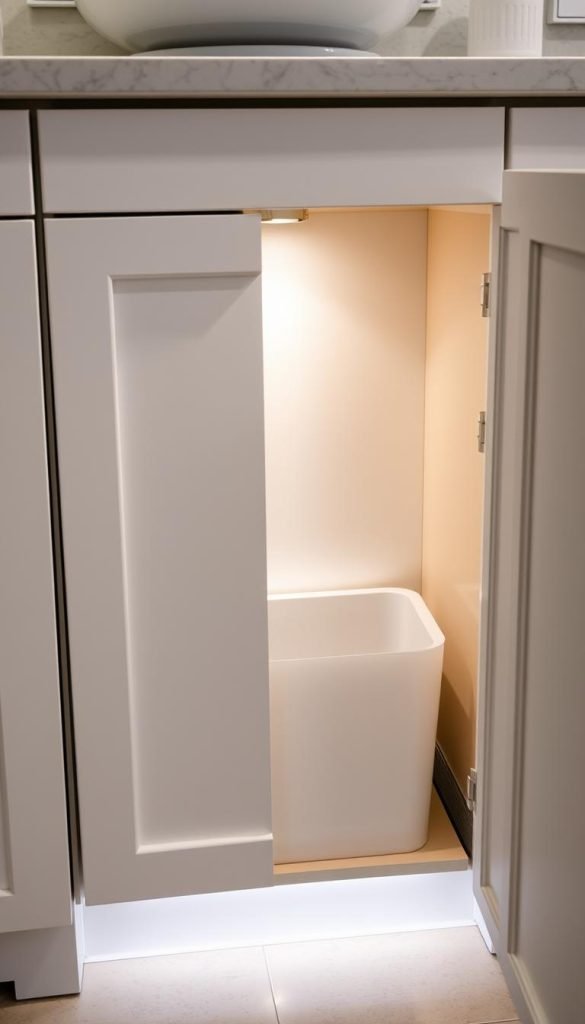
Start with the cabinet, not the hamper
Measure the usable width, height and depth inside the vanity after accounting for plumbing and hardware. Do not assume the nominal cabinet depth equals usable drawer depth.
- Leave access to water shutoffs and the trap.
- Make sure the hamper can be removed without disconnecting plumbing.
- Check that the drawer front will clear adjacent doors, walls and trim.
- Confirm the slide length and side-clearance requirements from the hardware manufacturer.
Best retrofit options
| Option | Best for | Main trade-off |
|---|---|---|
| Pull-out frame with removable bin | Existing vanity with a clear cabinet bay | Requires correct slide mounting and load capacity |
| Pull-out frame with fabric liner | Lightweight laundry and easy washing | Fabric must stay clear of slides and plumbing |
| Tilt-out hamper | Shallow front-access storage | Usually less capacity and more hinge geometry to manage |
| Freestanding slim hamper | Rentals or cabinets with plumbing conflicts | Uses floor space but avoids cabinet modification |
Ventilation and bathroom humidity
A hamper in a bathroom should not trap damp towels or wet clothing in a sealed compartment for long periods. Use a removable liner or bin that can be emptied and cleaned easily, and allow the cabinet to dry between uses.
Do not drill ventilation holes through structural cabinet members, plumbing chases or areas where moisture could enter unfinished material. If ventilation openings are part of a manufactured hamper system, follow that system’s instructions.
Choose hardware by the real load
Wet towels and clothing can be much heavier than dry laundry. Use the slide manufacturer’s published load rating and installation method. Do not assume a soft-close slide is automatically suitable for a hamper just because it fits physically.
For a custom drawer box, make sure the base, joints and front attachment are designed to support the load. If you are unsure about the cabinet construction, a cabinetmaker or experienced installer can verify whether the existing vanity is suitable for modification.

Removable liners are usually the easiest to live with
A removable liner makes it easier to carry laundry to the washer and clean the hamper compartment. Choose a washable material and size it to the actual frame rather than relying on a generic liters-per-person rule.
Keep handles, drawstrings and loose fabric away from drawer slides and hinges so they cannot snag during operation.
Materials that make sense in a bathroom
- Use cabinet materials and finishes intended for humid interior environments.
- Seal cut edges if the cabinet material or finish system requires it.
- Use corrosion-resistant hardware where the manufacturer specifies it.
- Avoid leaving raw absorbent board exposed where wet laundry can touch it.
- Clean the bin or liner according to its material-care instructions.
Retrofit versus remodel
Retrofit
A retrofit works best when one cabinet bay is already clear of plumbing and has enough room for a full-extension pull-out. Measure first, then choose a complete hamper kit or drawer system whose instructions match the cabinet construction.
Full remodel
During a remodel, the hamper bay can be planned around plumbing from the start. That gives more freedom to align the front with adjacent drawers and maintain clear service access.
Installation checklist
- Measure usable cabinet width, height and depth.
- Locate plumbing, shutoffs and all service points.
- Select a hamper system that fits those clearances.
- Verify the slide rating and required fasteners.
- Dry-fit the frame before attaching the front.
- Test full extension with the liner or bin installed.
- Confirm nothing contacts pipes, valves or hinges.
- Load it gradually and recheck alignment.
When not to put a hamper in the vanity
Skip the idea if the only available bay contains crowded plumbing, electrical components, recurring leaks, damp cabinet material or essential service access. In those cases, a slim freestanding hamper, wall-mounted laundry bag or storage outside the bathroom may be the better solution.
The short answer
A hidden vanity hamper works best as a removable bin or liner on properly rated pull-out hardware in a cabinet bay that is clear of plumbing. Prioritize service access, realistic loaded weight, washable components and moisture management over maximum capacity.
How the hamper fits into bathroom storage planning
The useful entity chain is vanity cabinet → clear interior volume → plumbing/service access → pull-out slides → hamper bin/liner → wet laundry load → ventilation and cleaning. A hamper is only a good use of the cabinet if it does not compromise the plumbing bay or make daily maintenance harder.
Continue with our powder room storage and vanity ideas, faster-drying bath mat guide, wall-mounted drying rack guide, and Dwelanor Room Guides.