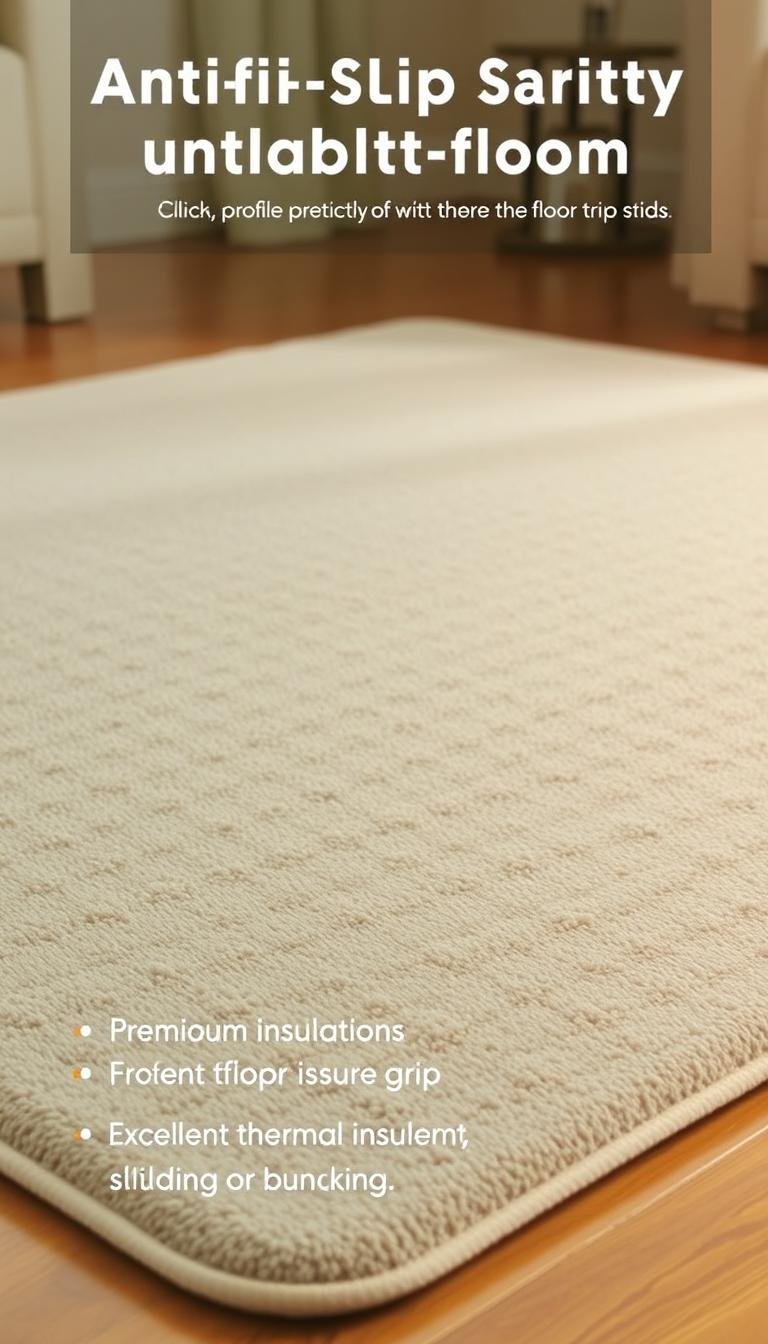
For a rug over radiant heat, the first question is not “which material grips best?” It is “is this exact pad approved for both the floor finish and the heating system beneath it?” Once that compatibility is clear, compare grip, thickness, rug-back compatibility and how much cushioning you actually want.
Felt-and-rubber pads are common because they combine support with traction, but no material should be treated as universally safe on heated floors. Product formulations, flooring warranties and temperature limits vary.
Start with compatibility, not marketing labels
Check two sources before buying:
- the radiant-floor or heating-system manufacturer;
- the rug-pad manufacturer.
If either one excludes rugs, underlays, a particular floor finish or a temperature range you expect to use, that is the deciding factor. A familiar material name such as “natural rubber,” “felt” or “memory foam” is not a substitute for explicit compatibility guidance.
- Is the pad approved for the floor beneath it?
- Is it approved for use over radiant heat?
- Does the heating system allow rugs and underlays?
- Is there a maximum surface-temperature limit?
- Does the rug backing have its own restrictions?
Which construction makes sense?
Felt with an approved rubber backing
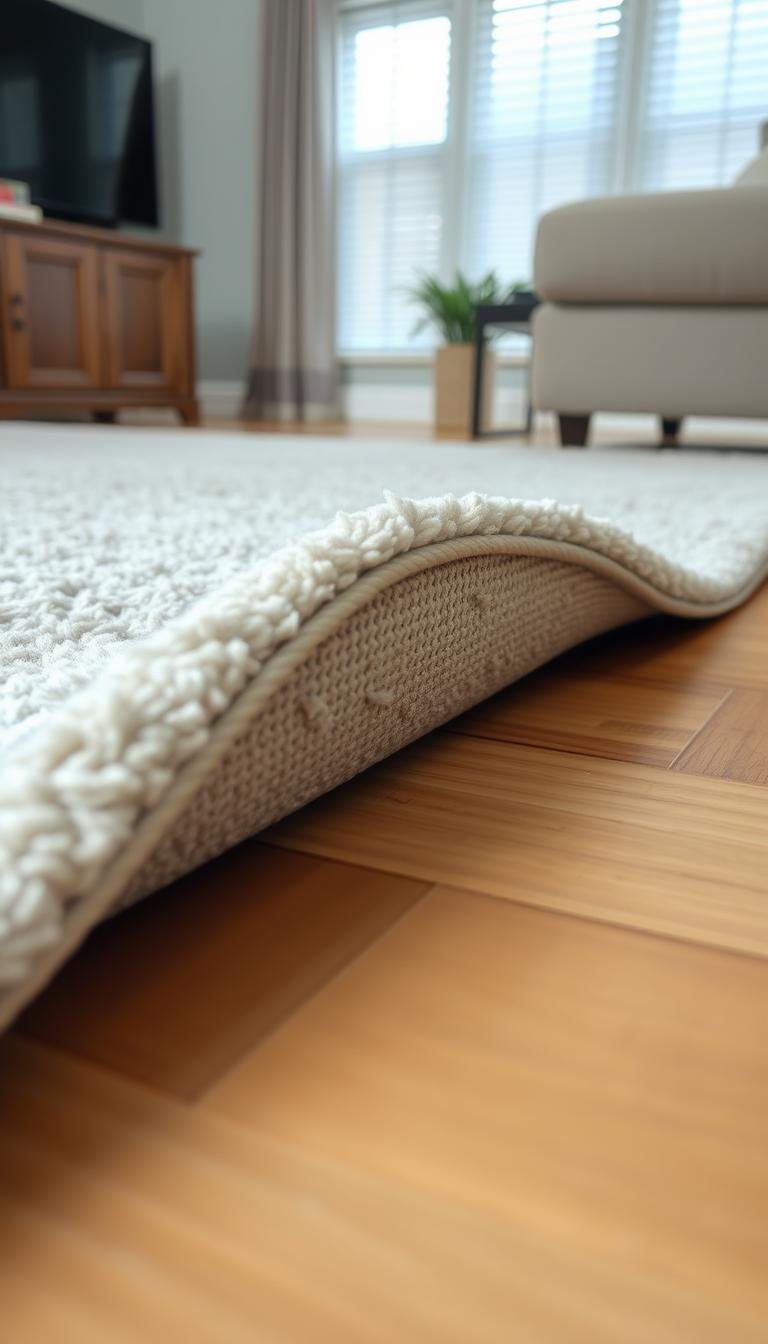
This construction is worth comparing when you want both grip and some cushioning. The felt supports the rug; the rubber side helps reduce movement on a hard floor. The key word is approved: verify the exact product rather than assuming every felt-and-rubber pad behaves the same way.
Thin rubber pads
A thinner pad can be useful where a door swings close to the rug or where you want stronger grip with minimal added height. Again, check finish compatibility. Some resilient flooring and sealed surfaces have specific restrictions on rubber or plasticized materials.
Foam and memory-foam pads
Foam is mainly about comfort. Some foam products may be suitable over radiant heat, but they should not automatically be treated as anti-slip solutions. If traction is the priority, verify that the product is designed to grip both the rug and the floor.
| Construction | Best reason to consider it | What to verify |
|---|---|---|
| Felt + rubber | Grip plus cushioning | Floor and radiant-heat approval |
| Thin rubber | Low clearance and stronger grip | Finish compatibility and heat limits |
| Foam | Extra softness | Whether traction is sufficient on its own |
Thickness: more is not always better
A thick pad can make a rug feel luxurious, but it can also create door-clearance problems, a higher edge transition and more thermal resistance. A thinner pad is often the better choice in a hallway, near a door or under a low-clearance piece of furniture.
Use thickness as a room-planning decision rather than a quality score. A dense, thinner pad can be more useful than a thick soft pad that shifts or interferes with doors.
Size the pad slightly inside the rug
The pad should normally sit just inside the rug perimeter so it does not show and so the rug edge can settle naturally toward the floor. The exact inset depends on rug thickness and construction, so there is no need to force one universal measurement.
Dry-fit the pad first, mark the edge and trim carefully with the tool recommended for that material. Dense felt-and-rubber pads may require a sharp utility knife or heavy scissors; thinner mesh or rubber products may cut more easily.
Floor type changes the decision
Hardwood and finished wood
Pay close attention to the floor manufacturer’s warranty and finish restrictions. Residue, discoloration or softened coatings are far more important concerns than whether a pad feels “premium.”
Tile and stone
These surfaces are often more forgiving, but the pad still needs enough grip and should not leave residue when warmed.
Laminate and vinyl
These are exactly the floors where generic advice can be risky. Check the flooring manufacturer’s documentation and the pad’s approved-surface list before use.
What to avoid
Skip products that do not clearly disclose their material or approved surfaces. Be cautious with pads that rely on unspecified adhesives, plasticized mesh or vague “works on all floors” claims.
If a pad develops an unusual odor as the floor warms, leaves residue, discolors the finish or starts bunching badly, remove it and check the product and flooring guidance before putting it back.
Maintenance matters
Lift the rug periodically, remove grit and inspect the floor beneath it. Fine debris can abrade a finish over time, even when the rug itself stays in place.
Vacuum using the setting recommended for the rug construction. If the vacuum pulls or bunches the rug, adjust suction or use a different floor head rather than assuming the pad has failed.
How to compare products when you are ready to buy
For future product recommendations, compare current manufacturer documentation on:
- radiant-heat compatibility;
- approved flooring types;
- material composition;
- available thicknesses;
- size range and trimability;
- return policy and warranty exclusions.
That makes a much stronger affiliate comparison than a permanent “best overall” list. Products can change; the decision framework should not.
The safest way to choose
Confirm the floor and heating-system rules first. Then choose the thinnest pad that gives the grip and comfort you actually need, fits the rug properly, and is explicitly approved for the surfaces involved.
For more floor-planning help, see our guide to rug pads for carpet and hardwood, curling rug corners, and the Dwelanor Room Guides.