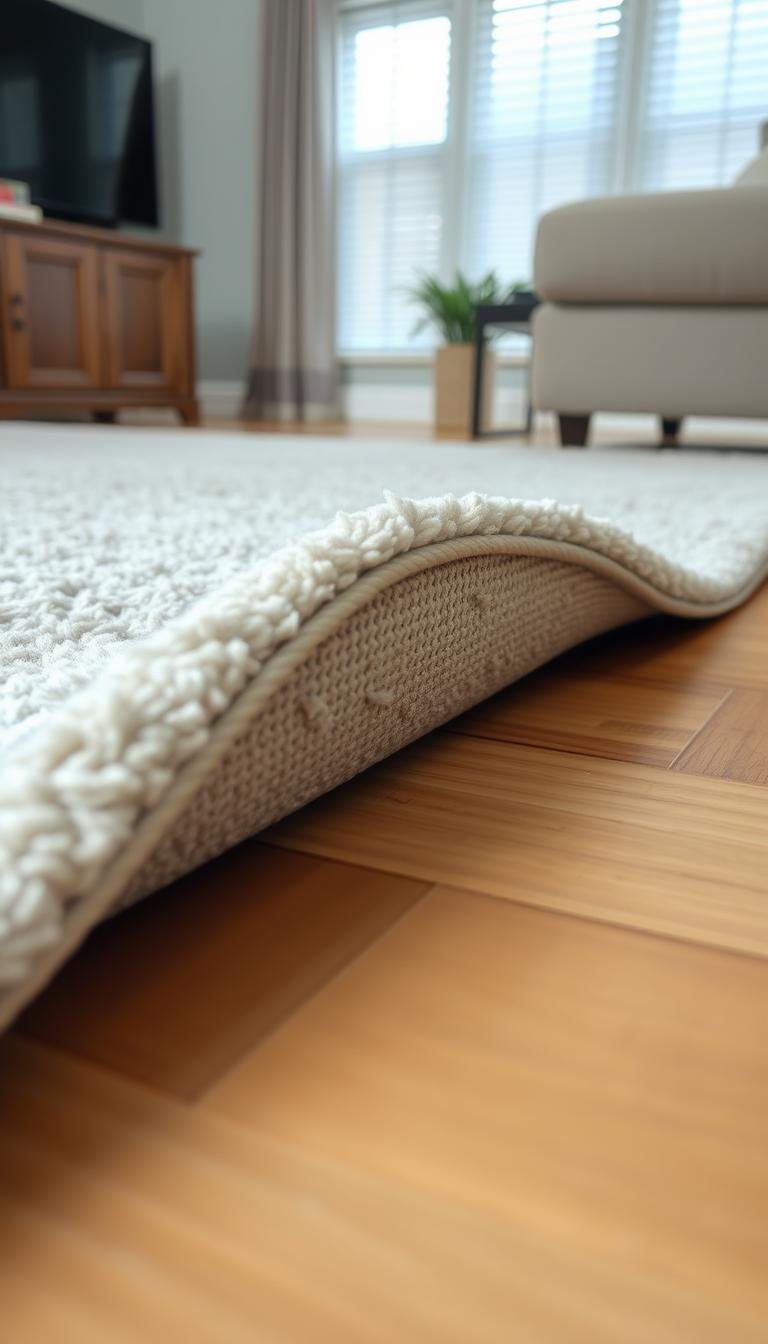
A rug pad that works well on hardwood is not automatically the right pad for carpet. Hard floors usually need a non-slip backing that the flooring manufacturer approves, while a rug placed over carpet often needs a pad specifically designed to grip carpet pile without damaging it.
If you plan to move the same rug between hardwood and carpeted rooms, it is safer to choose the pad for the surface it will actually sit on at the time rather than assuming one universal material is ideal for both.
For hardwood floors
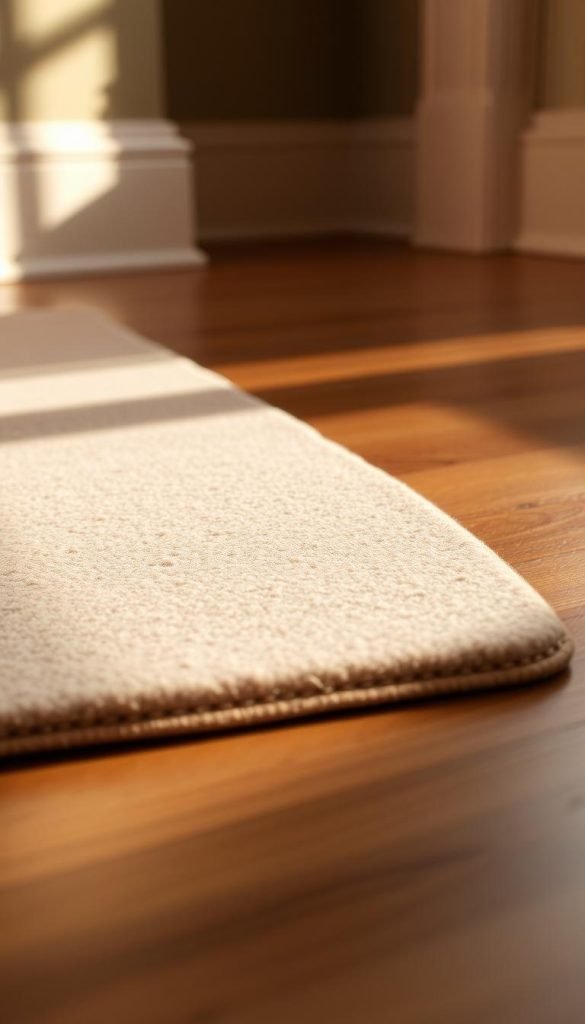
Look for a pad whose manufacturer explicitly lists your flooring type and finish as compatible. Felt-and-rubber combinations are commonly used because the felt adds cushioning while the lower surface provides grip, but finish compatibility still matters.
Do not assume “natural rubber” or “non-slip” automatically means safe for every wood finish. Flooring finishes, radiant heat, age and maintenance products can all affect compatibility.
For carpet
Rug-on-carpet pads are designed differently. They usually rely on a surface or construction that helps reduce creeping and bunching against carpet pile rather than gripping a hard floor.
A pad intended for hardwood can behave poorly on carpet, and a carpet-specific pad may not provide the right traction on wood. Check the rug-pad manufacturer’s stated surface compatibility before buying.
What to compare
| Factor | Hardwood | Carpet |
|---|---|---|
| Primary goal | Grip plus finish protection | Reduce rug movement and bunching on pile |
| Pad type | Floor-compatible non-slip or felt/rubber combination | Rug-on-carpet pad specifically labeled for carpet |
| Main risk | Discoloration, residue or finish interaction | Creeping, wrinkling or damage to carpet pile |
| Thickness concern | Door and threshold clearance | Too much lift or instability over soft pile |
Thickness matters
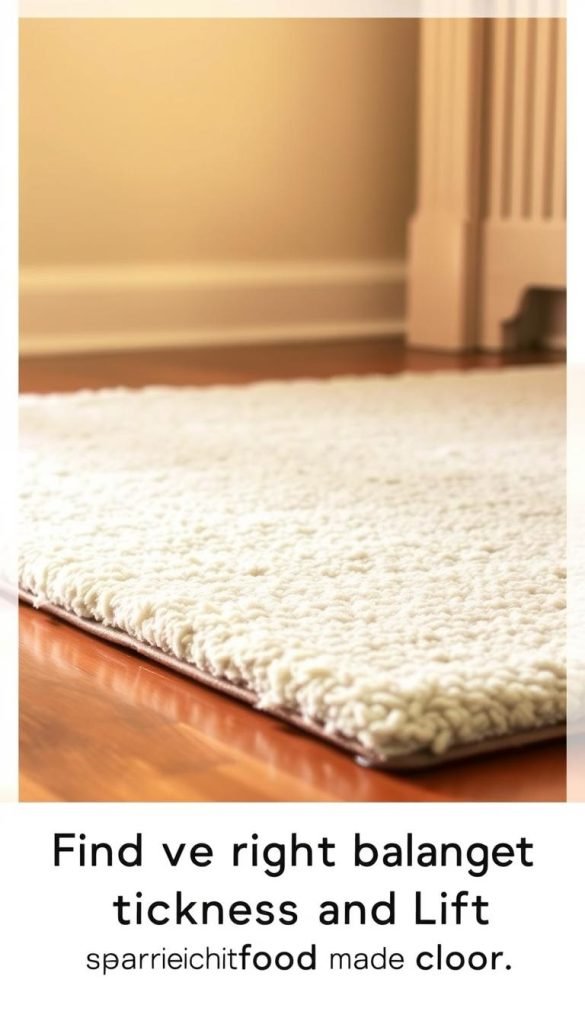
Choose thickness based on the rug, room and available clearance rather than a universal number. A thick pad can raise a rug enough to interfere with doors or create an abrupt edge. On plush carpet, extra thickness can also make the rug feel unstable.
Measure the clearance under nearby doors and check the rug manufacturer’s guidance, especially for flatweaves and low-profile rugs.
How large should the pad be?
The pad should generally sit slightly inside the rug edge so it stays hidden and does not create a visible ridge. Follow the pad manufacturer’s sizing instructions; do not rely on a fixed one-inch rule for every rug and pad construction.
For irregular, round or oval rugs, trace and trim only if the manufacturer says the pad can be cut safely.
Floor-finish compatibility comes first
If the rug will sit on hardwood, engineered wood, laminate, vinyl, stone or a heated floor, verify compatibility with both the flooring manufacturer and the pad manufacturer. Some backings and plasticized materials can interact with finishes or leave residue over time.
For radiant-heated floors, also confirm the pad is permitted over the heating system and flooring assembly. See our guide to rug pads for heated floors.
When you really want one rug to move between rooms
If the rug frequently moves between hardwood and carpet, two pads are usually the cleaner solution: one approved for the hard floor and one designed for rug-on-carpet use. That avoids compromising grip or floor compatibility just to reuse one pad.
Buying checklist
- Identify the exact floor surface and finish.
- Check whether the rug is flatwoven, tufted, woven, backed or unusually thin.
- Choose a pad explicitly approved for that surface.
- Check thickness against doors and thresholds.
- Confirm whether the pad can be trimmed.
- Follow cleaning and maintenance instructions for both rug and floor.
The short answer
For hardwood, choose a non-slip pad that is explicitly compatible with the floor finish. For carpet, use a pad made for rug-on-carpet applications. A single “dual-surface” pad should only be used on both if the manufacturer specifically states that both surfaces are supported.
For more flooring and room-planning guidance, browse the Dwelanor Room Guides.