
Bedroom Decor
What Hotels Actually Know About Bedrooms
Good hotel bedrooms tend to get the same fundamentals right: the bed has visual priority, lighting is layered instead of harsh, surfaces are edited, and the room is easy to use when you are tired.
None of that requires copying a hotel literally. The useful lesson is the discipline behind the room: fewer competing focal points, better bedside lighting, bedding that feels good to sleep in, and enough storage that the room can reset quickly.
This guide translates those principles into a bedroom that still feels like a home.
The Five Pillars of the Hotel Bedroom
If your bedroom is a rental, pair this guide with our renter-friendly bedroom ideas. For darker bedrooms, our guide to making a dark room feel warm and cozy covers the lighting strategy in more depth.
- The bed as the unchallenged centrepiece
- Lighting that flatters and calms
- Complete visual calm, nothing on display that does not need to be
- Scent and texture working together
- The small rituals that signal care
Pillar One: The Bed
Every decision in the hotel bedroom starts and ends with the bed. It is not just the focal point, it is the entire point. Everything else in the room exists in service of the bed and the quality of rest that happens in it.
Start with comfort before styling
If the mattress is basically supportive but feels too firm, a topper can change the surface feel without replacing the whole bed. It is not a universal fix for a worn-out or unsupportive mattress, so treat it as a comfort adjustment rather than a substitute for good support.
A simple hotel-style bedding formula
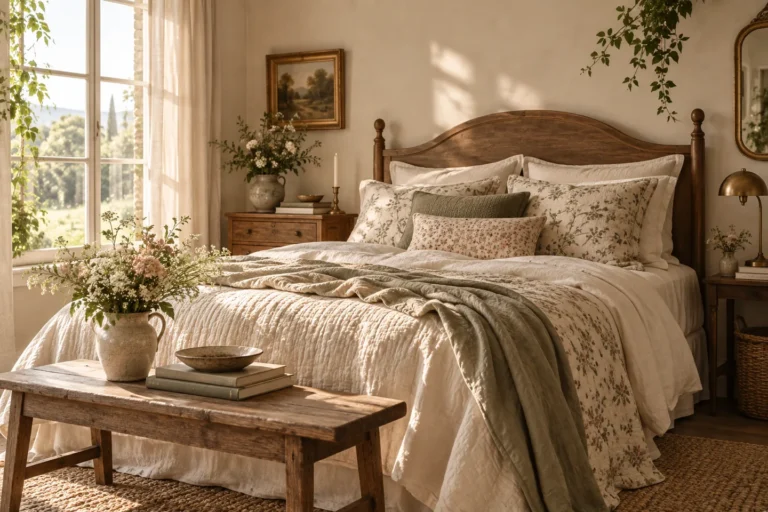
There is no single bedding formula used by every luxury hotel. What tends to create the look is consistency: one restrained palette, enough pillow structure to frame the bed, and a neatly handled duvet or coverlet. Use the layers below as a styling template, not a rulebook.
- Fitted sheet: White or another quiet neutral in a fabric you genuinely like sleeping on. Percale gives a crisp, cool hand; sateen feels smoother and denser. Fiber quality and weave matter more than chasing a very high thread-count number.
- Flat sheet: Same white percale, turned down over the duvet at the top. This is the signature hotel fold, it covers the top of the duvet and gives the bed that clean, pressed look.
- Duvet: White, down or down-alternative, in a plain white duvet cover. Not patterned. Not coloured. White. The whiteness is the luxury signal.
- Euro shams (26×26): Two or three in white, placed against the headboard. These create the visual architecture of the bed.
- Standard sleeping pillows: In white pillowcases, placed in front of the euro shams.
- Accent pillow: One or two in a subtle texture or complementary colour, placed in front. Not a collection of every cushion you own, one or two, chosen specifically.
- End-of-bed throw: Folded precisely across the lower third of the bed. This is the most overtly “hotel” element and the most immediately transformative.
The throw fold matters. Hotels fold it in thirds horizontally and lay it across the foot of the bed, aligned with the edges. Practice this once and it takes ten seconds. It changes the entire look of the bed.
Pillows: The Hotel Approach
Hotels stack pillows for visual impact and sleeping practicality. The standard arrangement, two king or euro shams at the back, two standard sleeping pillows in front, creates a pyramid of depth that makes the bed look substantially more luxurious. If you currently use two pillows lying flat, add two euro shams and see what happens. The transformation is immediate and costs $30-50 for the shams.
The hotel bed is not dressed to impress. It is dressed to invite. The distinction matters: every decision should make the bed look like somewhere you want to be, not somewhere that wants to be photographed.
Pillar Two: The Lighting
Walk into the bedroom of any great hotel and notice one consistent thing: the overhead light, if there is one, is never the main source of illumination. Everything is lamp light, warm, directional, flattering, and creating the kind of atmosphere that tells your nervous system it is safe to relax.
The Hotel Lighting Setup
Most hotel rooms use a minimum of four light sources: a lamp on each nightstand, a floor lamp in a corner, and often an additional fixture (pendant or wall sconce) as a fourth source. The overhead light exists only for practical cleaning, it is never used for ambient living.
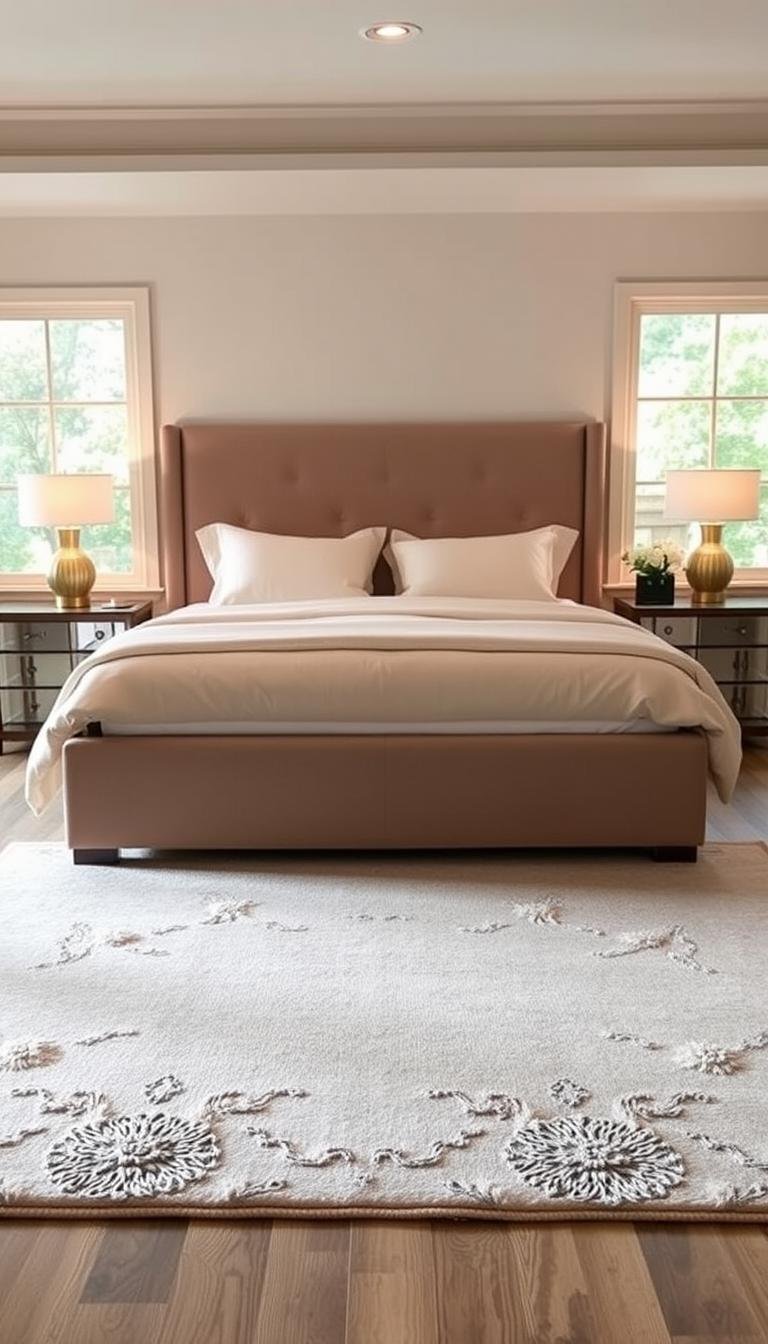
Replicate this in your bedroom and the transformation is immediate. Two matching bedside lamps, ceramic bases, linen or opaque shades, 2700K warm bulbs, plus a floor lamp in the corner. Turn off the overhead light entirely. The room becomes an entirely different experience.
- Two matching ceramic bedside lamps, $45-70 each from Amazon or Target
- One floor lamp, $60-120
- 2700K warm white LED bulbs, $12-15
- Smart plug to automate everything, $12
Total: $175-235. The impact on the feel of the room is worth ten times that amount.
Pillar Three: Visual Calm
Walk around a well-designed hotel room and notice what is not there. No charging cables on the nightstand. No piles of books waiting to be read. No half-used products on the dresser. No clothes on chairs. No visual clutter of any kind.
This is not because hotels are obsessive about tidiness (though they are). It is because visual clutter is neurologically stimulating, it signals unfinished business, decisions unmade, tasks incomplete. And a bedroom should do the opposite: it should signal that everything is resolved, that there is nothing to do here but rest.
The Daily Reset
Hotels reset their rooms daily. You don’t need a housekeeping staff to achieve something similar. A ten-minute bedroom reset every morning, bed made properly, surfaces clear, nothing on the floor, curtains open, resets the room’s psychological signal for the entire day. You come home to a room that feels like somewhere worth coming home to.
- Make the bed using the hotel formula, 5 minutes
- Clear all surfaces except the specific objects that live there
- Put charging cables away or route them out of sight
- Open curtains fully to let in maximum light
- Put away anything that was left on chairs or the floor
Ten minutes maximum. The bedroom you come home to will be completely different from the one you left.
Pillar Four: Scent and Texture
Great hotels smell extraordinary. Not heavily perfumed, that would be cloying. They smell clean and subtly scented in a way that is immediately calming and immediately distinctive. This is engineered deliberately. You can engineer it too.
Scent
A room spray used on pillows and soft furnishings before bed ($20-40). A diffuser with lavender, sandalwood, or cedarwood essential oil running in the evening. Linen spray on freshly washed sheets. None of these are expensive or complicated. All of them change the sensory experience of entering the room in a way that no visual element can replicate.
Texture
Hotels invest in towels and bedding of exceptional quality because texture is the primary sensory experience of a bedroom. The feel of bedding against skin matters more than its appearance. Stone-washed linen or high-thread-count percale cotton feels completely different from polyester-cotton blend and communicates quality in the most direct way possible, through touch rather than sight.
Pillar Five: The Small Rituals
What makes five-star hotels feel like five-star hotels is often not any single extraordinary thing, it is the accumulation of small, considered details that signal genuine care.
Fresh flowers on the nightstand, even a single stem in a small vase. A glass of water ready before sleep. A candle lit in the evening. Curtains that block light effectively so the room goes properly dark. A throw folded and waiting at the foot of the bed.
These are small things. They cost very little. But they are the things that transform a bedroom from somewhere you sleep to somewhere you genuinely love to be, and that difference, replicated every night of your life, is worth every bit of effort they require.
The Complete Hotel Bedroom Shopping List
- Mattress topper ($80-150): The most underrated bedroom upgrade. Changes the physical experience of sleep completely.
- White percale fitted sheet and pillowcases ($40-70): 400-500 thread count. The base of the hotel bed formula.
- White duvet cover ($50-90): Plain white. The luxury signal.
- Two euro shams ($30-50): The architecture of the hotel bed.
- End-of-bed throw ($40-70): The most immediately hotel-looking element. Folded at the foot.
- Two matching bedside lamps ($90-140 for two): Ceramic bases, linen shades, 2700K bulbs.
- Room or linen spray ($20-35): Lavender and cedar. Use every night before bed.
- Small vase for flowers ($15-25): One or two stems. Replaced weekly.
Total: $365-$630. A complete hotel bedroom transformation for any budget.
You spend a third of your life in your bedroom. The investment in making it feel extraordinary is one of the highest-return decisions you can make for your daily quality of life.
Tonight, make your bed using the hotel formula. Fold a throw across the foot. Put one item of clutter away from your nightstand. Change one bulb to 2700K warm white if you have not already. Notice the difference. That is where this begins.

Frequently Asked Questions
What bedding creates a hotel-like look?
White or quiet neutral bedding is common because it makes the bed read as one large, calm shape. Percale gives a crisp feel, sateen a smoother one. The exact weave matters less than choosing fabric you like sleeping on and keeping the layers visually consistent.
How do I make my bedroom feel more luxurious?
Give the bed visual priority, use layered bedside lighting, edit surfaces, hide everyday clutter, and choose bedding and textiles that feel good in use. Those changes usually matter more than adding decorative objects.
What thread count should I buy?
Do not shop by thread count alone. Fiber quality, yarn, weave and finishing all affect how sheets feel and wear. Compare reputable fabric descriptions and return policies, then choose percale, sateen or linen based on the feel you prefer.
Why does my bed not look like a hotel bed?
Three most common reasons: the bedding is not layered correctly using the hotel formula, the pillows are insufficient in number or arrangement, and the throw at the foot of the bed is absent or not folded precisely. The hotel formula requires a flat sheet turned down over the duvet, euro shams behind sleeping pillows, and a throw folded in thirds across the lower portion of the bed.
What scent do luxury hotels use?
Most luxury hotels use proprietary blends that are typically clean and subtle rather than heavily perfumed. Common notes include eucalyptus, cedar, sandalwood, white tea, and light florals. You can replicate this with a high-quality reed diffuser in a clean natural fragrance, a linen spray used on pillows, or a room mist used before bed.
Save this to your home decor Pinterest board and come back to it when you are ready to start.