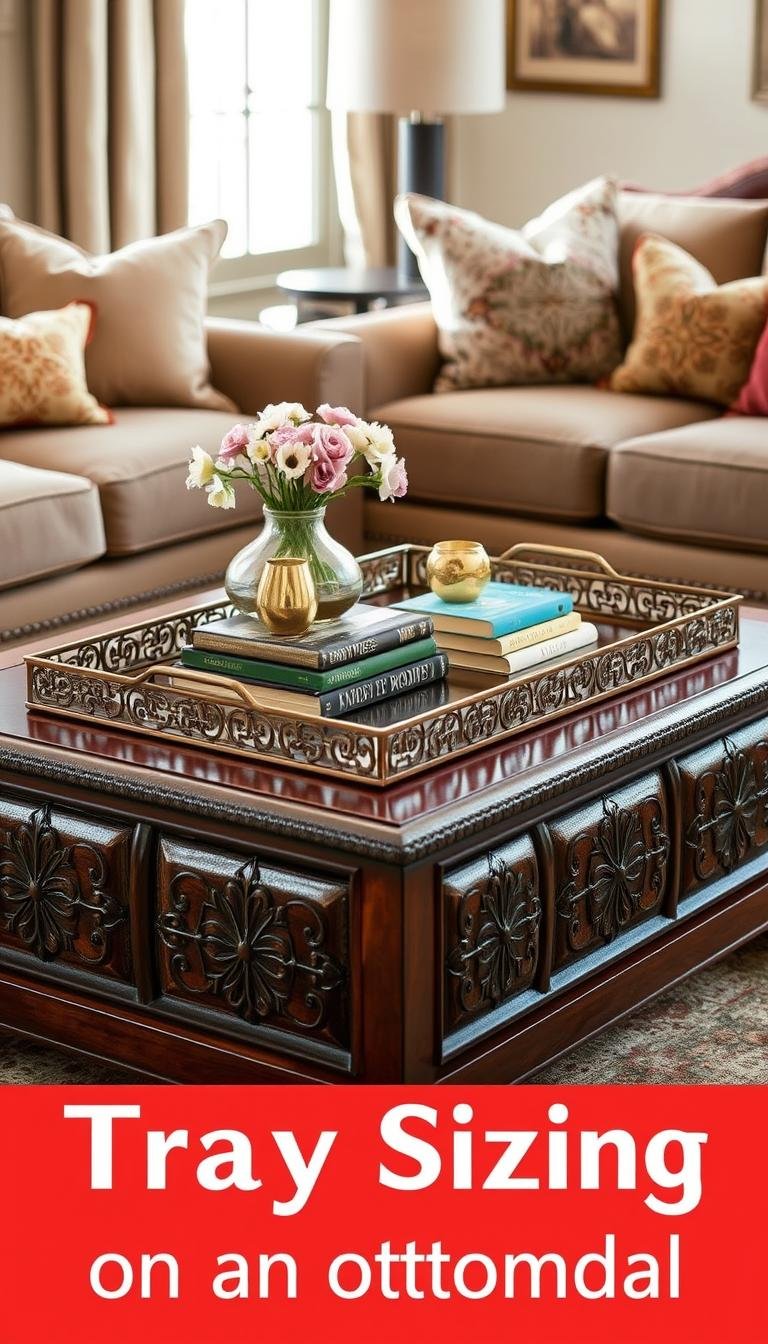
The right tray should add a stable surface without turning the whole ottoman into a hard tabletop. Start with the flat usable top, leave visible upholstery around the tray, and choose a size and weight you can move comfortably when the ottoman needs to work as seating or a footrest.
Measure the usable top first
Measure the flat area on top of the ottoman rather than the widest point of rounded or overstuffed upholstery. If the top has deep tufting or a pronounced crown, note where a rigid tray can actually sit level.
Include handles in the tray footprint. A tray body may fit while the handles still crowd the edge or interfere with someone sitting nearby.
Use a paper template before buying
If you are unsure about scale, cut a piece of paper or cardboard to the tray dimensions and place it on the ottoman. This shows immediately whether the tray feels undersized, oversized or awkwardly close to the edge.
A visible border of upholstery usually helps the arrangement feel balanced and keeps part of the ottoman available for feet or seating, but there is no single correct border measurement for every piece of furniture.
One large tray or two smaller trays?
One larger tray works well when you want a central surface for drinks, books and remotes. Two smaller trays can be easier to lift on a long ottoman, especially when different people use opposite ends.
- Choose one tray for a cleaner, more symmetrical look and one shared surface.
- Choose two trays when the ottoman is long, when you want easier lifting, or when one section needs to stay clear more often.
- Avoid covering the full top unless the ottoman is being used primarily as a coffee-table substitute.
Which tray material works best?
Material changes the weight, maintenance and feel of the tray. Choose for daily use first, then match the finish to the room.
| Material | Strengths | Things to check |
|---|---|---|
| Wood | Rigid, warm-looking, easy to integrate with many rooms | Finish quality, weight and resistance to drink rings |
| Metal | Thin profile and crisp architectural look | Weight, sharp edges and finish care |
| Mirrored or glass | Reflects light and can feel visually lighter | Fingerprints, breakability and how secure it feels on soft upholstery |
| Woven or rattan | Adds texture and feels casual | Whether the base is flat and rigid enough for drinks |
Look for features that make daily use easier
A raised lip helps keep small items from sliding. Handles make a tray easier to lift, but they also increase the total footprint. A flat underside is important on a soft ottoman, and a non-abrasive base helps protect upholstery.
If the tray is heavy even when empty, think about how often you will actually move it. A tray that looks substantial but is annoying to lift usually becomes a permanent obstacle.
How to style the tray without losing the usable surface
Keep the arrangement compact and leave a clear area for whatever the tray is meant to do. A few low objects usually work better than filling every corner.
- Use one low anchor such as a small book stack or decorative box.
- Add one or two smaller objects with a different texture or height.
- Leave a clear spot for a drink, remote or book.
- Keep tall or fragile objects away from the edge if the ottoman is frequently bumped.
A tray on an ottoman already creates visual contrast between hard and soft surfaces, so it does not need many accessories to feel styled.
Protect the ottoman underneath
Check the tray base for rough feet, exposed fasteners or sharp edges. Felt pads or another soft barrier can help where appropriate, but first make sure the material will not transfer color or adhesive to the upholstery.
Do not leave spills trapped under the tray. If moisture reaches the ottoman, remove the tray and follow the upholstery maker’s cleaning instructions.
Care depends on the material
Use the cleaning method recommended for the tray finish. Sealed wood, metal, mirrored surfaces and woven materials all have different care requirements. Start with the gentlest suitable method and avoid soaking joints, unfinished edges or decorative inlays.
Use coasters for drinks and deal with condensation promptly, especially on wood or metal finishes that can mark.
A simple sizing checklist
- Measure the flat usable top of the ottoman.
- Decide how much upholstery you want to keep exposed.
- Check the tray’s full outside dimensions, including handles.
- Use a paper template to judge scale before ordering.
- Make sure the empty tray is light enough for you to move comfortably.
- Choose a flat, furniture-friendly underside.
- Leave enough clear tray space for how you actually use it.
The simplest way to choose
Measure the usable top, test the intended tray size with a paper template, and keep enough exposed upholstery for the ottoman to remain useful. If one large tray feels bulky, two smaller trays can be easier to lift and rearrange.
For related living-room planning, see our ottoman sizing guide and the Dwelanor Room Guides.