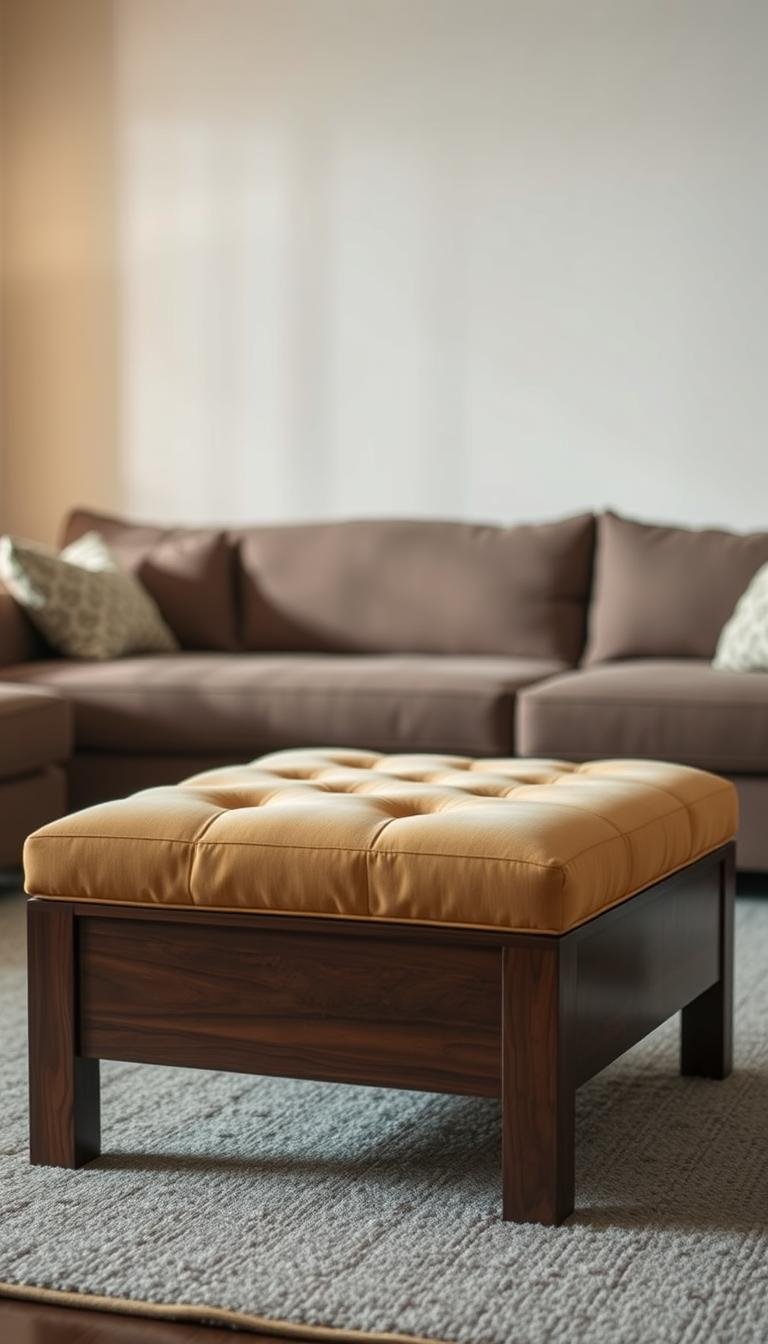
For a 90-inch sectional, the right ottoman size depends on the shape of the seating, the open floor area, and how you want to use the ottoman. A useful starting point is to choose an ottoman that feels substantial enough to reach from the main seats without filling the entire center of the room.
Do not choose from a single universal percentage. Instead, measure the open area in front of the sectional, compare the ottoman height with the compressed seat height, and mock up the footprint with painter’s tape before buying.
Start with the open floor area
Measure the space inside the sectional rather than only the overall 90-inch sofa length. An L-shaped sectional, a chaise sectional, and a U-shaped sectional can all be 90 inches wide while leaving very different center spaces.
Mark the proposed ottoman footprint with painter’s tape, then sit on each part of the sectional and walk the normal routes through the room. If the ottoman forces people to turn sideways, blocks a chaise, or makes a nearby door or cabinet awkward to use, scale it down.
How large should the ottoman feel next to a 90-inch sectional?
A medium-to-large ottoman often looks more balanced with a 90-inch sectional than a small accent pouf, but the actual dimensions should come from the usable center area.
As an example, a compact room may work better with an ottoman around the middle of the sectional’s visual width, while a larger room may support a longer rectangular piece. Treat those proportions as visual starting points, not fixed rules.
| Room situation | Useful direction | Why |
|---|---|---|
| Tight circulation | Choose a smaller or rounder ottoman | Preserves easier movement around the seating |
| Long L-shaped sectional | Compare rectangular ottomans first | They often echo the long sofa line and give useful reach |
| U-shaped seating | Consider square or compact rectangular options | Centers the seating group without favoring one side |
| Large open living room | Use a larger ottoman or a pair of smaller ones | Gives the seating group enough visual weight |
Match the height to the sectional in actual use
The ottoman should feel comfortable as a footrest when someone is sitting on the sectional. Measure the sofa seat while it is carrying normal body weight, because soft cushions can compress noticeably.
An ottoman that is close to the effective seat height usually feels more natural than one that sits dramatically above it. If you plan to place a thick tray on top frequently, remember that the tray raises the usable hard surface.
Choose the shape around the sectional layout
Rectangular ottoman
A rectangular ottoman is a natural fit for many L-shaped sectionals. It provides a long surface that can be reached from multiple seats and works well when the center space is wider than it is deep.
Square ottoman
A square ottoman can work well when the seating wraps around the center more evenly. It gives the room a centered focal point and can suit a U-shaped or symmetrical layout.
Round ottoman
A round ottoman softens a room with many straight furniture lines and can make circulation around the corners easier in a tight layout. The trade-off is less usable edge length for trays and books.
Two smaller ottomans
Two smaller pieces can be more flexible than one large ottoman. They can sit together as a central surface, separate for extra seating, or move out of the way more easily when the room is busy.
Think about how the ottoman will be used
The best size changes depending on the job.
- Mostly a footrest: prioritize comfortable reach from the main seats and enough soft surface for several people.
- Mostly a coffee-table substitute: choose a stable ottoman that can support an appropriately sized tray without the tray dominating the top.
- Extra seating: make sure the ottoman is designed and rated for sitting, not merely decorative use.
- Storage: check that the lid can open fully without hitting the sectional and that the interior volume is genuinely useful.
How much space should you leave around it?
There is no single clearance number that fits every room. The useful test is whether people can sit down, stand up, reach the ottoman, and walk through the room without feeling squeezed.
Use painter’s tape to test the footprint and move a dining chair or cardboard box into the taped area if you want a better sense of the physical volume. Check the path to doors, side tables, media cabinets, fireplaces, and any route that people use frequently.
If the room feels cramped, reducing the ottoman depth often preserves more useful reach than simply shortening the piece.
Storage ottoman or open-base ottoman?
A storage ottoman can earn its footprint in a small living room by holding blankets, games or remotes. Before buying, check the hinge design, lid weight, interior dimensions and whether the lid can open where the ottoman will sit.
An open-base or legged ottoman can feel visually lighter because more floor remains visible. That can be useful when the sectional already has a heavy, low profile.
Fabric, leather and other upholstery choices
Choose the upholstery for the way the room is used. A tightly woven performance fabric may be easier to live with in a busy household, while leather or faux leather can create deliberate contrast with a fabric sectional.
Check the manufacturer’s cleaning instructions, abrasion information where provided, and whether removable covers are available. For homes with pets, also consider how easily hair releases from the surface and whether claws can catch in the weave.
Using a tray on the ottoman
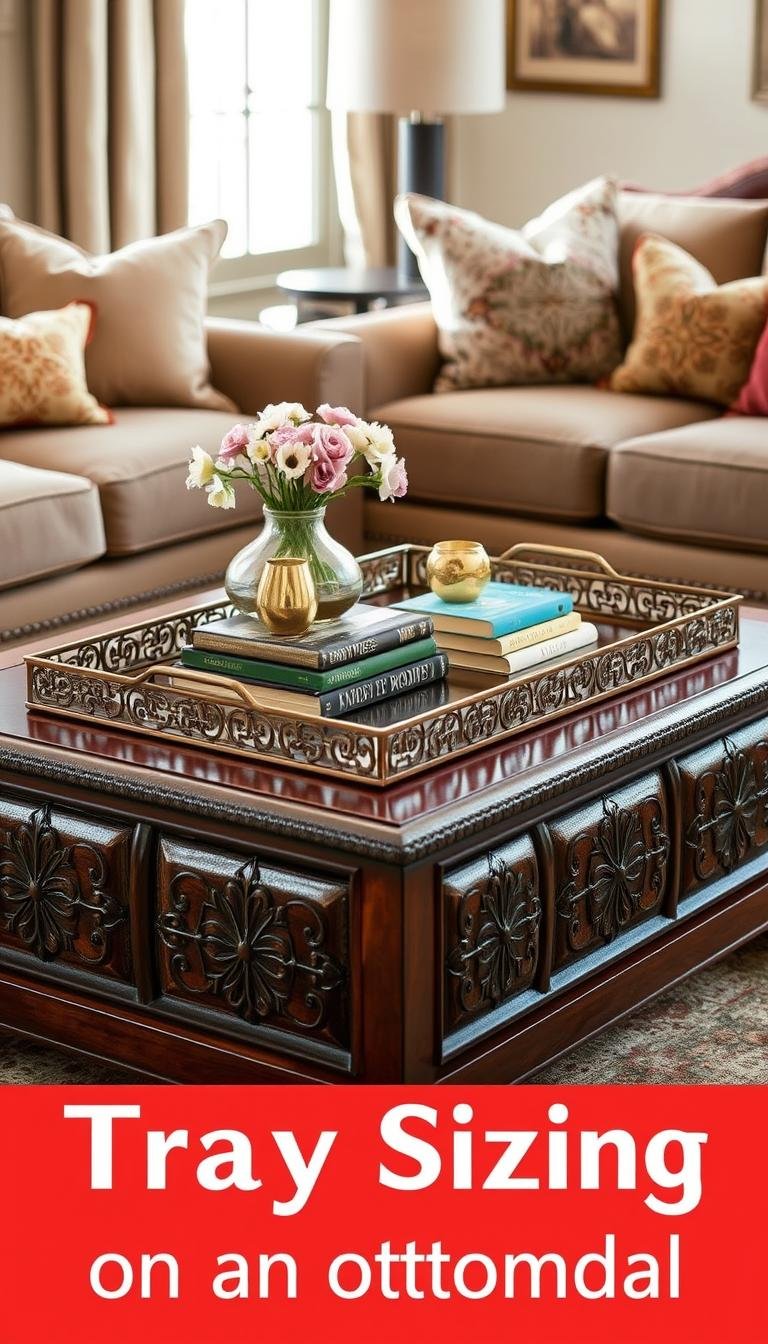
A tray creates a stable place for drinks, remotes or books without turning the entire ottoman into a hard coffee table. The tray should leave enough upholstery exposed that the ottoman can still function as a footrest or seat.
If you already know you want a tray, use our rectangular ottoman tray sizing guide to compare the usable top, tray footprint, handles and material.
When a coffee table is the better choice
Choose a conventional coffee table instead if the room regularly needs a firm surface for drinks, board games, laptops or serving. A soft ottoman plus tray is flexible, but it does not replace the stability of a hard table for every household.
A mixed setup can also work: a smaller ottoman for feet and an adjacent side table or compact coffee table for drinks.
A simple sizing process
- Measure the open center area created by the sectional.
- Measure the sectional’s seat height while someone is sitting normally.
- Decide whether the ottoman is mainly for feet, a tray, storage or extra seating.
- Choose a likely shape based on the sectional layout.
- Tape the proposed footprint on the floor.
- Sit, stand, walk the room and open nearby doors or cabinets.
- Scale the ottoman down if circulation feels compromised.
The simplest answer
For a 90-inch sectional, choose the ottoman from the center space rather than from the sofa length alone. A rectangular piece often suits an L-shaped sectional, a square can suit more symmetrical seating, and a round ottoman can help when circulation is tight.
Keep the height close to the sectional’s effective seat height, test the footprint with tape, and make sure the ottoman can still be moved or opened easily if it includes storage.
For related living-room planning, see the ottoman tray sizing guide, our small living room guide, and the Dwelanor Room Guides.