If the radiator pipe itself is fine and the ugly part is the rough hole where it meets the wall or floor, start with a split pipe collar or escutcheon. That is usually the neatest fix because it hides the cut-out without disturbing the heating system.
For longer exposed pipe runs, the practical options are paint, pipe sleeves, adapted skirting, or removable boxing. The best choice is the least invasive one that still leaves valves, joints, and likely leak points accessible.
How do you hide the hole where radiator pipes come through the wall?
If the pipe is sound and the problem is only the rough opening around it, use a split pipe collar or escutcheon sized to the actual pipe diameter. The outer flange should be large enough to cover the chipped plaster or oversized cut-out while the center opening fits around the pipe without forcing it.
This is usually better than building a box around a short vertical pipe because it fixes the visible wall gap while keeping the heating pipe, joints and nearby valves accessible.
Start with the smallest fix that solves the problem
Rough hole around a pipe
Use a split collar or escutcheon sized for the pipe. Because it opens around an existing pipe, you do not need to disconnect the radiator. This is the cleanest answer for an oversized drilled hole, chipped plaster, or an untidy flooring cut-out.
Short vertical pipe beside a radiator
A purpose-made pipe sleeve or shroud can make a short exposed section look intentional. Check the outside diameter of the actual pipe rather than assuming a standard size.
Long horizontal run
For pipework running along a wall, paint is the least invasive option. If you want the run hidden completely, adapted skirting or a shallow removable box can work, but access becomes more important.
When paint is enough
Painting is often underrated. If the pipework is straight, dry, and in good condition, painting it to match the wall can make it disappear visually without adding bulk or blocking access.
Use a coating that the paint manufacturer states is suitable for the pipe material and expected temperature. Clean and prepare the surface according to the paint instructions; do not paint over active corrosion, leaks, or damp patches.
When boxing makes sense
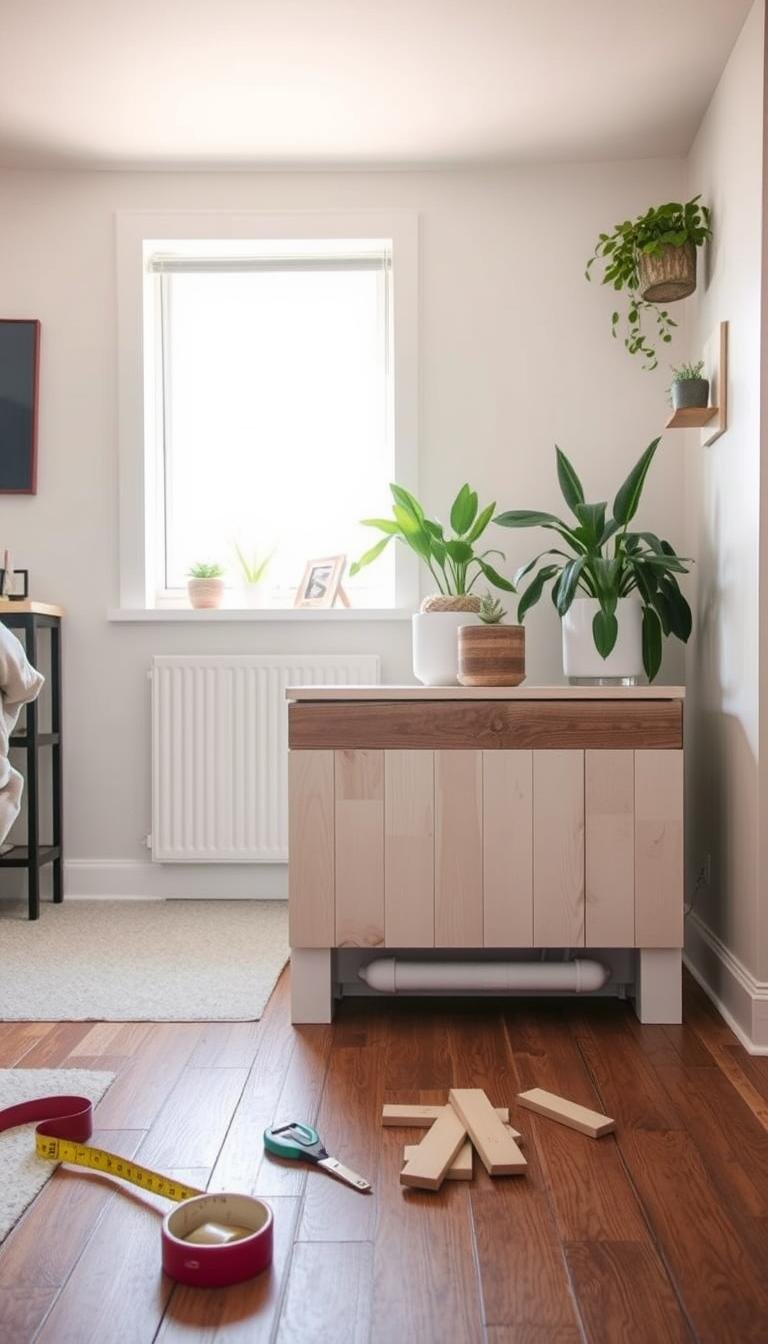
Boxing can work well when several pipes run together or when the pipe route cuts across an otherwise clean wall. Keep it shallow and visually aligned with the skirting or nearby cabinetry so it reads as part of the room rather than a second pipe-shaped object.
The key word is removable. Heating pipework may need inspection, valve work, or leak repair later. BestHeating also cautions that boxing can make leaks harder to locate, which is why permanent sealed enclosures are a poor fit for old or suspect pipework.
Avoid boxing when:
- there is visible corrosion or dampness;
- the boiler or heating system is losing pressure;
- the pipe joints have needed repeated work;
- valves or service points would become inaccessible;
- the enclosure would interfere with the radiator itself.
Do not confuse pipe covers with radiator covers
A small sleeve around a pipe is different from enclosing the radiator. Radiators rely on heat transfer and air movement around the unit, so do not extend decorative boxing across the radiator body or vents unless the radiator manufacturer specifically allows that arrangement.
If the concern is a hot exposed pipe in a circulation path or children’s area, ask a heating professional about an appropriate guard or insulation solution rather than assuming a decorative timber box is a safety device.
Measure before buying collars or sleeves
You need three measurements:
- Pipe outside diameter. Measure the actual pipe or check the system specification.
- Length of the exposed section. Measure only the part you intend to cover.
- Clearance around bends and valves. A neat sleeve is useless if it blocks a valve or cannot pass a bend.
For wall and floor collars, choose an outside diameter large enough to cover the damaged opening while keeping the center opening appropriate for the pipe.
Adapted skirting can hide long runs cleanly
Where pipework follows the base of a wall, over-skirting or purpose-made pipe-concealing trim can create a cleaner architectural line than a separate box. It is most successful when the new profile matches the height and style of the room’s existing trim.
Before covering the run, make sure joints that may need servicing can still be reached. A removable front panel or short removable sections are more practical than gluing everything permanently shut.
Choosing a material
| Material | Useful for | Watch for |
|---|---|---|
| Painted timber or MDF boxing | Long straight runs and skirting-height concealment | Moisture, service access, heat exposure |
| Metal sleeve or collar | Short visible pipes and neat wall/floor transitions | Correct pipe diameter and finish |
| Plastic/PVC trim | Lightweight removable cosmetic covers | Temperature rating and visual quality |
| Paint only | Sound pipework that simply needs to recede | Correct preparation and suitable coating |
What not to do
- Do not seal a leaking or corroded pipe behind decorative trim.
- Do not bury valves or service joints where they cannot be reached.
- Do not assume a random plastic cover is suitable for heating temperatures.
- Do not force furniture tightly against hot pipework simply to hide it.
- Do not wrap living plants around hot heating pipes.
A simple decision guide
Use a collar for a rough wall or floor opening. Use a sleeve for a short exposed vertical section. Use paint when the pipe is sound and you only want it to recede. Use removable boxing or adapted skirting for longer runs that genuinely need to disappear.
If the heating system is old, damp, corroded, or likely to need work, leave more access than you think you need. Good concealment should make the room look calmer without making the heating system harder to maintain.
For related room fixes, see the Dwelanor Room Guides, the guide to hiding TV wires on plaster safely, and making a wall-mounted mini-split less visually dominant.