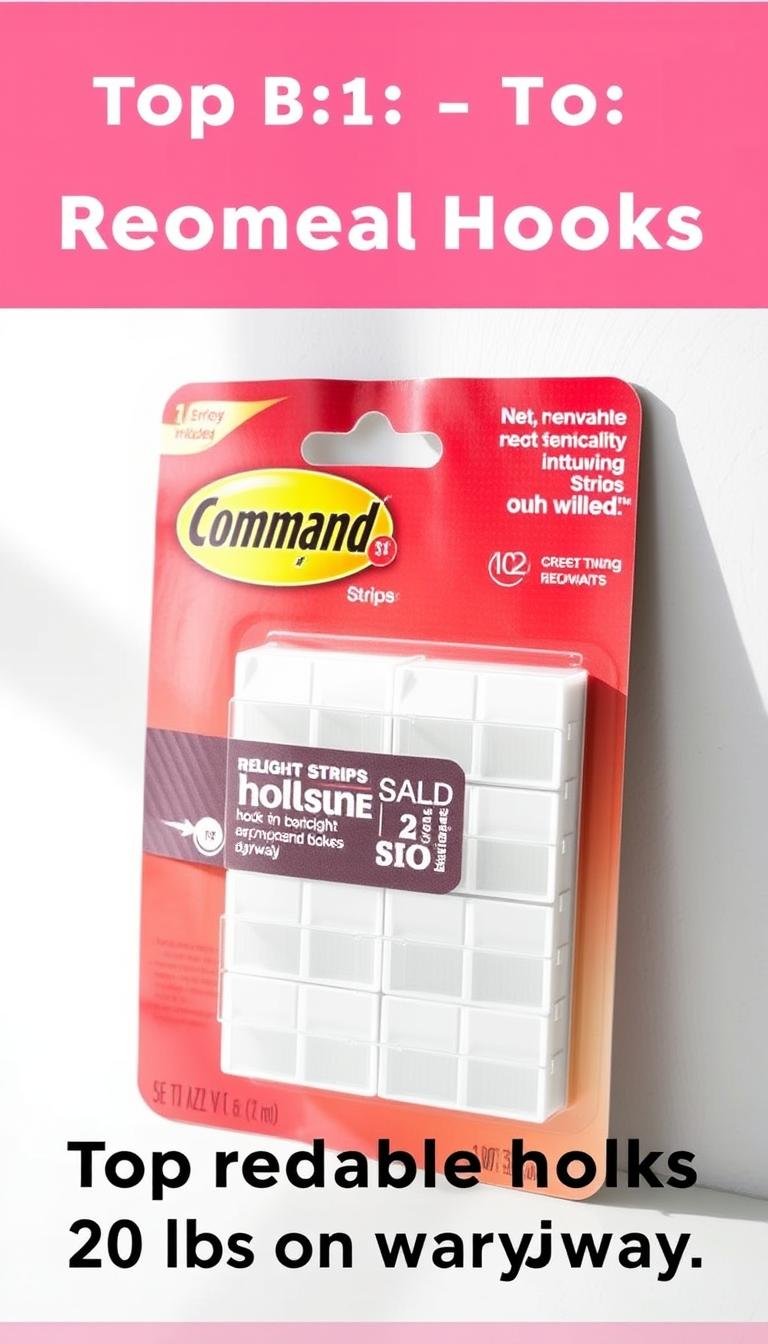
For a removable, no-nail option rated to 20 pounds, the clearest current fit is an extra-large picture-hanging strip system rather than a single adhesive hook. Capacity depends on using the specified number of pairs, an approved smooth surface, the stated frame size, and the manufacturer’s installation instructions.
For framed art near the top of an adhesive system’s rated capacity, weigh the finished frame rather than estimating. If the backing is uneven, the wall is textured, the paint is fragile, or the object is valuable, a mechanical hanger is the more conservative choice.
This guide favors products with clear manufacturer capacity, surface, frame-size, and installation guidance. It also explains when a removable adhesive system is not the right tool for the job.
For a 20-pound frame, the useful question is not “which hook is strongest?” but whether the exact hanging system is rated for the finished weight, frame size, backing and wall surface. Treat the manufacturer’s instructions as the limit, not a starting point to improvise from.
Start with the manufacturer’s published limits
Prioritize hanging systems that clearly state the total weight limit, required number of pairs or hangers, maximum frame dimensions, approved wall and frame surfaces, paint-cure guidance, temperature limits and removal method.
Do not rely on informal home load tests. A removable system is only as dependable as the conditions covered by its current instructions.
What actually works around the 20 lb range?
For a frame near 20 pounds, use a picture-hanging system whose current manufacturer instructions explicitly cover the finished weight, frame dimensions, wall surface and backing. A single generic adhesive hook should not be assumed to carry the same load as a multi-pair picture-hanging system.
One clearly documented option
3M currently specifies four pairs of its X-Large Command Picture Hanging Strips for frames up to 20 pounds and 24 × 36 inches on approved smooth surfaces. Treat that as one complete system: the rating depends on the specified strip size, quantity, placement and surface preparation.
When strips are a poor fit
Choose a mechanical hanger instead when the wall is textured or fragile, the frame backing does not provide enough flat contact area, the object is valuable or irreplaceable, or the installation would sit over a bed or another place where failure would carry extra risk.
If you are also trying to prevent frames from rubbing or drifting after installation, see our guides to protecting walls from frame marks and keeping gallery-wall frames level.
Key buying criteria: capacity, surface and removal
Weight rating: weigh the finished frame and check the exact quantity of strips or hangers required to support that weight. Do not combine different sizes or brands to invent a higher capacity.
Wall surface: adhesive systems usually require specific smooth, clean, fully cured surfaces. Textured paint, wallpaper, masonry, damp areas and fragile finishes may be excluded. Follow the current product instructions rather than assuming a material is suitable.
Frame backing: picture strips need enough flat contact area on the back of the frame. Deep mouldings, fabric backs, loose paper covers or uneven hardware can prevent proper placement.
Removal: for stretch-release systems, follow the stated pull direction and removal method exactly. Pulling outward instead of stretching the tab can damage paint or the adhesive system.
Risk: if the object is valuable, very heavy, mounted over a bed, or installed where a fall could injure someone, use a mechanical mounting method appropriate to the wall construction.
Do not improvise a higher capacity
Use the exact strip size, pair count and placement specified for the product you choose. Adding an arbitrary extra pair, mixing strip sizes or combining different adhesive systems does not create a manufacturer-supported higher rating.
For the current 20-pound X-Large Command system, the published requirement is four matched pairs within the stated frame-size and surface limits. If your frame or wall cannot accommodate that installation exactly, use a different hanging method.
Hooks vs. picture-hanging strips
Use a hook-style product when the item is designed to hang from a single point such as a keyhole, loop or wire and the exact hook is rated for the finished load and wall surface.
Use interlocking picture-hanging strips when the frame has enough flat backing for the specified strip placement and you want the load spread across several matched pairs.
Do not combine a hook and unrelated adhesive strips to create a homemade capacity rating. Each component should be used only within its own published installation instructions.
Installation: follow the exact system instructions
- Confirm the wall surface and paint condition. The product documentation should explicitly approve the surface.
- Weigh and measure the finished frame. Include glass, backing and hardware.
- Lay out the required attachment points. Use the manufacturer’s specified quantity and spacing rather than improvising.
- Prepare the surface exactly as directed. Cleaning method, paint-cure time and temperature requirements vary by system.
- Wait the stated bonding time before loading. Do not shorten the curing step.
- Remove using the stated stretch-release method. Pull tabs in the documented direction instead of peeling the adhesive outward from the wall.
For a gallery wall, use painter’s tape or a level to plan the layout before exposing any adhesive. That reduces unnecessary repositioning and wasted strips.
How to verify a 20 lb hanging claim before you trust it
Use the manufacturer’s current product page and packaging as the source of truth. Confirm the total weight limit, required number of pairs, maximum frame size, approved surfaces, paint-cure guidance, and any exclusions before installation.
Check the exact system, not just the headline number
A 20-pound rating may require several matched pairs and can be limited to a specific frame size and surface type. Do not mix strip sizes, reuse stretched adhesive tabs, or assume a single hook carries the same rating as a multi-pair picture-hanging system.
Environmental factors: humidity and temperature
Humidity, temperature swings, direct sun, and surface contamination can affect adhesive performance. Use products specifically rated for the room conditions, and choose mechanical support when the environment falls outside the adhesive manufacturer’s stated use.
- Surface condition: clean, smooth, fully cured paint is different from textured, dusty, damp, or fragile finishes.
- Capacity: use the exact number and size of pairs specified for the finished frame weight.
- Removal: stretch-release tabs are generally single-use; replace the adhesive components rather than reusing stretched strips.
For an item near the top of an adhesive system’s rating, follow the specified installation exactly and use a mechanical hanger instead if the wall, frame backing, room conditions, or value of the object makes failure unacceptable.
How to compare value
Count how many complete matched pairs each frame requires, then compare the cost per finished installation rather than the price per individual strip. A bulk pack only saves money when it contains the exact size and system your frames actually need.
Use genuine replacement adhesive components specified for the hanging system. Mixing third-party refills or different strip sizes can invalidate the published capacity and removal guidance.
Common mistakes to avoid
- Using lightweight poster strips for a heavy frame.
- Mixing strip sizes, brands or replacement adhesives to invent a higher capacity.
- Hanging on textured, dusty, damp, uncured or otherwise excluded surfaces.
- Ignoring the maximum frame dimensions or the amount of flat backing required for strip placement.
- Loading the system before the stated bonding time has passed.
- Reusing stretched or previously removed adhesive components.
- Using an adhesive-only solution where a falling frame would create an unacceptable safety or damage risk.
The simplest way to choose
Weigh the finished frame, check the wall and backing against the current manufacturer instructions, and use the exact strip size and quantity required for the published rating. If any part of the installation falls outside those limits, use a mechanical hanger suited to the wall instead.
For a frame near 20 pounds, treat the rating as a ceiling that depends on correct installation—not as spare capacity to improvise around.