To make French doors quieter in a rental, start with the air gaps—not acoustic foam. The most useful reversible improvements are usually compatible perimeter weatherstripping, a removable bottom-gap solution, careful treatment of the meeting line between the two doors, and a dense curtain if you also want to reduce reflections and soften the remaining noise.
French doors are difficult to sound-isolate because the opening has more potential leakage paths than a single door: two outer jambs, the head, the floor gap and the center meeting stile. If the doors themselves are lightweight or heavily glazed, renter-friendly treatments can improve comfort but will not turn them into a studio-grade acoustic wall.
Why French doors leak so much sound
Sound can pass through the door leaves themselves and around them. Gaps matter because airborne sound does not need much open area to bypass an otherwise heavier assembly.
The U.S. General Services Administration’s acoustics guidance notes that door performance depends on the door construction and effective seals; its guidance for better-performing hinged doors calls out solid or insulated cores, continuous perimeter seals and treatment of the undercut with a sweep or drop seal.
GSA Sound Matters acoustics guide
First, find the actual weak points
Close the doors and inspect the opening rather than buying products immediately.
- Look for visible light around the sides, head, bottom and center meeting line.
- Check whether one leaf sits farther forward than the other.
- See whether the latch pulls the meeting stile together or leaves a loose seam.
- Inspect existing weatherstripping for hardening, gaps or missing sections.
- Note whether the doors are solid, hollow, glazed or mostly glass.
- Check what the lease permits before applying adhesives or changing hardware.
A visible air gap is a logical first target. If the perimeter is already tight and the door leaves are thin, the limiting factor may be the doors themselves.
Sound blocking and sound absorption are different
This distinction prevents a lot of wasted money.
Sound blocking is about reducing transmission from one side of the doors to the other. Door mass, airtightness, glazing and the surrounding construction all matter.
Sound absorption reduces reflections inside a room. Rugs, curtains and fabric panels can make the room less echoey and can make noise feel less harsh, but thin foam panels stuck to a door should not be presented as if they add the isolation of a heavy acoustic door.
Use absorptive treatments for room comfort. Use seals and better assemblies when transmission through the opening is the problem.
Step 1: improve the perimeter seal
If the door manufacturer and lease allow it, compatible compressible weatherstripping around the head and side jambs is often the best renter-scale starting point.
The seal should make contact when the doors close without requiring excessive force or preventing the latch from working correctly. More compression is not automatically better.
What to check before using adhesive weatherstripping
- Whether the adhesive is approved for the painted, stained or finished surface.
- Whether the lease permits adhesive products.
- Whether the strip thickness allows the doors to close and latch normally.
- Whether removal instructions warn about fragile or uncured paint.
If the frame already has a purpose-made replaceable seal, replacing that component can be cleaner than layering generic foam over it.
Step 2: deal with the bottom gap
The under-door opening can be a major leakage path. The right treatment depends on the flooring, threshold and whether the two leaves swing independently.
Removable draft stopper
A fabric or removable draft stopper is the lowest-risk option when drilling or permanent hardware is not allowed. It can reduce the open air path but may need to be repositioned whenever the doors are used.
Adhesive or clip-on sweep
A sweep can create a more consistent seal if the product is compatible with the door finish and floor. Confirm that it will not scrape flooring, prevent the doors from opening fully or interfere with an existing threshold.
Automatic drop seal
Automatic drop seals can perform well in purpose-designed acoustic doors because they lower when the door closes and lift when it opens. They are usually a more involved hardware modification, so they are not automatically renter-friendly. Treat them as a landlord-approved or professional upgrade rather than a default temporary fix.
Step 3: treat the center meeting line
French doors have a vertical joint where the two leaves meet. The exact solution depends on the existing astragal, latch arrangement and which leaf is active.
If the doors already have an astragal or compression seal, inspect its alignment before adding another layer. If the center seam is visibly open, a compatible removable seal may help, but do not obstruct bolts, latches or emergency egress hardware.
Custom or historic French doors deserve extra caution: adding thick foam at the meeting stile can prevent proper closure or damage delicate finishes.
What if the doors contain a lot of glass?
Once the perimeter gaps are controlled, large glazed areas can become the limiting part of the assembly. Thin single glazing will generally provide less isolation than a well-designed acoustic glazing system.
In a rental, a secondary removable glazing insert may be worth investigating if the door design and lease allow it. The effectiveness depends on the insert mass, airtight perimeter and air space—not simply on attaching a thin sheet of plastic to the glass.
Do not drill into glass stops, historic millwork or proprietary door components without permission and a clear installation method.
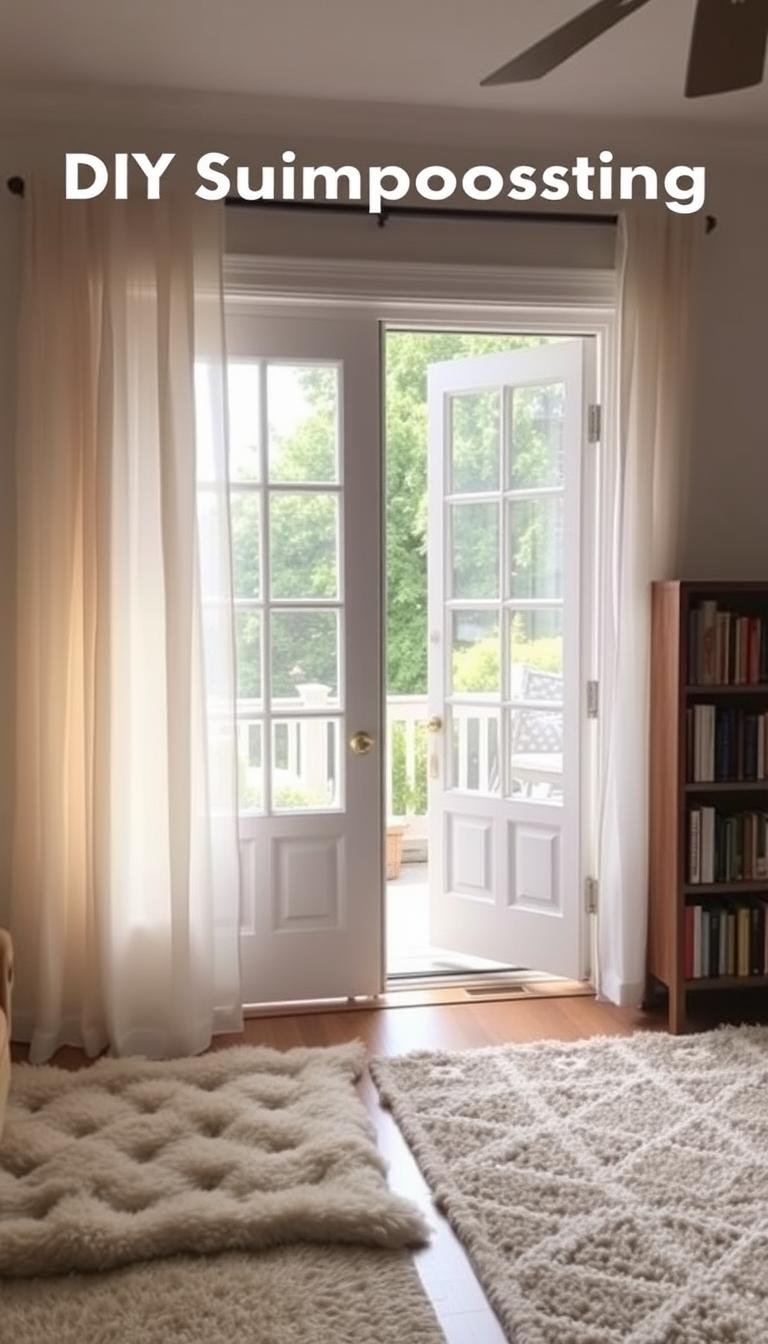
Do heavy curtains help?
Yes, but understand what they are doing.
A dense curtain covering the whole doorway can:
- reduce reflections in the room;
- soften high-frequency sound reaching the listener;
- add another partial layer across the opening;
- help with light and drafts at the same time.
It will not make a lightweight glazed French-door assembly perform like a purpose-built acoustic door. Think of curtains as a useful layer, not a substitute for sealing the opening.
If you install a curtain, make it wider than the doorway and allow enough fullness to create folds. Keep the hem clear of tripping paths and make sure the rod and mounting method are rated for the curtain’s weight.
Should you put acoustic foam on the doors?
Usually not if your main problem is sound coming through the doorway. Lightweight acoustic foam is designed primarily to absorb reflections. It does not add enough mass or airtightness to solve a leaky door assembly.
A heavy removable panel could add mass, but then attachment, door loading, hinges, fire safety and usability become more complicated. In a rental, that quickly stops being a simple low-risk improvement.
What about mass-loaded vinyl?
Mass-loaded vinyl is dense and can be useful inside properly designed acoustic assemblies, but hanging it casually from rental French doors is not automatically a good solution. It is heavy, it needs reliable support, and adding weight to the door leaves can affect hinges and operation.
If the doors are the dominant weak point after the gaps are sealed, replacement with a heavier, better-sealed assembly is often a more coherent long-term solution than building a homemade layer onto the existing leaves.
Room treatments can make the remaining noise less intrusive
Once transmission through the doorway has been addressed as far as the rental allows, reduce reflections in the room so the residual noise does not bounce around hard surfaces.
- Add a rug and appropriate rug pad on hard flooring.
- Use curtains on other large glazed surfaces.
- Place upholstered furniture where it suits the layout.
- Add bookcases or other irregular surfaces to reduce a very bare, reflective room.
These measures improve room acoustics. They are not replacements for an effective door seal.
Can a white-noise machine help?
Masking does not block sound; it makes some unwanted sound less noticeable by raising the background sound level. It can be useful when the remaining problem is intermittent speech or hallway activity and structural changes are not possible.
Keep the volume comfortable and place the device where it masks the intrusive sound without becoming another annoyance. If sleep is the goal, use a level that remains comfortable through the night.
A renter-friendly order of operations
- Inspect the opening. Find the side, head, bottom and center gaps.
- Check the lease. Know what adhesives, hardware and drilling are allowed.
- Improve the perimeter seal. Use compatible, removable products where permitted.
- Treat the bottom gap. Start with the least invasive method that works with the flooring.
- Check the center stile. Make sure both leaves close and seal properly.
- Retest before buying more. If the biggest improvement has already occurred, additional small accessories may have diminishing returns.
- Add a dense curtain or room absorption if useful. Treat this as comfort/absorption, not a magic transmission barrier.
What improvement is realistic?
Expect the most noticeable benefit when the doors currently have visible or obvious air gaps. If the doors are already well sealed but are lightweight or mostly glass, renter-friendly accessories have less room to change the underlying sound isolation.
Avoid product listings that promise a fixed decibel or STC improvement without specifying the complete tested assembly. Acoustic ratings apply to defined construction systems, not to an isolated strip of foam or curtain used in any doorway.
When the landlord or a professional should be involved
Ask for help when:
- the doors do not align or latch correctly;
- hinges are loose or the leaves are sagging;
- the proposed treatment requires drilling into the door or frame;
- you are considering an automatic drop seal or permanent astragal;
- the doors are historic, fire-rated or part of a required exit route;
- privacy requirements are important enough that a measured acoustic solution is needed.
For a permanent improvement, a properly fitted heavier door assembly with continuous seals will usually outperform layers of improvised renter accessories.
So how do you soundproof French doors on a rental budget?
Seal the obvious air paths first, keep the doors operating normally, and treat curtains and furnishings as secondary acoustic layers. A removable perimeter seal, a sensible bottom-gap treatment and a better center meeting seal can make a useful difference when gaps are the problem.
If the door leaves themselves are thin or heavily glazed, be realistic: renter-friendly methods can reduce intrusion, but true sound isolation may require a better door assembly.
For related renter-friendly improvements, see adding dimmable lighting without altering fixed wiring, choosing linen-look roller shades, and the Dwelanor Room Guides.