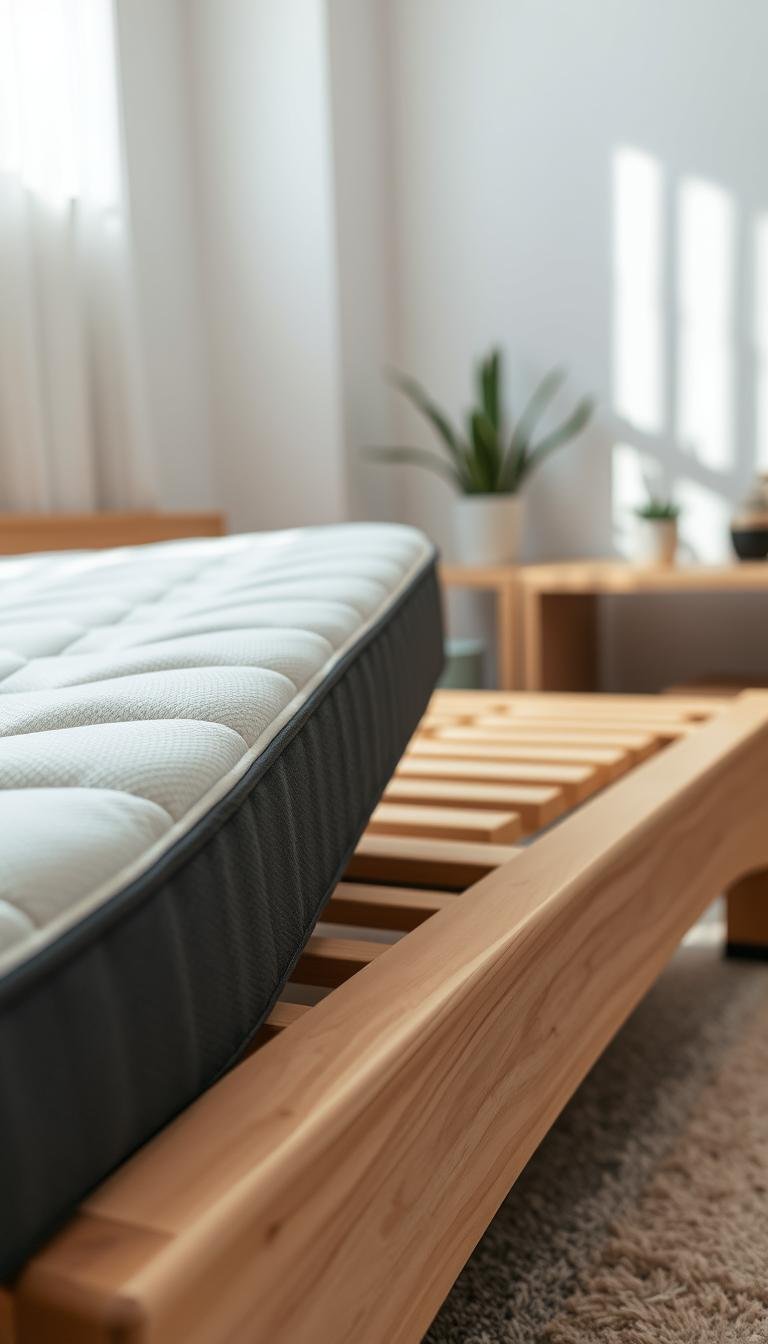

A creaking bed is easiest to fix when you stop treating the whole bed as one object. The noise usually comes from one of four places: the mattress, the foundation, the frame joints, or a leg moving against the floor.
Strip the bed back and test those parts separately. Once you know where the sound starts, the repair is usually much simpler than replacing everything at once.
Why My Bed Creaks and How to Identify the Source
Pinpointing the exact location of the squeak makes fixing it much easier. I start by listening carefully when the noise occurs. This helps me narrow down which component might be causing the problem.
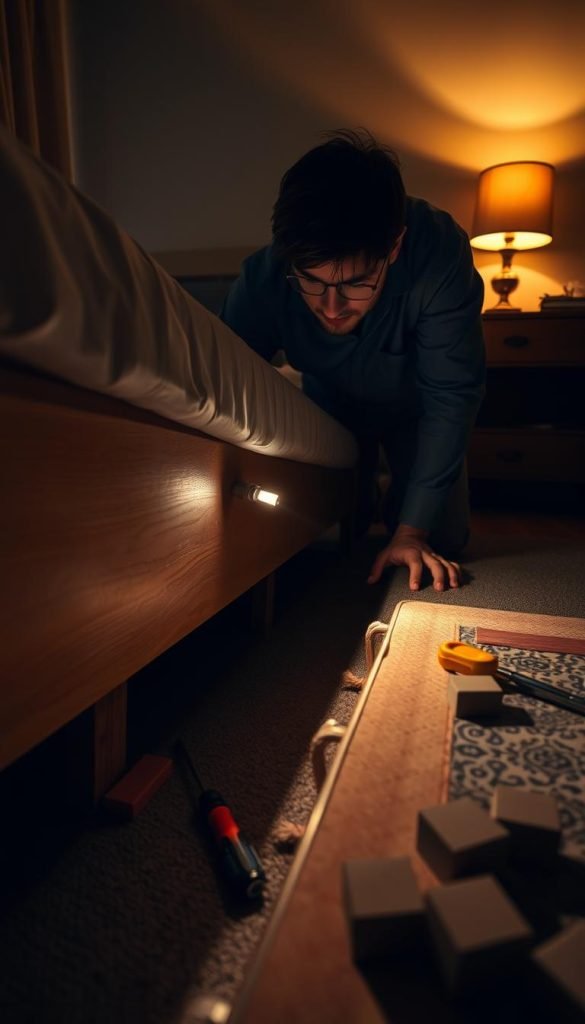
The main culprits are usually the mattress, box spring, or frame. Each part can create noise for different reasons. I test them separately to find the source.
Listening for the squeak culprit
I move around on the bed slowly and listen closely. The sound often reveals its origin when I shift my weight. This simple test helps me locate the general area of the noise.
I pay attention to whether the sound comes from below me or beside me. This tells me if it’s the mattress or frame. Sometimes the floor can even contribute to the problem.
Testing different bed components
I test each part individually to isolate the noise. First, I press down on various mattress areas. Then I check the box spring by applying pressure to different spots.
For the frame, I examine all connections and joints. I look for loose bolts or warped wood. Metal frames might need lubrication at connection points.
Hybrid spring mattresses require special attention. Their innersprings often cause repetitive squeaking. If this is the case, it might be time for replacement.
Common squeak locations to check first
I always start with the areas under where I normally sleep. These spots receive the most pressure and wear. The corners of the mattress and frame joints are also common trouble areas.
Box springs often squeak due to their wood frame construction. The wooden slats or support beams can rub together. This creates that familiar annoying sound.
Here’s a quick reference table for common noise sources:
| Component | Common Issues | Quick Check |
|---|---|---|
| Mattress | Springs wearing out, material compression | Press center and edges |
| Box Spring | Wood frame friction, support issues | Check corners and center |
| Bed Frame | Loose bolts, warped wood, metal friction | Test all joints and connections |
| Floor Contact | Uneven surfaces, lack of padding | Check where legs meet floor |
By testing systematically, I save time and effort. I identify the exact cause before attempting any repairs. This approach ensures I fix the right problem the first time.
Remember that some beds might have multiple noise sources. A wooden bed might have frame issues and mattress problems. Taking the time to check everything thoroughly pays off in peaceful sleep.
Fixing a Squeaky Mattress
When my mattress becomes the noise source, I tackle it with simple yet effective methods. These approaches often restore peace without major expense.

If the mattress itself squeaks
Take the mattress off the frame and press on it in several places on the floor. If the noise follows the mattress, check the maker’s support and rotation instructions before trying a workaround. Some mattresses can be rotated; others have a defined top and bottom and should not be flipped.
Do not add a sheet of plywood automatically. A mattress may require specific slat spacing or ventilation, and changing the support surface can affect comfort or warranty terms. If an innerspring unit is noisy internally and the frame is quiet without it, that points to the mattress rather than the bed hardware.
Addressing mattress noises promptly improves my sleep environment dramatically. These solutions help maintain comfort while eliminating disruptive sounds. A quiet sleeping surface makes all the difference for restorative rest.
Silencing a Noisy Box Spring
That rumbling sound beneath me often points to the foundation. The box spring frequently becomes the main noise cause in many sleeping setups.
I approach this issue with simple, effective methods. These techniques usually restore peace without major expense.

Rotating your foundation
I begin by rotating the entire unit. This redistributes weight and pressure points evenly. It’s surprising how this simple action can eliminate unwanted sounds.
Similar to mattress care, I rotate my foundation regularly. This prevents wear in specific areas. Consistent maintenance extends the life of my sleep setup.
Lubricating internal components
When rotation doesn’t solve the problem, I investigate further. Opening the bottom fabric reveals the internal structure. This allows me to access the actual noise sources.
I apply lubricant to any moving parts. Metal springs benefit from light oil applications. Wooden joints respond well to wax-based products.
This approach addresses friction-based noises effectively. Proper lubrication can silence most squeaks instantly.
Considering platform bed alternatives
Sometimes, the best fix involves changing the entire system. Platform beds offer excellent built-in support. They eliminate the need for traditional foundations.
These modern designs use sturdy wooden slats. This construction prevents most noise issues. The solid foundation ensures lasting quiet.
When my current setup causes persistent problems, I explore these alternatives. The investment brings long-term peace and better sleep quality.
| Solution | Effectiveness | Time Required | Cost |
|---|---|---|---|
| Rotation | Moderate | 5 minutes | Free |
| Lubrication | High | 15 minutes | $5-10 |
| Platform Conversion | Permanent | 1-2 hours | $200-500 |
Each option addresses different needs and budgets. Rotation works for minor issues. Lubrication solves most friction problems.
For complete noise elimination, platform conversion provides the best results. This approach ensures lasting quiet for years to come.
Sometimes the most practical solution involves upgrading your entire sleep system. If you’ve tried everything and still can’t fix squeaky bed issues, considering a platform bed might be your best investment for peaceful nights.
How do I stop my bed from creaking every time I roll over? – Frame Solutions
The structural foundation often holds the key to lasting bedroom tranquility. When my sleeping surface makes noise, I focus on the underlying support system first.

Proper frame maintenance eliminates most unwanted sounds. I approach this systematically to ensure complete noise elimination.
Tightening loose bolts and joints
I begin with a thorough inspection of all connections. Loose hardware causes most frame-related noises. Using the right tools makes this process simple.
I check every bolt and screw for proper tightness. Regular movement can loosen these parts over time. A simple wrench turn often solves the problem completely.
Reduce friction only after you find the rubbing point
On a metal frame, tighten the joint first. If two metal parts still move against each other, use a lubricant that the frame manufacturer allows rather than spraying every connection indiscriminately.
On a wood frame, felt or thin cork can help where slats or rails are visibly rubbing. Avoid packing joints so tightly that the frame no longer seats correctly; the goal is to stop movement, not hide a loose connection.
Addressing uneven floor issues
Uneven floors cause unexpected frame movements. I check all legs for proper contact with the surface. Sometimes the problem isn’t the frame itself.
I use padding under legs to stabilize the entire structure. Caster cups help with wheeled frames. This prevents wobbling and subsequent noise generation.
Here’s a quick comparison of frame solutions:
| Solution | Best For | Materials Needed | Time Required |
|---|---|---|---|
| Bolt Tightening | All frame types | Wrench set | 10 minutes |
| Metal Lubrication | Metal bed frames | WD-40 or similar | 5 minutes |
| Wood Cushioning | Wooden bed frames | Felt, cork, or wax | 15 minutes |
| Floor Leveling | Uneven surfaces | Padding or shims | 5 minutes |
When these fixes don’t work, replacement becomes necessary. A quality bed frame provides lasting support and silence. Investing in good materials ensures peaceful nights for years.
Sometimes the most practical approach involves upgrading your entire support system. If basic fixes don’t solve the problem, a new frame might be the best investment for quiet sleep.
Keep the fix from coming back
Recheck the same connection if the noise returns. Hardware that repeatedly loosens can indicate a worn fastener, damaged thread, cracked slat or joint that needs repair rather than another round of tightening.

Keep all legs firmly supported, replace cracked or badly warped slats, and use floor pads where the frame is moving or marking the surface. There is no need for an elaborate maintenance calendar; check the bed when you notice movement, noise or looseness.
This proactive approach ensures many quiet nights of rest. It’s the best way to stop bed noises before they start. Consistent care maintains sleep quality for years to come.
The fastest way to solve it
Test the mattress, foundation, frame and floor contact separately. Tighten loose hardware, stop known rubbing points, and replace damaged slats or fasteners instead of masking the noise. If the mattress itself squeaks when it is off the frame, the frame is not the problem.