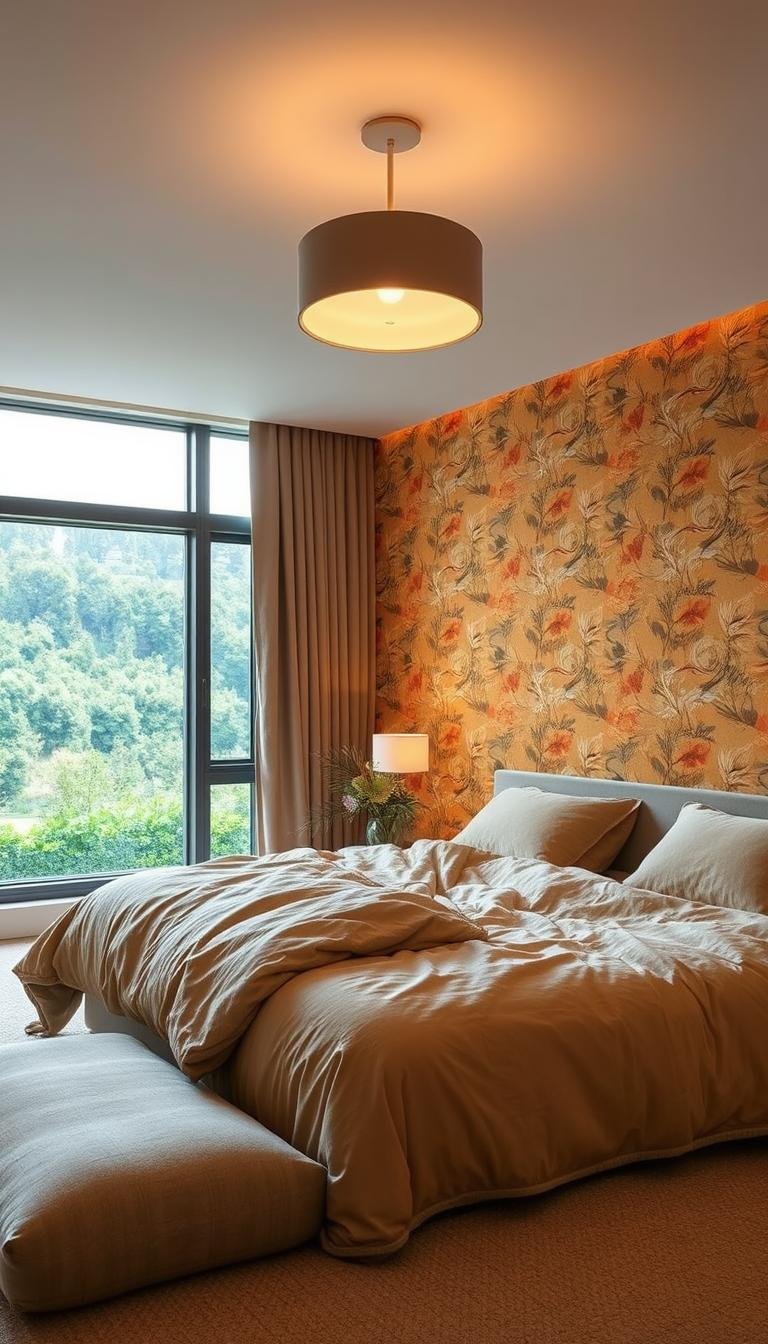
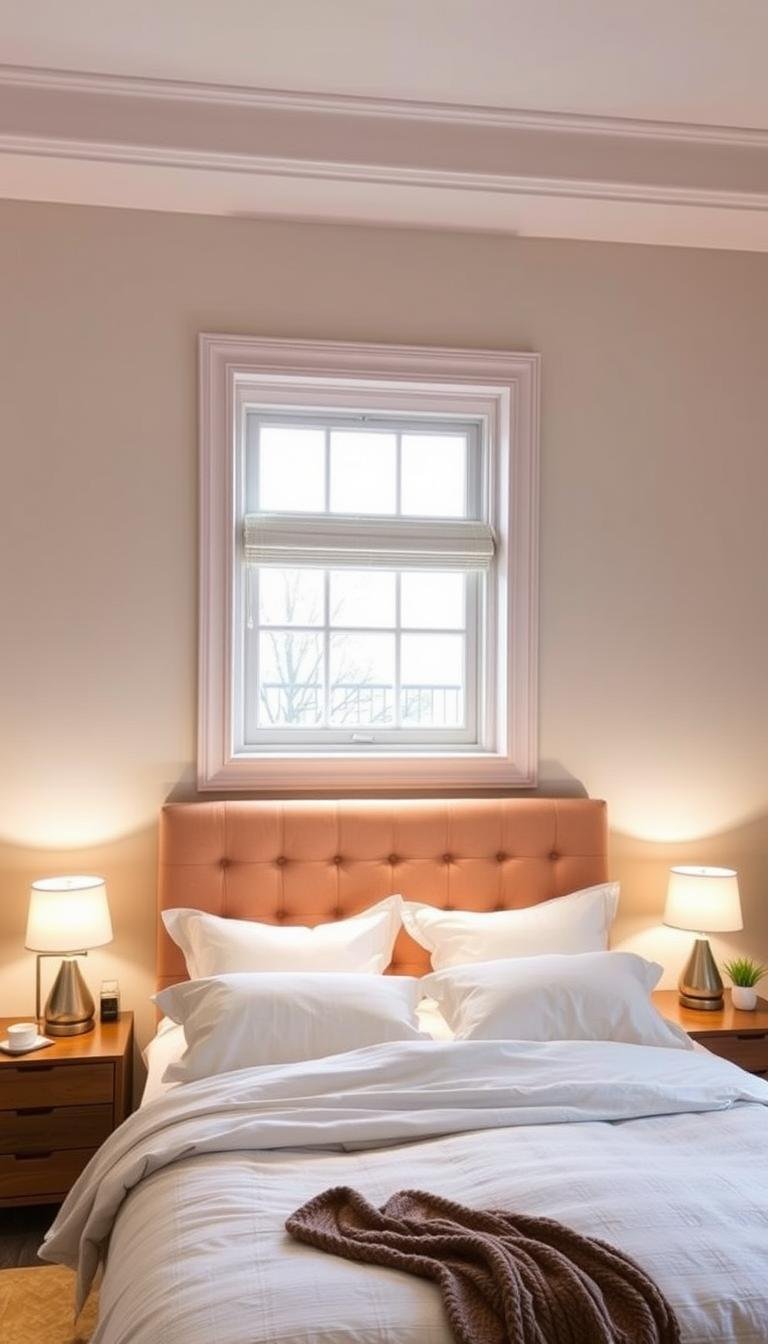
A headboard can work well in front of a low window if it leaves the window usable, does not interfere with treatments, and fits the bed at a comfortable height. There is no universal “bottom third” rule or fixed number of inches that works in every bedroom, so measure the actual window, mattress, and headboard together.
Measure the window from the mattress, not just the floor
Start with the finished bed height, including the mattress and any topper. Then measure from the mattress top to the sill, sash, and trim.
Also note:
- how far the sill projects into the room;
- whether the window opens inward, slides, or tilts for cleaning;
- whether blinds, shades, or curtains need clearance behind the bed;
- where outlets, vents, and radiators sit;
- how high your pillows rise when the bed is made.
Choose the headboard by what you want to preserve
If natural light and the view matter most, choose a lower or visually open headboard. Spindle, slatted, cane, or open metal designs can keep the window visible.
If you want more back support or privacy, an upholstered or solid panel can work, but mock up its height before buying so you know exactly how much glass it will cover.
Do not block window operation
A bed placed in front of a window should still allow safe access to the latch, sash, blind controls, and any emergency-egress function that applies to that window.
If the window is needed for egress or ventilation, keep the arrangement compliant with local requirements and do not let the headboard, mattress, or furniture prevent normal opening.
Leave room for window treatments
Roman shades and rollers are useful when there is little space behind the headboard because they stay close to the glass. Drapery needs more clearance.
If curtains pass behind the bed, move the bed far enough forward that the fabric can open and close without being crushed or snagged. The exact gap depends on the curtain hardware and fabric thickness.
Headboard styles that tend to work well
| Headboard type | Why it can work | Main thing to check |
|---|---|---|
| Low upholstered panel | Comfortable and visually simple | How much of the window it covers |
| Open metal or spindle | Lets light pass through | Trim clearance and pillow contact |
| Cane or slatted wood | More visual openness than a solid panel | Durability and cleaning |
| Shaped or arched | Can rise at the center without covering side trim | Actual window geometry |
| No headboard | Maximum window access | Wall protection and pillow support |
Use a full-size mock-up before buying
Painter’s tape or a cardboard outline is one of the best ways to test a headboard height. Mark the real width and height on the wall, then make the bed normally and sit against the pillows.
Check the room in daylight and at night. A height that looks fine on an empty wall may feel too tall once curtains, lamps, pillows, and side tables are in place.
What if the window is off-center?
Do not force the bed to align with the window if that makes the room layout worse. Center the bed on the most logical wall composition, then balance the window with curtains, artwork, or lighting.
For two windows flanking the bed, use a headboard that clears both frames and keep the window treatments symmetrical if possible.
Privacy and light control
If the main concern is privacy rather than the headboard itself, solve that with the window treatment first. A shade can give privacy without requiring a tall headboard to cover the glass.
For bedrooms that need darkness, choose a blackout system based on the full window opening and perimeter gaps rather than assuming the headboard will improve blackout performance.
Safety and installation
Secure the headboard according to the manufacturer’s instructions. A wall-mounted headboard must use hardware appropriate for the wall construction and the product weight.
Keep the bed clear of heaters, radiators, electrical equipment, and window mechanisms. If the layout conflicts with an egress window or heating appliance, change the furniture arrangement rather than improvising around it.
Bottom line
The best headboard for a low window is one that fits the real space, keeps the window usable, and leaves enough clearance for treatments and everyday access. Start with measurements and a tape mock-up, then choose between a lower solid panel, an open frame, or no headboard based on how much light and support you want.
For more bedroom layout ideas, see our Room Guides.