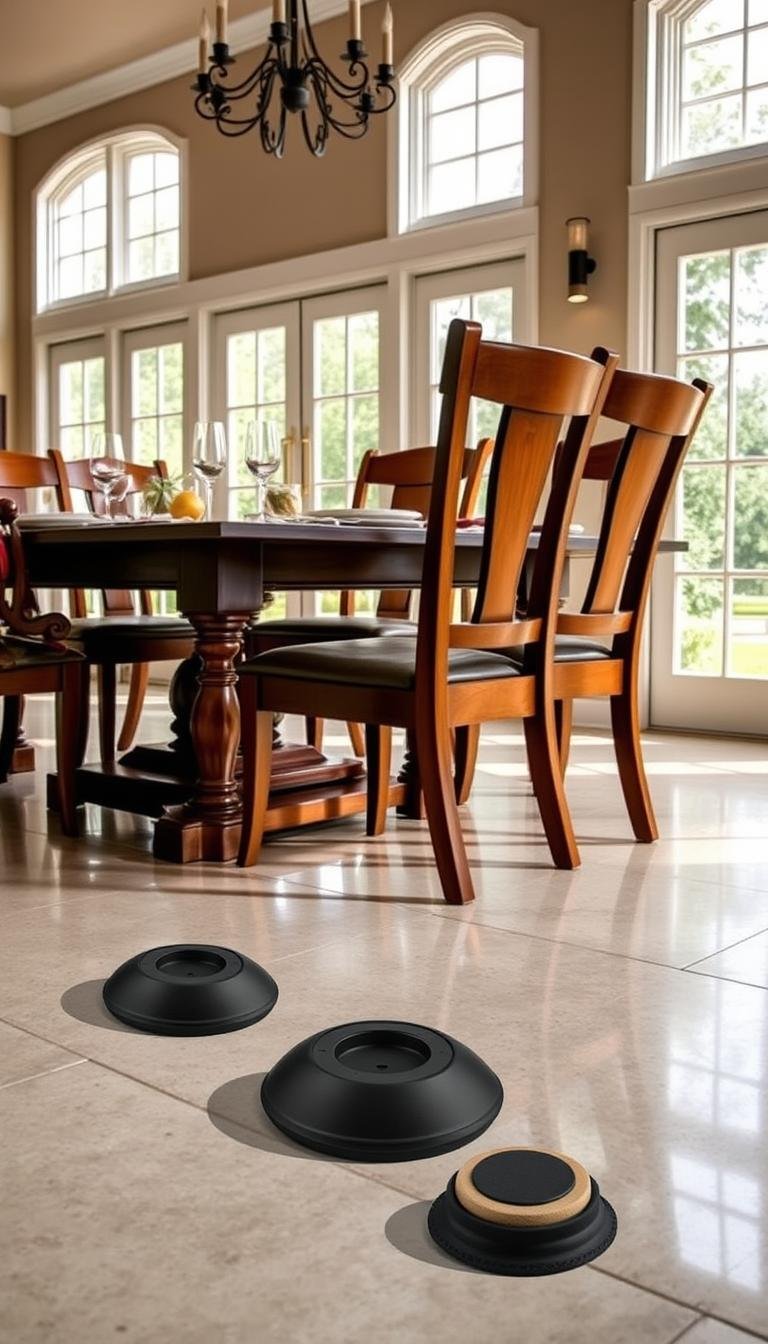
For heavy dining chairs on tile, the safest floor protector is usually one that fits the chair leg securely, keeps grit away from the tile, and matches how often the chair is moved. Felt, nylon, rubber, and mechanical glides all behave differently, so choose by use case rather than by a universal “best” label.
First identify the tile surface
Glazed ceramic, porcelain, natural stone, textured tile, and sealed tile can respond differently to contact materials and cleaners. If the floor manufacturer has guidance for furniture glides or pads, follow that first.
For natural stone or specialty finishes, avoid assuming that rubber, adhesives, or plastic are automatically safe. Some compounds can stain or react with sealers.
Then measure the chair legs
Measure the actual contact point of each leg. Round, square, tapered, angled, and metal-tube legs may need different protector styles.
- Measure width or diameter at the floor.
- Check whether the leg is hollow metal, solid wood, plastic, or another material.
- Inspect the bottom for existing nails, glides, or threaded inserts.
- Choose a protector designed for that attachment method.
Felt pads: good for frequent movement
Dense felt can work well when dining chairs are pulled in and out regularly because it allows relatively smooth movement and reduces direct abrasion.
The main weakness is dirt. Grit can become embedded in felt and turn the pad into an abrasive surface. Inspect and clean or replace felt regularly.
Adhesive felt is convenient but can detach under repeated lateral movement. Nail-on, screw-on, or replaceable-cap systems may stay in place better when they are compatible with the chair construction.
Nylon or hard-plastic glides
Low-friction nylon or plastic glides can be durable and easy to move, especially on metal or wood legs with compatible sockets or inserts. They should have a smooth, undamaged contact face and should not expose fasteners as they wear.
Check the tile manufacturer’s guidance before using a hard glide on a highly polished or delicate surface.
Rubber or non-slip feet
Rubber-style protectors are better when the goal is to stop a chair from sliding rather than make it glide. This can be useful for stationary benches or chairs that should stay put.
Because rubber compounds vary, confirm compatibility with the tile or sealer and watch for discoloration during the first weeks of use.
Swivel and mechanical glides
Swivel glides can help angled chair legs maintain flatter contact with the floor. They are useful when a fixed glide would touch the tile only at one edge.
Use the size and installation method specified by the glide manufacturer. Do not drill or screw into a chair leg unless the furniture construction can safely accept that hardware.
Weight ratings: use manufacturer data, not generic rules
There is no reliable universal chair-weight threshold that determines when felt, nylon, or metal must be used. A protector’s performance depends on its material, contact area, attachment, chair geometry, and the floor beneath it.
If a product publishes a load rating, use that manufacturer rating. Avoid homemade “per-leg” calculations unless the product documentation specifically supports them.
Keep the contact surface clean
Most scratches happen when hard grit is dragged between the chair and floor. Vacuum or sweep the dining area regularly and inspect protectors for trapped debris.
Replace any glide that has become rough, cracked, compressed, detached, or worn through.
Quick comparison
| Protector type | Best use | Main maintenance issue |
|---|---|---|
| Dense felt | Chairs moved often | Collects grit and compresses |
| Nylon/plastic glide | Smooth, durable movement | Inspect for rough wear |
| Rubber/non-slip foot | Keeping furniture in place | Check floor compatibility |
| Swivel glide | Angled or uneven leg contact | Check attachment and rotation |
| Replaceable-cap system | High-use chairs | Replace worn contact caps |
Installation basics
Clean the bottom of each chair leg before fitting a protector. Follow the manufacturer’s instructions for adhesives, inserts, screws, or snap-on systems.
Avoid overdriving screws into wood, forcing an undersized cap onto a leg, or using adhesives not intended for the furniture material.
Bottom line
For most heavy dining chairs that move frequently on tile, start with a securely attached dense felt or smooth manufacturer-approved glide, then inspect it regularly for grit and wear. If the chair should not move, a compatible non-slip foot may be better.
For more dining-room decisions, see our Room Guides.