Style Guide
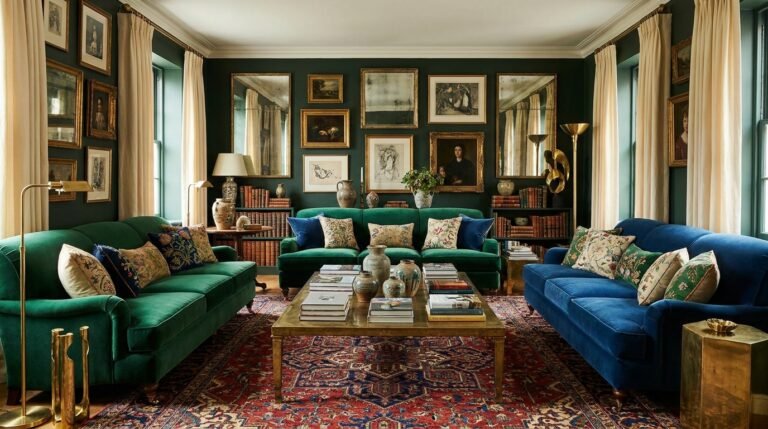
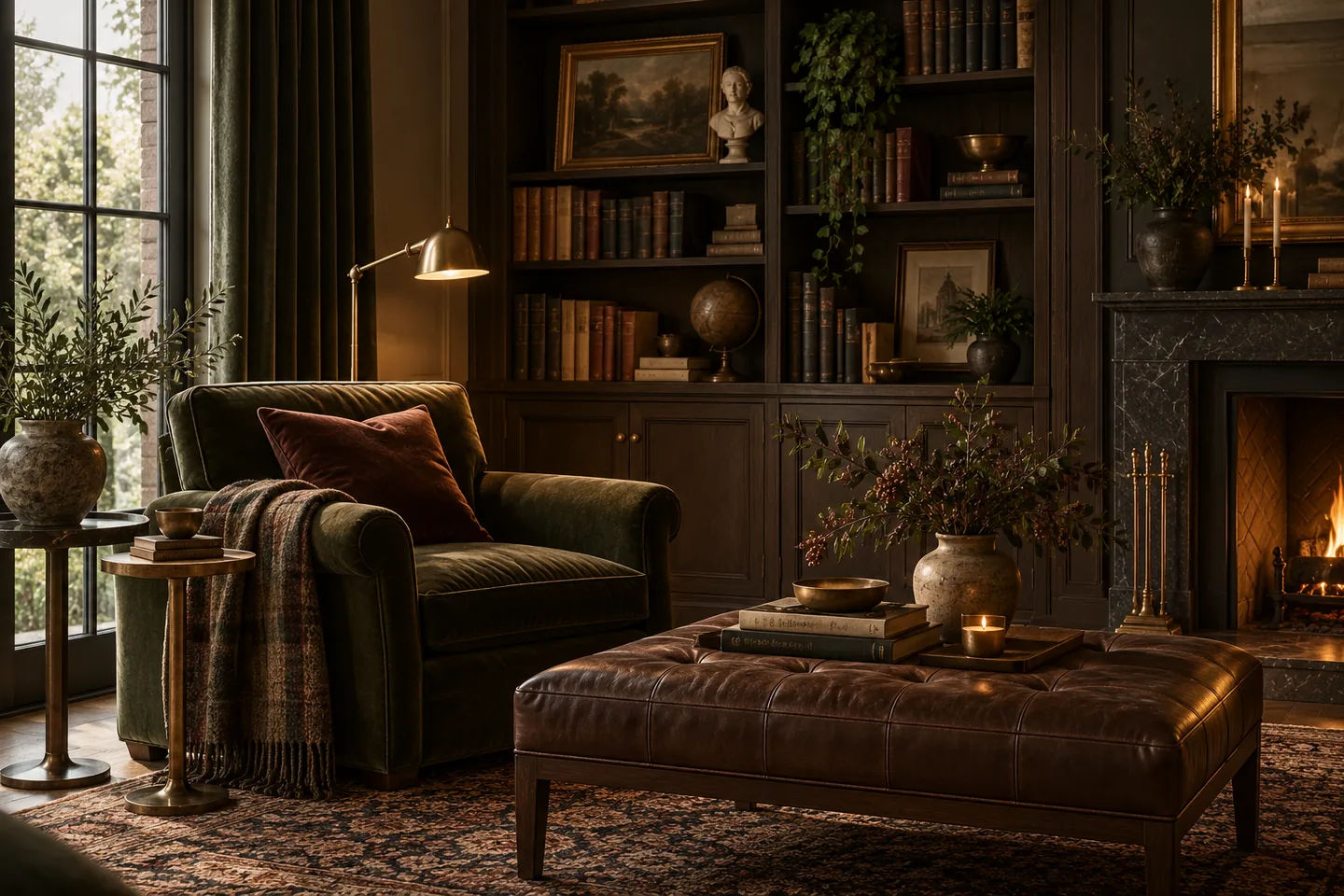
Dark academia works when a room feels warm, thoughtful and layered—not simply dark. Books, timber, brass, aged finishes and low pools of light can create extraordinary atmosphere, but only when the room still feels comfortable enough to live in every day.
The useful part of the style is not the theatrical props. It is the emphasis on depth, reading, craftsmanship, texture and lighting. Those ideas can work in a living room, bedroom or study without turning the space into a movie set.
If your room is genuinely short on daylight, pair this guide with our guide to making dark rooms feel warm. If you are still comparing aesthetics, use our home decor style framework.
The Three Things Dark Academia Needs
Warm Darkness
Deep green, navy, oxblood, brown, tobacco, warm charcoal and muted plum usually feel more inviting than flat black. The room should have colour inside the darkness.
Layered Light
One ceiling fixture is rarely enough. Table lamps, floor lamps, picture lights and wall lights create smaller pools of light that give books, artwork and furniture more depth.
Natural and Aged Materials
Dark timber, leather, wool, linen, velvet used sparingly, brass, bronze, ceramic and old glass all work because they respond beautifully to warm light. Glossy plastic and highly reflective surfaces tend to break the mood.
A dark room succeeds when the shadows feel intentional and the places you actually sit, read and work still feel comfortable.
Living Room
Start with the largest pieces and the way the room will be used. A deep sofa, a substantial rug and one strong storage or book element can establish the look before you add a single decorative object.
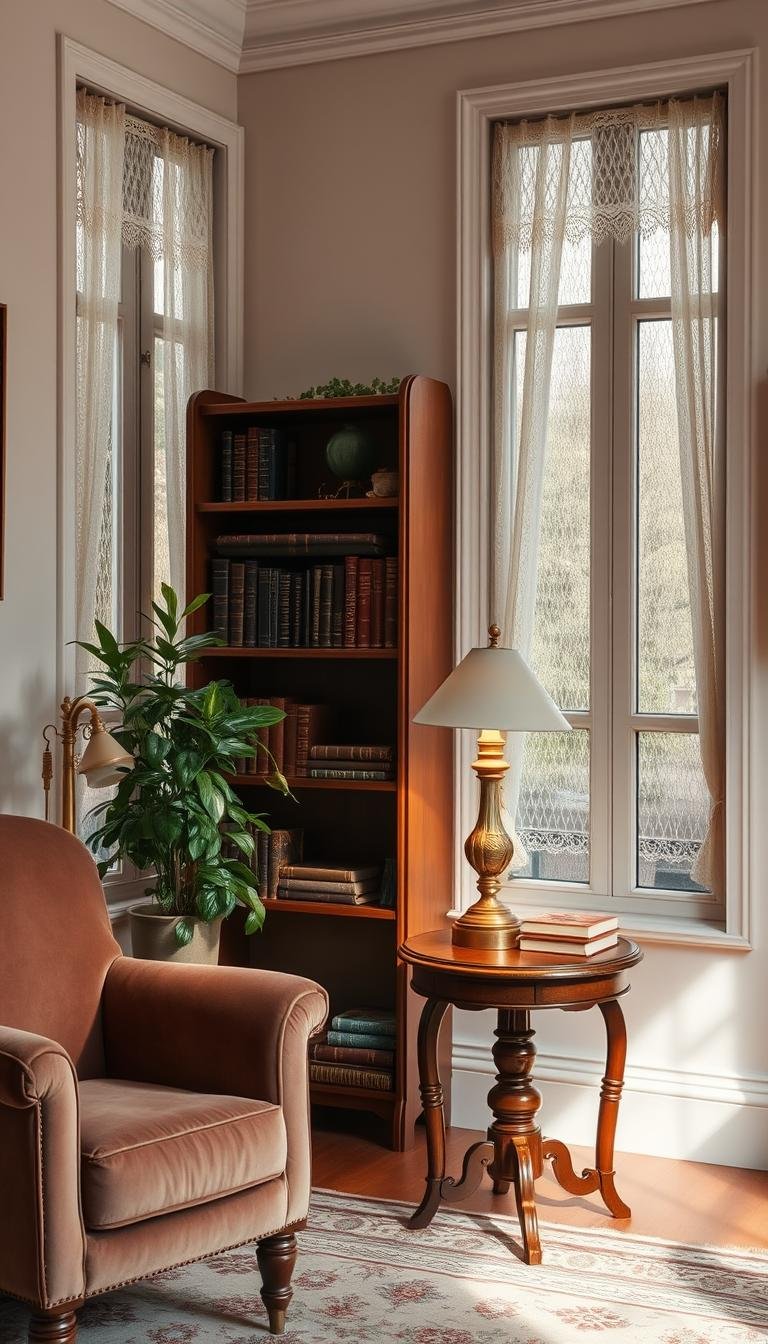
Bookshelves help because they create both function and visual rhythm. Full shelves usually feel more authentic than sparse shelves styled with unrelated props. Mix upright books with a few horizontal stacks and leave enough room for the books to remain usable.
For upholstery, dark leather, warm neutral linen, deep green, navy or muted burgundy can all work. The furniture does not need to be antique; the material and silhouette matter more than age.
- Use a rug with enough pattern or texture to anchor the room.
- Keep the main seating comfortable and practical.
- Use brass or dark metal as an accent, not on every surface.
- Let books and art carry the personality instead of novelty décor.
Bedroom
A bedroom can take darker colour surprisingly well because the room is meant to feel enclosed and restful. Deep green, navy or warm charcoal can work on all walls or on one wall, depending on daylight and room size.
Balance darker walls with tactile bedding and warm light. Linen, cotton, wool and a small amount of velvet can add richness without making the room feel heavy. If the bed frame is dark, lighter bedding often creates the contrast the room needs.
A small writing desk or reading chair can reinforce the academic side of the style if the room has space. If not, a bedside stack of books and a good reading lamp is enough.
Study or Home Office
This is the easiest room in which to use dark academia because books, work surfaces and task lighting already belong there. Start with the desk and make sure it is comfortable before styling around it.
Hide cables where practical, but do not turn technology into something shameful that must be disguised at all costs. A modern monitor and keyboard can coexist with timber, books and warm lighting as long as the desk remains visually ordered.
| Element | Useful direction |
|---|---|
| Walls | Deep green, navy, warm charcoal, burgundy or rich brown |
| Wood | Walnut, dark oak, stained timber or painted cabinetry |
| Metal | Aged brass, bronze, blackened steel |
| Textiles | Wool, linen, leather, velvet in limited doses |
| Lighting | Warm table lamps, floor lamps, sconces and picture lights |
Artwork and Objects
Maps, botanical drawings, landscapes, old photographs, portraits and framed ephemera can all suit the style. The key is to choose things you actually enjoy looking at rather than objects that merely signal “dark academia.”
A globe, chess set, fountain pen or brass candlestick can work if it is something you genuinely use or value. A room filled with props quickly becomes theatrical.
How to Keep It From Feeling Gloomy
Do Not Under-Light the Room
Dark walls absorb light. Add enough lamps that reading, working and moving through the room remains comfortable after sunset.
Use Contrast
Dark-on-dark everywhere can flatten the room. Contrast deep paint with cream paper, lighter lampshades, warm timber, reflective glass or a lighter ceiling.
Leave Some Surfaces Quiet
Visual density is part of the style, but every shelf and wall does not need to be filled. A calm desk surface or a patch of empty wall gives the layered areas more impact.
Keep the Room Functional
Do not block windows, vents, switches or circulation in the pursuit of atmosphere. The room has to work before it looks dramatic.
What to Add First
- Lighting: add warm, useful lamps before painting the room darker.
- Books and storage: make the room feel inhabited rather than staged.
- A rug: pattern and texture can add depth without darkening every surface.
- One aged metal finish: brass or bronze can warm the palette.
- Art: choose a few pieces with actual meaning rather than a wall of generic prints.
Frequently Asked Questions
What is dark academia home decor?
Dark academia is a moody interior style inspired by libraries, studies and old academic spaces. It typically uses deep colours, books, timber, warm lighting and aged materials.
Which colours work best?
Deep green, navy, warm charcoal, brown, burgundy and muted plum are reliable starting points. The best choice depends on the room’s daylight and the warmth of the other finishes.
How do I stop a dark room feeling depressing?
Use layered warm lighting, enough contrast, comfortable textiles and lighter elements such as paper, plaster, linen or natural timber. Darkness should create depth, not make the room unusable.
Do I need lots of books?
No, but books are one of the most natural and functional ways to create the look. A smaller collection that is genuinely used is better than decorative fake books.
Can dark academia work in a small room?
Yes. Keep the furniture scaled correctly, preserve circulation and make sure the lighting is strong enough. A small room can feel intimate rather than cramped when the layout is disciplined.