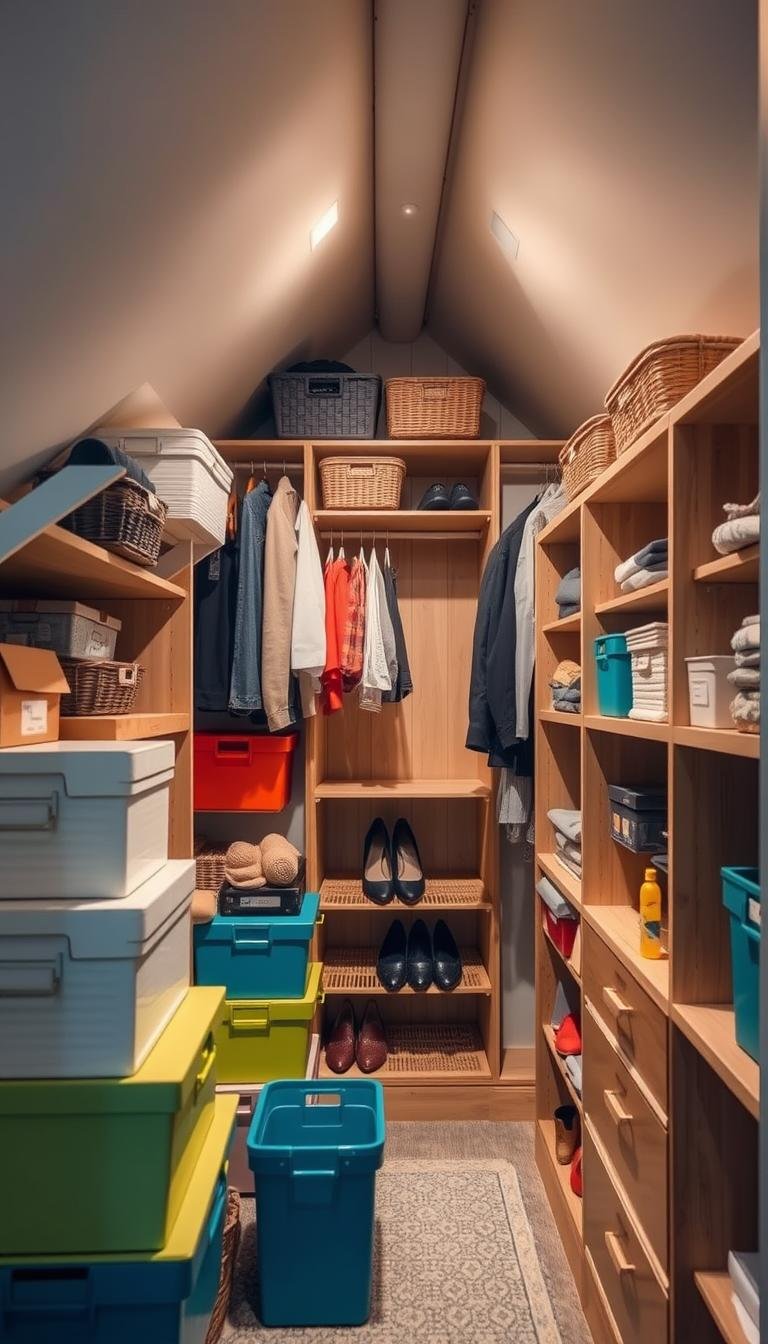
An under-eave closet becomes useful when you stop treating the sloped area like a normal wardrobe. Map the changing height first, then assign each part of the space a job: low drawers or bins near the shallow edge, shelves where headroom is limited, and hanging storage only where garments can actually fit.
The goal is not to fill every triangular inch. It is to make the storage easy to reach, easy to inspect, and flexible enough that seasonal items do not block everyday ones.
Map the space before buying anything
Measure the floor width and depth, then record the ceiling height at several points from the low eave toward the taller part of the room. Also note doors, hinges, outlets, vents, access panels, pipes, structural members and any equipment that must remain reachable.
A quick sketch with these measurements is more useful than a single “closet width” number because the usable volume changes across the slope.
Divide the closet into height zones
| Zone | Useful storage | What to avoid |
|---|---|---|
| Lowest eave | Low drawers, pull-out bins, shoes, seasonal boxes | Deep fixed shelves that create unreachable pockets |
| Mid-height area | Adjustable shelves, folded clothing, baskets | Hanging rails where garments drag on the floor |
| Tallest area | Hanging clothes, taller shelving, frequently used items | Using prime headroom for rarely accessed boxes |
Low drawers and pull-outs make the shallow edge usable
The lowest part of an eave is often difficult to reach if storage only opens from the front. Drawers, wheeled bins or other pull-out systems bring the contents toward you instead of forcing you to crawl into the deepest part of the closet.
Measure the clear opening and the path the drawer or bin needs when fully extended. Make sure handles and runners do not collide with doors, trim or nearby furniture.
Use adjustable shelving in the middle zone
Adjustable shelves are useful where the ceiling is too low for hanging garments but tall enough for folded clothing, baskets or linens. A modular system can be easier to adapt than fixed carpentry if your storage needs change.
Keep shelves shallow enough that items at the back remain visible and reachable. Deep shelves often turn into hidden storage for things you forget you own.
Reserve full-height space for hanging clothes
Only install hanging rails where there is enough vertical space for the garments you actually plan to store. Shirts and jackets need less drop than dresses or long coats, so one closet may benefit from different rail heights in different sections.
Offset or pull-out rails can work in awkward geometry, but use systems intended for the load and follow the manufacturer’s installation requirements.
Built-ins can be worthwhile when the slope wastes standard furniture
Custom cabinetry makes sense when the roof angle creates gaps that freestanding furniture cannot use efficiently. The strongest designs usually follow the roofline while keeping drawer fronts, doors and visible trim simple.
Before enclosing an eave permanently, confirm that no inspection point, electrical equipment, pipework, ventilation path or roof access needs to remain available. If the area contains building services, involve the appropriate professional before covering them.
Containers work best for seasonal storage
Use bins for things you access occasionally rather than making every everyday item live inside a box. Clear or clearly labeled containers can help with seasonal bedding, holiday items and out-of-season clothing.
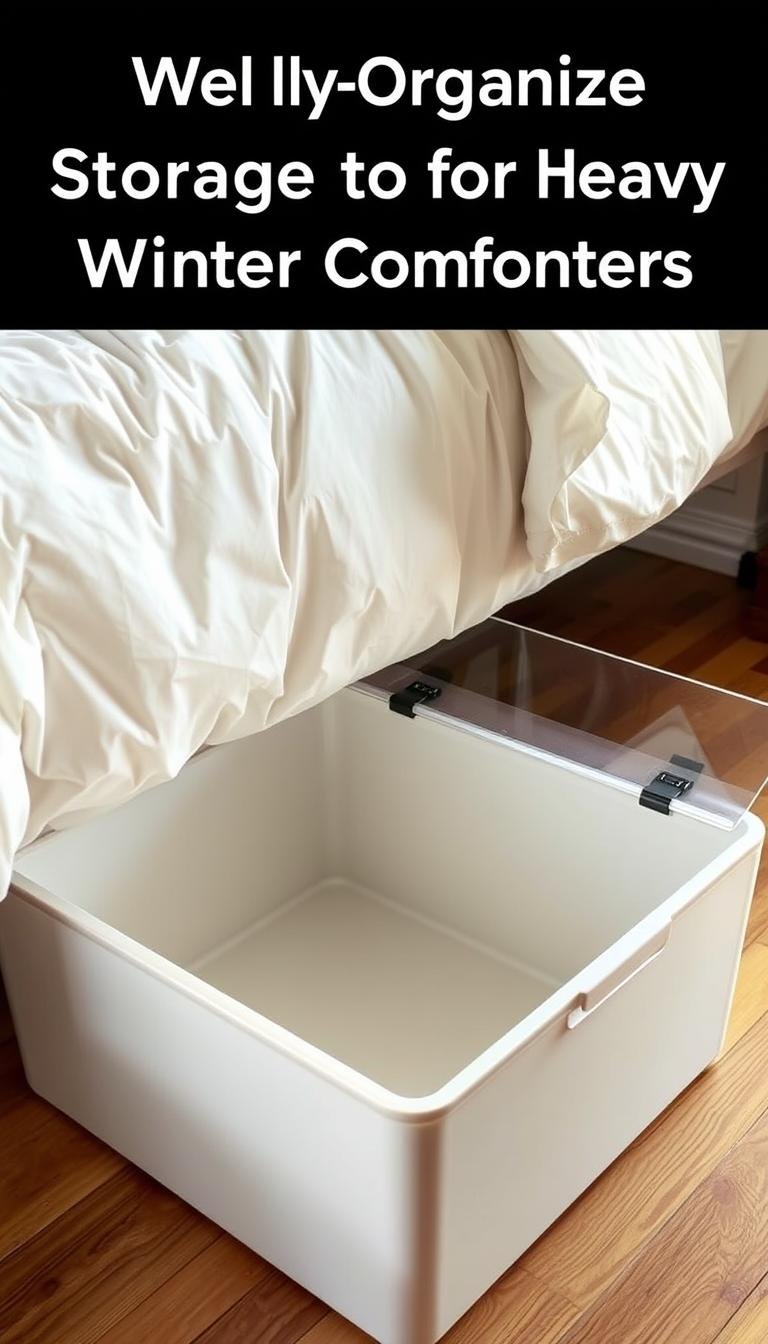
For bulky bedding, choose containers that fit the actual height and depth without crushing the contents unnecessarily. Our bulky comforter storage guide covers the same measurement and container trade-offs.
Do not block ventilation or trap moisture
Eave spaces can be more sensitive to temperature and moisture than the main room. Do not push boxes tightly against surfaces that need ventilation, and do not conceal signs of dampness, staining or mold behind cabinetry.
If the closet smells persistently damp, shows condensation, or contains visible water damage, address the building problem before adding more storage.
Lighting makes low storage easier to use
A dark triangular closet quickly becomes a place where things disappear. Use lighting that is suitable for the location and installed according to the product instructions.
Battery or rechargeable motion lights can be useful in a rental or shallow cabinet. Permanent electrical work should meet applicable requirements and be handled by a qualified electrician when new wiring is involved.
Keep the access path clear
Good storage is not useful if you have to unload half the closet to reach it. Put frequently used items closest to the opening and reserve the deepest or lowest sections for things you need only occasionally.
If the closet is deep, consider pull-outs or removable bins rather than fixed rows of boxes stacked one behind another.
Choose doors around the room, not just the closet
Hinged doors need swing space. Sliding or bifold doors can save floor area in some layouts, but they may reduce the width of the opening. A curtain can be a lightweight option for a low-use storage nook, though it provides less dust control.
Choose the opening method after checking how furniture, walkways and the sloped ceiling interact with it.
A practical planning sequence
- Measure floor dimensions and ceiling height at several points.
- Mark services, vents, outlets and access panels that must remain clear.
- Sort belongings into everyday, occasional and seasonal groups.
- Assign low, middle and tall zones based on actual headroom.
- Use pull-outs at the shallow edge and adjustable storage where possible.
- Mock up cabinet or drawer fronts with tape before building.
- Check ventilation, moisture and service access before closing anything in.
What to avoid
- Deep fixed shelves that create unreachable storage pockets.
- Blocking roof, plumbing, electrical or HVAC access.
- Sealing visible dampness behind cabinetry.
- Using tall hanging storage where the roof slope does not provide enough garment drop.
- Filling every inch so tightly that nothing can be retrieved comfortably.
The simplest answer
Use the slope instead of fighting it: low pull-outs at the shallow eave, adjustable shelves through the middle, and hanging storage only in the tall zone. Keep seasonal items deepest and everyday items closest to the opening.
For more small-space planning, see the under-bed storage guide, the Organization library, and the Dwelanor Room Guides.