Style Guide
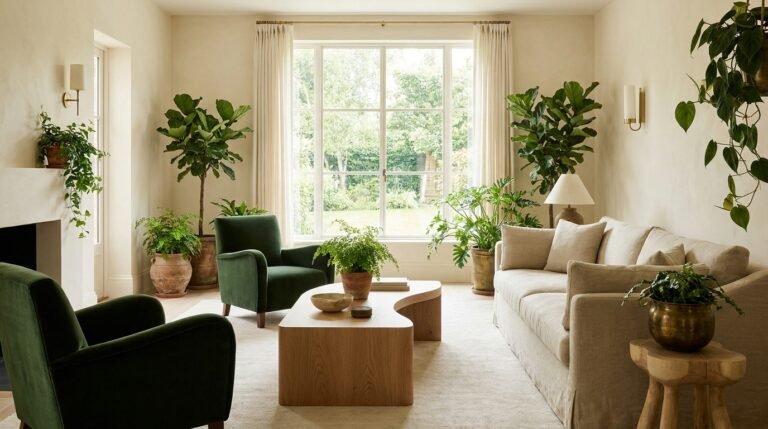
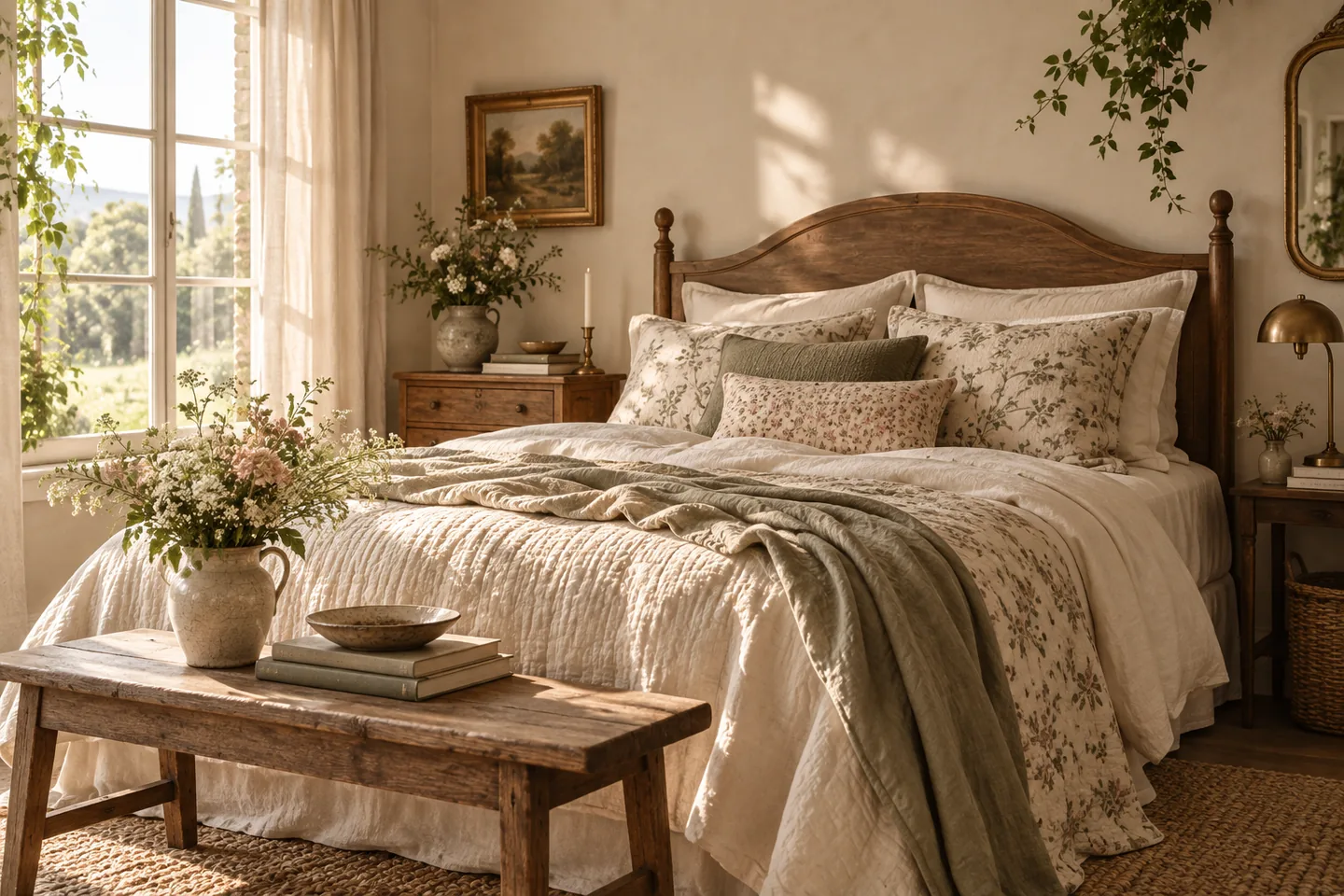
Cottagecore bedrooms work best when they feel collected rather than decorated. The romance comes from natural materials, faded colour, soft light and objects that look as though they have a history—not from filling every surface with florals and vintage-style props.
The goal is a room that feels warm, personal and a little imperfect. Think linen, cotton, timber, old books, botanical art and a bed that invites you to stay in it. Restraint matters just as much as nostalgia.
If you like this warmth but want a cleaner direction, compare it with our modern farmhouse guide. If you are still deciding on your wider aesthetic, start with our home decor style framework.
What Cottagecore Actually Looks Like
Cottagecore draws from an idealised version of rural domestic life: simple materials, handmade details, flowers, practical furniture and rooms that feel gently worn in. It does not require a literal cottage, antique furniture or a large budget.
- Soft colour: warm white, cream, muted rose, sage, faded yellow, dusty blue and natural timber.
- Natural texture: linen, cotton, wool, wicker, wood, ceramic and woven fibres.
- Vintage influence: a few older or vintage-looking pieces rather than a room full of themed objects.
- Useful decoration: quilts, lamps, baskets, books, mirrors and flowers that also serve a purpose.
Start With the Bed
The bed carries most of the visual weight in a bedroom, so solve it before adding small décor. Iron, brass, painted timber and simple upholstered frames can all work well. The important part is that the shape feels soft and residential rather than ultra-modern or highly ornate.
Bedding is where the style becomes convincing. Use a quiet base—warm white, cream or a faded neutral—then layer texture with a quilt, coverlet, linen duvet or soft woven throw. A small floral or botanical pattern can work beautifully, but it does not need to appear on every layer.
The most convincing cottagecore rooms look gathered over time, not assembled from one shopping list.
Keep the Bedding Relaxed
Perfectly symmetrical pillows and sharply tucked corners can make the room feel staged. A slightly softer arrangement usually suits the style better: practical pillows, one or two decorative pieces and a blanket or quilt with some natural drape.
Use Faded Colour, Not Sugar-Sweet Colour
One reason cottagecore can become theatrical is colour. Very saturated pinks, greens and yellows can make the room feel more like a set than a home. Softer, dustier versions are easier to live with and pair more naturally with wood and vintage finishes.
| Area | Good direction |
|---|---|
| Walls | Warm white, cream, soft sage, pale blush or muted mushroom |
| Bedding | Warm neutrals with one faded floral, stripe or quilted pattern |
| Wood | Natural, painted, lightly worn or vintage finishes |
| Metal | Aged brass, black iron or antique-looking bronze |
| Accent colours | Dusty rose, muted lavender, faded blue, butter yellow, deep green |
Nightstands Should Tell a Small Story
A cottagecore nightstand does not need much: a lamp, a book, water and perhaps a small vase or ceramic dish. Too many tiny objects quickly turn warmth into clutter.
The furniture itself can be simple. A small timber chest, painted bedside table, round table or wicker piece can all work. Matching nightstands are optional; two related but different pieces can make the room feel more collected.
Walls and Windows
Botanical Art
Botanical prints, small landscapes, pressed flowers and simple vintage-style drawings suit the room because they bring nature in without adding bulky decoration. Use a small group with related frame finishes rather than covering every wall.
Curtains
Linen-look or cotton curtains in warm white, cream or a subtle pattern can soften the room considerably. Full-length curtains generally feel more intentional than short panels, but the exact length should work with the radiator, sill, furniture and floor conditions in your room.
Wallpaper
A small-scale botanical or floral wallpaper can work on one wall or throughout a small bedroom if the colours stay muted. In rentals, removable wallpaper is worth testing on a discreet area first because paint condition and wall finish affect removal.
Lighting Makes the Room Feel Romantic
Use warm, soft light at more than one height. A bedside lamp plus a second lamp, wall light or floor lamp creates a gentler atmosphere than relying only on the ceiling fixture.
Ceramic, pleated fabric, woven or simple metal shades can all work. The lamp does not need to look antique; it simply needs to sit comfortably within the room’s material palette.
Flooring and Rugs
If you have timber floors, a rug can soften the bed area without covering all the character. Vintage-inspired rugs, simple flatweaves and natural-fibre rugs can all work depending on comfort and maintenance needs.
If the room is carpeted, do not assume another rug is necessary. Sometimes the better move is to focus on bedding, curtains and lighting rather than stacking more pattern underfoot.
What to Add First
- Improve the bedding: one good quilt, duvet cover or textured throw has more impact than several small accessories.
- Fix the lighting: warm, layered light makes the whole room feel softer.
- Add curtains: fabric at the windows can transform a plain box into a much calmer bedroom.
- Introduce one vintage or handmade element: a mirror, stool, lamp, ceramic or framed print is enough to start.
- Add botanicals carefully: one vase, one print or one floral textile often does more than several competing motifs.
How to Keep Cottagecore From Looking Themed
Do Not Buy Everything From One Collection
A room filled with matching distressed furniture, matching florals and matching vintage-style accessories can look less authentic than a room with only a few carefully chosen pieces.
Use Real-Life Storage
Baskets, drawers, a small dresser and under-bed storage help the room stay visually calm. Open shelves full of decorative objects usually create more work and more visual noise.
Let Some Surfaces Stay Empty
Romantic does not mean crowded. A quiet section of wall or an uncluttered bedside surface gives the softer details more presence.
Mix Old and New
You do not need a fully vintage room. A new mattress, modern lamp and practical storage can sit comfortably beside an old mirror, second-hand bedside table or handmade quilt. That mixture usually feels more believable than trying to recreate another era.
A Simple Cottagecore Formula
Start with a warm wall colour, soft bedding, one vintage-influenced furniture piece, warm lighting and a single botanical detail. Live with that for a while before adding more. The style becomes stronger when each new element earns its place.
Frequently Asked Questions
What is cottagecore style?
Cottagecore is a home aesthetic inspired by rural domestic life, natural materials, handmade details, botanical motifs and rooms that feel personal and gently lived in.
Which colours work best in a cottagecore bedroom?
Warm white, cream, muted sage, dusty rose, faded blue, soft yellow and natural wood tones are easy starting points. Softer versions of colour generally feel more convincing than highly saturated ones.
What kind of bed works?
Simple iron, brass, timber or upholstered beds can all work. The frame does not need to be antique; proportion, material and the way the bedding is layered matter more.
How do I make cottagecore look grown-up?
Use fewer motifs, better materials and more negative space. One floral, one vintage piece and one botanical element are often enough. Avoid filling every surface with themed accessories.
Can cottagecore work in a rental?
Yes. Bedding, lamps, curtains, art, baskets and removable wall treatments can create the look without permanent renovation. Test adhesives and removable wallpaper before committing to a large area.