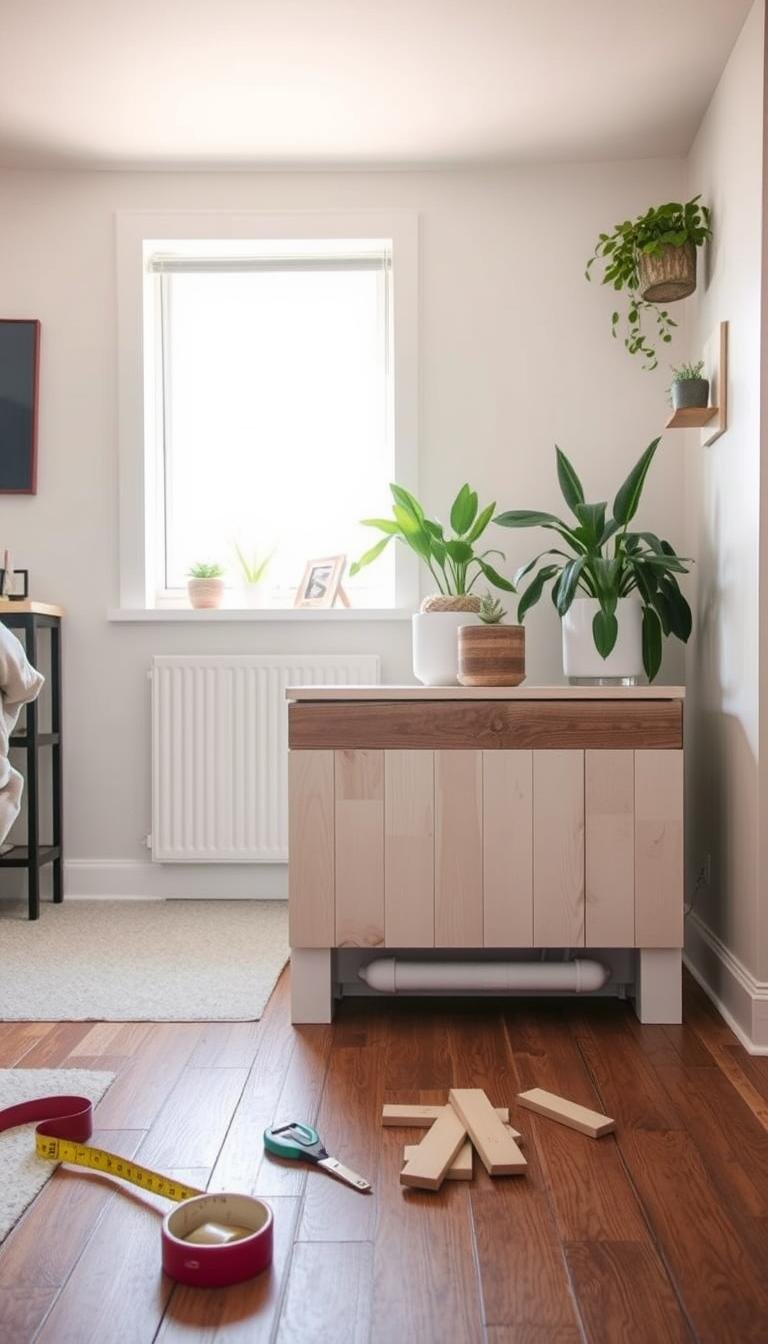
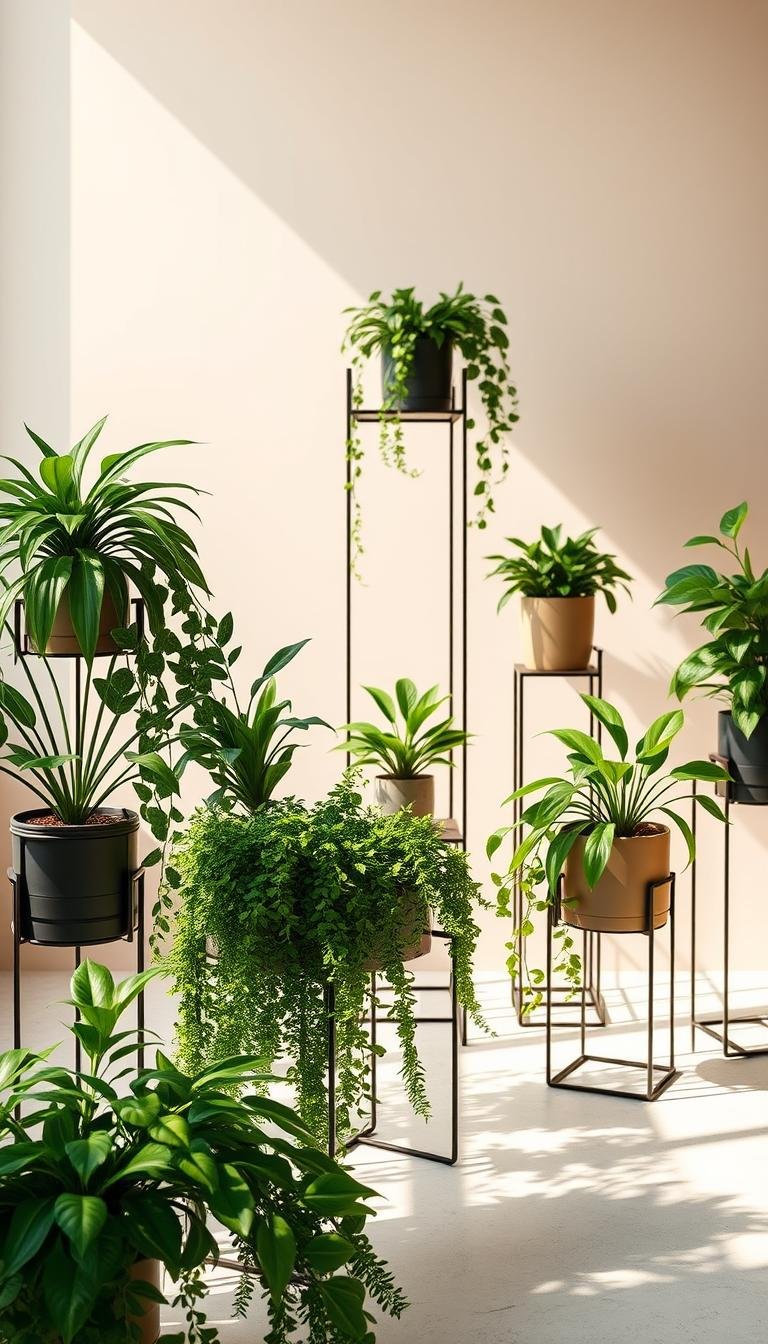
I love how a simple rack can turn a corner into a vibrant focal point. A smart plant stand lifts pots toward sunlight, frees useful space, and keeps curious pets from nibbling leaves. I often swap pieces by season to chase brighter windows or a cozier look.
In this guide I preview vintage ladders that add rustic warmth, sleek metal grids in copper or black, airy macramé towers, modular crates, and clear acrylic stands that let greenery sing. I also touch on industrial pipe builds and rotating carousels for even light and easier care.
My focus is both style and function. I show options that save floor inches in small living rooms and pieces that boost airflow and drainage. Each pick aims to help plants thrive while making your home feel more intentional and alive.
Key Takeaways
- Right racks create layered focal points and improve light access.
- Vertical pieces free floor space and protect curious pets.
- Choices range from vintage ladders to minimalist metal and macramé towers.
- Transparent and hanging options suit small living rooms.
- Rotate or move stands seasonally to track sun and boost growth.
Today’s must-know trends for plant stands that elevate any indoor garden
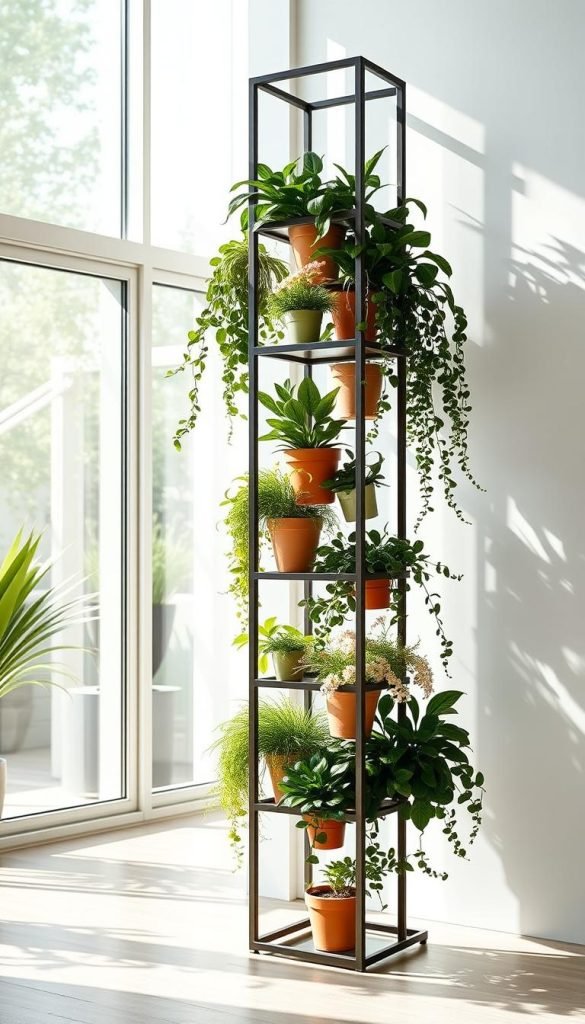
I’ve found tall racks change how light moves through a room and how plants grow. Vertical ladders, wall-mounted shelves, and multi-level metal grids pull the eye up and make small spaces feel larger.
Open frames like wire grids and acrylic risers let light pass to lower tiers. That reduces shadowing and helps shade-tolerant plants thrive below brighter pots.
Why vertical displays transform small spaces and lighting
I stack tiers to capture brighter window light up high while keeping low shelves for ferns and pothos. Rotating carousels or LED-lit shelves even out exposure when a window isn’t available.
Materials and shapes that boost visual height and plant health
Metal grids feel light and strong; wood adds warmth; clear acrylic keeps focus on foliage. Mixing heights and geometric shapes creates depth and more balanced lighting across a collection.
| Material / Shape | Key benefit | Best placement | Ideal plant types |
|---|---|---|---|
| Open metal grid | Minimal shadowing, sturdy | Near window or center shelf | Succulents, herbs, trailing vines |
| Transparent acrylic | Airy, nearly invisible | Window height or living room corner | Fiddle leaf, snake plants |
| Wood ladder / shelves | Warmth, texture | Corner or beside seating | Ferns, philodendron, monsteras |
| Rotating carousel / LED shelf | Even lighting, compact | Low-light rooms without strong windows | Seedlings, small pots, propagation trays |
- Wall-mounted and corner stands unlock dead space without crowding floors.
- Match finishes to existing decor so the display feels intentional, not tacked-on.
What Are the Top Plant Stand Designs for Elevating Greenery Displays?
I like to mix heirloom wood and sleek metal to give my indoor garden a layered, lived-in feel. Small structures can lift pots into better light and make a room feel taller without cluttering the floor.
Vintage ladder displays and repurposed wooden crate systems
Vintage ladders offer ascending tiers and instant charm. I place trailing vines on upper rungs and upright plants lower down to create depth.
Repurposed crates stack, mount, or reconfigure as my collection grows. The warm wood tones feel homey and suit leafy specimens perfectly.
Minimalist metal grids and geometric wire frames
Minimalist metal grids come in copper, brass, black, or white and often include adjustable shelves. I use them for succulents and small pots that need strong airflow.
Geometric wire frames act as sculpture and support. A powder-coated finish keeps metal durable and visually striking in any room.
Macramé hanging towers and multi-pot holders
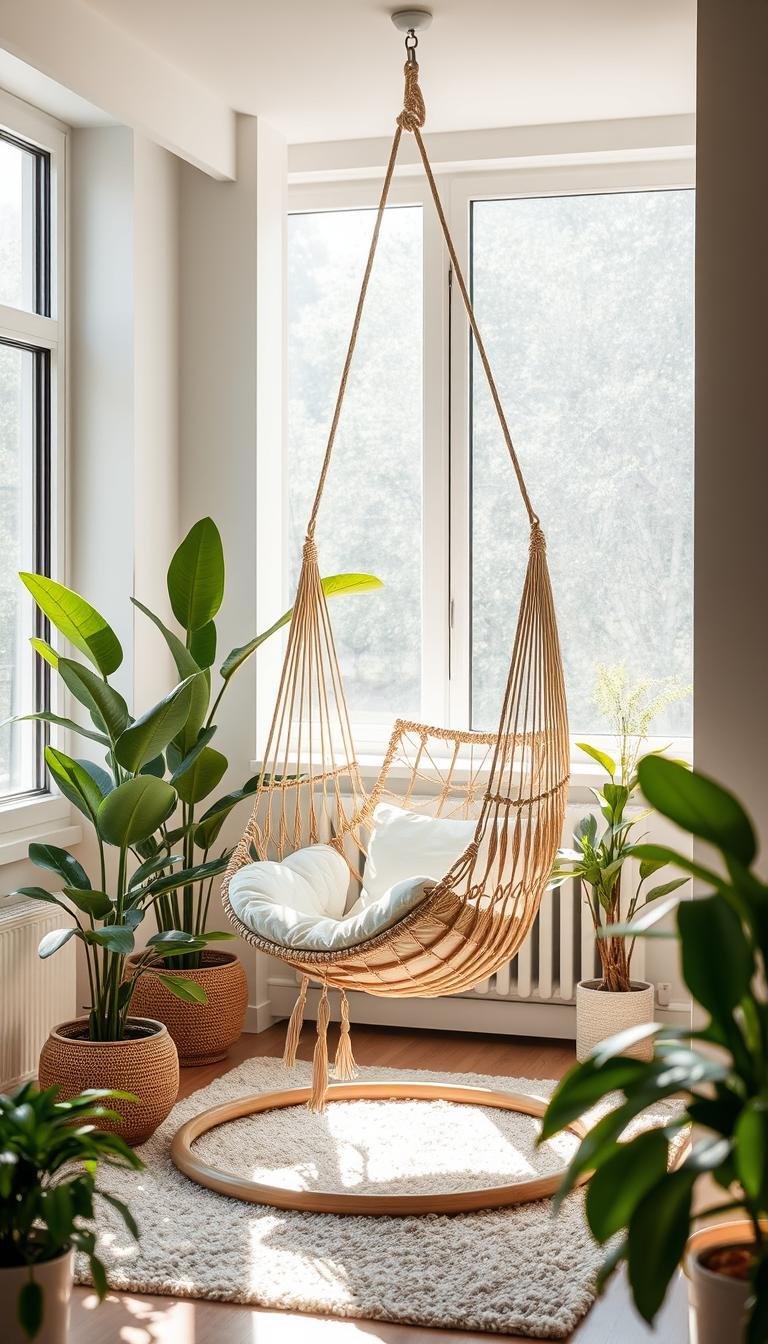
Macramé towers save floor space and add boho texture. They show off varied pots and free a corner for seating.
Multi-pot holders create compact clusters that read as a single statement. I group contrasting leaf textures to make the display pop.
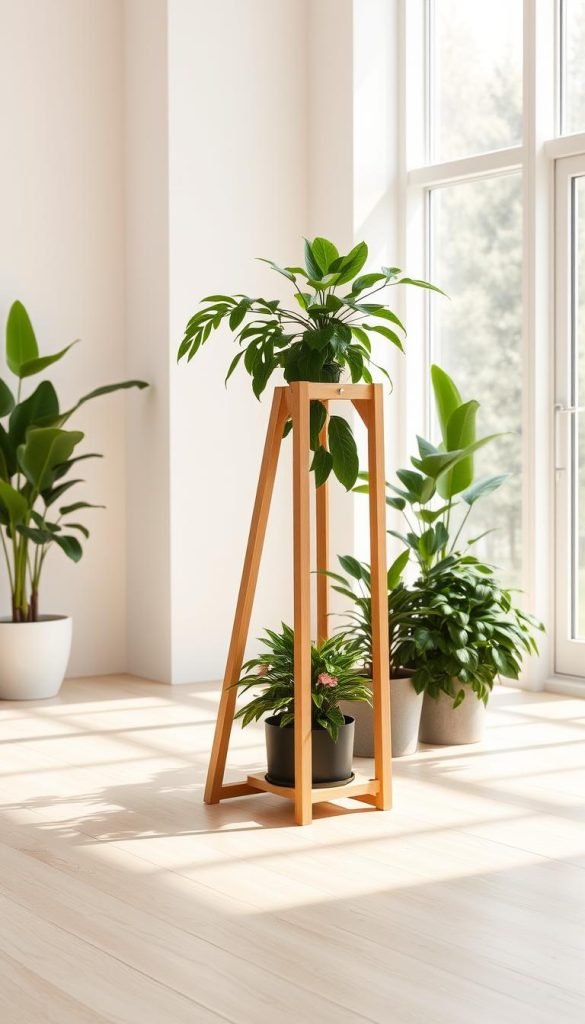
Mid-century modern pedestals and tiered stands
Mid-century pedestals with hairpin legs lift specimen plants and feel timeless. Tiered stands keep a collection organized without crowding a room.
“A well-chosen stand boosts plant health and completes a room’s look.”
- Pairing tip: put succulents on metal, leafy plants on warm wood to match texture and scale.
- Style note: mix heights and finishes to let each plant shine while keeping the display cohesive.
Style-forward picks: from boho to industrial to mid-century
I pick pieces that give each plant a role, turning a collection into a curated vignette. Below I map three looks to clear choices so you can match function with form.
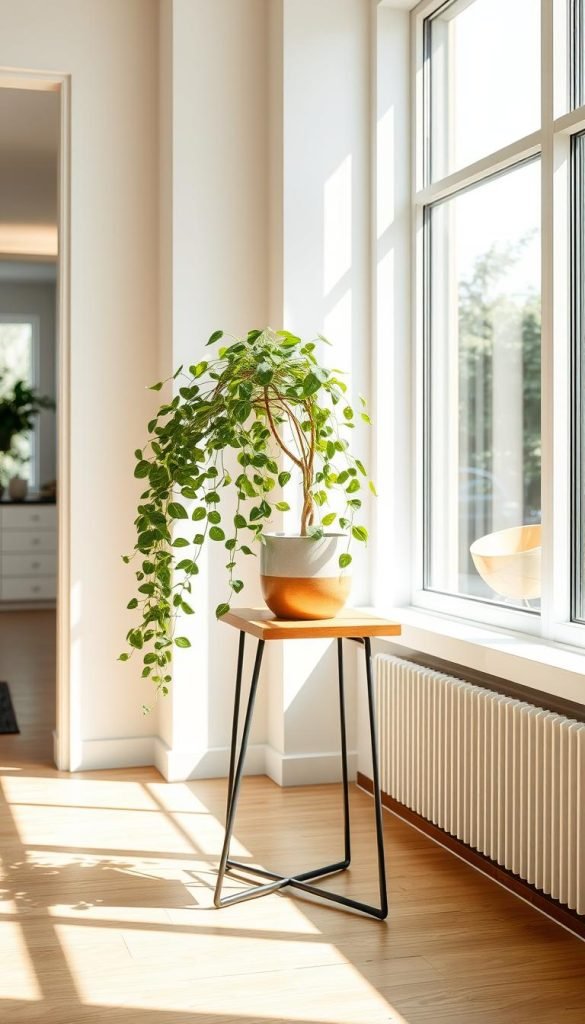
Boho charm: macramé hangers, bamboo tiered stands
I use macramé hangers to add motion and texture. Bamboo tiered stands bring a calm, sustainable vibe and handle moisture well.
Industrial edge: pipe structures, DIY concrete block builds
Pipe frames in black iron or galvanized finishes hold heavy pots and can include shelves and lighting. DIY concrete block builds pair cinder blocks with wood or metal boards for budget-friendly, sturdy stands that suit raw, minimalist decor.
Timeless appeal: hairpin-leg mid-century stands
Hairpin-leg pedestals with walnut or oak tops lift statement plants while keeping a light footprint. These pieces let foliage read as sculpture and layer easily with other stands.
| Style | Best pick | Strength | Where it shines |
|---|---|---|---|
| Boho | Bamboo tiered, macramé | Texture, moisture tolerance | Bathrooms, sunlit nooks |
| Industrial | Pipe frame, concrete block | Load-bearing, customizable | Lofts, large open rooms |
| Mid-century | Hairpin-leg pedestal | Elegant, sculptural | Living rooms, entryways |
| Mixed finishes | Metal + warm wood | Balanced contrast | Anywhere you want a statement piece |
Styling tip: pick one standout stand and keep planters simple so the plants and piece hold the room’s beauty. Match matte black metal with structured foliage and warm wood with soft leaves to keep the overall look cohesive.
Space-saving plant stands for corners, windows, and tight rooms
I reclaim dead corners with compact shelves that stack pots without crowding floors. These systems make small spaces feel intentional while giving my plants room to breathe.
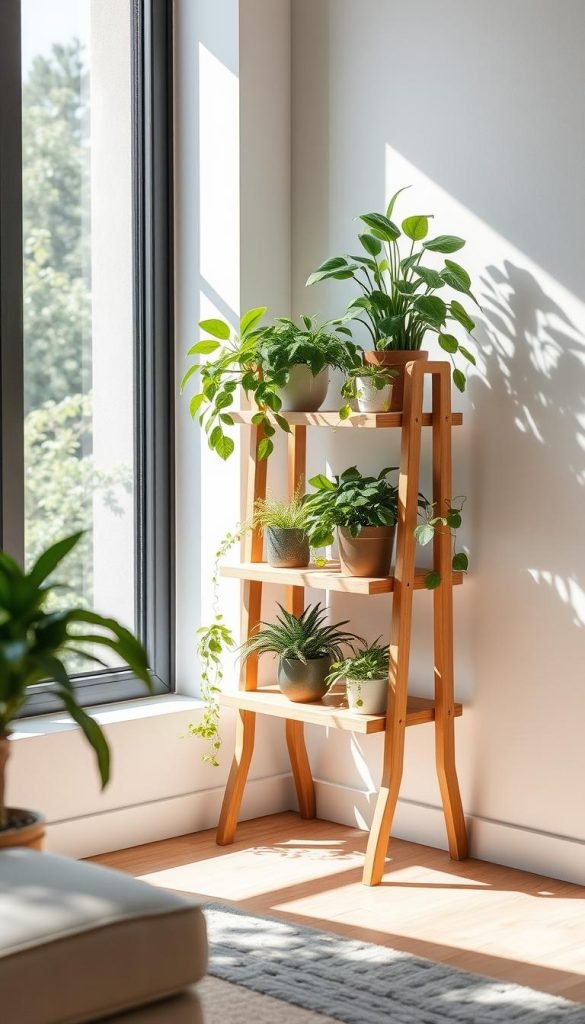
Floating corner shelves and hexagon wall-mounted shelves
Floating corner shelves convert unused corners into vertical displays. Hidden brackets hold surprising weight, so I can stack heavier pots without a bulky footprint.
I like hexagon wall-mounted shelves for modular living walls. They link into honeycomb patterns and accept LED edge strips for soft nighttime glow.
Window-height pedestals for balanced natural light
I place window-height pedestals to center foliage in bright zones. This avoids lopsided growth and frees the sill for smaller pots or tools.
Practical tips: match shelf heights to plant needs—high tiers for sun lovers, low tiers for shade-tolerant greens. Use compact pots and trailing varieties in corners to keep sightlines clean.
- Choose sturdy materials and concealed hardware so wall systems feel secure with heavier planters.
- Plan watering with trays and mats to protect walls and floors while keeping the display tidy.
- Mix triangular corner shelves with hexagons to add rhythm and avoid a flat look.
“Smart, vertical solutions turn tight rooms into curated green spaces without sacrificing flow.”
Material matters: wood, metal, acrylic, and bamboo compared
Material choice shapes both the look and the life of my indoor collection. I pick a material to match room humidity, pot weight, and the finish I want to show off.
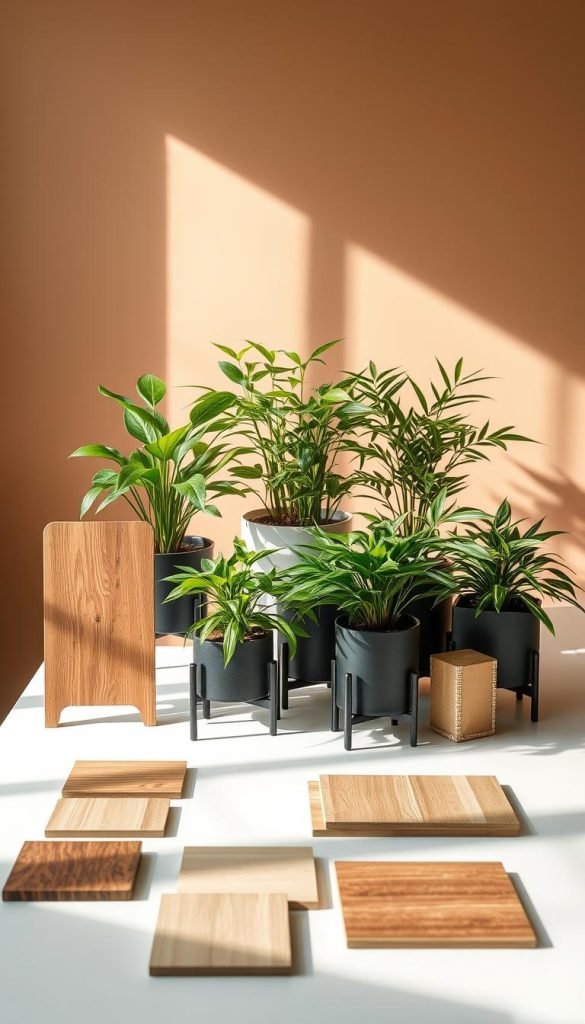
Warmth from wood and crate systems
Wood brings rustic charm and warmth. Crate systems stack, mount, and reconfigure as my collection grows, so they feel flexible and lived-in.
Sealed wood resists stains and handles heavier pots when reinforced. That makes it my go-to when I want cozy appeal and reliable support.
Metal strength and finishes
Metal grids in copper, brass, black, or white deliver slim, sturdy frames. Powder-coated options resist rust and often include adjustable shelves.
I choose metal when a slim silhouette and high weight capacity matter, or when modern design and durability lead the decision.
Acrylic transparency for a floating effect
Acrylic feels nearly invisible. UV-resistant and waterproof, it lets light reach lower tiers so lower plants get more even exposure.
When I want plants to appear like they float, acrylic keeps focus on foliage and reduces visual clutter.
Sustainable bamboo for moisture-prone spaces
Bamboo tiered stands offer eco-friendly strength and natural moisture resistance. I use them in bathrooms or near sinks where humidity and spills happen.
Bamboo needs minimal care and pairs well with ceramic pots for a calm, natural beauty.
- Maintenance: sealed wood resists stains, powder-coated metal prevents rust, acrylic wipes clean, bamboo needs light care.
- Load: choose metal or reinforced wood for heavy pots; use acrylic or bamboo for lighter, decorative groups.
“Match material to purpose: durability, moisture, and the look you want will guide the best choice.”
For practical buying tips and placement ideas, I often consult a short guide on choosing a houseplant stand.
Statement pieces that turn greenery into living art
An arresting sculptural base makes foliage read like a curated installation. I pick one dramatic piece to act as an anchor and let surrounding pots play supporting roles.
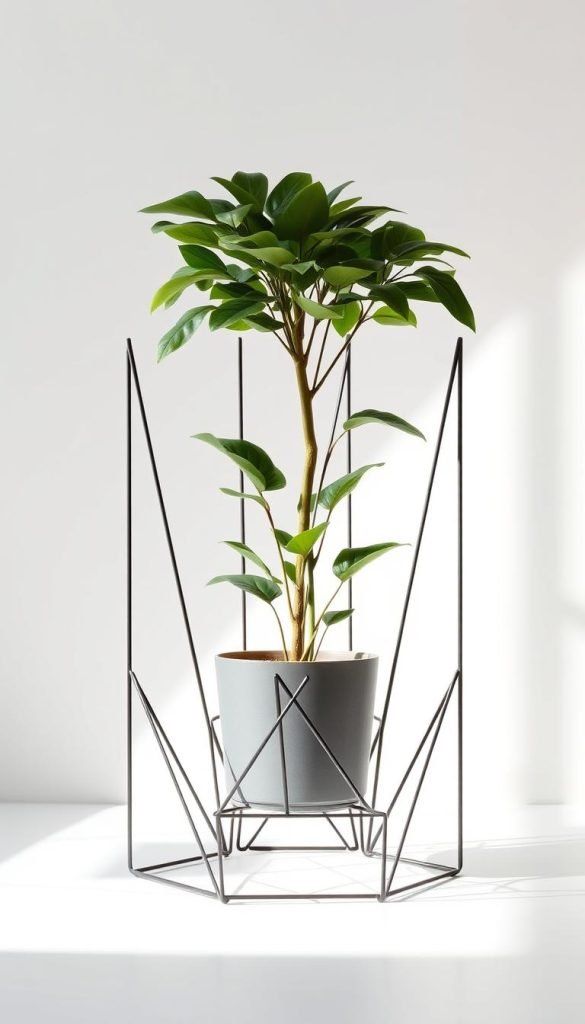
Geometric wire frames and sculptural stands
Geometric wire frames use minimal material and powder-coated finishes to form bold shapes. They double as sculpture and as a reliable stand for a single specimen.
Rotating carousel displays with even light exposure
Rotating carousels turn each plant into sunlit view. Models range from manual spinners to motorized units with integrated grow lights.
Tree branch holders as nature-inspired art
Sanded, sealed branches become vertical or horizontal supports. I treat these as both art and functional supports that grow living forms.
“A single dramatic stand can anchor a broader arrangement without overwhelming the plants.”
- I choose bold frames when one stand must serve as a statement piece and a support.
- I use carousels to even light and add gentle motion to a room.
- I place tree-branch installations in open sightlines so their organic shapes read as art.
- I pair simple pots with complex stands to keep the focus on foliage and form.
| Type | Key benefit | Best placement |
|---|---|---|
| Geometric wire frame | Minimal material, sculptural look | Entryway or beside seating |
| Rotating carousel | Even light, dynamic motion | Window-adjacent spots |
| Tree branch holder | Natural texture, unique shapes | Open corners or gallery walls |
DIY and modular systems that grow with your collection
I build modular displays when I want a system that grows as my collection does.
Concrete block + board builds for flexible heights
I use cinder blocks as sturdy legs and span boards of wood, metal, or glass between them. This gives custom heights and wide spans without special tools. Blocks sit low-cost and stable, so I can fit heavy pots and tall foliage safely.
Modular stacking systems for evolving plant walls
Modular units snap together vertically and horizontally, letting me shape corners, curves, and straight runs. Many systems include water-management features to stop drainage problems and let damaged sections be swapped out alone.
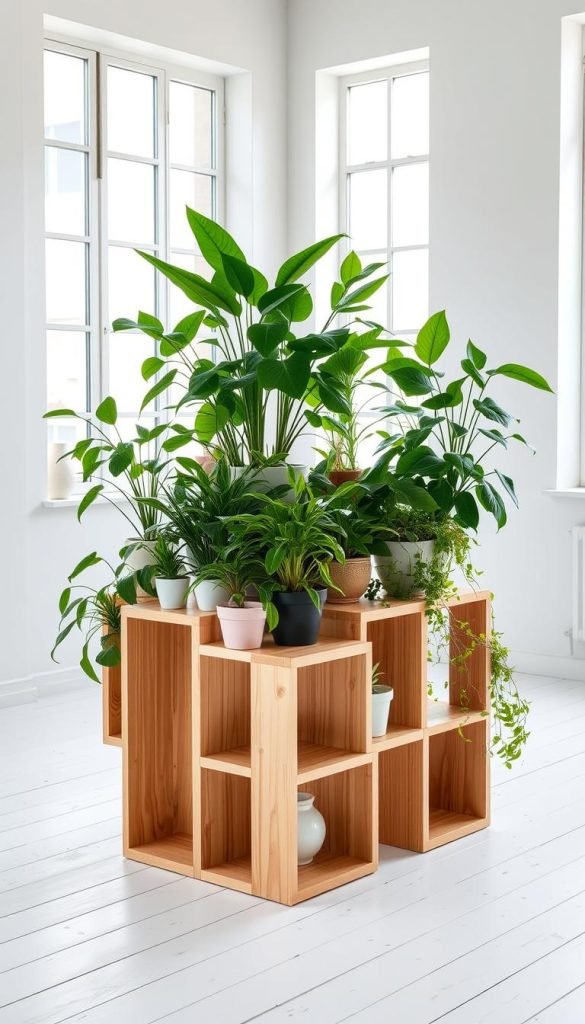
- Practical tip: match board materials to the room—wood for warmth, metal or glass for a sleek look while watching weight and stability.
- I protect floors with felt pads under heavy blocks and spread load across the base so everything stays square and safe.
- I use trays, mats, and easy-disconnect modules to simplify cleaning, pruning, and rotating as my plants multiply.
“Anchor a layout with one focal module, then expand with corner and curved pieces to fit the room.”
For more modular options and placement ideas, I often consult a short guide at indoor plant stand ideas.
Tech-forward stands: LED grow light shelves and illuminated glass
I rely on tech-forward racks that deliver full-spectrum light so indoor greens don’t suffer in dim corners.
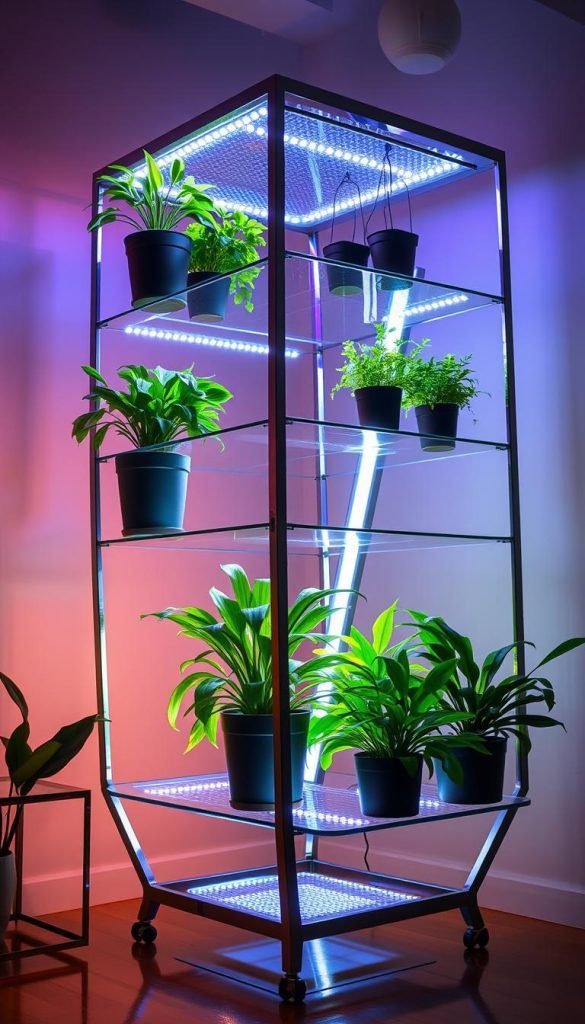
Integrated LED plant stand systems give steady, balanced lighting when a window is not an option. Creative kits from Spider Farmer use 1680D Oxford fabric tents and clear PVC doors so I can watch seedlings without opening the case.
Integrated LED units and tented shelves for low-light rooms
The sizes range from compact SF-Plantstand60 (54W) up to SF-Plantstand230 (220W). Each model has full-spectrum U-shaped bars, waterproof covers, and sturdy carbon steel frames that hold up to 110 lbs per layer.
I appreciate adjustable shelf heights, lockable casters, and waterproof mats with drainage. Some kits include seed starter trays and a heat mat for quick germination.
Floating glass shelves with LED strips for bright-light groups
Floating glass with integrated LED strips makes a clean, modern display for succulents and air plants. The glow doubles as subtle nighttime ambiance and highlights texture without bulky frames.
“Full-spectrum LED bars give even coverage; add external timers or controllers if you want automation.”
- Placement tip: keep tented shelves away from drafty windows and manage heat for seedlings.
- Care note: rotate pots and space tiers to avoid shading within your collection.
| System | Key features | Best use |
|---|---|---|
| SF-Plantstand60 | 4 layers, 6 light strips, 54W, waterproof covers | Small indoor setups, seedlings |
| SF-Plantstand110 | 4 layers, 6 light strips, 108W, adjustable heights | Growing several medium pots |
| SF-Plantstand230 | 6 layers, 10 light strips, 220W, heavy-duty frame | Large collection, heavier pots |
| Floating glass shelves | Integrated LED strips, minimalist look | Succulents, air plants, display lighting |
Conclusion
, One thoughtful piece can turn scattered pots into a cohesive indoor garden. I recommend picking a single standout item, then adding modular options so your collection grows without crowding a room.
I favor choices that balance beauty and function: metal for slim strength, wood for warmth, and bamboo for sustainable durability. Mix heights and shapes so your display reads as layered style, and use corner or floating systems to save space.
Light matters—use window-height pedestals or LED-lit shelves to keep plants healthy year-round. Align each stand with your decor and pick materials and accessories that make care easy so your home and indoor garden both look their best.