How do I choose throw pillows that don’t flatten after a month?
Welcome — this guide walks you through simple, practical ways I use to keep cushions looking plush for months. I explain which inserts matter, why covers can be the fun part, and how small care habits keep loft alive.
Cheap polyfill often deflates fast and looks like a flat patty. Feather and down blends add weight and a relaxed look but need a quick fluff now and then. A good down alternative gives loft, is hypoallergenic, and avoids harm when responsibly sourced.
My rule: size inserts up by about two inches for squares and one inch for lumbars. Invest in inserts, buy seasonal covers, and pick fabrics like linen, cotton canvas, Crypton, or Sunbrella for long wear.
Care is simple: fluff, rotate, sun-air, and spot-clean promptly. For shopping, I rely on small-batch makers like Jolie Marche and Laurel + Blush, plus Pottery Barn for reliable options and Hobby Lobby for budget covers.
Key Takeaways
- Invest in high-quality inserts; they make the biggest visual difference.
- Size up inserts for a tailored, full look.
- Choose durable fabrics like linen, canvas, or performance weaves.
- Fluff, rotate, air, and spot-clean to extend loft.
- Use covers to change color and pattern without bulky storage.
- Consider responsibly sourced down or a quality down alternative.
What I’m solving for: plush pillows that keep their shape over time
A full, tailored pillow lifts a room; I aim for that look to last.
The exact problem: I want pillows that still look full after daily lounging—no sad slouching two weeks in and no constant reshaping whenever someone sits.
Most fast-fail cases come from under-filled inserts, cheap fiberfill blends, and pre-styled multi-packs that trade longevity for price. Those choices ruin the look over time and force yearly replacement.
What I focus on first: the insert, cover fabric, and size. Upgrade one part and you get the biggest return. Swap pillow covers to change color and style without buying new inserts.
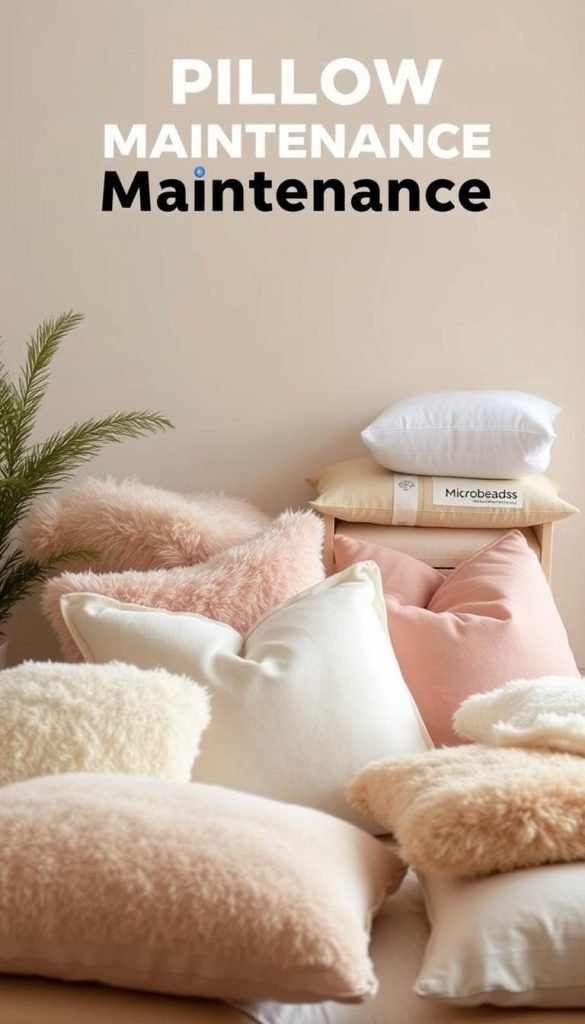
I prefer a neutral base with one or two patterned accents. That design keeps the space fresh while saving money and storage. One well-chosen cushion can do more than three flimsy ones.
- I test shape memory by pressing the center and timing the rebound.
- I keep a few quality inserts on hand and rotate seasonal covers.
- Next, I’ll walk through the insert types, sizing rules, and durable fabrics so you can apply this to any sofa or space in your home.
Start with the insert: the core of a throw pillow that lasts
The insert is the engine of any good cushion; pick it well and the rest follows.
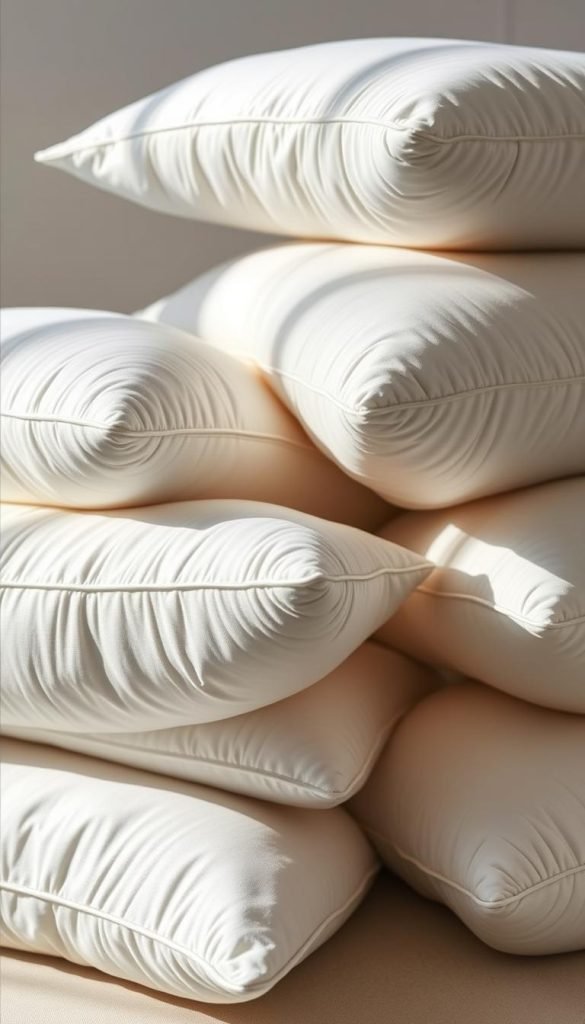
Down and feather blends give a lived-in weight and soft sink. Most labels show feather-heavy mixes with some down. They look relaxed and recover with a quick karate-chop fluff.
High-quality down alternative mimics loft without allergens. It holds shape and suits anyone avoiding animal products. I use these where allergy, ethics, or consistent loft matters.
Polyfill realities: cheap fiberfill pancakes fast. If you need synthetic, pick higher-density polyester meant to spring back.
Responsible sourcing matters. Live-plucking is banned here, but I still look for brands with clear supply chains and certifications.
| Insert Type | Feel | Durability | Best Use |
|---|---|---|---|
| Feather/Down blend | Soft, weighted | High with topping up | Formal sofas, luxe living rooms |
| Down alternative | Plush, springy | High, hypoallergenic | Everyday use, allergy-friendly |
| High-density polyester | Supportive, bouncy | Medium-high | Budget-conscious, active homes |
- I start with inserts because they set structure; a great insert makes any pillow cover look fuller.
- Quick in-store trick: hug-test the insert; if it springs back and feels weighty, it will likely keep loft.
- Sizing matters — size up by about 2 inches for squares and roughly 1 inch for lumbars to avoid sag and baggy corners.
Money-wise, invest in one quality insert and rotate covers for seasonal style. It saves cash and storage long term.
Size it right: the simple sizing rule that prevents sagging
Sizing changes everything. A correctly sized insert fills corners, smooths wrinkles, and keeps your sofa looking intentional. This is an easy upgrade with big visual payoff.
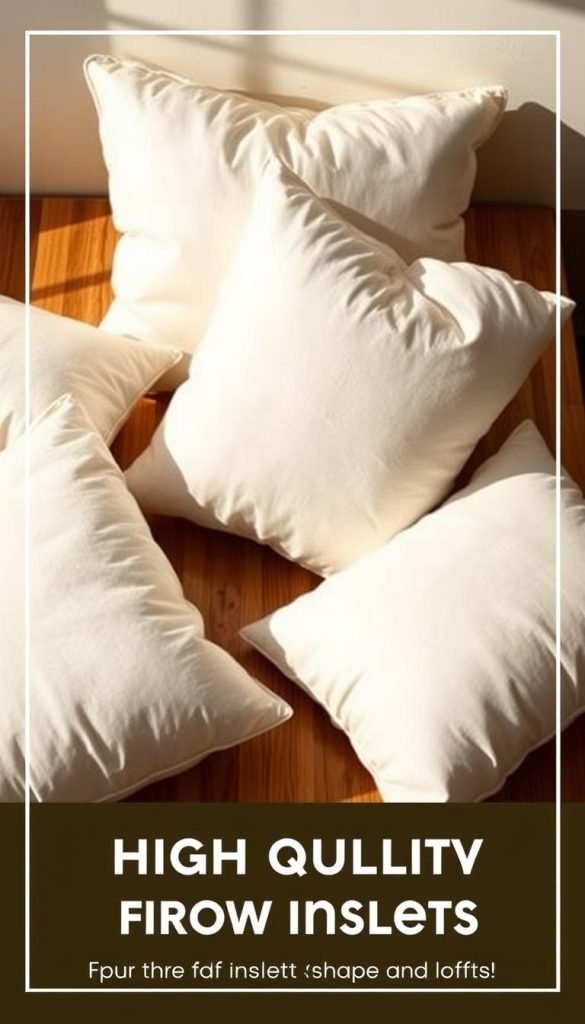
My go-to rule for square covers: buy inserts about 2 inches larger than the cover. For example, a 22×22 insert in a 20×20 cover looks crisp and full.
My go-to: choose inserts 2 inches larger than square covers
Under-sized inserts cause sagging corners and hollows in the middle. The 2-inch step gives enough fill to plump edges without stressing seams.
Lumbar tricks: size up about 1 inch for slimmer pillows
For lumbar shapes, I add roughly 1 inch. A 14×22 insert fits nicely in a 13×21 or 12×20 cover and keeps edges straight without overstuffing.
- Stand back 8–10 feet: if corners cave, size up the insert.
- Use larger squares as anchors, then layer a slim lumbar for balance in the room.
- Check seam allowances and zipper length so the larger insert slides in easily.
- Performance covers with less stretch benefit most from the 2-inch rule.
Pro tip: keep the cover you love and swap an under-filled insert for a larger, higher-quality one. Comfort and look both improve with the right size.
Pick durable fabrics for covers you can actually live with
Good fabric choices keep pillows looking fresh while handling spills and sun.
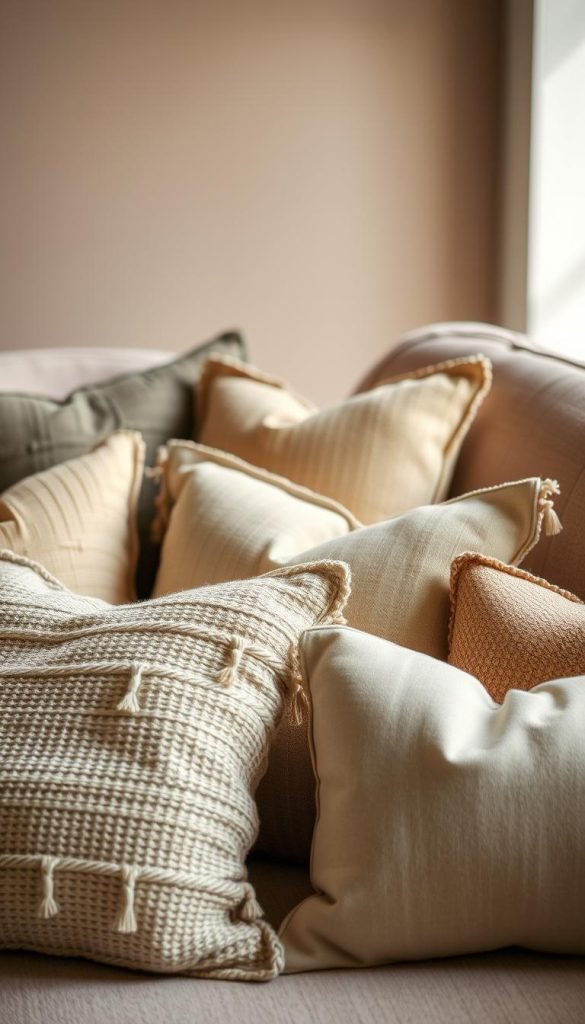
Linen is breathable, softens with washing, and holds up without losing charm. It reads timeless and works well as a neutral base for color and pattern.
Cotton canvas or duck feels thicker and resists rough use. I reach for cotton when kids or pets use the sofa daily; it cleans easily and keeps shape around a plump insert.
Performance fabrics for high-traffic rooms
Materials such as Crypton and Sunbrella resist stains and fading. For sunny windows or busy living areas, these fabrics protect color and extend the life of covers.
When to use richer textures
Velvet, wool blends, and bouclé add warmth and depth as accents. Use them sparingly so texture enhances the design without overwhelming the room.
- Care first: prefer washable covers and colorfast dyes.
- Check weave density; dense fabric resists pilling and holds seams tight.
- Strong zippers and neat finishes keep covers sitting smoothly on the insert.
| Fabric | Key Benefit | Best Use |
|---|---|---|
| Linen | Breathable, softens with wash | Neutral bases, year-round rooms |
| Cotton canvas/duck | Thick, easy-care | Family rooms, high-use sofas |
| Crypton / Sunbrella | Stain- and fade-resistant | Sunny spots, high-traffic areas |
| Velvet / Wool / Bouclé | Rich texture, warm feel | Accent covers, layered designs |
How do I choose throw pillows that don’t flatten after a month?
A quick aisle test lets me tell which insert will hold shape and which will sag in weeks. I use a short checklist when shopping so choices save time and money later.
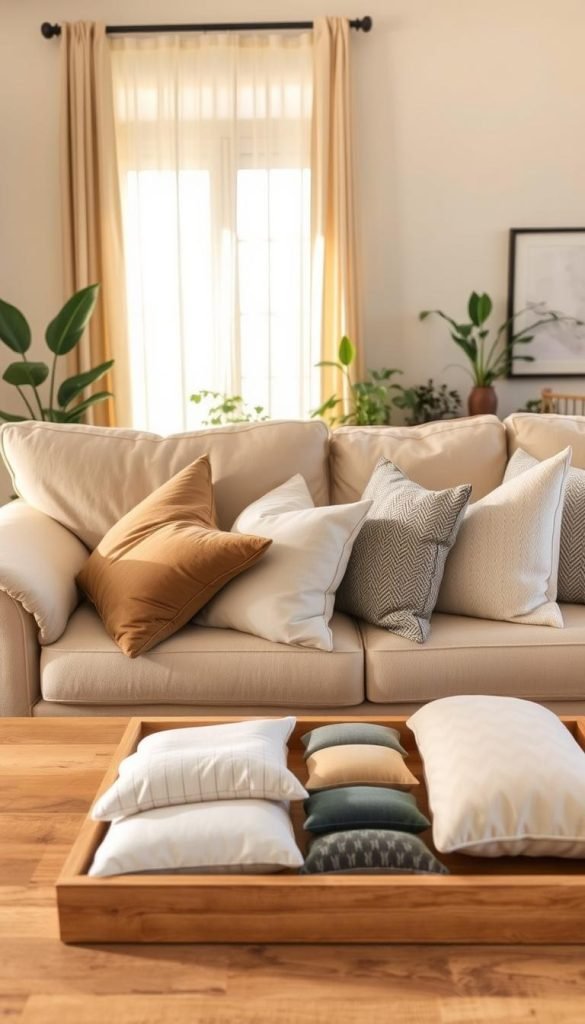
My quick decision checklist: insert, size-up, cover fabric, care label
Feel the insert — press the center and watch rebound. A fast bounce means better loft.
Size up — add about 2 inches for squares and 1 inch for lumbars to avoid saggy corners.
Invest in inserts, swap seasonal pillow covers to save space and money
Buy the cover you love and upgrade the insert at home if needed. Treat the insert as the long-term piece and covers as seasonal refreshes.
- I check wash instructions and strong zippers so covers survive real life in the living room.
- I keep a neutral base, then add one color or patterned accent for easy swaps.
- Weekly fluffing, rotating, and occasional sun-air keep pillows fresh and full.
- Confirm return policies online so inserts can be exchanged if loft is wrong.
Style that holds up: mix and match without losing structure
A smart layering plan keeps shape while letting style feel effortless.

Layer sizes and textures so the arrangement reads clean from across the room. Combine two larger square anchors, for example 22-inch squares, with a slimmer lumbar in front to add balance and comfort.
Layer sizes and shapes
I place denser, structured covers at the back and softer textures up front. Odd-number groupings—three or five—create a natural, relaxed look.
Textures, patterns, and color
Anchor the palette with neutrals, then add one patterned piece or a bold color as a focal point. Mix linen next to velvet or bouclé beside canvas to keep visual interest without clutter.
- Balance: two full squares + one lumbar for comfort and proportion.
- Repeat color: echo one tone in another part of the room for cohesion.
- Limit prints: one busy pattern keeps decor calm and focused.
- Seasonal swaps: change covers on the same insert to refresh the look.
| Element | Purpose | Best use |
|---|---|---|
| 22″ square | Anchor, structure | Back row on sofa |
| Lumbar | Comfort, balance | Front center |
| Accent pattern | Visual focus | One piece only |
| Heavy texture (velvet) | Warmth, depth | Use sparingly as accent |
Care and maintenance that keep pillows full and fresh
A little weekly maintenance goes a long way toward preserving loft and keeping cushions inviting.
Fluff, rotate, and sun-air to revive loft
Fluff and rotate weekly so one side does not take all the wear. I fluff each insert, then rotate positions to spread stress across pieces.
Sun-airing for a few hours refreshes inserts, lifts mild odors, and helps fibers spring back.
Spot-clean fast; machine-wash covers per fabric rules
Spot-clean spills right away to stop stains from setting. Machine-wash covers according to fabric: gentle cold cycles for linen and cotton, careful hand-washing for velvet, and dry-clean for silk.
Close zippers and wash covers inside out. Dry flat or tumble low, then re-stuff while the cover is slightly warm for a smooth finish.
Protect against fading with better dyes and smart placement
Choose colorfast dyes for sunny rooms and place seating to reduce direct sun. Store off-season covers flat or on hangers to save space and preserve patterns and textures.

| Care Action | Benefit | Frequency |
|---|---|---|
| Fluff & rotate | Even wear, maintained loft | Weekly |
| Sun-air inserts | Freshens, restores spring | Monthly or as needed |
| Spot-clean & wash covers | Prevents stains, preserves color | As incidents occur; seasonal washing |
| Store covers properly | Protects fabric, saves space | Per season |
Where I actually shop for quality inserts and covers
Reliable sources make the shopping part simple. Reliable stores give me color stories, while artisans bring the texture details that elevate a room.
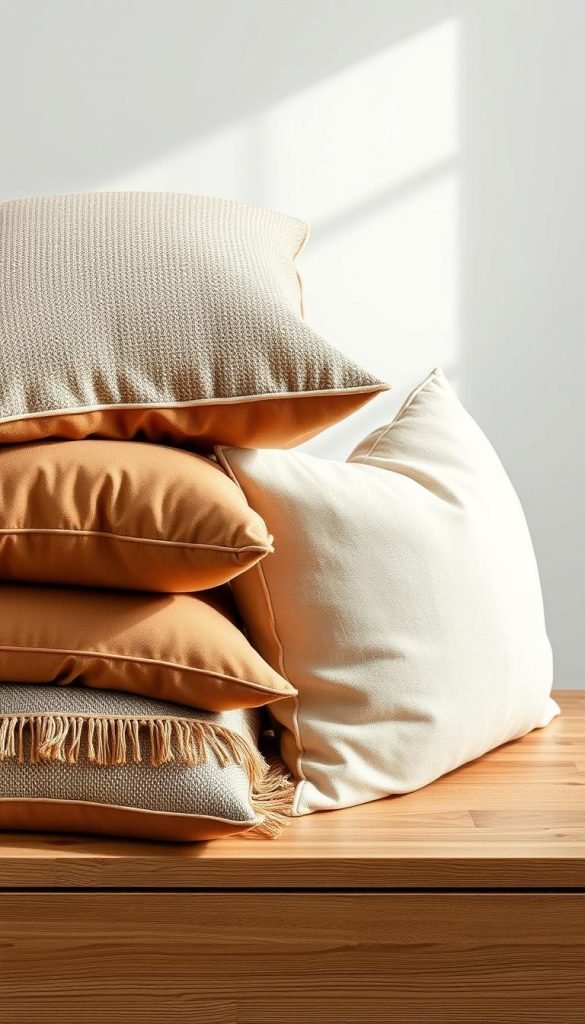
Small-batch and artisan covers
Jolie Marche offers artisan, small-batch covers with unique patterns and quality details like metal zippers and hand-stitched seams. These covers feel special and help a living space look curated.
Laurel + Blush on Etsy leans soft neutrals and farmhouse patterns. I use their pieces when I want a collected look without seeing the same design everywhere.
Trusted retail options
For coordinated style, I rely on Pottery Barn. Their pillow program pairs classic covers and sizes so furniture and rugs feel intentional.
Hobby Lobby is my go-to for occasional statement covers at budget prices. I always check fabric weight and seam strength before buying.
Online strategy: buy the cover, upgrade the insert
If a cover sings but the insert feels thin, I buy the cover and swap in a larger, higher-quality insert at home. I filter by washable fabrics, strong zippers, and real-room photos when I shop online.
- Tip: keep inserts as a long-term part of your collection and rotate covers seasonally.
- Note: track dimensions in your notes app so the right pillow fits every time.
Conclusion
A well-picked insert plus the right cover fabric is the fastest route to a lasting, pulled-together room.
Start with quality inserts — a down/feather blend or a durable down alternative, sized about 2 inches up for squares and ~1 inch for lumbars. Pair that insert with linen, cotton canvas, or performance weaves for covers that stand up to daily life.
Rotate covers seasonally instead of replacing inserts. Fluff, rotate, sun-air, and spot-clean regularly; these simple steps keep the pillow and sofa looking fresh with little effort.
Pick one anchor palette, add one accent color or texture, and buy the cover you love then upgrade the insert at home. One well-made throw pillow can change the feel of your whole home and room design over time.