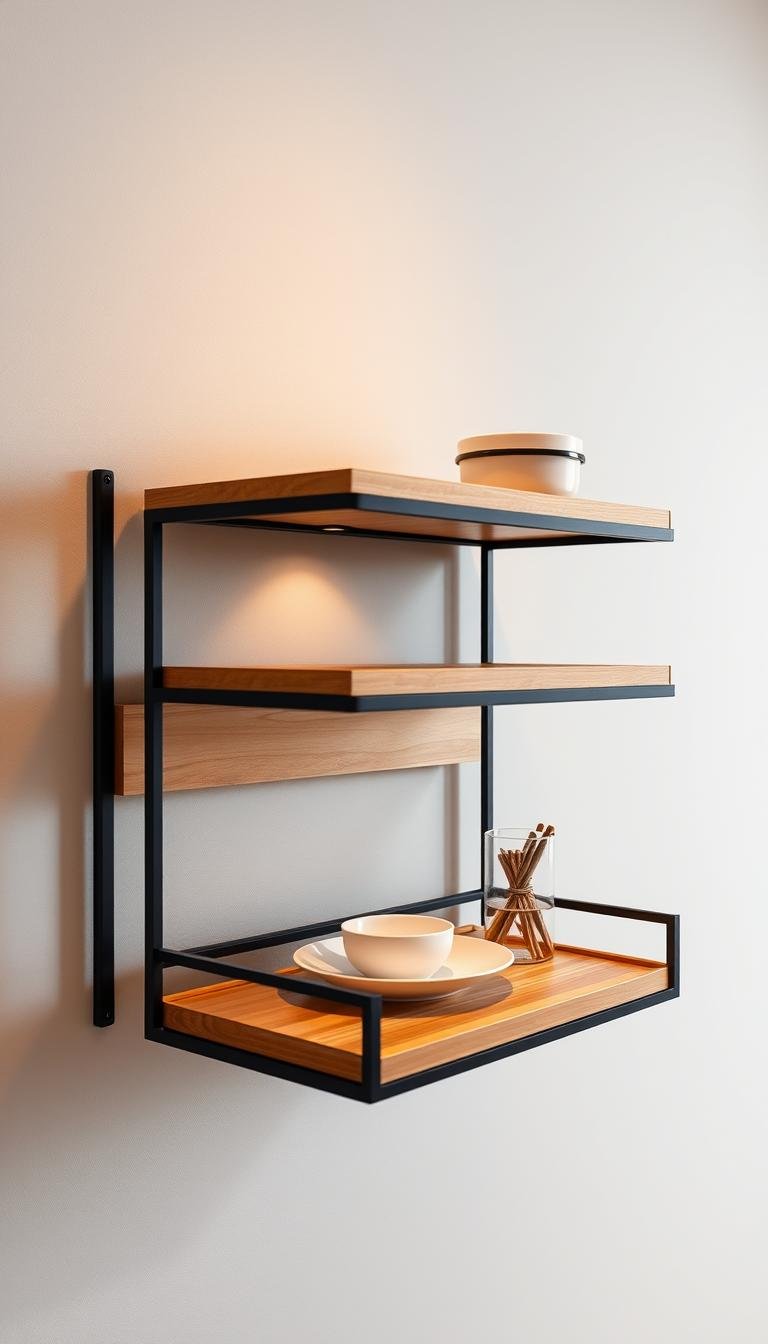
How can I add a breakfast tray wall rack that folds flat when empty?
I walk you through every step, from picking hardware to final testing, so this project fits your kitchen without guesswork.
This install reclaims vertical space and gives trays a clear storage spot. Counters stay tidy and trays are easy to grab for quick meals or snacks.
I set realistic time estimates and show the tools I reach for, including a drill, level, Stud finder, and a reliable hinge like Blum. That helps you avoid extra trips to the store.
Before drilling, I check wall type, stud location, tray weight, and door swings. I define what “folds flat” means: flush, snag‑free, and stable.
The guide is a friendly, step‑by‑step list that ends with hinge tuning and clean‑up. Expect hidden‑in‑plain‑sight storage, calmer mornings, and renter‑friendly solutions.
Key Takeaways
- Follow a clear layout and mark studs before you drill.
- Choose sturdy hinges and match them to tray weight.
- Set aside the right time and tools to finish in one trip.
- Test the swing and clearance to avoid snags.
- Small organizing add‑ons make the system more useful.
Why I love a fold‑flat breakfast tray wall rack for small kitchens
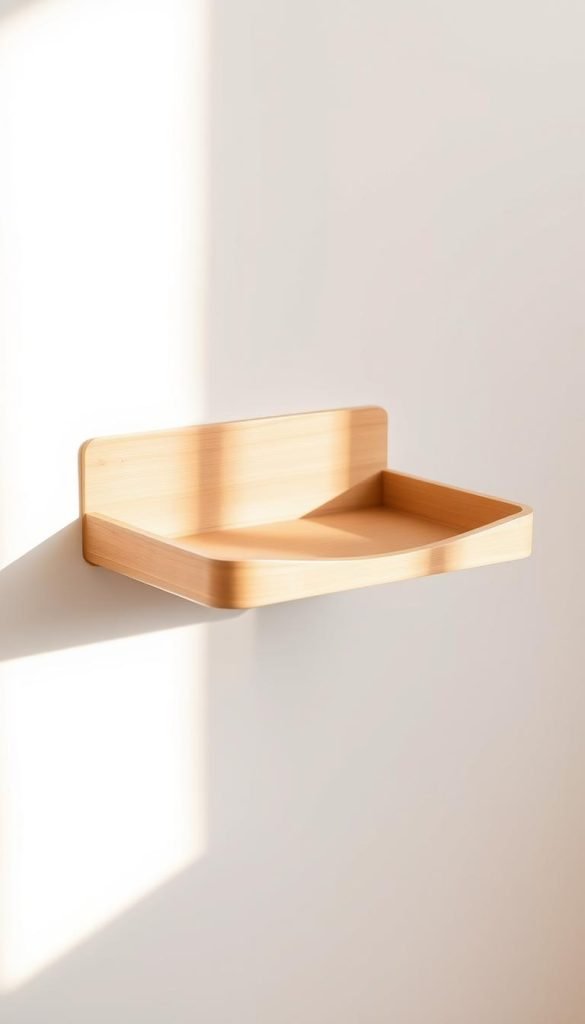
Turning dead wall into useful storage gave my small kitchen new breathing room and less clutter. Mounting the shelf at a comfortable spot makes it feel built‑in without permanent changes, which suits renters and homeowners alike.
When folded, the unit visually disappears, so every inch and color choice matters. Neutral finishes keep the look calm whether I prefer warm wood or crisp white.
The setup keeps trays within arm’s reach for quick food prep and creates a reliable landing spot near my main prep counter. That reduces clutter and keeps daily items out of splash zones.
- Frees counter space for cooking and staging coffee or toast.
- Protects trays from dings and saves drawer room for small items.
- Budget‑friendly storage that blends with most color schemes.
| Benefit | Why it matters | Typical result |
|---|---|---|
| Counter breathing room | Clears prep surfaces for cooking | Faster morning routines |
| Built‑in feel | Mounted at convenient height | Comfortable daily use |
| Visual simplicity | Blends with palette and finishes | Room feels larger |
| Tray protection | Prevents scratching and stacking | Longer‑lasting items |
Understanding the project: scope, time, tools, and safety at a glance
I break the project into clear steps so a beginner finishes in under two hours, breaks included. Gather your list of parts and lay out the items before you start. This saves mistakes and speeds the work.
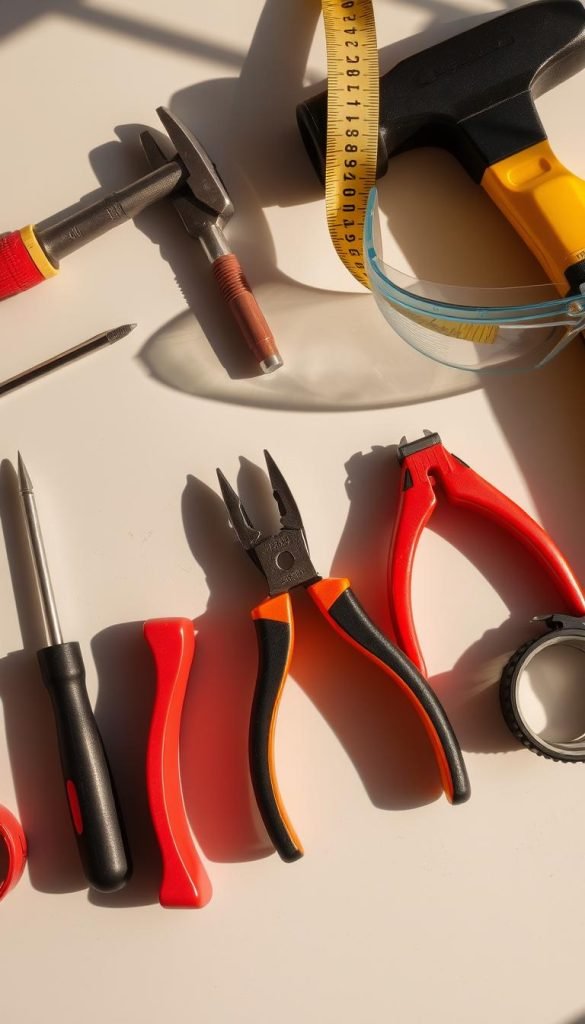
Basic tool list and low-cost alternatives I keep on hand
Core tools: stud finder, level, tape measure, pencil, drill/driver, countersink bit, and a small square.
Low-cost options include a phone level app and painter’s tape for alignment. I also keep a pilot-hole kit and matching screws or anchors—these products prevent blowouts and keep mounts snug.
Quick safety checklist before I drill into a wall
- Locate studs and scan for wires and plumbing.
- Wear eye protection and keep a cup of water nearby for dust control and bit cooling.
- Make a paper template of the backplate and hinges, tape it up, and test swing clearances.
- Clear adjacent drawer fronts and door swings so nothing binds.
- Label screws by length and set a small box and vacuum for cleanup.
“Ten minutes of prep with a paper template saves hours of patch work later.”
| Task | Why it matters | Low-cost option |
|---|---|---|
| Stud locate | Secures heavy loads | Tap test or basic stud finder |
| Pilot holes | Prevents wall blowouts | Pilot-hole kit or drill rental |
| Template test | Verifies clearances | Paper and tape |
| Cleanup | Kitchen ready immediately | Small box and vacuum |
Planning the perfect spot: reach, clearance, and everyday workflow
I pick a place that feels natural from my main prep zone so reaching the shelf is effortless during the routine. This keeps the unit useful, not in the way of coffee and cooking flows.
Measure twice, tape once. I measure tray size, hinge offset, and backplate thickness, then mark the arc with painter’s tape. The taped arc shows whether the unit will clear drawer faces and door swings.
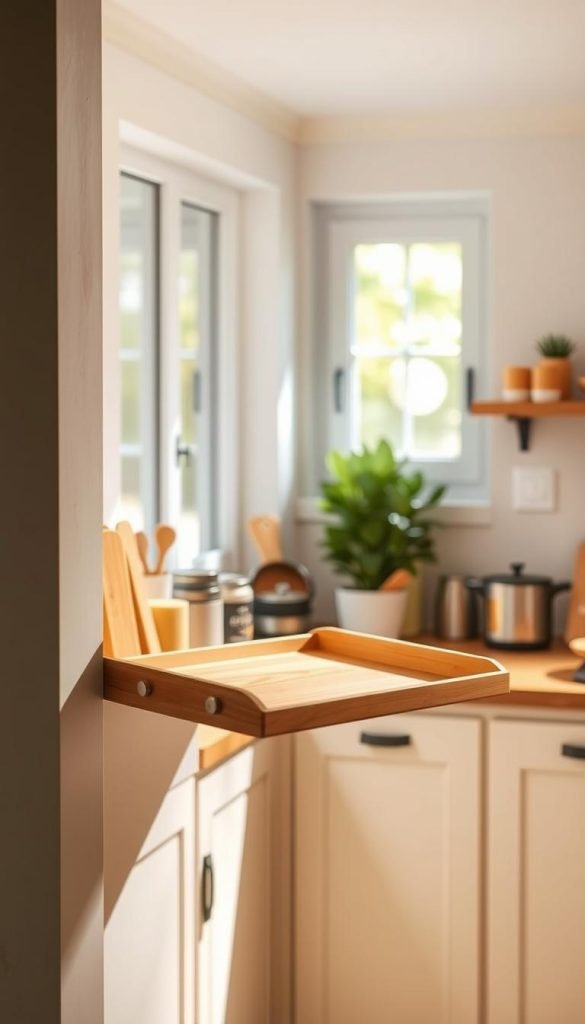
I check vertical space above and below to avoid switch plates, outlets, or nearby shelf edges. Then I trace the rack’s shape and the tray outline so the visual shape reads balanced on the wall.
I stand in normal working positions to confirm the tray won’t hit hips, elbows, or handles. I also make sure adjacent storage still opens fully; I won’t sacrifice my workflow for a clever mount.
- Mark stud centers and note where anchors are needed if studs miss the ideal spot.
- Test the taped arc with the actual tray to confirm feel before drilling.
- Take a quick photo of the taped layout so drilling matches the plan.
“A quick mock-up saves holes and keeps the final install feeling intentional.”
| Check | Why it matters | Action |
|---|---|---|
| Reach | Comfort during use | Place near main prep area |
| Clearance | Unobstructed doors/drawers | Mock arc with tape |
| Sightline | Looks intentional from rooms | Trace shape and snap photo |
Choosing rack materials and finishes: wood, plastic, and metal options
Choosing materials sets the tone for function and finish, so I weigh durability against daily cleanup needs.
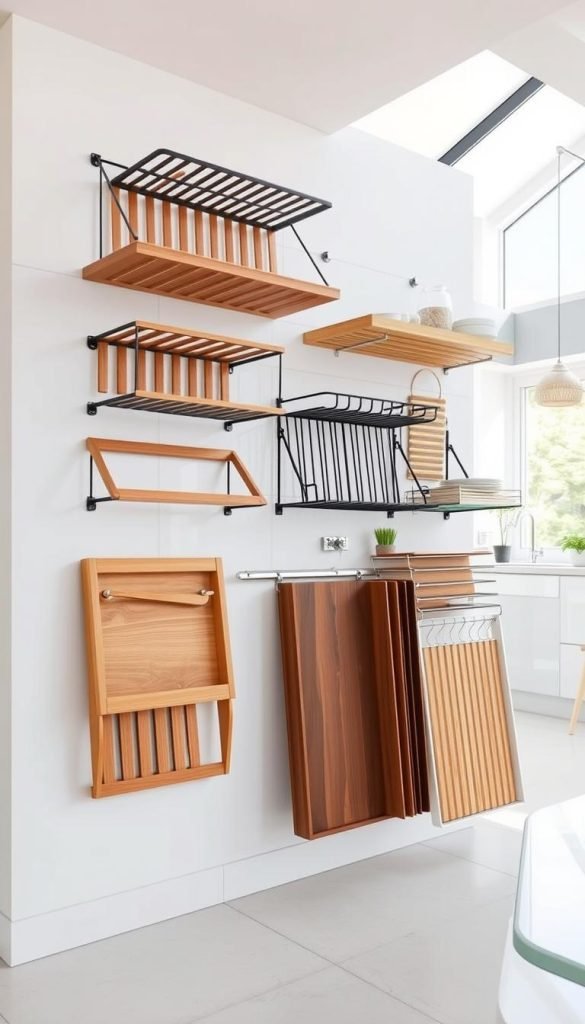
Wood feels warm and forgives light dings. I pick sealed hardwoods with food‑safe finishes for any surface that may touch plates or bowls. These woods are easy to refinish and gentle on delicate edges.
Moisture, oil, and cleaning considerations
Plastic components offer low‑maintenance appeal. I favor glass‑filled nylon or high‑grade ABS with a matte texture because they resist staining and wipe clean fast.
In greasy zones, finishes that shed oil save time. I prefer stainless or zinc‑plated fasteners so rust rings never mar the wall.
- Match color and shape to nearby trim and appliances for a seamless look.
- Choose visible handles and clips in finishes that echo kitchen hardware.
- Keep food‑contact surfaces food‑safe or use removable liners for easy washing.
| Material | Good for | Maintenance |
|---|---|---|
| Wood | Warm look, refinishable | Wipe, occasional reseal |
| Plastic | Stain resistant, light | Quick wipe |
| Metal | Durable, slim profile | Wipe and dry to avoid spots |
“I always err on the side of sturdier hinges for long‑term reliability.”
Fold-flat hardware that actually works: hinges, cleats, and latches
Good hardware turns a clever shelf into a reliable, low‑profile solution that disappears when not in use. I focus on parts that keep the folded size minimal, stay quiet, and survive kitchen moisture.
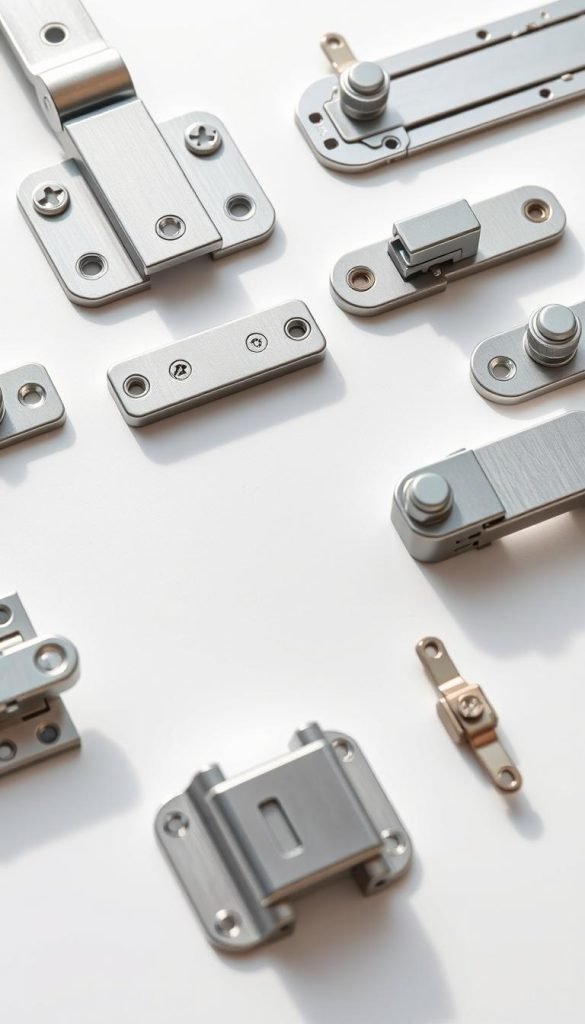
Selecting low-profile hinges for a truly flat fold
My go‑to choices are Soss‑style invisible hinges and thin‑leaf piano hinges. They keep the unit almost flush and stop the structure from standing proud of the paint.
I always pre‑drill hinge holes and use a self‑centering bit so screws sit straight and wood doesn’t split.
French cleats vs. direct-mount: when I pick each
For heavy loads or removable setups, I use a French cleat for rock‑solid alignment and easy removal. If stud placement is perfect and I want the lowest profile, direct‑mount wins.
Magnetic catches and strap options to keep the unit closed
I fit magnetic catches or a slim webbing strap with a snap to stop drifting. I pick pull strengths that feel secure but allow one‑handed opening.
- Place handles and pull tabs where fingers naturally land for intuitive use.
- Add shallow bumpers or felt to protect paint and prevent rattles.
- Choose corrosion‑resistant hardware to handle steaming kitchen air.
“Test the motion several times before final tightening; tiny shifts now avoid squeaks later.”
Finding studs and using the right anchors for a secure mount
I always start by locating solid backing so every screw carries its full share of weight. That simple habit prevents loose mounts and keeps the installation safe over time.

Begin with a reliable stud finder and confirm with a tiny pilot hole. Never trust electronics alone; a pilot hole tells you if you hit wood, plaster, or an empty cavity.
Stud finders, pilot holes, and toggles
Pick screw size to match studs—longer, thicker screws for wood; shorter screws with appropriate anchors for hollow sections. Avoid over‑driving; that strips threads and weakens the hold.
- I keep a simple tools kit: stud finder, stepped drill bits, and a vacuum for dust control near the kitchen prep area.
- When studs miss the mark, choose toggle or strap anchors rated for the total load, including trays and any occasional weight.
- Test the first screw fully before finishing the rest to confirm substrate strength.
“One verified hole beats ten guesses—test before you trust the rest.”
| Task | Why it matters | Options |
|---|---|---|
| Find backing | Secures heavy loads | Stud finder, pilot hole |
| Choose fastener | Prevents pull‑out | Wood screw, toggle, strap |
| Pilot bit progression | Stops tear‑out near edges | Start small, step up |
| Cleanup | Keep food areas clean | Vacuum as you drill |
I keep a short list of anchor options on hand and log the final hardware in my project notes for future repairs. Mark holes with a level and square so lines stay true across tile or textured paint.
Step-by-step: my installation process from mark-up to final test
I begin with a clear mock-up before any drilling. First I trace the outline, confirm level and plumb, then walk the kitchen to confirm the motion and clearance feel right.
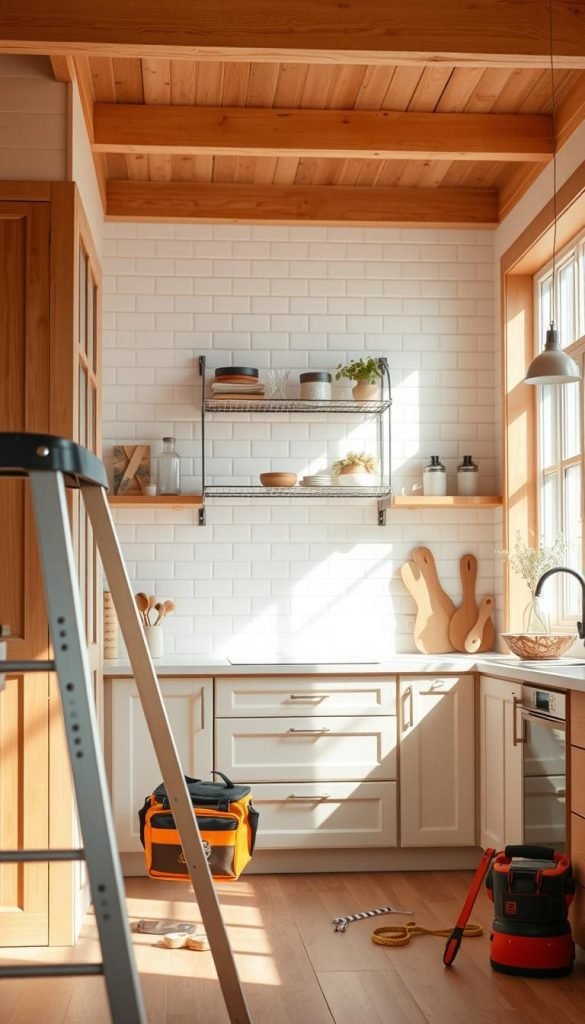
Marking the layout and pre-drilling clean, straight holes
I tape a template, pencil the stud centers, and mark hardware locations. I pre‑drill with a self‑centering bit for hinge screws and a standard bit for anchors to keep edges neat.
Mounting the backplate and setting hinge alignment
I fasten the backplate loosely, position the tray, then set the hinges. I tighten screws in diagonal order to prevent skew and adjust standoff pads so nothing rubs.
Leveling, load testing, and tuning the fold action
I test with the heaviest tray I plan to store, loading and unloading several times. I check drawer and cabinet clearances with the unit open and closed, snug all fasteners, and clip any excess strap ends.
“A quick video of the motion often reveals subtle misalignment I miss by eye.”
- Verify level and sightlines.
- Pre‑drill and mount loosely.
- Test load, tune, then finalize in order.
| Check | Why | Action |
|---|---|---|
| Alignment | Clean closing | Diagonal tighten |
| Clearance | Prevent snags | Mock arc, test with drawer |
| Finish | Lasting hold | Thread locker, store spare parts |
How can I add a breakfast tray wall rack that folds flat when empty?
Start with one simple list and the whole install feels manageable. Measure tray width and hinge offset, tape a mockup, find backing, pre‑drill pilot holes, mount the backplate, set hinges, test with weight, and tidy up.
Keep the needed items together in one bin: drill, bits, level, screws and anchors, pencil, tape, and soft bumpers. That bin stops mid‑project hunting and speeds the work.

Snap a phone photo of the taped layout so measurements are easy to match at the drill. Pick a spot that returns usable space to the kitchen flow, near coffee or morning prep if possible.
- Measure and mock with tape.
- Locate studs and pre‑drill every hole.
- Mount backplate, fit low‑profile hinges, and install a slim catch.
- Test with a loaded tray, then retighten fasteners and add felt pads to protect paint.
“Finish in under two hours, wipe the area, and store the install photo and receipt in your phone notes for future upkeep.”
| Step | Why it matters | Quick tip |
|---|---|---|
| Mockup | Confirms clearance | Use painter’s tape and actual trays |
| Bin of items | Reduces interruptions | Label a small tote for future projects |
| Pre‑drill | Prevents splits and crooked screws | Start with a smaller pilot bit |
| Final test | Locks alignment under load | Retighten after several open/close cycles |
Organizing the rack: trays, towels, and daily-use items
I keep my daily setup simple so the shelf stays useful and resets in seconds.
Focus matters more than capacity. I dedicate the mount to trays and the few daily items that belong with them: napkins, a slim caddy, or a lightweight liner. This keeps the unit tidy and fast to load each morning.
Towels hang on a nearby hook so they dry and never block the fold. I avoid stuffing utensils onto the shelf; those live in a nearby drawer for quick reach.
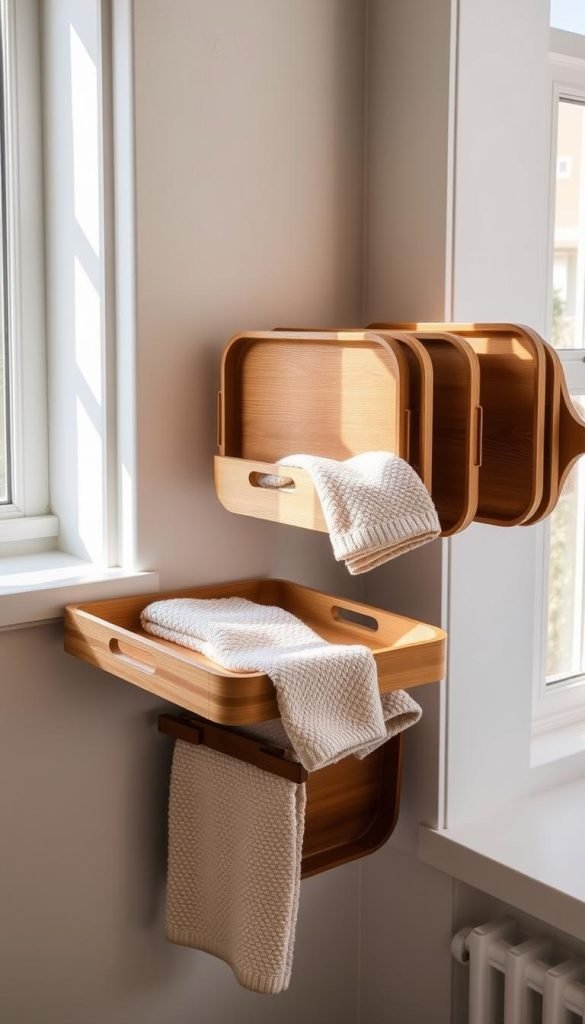
Smart small organizers and placement rules
- I use narrow organizers or a small container on the tray for sugar packets and spoons, then stow them in one motion.
- Anything with a handle gets checked so it won’t snag or stop the fold path.
- A thin paper towel or cork sheet under delicate trays prevents scuffs and keeps finishes like new.
Keep heavy items off the shelf. Place bulky containers lower or in a cabinet so the mounted unit carries only light, daily-use pieces. That preserves the motion and saves wall space in the kitchen and home.
“A simple rule—store only what you use each morning—keeps the system fast and family-friendly.”
| Use | Where it belongs | Quick tip |
|---|---|---|
| Trays | On the mount | Thin liner to protect surfaces |
| Utensils | Drawer | Divider for spoons |
| Towels & napkins | Hook or small caddy | Drying space to avoid mildew |
Smart add-ons I pair with the rack for a clutter-free counter
A few well-chosen pieces extend the functionality of the shelf without stealing visual space. I pick add-ons that keep tools visible, tame overflow, and preserve the kitchen flow.
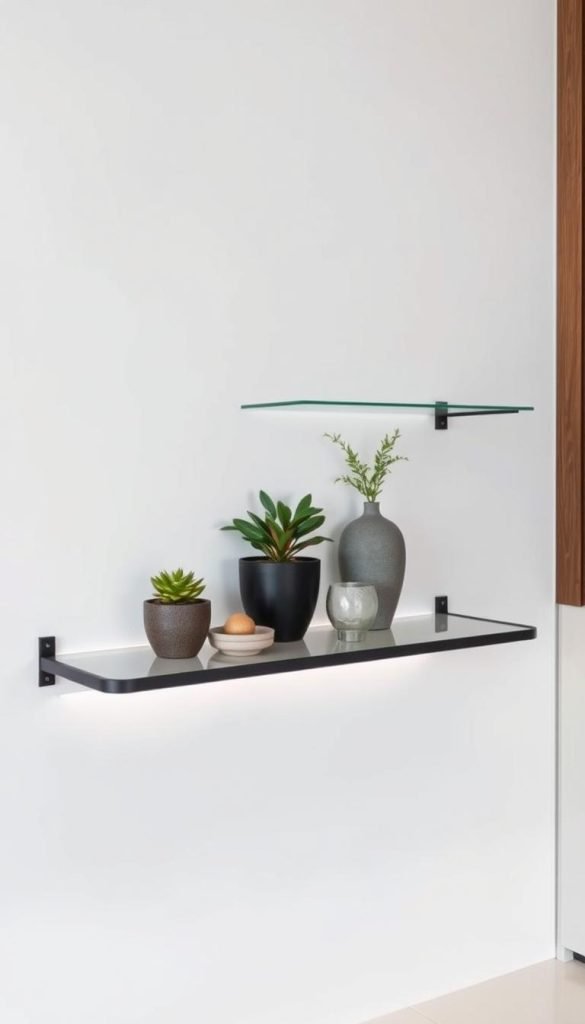
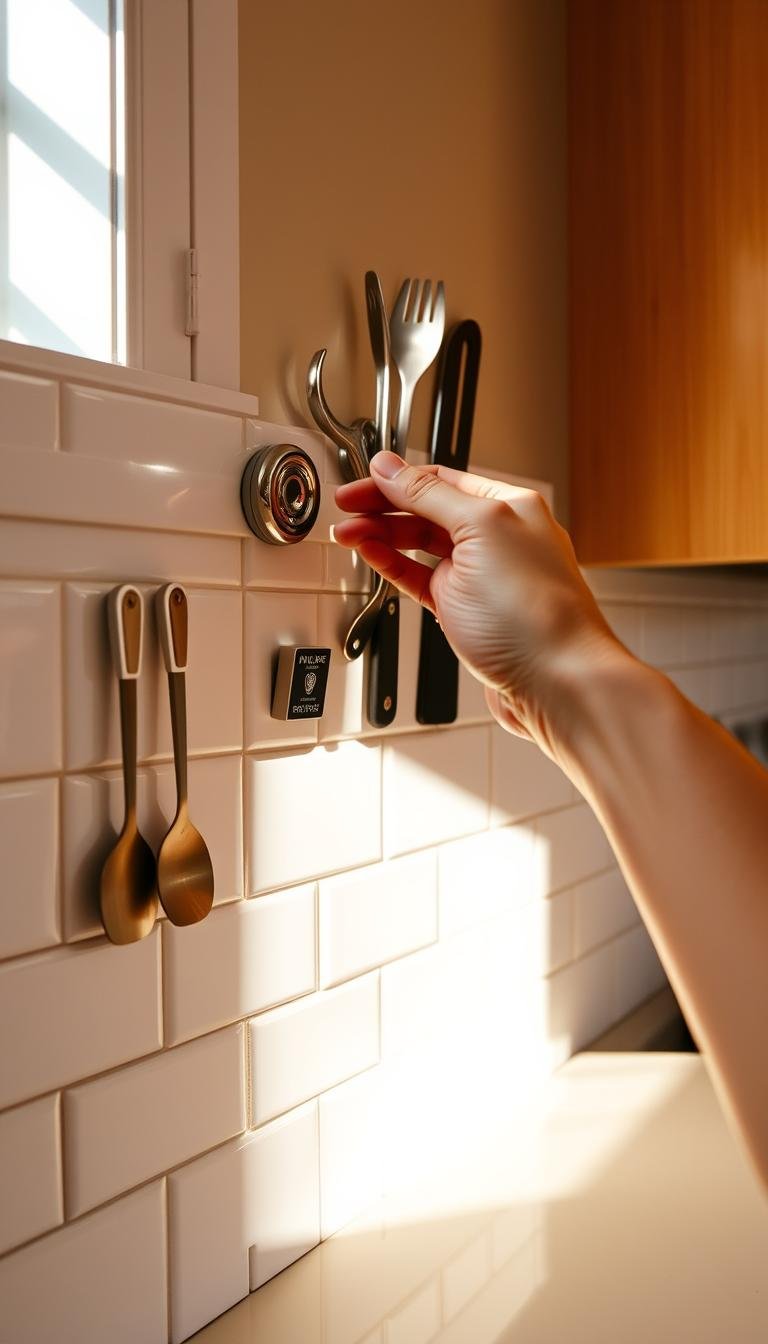
Magnetic strips like the Benchcrafted Mag‑Blok look warm and hold blades gently. I mount a wood-faced strip near the shelf so knives and metal tools stay off the counter and in plain sight. For measuring spoons and scissors, the Modern Innovations stainless bar works well inside a cabinet door with shorter screws.
- I screw in 1‑inch BronaGrand cup hooks under cabinets to hang mugs and utensils and free shelf space.
- Dream Drawer Organizers rezone messy drawers so overflow has clear order and doesn’t migrate back to the counter.
- InterDesign Linus shallow organizers keep small items tidy in shallow drawer spaces; their grippy feet stop sliding.
| Product | Best use | Note |
|---|---|---|
| Benchcrafted Mag‑Blok | Visible knife storage | Wood faces; gentle on blades |
| Dream Drawer Organizer | Drawer overflow | Spring-loaded, fits 12–18 in |
| Wüsthof 7‑Slot Tray | In-drawer knives | Requires ≥3¼ in depth |
“Keep finishes consistent so the add-ons feel curated, not cobbled together.”
Basket-based storage that complements a wall rack beautifully
A well-chosen basket tucks small items out of sight without losing reach.

Functional basket choices: size, durability, and handle strength
Pick tight weaves and sturdy handles so the basket keeps its shape after daily grabs. I prefer natural fibers for warmth and synthetic blends where moisture is a worry.
Match color and shape to your home so baskets look curated, not temporary. A shallow container beside the mount holds spreads or tea packets; a deeper container stores cookbooks or small appliances if space allows.
Using baskets in adjacent zones: pantry, entry, and laundry support
In the pantry, baskets group breakfast and food packets for quick tray loading. At the entry, a small handled basket corrals keys and sunglasses to speed morning exits.
In the laundry, a labeled bin keeps cloth napkins and towels ready to return to the kitchen. I also tuck one vintage basket on a shelf to add texture around the fold‑flat hardware.
- I choose baskets with sturdy handles and tight weaves for daily use.
- I use organizers inside large baskets to prevent small-packet clutter.
- I rotate linens and towels seasonally so the setup refreshes fast.
| Zone | Best use | Recommended size |
|---|---|---|
| Pantry | Group breakfast items and snack packets | Shallow to medium |
| Entry | Keys, sunglasses, mail | Small handled container |
| Laundry | Cloth napkins, towels, sorting | Medium to deep |
| Living/Bedroom | Throws, linens, essentials | Medium decorative |
“A smart basket keeps daily life moving while keeping counters clear.”
Small-space layouts: keeping floors clear and traffic smooth
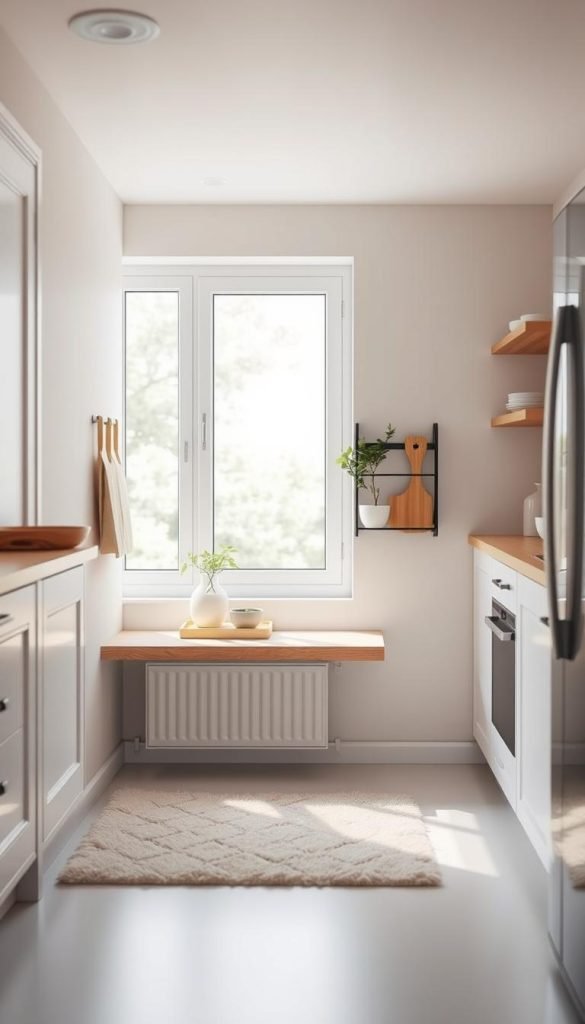
A clear pathway around the shelf makes daily movement safer and keeps the room feeling larger.
I place the unit where people walk naturally so no one pivots into it during busy mornings. I also set the mount height to lift bulk off the floor and use wall solutions to preserve walking space.
I test the reach for everyone who uses the unit to ensure one-handed opening feels secure. Then I align it with nearby shelves and hooks so the view stays streamlined and not visually noisy.
Before finalizing, I confirm trash cans, stools, and pet bowls do not sit under the open path. I keep a tiny staging spot beside the mount so loading does not create bottlenecks.
I measure swing distances from doors and appliances and leave a buffer for accidental bumps. I tidy cords, keep switches accessible, and take a quick video walk-through to catch any layout friction I missed.
| Layout check | Why it matters | Quick action |
|---|---|---|
| Path clearance | Prevents collisions in busy mornings | Place unit off main line |
| Floor clutter | Keeps walking zones open | Move bins and stools upward |
| User reach | Safe, one-handed use | Test with each family member |
| Staging area | Reduces bottlenecks | Small counter or hook nearby |
“A quick video walk-through reveals layout friction I often miss.”
Care, cleaning, and maintenance so the fold stays smooth
Small, regular care beats large repairs later; a few minutes each month keeps motion quiet.
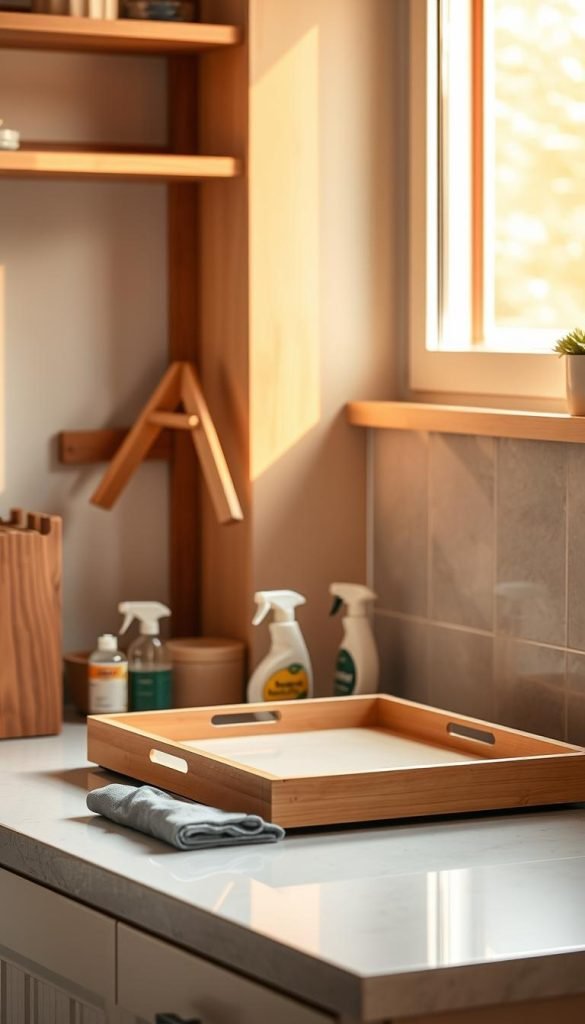
Keep spills and grime from building up. Wipe oils and crumbs quickly, paying attention to hinge knuckles where gunk hides. I keep paper towels handy for fast cleanups and use microfiber towels for a final polish without lint.
Wiping oils, tightening hardware, and dealing with humidity
- I wipe spills and oil traces immediately to protect finishes and moving parts.
- For wood surfaces I use a food‑safe conditioner a few times yearly and avoid soaking; water shortens hinge life.
- I tighten screws on a schedule—quarter turns now stop squeaks and sag later.
- Felt pads or fresh bumpers at contact points protect paint and soften the close.
- Spot‑clean plastic parts with mild dish soap and dry fully to prevent film.
- Rotate trays so wear spreads evenly and the setup stays fresh for food service.
| Task | Frequency | Quick tip |
|---|---|---|
| Wipe hinges | Weekly | Use paper or microfiber towel |
| Tighten hardware | Every 3 months | Quarter turn checks |
| Condition wood | 2–3 times/yr | Avoid soaking; use food‑safe oil |
“A five‑minute check keeps the motion smooth and your kitchen looking cared for.”
Troubleshooting common issues after installation
Most post‑install problems trace to hinge position, catches, or backing—so I start there.
Rack won’t fold, hits trim, or drifts open—my fixes
If the unit won’t close fully, check hinge orientation and add a thin shim behind the backplate to align the leaves. Tighten screws in a cross order so everything pulls square.
When the edge hits molding, shift the hinge line up or down a few millimeters or add a spacer to clear the trim. That frees valuable wall space and avoids paint damage.
If the door drifts, increase the magnetic catch strength or move the catch slightly closer to the strike for a firmer hold. For creaks, snug screws and add a dab of dry lubricant at hinge knuckles.
- Rubbing on a nearby drawer: tweak bumpers and re‑index hinges to alter the swing path.
- Handles that snag: rotate them horizontally or swap for low‑profile pulls to regain clearance.
- Anchors spin in drywall: replace with toggles rated above the rack’s max load.
Keep a short list of fixes and snap quick phone photos before and after adjustments to track what works. If paint scuffs appear, add felt pads and touch up the wall.
If small repairs fail, remount with a French cleat to re‑establish square, then fine‑tune hardware for lasting results in your home kitchen.
| Issue | Likely cause | Quick solution |
|---|---|---|
| Won’t fold | Hinge misalignment | Shim backplate; cross‑tighten screws |
| Hits trim | Incorrect hinge line | Shift hinge up/down or add spacer |
| Drifts open | Weak catch | Stronger magnet or move catch closer |
| Handles/drawer snag | Protruding pulls or swing path | Rotate handles or reindex hinge; adjust bumpers |
“A quick photo log helps repeat the same successful solutions later.”
Time-saving kitchen habits that make the rack even more useful
Small planning moves—like freezing batter in cubes—turn clutter into calm, usable space.
Prep once, use often. I pre-portion pancake batter or oatmeal into Souper Cubes so mornings start with almost no mixing. Canned cinnamon rolls in a waffle maker give fast, impressive results and cheese‑crisp taco shells beat store options for texture.
I protect produce with tiny tricks: wrap cucumbers in paper towels, chill onions to cut tears, and store tomatoes stem‑down. Herbs stay fresh rolled in damp paper towels or frozen in oil cubes for months.
Tool multipliers and safe shortcuts
I rely on simple tools to multiply results. A cleaned soap dispenser foams milk for café drinks. Folded tortillas crisp in a toaster; use tongs to remove them. Sandwich cherry tomatoes between two lids to slice safely and keep knives off the serving surface.
- I keep a short weekly list on my phone to track what stays on the shelf and what returns to drawers.
- Visible zones with OXO organizers make items easy to spot and replace.
- Watch heated hacks closely and clean any food-contact tool thoroughly before reuse.
“Some tested hacks showed about 90% success versus 60–70% for conventional approaches.”
| Hack | Result | Notes |
|---|---|---|
| Frozen batter cubes | Fast, uniform pancakes | Portion control; thaw or cook from frozen |
| Cinnamon rolls in waffle maker | Crispy exterior, tender inside | Creates frosting pockets; quick serve |
| Herbs in oil cubes | Instant seasoning year-round | Use up to 6 months; label date |
Conclusion
Installing a low-profile storage solution returns usable room on counters and calms the morning rush. It gives your small home back space and keeps the counter clear for real use. The result is a tidier kitchen and an easier start to the day.
With thoughtful planning and the right hardware, you get a clean fold, sturdy storage, and a smoother workflow. Pair the mount with magnetic strips, cup hooks, and smart drawer bins so trays and small items have an obvious place. These simple solutions make daily habits repeatable.
Near-by baskets add warmth and function so every item feels intentional in the kitchen. Simple maintenance keeps the motion smooth and the wall pristine for years. If you’ve been waiting for a sign, this is it—your trays deserve a proper home and your kitchen will feel polished once the project is done.