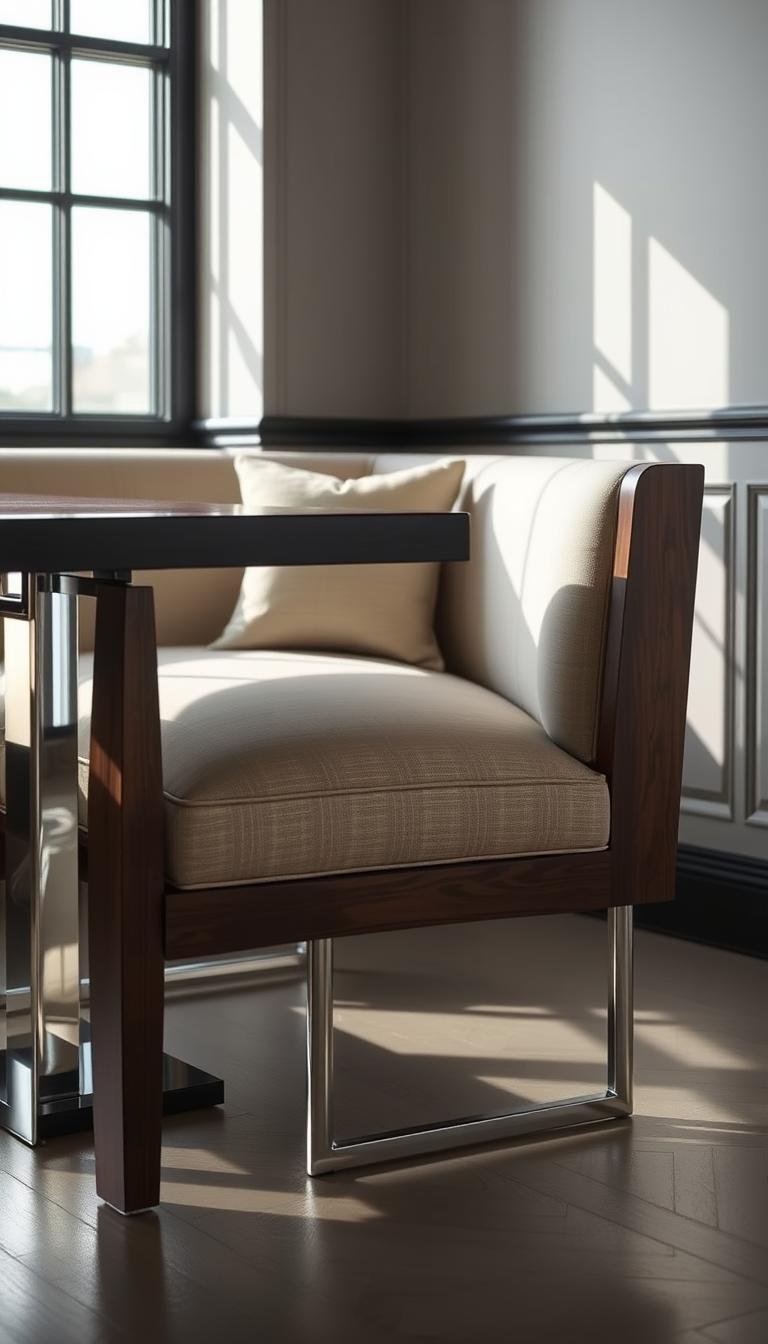
What’s the perfect bench depth for a dining table banquette?
I open with exactly what you came for: the seat dimensions that feel right when people actually sit, eat, and linger. I use proven numbers so you size a bench and table as one system, not two guesses that clash.
I rely on familiar measurements: seat height near 18 inches and table tops at 28–30 inches. Leave about 9–12 inches between the underside of a table and the seat top so knees and plates fit without fuss.
Baseline seat depth can be 18 inches when a firm back supports you. Add roughly 6 inches if you want built-in cushions or pillows, bringing practical seat depth to about 24 inches. I also preview how straight, L, or U shapes affect access, and why a pedestal table helps prevent knee knocks.
My goal is simple: balance comfort with traffic flow so benches, chairs, and floor space work for your room, family, and hosting needs.
Key Takeaways
- Use 18 inches seat height with a 28–30 inches table as a system baseline.
- Keep 9–12 inches clearance between table underside and seat top.
- Plan 18 inches seat depth for a firm back; add ~6 inches for cushions or pillows.
- Choose straight, L, or U shapes based on room flow and access needs.
- Consider a pedestal table to improve legroom and ease of seating.
Why bench depth matters for comfort, space, and dining flow
A few inches change how people eat, chat, and linger at the table. I focus on dimensions that help bodies sit naturally, keep plates within reach, and let traffic move without awkward shuffling.
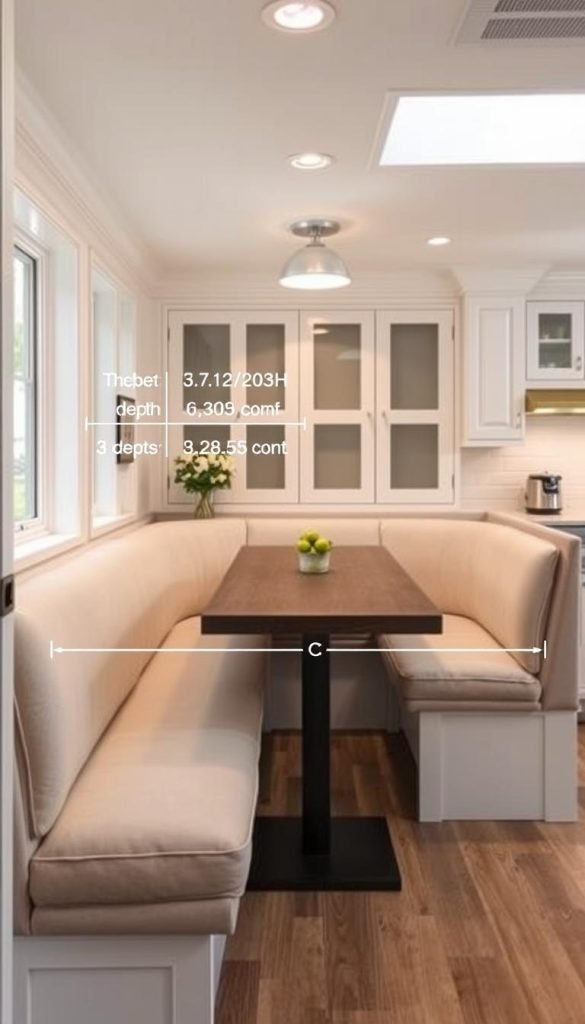
My quick take: the sweet-spot depths that actually feel good
Minimum seat works at about 18 inches when the back is firm and cushions are minimal. If you want a cozier lean with cushions or pillows, push toward roughly 22–24 inches.
How depth impacts posture, back support, and cushion choice
More seat without proper back support makes people slump. I add back support when depth grows so guests can sit back with relaxed forearms over the table.
Small dining room, big payoff: saving floor space without sacrificing comfort
Banquette seating reclaims floor area compared with loose chairs. A tuned seat length keeps clearances comfortable and helps traffic flow past the tables, especially when I pair the bench with a pedestal base.
| Use case | Seat depth | Seat height | Why it works |
|---|---|---|---|
| Minimalist meals | 18 inches | 18 inches | Firm back, compact footprint |
| Everyday comfort | 20–22 inches | 18 inches | Cushion adds 2–4 inches of give |
| Cozy lounging | 24 inches | 18 inches | Built-in back or pillows for support |
| Small rooms | 18–22 inches | 18 inches | Optimizes floor space and guest capacity |
What’s the perfect bench depth for a dining table banquette? Here’s how I size it
My first move is to picture real use: people seated comfortably, knees clear, plates within reach.
Start with standards. I use an 18 inches seat height and a 28–30 inches table so you get about 9–12 inches of clearance under the table. That gap keeps legs and plates from bumping.
Add cushions and pillows into the math. Seat cushions run 2–4 inches. If you plan a built-in back or pillows, add about 6 inches to the base depth so the final seat feels supportive.
Target ranges I use
- Minimal: 18 inches base depth for firm walls and compact seating.
- Cozy: 20–22 inches to let thinner pillows sit without slumping.
- Plush: 24 inches when you add a padded back or stacked pillows.
Test before you build. I mock footprints with painter’s tape and do a sit test using stacked books and a temporary cushion. For boxed bases, recess the toe-kick a few inches to gain legroom without changing external dimensions.
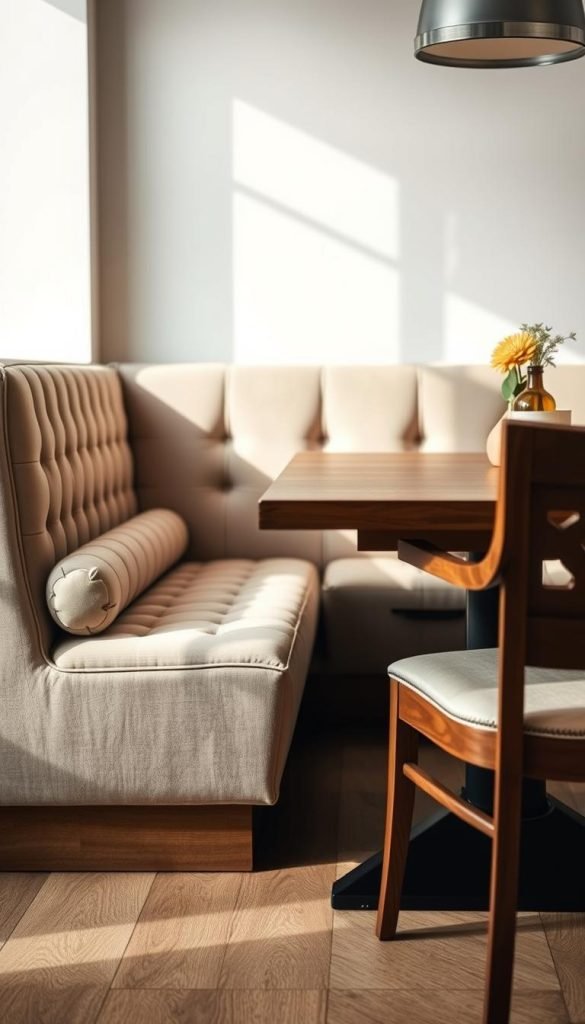
| Use | Base depth | Final seat height | Why it works |
|---|---|---|---|
| Minimal meals | 18 inches | 18 inches | Compact, quick posture |
| Everyday comfort | 20–22 inches | 18 inches (with 2–4″ cushion) | Lean support with room for pillows |
| Lounge-style | 24 inches | 18 inches (lower box + cushions) | Built-in back or pillows for support |
Dialing in dimensions with your table, seating layout, and guests
I map traffic, seating, and reach zones to make sure the layout works in practice.
Keep vertical clearance in a 9–12 inches window so thighs slide under and plates sit at a natural height.
I allow about 21 inches of length per person along the bench run to avoid cramped place settings. For U-shaped runs, I stick to minimums: roughly 78 inches for the back run and 54 inches for each side arm so knees don’t clash in corners.
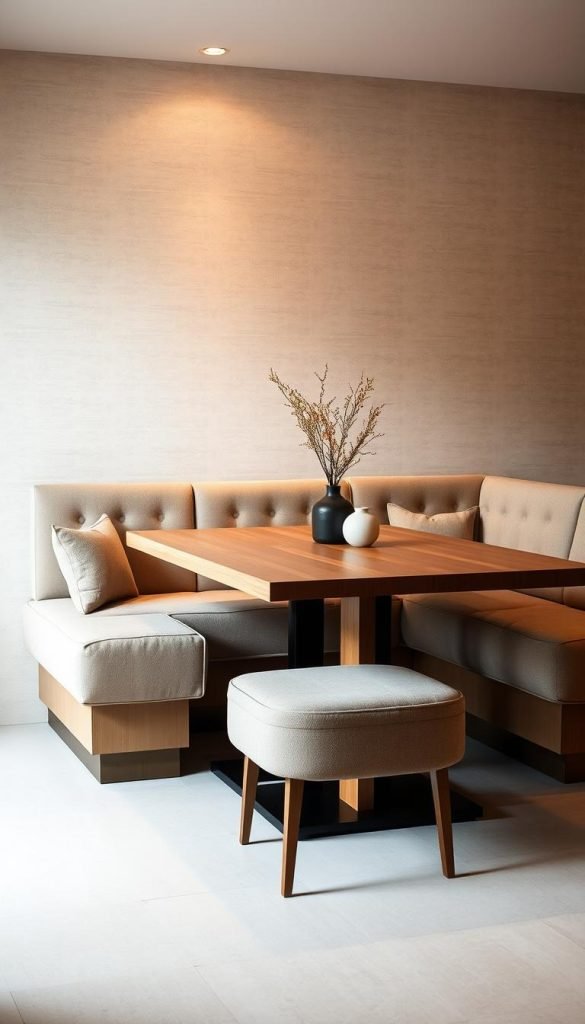
Practical layout tips
- Extend seating roughly 12 inches beyond table ends so guests can sit before sliding in.
- Use 4–5 inches of tabletop overlap above the seat to keep reach comfortable.
- Choose a pedestal when possible; lost legs mean smoother access at ends and fewer knocked knees.
| Item | Typical | Why it helps |
|---|---|---|
| Width | 36 inches | Room for centerpieces and reach |
| Common lengths | 48 / 60 / 78 / 92 inches | Match bench run and guest count |
| Round sizes | 44 / 54 / 60 / 72 inches | Better flow in tight spaces |
Mockup before you build: tape outlines, pull in chairs, and walk clearances so final measurements feel right for real guests.
“Good planning lets people sit, eat, and move without awkward shuffling.”
Conclusion
Let me wrap this with a short checklist you can test in real space. Start with an 18-inch seat height and match your table to 28–30 inches. Keep 9–12 inches of clearance so knees and plates sit comfortably.
Pick a base seat of about 18 inches if you sit upright. Go 20–22 inches for cozy cushions or near 24 inches when you add a built-in back and pillows.
I always mock the footprint with tape, a chair, and a temporary cushion before I cut wood or pick finishes. Recess a toe-kick, use a pedestal to clear legs, and extend the run roughly 12 inches past each end so people slide in easily.
My quick bottom line: tune lengths to how many guests you host, align seat and table dimensions, and size once so this place feels right every time you sit down.