How do I pick wallpaper that hides toddler crayon marks?
I want a look that survives everyday life with little artists. With kids underfoot, my priority is a wall covering that blends style and real-world resilience. I focus on materials and patterns that soften lines and help prevent stains from becoming permanent.
Durability matters to me. I favor finishes that take cleaning without losing their color. Pattern and texture play a role too; a busy print can visually break up crayon lines and buy time between wipes.
Before a full install, I run simple tests on scraps. I try common cleaning methods on samples to confirm the surface handles crayons and light scrubbing. That step saves time and keeps my walls looking fresh.
My selection checklist centers on abrasion resistance, finish type, and pattern density. I explain the terms I use in this guide so you can follow from the first crayon to a clean wall.
Key Takeaways
- Choose durable materials and forgiving patterns to mask and resist stains.
- Test cleaning methods on samples before covering a full wall.
- Prefer matte or scrubbable finishes that handle surface cleaning.
- Use busy prints or textures to break up visible lines.
- Focus on long-term maintenance to keep walls looking good with kids at home.
Why I’m choosing wallpaper that can camouflage and clean easily
Kids bring color into every room, often in unexpected places. I see crayon sketches on my walls and need a surface that forgives light lines until I can clean them.
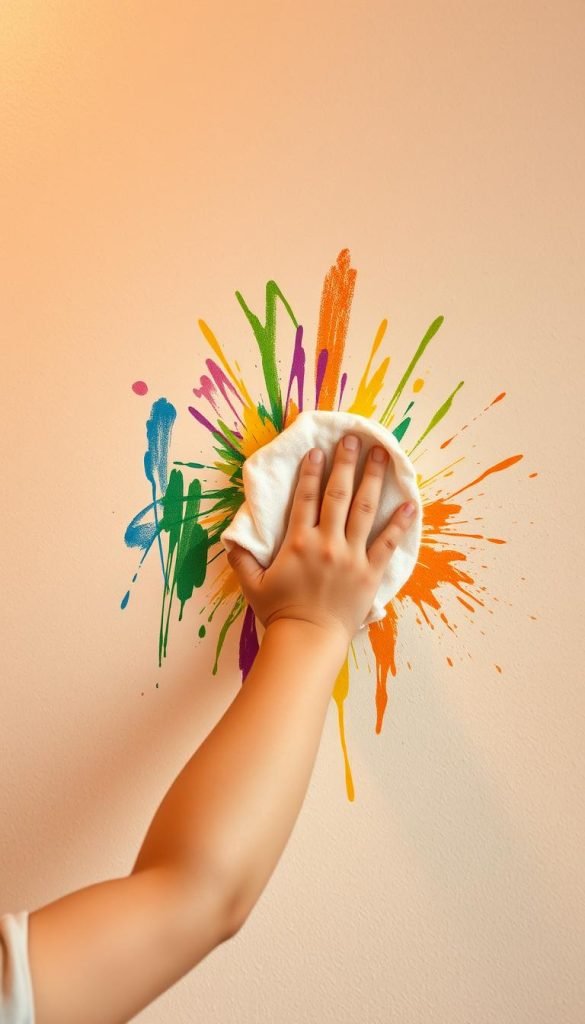
Practical living means choosing finishes where a faint residue blends with pattern and texture. That gives me time to use a simple cleaning method—warm water, dish soap, and a soft cloth—without stressing about a permanent stain.
I balance look and performance. A cozy, soft feel is lovely, but I favor options that resist stains and make upkeep realistic for my week. Ultra-delicate finishes get screened out because they spotlight residue instead of hiding it.
Patterns and embossing help break up visible marks so tiny smudges don’t dominate the view. I plan to test sample panels on my wall to compare how a surface lifts crayon and other marks before committing.
- Choose forgiving surfaces that mask light stains.
- Use dish soap and a gentle cloth as a go-to cleaning method.
- Test samples to confirm real-world cleanability.
Wallpaper materials that hide marks and stand up to cleaning
I start by comparing materials and finishes to see which handle daily life best. Solid vinyl and vinyl-coated options offer a sealed face that takes a damp cloth and mild cleaner without losing color.
Solid vinyl is forgiving. It wipes well and resists light stains from crayon and pencil. Vinyl-coated paper gives a similar benefit but can vary by manufacturer, so check the care label.
Washable often means surface cleaning only. Scrubbable implies stronger resistance to gentle abrasion. I always test scrubbable claims on a hidden scrap before using pressure.
Nonwoven backings add dimensional stability. They resist bubbling when I clean walls with a light touch and help the paper stay flat around trim and paint lines.
Fabric-backed options can look luxe, but open fibers trap wax and stains. Treat steel wool as a last-resort tool — only after a hidden-area trial, since wool can change sheen or abrade the surface.
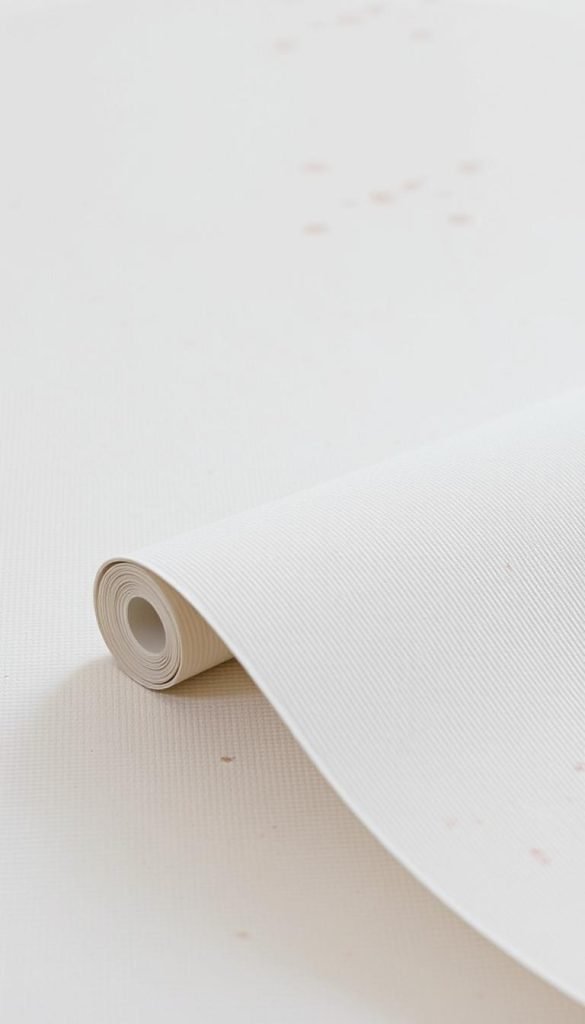
“Start gently and follow manufacturer care notes — it saves a full replacement later.”
- Confirm care instructions before cleaning.
- Test in a hidden spot even if labeled scrubbable.
Patterns, textures, and colors that disguise crayon marks
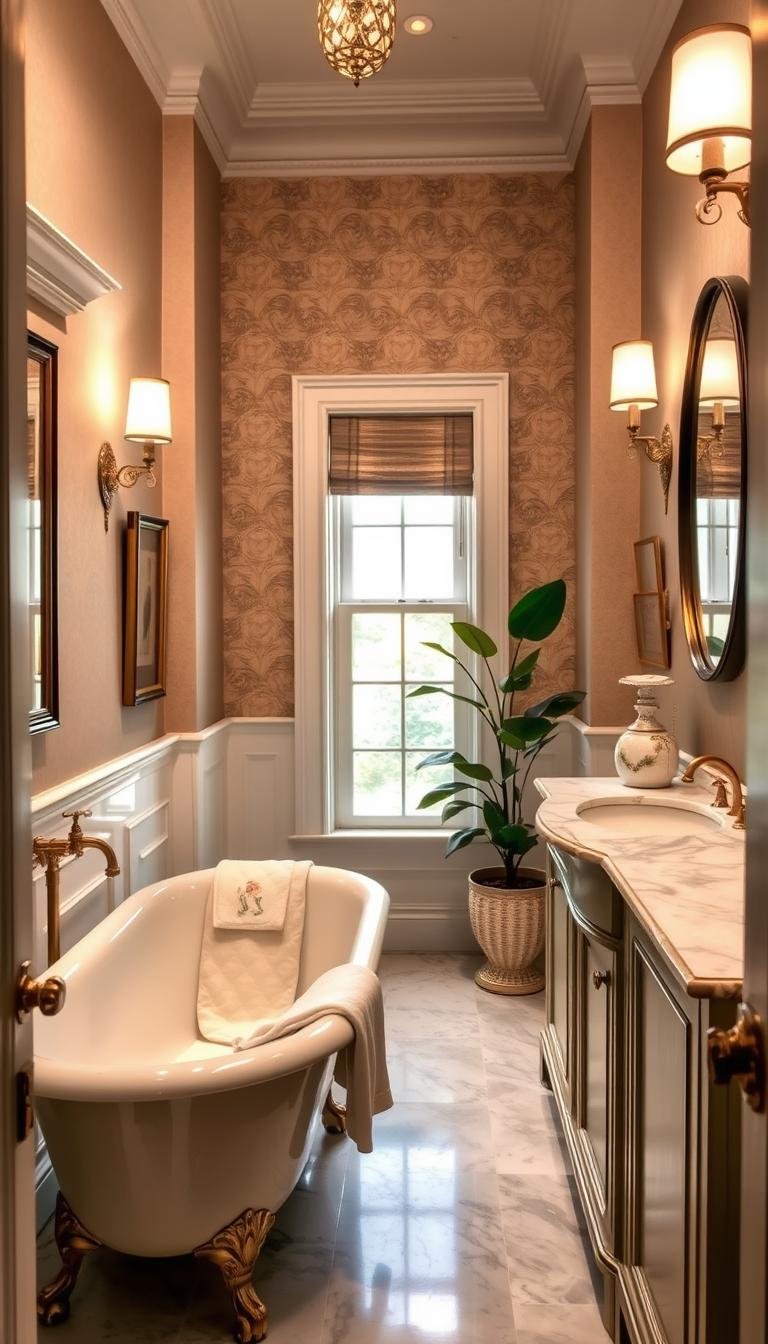
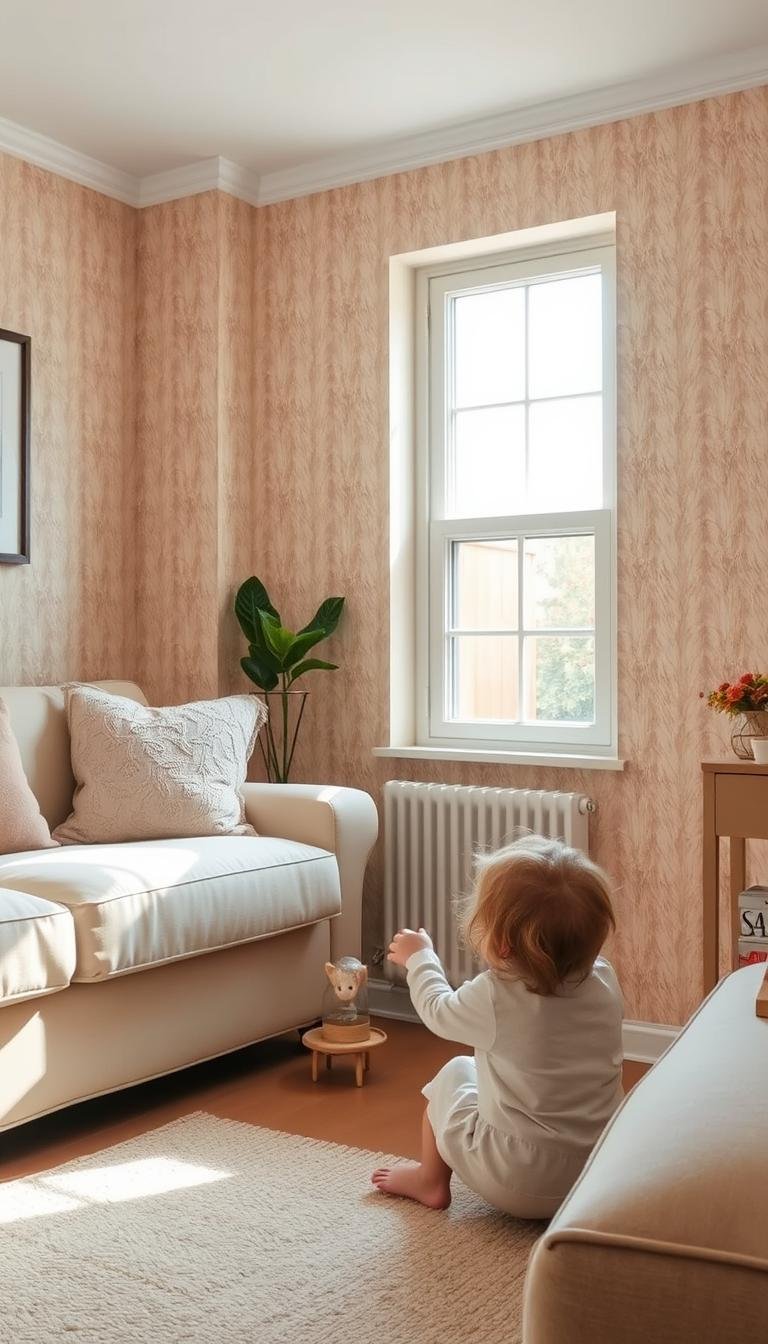
A smart pattern choice can make small scribbles almost invisible from a normal sitting distance. I look for mid-scale repeats and organic motifs because they scatter the eye and break up tiny lines and spots.
Mid-scale patterns and organic motifs to break up lines and smudges
I prefer prints with flowing shapes, leaves, or abstract speckling. These hide small marks on a feature wall and work at common viewing distances.
Color strategy: warm neutrals, variegated hues, and low-contrast palettes
Warm neutrals and layered tones soften contrast so fresh crayon marks read as part of the pattern. A deeper mid-tone with satin or low-sheen finish hides tiny stains better than ultra-light paint.
Textural embossing and grasscloth look-alikes without the cleanability trade-off
Choose embossed, wipeable options that mimic grasscloth. Slight variegation or heathering masks residue without trapping wax.
Finishes to avoid: ultra-flat surfaces that spotlight waxy residue
Avoid very flat finishes — they can make crayon and wax stand out even after cleaning. Instead, aim for texture plus a practical surface you can wipe.
How I test cleanability at home before I commit
I verify cleanability with deliberate marks and repeat wipes on each sample. This lets me compare real results across finishes and patterns before I order full rolls.
Sample swatch test with a crayon and a microfiber cloth
I draw a short line of crayon on each swatch. Then I use a microfiber cloth with a tiny drop of dish soap and warm water. I wipe gently and rinse the cloth often so I don’t spread pigment or wax.
Dish soap and warm water wipe test to check stain lift
I count passes to see how many wipes remove the stain. I note any haze, color shift, or raised sheen after the area dries. That tells me if the surface will handle regular cleaning on my walls.
Baking soda paste spot test for stubborn marks
For tougher spots, I mix a baking soda paste using three parts baking soda to one part water. With a soft sponge or cloth I rub gently to avoid scuffing. If needed, I follow with a vinegar rinse and then plain water.
| Test | Materials | What I watch for |
|---|---|---|
| Microfiber wipe | Dish soap + warm water, cloth | Stain lift in few passes; no haze |
| Baking soda paste | Baking soda + water, sponge | Lift on durable faces; no sheen change |
| Vinegar spot | Distilled white vinegar, soft brush | Removes residue; rinse clean |
“Test gently, record results, and avoid wool unless a hidden-area trial proves it’s safe.”
Safe cleaning methods for wallpaper I’ll actually use
A calm, reliable routine saves time and protects the finish when kids create on walls. I focus on low-risk steps that work on most wipeable surfaces and keep the finish intact.
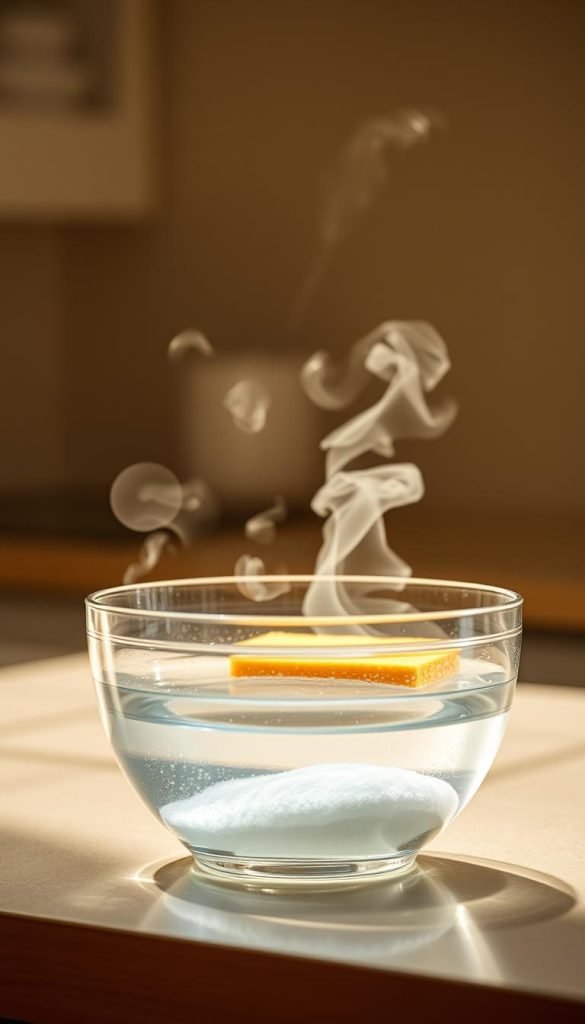
Gentle routine: dish soap, warm water, and a soft cloth or sponge
My go-to: wet a microfiber cloth, wring well, add a drop or two of dish soap to warm water, and wipe gently. Rinse and wring the cloth often to avoid smearing crayon pigment.
Tip: start at the outer edge of the stain and work inward to prevent halos. If a sponge is needed, keep pressure light and controlled.
When vinegar helps—and how to rinse away residue
For waxy residue, I apply a small amount of distilled white vinegar with a soft brush to loosen buildup. I follow with a plain water rinse so no vinegar residue lingers on the wall.
Baking soda paste for controlled abrasion on durable surfaces
For stubborn marks I mix a baking soda paste (3:1 baking soda to water). I dab the paste with a soft sponge and buff gently, then wipe away with clean water and let the area air dry.
Steel wool caution: only on certain wallpapers and after a hidden-area test
I only consider steel wool after testing a hidden scrap. If used, I move in one direction with very light pressure and stop if sheen or color changes appear.
“Start gently and record what the wall tolerates—cloth versus sponge, how much water, and which methods work best.”
- I scrape excess crayon gently first, then wash with a mild detergent solution and rinse well.
- I document results so I have a repeatable plan the next time I need to scrub crayon.
How do I pick wallpaper that hides toddler crayon marks?
A clear, repeatable checklist keeps decisions simple when walls face regular playtime art. Below I lay out the quick steps I follow so the surface handles life and my cleaning routine.
My step-by-step checklist: material, pattern, color, and finish
Start with materials. I shortlist scrubbable vinyl-coated or solid vinyl, then confirm care notes so my methods for removing crayon won’t void warranties.
Choose pattern and color. Mid-scale prints and low-contrast palettes downplay small marks so removing crayon never feels urgent.
Test a sample. I mark a corner, try my go-to dish soap wipe with a soft cloth, then dry and inspect for any lingering stain or sheen change.
Reading labels: washable vs. scrubbable ratings and care instructions
I scan labels for specific language about dish soap, gentle wiping with a cloth, and tools like a soft brush. I avoid papers that warn against solvents or abrasive pads.
“Confirm the care notes and keep a simple toolkit so removing crayon or handling crayon stains is quick and predictable.”
Room-by-room picks for real life with kids
Each room has its own wear pattern, so I choose surfaces that suit the daily routine.
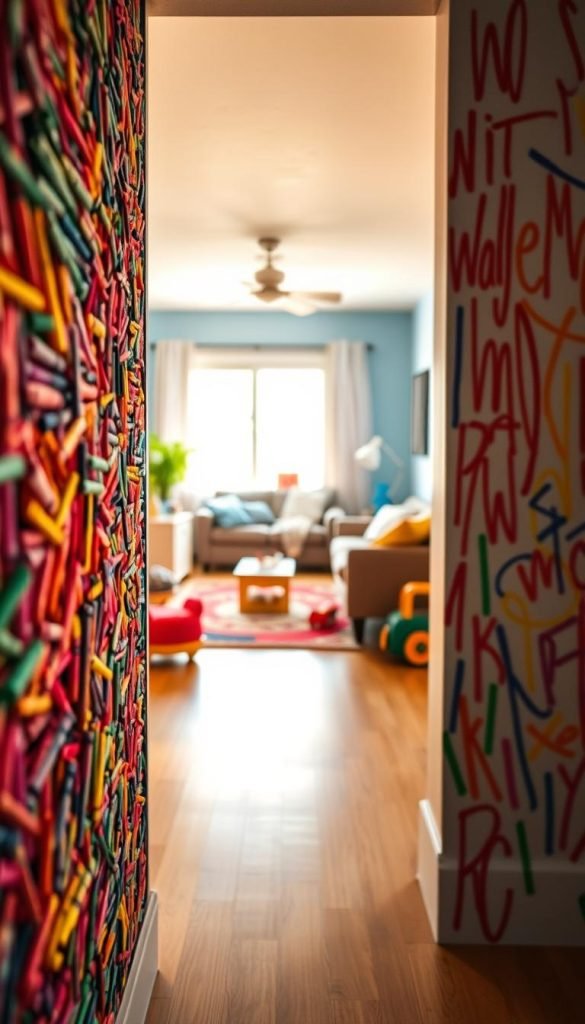
Playrooms: I lean into wipeable, scrubbable options in warm, variegated tones. These let me handle crayon walls without panic and save removal for a weekend reset.
Hallways: Mid-scale patterns work best here. They hide scuffs and stains while tougher finishes mean I can clean quickly and move on.
Smart choices near floors, trim, and tight spots
Near carpet, I pick deeper base colors so tracked smudges blend with flooring. Around wood trim and paint transitions, I select patterns that visually merge with the trim to disguise tiny marks between cleanings.
In nooks where surfaces meet, a slightly darker tone helps mask everyday stains. For shared bedrooms, playful motifs with gentle finishes keep bedtime routines low-stress and simple for cleaning.
Entry and stair areas: I favor textures that mimic natural fibers but come in wipeable faces. Along stair walls, busy designs break up fingerprints and crayon marks so maintenance stays realistic.
“Match finish to traffic and keep a small toolkit handy so cleaning stays fast and easy.”
| Room | Finish | Color/Pattern | Benefit |
|---|---|---|---|
| Playroom | Scrubbable, wipeable | Warm variegated tones | Easy weekend stain removal |
| Hallway | Tough, mid-sheen | Mid-scale pattern | Hides scuffs and stains |
| Near carpet | Durable face | Deeper base color | Masks tracked smudges |
| Entry / Stairs | Textured wipeable | Natural-fiber look | Looks lived-in, cleans well |
Conclusion
Quick, calm action usually removes most everyday stains without stress. I keep a simple toolkit: water, a drop of dish soap, a soft sponge or rag, and a small baking soda paste for stubborn crayon stains.
Let treatments sit for a few minutes on tough spots, then rinse and dry. Repeat in parts if needed until the stain lifts. For waxy build-up I use a soft brush and light pressure, watching the surface so finishes stay safe.
As a last resort, steel wool or wool pads see use only after a careful test on paper or textured areas. A quick visual scan from different angles confirms no haze remains and helps me remove crayon with minimal fuss.