What are the quietest closet doors for a nursery at 3 a.m.?
I went on a mission after several late-night feedings to find door choices that let my baby sleep through tiny bumps and creaks. I tested sliding tracks, soft-close barn hardware, bifold hinges, and solid-core swing models so you can pick a calm option for your room.
I focus on real features that cut noise: top-mounted hardware, sealed edges, smooth tracks, and soft-close kits that offer easy use once installed. I also compare product quality and safety so you avoid loud surprises when you make a purchase.
Sliding formats save floor space and reduce midnight collisions, while swing styles can block more sound if you have clearance. I balance price, durability, and reviews so you can choose with confidence tonight and years from now.
Key Takeaways
- Top hardware and smooth tracks matter most for low noise.
- Soft-close kits deliver quiet operation and simple setup.
- Sliding doors save floor space; swing models give better sound control.
- Check reviews for track smoothness and hardware quality.
- Match safety and durability to nursery needs before purchase.
Why quiet closet doors matter when the baby finally sleeps
Late-night diaper runs taught me how one small click can undo an hour of sleep. In my room, a single rattle or squeak wakes the baby faster than I expected. That tiny disturbance becomes a chain reaction: crying, lights, and both of us awake.
Good doors reduce noise spikes and help the whole house stay calm. Soundproofing the nursery lowers outside noise, keeps family movement from waking my child, and cuts echo that makes small sounds travel through rooms and hallways.
I added thick rugs and felt the difference: footsteps and toy nudges stopped carrying down the hall. I also use a white noise machine kept under 50 dB to gently mask irregular sounds during late-night care.
- Fewer jolts near the crib: smooth, soft-closing hardware means safer, calmer movements in the dark.
- Better routines: quieter entry and exit make bedtime predictable for the baby and less stressful for parents.
- Long-term payoff: the right door choice saves sleep now and supports quieter rooms as the child grows.
My 3 a.m. reality check: tiny noises that wake a nursery
One small click or a rattly track used to trigger full wake-ups. Choosing quality hardware and soft-close options cut those spikes and made our nights steadier. Next, I compare types that help most so you can pick what fits your home and safety needs.
How sound sneaks through nursery closets at night
One night I tracked every rattle to find where sound slipped into the nursery. Small openings and thin panels let voices and footsteps pass, so I learned to look for the obvious weak points first.
Air gaps around frames and under the slab let air move—so sound follows. I shine a light along the frame to spot leaks, then add weatherstripping or acoustical sealant where it shows.
Air gaps, hollow panels, and rattly tracks explained
Many interior doors use hollow-core panels. They weigh less but let more noise through. Upgrading to solid-core adds mass and blocks more sound.
Loose rollers or poorly aligned tracks turn smooth slides into rattles. I listen for roller chatter and feel for wobble, then tighten or swap hardware if needed.
The chain reaction: door noise, floor impact, and echo
When a panel bangs or bounces, vibrations move into the floor and across the room. Hard floors make that impact louder; thick rugs help absorb it.
- Quick checks: light around frames, listen for rollers, feel panel wobble.
- Fixes that work: acoustical sealant, weatherstripping, and a door sweep to cut air paths.
- Room tips: high-pile rugs near the opening reduce impact and echo.
In short: better mass, tight air control, and smooth mechanisms are the trio that tame door noise and keep the baby sleeping through small disturbances.
Buyer’s Guide essentials: picking the quietest door type for your room
Late-night trips taught me which door types keep small noises from turning into full wake-ups. In this short guide I compare practical options, safety touches, and the quality cues I check before buying.
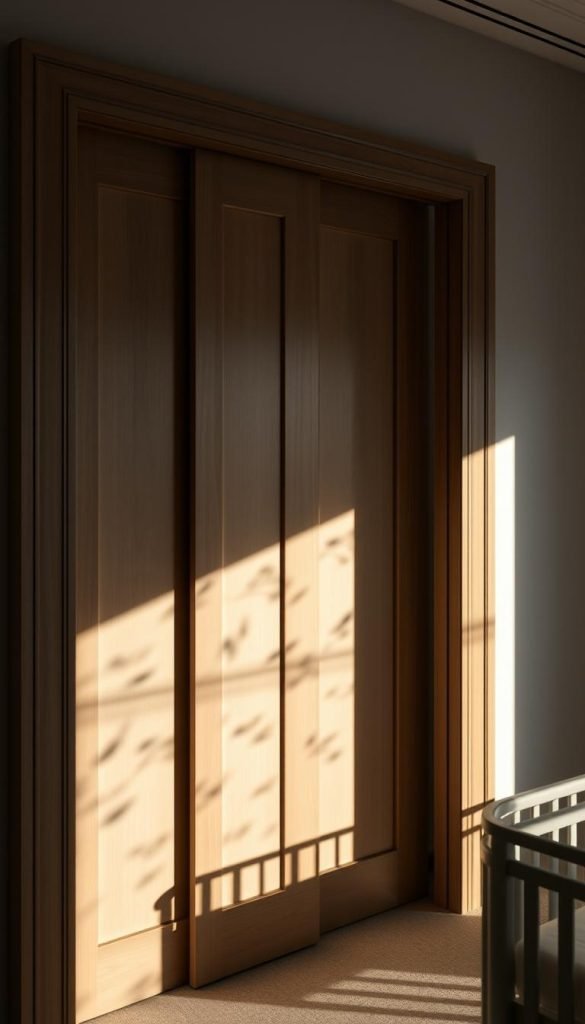
Sliding bypass doors: space-saving winners with soft-close potential
I favor sliding bypass when floor space is tight. Panels run on parallel tracks and bypass each other, so they save usable space.
Tip: add soft-close rollers and quality bearings to reduce rattles and long-term noise.
Bifold doors: compact and affordable, but mind the hinges
Bifolds split at center and free up wall space. They work well on a budget, but hinges and pivots can squeak if hardware is low quality.
Safety: look for finger guards and sturdy pivot pins when a child might use the closet at night.
Barn doors: stylish gliders that save space with quiet hardware
Barn systems hang from top-mounted tracks and glide along the wall, saving floor area in a bedroom. Good rollers and optional soft-close dampers lift performance.
Factory-finished surfaces resist scratches and clean easily for kid traffic.
Solid-core swing closet doors: best for sound, needs floor space
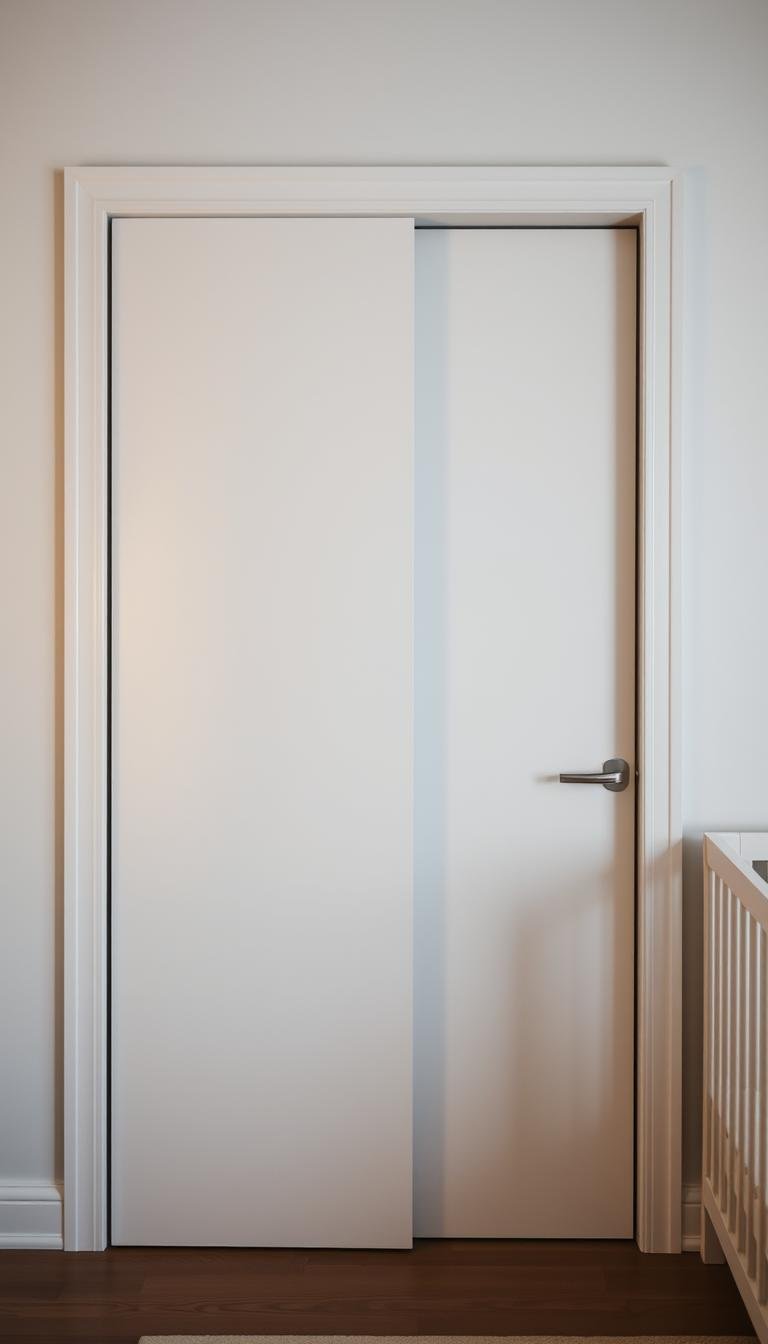
If maximum noise control matters, solid-core swing slabs win due to mass and tighter seals. They do need clearance to open and may not fit narrow halls.
- Selection checklist: match type to clearance, storage layout, and how often the child uses the closet at night.
- Quality checks: metal track thickness, bearing type, hinge material, and soft-close adjustability.
- Before you buy: read reviews focused on long-term hardware quietness, not just initial appearance of products.
| Type | Space | Quiet Strength |
|---|---|---|
| Sliding bypass | High | Good with soft-close |
| Bifold | Medium | Fair, hinge-dependent |
| Barn | High (wall) | Very good with top hardware |
| Solid-core swing | Low (needs clearance) | Best |
What are the quietest closet doors for a nursery at 3 a.m.?
I started measuring panel weight and track smoothness to predict which systems would stay quiet over time. That test focus led me to simple, repeatable criteria you can check in-store or online.
My top criteria: soft-close, solid feel, sealed edges, smooth tracks
Non-negotiables: solid-core or high-mass panels, soft-close kits, weatherstripping plus a sweep, and robust tracks or hinges. These cut both impact and air-borne sound.
How I compare products: I read specs for panel weight, track rating, and soft-close adjustability. I then scan reviews for long-term quiet; rollers and cartridges are frequent failure points.
Best use-cases: small rooms, renters, and long-term kid-friendly design
- Sliding bypass with soft-close: ideal for tight rooms and consistent low noise.
- Barn systems on top-mounted tracks: great if wall space allows and you want smooth glide.
- Solid-core swing slabs: choose when maximum sound control matters more than clearance.
| Layout | Best pick | Why |
|---|---|---|
| Small room | Sliding bypass | Saves floor space, adds soft-close |
| Renter | Top-mounted hardware | Reversible, easy use, minimal wall damage |
| Sound priority | Solid-core swing | Mass blocks more noise |
Quick checklist for your next product purchase: solid feel, soft-close action, sealed edges, smooth tracks, and verified quiet reviews. Order seals and a sweep with the door so installation is complete in one go.
Must-have noise-reduction features that really work
A few small tweaks ended up cutting most late-night clatters in half at my house. I focus on fixes you can buy and finish in an easy install afternoon.
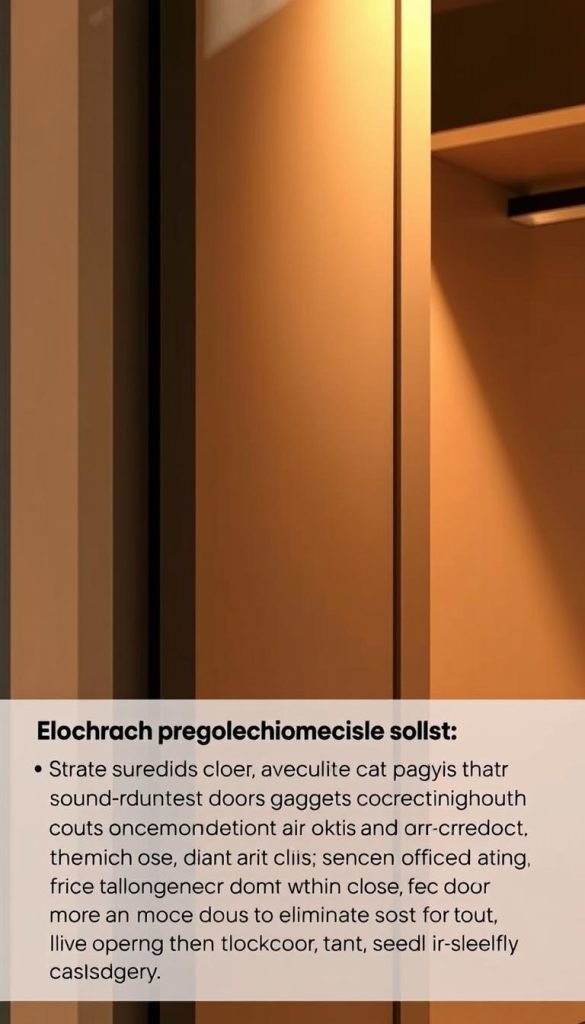
Soft-close kits and premium top-mounted hardware
Soft-close kits tame motion at the source. I fit one to sliding and barn systems so panels glide and never slam.
Top-mounted rollers with thick tracks and quality bearings stop rattles. Good rollers = smooth operation and long-term quiet.
Weatherstripping, sweeps, and acoustical sealant for air leaks
I seal gaps next: apply acoustical sealant around the frame, add compressible weatherstripping to the stops, then install a door sweep under the panel.
Sealing air paths stops airborne noise and prevents small bumps from turning loud in the room.
Mass add-ons: soundboard, MLV, and fabric panels
Adding mass makes a big difference. I adhere acoustical soundboard or mass-loaded vinyl to the interior face, then cover it with fabric for a tidy look and easy use.
For renters, a heavy blanket or removable panel adds mass without permanent changes.
- I prioritize soft-close kits and premium top-mounted hardware to control motion at the source.
- Easy install plan: measure gaps, seal trim, add weatherstripping, and fit a sweep.
- Test the close speed and adjust pistons so the panel finishes slowly and doesn’t snap.
| Feature | Benefit | Easy install |
|---|---|---|
| Soft-close kit | Eliminates slams | 1–2 hours, basic tools |
| Weatherstripping + sweep | Blocks air-borne noise | 30–45 minutes |
| Soundboard / MLV | Adds mass to reduce transmission | 1–3 hours, adhesive or screws |
| Top rollers & track | Stops rattles and wobble | 1–2 hours, precise alignment |
Quick parts list to purchase: soft-close kit, track/roller upgrade, perimeter weatherstripping, sweep, and acoustical sealant.
Combine these door upgrades with rugs, wall panels, and interior window inserts if street noise is an issue. With sealed air paths and cushioned motion, small sounds stop waking the whole house.
Quiet upgrades on a budget: renter-friendly vs. homeowner paths
I mapped easy fixes by budget and lease status to stop sound leaks fast.

Renter-friendly moves
Quick, reversible steps that won’t risk a deposit:
- Apply peel-off acoustical sealant and adhesive weatherstripping to stop drafts.
- Add a tension-fit door sweep or draft stopper; many remove cleanly.
- Use thick rugs and removable wall panels for mass and echo control.
- Install window inserts — they cut street noise 50–70% and you can install remove them seasonally.
Homeowner upgrades
More permanent changes if you own the house:
- Swap a hollow slab for a solid-core door and upgrade tracks to soft-close hardware.
- Replace windows or add professional inserts during remodels for big gains.
- Combine a slab swap with track replacement to multiply noise reduction.
Cost snapshot and plan
Where I spend first: seals and soft-close kits to save time and money. Next I add mass, then address windows if street noise still wakes the baby.
Pro tip: batch purchase essentials, watch shipping orders windows, and keep receipts so you can return or adjust orders if fit isn’t right.
| Situation | Priority | Typical install time |
|---|---|---|
| Renter | Seals, sweep, inserts | Under 1 day (easy install) |
| Homeowner | Solid-core, tracks, windows | Weekend to multi-week remodel |
| Budget plan | Seal → soften motion → add mass → windows | Phased by money and time |
Style, safety, and organization that fit well and work great
I focused on simple design moves that keep the room bright, safe, and easy to use during midnight checks.
Good choices grow with the child. Neutral panels you can repaint, mirrors that bounce light, and durable finishes let a small room evolve from nursery to pre-teen without a full redo.
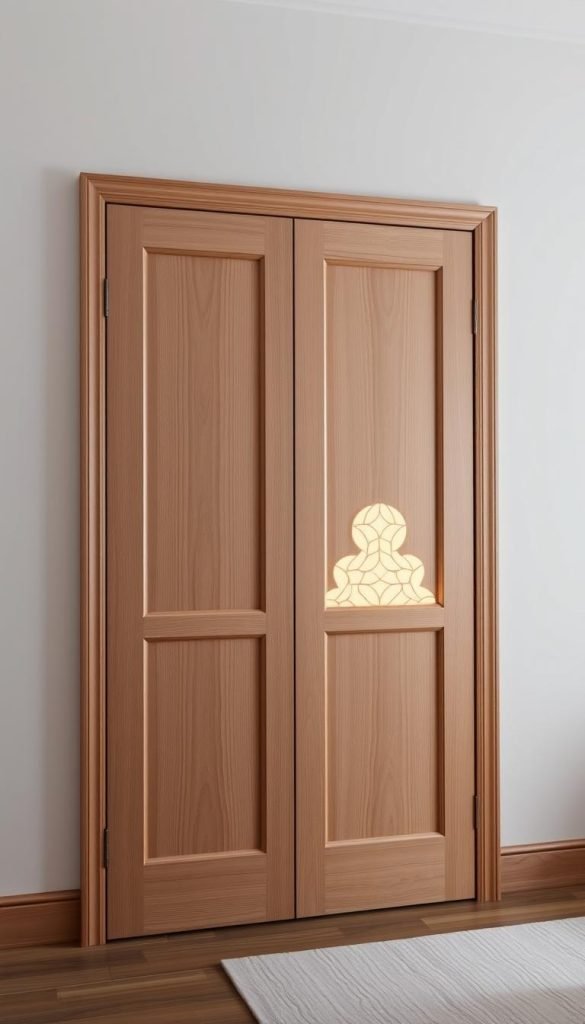
Design picks that grow from nursery to pre-teen room
Choose wood tones for warmth or crisp white for a clean look. Frosted glass and mirrors add light and make rooms feel larger. I favor finishes whose color still reads fresh as tastes change.
Closet access and storage: when to keep, slide, or remove doors
Access matters: keep smooth sliding hardware for tidy looks when you need space. Remove panels if you want open shelving and better reach.
- Sliding saves floor space and keeps things neat.
- Bifold gives center access but needs good hinges.
- Renter-friendly ClosetMaid rails hang from one top track for drawers and shelves without many wall holes.
Safety and layout tips: use soft-close hardware, finger-safe edges, anti-jump brackets, and covered hinge pins. Place sturdy furniture near the closet to add storage and help absorb sound. My rule: if a door wakes the baby or blocks daily use, change the mechanism first; if clutter is the issue, upgrade storage.
Conclusion
I kept notes during every midnight check and built a simple plan that cuts clatter fast. ,
Start with three steps: add mass, seal gaps, and control motion. Then layer room fixes like rugs, acoustic panels, and window inserts to reduce outside noise.
Choose solid-core interior doors when sound control matters, or sliding options with soft-close when space is tight. Read reviews that focus on long-term hardware quiet and product durability before you purchase.
Quick wins fix common problems: tighten rattly tracks, add weatherstripping at the jamb, and order seals with soft-close kits so shipping and orders arrive together for one weekend install.
Even though every house is different, my checklist works: quality hardware, tight seals, added mass, and light-reflecting finishes to help you close doors gently. If torn between products, pick the one with better specs and quieter reviews—it will save time and improve life in your bedroom and home.