How do I stop my glass coffee table from showing every fingerprint?
My table used to look messy minutes after guests left. Fingerprints are just oils, sweat, and fine dirt that cling to the surface and resist plain water or the wrong cleaners.
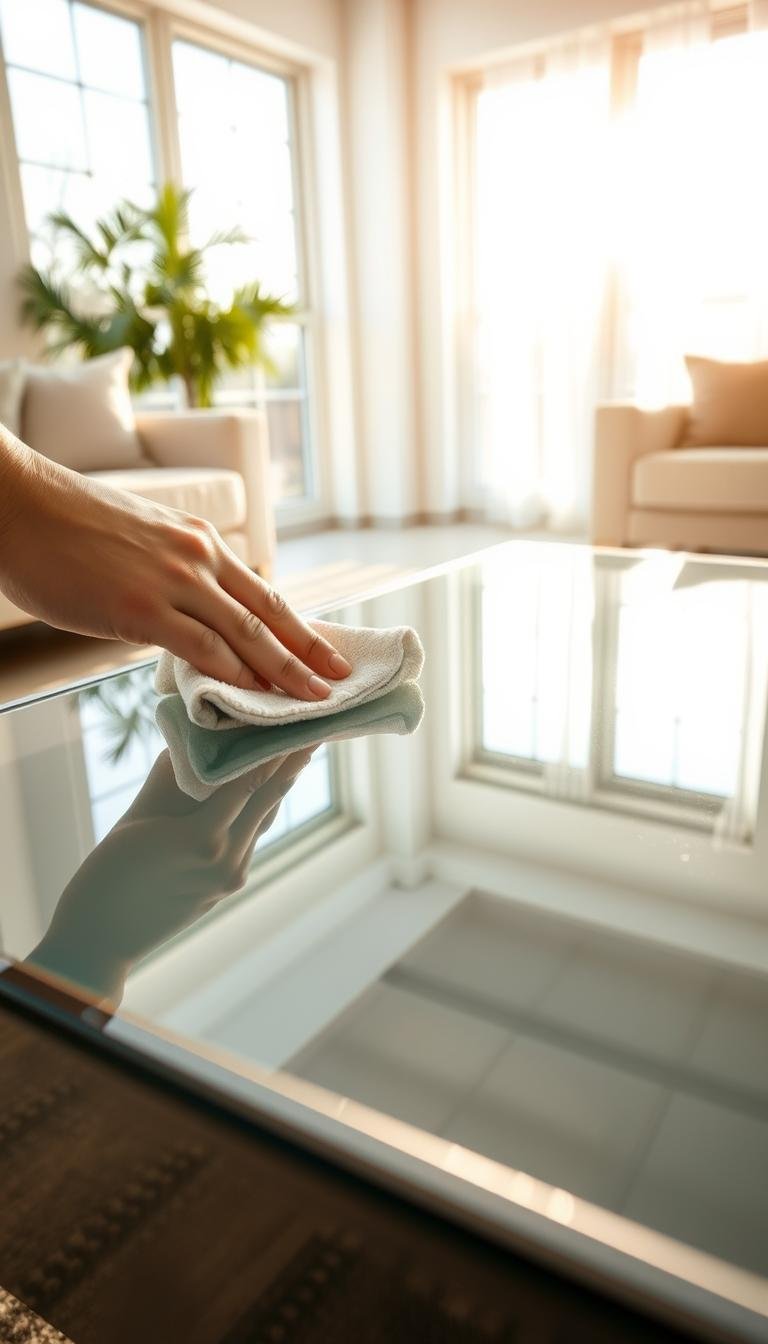
I keep things simple: a residue-free cleaner plus a microfiber cloth beats paper towels and rags. I work on cool glass in indirect light, spray the cloth not the table, then wipe in smooth, overlapping passes.
This routine cuts smudges and streaks fast. I finish by buffing with the clean side of the cloth and checking from different angles. Small habits and optional hydrophobic coatings help the table stay clear longer.
Key Takeaways
- Use a residue-free cleaner and a microfiber cloth for streak-free results.
- Spray the cloth, not the glass, to avoid overspray and streaks.
- Clean in indirect light on cool glass for best visibility of smudges.
- Wipe in smooth, overlapping passes and buff dry with a clean side.
- Preventive coatings and quick daily wipes reduce the need for heavy cleaning.
Why fingerprints show up on glass coffee tables in the first place
What you see as smudges is really oil mixed with fine dirt stuck to the surface. Oils and sweat sit on the glass and bind tiny particles of dust and grime. That mix won’t evaporate with plain water alone.
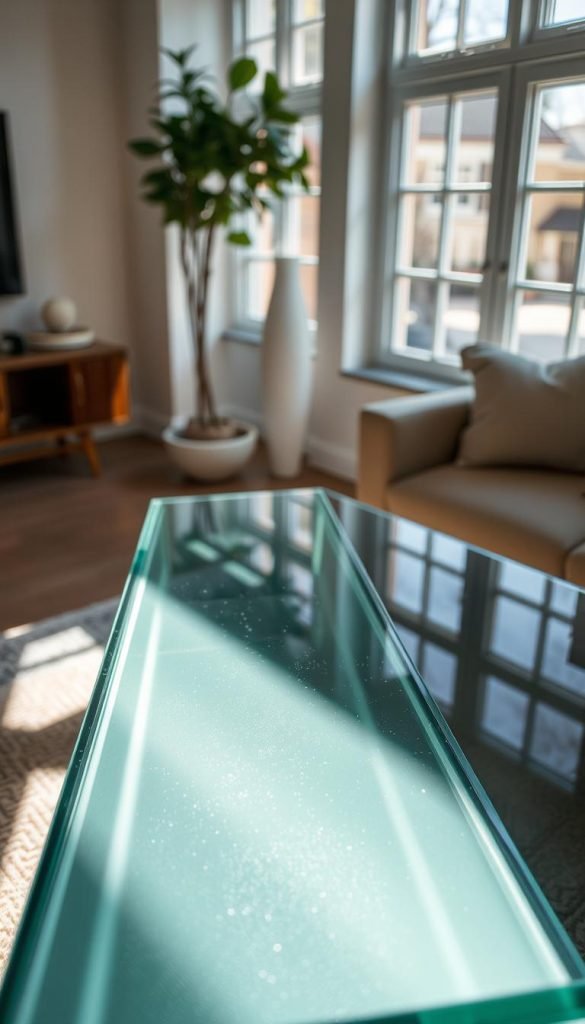
The oil, sweat, and fine dirt your hands leave behind
Visible marks are a blend of oil, sweat, and tiny dirt particles that cling to the glass and resist quick sprays. Every time I rest a palm or move a book, hands re-deposit oils so high-touch areas show smudges faster.
Why streaks happen with the wrong cleaners and towels
Paper towels and cotton rags can’t absorb oils well. They push grime across the surface and create streaks instead of lifting residue.
“Direct sun or heat speeds drying, which traps leftover cleaner and leaves haze.”
- Many all-purpose cleaners are water-heavy or leave additives that don’t cut oils cleanly.
- Working on cool glass in indirect light helps prevent rapid drying and marks.
- A soft cloth made to grab particles lifts grime instead of spreading it.
| Cause | Effect on surface | Simple fix |
|---|---|---|
| Skin oils + dirt | Visible smudges | Use residue-free cleaner and soft cloth |
| Wrong towels | Streaks and smear | Swap to microfiber |
| Heat or direct light | Quick drying, haze | Work in cool, indirect light |
Understanding the cause—oils plus fine dirt—helps me pick tools and steps that avoid streaks. In the next section I’ll outline the exact supplies I rely on to get clear, lasting results.
The tools and cleaning solutions I rely on for spotless, streak-free glass
A few simple, purpose-made items let me restore clarity fast and with less effort. I focus on tools that lift oils and dust instead of spreading them.

Microfiber cloths and a residue-free glass cleaner
Microfiber cloths are essential because their split fibers trap oils and particles. I fold the cloth into quarters so each pass uses a clean side.
Pair that with a dye-free, ammonia-free glass cleaner made for delicate surfaces. I spray the cloth, not the surface, for controlled application.
Safe alternatives: a mild dish soap or vinegar solution for light grime
For light grime, I mix a drop or two of dish soap in water or dilute vinegar with water. Apply sparingly with a soft cloth, rinse with a damp pass, then buff dry.
What to skip: paper towels, cotton rags, and harsh cleaners
I avoid towels that shed and cotton rags that smear oils. Harsh cleaners or abrasive pads can scratch or leave a film that dulls the surface.
- I keep one labeled bottle for my main cleaner and another for mild options to prevent mixing.
- I dedicate cloths just for the table to avoid cross-contamination from kitchen grease.
| Item | Why I use it | When to avoid |
|---|---|---|
| Microfiber cloth | Traps oils and dust; multiple clean sides | If linty or worn, replace |
| Residue-free glass cleaner | Cuts oils without film or haze | Avoid if contains ammonia (near coatings) |
| Dish soap solution | Gentle on fresh grime; accessible | Use sparingly to prevent residue |
| Vinegar solution | Breaks down fresh prints; low cost | Don’t use on certain coatings or stone |
How do I stop my glass coffee table from showing every fingerprint?
Prep matters. I always clear the top and dust the surface before any wet pass. That removes grit so the cloth won’t scratch or smear the finish.
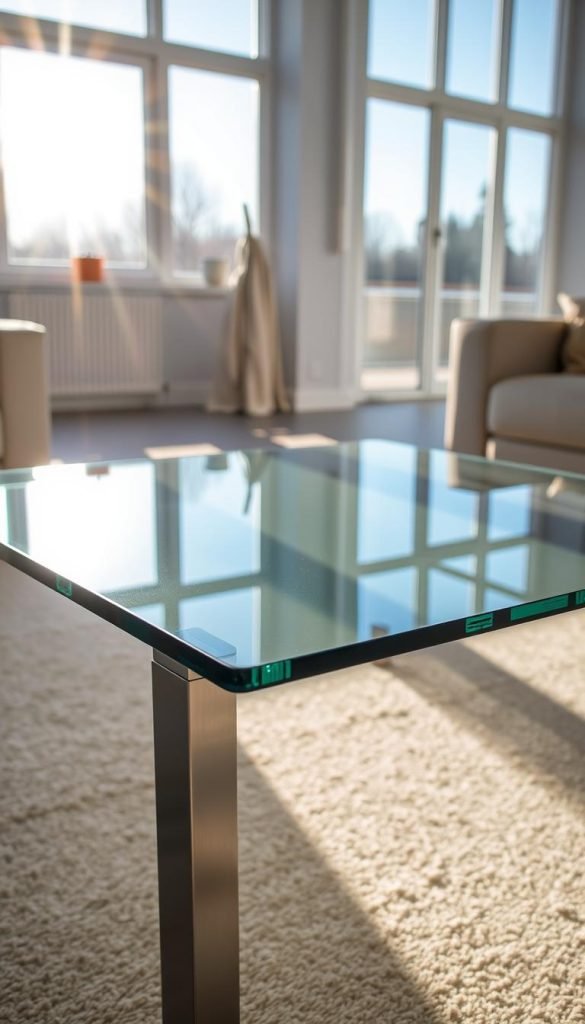
Cool surface, indirect light, and a dust-free area
I wait until the glass is cool and the room has soft, indirect light. Heat can flash-dry a cleaner and cause streaks or spots that are hard to remove.
Spray the towel, not the glass
I fold a microfiber cloth and give one section two light spritzes of cleaner. This small amount gives controlled coverage without overspray or pooling.
Wipe in smooth, overlapping passes
Using a soft S-pattern, I start at the top and work down. Light pressure lifts oils and dust instead of smearing them across the surface.
Buff dry and inspect from angles
After wiping, I flip to a dry side and buff until the surface is clear without leaving haze. I check from different angles and touch up with a clean section and a tiny amount of solution. If the cloth gets damp I swap to a fresh one and finish the rim and legs so the whole table looks consistent.
Pro tips for glass cleaning that leaves no smudges, spots, or residue
Targeted technique beats elbow grease. Small changes in pressure, cleaner amount, and timing give clearer, faster results.
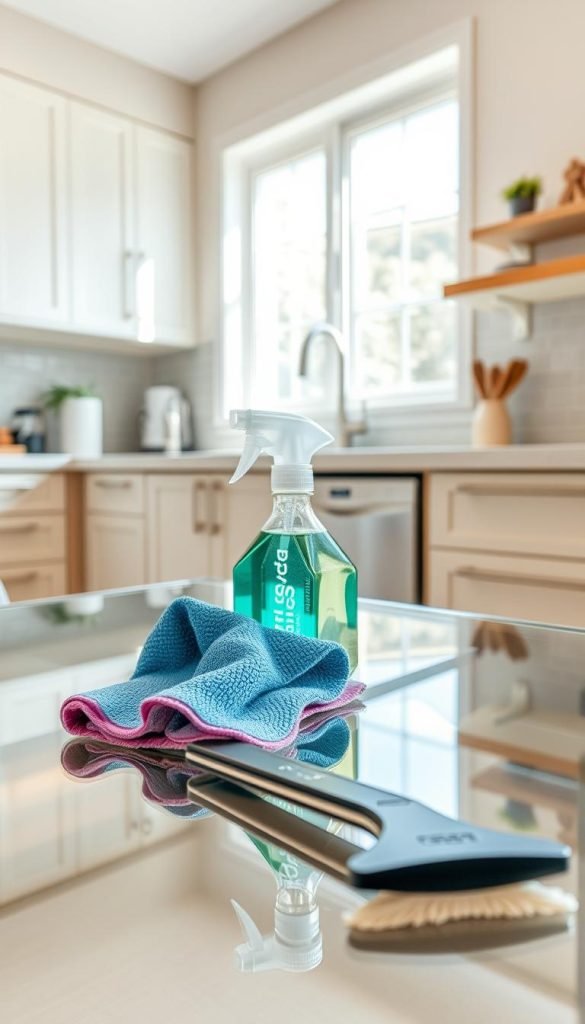
Use a small amount of cleaner and light pressure for best results
I apply a tiny amount of solution to the cloth, not the surface. Light, steady pressure lifts oils and dust without dragging residue across the surface.
Too much liquid or force creates streaks and takes extra time to fix. Buffing with a dry side finishes the job and removes any lingering haze.
Swap cloths as they get damp to prevent re-depositing grime
Keep a clean microfiber cloth ready. When a side feels damp, fold to a fresh section or reach for a spare.
Changing cloths stops water and trapped dirt from going back onto the surface. I also wash microfiber separately and skip fabric softener to keep its grip.
- Quick midweek wipe reduces dust buildup and makes weekend work faster.
- Work in indirect light to avoid flash-drying and see faint streaks while you clean.
- Check edges and the underside lip for hidden moisture or spots.
- Keep a small kit—cleaner, microfiber cloth, and backup—nearby to save time.
| Action | Why it helps | When to use |
|---|---|---|
| Small amount of cleaner | Prevents pooling and streaks | Every full clean |
| Light pressure | Lifts oils without smearing | Spot and full cleans |
| Swap damp cloths | Avoids re-depositing grime | After each damp pass |
| Dry-side buff | Removes haze quickly | Final step |
Finish with an angle check from across the room. If the surface looks invisible, the cleaning truly worked and will hold up until the next quick touch-up.
Keep fingerprints from coming back: everyday habits and long-lasting protection
Small, repeatable habits keep surfaces fresher and cut cleaning time. A few simple moves each week dramatically reduce smudges and dust buildup on glass coffee table tops.
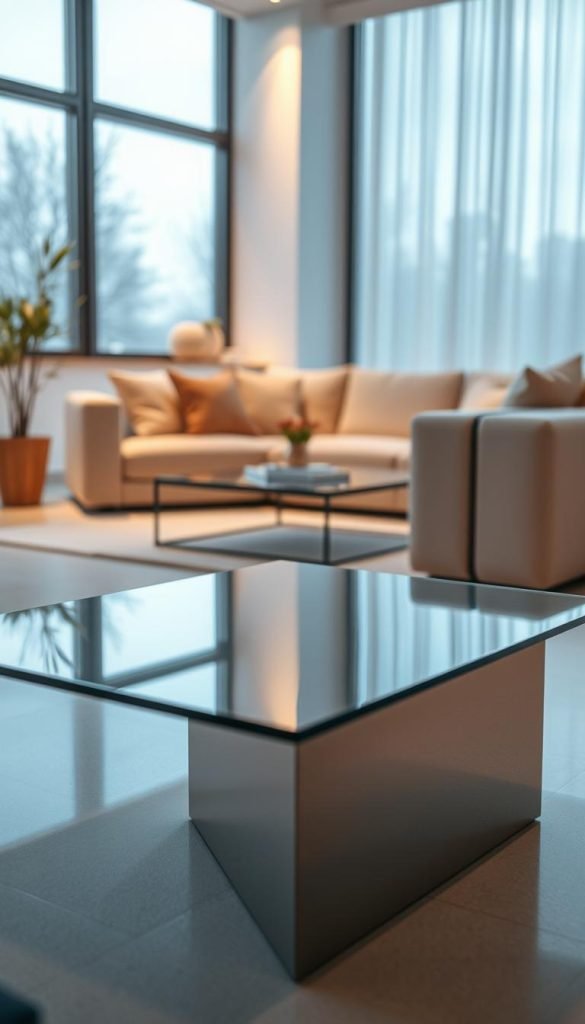
Low-effort daily and weekly habits that minimize smudges
Wipe high-touch areas every few days with a clean, dry microfiber cloth to stop dust and light spots from turning into grime. Use edges or handles rather than pressing hands on the surface to limit fresh marks.
Keep a tiny kit—cleaner, microfiber cloth, spare—near the lounge or dining space so a 60-second touch-up is easy after coffee or meals. Teach family and guests to lift items instead of sliding them across the finish.
Hydrophobic coatings that repel oils and make cleaning easier
Consider a hydrophobic coating or hybrid ceramic cleaning product. These options both clean and add a slick layer that repels oils, so future wipe-downs take less effort.
- Reapply protection as directed to keep the surface slick and prints easy to remove.
- For light maintenance, a dab of dish soap in water or a diluted vinegar solution removes fresh hand marks quickly.
| Habit | Frequency | Benefit |
|---|---|---|
| Quick dry wipe | Every few days | Stops buildup |
| Light weekly clean | Weekly | Prevents grime |
| Hydrophobic treatment | Per product | Less frequent cleaning |
Conclusion
A clear top often comes down to the right routine and a few reliable tools. I use a residue-free glass cleaner and a soft microfiber cloth, spray the towel not the surface, then wipe in smooth, overlapping passes. A quick dry buff finishes without leaving streaks or residue.
I avoid paper towels and cotton rags because they smear oils and trap dirt. Weekly touch-ups with a tiny dish soap or a mild vinegar solution keep dust and grime at bay. Consider a hydrophobic coating to cut re-soiling and speed future cleaning.
Keep a small kit near the lounge and protect the finish by lifting decor instead of dragging it. When the top looks invisible from several angles, I know the job is done—and upkeep only takes a minute.