What are the top cordless picture lights for dark hallways?
I put this roundup together to answer one simple goal: help you elevate artwork without calling an electrician. I tested wireless fixtures that brighten a narrow entry and still feel elegant.
I focused on products that layer soft light on art while also adding usable glow along a passage. In my tests, the right lamp avoided glare and harsh shadows and made a small space read intentional.
My picks span budget-friendly to premium models, including options with remotes and warm finishes that keep walls clean. Each selection balances brightness and beam spread so the hallway won’t look patchy.
Below I’ll show how I size and place each unit so your wall feels designed, not improvised. You’ll leave knowing which lights to buy today and how to install them fast over your artwork.
Key Takeaways
- I tested wireless options that lift artwork and add usable hallway illumination.
- Good choices balance beam spread and brightness to avoid hotspots.
- Warm finishes and slim profiles make a space look timeless.
- Remote and rechargeable models add convenience in tight runs.
- I include quick sizing and placement tips so installation feels finished.
My approach to finding the best battery picture lights for hallways
I tested dozens of battery fixtures to find models that give steady, even illumination in narrow runs. I focused on cordless options that kept frames lit without creating harsh spots.
My checklist blended measured performance with real-world fit. I measured brightness, beam angle, and glare control. I also checked build quality, finish consistency, and how snug the backplate sat against the wall.
I compared power types — standard cells versus rechargeable — because replacement cost and charging habits matter. I weighed extra features like dimming, timers, and remote control so you avoid reaching over fragile frames.
- How the light falls across a piece: hot spot vs. even wash.
- Mount stability when doors open in tight corridors.
- Maintenance: swapping cells, secure housing, no visible seams.
- Quiet, instant on/off without flicker.

| Criterion | Why it matters | What I tested |
|---|---|---|
| Brightness & beam | Even coverage avoids hotspots | Measured lux, spread, and falloff |
| Power types | Cost and convenience | Alkaline vs. rechargeable runtime |
| Mount & finish | Fit, no wobble, visual polish | Backplate fit and seam visibility |
What matters most in a dark hallway: brightness, beam, and temperature
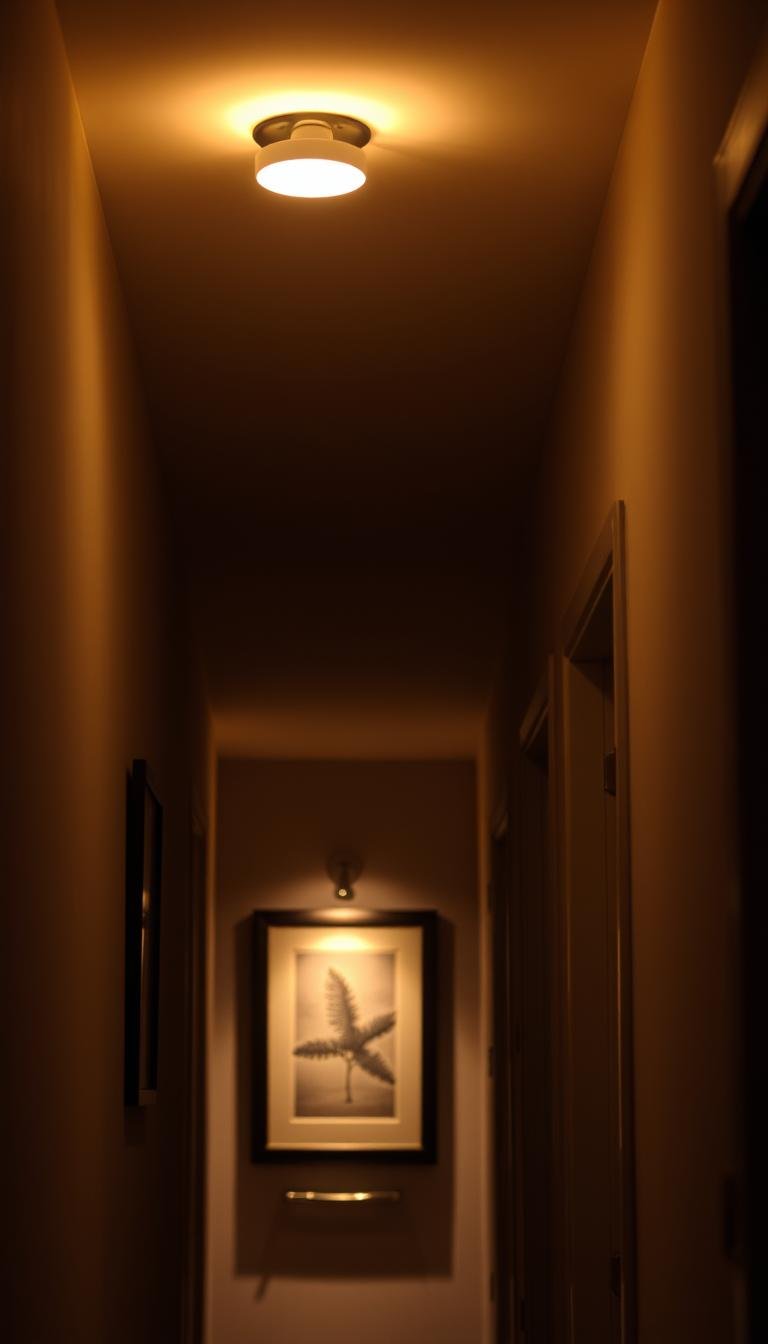
A narrow passage needs lighting that reads like design, not an afterthought. I look for fixtures that do two jobs: make the artwork readable and keep the walk pleasant.
Brightness and beam spread
In tight spaces I favor lights with enough peak output to read a piece at a glance while also spilling light onto the floor so the corridor doesn’t feel like a tunnel. Beam spread matters more than raw lumens; a wider optic often gives a smooth wash top to bottom without a hard cutoff on the wall.
Battery convenience, remote control, and timers
Battery powered models win when they avoid drilling or exposed wiring. I prefer ones with remote control and timers so I can set schedules and avoid reaching over frames. Dimming control is essential for late‑night passes and to tame reflections on semi‑gloss paint.
Warm temperature for artwork and a welcoming look
I choose a warm temperature output so skin tones and natural materials stay inviting. Good color rendition keeps whites from going blue and blacks from washing out. Finally, mounting height matters: place the fixture so light grazes the face of the picture, creating a bright top edge that tapers softly downward.

- Peak brightness that also lights the floor.
- Wider beam to avoid hotspots at frame corners.
- Remote/timer for hands‑off control and consistent schedules.
Top cordless picture lights I recommend for dark hallways
My picks focus on easy installs, low fuss maintenance, and flattering beam spread. Below I highlight a value hero, a rechargeable premium, a performance classic, and a budget winner so you can match finish and function to your run.
Allen + Roth Prichard 18-inch LED — I like the 18-inch brushed gold bar for medium art or two small frames. It is battery powered and mounts with a simple bracket. The included remote control gives dimming levels and a timer. At about $40 it delivers a cleaner look without hardwiring.
Pooky cordless options — Rechargeable models in antique brass and bronze. They use a magnetic charging connection and remote control. That design makes topping up easy when a fixture sits high above a frame.
Concept Picture Lights — Warm-white SMD LEDs that read like incandescent. Four-stage dimming via press-and-hold feels smooth. In my notes, four D batteries ran over a week at ~6 hours/day, matching brochure runtime claims.
Best budget-friendly pick — Mirrors the Allen + Roth value: solid output, easy bracket install, and a finish that blends with modern organic decor for a polished hallway result.
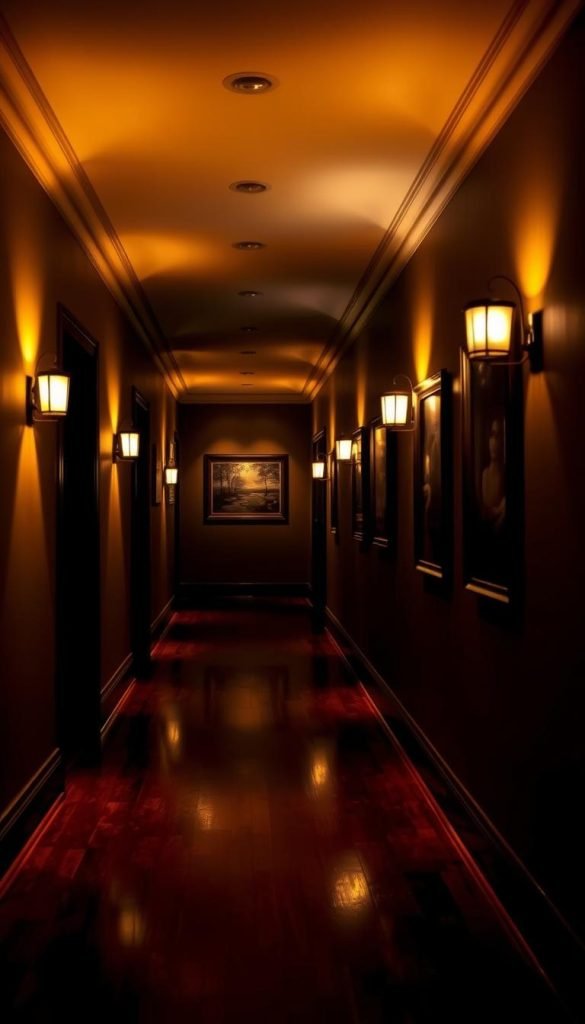
| Model | Power | Finish | Key feature |
|---|---|---|---|
| Allen + Roth Prichard 18″ | Battery / remote | Brushed gold | Timer, easy bracket install |
| Pooky Rechargeable | Rechargeable / remote | Antique brass, bronze | Magnetic charging, no visible wires |
| Concept Picture Lights | Alkaline D / remote | Matte black, brass, antique brass | Warm SMD LEDs, 4-stage dimming |
What are the top cordless picture lights for dark hallways?
I chose options that give consistent beam and color so a run reads as one curated space. My picks balance easy install with even wash and pleasing finish.
My top three: Allen + Roth Prichard for budget-friendly polish, Pooky for rechargeable elegance, and Concept Picture Lights for strong performance on artwork.
For narrow corridors, favor fixtures that throw a wide, even wash so pieces don’t hotspot at the top and fade at the bottom.
If you want simple setup and nightly convenience, battery powered picture models with remote control remove fuss. For period frames, powered picture designs in antique brass or matte black give a timeless look that still feels updated.
When mounting multiple pieces, repeat the same finish and model so beam, color, and on/off timing stay uniform along the run.

| Model | Power | Finish | Key benefit |
|---|---|---|---|
| Allen + Roth Prichard 18″ | Alkaline / remote | Brushed gold | Affordable, easy bracket install |
| Pooky Rechargeable | Rechargeable / remote | Antique brass, bronze | Magnetic charging, low maintenance |
| Concept Picture Lights | Battery / remote | Matte black, brass | Warm output, staged dimming |
Choosing the right size picture light for your artwork and wall width
Choosing the correct fixture width makes a hallway display feel intentional and balanced.
Rule of thumb: matching fixture width to the piece
My sizing rule of thumb is simple: get the right size so the bar either matches the art or comes close enough to wash the entire surface evenly.
Single wide piece
For a single wide work I usually match the fixture to the piece when possible. A bar that tracks a few inches shorter than the frame keeps light on the art, not the ceiling.
Two smaller pieces or gallery runs
In many hallways an 18-inch bar is a sweet spot. That width covers a medium piece or, when centered, lights two smaller frames with a tidy wash.
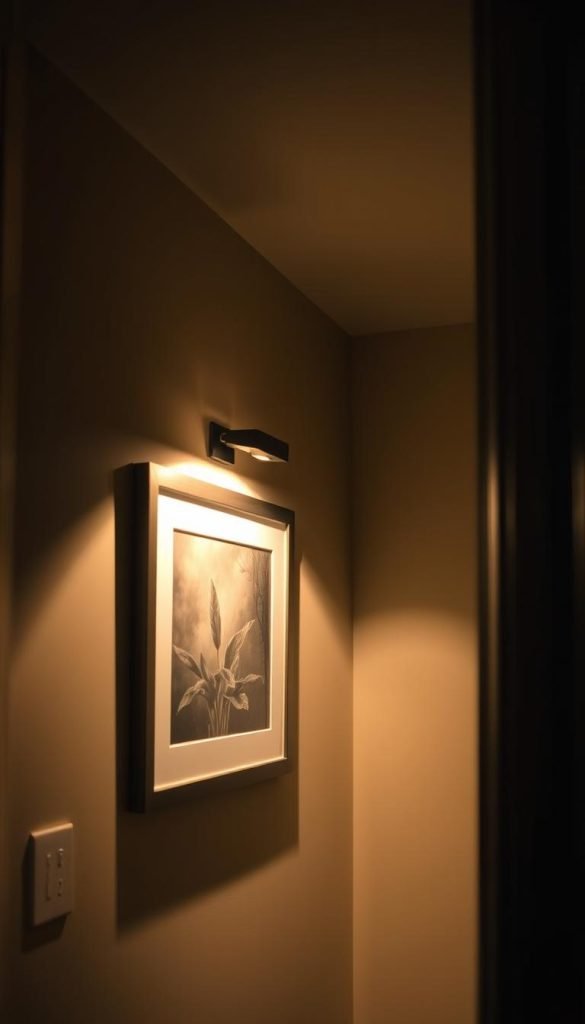
- Avoid oversized heads on a tight wall; they can feel bulky and crowd sightlines.
- Frame depth matters—thicker frames may need a slightly wider bar to prevent shadows.
- Mock up with painter’s tape to confirm drop and width before drilling.
- If you rotate work seasonally, pick a size picture that suits your most common dimensions.
| Scenario | Recommended width | Why it works |
|---|---|---|
| Small single piece | 8–12 in | Focused wash, minimal visual bulk |
| Medium piece or two small | 18 in | Even coverage across one or two frames |
| Wide or tall artwork | 24 in+ | Ensures lower thirds receive light in dim corridors |
When I’m unsure, I test with tape and step back. That quick check saves re-drilling and gives the right size picture result every time.
Installation and placement: no hardwiring, cleaner look
I mount and test one light at a time so every piece reads right in its place. For a quick, renter-friendly setup I rely on battery operated fixtures that avoid chasing outlets.
Quick mount steps
Step 1: Mark the bracket level and anchor it firmly into the wall. Then slide the fixture onto the plate — Allen + Roth models use a simple bracket with a few screws and no hardwiring required.
Step 2: Keep the body of the fixture aligned with the frame’s top edge to create a cleaner look that feels intentional.
Ideal height and finishing checks
A dependable way to avoid glare is to set the bar about 1.5 to 3 inches above the frame and angle the head so the beam grazes the surface.
- I pick low-profile models in slim corridors to reduce bumps and visual bulk.
- When running multiple units, I keep spacing consistent from frames and the ceiling line.
- I always double-check dimming after install because art glass or textured paper can change perceived brightness.
- Finally, I test remote and timer from both ends of the hall to confirm reliable on/off and range.
“Anchor level, slide the fixture on, then fine-tune angle and dimming for the best result.”
| Task | Timing | Why it matters |
|---|---|---|
| Bracket layout & anchoring | 5–10 min | Keeps fixture secure and the wall tidy |
| Slide-on mount | 2 min | No hardwiring, reversible for renters |
| Angle & dim test | 5 min | Controls glare and matches art finish |
Finishes and styles: brushed gold, brass, antique brass, matte black
I like to match finishes so a hallway feels thoughtful and cohesive. Choosing a finish is as much about how it reflects color as it is about style.
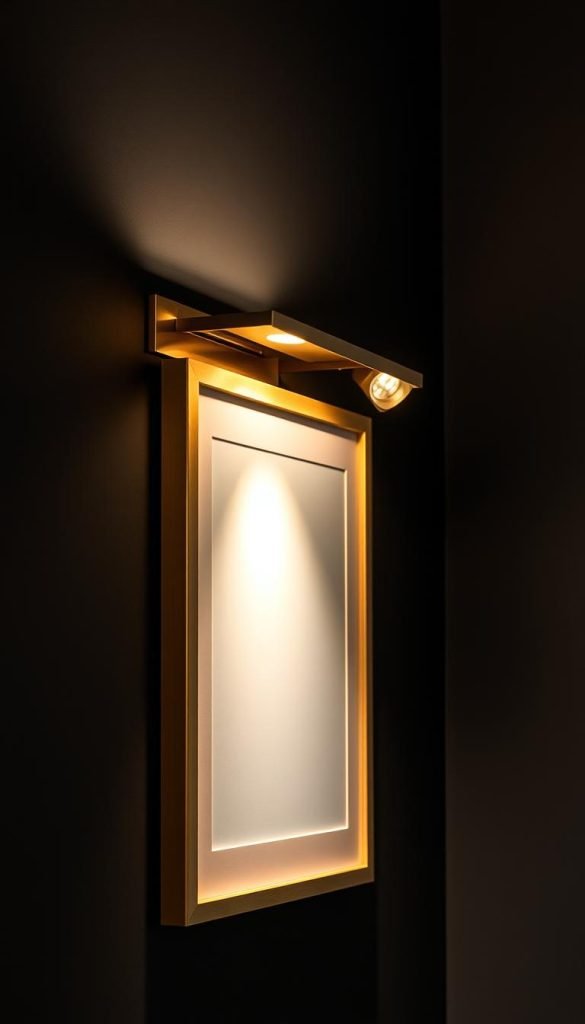
Brushed gold gives a modern organic vibe. I reach for it when natural woods and neutral textiles dominate a home. It warms a picture and pairs well with soft, warm-white output.
Antique brass and bronze (seen on Pooky rechargeable models) work with traditional frames and oil-rubbed hardware. The magnetic charging and remote control keep these finishes practical and wire-free.
Coordinating with frames, hardware, and existing lighting
I keep the picture light finish aligned with the dominant hardware in the hall so trim, knobs, and pendants read as one ensemble. If the hallway flows into a dining area, echo that finish on nearby pendants or cabinet pulls for a continuous look.
Modern organic vs. traditional semi-cylindrical silhouettes
Matte black (Concept Picture Lights) reads crisp and graphic. It grounds light wood frames or black-and-white arrangements along a wall.
Traditional semi-cylindrical silhouettes sit beautifully over classic frames. Slim bars feel lighter and more contemporary. Color temperature interacts with finish: warmer metals amplify warm-white output and reduce glare.
“Pick a satin or brushed sheen — it hides fingerprints and keeps the finish refined.”
| Finish | Best paired with | Why I pick it |
|---|---|---|
| Brushed gold | Natural wood, linen mats | Modern organic, soft warmth |
| Antique brass / Bronze | Gilded frames, oil-rubbed hardware | Traditional, complementary warmth; Pooky rechargeable options available |
| Matte black | Light wood, monochrome art | Graphic contrast, crisp and modern (Concept style) |
Cordless tech that actually performs in hallways
I want gear that stays reliable between installs and still looks good above frames. In practice that means choosing units with predictable runtimes, simple recharge or swap routines, and optics that keep glare down while showing artwork true to tone.
Battery life expectations and rechargeable options
Practical runtimes matter. In my tests the Concept unit ran more than a week at roughly six hours per day on four D cells, which matches its ~100-hour full‑brightness claim. That gives you several evenings of use before any swap.
If you hate swapping cells, Pooky’s rechargeable design with a magnetic connector makes topping up painless. I recharge on a cadence that fits family habits and check battery picture status monthly in heavy‑use homes.
LED quality: warm white, dimming, and glare control
Warm‑white SMD LEDs feel close to incandescent and avoid a blue cast that dulls artwork. They also claim no heat or UV, which helps protect delicate media.
Dimming and remote control are essential. Concept’s four‑stage remote is intuitive and lets me lower output for late nights or bump it up for guests. I also look for beam shaping and baffles so reflections off glass stay minimal.
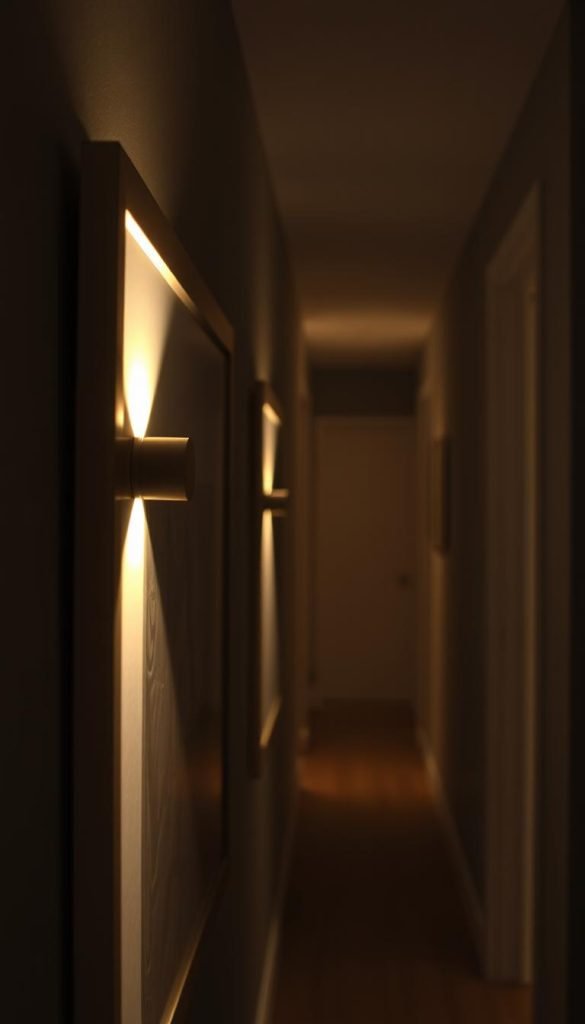
| Topic | Why it matters | Practical note |
|---|---|---|
| Battery life | Keeps runtime predictable | Concept: ~100 hrs on four D at full; >1 week at ~6 hrs/day |
| Rechargeable option | Fewer swaps, easy top‑ups | Pooky: magnetic charging, remote control, no visible wires |
| LED quality | Color, heat, UV safety | Warm‑white SMD feels incandescent; no heat/UV claims |
| Dimming & control | Night and guest modes | 4‑stage remote for precise steps; timers save runtime |
“I prefer a single model across a run so color, temperature, and brightness match from piece to piece.”
Conclusion
I close with clear, usable steps so your hallway feels finished and effortless. Pick a model that matches your frames and routine. If you want a sure bet, allen roth options—especially the allen roth prichard in brushed gold—give a refined picture light experience without hardwiring.
Match fixture width to each piece so the beam covers the whole surface. Decide between battery powered and rechargeable based on how you maintain devices. Repeat a finish down the run, keep installation heights consistent, and use timers or a remote to automate daily use.
Finally, angle the light to cut glare on glassed decorative pieces and confirm battery life claims before you commit. A strong, considered finish and simple upkeep make a small space feel polished long term.