What’s the ideal pendant spacing over a 9-foot island?
I get this question most: I’ll give quick, practical measurements you can use today for your kitchen island. My goal is to make lighting choices feel simple, not technical, so you can mark and hang with confidence.
Placement matters for both how the room reads and how well you can work at the counter. Good pendant placement balances proportion, comfort, and clear sightlines. That keeps your space from feeling crowded or oddly empty.
I outline the sweet spot I use for center-to-center numbers and edge clearance so you know which tape measures to trust first. I also preview when I pick two pendants versus three based on pendant size and the type of light each fixture gives.
Finally, I note how ceiling height and island size influence height and layout. Follow this short guide and you’ll avoid guesswork while keeping your home’s look consistent and welcoming.
Key Takeaways
- I give simple measurements you can use now for a 9-foot kitchen island.
- Proper placement improves both lighting and room look.
- Center-to-center and edge clearance are two different numbers to measure first.
- Choose two or three pendants based on fixture size and light output.
- Ceiling height and island size change recommended height and layout.
Quick answer: My go-to spacing for a 9-foot kitchen island
I use simple center marks and an edge buffer to make layout quick and repeatable. Start by leaving 6 inches at each end, then work with the remaining run.
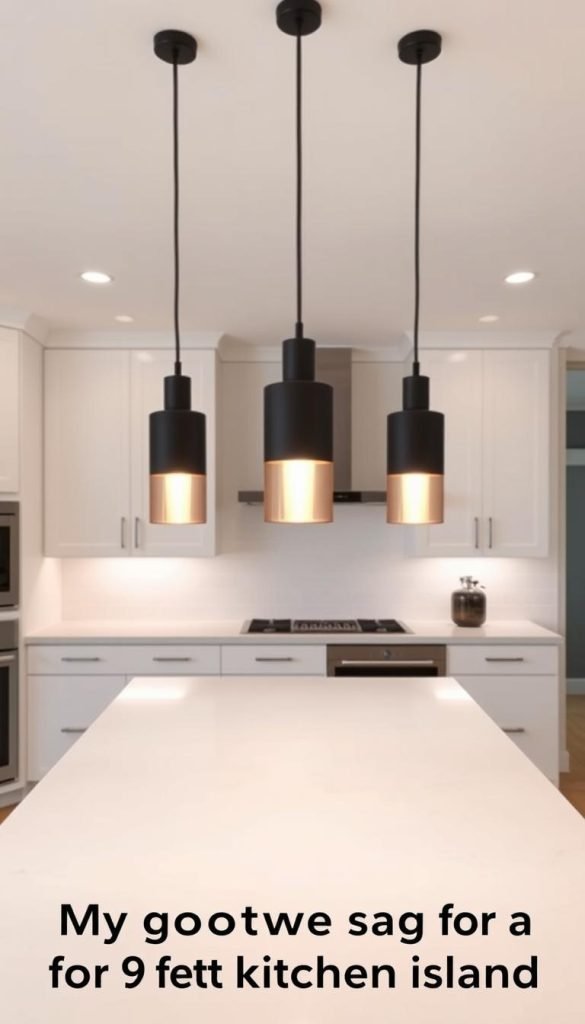
The sweet spot: 24–30 inches between fixtures, 6 inches from each end
For a 9-foot span (108 inches) I subtract 12 inches for end clearance. That leaves 96 inches to divide. Spacing fixtures about 24–30 inches center to center gives even pools of task light.
When I choose two vs. three
If I want fewer, bolder shades, I pick two larger fixtures (12–16 inch diameters). For even coverage, I install three smaller or medium lights and keep them in that 24–30 inch range.
- Height tip: hang 30–36 inches above the countertop; for 10-foot ceilings set bottoms near 70–72 inches off the floor.
- Preview with tape, string, or paper lanterns before drilling.
- Rule thumb: bigger shades = fewer fixtures; smaller shades may need a third.
Key factors I weigh before placing island pendants
I start with the island footprint and mark usable surface, including any seating overhang. If people sit there, I shift coverage so plates and prep zones get direct light.
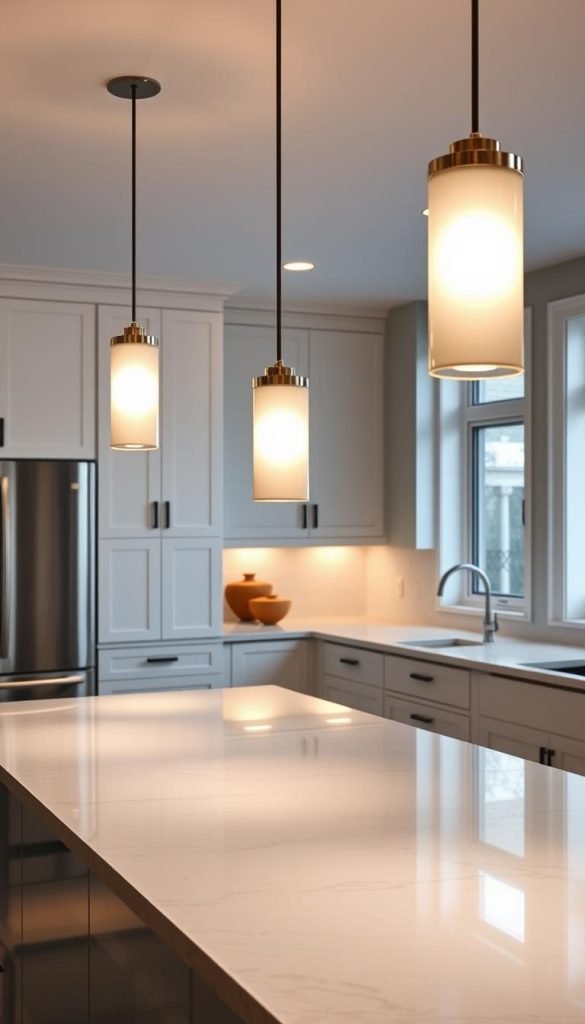
Island dimensions and usable surface
I measure length and width, then leave at least 6 inches at each end for edge clearance. That keeps fixtures from feeling crowded and protects sightlines across the room.
Pendant diameter and light spread
Big shades push more light, so larger pendants can cut the fixture count—often two for a nine-foot span. Smaller pendant lights need closer centers to avoid dark patches.
Ceiling height and sightlines
Lower ceilings call for compact forms; taller ceilings let me scale up for drama. I check sightlines so nothing blocks views or makes the island look heavy.
Aesthetics and function
I balance form and use by matching finishes and scale to the room. Before drilling, I test with tape, string, or a temporary bulb so spacing and brightness feel right.
- Tip: Visualize with painter’s tape to tweak centers.
- Tip: Shift lights toward seating when an overhang exists.
- Tip: Choose fixtures that fit your design and task needs.
For more practical placement examples, see island pendant lighting tips.
What’s the ideal pendant spacing over a 9-foot island?
My first move is to mark 6-inch end buffers, then mock up lights to judge rhythm and coverage.
Typical layout choices come down to two looks: three medium pendants for steady coverage or two larger fixtures for bold, simple impact.
Three medium lights: center the middle fixture on the island length, then place outer lights so centers sit about 24–30 inches apart and still keep 6 inches from each end.
Two larger fixtures: pick shades roughly 12–16 inches in diameter and space their centers so they read balanced and not too far apart.
I always measure from the countertop edge to avoid skew and use painter’s tape for pencil marks. Then I preview with paper lanterns or placeholders to check light spread and sightlines.
- I confirm each center aligns with cabinetry and the island length for a clean composition.
- I stick to the 24–30 inch band for center-to-center distance, adjusting slightly for shade diameter and output.
- For a step-by-step layout guide, see how many pendant lights over 9 ft.
How I measure and mark perfect placement
I start with a simple center line so every mark references one fixed point. That keeps measurements honest and makes adjustments quick when I test with placeholders.
My step-by-step for two pendants on a 9-foot island
I find the island center and mark it with painter’s tape. From that center I measure equal inches left and right to place each pendant center. I always confirm there’s at least 6 inches from each end before tightening any marks.
- Tip: subtract 12 inches from the island run to reserve end clearance, then divide remaining inches for even centers.
- Label each center on the countertop so I can cross-check numbers quickly.
My step-by-step for three pendants on a 9-foot island
I set the middle pendant first at the island center. Then I measure roughly 24–30 inches from that middle point to each outer center so the spread feels balanced and practical.
I use those numbers to confirm edge clearance and adjust slightly for shade diameter or fixture output.
Using tape, string, or placeholders to preview spacing and height
I run a tape line along the countertop and drop a plumb line to mark exact centers on the surface. Then I hang paper lanterns or tie balloons to string as placeholders.

“Mockup saves mistakes; I prefer seeing mass and shadow before I drill.”
Finally, I check alignment against countertop seams and cabinetry so the grid reads clean from every angle. This guide helps me lock in placement that looks deliberate and works well.
Height matters: Getting pendant lights right above the countertop
My starting point is a practical hanging height that keeps faces visible and gives solid task light on the island countertop. That balance keeps the room friendly and functional.

Standard guidance: 30–36 inches above the surface
I hang most pendants about 30–36 inches above the island surface. This range delivers focused illumination without blocking sightlines or feeling low when people sit.
Adjusting for lower vs. taller ceilings
On 8-foot ceilings I stay closer to 30 inches so the lights don’t crowd the space. For 10-foot-and-up ceilings I raise fixtures so their bottoms land near 70–72 inches from the floor.
Reducing glare and avoiding interference with views
I use dimmable bulbs or diffusers when bulbs are exposed. That keeps brightness pleasant and stops glare into eyes.
- I test heights with a helper so I can judge comfort for sitting and standing.
- I recheck cord or chain length against ceiling height to ensure adjustment room.
- I confirm lights clear cabinet doors, hood lines, and head space for taller guests.
- Finally, I keep matching lights at the same height so the trio or pair reads tidy and intentional.
“Good height makes lighting feel effortless — it should help you cook, chat, and enjoy the room.”
Choosing pendant size and style for scale and function
I choose fixture size by balancing light spread and visual weight so the row reads intentional and useful. That decision affects how many lights you need and how the whole kitchen feels.
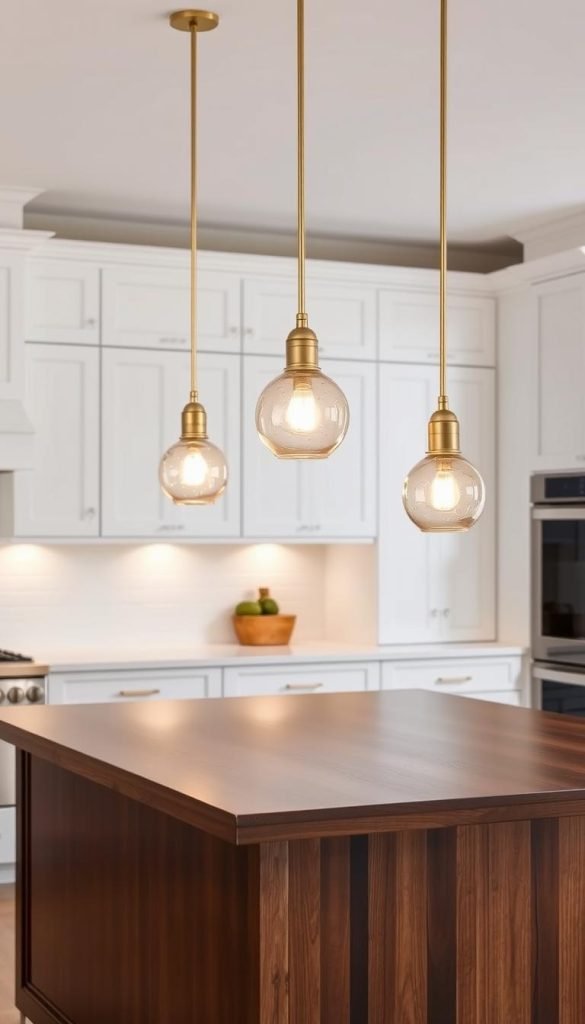
How fixture diameter influences the number of lights
Larger shades give broader coverage, so two fixtures often light a nine-foot run well. Smaller shades fail to cover as much, so I plan for three to avoid dim spots.
For low ceilings I pick compact forms. For ceilings ten feet and taller I use taller or wider fixtures to fill vertical space and keep proportions right.
Matching finishes and shapes to your kitchen design
I match style to room design: sleek metal for modern, exposed bulbs and steel for industrial, warm wood and aged brass for farmhouse. Clear glass stays versatile across looks.
I check finishes against cabinet hardware and appliances at home so the set reads as one design story. I also pick adjustable drops and confirm lumen output so work zones stay bright and comfortable.
“Size and finish should solve both form and function.”
Common spacing mistakes I avoid
I avoid crowded rows because too many fixtures make islands look busy and cast uneven light.
Overcrowding with too many fixtures dilutes each light’s effect and fragments the look. I prefer fewer, well-placed pendants to many pendants that compete for attention.
Ignoring edge clearance and centering
I always keep a minimum 6 inches from each end and center the array so the composition reads calm and polished. Starting from a single center line helps me stay symmetrical and prevents fixtures from drifting to one side.
Hanging too high or too low for your ceiling height
I track height carefully and keep most drops between 30–36 inches above the countertop. If fixtures sit far apart or too close to the ceiling, task lighting suffers and glare increases.
- I don’t cram too many pendants because overcrowding reduces lighting effectiveness.
- I resist putting lights far apart; the 24–30 inch band keeps pools even.
- I match finishes and shade shapes so the line reads cohesive, not pieced together.
- I test placement standing, sitting, and walking the kitchen before drilling.
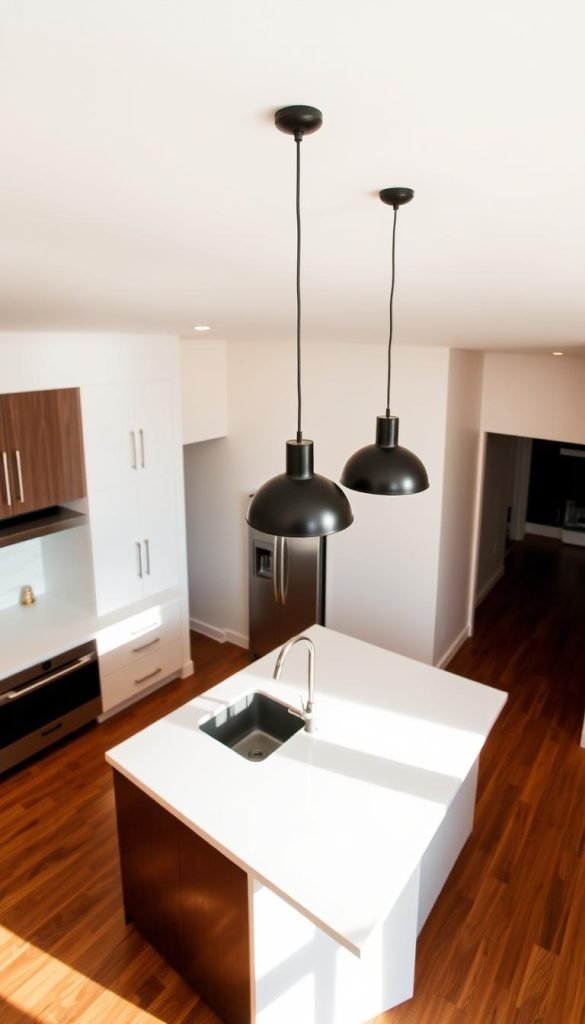
| Common Mistake | Why It Matters | Quick Fix |
|---|---|---|
| Too many lights | Creates clutter and uneven pools | Remove extras; choose larger shades |
| Poor edge clearance | Feels cramped and asymmetrical | Reserve at least 6 inches per end |
| Wrong height | Glare or weak task light | Aim 30–36 inches above countertop |
| Mismatched styles | Breaks visual flow | Use matching finishes and shapes |
Real-world rules of thumb I rely on
I use simple checks that keep layout steady and avoid guesswork. Start by holding the run in clear inches and reserve room at both ends so fixtures don’t feel crowded.
Edge clearance: I always leave at least 6 inches from each island end. That small gap protects sightlines and prevents lights from appearing to hang over the counter edge.

Center-to-center spacing
My go-to center-to-center distance is 24–30 inches. For a 9-foot length I subtract 12 inches total for end gaps, then divide the remaining run to place centers evenly.
With three fixtures I place one at center and mirror the outer two. With two fixtures I measure equal distance from the center point and confirm each sits at least 6 inches from the ends.
- I tape my mounting plan along the counter so every mark stays true.
- I level each drop and match heights so the row reads tidy.
- If more task light is needed, I tighten centers slightly; for big shades I increase the gap a touch.
“These are practical rules of thumb I tweak for shade size, room scale, and how people use the counter.”
| Rule | Why it matters | Quick action |
|---|---|---|
| 6-inch edge clearance | Prevents crowded look and keeps sightlines clear | Mark 6″ from each end before placing centers |
| 24–30″ center-to-center | Balances task light and visual rhythm | Subtract 12″ from length, divide remaining run |
| 30–36″ height above countertop | Avoids glare and keeps faces visible | Adjust to 70–72″ from floor for tall ceilings |
Conclusion
My quick take: leave 6 inches at each end, aim for 24–30 inches center‑to‑center, and hang lights about 30–36 inches above the countertop for most 9‑foot runs. These numbers make layout fast and predictable.
I pick two larger shades when I want fewer, bolder fixtures and three smaller lights when even coverage matters. Then I tweak height to suit ceiling height and room scale so the light feels comfortable.
Before you commit, center your run, measure twice, and mock placement with paper lanterns or tape. I also build a simple table with overall length, edge gaps, and center points to bring on install day.
Use these rules as your guide, adjust for style and size, and you’ll end up with island lighting that looks right and works well for how you live at home.