How do I choose a rug pad that works on both carpet and hardwood?
I set one clear goal: find one pad that grips hardwood while staying stable on carpet, adds cushioning, and protects floors from scratches and furniture marks.
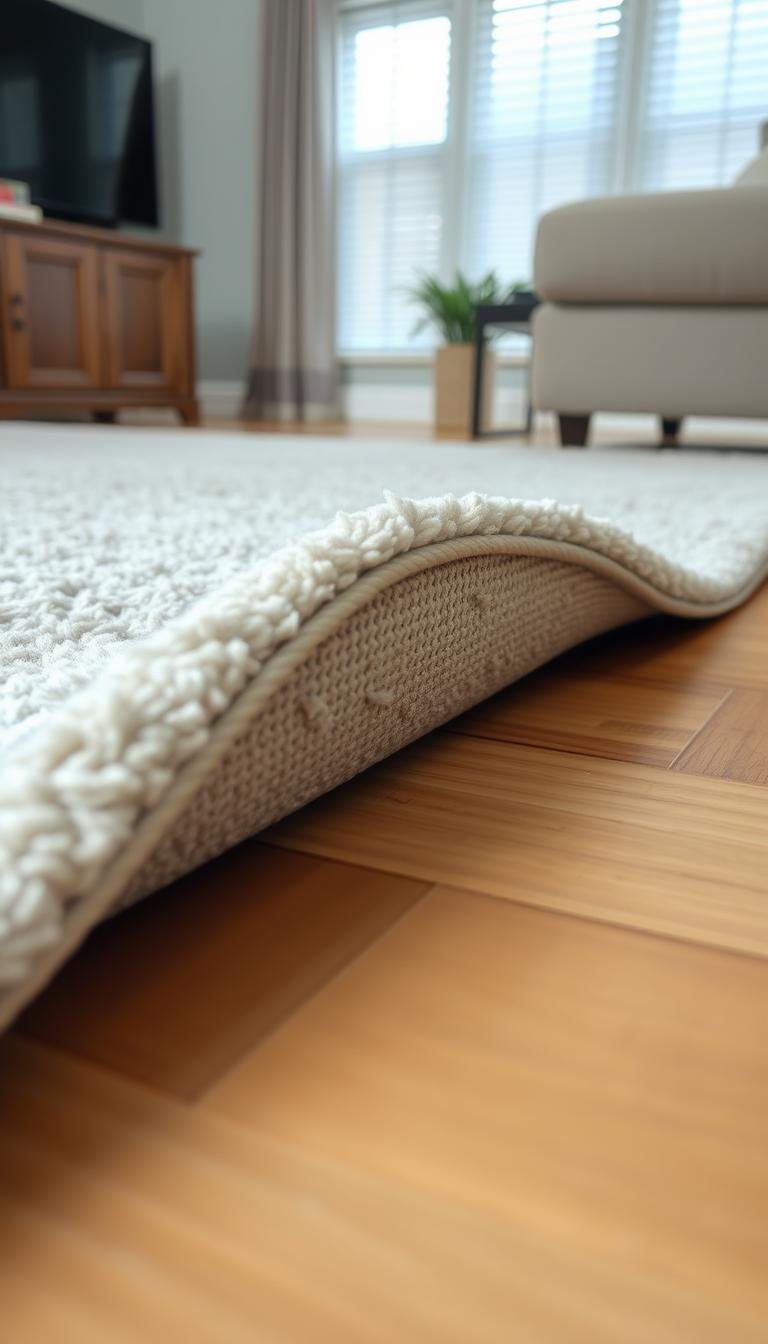
My go-to option is a dual-surface felt-and-natural-rubber rug pad. The felt side hugs the underside of rugs to keep them flat. The natural rubber backing anchors to the floor without staining most finishes.
Safety and care matter: pads stop slips, reduce trip hazards, and prevent bunching at doorways. I trim the pad about one inch smaller than the area rug so edges stay hidden and corners lie flush.
For indoor air quality, I pick low-VOC, recycled felt with natural rubber and avoid PVC. Thickness affects comfort and door clearance, so I pick low-profile in busy zones and plusher options in living spaces.
Key Takeaways
- Dual-surface felt with natural rubber gives grip and cushioning without staining floors.
- Trim the pad ~1 inch smaller than the area rug to hide edges.
- Low-VOC, recycled materials are safer than PVC for finishes and air quality.
- Choose thickness based on traffic and door clearance.
- Quality pads cost more but protect floors and extend rug life.
- Use thin rubber for small rugs; felt-rubber combos suit mid-size and plush options for large rugs.
What I’ll help you decide today
I’ll walk you through the simple choices that keep family areas safe, floors intact, and steps comfortable. In short: pick a dual-surface felt-and-natural-rubber rug pad and trim it about one inch smaller than the area rug for best results.
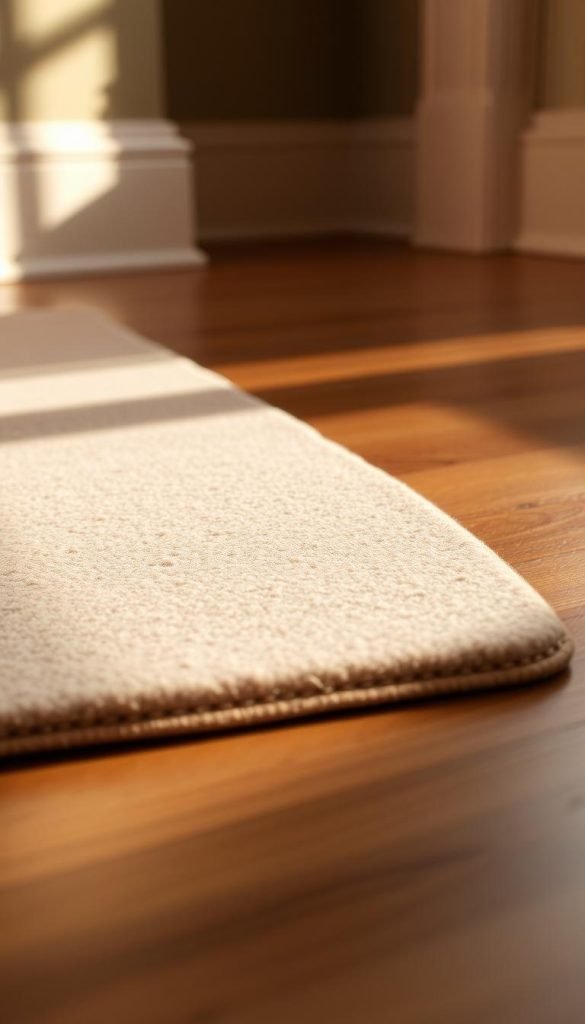
User intent at a glance: safety, floor protection, and comfort
Safety first: a non-slip pad stops movement and corner curl, cutting trip risk. Pads also reduce friction between rugs and flooring, which lowers scratches and wear.
Flat rugs make vacuuming easier and keep rooms tidy. Felt on top grabs the rug; natural rubber beneath anchors to hardwood floors without sticky adhesives.
Quick answer: the right dual-surface pad and proper sizing
I recommend the felt-rubber option for most rooms. Trim the pad about 1 inch smaller than the rug so edges stay hidden and corners lie flush.
- Where grip matters most: entryways, hallways, bathrooms.
- Where cushion matters most: living rooms, bedrooms.
- Material note: felt stabilizes and adds body while natural rubber secures to wood without staining finishes.
| Need | Recommended option | Thickness tip |
|---|---|---|
| High grip (small rugs) | Thin felt + natural rubber | Low-profile |
| Cushion (large area rugs) | Thicker felt-rubber combo | Medium to plush |
| Door clearance | Low-profile felt or thin rubber | Under 1/4″ where doors swing |
How this how-to works: my step-by-step for picking the right pad
My first step is to decide whether the space needs extra traction or more softness underfoot. That single call frames every later choice: materials, thickness, and final trimming.
Step one: match grip vs. cushion to your space
I favor low-profile natural rubber or felt-rubber designs (RugPro, waffle-style natural rubber) for runners and small rugs where grip matters most. For living rooms, I lean toward felt or memory foam for extra cushioning and comfort.
Step two: choose material
Natural rubber gives non-slip performance on hardwood. Felt adds body, warmth, and sound control. Memory foam delivers plush under large area rugs where grip is less critical.
Step three: dial in thickness
Select 1/16–1/8″ for doors and heavy traffic, 1/4–3/8″ for balanced comfort, and up to 1/2″ for lounge zones. I always check thresholds before committing.
Step four: size and trim so the area rug lays flat
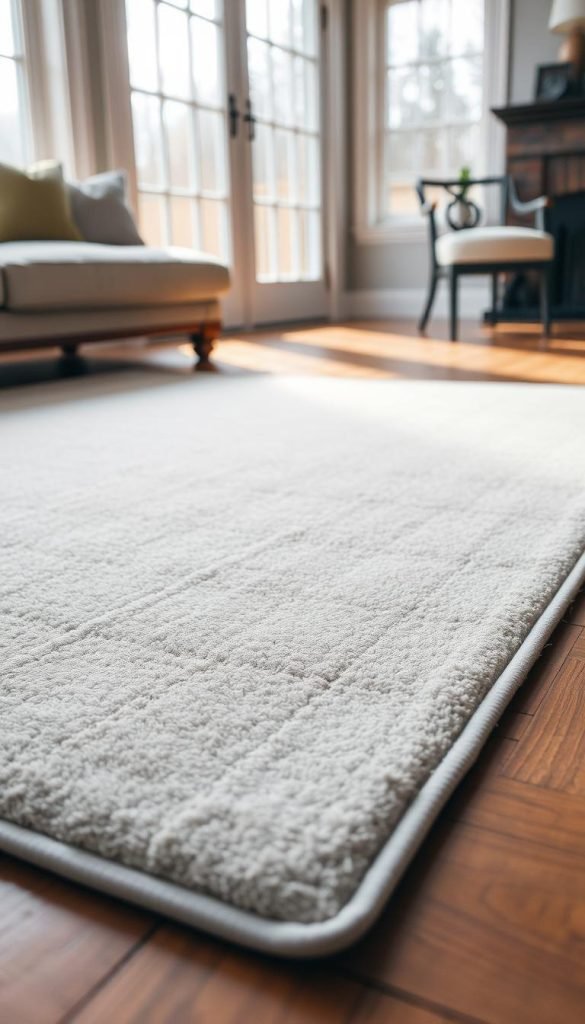
Measure, cut, and trim the pad about 1″ smaller on all sides so edges stay hidden and corners lie flush.
“Trim the pad slightly smaller than the rug — it keeps edges invisible and prevents curl.”
| Use case | Recommended option | Thickness tip |
|---|---|---|
| Small rugs & runners | Low-profile natural rubber / felt-rubber | 1/16–1/8″ |
| Medium area rugs | Felt + natural rubber combo (Contour-Lock) | 1/4–3/8″ |
| Large rugs anchored by furniture | Felt or memory foam (Eco-Plush, Cloud Comfort) | Up to 1/2″ |
Rug pad basics: why rugs need pads on any floor
A simple layer beneath rugs prevents bunching and cuts trip hazards in busy homes.
Keeping rugs in place is the top safety win. A good pad stops sliding and corner curl, which lowers slips and trips on hard floors and high-traffic zones.
Keeping rugs in place and preventing trips
Thin runners and small pieces need strong grip. Natural rubber gives traction without sticky residue.
Protecting hardwood floors and carpet from wear
Pads act as a buffer underfoot. They reduce friction between textile and floor, so finishes and carpet fibers last longer under furniture and feet.
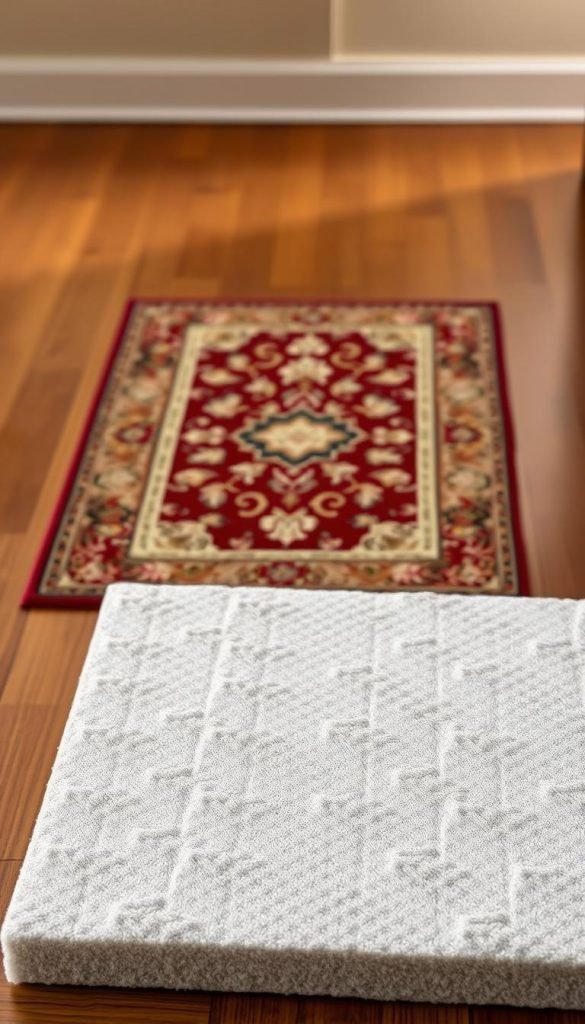
Longer rug life, easier vacuuming, better airflow
Felt or felt-rubber combos add cushioning and stop thin flatweaves from rippling. Better airflow under rugs helps prevent mildew and keeps vacuuming simple.
“Trim the pad slightly smaller than the rug — it keeps edges invisible and prevents curl.”
| Benefit | Best for | Quick tip |
|---|---|---|
| Non-slip | Small rugs & runners | Use natural rubber |
| Floor protection | High-traffic areas | Choose felt-rubber combo |
| Cushion & sound | Living rooms, area rugs | Pick thicker felt options |
Materials decoded: felt, natural rubber, felt-rubber combos, and memory foam
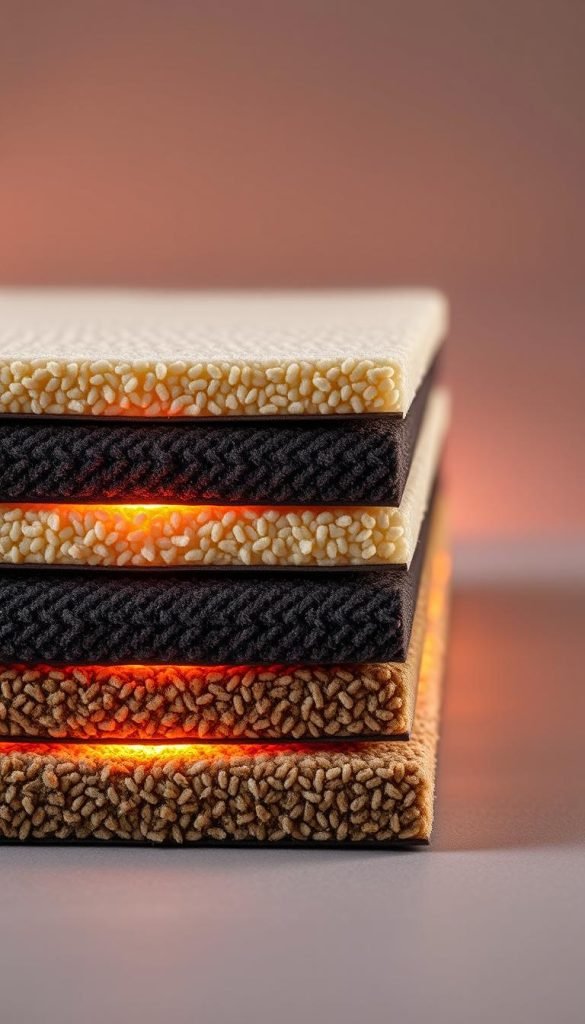
I look at materials first because they set the performance and feel underfoot. Each surface brings clear strengths: cushioning, grip, or both. Below I break down the common types so you can match the option to room needs.
Felt pads for cushioning and sound absorption
Dense, recycled-fiber felt adds body, quiets footsteps, and boosts comfort. Felt pads are heat-pressed without adhesives, so they resist shedding and hold loft longer. They are ideal under medium and large area rugs where cushioning and insulation matter most.
Natural rubber for non-slip grip on hardwood floors
Natural rubber is my go-to non-slip hero for hardwood and tile. It grips firmly without synthetic adhesives that can stain finishes, making it safe for many hardwood floors. Dense rubber also lasts; it keeps thin runners from sliding in high-traffic zones.
Felt + rubber (dual surface) to balance cushion and grip
Dual-surface felt-rubber pads pair a felt face that grabs the rug with a natural rubber backing that locks to the floor. This heat-pressed combo blocks grit better than open-weave styles and often gives the best value for everyday living spaces.
Memory foam for extra comfort under large area rugs
Memory foam pads (around 7/16″) feel like a mattress topper. They maximize comfort and sound absorption and can include moisture barriers with low-VOC content. Use them where grip is less critical and plush cushioning is desired.
| Material | Best for | Key benefit |
|---|---|---|
| Felt | Medium & large rugs, bedrooms | Cushioning, sound control, insulation |
| Natural rubber | Runners, entryways, hardwood floors | Non-slip grip without staining |
| Felt + natural rubber | Living rooms, multi-surface use | Balanced cushion and floor grip |
| Memory foam | Large area rugs, lounge zones | Maximum comfort, quiet, moisture barrier |
Tip: For most homes, a felt-rubber combo delivers the best balance of cushion, grip, and long-term value.
Thickness and lift: finding the sweet spot for doors, feet, and furniture
Thickness alters how a rug sits underfoot, affects door clearance, and changes how furniture settles.
Low-profile options (1/16″–1/8″) like RugPro and waffle-style natural rubber give excellent grip and keep doors moving freely. I use these for runners and small rugs where clearance matters most.
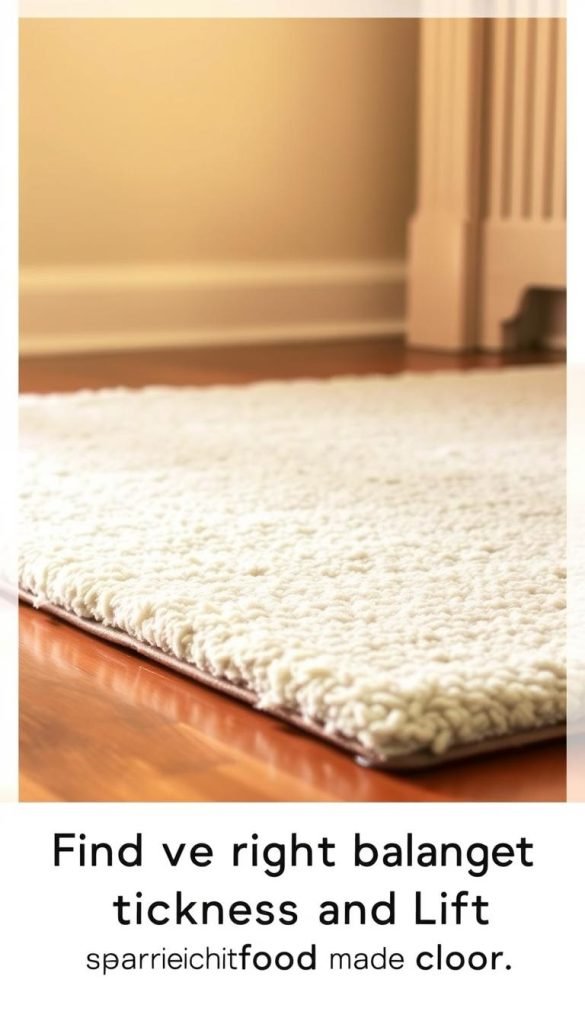
Medium to plush choices center on comfort. A 1/4″ felt-rubber combo balances cushioning and anchor for mid-size area rugs. Moving up to 3/8″ adds more cushion without making the rug float.
Plush pads—around 7/16″ memory foam or 1/2″ felt—feel luxurious underfoot in bedrooms and living areas. They can block door swings and may give thin flatweaves a “floating” look, so I reserve them for large rugs held down by furniture.
“Measure door clearances before you buy. If a door barely clears, go ultra-thin.”
| Use case | Recommended thickness | Quick tip |
|---|---|---|
| Entryways & runners | 1/16″–1/8″ | Low-profile rubber for grip and clearance |
| Living room & mid-size area rugs | 1/4″–3/8″ | Balanced cushion and stability for furniture |
| Bedrooms & lounge zones | ~7/16″–1/2″ | Plush comfort; avoid under thin flatweaves |
Sizing and trimming: how I get the rug pad to disappear
Sizing the pad right makes it vanish beneath the rug and keeps edges tidy.
The rule I follow is simple: cut the pad about 1 inch smaller on each side than the rug. For example, a 9’×12′ area rug pairs best with a pad roughly 8’10″×11’10”. That tiny inset hides edges and stops corners from lifting.
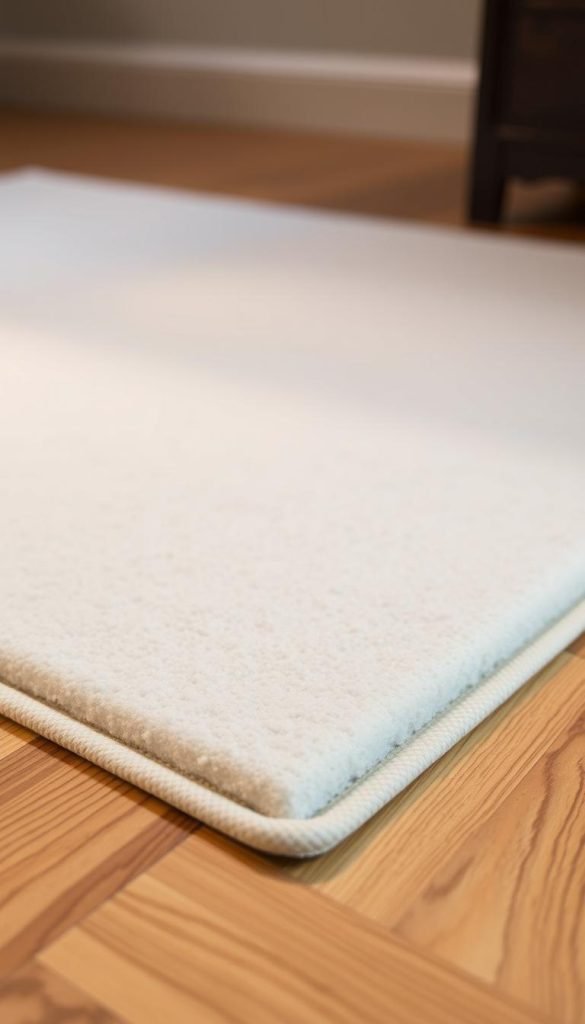
Custom cuts for round, oval, and irregular shapes
I place the rug on the pad, trace the outline, and cut. For rounds and ovals I use sharp scissors; for thick felt-rubber combos I score with a fresh utility blade and work slowly to avoid crumbling.
Before final trimming I mark door swing points on the underside and shave an extra 1/8″ where needed. I always test-fit, then fine-tune edges before returning furniture.
“Trim the pad slightly smaller than the rug — it keeps edges invisible and prevents curl.”
| Situation | Recommended size | Cutting tip |
|---|---|---|
| Standard rectangular area rugs | 1″ inset all sides | Scissors for thin pads; utility knife for thick |
| Round or oval rugs | Trace and cut to shape | Slow, repeated passes with blade |
| Doorway or swing clearance | Taper 1/8″ extra under swing | Mark before cutting and test-fit |
Choosing by rug size: small, medium, and large area rugs
Small runners need near-zero lift so doors clear and footsteps stay steady. For tiny mats and hallway runners I favor natural rubber or low-profile felt rubber for maximum grip and minimal thickness.
Tip: keep the profile ultra-low in entryways so doors swing freely and edges lie flat.
Small rugs and runners: maximum grip, minimal lift
Small pieces move more than larger coverings, so grip is the priority. Natural rubber grippers or ultra-thin felt rubber work best.
These options provide traction without raising thickness that blocks doors or causes snags. Trim the pad about 1″ inset so corners hide beneath the rug.
Medium rugs: balanced cushion and grip
For 4×6 to 5×9 areas I pick a felt + natural rubber combo like Contour-Lock or Superior-Lock.
Why: the felt gives cushion and warmth while rubber secures the rug for vacuuming and daily use.
If the run is in a high-traffic path I go thinner; if it’s a lounge spot, I step up to 1/4–3/8″ for extra cushioning.
Large/oversized rugs: prioritize cushioning and floor protection
Large area rugs (8×10 and up) are heavy and often anchored by furniture. I focus on dense felt or memory foam (Eco-Plush, Cloud Comfort) for comfort and floor protection.
Thin flatweaves still benefit from a felt-rubber touch to prevent ripples. Always size the pad about 1″ smaller per side and choose low-VOC felt and natural rubber for finish safety.
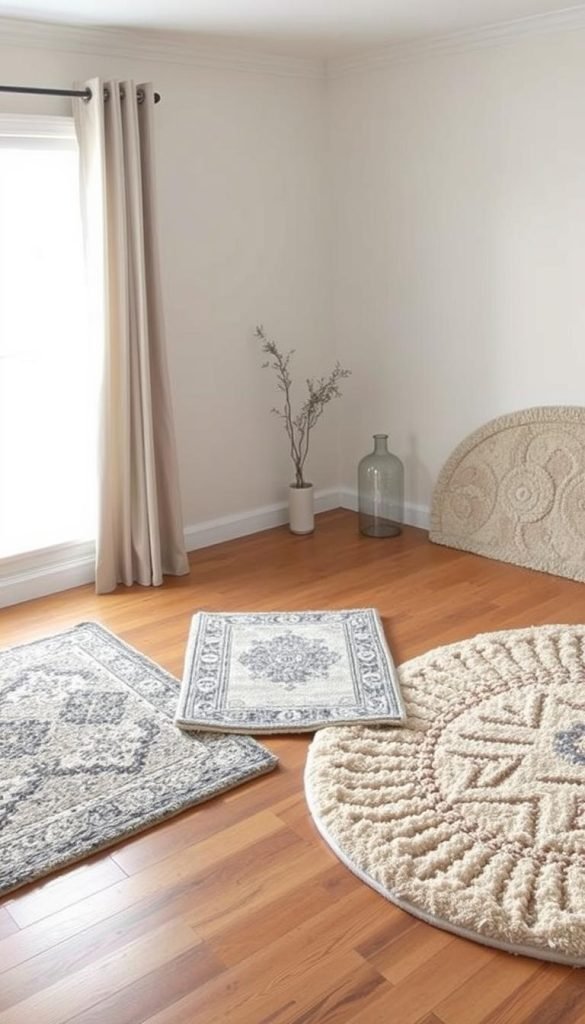
“Trim the pad slightly smaller than the rug — it keeps edges invisible and prevents curl.”
- Small rugs: natural rubber or ultra-thin felt-rubber for grip and clearance.
- Medium rugs: felt + rubber hybrids for balance; adjust thickness by use.
- Large rugs: dense felt or memory foam for cushioning; add felt-rubber under thin flatweaves.
| Size category | Best option | Thickness tip |
|---|---|---|
| Small rugs & runners | Natural rubber or ultra-thin felt-rubber | 1/16″–1/8″ (low-profile) |
| Medium area rugs (4×6–5×9) | Felt + natural rubber (Contour-Lock, Superior-Lock) | 1/4″–3/8″ depending on traffic |
| Large area rugs (8×10+) | Dense felt or memory foam (Eco-Plush, Cloud Comfort) | Up to 1/2″ for cushion; felt-rubber for thin flatweaves |
For more on sizing and materials, see my recommended guide: rug pad selection tips.
How do I choose a rug pad that works on both carpet and hardwood?
One smart solution lets rugs stay put whether placed over hardwood or plush carpet. A dual-surface pad with heat-pressed felt on top and natural rubber beneath gives the best balance of cushion and anchor.
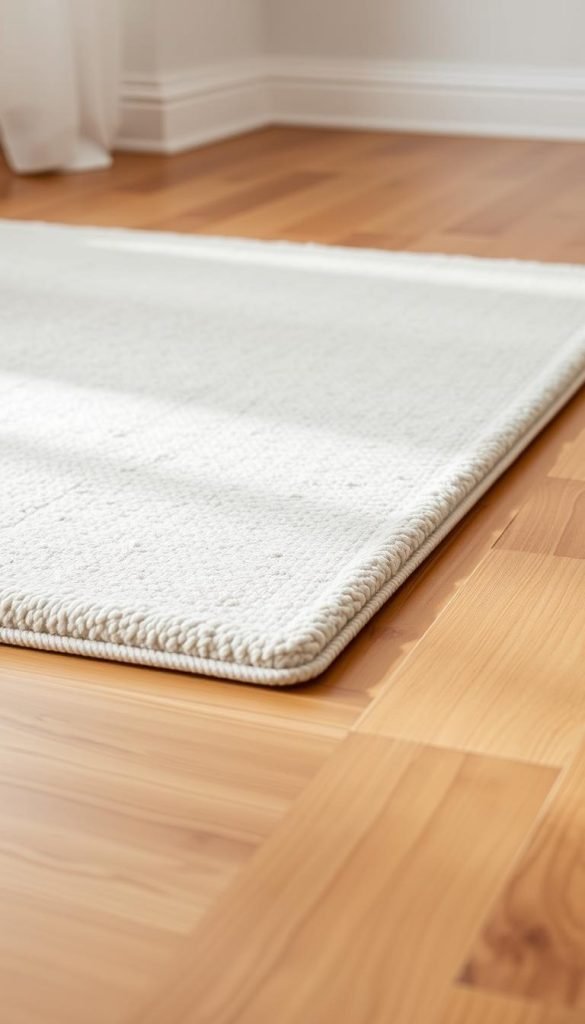
On hardwood: natural rubber backing that won’t stain or stick
Natural rubber grips without synthetic adhesives that can leave sticky residue or stain finishes. For hardwood floors I pick natural rubber because it holds runners steady and protects finish integrity.
On carpet: felt-on-top for the rug, rubber-on-bottom for stability
The felt face engages rug fibers so area pieces lie flat. The rubber backing then stabilizes the whole assembly against shifting in high-traffic zones.
One pad, two surfaces: when a dual-surface pad makes sense
Dual-surface felt + natural rubber pads are heat-pressed to act like a “gentle Velcro” for rugs. This option works well if I move rugs between rooms or use rugs over mixed flooring.
“Trim the pad about 1 inch smaller than the rug so edges stay hidden and corners stay tidy.”
| Situation | Recommended material | Quick tip |
|---|---|---|
| Hardwood hallways | Natural rubber | Check door clearance |
| Carpeted bedrooms | Felt top + rubber bottom | Use firmer felt for thin rugs |
| Mixed-use areas | Felt-rubber combo | Trim 1″ inset; avoid PVC |
- Avoid PVC or adhesive-backed pads on delicate finishes.
- Test thickness for compression under carpet and for doors over hardwood.
- Choose recycled felt and natural rubber when air quality matters.
Floor safety and air quality: finishes, VOCs, and eco-friendly choices
Choosing materials that protect both finishes and indoor air is essential. Low-quality PVC can off-gas volatile compounds and may stick or stain natural stone, concrete, and hardwood floors.
I look for recycled felt and natural rubber as primary options. Heat-pressed felt pads without adhesives reduce chemical exposure while still giving cushion and sound control.
Memory foam options with mineral or soy content offer very low VOCs and can include moisture barriers. Some felt products are CRI-tested and help earn LEED credits for low emissions and recycled content.
I check manufacturer guidance for finish safety and avoid products that warn against specific floors. A strong chemical odor out of the box is a red flag and suggests off-gassing risk.

“Choose low-emission materials and verified testing to keep floors and lungs safe.”
| Risk | Low-VOC option | Practical tip |
|---|---|---|
| PVC off-gassing & staining | Recycled felt / natural rubber | Avoid PVC on stone, concrete, hardwood |
| Adhesive residues | Heat-pressed felt pads | Pick no-adhesive construction |
| Plush comfort with low emissions | Mineral/soy memory foam | Check emission testing & manufacturer notes |
Common mistakes I see—and how I avoid them
A few common missteps regularly undo the benefits of an otherwise great floor setup. I highlight the trouble spots so you can skip the learning curve and keep rugs flat, safe, and neat.
Using pads that are too thick under thin flatweaves
Too much thickness lifts thin flatweaves and makes them look like they float. That floating effect also invites curled edges and visible ripples.
I opt for low-profile options in those cases. Thin felt pads or slim natural rubber give grip without changing the feel or appearance.
Letting pads show or cause curled edges
Edges that peek out look sloppy and can catch feet. My rule is simple: trim the pad about one inch smaller than the rug so the pad stays hidden and corners lie flat.
I test the set-up, try the door swing, then re-check after a few days. Small settling often needs tiny tweaks.
Relying on adhesives or tapes that can damage flooring
Aggressive tapes and glues may leave residue or pull backing fibers. I avoid them for finished floors and delicate stone.
Instead, I use felt-rubber combinations and vacuum-suction corner grippers when needed. Natural rubber and felt pads provide grip without sticky residue.
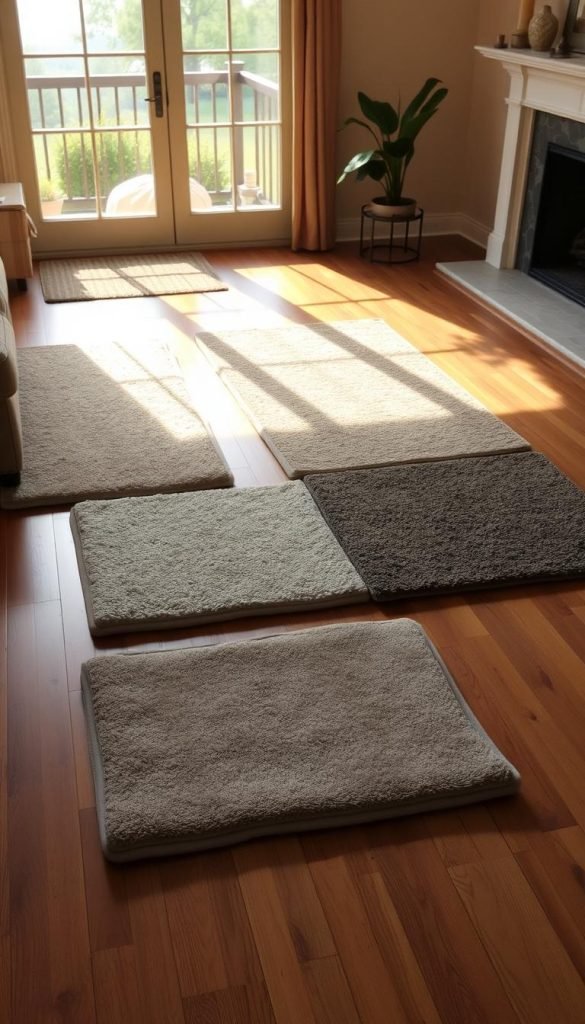
“Trim the pad slightly smaller than the rug — it keeps edges invisible and prevents curl.”
- I avoid over-padding flatweaves; too-thick pads encourage edge curl.
- I steer clear of strong adhesives and open-weave plastic grippers that crumble.
- I check for chemical smells out of the box and skip PVC on sensitive floors.
Conclusion
A simple dual-surface solution often solves grip, cushion, and finish safety in one go. Use a felt-top with a natural rubber base as your primary rug pad. This felt rubber combo gives cushion for comfort and grip to keep rugs stable across floor types.
Match thickness to the room: go ultra-thin for doors and runners, medium for daily living, and plush under large area pieces anchored by furniture. Trim the pad about 1 inch smaller than the rug so edges stay hidden and corners lie flat.
Avoid PVC on delicate finishes. Pick low-VOC felt and natural rubber for long-term floor safety and indoor air quality. One quality rug pad choice protects your rugs, preserves floors, and makes your home safer and more comfortable.