What are the best anti-slip pads for rugs on heated floors?
I set out to answer a simple question: how do you keep an area rug safe and steady over radiant flooring in your home? I found safety is the top reason to add a rug pad. It prevents shifting, curled corners, and bunching in high-use places.
My testing focused on materials that tolerate warmth. Felt paired with natural rubber gives grip and cushioning while letting heat pass through. I avoided PVC mesh and looked for low-VOC options to limit odors on heated surfaces.
Brands like Durahold Plus and Mohawk Home Dual Surface stood out for grip and a range of sizes. For comfort-first spots, RugPadUSA Cloud Comfort works well. For low-clearance doorways, thin choices such as nuLOOM Brody keep a tidy look without trapping heat.
Key Takeaways
- Safety first: a proper rug pad stops slips and protects hardwood floors.
- Felt + natural rubber balances grip and breathability for radiant systems.
- Choose low-VOC materials to avoid off-gassing on warm flooring.
- Pick a size that minimizes trimming for a cleaner, custom fit.
- Thin pads help clear doors; memory foam adds comfort where you stand often.
Why I tested rug pads specifically for heated floors
I examined how sustained warmth beneath a rug affects grip, smell, and long-term fit. Warmth can speed up off-gassing and change how materials soften, so a product that works on a cool surface may fail in a heated place.
My testing covered practical, everyday actions. I pushed the rug with my feet, walked across quickly, and vacuumed back and forth to watch for slipping or bunching. I also checked odor after unpacking, since radiant heat can intensify smells.
To test durability, I placed a 35-pound weight on a rug for ten minutes to simulate furniture and watched recovery. I paid attention to how the rug seated on the floor while warm and whether corners stayed flat.
“Safety matters most: a pad that keeps a rug still lowers trip risks and protects finishes.”
- Grip, cushioning, durability, odor, and floor compatibility were my core criteria.
- I eliminated items that list finish restrictions or use solvent-based adhesives.
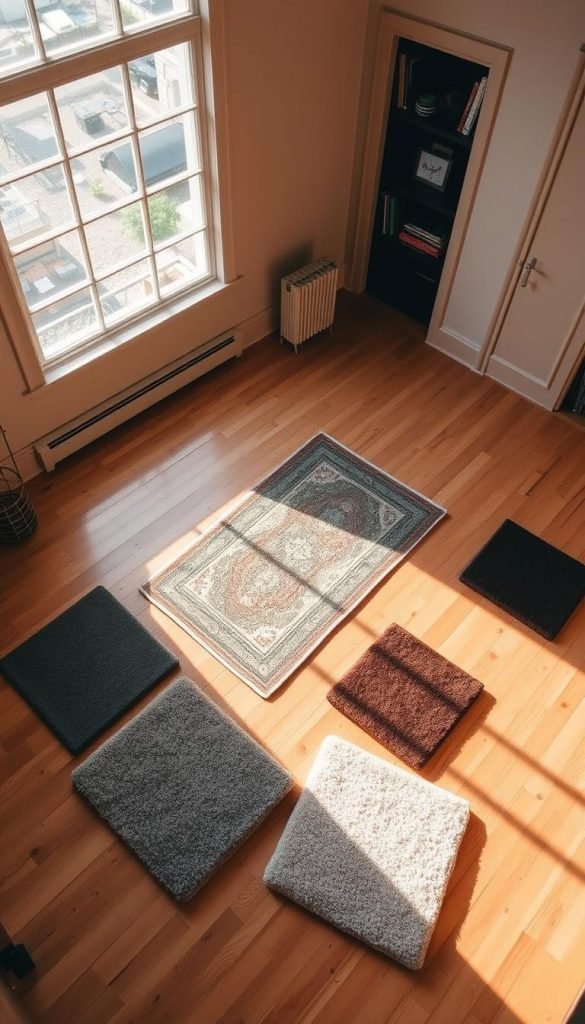
| Test | Method | Key result |
|---|---|---|
| Grip | Pushing, walking, vacuum transitions | Identified pads that resisted movement under suction |
| Durability | 35-lb weight for 10 minutes | Measured indent recovery and long-term hold |
| Odor & VOC | Unpack and warm-floor sniff test | Favored low-VOC options with no lingering smell |
Search intent decoded: What “best anti-slip pads for rugs on heated floors?” really means
I see people hunting for a simple promise: a grip solution that holds now and stays safe under recurring warmth. My focus is on long-term compatibility with radiant systems and clear labeling that suits your finish.
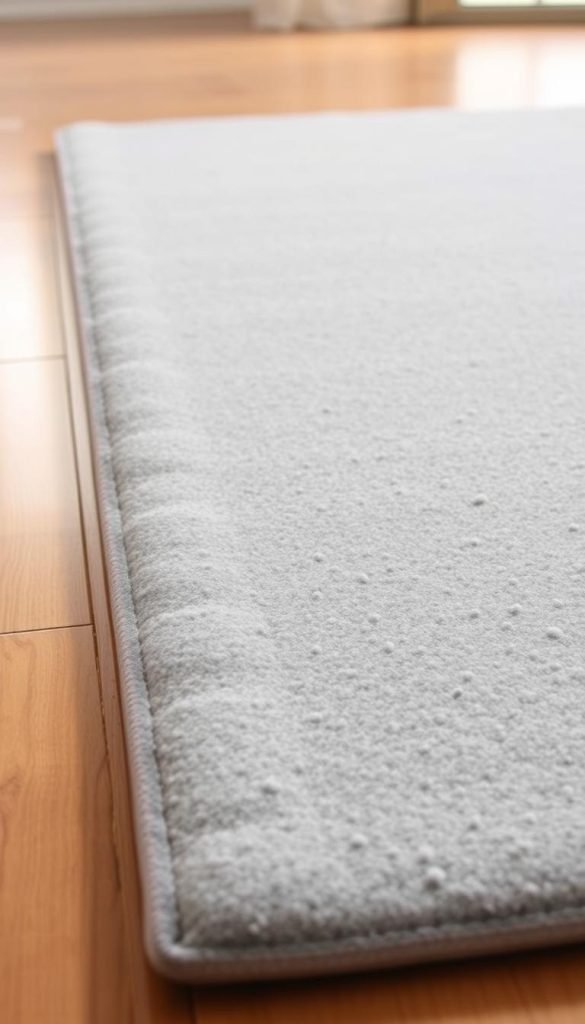
Non-slip first, floor-safety always
Non-slip performance matters most, but I won’t accept grip that risks damage. A quality rug pad must list radiant-heat approval and avoid solvent-based materials.
Felt paired with natural rubber consistently wins. Dense felt supports the rug and resists compression while the rubber backing holds the surface beneath.
Performance on radiant heat vs. standard hard floors
Radiant systems change how materials behave. Some PVC and rubber-mesh types can stain or soften as temperatures rise, and many carry finish restrictions.
In practice I choose rug pad constructions rated for warm flooring, check sizes to reduce trimming, and balance thickness for door clearance and feel. The upshot: pick tested options that state compatible surface types and avoid materials known to react under heat.
“Prioritize tested, radiant-safe choices that state approved surfaces—traction matters only when it won’t harm your floors.”
Heated floors 101: Materials that won’t melt, mark, or off-gas
I focus on materials that hold shape under steady heat and won’t harm flooring finishes. On radiant systems this matters more than softness or price.
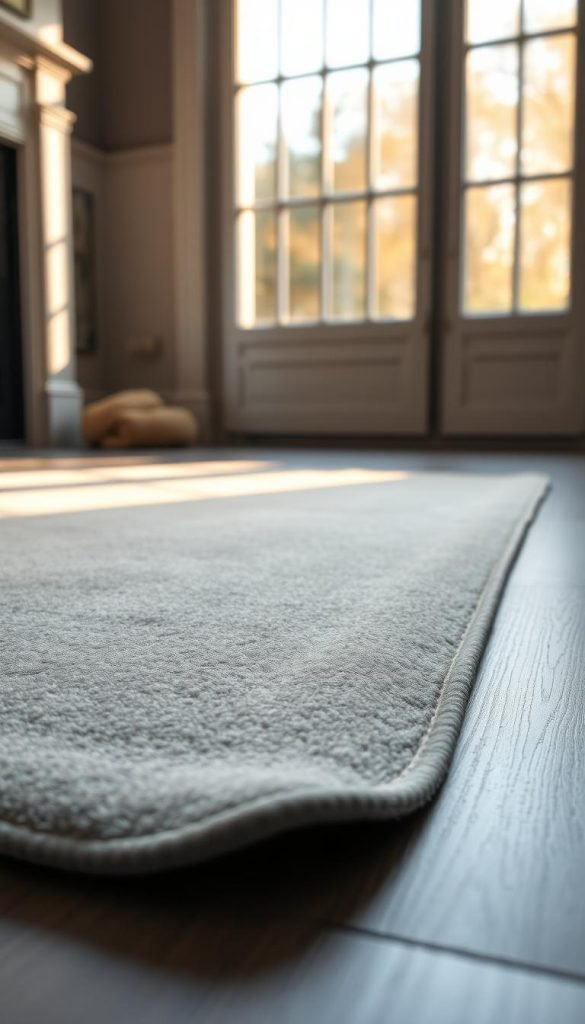
Why felt with natural rubber leads
Felt paired with natural rubber balances cushion and grip. Dense felt supports pile and resists compression. The rubber layer secures the rug without softening or smearing when warm.
I look for pads made with low‑VOC components and no solvent adhesives so heat won’t amplify odors or chemical transfer to the floor.
When to pick all‑rubber or memory foam
All‑natural rubber is a good option for thin, low‑clearance needs. It provides solid traction under small rugs and in damp areas. Memory foam adds welcome comfort but offers little grip on hard surfaces, so I pair it with a grippy underlayer if slip resistance matters.
| Material | Strengths | Limitations |
|---|---|---|
| Felt + natural rubber | Grip, cushioning, heat stability | Heavier, may need trimming |
| All‑natural rubber | Thin profile, strong hold, low clearance | Less cushioning, can be sticky on some finishes |
| Memory foam | Comfort, sound dampening | Poor grip alone; not ideal on hard floors |
| PVC waffle mesh | Cheap, lightweight | Risk of staining, off‑gassing; often restricted |
- Check product notes for explicit radiant‑floor approval.
- Consider thickness versus door clearance and furniture loading.
- Avoid solvent adhesives and PVC if you want long‑term floor safety.
My testing framework: grip, cushioning, floor protection, and vacuuming
To judge real-world performance I used simple, repeatable actions that mimic life at home. I focused on grip, cushion, floor safety, and how each layer behaves during cleaning.
First, grip. I moved the rug with my feet and made quick turns to spot any sliding around. I noted whether the rug shifted or the rug pad crept underfoot.
Cushioning and dent recovery came next. I stood on each rug for minutes to feel support. Then I added a 35-pound weight for ten minutes to simulate furniture and checked indent recovery.
I tested vacuum transitions by running a vacuum from floor to rug and back. This exposed edge-bunching and corner lift, two common failure points.
I also trimmed pads to size, noting dense constructions that needed heavy-duty scissors. Odor checks followed—heated floors can amplify smells—so any strong off-gassing was a fail.
Floor-type checks

| Test area | Method | What I watched for | Result indicator |
|---|---|---|---|
| Hardwood | Feet motion, vacuum | Pad slip, finish transfer | Low-VOC felt+rubber passed |
| Vinyl & laminate | Odor, heat exposure | Off-gassing, warping | Skipped pads with solvent adhesives |
| Tile & stone | Weight, walking | Grip and cushion | Thin rubber held well |
| General | Trimming & vacuum | Edge finish, bunching | Dense felt needed stronger tools |
- I verified compatibility across hardwood, tile, vinyl, laminate, and stone.
- I tracked sliding around at both rug-to-pad and pad-to-floor interfaces.
Best overall felt-and-rubber pick for radiant heat flooring
Through repeat testing, felt backed with patterned natural rubber proved the most reliable under radiant systems. I focus on pads that balance cushion, grip, and heat safety. Two stood out in my trials for staying put and protecting the floor beneath.
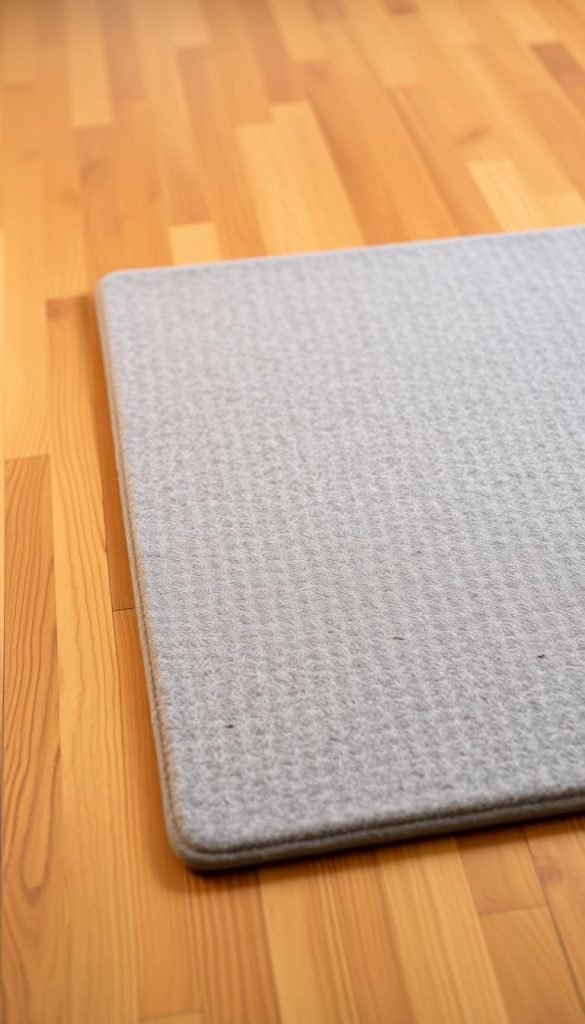
Durahold Plus Felt and Rubber: standout grip and floor safety
Durahold Plus pairs dense felt with a hex-pattern natural rubber backing at 1/4 inch. That hex pattern locked the pad to the floor and kept the rug steady during quick turns and vacuum passes.
It’s safe across hard floors and rated for radiant systems. Trimming took effort—strong scissors and patience—but the cut fit looked custom under my rug.
RugPadUSA Dual Surface Cushioning: dense felt, natural rubber, multiple thicknesses
RugPadUSA Dual Surface adds options: 1/8, 1/4, and 7/16 inch sizes to match clearance needs. The felt cushions the pile while the rubber secures the rug to the floor.
On very smooth rug backs I noticed slight top-layer movement, but woven and natural-fiber rugs held tight. Thick versions require heavy-duty tools to trim.
What makes dual-surface felt rubber pads different
Dual surface construction splits duties: felt for cushioning and cushioning recovery, rubber for traction and floor contact. That separation outperforms felt-only or mesh styles in my testing.
Both Durahold Plus and RugPadUSA are explicitly approved for radiant flooring, so I recommend them when floor safety and reliable grip matter most.
| Model | Thickness | Strength |
|---|---|---|
| Durahold Plus | 1/4 inch | Hex rubber grip; durable felt |
| RugPadUSA Dual Surface | 1/8, 1/4, 7/16 inch | Multiple thickness options; great cushion |
| Notes | Sizes available | Trimming can be tough on thick pads |
Best value: Mohawk Home Dual Surface for large area rugs
For covering large living areas affordably, Mohawk Home Dual Surface often wins my pick. I like that it pairs recycled felt with a rubber backing to balance cushion and grip.
Budget-friendly and sustainable: the recycled felt is a nice plus, and the line comes in many sizes and shapes. That makes trimming simple and keeps seams tidy under a large area rug.
Trade-offs to expect
Reality check: while it grips the hard floor well, rugs with slick, plasticized backs can slide on top. I usually pair this with woven or textured rug backs to prevent movement.
Also, some units measure thinner than listed. Expect modest cushioning—closer to 1/8–1/4 inch feel rather than plush support. Light rugs may bunch during heavy vacuuming; lowering suction and easing edges helps a lot.
| Feature | Common specs | Note |
|---|---|---|
| Thickness | 1/4, 3/8, 1/2 listed | Often measures thinner |
| Material | Recycled felt + rubber | Good floor grip; sustainable |
| Fit | Many sizes and shapes | Pad comes in dimensions to match rugs closely |
When value and coverage matter for a large area rug, I recommend this Mohawk Home option. For more detailed comparisons, check a trusted best rug pads guide.
Best memory foam comfort for standing zones on heated floors
When comfort matters more than traction, memory foam pads bring noticeable relief underfoot during long chores. I tested RugPadUSA Cloud Comfort to see how plush support performs over warm flooring.
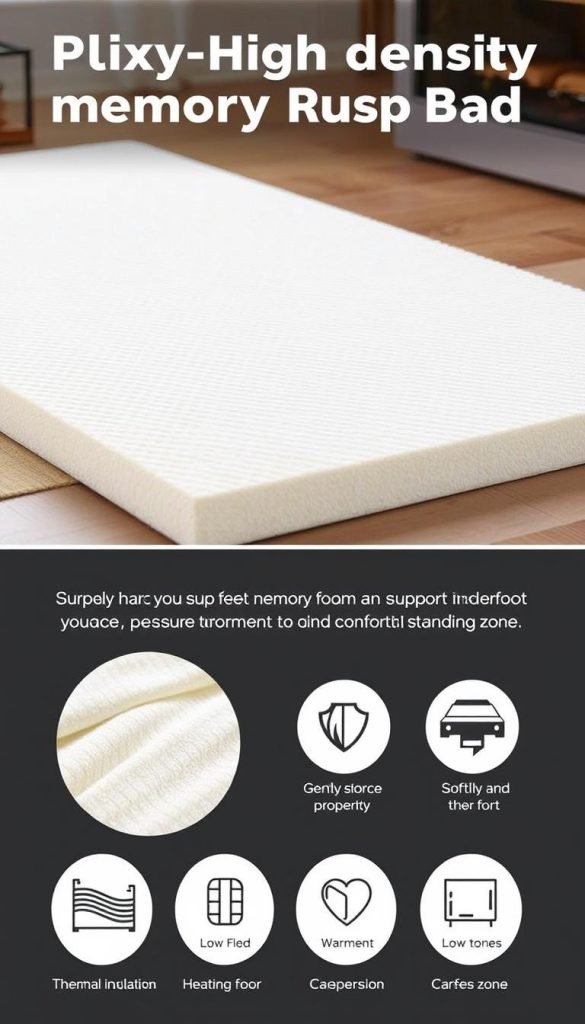
RugPadUSA Cloud Comfort uses 100% visco‑elastic memory foam and comes in two thickness choices: 7/16 inch and 1/4 inch. The thicker 7/16 option feels ultra‑soft and cradles feet during long standing sessions. The 1/4 inch keeps height manageable where doors and appliances are close.
Key practical notes from my testing:
- Water‑resistant and sound‑dampening — handy for kitchens and play areas.
- Stabilizes many rugs, but it’s not designed as a primary anti‑slip layer on smooth hard surfaces.
- Vacuuming needs a gentler approach; reduce suction and ease transitions to prevent edge lift.
- Approved for hardwood, polyurethane finishes, tile, stone, concrete, laminate, and vinyl — I noticed no post‑unboxing odor on warmed floors.
In short, I reach for this memory foam option when comfort and cushion come first. When traction is non‑negotiable, I pair or choose a felt‑and‑rubber pad instead.
Best thin and low-profile options for door clearance
Doorways and narrow halls demand thin, low-profile solutions that won’t snag on thresholds. I favor slim options when a tight clearance matters most.

nuLOOM Brody (1/8 inch) is a solid pick for this use. It measures 1/8 inch, carries Green Label Plus low‑VOC certification, and trims easily thanks to a printed cutting pattern. I used it under a wool rug and the piece stayed stable during normal traffic.
Practical trade-offs: cushioning is limited. My 35‑lb weight test left a visible indent after ten minutes, so I avoid this under heavy furniture.
- For tight door swings and hall transitions, 1/8 inch pads like nuLOOM Brody clear thresholds without losing basic stability.
- The patterned surface makes straight trimming simple, helping the edge sit neatly inside the rug border.
- Compared to 1/4 inch, the thinner profile cuts lift at the edges and lowers the risk of a tripping hazard in narrow walkways.
- I confirm pad size relative to the rug so the border sits just inside the edge for a clean look.
| Feature | nuLOOM Brody | When to use |
|---|---|---|
| Thickness | 1/8 inch | Runners, doors, tight clearances |
| VOC | Green Label Plus (low‑VOC) | Heated or warm floors where odors matter |
| Cushioning | Minimal; indent after 35 lb | Not for heavy furniture; light traffic only |
Corner and edge control: best grippers to stop curling
A slim add-on can lock a rug’s edge down without changing how it feels underfoot. I turn to corner grippers when a rug refuses to lie flat, especially in busy hallways and entry zones.
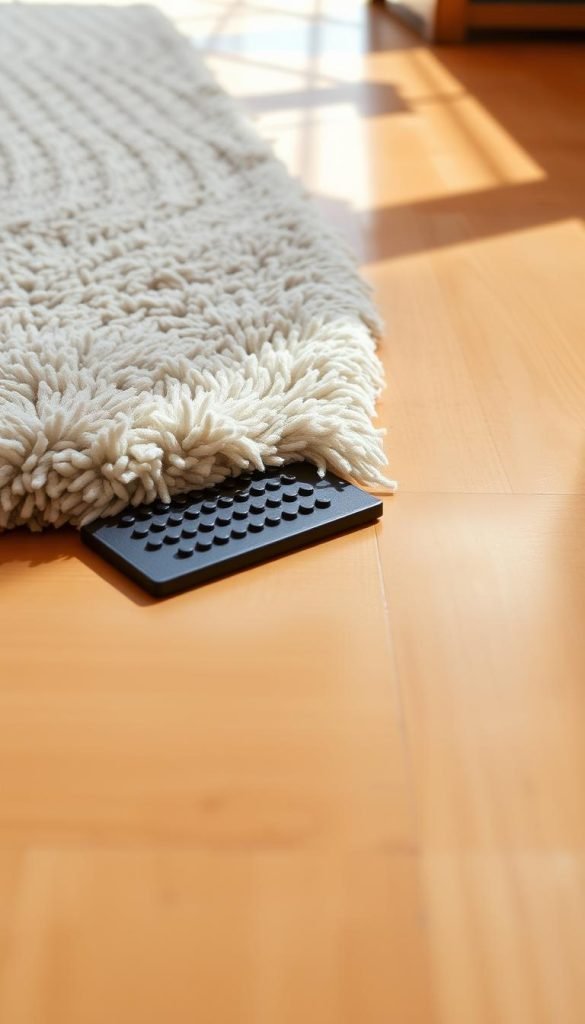
Gorilla Grip corner strips adhere to both the rug and the hard surface beneath to tame curled edges. They stick strongly at first and smooth wrinkles so the rug looks neater and feels safer.
Gorilla Grip corner strips: strong hold on hard floors
In my use, gorilla grip strips gripped well on hardwood, tile, and similar hard surfaces. Removal took effort but left no residue, which I liked for sensitive finishes.
Limitations: not for carpeted areas
These are not meant for carpeted floors. They don’t bond reliably to soft pile, so I only use them on exposed hard surfaces.
- I add a gorilla grip strip when stubborn corners curl even with a good rug pad in place.
- They stick to both rug and floor, smoothing edges and lowering trip risk.
- Reapplication still holds, but long-term adhesion can vary with traffic and cleaning.
- For rental situations, I test a small spot first to confirm easy release.
- Think of corner grippers as a complement, not a replacement, to a proper rug pad or other pads.
- I use these in high-action places like entryways and kitchen runners where edges need extra help.
What are the best anti-slip pads for rugs on heated floors?
A simple rule guided my picks: prioritize traction where people move and comfort where they stand. Below I break choices down by use case, rug type, and safe materials so you can match a rug pad to your room with confidence.

Top choices by use case
High-traffic paths: I reach for Durahold Plus. Its felt rubber build keeps rugs planted and protects hardwood floors under warm surfaces.
Under furniture: Mohawk Home Dual Surface balances cost and performance for a large area setup. It gives stability without a big price tag.
Kid and pet zones: I like memory foam for cushion, but only when sliding around isn’t a risk. Otherwise I stick with dual surface options for safety.
Quick picks by rug type
Flatweave: thin but grippy pads work best to avoid bunching.
Shag: choose a pad that resists lateral movement and supports pile.
Runners: firm traction at both interfaces keeps edges in line; dual surface is my default.
Round rugs: round-size pads reduce trimming and give a smooth perimeter.
Safe-materials shortlist
Top pick: felt + natural rubber — best overall balance of cushion, grip, and heat stability.
When thin profile matters: all‑natural rubber works well under low-clearance doors or damp areas.
Comfort-only spots: memory foam adds softness but needs a grippy underlayer if you worry about sliding.
Tip: always check radiant‑floor approval, low‑VOC claims, and pick a pad size that tucks just inside the rug edge for a clean look.
Sizing and trimming: get a custom-looking fit every time
A neat edge is more than cosmetic—it prevents trips and keeps grip consistent underfoot. I size and trim pads so they sit just inside the rug border. That keeps the perimeter flat and hides the pad from view.

How much smaller than the rug should the pad be?
I aim to cut a rug pad about 1 to 1.5 inches inside the rug outline. This prevents the pad from peeking out and reduces edge lift.
For high-pile rugs, I cut about 3 inches off each side so the pile tapers smoothly and no bump forms underfoot. That little extra margin avoids trips and keeps the surface tidy.
Cutting dense felt-and-rubber vs. waffle and foam pads
Dense felt-and-rubber can be tough to trim. I mark straight lines, use heavy-duty scissors or a utility knife, and take slow, steady cuts for a clean edge.
Thin patterned pads, like nuLOOM Brody, trim easily and work well when you need a quick fit. I always measure twice and dry-fit before final cuts.
- Measure and mark a straight guideline.
- Dry-fit the pad under the rug to check the border.
- Smooth the rug from center to edge after trimming to lock everything in place.
| Task | Recommendation | Why it matters |
|---|---|---|
| Trim amount | 1–1.5″ (3″ for high-pile) | Prevents overhang and tripping |
| Tools | Heavy scissors / utility knife | Clean cuts on dense felt+rubber |
| Quick option | Patterned thin pads | Faster trimming; easy accuracy |
Thickness guide: from 1/8 inch to 1/2 inch and when to use each
I treat thickness as a tool that matches room use, rug construction, and door clearance. A good rug pad choice starts by thinking about clearance and long-term hold.
1/8 inch works best under flatweave and where doors need to clear. It gives stability without creating an edge bump that can trip people.
1/4 inch is my go-to. It offers a balanced feel — a touch of cushion and reliable grip — and suits most living areas with warm floors.
3/8 to 1/2 inch add real comfort. I use these where extra padding matters, but I always confirm doors still swing freely and the rug sits flat at the border.
Density matters more than raw thickness. A dense felt often outperforms a thicker, spongy option that compresses over time. For high‑pile pieces I cut the pad inside the edge so the pile can feather to the floor.

| Thickness | Best use | Notes |
|---|---|---|
| 1/8 inch | Flatweave, low clearance | Minimal cushion; reduces trip risk |
| 1/4 inch | Everyday living rooms | Balanced cushion and grip |
| 3/8–1/2 inch | Playrooms, lounging | More comfort; check door clearance |
Floor compatibility and safety on radiant heat systems
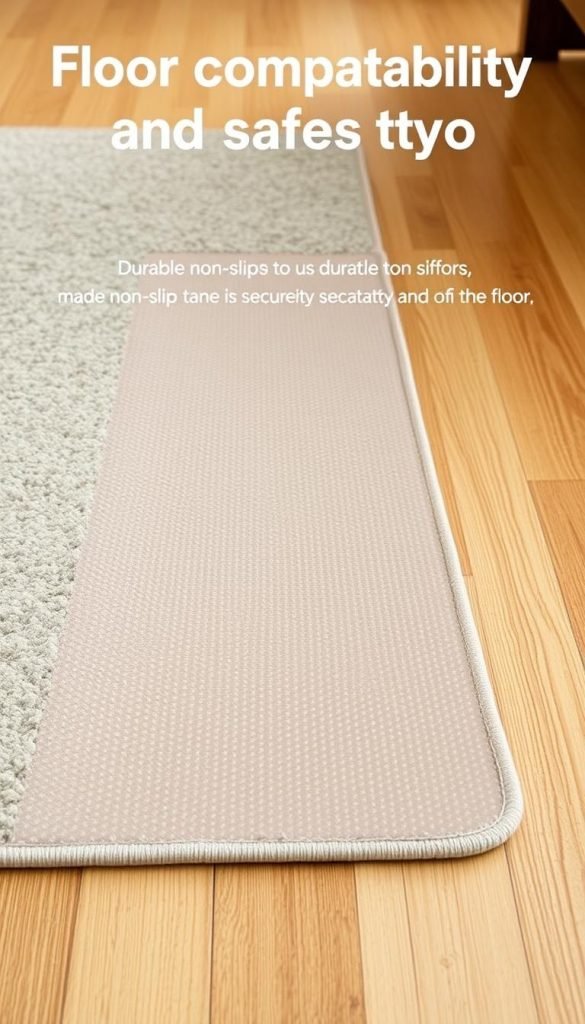
When floors run warm, material choice becomes a safety decision as much as a comfort one. I always check product labels for radiant‑heat approval before buying a rug pad. That single label is my first filter.
Hardwood and polyurethane finishes
I default to felt with natural rubber on hardwood and polyurethane. Felt cushions the rug while natural rubber grips without softening under heat.
I avoid any product that lists solvent adhesives. Warmth speeds damage and off‑gassing on sensitive finishes.
Tile, stone, laminate, and vinyl considerations
Tile and stone tolerate more, but I still skip PVC mesh. Those types can leave residue or powder from fillers over time.
For laminate and vinyl, I read restrictions closely. Some models explicitly exclude vinyl, so I choose pads rated safe for that flooring and test a small area first.
| Surface | Preferred pad | Notes |
|---|---|---|
| Hardwood / Polyurethane | Felt + natural rubber | Heat‑safe; avoid solvent glue |
| Tile / Stone | Thin rubber or felt+rubber | Durable but avoid PVC mesh |
| Laminate / Vinyl | Radiant‑safe labeled pads | Check label; test small area |
Practical checks I use: clean the floor before placement, pick a size that covers main traffic under the rug, and test one corner if I doubt compatibility. When in doubt, I stick with a known, radiant‑heat‑safe rug pad for peace of mind.
Avoid these pitfalls: PVC pads, solvent adhesives, and floor restrictions
One quick rule I follow: if a product dodges clear floor approvals, I skip it. That keeps me from buying risky materials that look fine until they warm up.

Why many mesh PVC pads can stain or stick
I steer clear of PVC mesh because it often causes staining or etched finishes, especially when heat is involved. Some cheap models are pads made with fillers like clay or sand. Over time those fillers can shed and leave a powdery residue under a rug.
Reading the fine print: restricted floors and warranty notes
Always read exclusions. Many listings forbid use on vinyl, lacquered, porous, or recently refinished floor surfaces. A long warranty looks good, but I treat explicit radiant‑system and surface approvals as far more important.
- Solvent‑based adhesives can soften and transfer to the floor when warm.
- If a product lists vague materials or many restrictions, I pass and choose felt + natural rubber.
- Proper sizing and a clean install cut the chance of a tripping hazard.
| Risk | Why it matters | Action |
|---|---|---|
| PVC mesh | Stain, residue | Avoid on warm surfaces |
| Solvent glue | Softens, transfers | Skip; look for low‑VOC |
| Vague specs | Hidden exclusions | Choose pads with clear approvals |
Vacuuming, cleaning, and long-term durability on warm floors
A clean routine quickly shows which layers hold up under heat and motion. I test how suction tugs at a rug edge and whether a rug pad keeps everything planted. Simple vacuum passes expose pads that bunch or creep.

Which options resist bunching during vacuum passes
Durahold Plus stood out. When I ran a vacuum from hard floor to rug, it stayed flat and resisted edge lift. Mohawk Home Dual Surface sometimes bunched on lighter pieces, so I slow the strokes and lower suction when I use it.
RugPadUSA Cloud Comfort can complicate cleaning because its thicker edges catch the nozzle. Switching to a 1/4 inch option or easing transitions reduces that issue.
Indent recovery after heavy weights
I simulate furniture by placing 35 pounds on a pad. nuLOOM Brody at 1/8 inch shows visible marks more often. Memory foam displays slight dents that fade, while dense felt recovers best if the load is not extreme.
“Regular lifting and spot cleaning at the perimeter keeps grit from working between layers and extends pad life.”
| Test | Result | Action |
|---|---|---|
| Vacuum passes | Durahold Plus: stable; Mohawk: occasional bunching | Reduce suction; slow strokes |
| 35-lb indent | nuLOOM: visible mark; memory foam: fades | Use dense felt under heavy furniture |
| Maintenance | Dust builds at edge | Lift rug and vacuum perimeter regularly |
Comparison snapshot: grip vs. cushioning vs. protection
My side-by-side look shows which constructions win where: traction, softness, or protection. Below I summarize how each type performed in my testing and which model I recommend by need.

Felt-and-rubber leaders for non-slip performance
Durahold Plus leads on traction thanks to a hex-pattern natural rubber underside and dense felt top. It locked a rug in place during quick turns and vacuum passes.
RugPadUSA Dual Surface Cushioning followed closely and adds useful thickness options so you can match clearance and feel without losing grip.
Mohawk Home Dual Surface is the value choice for large area coverage, but I noticed slight movement with slick rug backs during testing.
Comfort-first pads for lounging and sound dampening
RugPadUSA Cloud Comfort wins on softness and noise control. In my trials it felt plush underfoot and reduced impact noise.
Memory foam gives great cushion but offers limited grip on smooth surfaces. I pair it with a grippy underlayer when traction matters.
- If grip is your priority, pick felt+rubber models like Durahold Plus.
- Choose RugPadUSA Dual Surface when you want thickness options and balanced protection.
- Use Mohawk Home for budget-friendly area coverage; test with your rug back.
- Avoid PVC waffle designs on warm surfaces—my testing found too many restrictions.
- Gorilla Grip corner strips help stubborn edges but don’t replace a stable base pad.
| Need | Top pick | Key note |
|---|---|---|
| Grip | Durahold Plus | Hex rubber pattern; excellent hold |
| Cushion | Cloud Comfort (memory foam) | Best feel; pair for traction if needed |
| Value large area | Mohawk Home Dual Surface | Good coverage; may shift with slick backs |
Tip: weigh thickness and size availability so the pad fits under your rug without creating a raised perimeter.
Conclusion
In practice, a felt-and-rubber solution balances traction, cushioning, and heat safety better than other choices.
I recommend a felt-backed rug pad as the single most reliable route for warm surfaces. Durahold Plus and RugPadUSA Dual Surface gave the best grip and protection in my tests. For a large living area, Mohawk Home is a solid value option that covers more ground without losing basic stability.
When comfort under your feet matters, add a memory-foam layer, but only where slipping is not a concern. Thin 1/8 inch pads solve tight thresholds, and corner grippers tame curled edges. Avoid PVC mesh and always confirm radiant-heat approval before you buy. Get the size right, trim carefully, and your rug will sit flush and safe in your home for years.