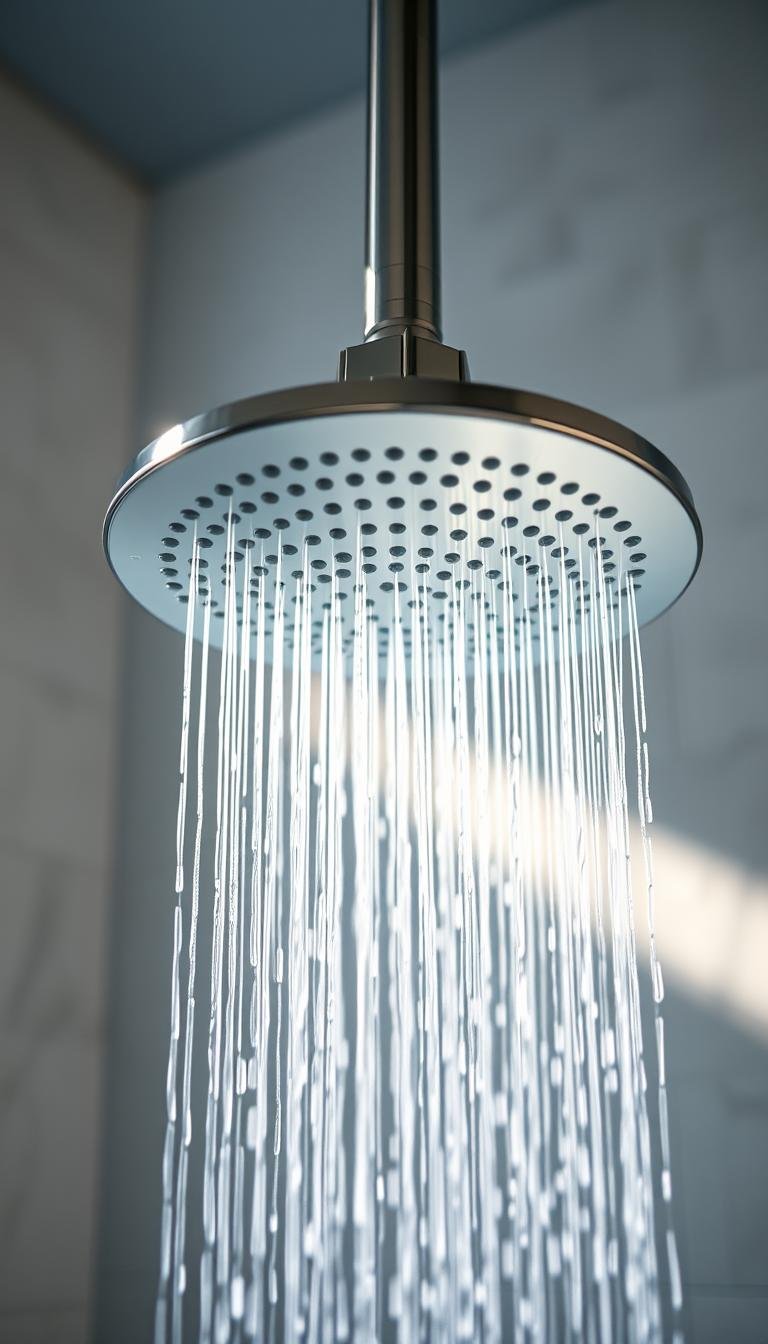
How do I pick a showerhead that feels like rain but saves water?
I want the gentle, full-coverage rinse of a rain-style fixture without wasting resources or raising my bills. Consumer Reports testing shows flow rate alone won’t predict comfort; top models can cut use to about half the legal limit while still delivering a great shower experience.
This brief guide lays out the smart choices I can make: head type, size, flow control, and simple maintenance. I explain which features truly affect rinse power and coverage, like engineered spray patterns and pause modes, rather than chasing high flow numbers.
Swapping an old model is nearly as easy as changing a lightbulb, so I list quick wins I can try today and flag when to call a pro for repositioning or plumbing work. I also show how to read gpm and test performance at home without tools.
Key Takeaways
- Top-tested models can pair rain-like feel with low flow.
- Focus on spray design, coverage, and flow control over raw numbers.
- Simple swaps often cut use and improve rinse in minutes.
- Read gpm critically and try a home test before judging performance.
- Your preferred style can match efficiency, so bathroom looks and savings coexist.
My goal: a rain-like feel with real water savings
Comfort, full coverage, and measurable savings guide every choice I make for my next shower head.
I want a true rain shower sensation that relaxes me and spreads water evenly for excellent coverage. Consumer Reports shows some models deliver a powerful feel while using far less water than allowed; the top model used about half the legal limit.
That tells me the right design can boost rinse without upping flow. I’ll favor spray plates and tuned pathways that stretch each droplet for better coverage and perceived pressure.
Understanding my intent: comfort, coverage, and lower bills
- Target comfort and savings together: lower GPM can still give great feel and energy savings.
- Match head size to shower space so the pattern covers where I stand.
- Look for pause or eco modes to lather while I save water and heat energy.
- Consider water pressure at the source—good design helps even with lower pressure.

| Goal | Feature to check | Benefit |
|---|---|---|
| Even coverage | Tuned spray plate | Full rinse without higher flow |
| Lower bills | Eco/pause mode | Reduced water and energy use |
| Low pressure | Engineered nozzles | Improved perceived pressure and rinse |
Rain shower head types and who they’re best for
Different rain-style options suit different bathrooms and routines. I’ll outline the main types, note who benefits most, and flag models or design quirks to watch for.

Ceiling-mounted: true overhead rainfall
Ceiling plates deliver the straight-down feel many call spa-like. They give the most authentic rain sensation, but installation often means opening the ceiling and hiring a pro.
Wall-mounted: easiest upgrade
Wall heads are the simplest swap and fit most bathrooms. A well-engineered wall model can still cover you fully without moving plumbing.
Handheld and combos: flexible coverage
Handheld units add targeted rinsing for kids, pets, and cleaning. Combos like Moen Attract Magnetix stand out for docking. Avoid models with awkward angles or weak flow.
Multifunction systems: many settings, mixed results
Dual heads and switchable sprays suit varied households. Some Kohler models offer many patterns; that can be overkill. A few two-in-one designs tested weak or hissed under low flow.
“Match the type to who uses it and your room layout; bigger faces aren’t always better if supply or pressure can’t support them.”
- Tip: Measure inches of spray face to fit your space.
- Tip: Favor simple controls and durable docking over gimmicks.
Feel vs. flow: why water pressure and gpm don’t tell the whole story
Perceived strength in the spray often comes from smart internal design, not just higher gpm numbers. Consumer Reports found that water flow does not predict performance: two top models delivered great feel while using far less than the legal limit. The highest-ranked unit used about half that limit.
That proves I can chase efficiency without losing comfort. I’ll treat gpm as one clue, not the final answer.
CR insight: lower flow can still deliver top shower feel
Independent tests show some low-flow models outperform higher-flow rivals on comfort. A well-tuned head makes the most of modest pressure and water flow.
Spray engineering that boosts perceived pressure
I look for nozzle designs that form fuller droplets or denser spray patterns. Those features raise perceived pressure and improve rinse without extra flow.
- Focus: consistent spray distribution over sheer volume.
- Tip: pause or eco modes let me save during lather and restore full pattern instantly.
When a wide head hurts performance and when it helps
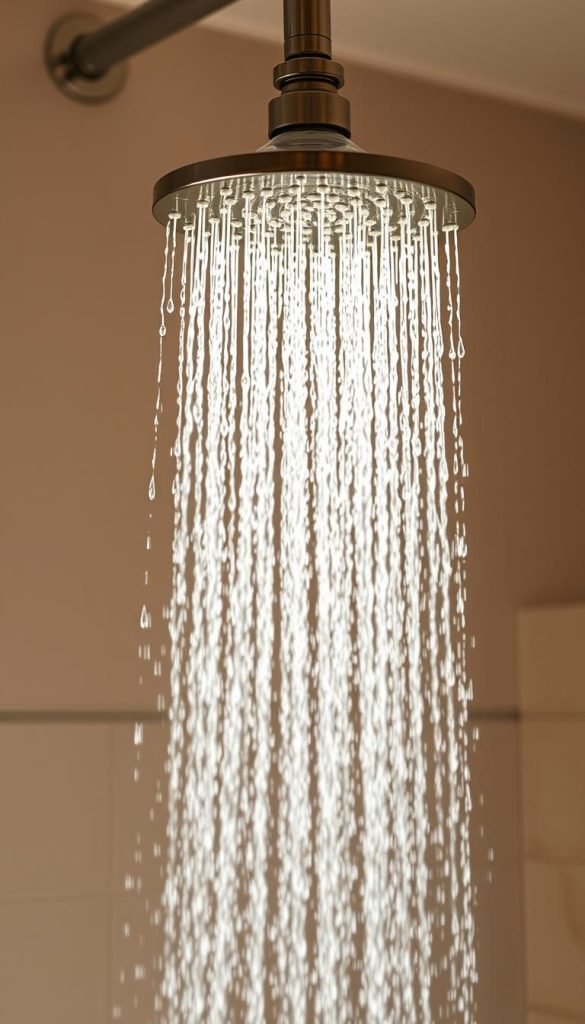
Wide plates can feel luxurious, but they can also spread limited water too thinly. For example, Moen S6320EP’s 8-inch head underpowered sprays and needs a longer arm to fit. I balance head diameter with my home’s water pressure to preserve intensity and warmth.
| Factor | What to check | Why it matters |
|---|---|---|
| gpm | Listed flow rate plus reviews | Gives baseline efficiency but not comfort alone |
| Nozzle design | Engineered spray plates, silicone tips | Shapes droplets for fuller feel and easy cleaning |
| Head diameter | Match to pressure and arm length | Too large may dilute spray; right size keeps coverage and warmth |
| Eco features | Pause modes, flow restrictors | Reduce waste during lather while keeping rinse strong |
How do I pick a showerhead that feels like rain but saves water?
Choosing well means matching size, flow, and practical controls to my bathroom and routine. I start by measuring space and thinking about true coverage versus novelty settings. Big faces can look luxurious but may dilute spray if supply or pressure is limited.

Match head size (inches) to space and coverage
I aim for 8–10 inches in a typical stall for lush feel without overreaching. An 8-inch halo can fail if nozzles aren’t engineered; Moen’s 8-inch S6320EP showed that larger isn’t always better.
Choose flow rates wisely: 2.5 gpm, 2.0 gpm, 1.75 gpm, 1.5 gpm
My sweet spot is 1.75–2.0 gpm. Test data show 1.5 gpm units like the Kohler Statement VES K-20999 don’t always outshine well-tuned 1.75 gpm picks with pause modes. I treat 2.5 gpm as a ceiling, not a goal.
Prioritize features that aid rinsing without wasting water
- Pause or eco modes save water during lather and restore full spray fast.
- Look for engineered channels and uniform nozzles so edges don’t drop off—Delta 52535 is a good benchmark for coverage.
- Favor simple, durable controls that switch between soft rain and a stronger rinse without fiddling.
- Check reviews and independent tests to confirm real-world coverage and warmth from each model.
Water pressure realities at home
Before I swap fixtures, I test flow at the shower arm so I know what the plumbing delivers.
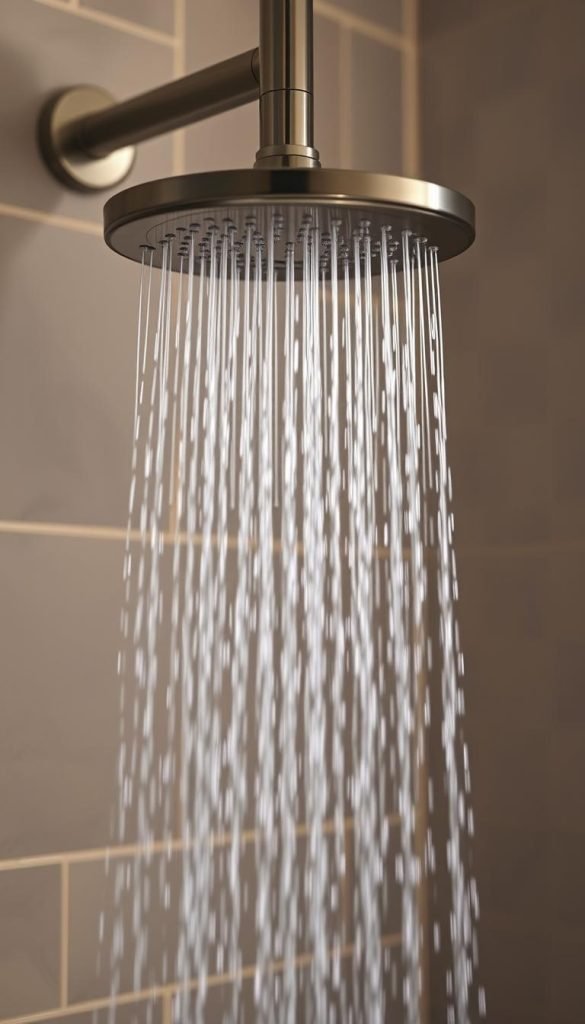
Performance often depends on my home’s piping and baseline water pressure. A great head can make modest pressure feel better, but persistent low pressure across every fixture points to the main supply.
Testing my pressure and when to consider a booster
I use a simple gauge at the shower arm to measure psi and confirm water flow. That data tells me whether to try a direct-swap installation or call a pro.
If every sink and shower is weak, I’ll consider a whole-home pressure booster. A licensed plumber installs it on the main line and raises baseline pressure safely. I’ll also check local codes and energy impacts before upgrading.
Low-pressure friendly designs and spray faces
I prioritize models with nozzle engineering that form fuller droplets instead of fine mist. Those spray faces concentrate flow into usable force so the shower feels stronger and stays warm.
- Avoid ultra-wide plates when pressure is marginal; a slightly smaller, tuned face often performs better.
- Choose internal flow-stabilizers so the spray stays steady when other fixtures run.
- Retest after installation to confirm the change improved comfort without raising energy use.
“Good design often matters more than raw numbers; smart spray shaping makes the most of modest pressure.”
| Issue | Quick check | Possible fix |
|---|---|---|
| Weak everywhere | Gauge at arm | Main-line booster by plumber |
| Weak only in shower | Compare fixtures | Direct-swap head or valve check |
| Surges when other taps run | Run multiple fixtures | Flow-stabilizing head or pressure regulator |
Features that make or break the rain feel
Good spray engineering can turn modest pressure into a lush, steady cascade that covers your shoulders.

Soft rain, wide coverage, effective rinse
A primary soft spray should feel full, not misty, and a secondary rinse must clear shampoo fast.
I prefer two main settings: gentle coverage and a focused rinse. Too many novelty sprays dilute performance.
Pause and eco modes for lather-time savings
Pause or eco modes cut waste during lather and restore the exact spray and temperature with one click.
Tip: Delta 52535 illustrates useful pause control; Delta 52680 lacks that function and feels limited.
Nozzle design: silicone tips and anti-scale upkeep
Silicone nozzles flex to shed mineral buildup and keep spray even across the plate. That preserves the rain sensation.
Magnetic docking and ergonomics for handhelds
Moen Attract Magnetix Combo 26008’s magnetic holster is a standout for easy docking and secure alignment.
Choose ergonomic shapes so the handheld aims naturally for rinsing and helps people with mobility needs.
| Feature | Why it matters | Real-world note |
|---|---|---|
| Silicone nozzles | Stops clogs, keeps spray even | Easy-clean maintenance |
| Pause/eco | Save water during lather | Restores full spray reliably |
| Magnetic dock | Secure, one-hand use | Moen Magnetix praised for this |
“I’ll skip a long list of novelty settings and instead prioritize two or three patterns I’ll actually use every day.”
Materials, finishes, and style that fit my bathroom
The metals and coatings I choose influence durability, maintenance, and overall bathroom design.
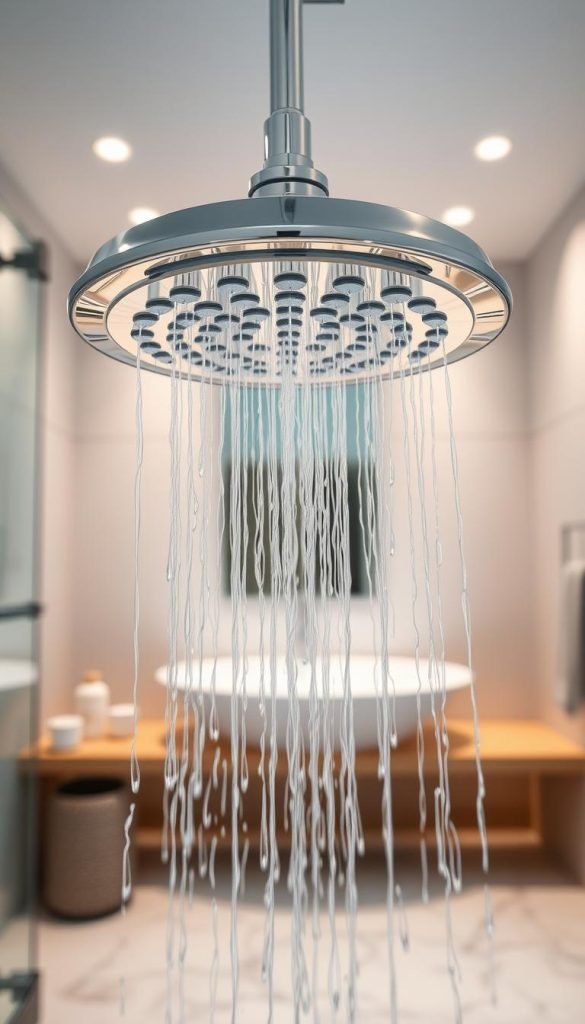
Stainless steel, brass, and engineered plastics
Stainless steel and brass feel solid and are often recyclable. They resist corrosion and last years under regular use.
Quality engineered plastics cut weight and strain on the arm while keeping performance steady. Some models use metal nuts where it counts, and plastic plates to control heat.
Finishes and the look they give your room
I match finish to my bathroom style. Chrome pops in bright, modern rooms. Matte black makes a bold contrast. Brushed nickel and champagne tones add warmth.
Think about lighting: brushed surfaces soften glare, polished surfaces shine. Coordinate the head, valve, and accessories so the whole bathroom reads as one cohesive look.
“Prioritize a head that performs first, then let the finish elevate the room.”
| Material | Benefit | Note |
|---|---|---|
| Stainless steel | Durable, recyclable | Long-term value for busy bathrooms |
| Brass | Premium feel, corrosion resistant | Classic look, often used in quality models |
| Engineered plastic | Lightweight, cost-effective | Reduces arm strain, keeps heat manageable |
| Finish choice | Style and maintenance | Chrome hides spots; matte hides fingerprints |
Size, placement, and coverage tips
A well-placed head can make a modest flow feel like a full, warm cascade. I focus first on where the spray lands in my bathroom and then on size. That order saves me from buying an oversized plate that spreads water too thinly.
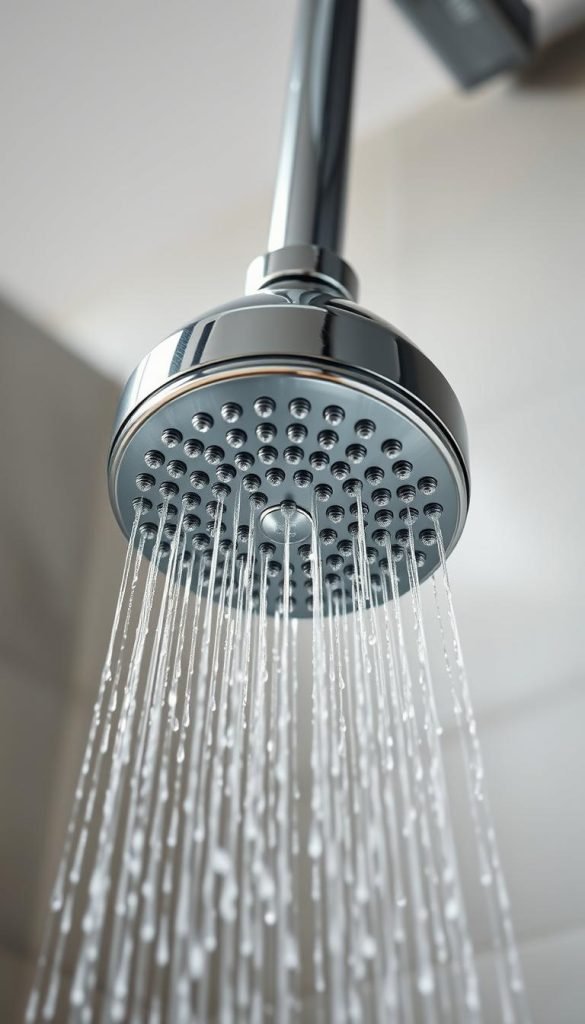
8–12 inch rain heads: when bigger is better
In tighter stalls, an 8–10 inch head often fits best. It gives solid coverage without losing intensity. Larger heads can be lovely, but they need room and supply to perform.
Note: some models, like the Moen S6320EP, felt underpowered at 8 inches and won’t fit arms shorter than 3 inches. I don’t oversize when my water or pressure is limited.
Arm length, tilt, and ceiling-drop considerations
I measure from the wall to where I stand and plan arm reach to center the spray ahead of my shoulders. Extending the arm or adding a ceiling-drop changes where the spray lands and reduces cold spots.
- I check arm length and fit before installation to avoid surprises.
- I tilt slightly so the pattern hits the center of my stance, not the wall.
- For large bathrooms, a ceiling drop gives authentic placement but must clear taller users.
| Factor | Quick check | Result |
|---|---|---|
| Head size | Measure stall width | Match to space for even coverage |
| Arm length | Measure reach from wall | Move spray forward, avoid hugging wall |
| Supply | Assess flow and water pressure | Choose tuned heads over oversized plates |
“Good placement often lets me use lower flow and still feel fully wrapped by the spray.”
Installation and compatibility made simple
A few simple checks let me swap models fast and avoid common leaks or damage.
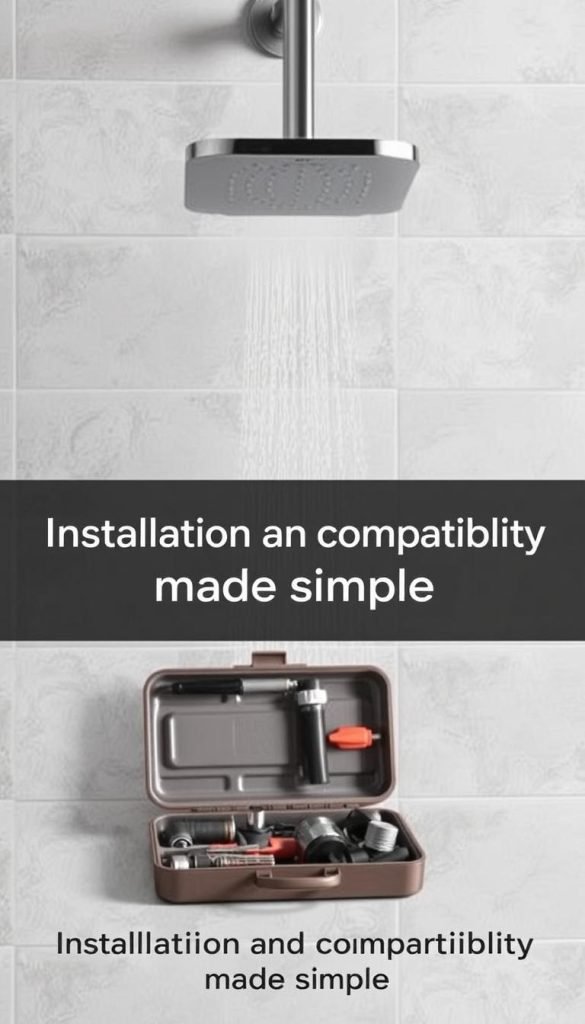
Most installs are straightforward. Consumer Reports notes replacing a head is only slightly harder than changing a lightbulb. I confirm basic compatibility before I start.
Standard threads, DIY swaps, and when to call a pro
I first verify the arm uses standard 1/2-inch NPT threads. With plumber’s tape and a soft cloth, a direct swap often takes little time.
- I hand-tighten the shower head, then lightly snug with a wrench. This avoids cracked connectors and scratched finishes.
- I check washers and included flow restrictors. I won’t remove a restrictor unless I understand local codes and gpm impacts.
- Two-in-one or multi-part models can be fiddly. Some, like the Hydroluxe 24 Function 3-Way, proved cumbersome and prone to leaks during assembly.
- Magnetic docks such as Moen Magnetix improve daily use but need careful alignment during installation.
Call a pro when the change is more than cosmetic. If I move from wall to ceiling, add a ceiling drop, or alter rough-in height, I hire a plumber to protect my home and avoid hidden leaks.
“Turn on the water and check for leaks immediately; a quick reseat often saves a repeat trip and saves time in the morning.”
| Task | Quick check | Why it matters |
|---|---|---|
| Thread size | Confirm 1/2-inch NPT | Ensures the head fits without adapters |
| Washers & restrictors | Inspect included parts | Controls gpm and prevents leaks |
| Multi-part models | Test assemble off arm | Prevents breakage and wasted time |
| Clearance & docking | Verify handheld fit | Avoids rubbing tile or kinking hose |
Maintenance to keep the rain feel going
A little regular care keeps my shower performing and my chosen pattern feeling full. I follow a short routine so nozzles stay clear and the head keeps delivering steady spray without wasting water.

Quick-clean routines for nozzles and spray plates
Weekly, I wipe the spray plate and flex silicone nozzles. That prevents mineral buildup from blocking jets and dulling coverage.
If I spot jets angling or weaker flow, I soak the head in a vinegar-and-water mix for 20–30 minutes to loosen scale. Easy-clean nozzles shed deposits faster and cut time spent scrubbing.
Mineral buildup fixes and replacement parts to look for
- I check gaskets and swivel joints twice a year; swapping a washer often stops drips and keeps spray consistent.
- I avoid abrasive pads that scratch finishes and choose models with replaceable plates or nozzles so I can refresh parts instead of buying a new head.
- I listen for hissing after cleaning—some low-flow designs like High Sierra can whistle if plumbing and design clash. That can signal an internal obstruction or a mismatch in gpm.
- I clean the handheld hose and dock to prevent grit from scratching and to keep docking smooth. I set a calendar reminder so this quick work fits into busy weeks.
| Issue | Quick fix | Why it matters |
|---|---|---|
| Clogged nozzles | Vinegar soak + flex | Restores even spray and warmth |
| Drip at joint | Replace washer/gasket | Stops gallons lost and preserves savings |
| Hissing or whistle | Inspect internals or try a different model | Solves annoying sounds and steady flow |
“Small, regular checks keep my chosen pattern and gpm steady, protecting comfort and water savings.”
Conclusion
Summary guide: Here’s a short checklist to help you land on a rain shower option that feels luxurious while cutting waste.
Independent testing shows thoughtfully engineered low-flow models can match comfort at about half the legal limit, so I trust good design over raw gpm numbers.
I focus on coverage, nozzle engineering, and useful controls like pause or eco modes. I also weigh finishes — chrome, brushed nickel, or stainless steel — for durability and look.
If whole-home pressure is low, I’ll consider a plumber-installed booster. Otherwise I shortlist two or three heads, compare spray and flow side by side, and plan a simple install test for leaks and alignment.
Result: an enveloping spray I enjoy every day that honors gallons, energy, and my bathroom’s style.