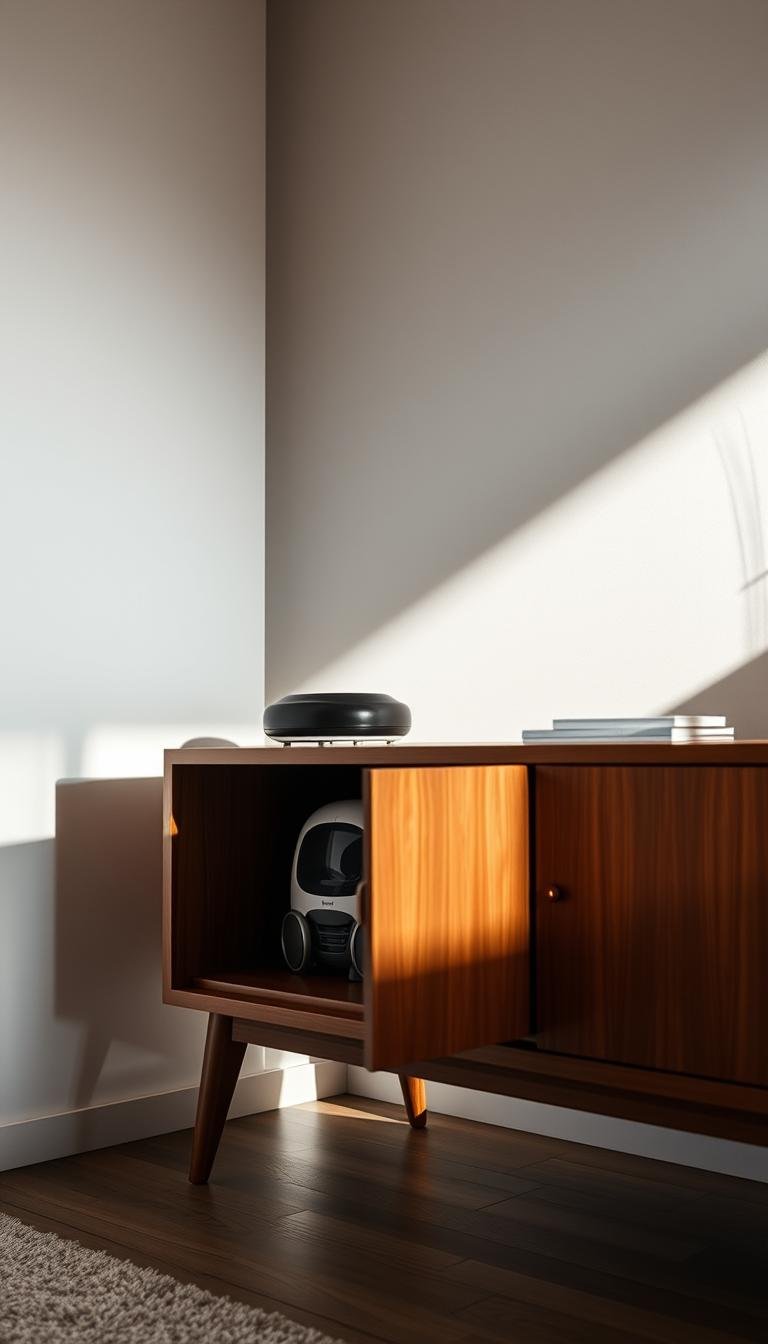
How can I hide a litter-robot in a mid-century credenza?
I turned a vintage credenza into a discreet litter box solution that keeps my cat comfortable and my living room tidy. My goal was simple: keep the unit out of sight, preserve the mid-century look, and still make upkeep easy.
I measured the interior, planned ventilation, and cut a subtle entry opening so my cat could move freely. I added waterproofing where litter might spill and rear airflow cutouts to control odors. Quiet hardware and soft-close doors kept noise low so my cat would not be startled.
The result blends furniture and function. The setup doubles as decor, blocks curious dogs and toddlers, and works best in low-traffic, well-ventilated rooms. Below are quick takeaways to guide your own project.
Key Takeaways
- Measure the credenza interior and allow clearance for the unit and movement.
- Prioritize ventilation and waterproofing to control litter odor.
- Use quiet door hardware so your cat feels safe using the box.
- Place the furniture in a low-traffic, ventilated area of your home.
- Consider purpose-built furniture or simple mods to preserve design and sight lines.
What I planned before cutting: space, airflow, and cat access
“Before any cuts, I mapped the interior so the unit would slide, breathe, and stay quiet.”
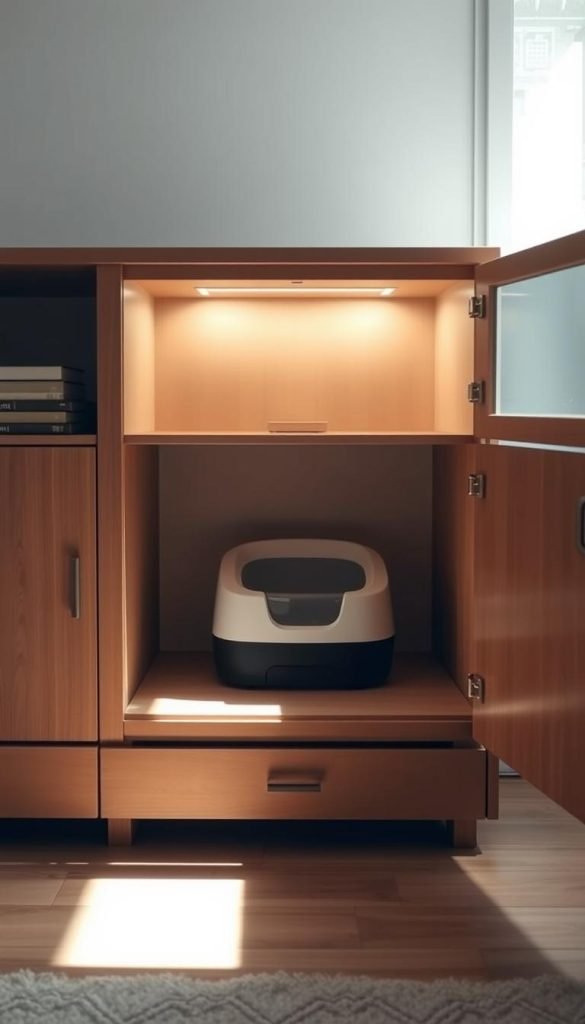
I measured the credenza interior to make sure the litter box fits with room to spare. This kept the unit from rubbing and let me slide the waste drawer out without troubleshooting.
Measuring for clearance
I checked height, depth, and door swing. I taped the layout on the shell to confirm clearances and avoid structural interference.
Designing airflow and odor control
Enclosed boxes trap heat and odors, so I planned rear cutouts and mesh panels that line up with the unit’s vents. For tight spaces, a small fan helps circulation while keeping the design clean and unobtrusive.
Ensuring easy waste-drawer access
I mapped the waste-drawer path and routed the power cord so the cable won’t kink. I chose soft-close hinges to protect my cat’s privacy and reduce noise.
- Waterproof base: contact paper or a wipeable mat catches stray litter and spills.
- Placement tip: pick a quiet, low-traffic room away from food and direct sun.
For more covering ideas, I linked to creative covers that inspired my layout.
How can I hide a litter-robot in a mid-century credenza?
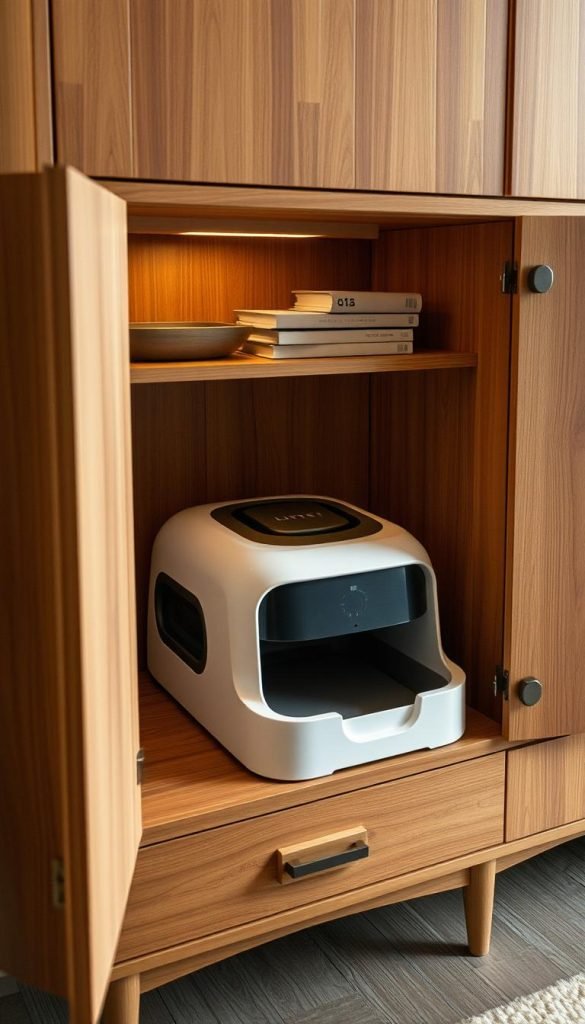
I planned the side opening so my cat would step in easily while keeping the cabinet’s silhouette intact. I traced the hole on painter’s tape, adjusted height for comfort, and drilled pilot holes before cutting a smooth arc with a fine jigsaw blade.
Marking and cutting a discreet side entry
Tip: add edge banding or a trim ring after sanding so the opening looks finished and splinter-free. This keeps the design cohesive and sturdy for daily use.
Waterproofing and lining the interior
I lined the floor with waterproof contact paper and added a removable mat to catch loose litter. I sealed seams with a clear, non-toxic sealant to protect the wood and make wipe-downs easy.
Ventilation and quiet access
Rear ventilation slots backed with black mesh balance airflow and appearance. Where needed, a quiet USB fan on a timer helps circulation without extra noise. I used soft-close magnetic hardware so servicing the box is calm and rattle-free.
| Feature | DIY choice | Benefit |
|---|---|---|
| Side entry | Taped template, jigsaw, edge banding | Clean look and safe cat access |
| Interior lining | Waterproof contact paper + mat | Easy cleanup, protects wood |
| Ventilation | Rear slots + mesh or small fan | Odor control without visible vents |
| Doors | Soft-close or magnetic | Quiet operation, less stress for cat |
Choosing the right credenza and finishes to match mid-century decor
I hunted for a credenza that could handle stray litter and spills while still matching my living room’s mid-century vibe. Durability came first, then finish and scale so the unit reads like regular furniture.
Picking sturdy, wipeable materials and coffee oak tones
Composite wood stood out because it wipes clean and resists scratches better than many vintage solids. That mattered with daily litter tracking and the occasional spill.
I picked a coffee oak finish to hide light scuffs and to pair with warm wood tables and lamps. A protective polish keeps dust and tracked litter easy to brush away.
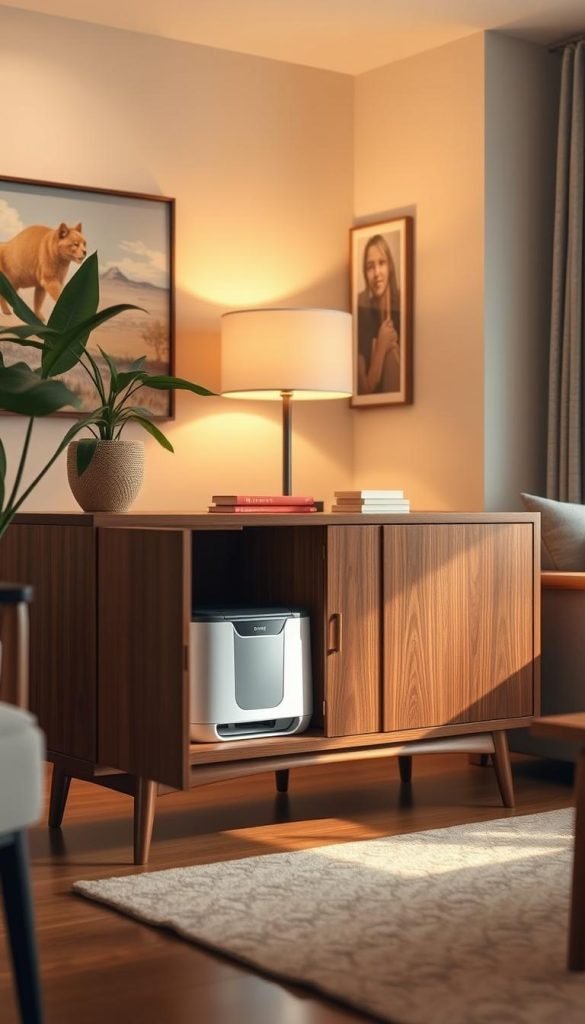
Blending with existing furniture, table decor, and storage
I matched leg style and hardware so the piece reads as a cohesive part of the room. Inside, low-profile storage holds liners, scoops, and spare cat supplies.
| Option | Construction | Finish | Key features |
|---|---|---|---|
| Coastal Credenza | Composite wood | Coffee oak | 43.2″ W, rear airflow cutouts, soft-close doors |
| Storage Cabinet | Composite wood | White plank / coffee oak | 30.7″ W, compact depth, side entry friendly |
| Vintage piece (my choice) | Solid or restored | Custom finish | Can match decor, needs waterproofing |
- Tip: favor internal volume over slim profiles so the box fits comfortably.
- Choose doors that open wide for easy service and discreet access for your cat.
Placement matters: where this hidden litter box works best in my home
Picking the right spot made daily care easy and kept the setup discreet. I favored privacy and airflow over central convenience so my cat would use the box without stress.
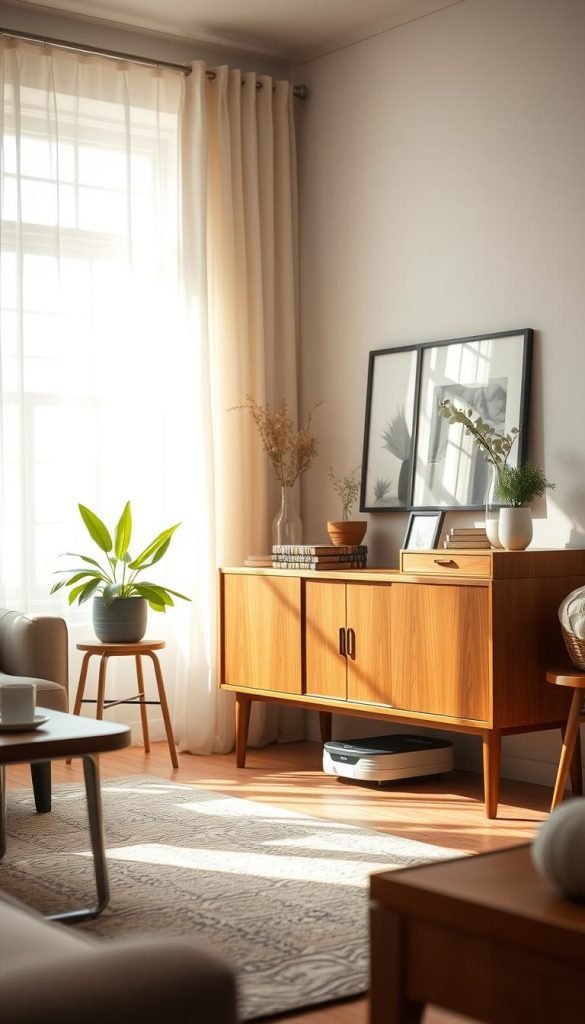
Best rooms for privacy, low traffic, and ventilation
Closets with a vent or a slightly ajar door worked well because they are quiet and easy to tidy. Bathrooms are another good place since they handle humidity and have natural airflow.
Laundry rooms are okay if the furniture sits away from washers and dryers. I avoid bright sun and busy hallways. Basements or spare rooms are fine when stairs do not limit access.
Dog-proofing the setup while keeping full feline access
To keep dogs out I used a side entry sized for my cat and magnetic doors that close securely. That preserves the sight lines of the living room and keeps curious noses away.
- I placed the credenza in a low-traffic room for comfort and privacy.
- I keep a small airflow gap or rear cutouts so smells dissipate.
- I store extra litter and liners inside the same unit for quick maintenance.
- I do a brief daily check to catch tracked litter and keep the space tidy.
Upgrades and alternatives I considered
I compared off-the-shelf storage options and simple hacks to balance form, function, and weekly upkeep.
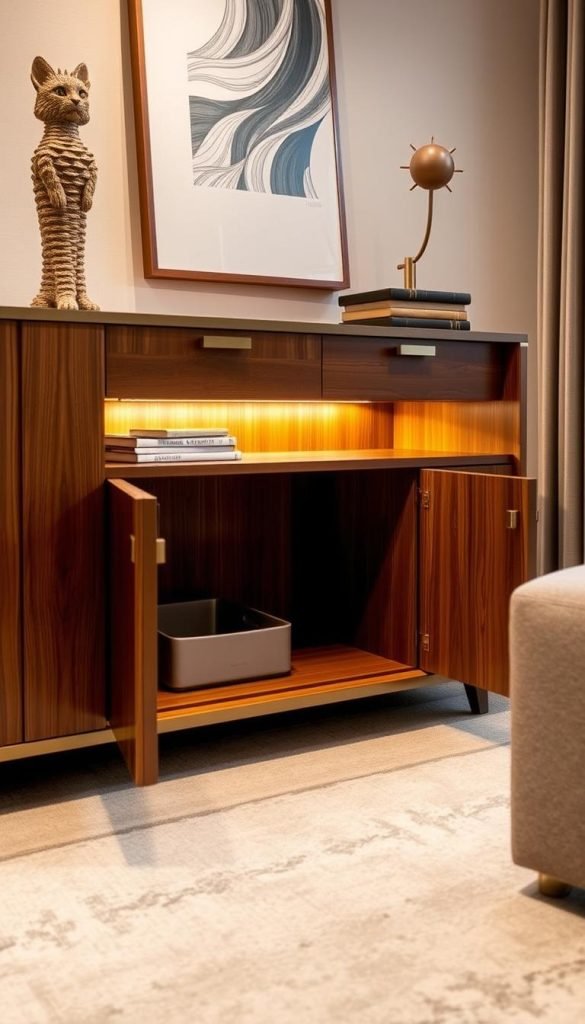
Purpose-built storage cabinet and coastal credenza
Whisker’s Coastal Credenza and Storage Cabinet stood out. Both are sized for the unit with soft-close magnetic doors and rear airflow cutouts.
- The Coastal is about 43.2″ W x 28.1″ D x 33.1″ H and the Storage Cabinet is about 30.7″ W x 28.1″ D x 34.3″ H.
- Both come in a coffee oak finish to match living furniture and hide daily wear.
- They work as real box furniture with storage above and easy service access below.
DIY and IKEA hacks for small spaces and multi-cat homes
For tight spaces I looked at BESTA and HAVSTA mods. The usual upgrades are full-opening doors, rear vents, waterproof bases, and motion lights.
Rule of thumb: aim for at least 30″ W x 25″ D x 30″ H inside so the litter box fits and the drawer slides out.
- Add low-noise fans and motion lights for airflow and safe access.
- Store liners and supplies inside the same cabinet for fast maintenance.
Conclusion
Converting an old cabinet into usable box furniture gave me both storage and privacy for my cat. The result is tidy, matches the room, and keeps the litter box furniture discreet.
For steady odor control and easy service, I recommend a minimum interior of 30″ × 25″ × 30″, waterproof the base, add vents, and allow full access to the waste drawer. Purpose-built pieces like the Whisker Coastal Credenza or a simple storage cabinet simplify the process.
Final cat tips: place the unit in a quiet, low-traffic room, size the side entry to keep dogs out, and store liners and scoops inside the same piece to save time and keep cleaning quick.