What’s the perfect ottoman size for a 90-inch sectional?
I wrote this guide to answer one clear question: how to pick the right ottoman so your living room feels balanced, comfy, and intentional.
I’ll share a simple method that blends practical measurements with design sense. First, confirm seat height so foot support feels natural; aim for an ottoman slightly lower than the sofa seat.
Length matters: pick roughly half to two-thirds of the couch so the piece reaches and never overwhelms the seating. Keep 12–18 inches clear around seats for easy movement.
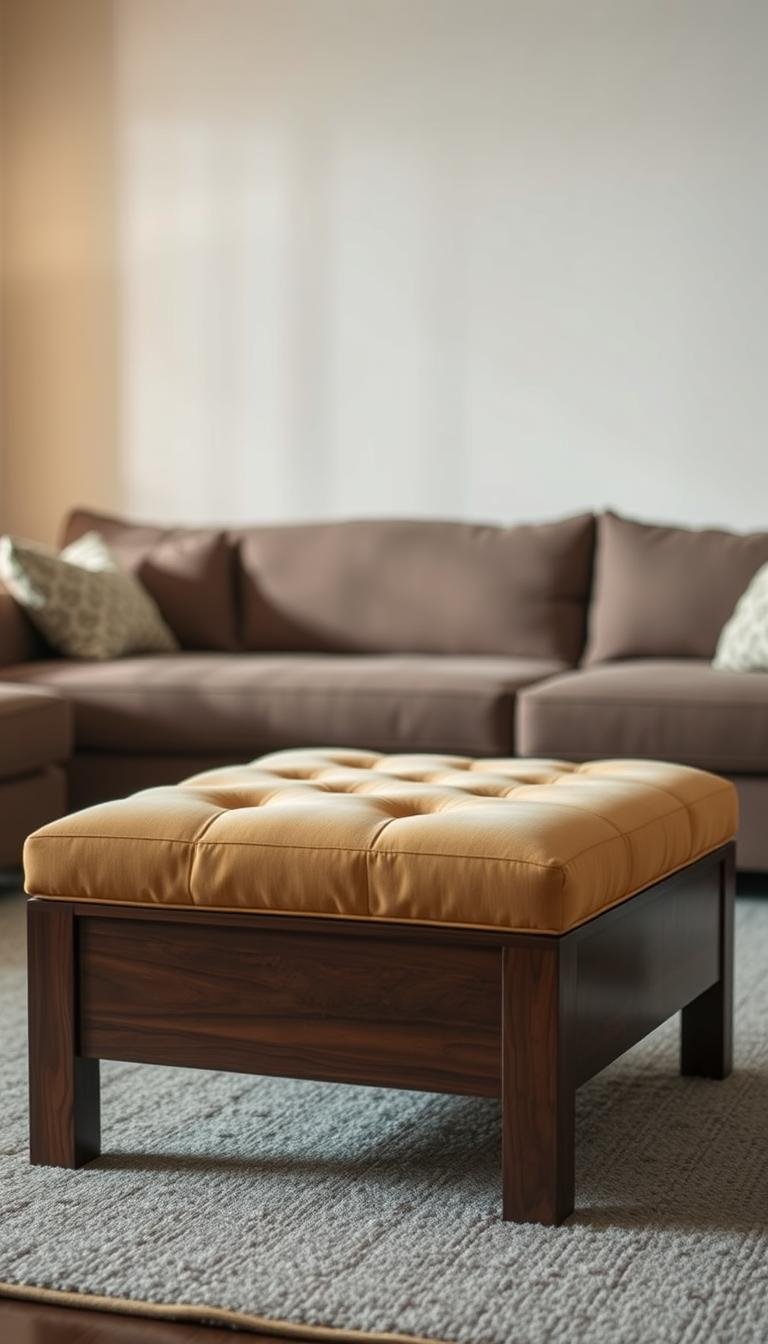
Shape and material affect both look and use. Rectangular pieces suit L layouts, squares work with U shapes, and rounds soften corners. Choose fabrics that clean easily, or leather for long-lasting contrast.
Key Takeaways
- Match ottoman height to seat height minus 1–2 inches for comfort.
- Target half to two-thirds of the couch length for proper scale.
- Keep 12–18 inches of clearance around seating for flow.
- Pick shape to fit layout: rectangular for L, square for symmetry, round to soften.
- Choose materials with kids and pets in mind; use a tray to convert into a coffee table.
My goal for this guide: pick an ottoman that fits your 90-inch sectional and your living room
I want to make this simple and useful. My aim is to help you choose a centerpiece that brings balance to your room and works for real life. I focus on proportion, reach, and clearance so the furniture fits the space and daily routines.
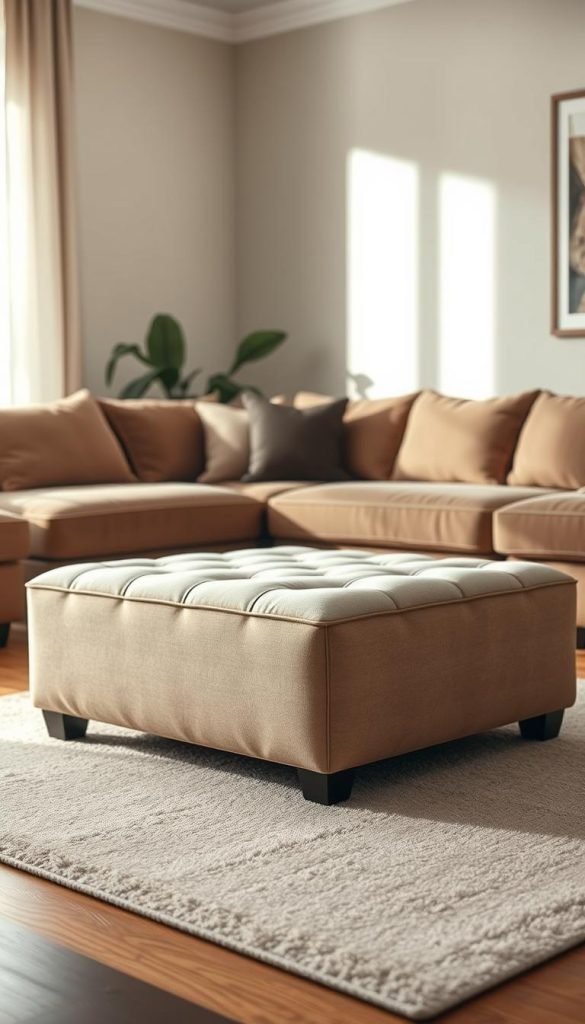
I’ll walk you through a few measurements and design guardrails. Aim for a length at roughly half to two-thirds of seating, match seat height minus 1–2 inches, and keep clearances: 12–18 inches around seating and 24–30 inches to media or fireplace.
- I’ll explain when a coffee table might serve you better and how a tray can make one piece do both jobs.
- Expect practical notes on style, durability, and daily living—kids, pets, snacks, and remotes included.
| Option | Best use | Quick guide |
|---|---|---|
| Ottoman | Footrest, extra seating | Half–two-thirds length; soft surface; add tray for drinks |
| Coffee table | Stable surface for drinks/games | Same length rule; keep 24–30 in to TV/fireplace |
| Hybrid (tray top) | Flexible daily living | Combine comfort with tabletop stability when needed |
Bottom line: I’ll give exact measurements and small tweaks so your next purchase feels intentional and lives well in your room.
Measure first: the simple tape-measure checklist I use
I begin by taking three simple measurements that save time and prevent returns. Small checks let me know whether a candidate piece will fit and feel right in daily life.

Seat height
How I measure: I measure from floor to top of cushion, then subtract 1–2 inches. That target keeps feet supported without forcing hips or knees into awkward angles.
Sectional length
Next, I confirm full seating length at 90 inches so I can apply the half-to two-thirds rule for length. That guides whether an ottoman or coffee table will balance with the sofa without crowding the visual field.
Open floor area
I map traffic lanes and mark clearances with painter’s tape.
- Keep 12–18 inches from seating to the ottoman or coffee table for reach and circulation.
- Allow 24–30 inches to media units or fireplaces to protect sightlines and movement.
- Note door swings, vents, cable runs, and robot vacuum paths before buying.
Tip: I sketch dimensions and bring numbers when I shop. It stops impulse buys that don’t fit the living room.
What’s the perfect ottoman size for a 90-inch sectional?
I like to frame choices around two practical length targets that save guesswork.
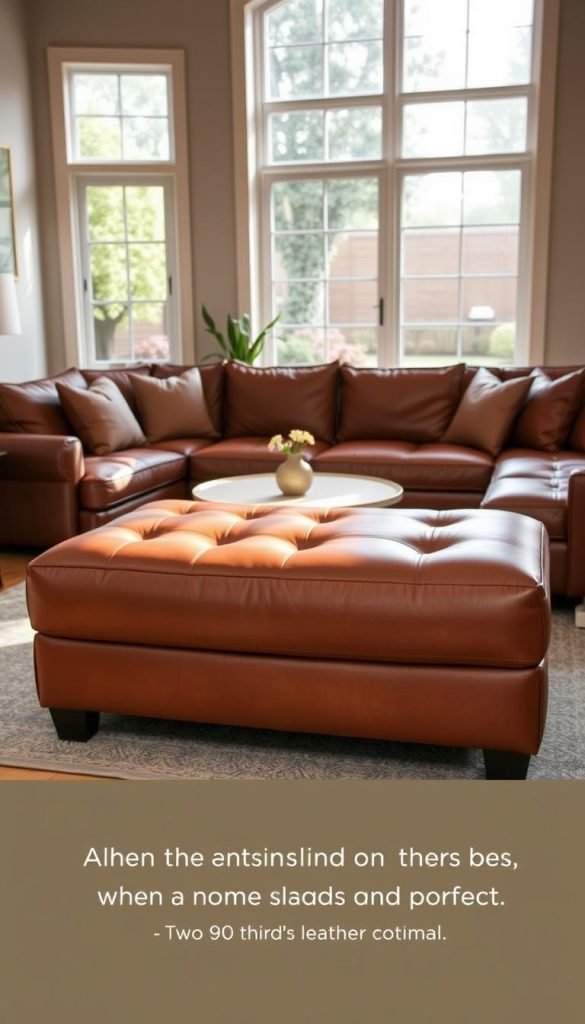
Length target: two-thirds vs half
Quick rule: aim near half or two-thirds of the couch. For a 90-inch sofa that means about 45″ or 60″.
Choose 45″ when the room is tight. Pick 60″ to give the piece more presence and usable surface.
Depth sweet spot
Keep depth around 24–36 inches. That range gives easy reach from seating and still lets people move by without bumping furniture.
When to size up or down
If your living room is large, I size up for better visual balance and a larger surface for trays and books. If traffic lanes feel squeezed, I lean down.
| Option | Best when | Result |
|---|---|---|
| ≈45 inches | tight room | better circulation |
| ≈60 inches | generous room | strong focal surface |
| Rectangular ottoman | L-shaped seating | neat parallel look |
Clearance rules I never skip for comfort and flow
Before I pick style, I lock down clearances that protect comfort and flow. Good spacing keeps a room usable and calm. It also makes furniture choices behave well over time.
Reach and circulation: I measure 12–18 inches from seating to the ottoman or coffee table. Too tight and knees hit; too loose and you can’t reach a drink or remote.
Safety and sightlines: I leave 24–30 inches between that surface and a TV stand, console, or fireplace. This gap preserves safe movement and clean sightlines in the living area.
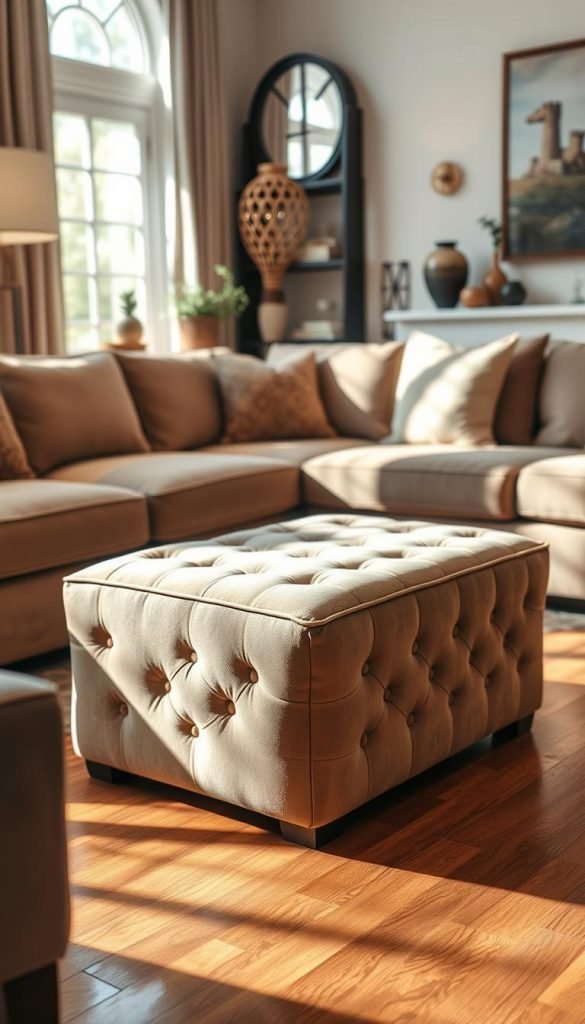
- When space is narrow, I pick a smaller piece rather than steal from the aisle.
- Families benefit from the larger 24–30 inch zone; kids run by without bumping corners.
- I tape the footprint and walk it—daily habits reveal whether the area works.
- Account for rug pile and hearth edges; they reduce usable floor space and change clearances.
Bottom line: these simple distances protect comfort and keep the room feeling intentional. I use them every time I place furniture.
Height matters: dial in footrest comfort
A small height tweak can turn an awkward footrest into a cozy focal point. I focus first on height because it directly affects how your feet rest and how the seating feels over time.
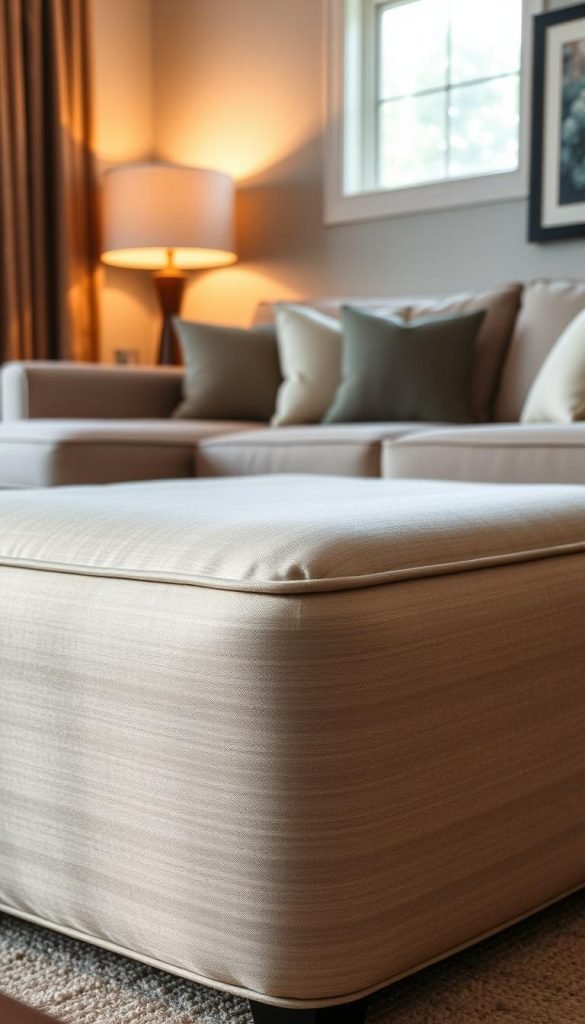
Match to cushion height minus about 1 inch
My rule: measure seat-cushion height and choose an ottoman roughly 1 inch lower. That slight drop supports feet without forcing knees upward.
If your sofa cushions compress a lot, I test with someone sitting. Real use can change how high a piece feels.
Tray on top? Account for added height and stability
A tray raises the top surface and can turn the piece into a coffee table in seconds. If you plan to use trays, pick a slightly lower ottoman so drinks stay at a comfortable reach.
Stability matters: choose a wide, grippy tray and a sturdy piece of furniture so nothing slides or rocks when plates or cups sit on it.
- Low, loungey seating pairs best with low-profile pieces to keep sightlines clean.
- For mixed seating heights, match the ottoman to the most-used seat.
- Rounded edges and solid build help busy homes with kids and pets.
Bottom line: get the height right first, then fine-tune shape and surface so your living area stays comfortable and useful.
Choose the best shape for your sectional and space
I pair each layout with a shape that plays to its strengths and keeps traffic flowing. Picking the right silhouette makes a room feel balanced and helps seating stay useful.
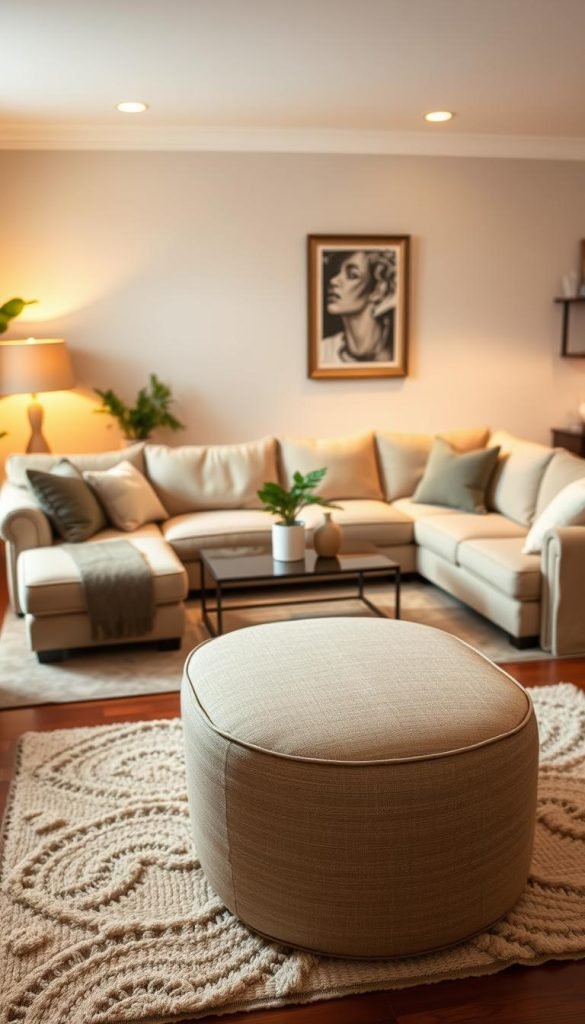
Rectangular option for L-shaped balance and surface area
Rectangular ottoman echoes the long line of an L layout and gives a generous surface for trays and books.
This form removes awkward gaps and keeps reach easy from both the sofa and chaise.
Square choice for symmetrical or U-shaped layouts
When seating faces inward, a square piece centers the room. It balances footprints side to side.
Two trays or one large tray both work, so styling stays flexible.
Round pieces to soften corners and improve movement
Round styles calm boxy rooms and reduce shin bumps in tight space. They also mirror curved or wedge sectionals well.
Tip: tape both footprints to compare walk paths and balance. Match or contrast a nearby coffee table on purpose so the overall design reads as one calm, living space.
“Shape guides how people use a room; pick one that makes sense for daily life.”
Proportion and scale: make the room feel balanced
My first step is to judge how a piece will sit in the room from the doorway. I check whether the visual weight of the furniture reads like a single unit or feels off balance.
I use the half‑to two‑thirds length rule as an anchor. That quick check tells me if the ottoman will look too slight or too dominant.
Clearance matters: I keep reach and flow in mind so the piece never blocks movement. If floor space is tight, I trim depth before changing length.
For low ceilings or heavy sofa lines I pick lighter legs or slim profiles so the living space stays airy. In larger rooms I’ll scale up or use two ottomans to form a cohesive coffee table alternative.
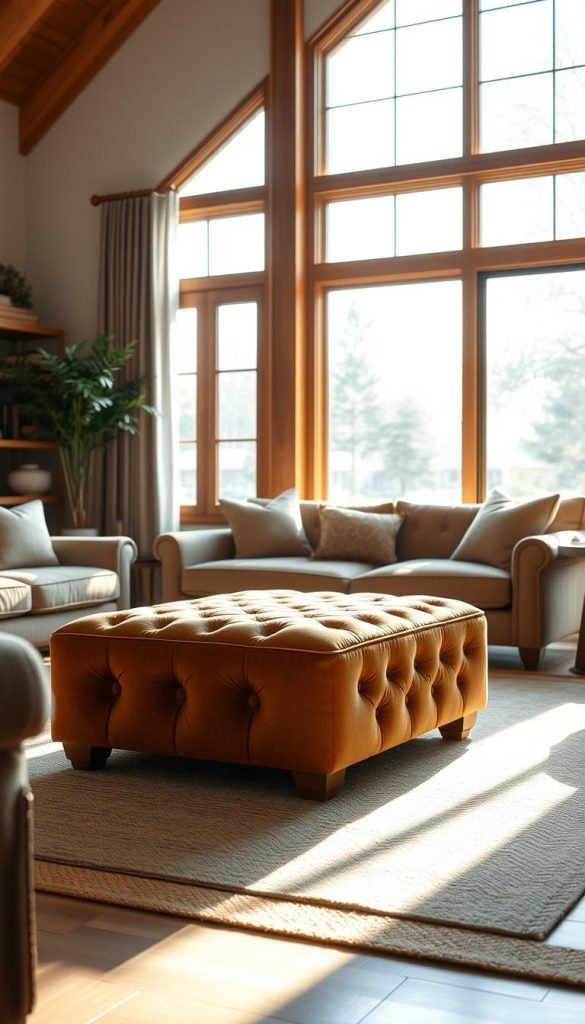
- I stand at the entry and judge whether the seating area feels grounded.
- Rugs help with scale—center the piece over the rug field to tidy the composition.
- If length is fixed, I tweak height and depth to refine balance without losing flow.
Tip: keep decor on top minimal when patterns are strong elsewhere so the living room reads calm and intentional.
Function first: how I decide between ottoman, coffee table, or both
I picture an evening in the room—where feet land, where cups sit, and how people move—then pick based on that habit map.
Soft surface vs hard surface: I pick a soft piece when I want a cozy footrest and extra seating during gatherings. A padded surface keeps loungers happy and reduces sharp edges in busy spaces.
Hard surface wins when: I need a stable coffee table for drinks, board games, or laptops. Solid tops handle spills and are easier to clean after parties.
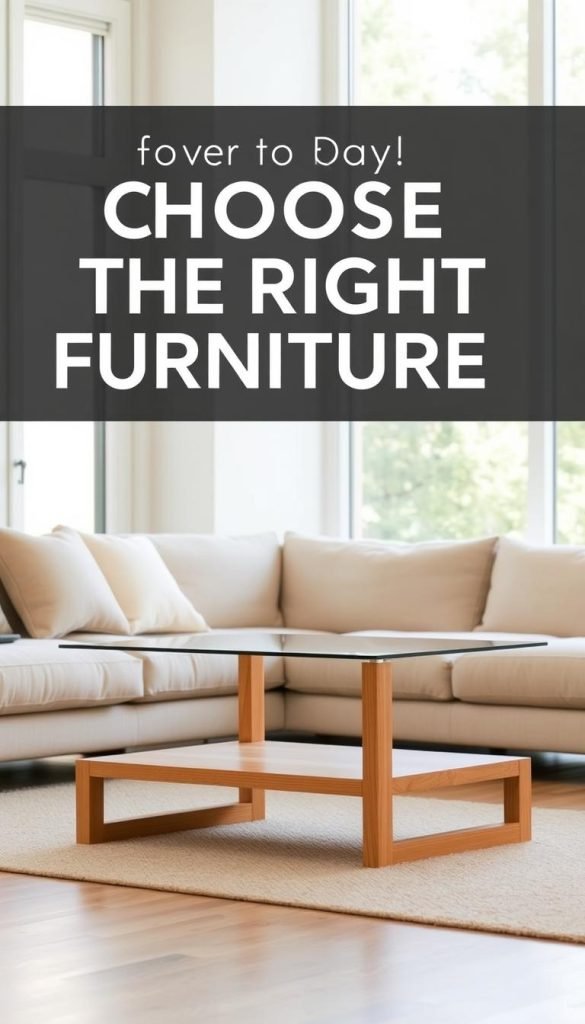
Using a tray to convert on demand
A large tray lets an ottoman double as a table without adding furniture. I use trays with non-slip pads and a raised lip for safe transport of drinks and snacks.
- I choose an ottoman when extra seating matters more than firm surface.
- I pick a coffee table when stability and easy cleaning are priorities.
- If I want both, a tray gives flexible functionality and saves space.
“Match your furniture to daily routines—comfort, cleanup, and hosting habits rule the choice.”
Storage and multifunction options that earn their keep
I favor pieces that hide clutter and pull double duty in daily life. Storage ottomans make blankets, remotes, and kids’ toys vanish quickly while keeping the room tidy.
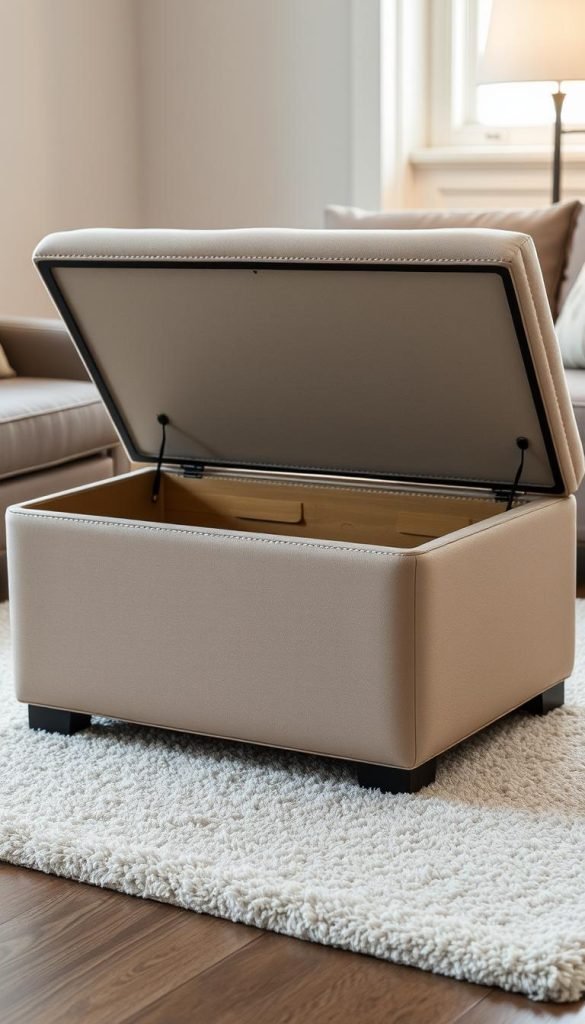
Hinged-top storage: blankets, remotes, kids’ toys
Hinged tops are my go-to when access matters. I pick units with sturdy hinges and smooth interiors so throws and gadgets slide in without snagging.
Tip: if you often serve drinks, choose firm upholstery or a wide tray so glasses sit steady on the surface.
Cube ottomans and poufs for flexible seating
Cube pieces and poufs shift between extra seating and makeshift side tables when topped with a tray.
Two small units can push together to mimic a coffee table or split for more seats. I still keep 12–18 inches to seating and 24–30 inches to media units when arranging them.
- I love hinged-top storage ottomans for taming clutter—blankets, remotes, and kids’ toys disappear in seconds.
- Cube ottomans and poufs flex between extra seating and makeshift side tables when topped with a tray.
- Storage only helps if it’s easy to open; choose durable hinges and snag-free interiors.
- For small living spaces, nesting designs or lightweight poufs make rearranging effortless.
- Before buying, list your top three storage needs and match volume and access to those habits.
Material and durability: fabric, leather, performance weaves
I pick upholstery and cores that stand up to daily life, not just showroom looks. Choosing the right material affects how long a piece lasts and how it fits into daily routines.
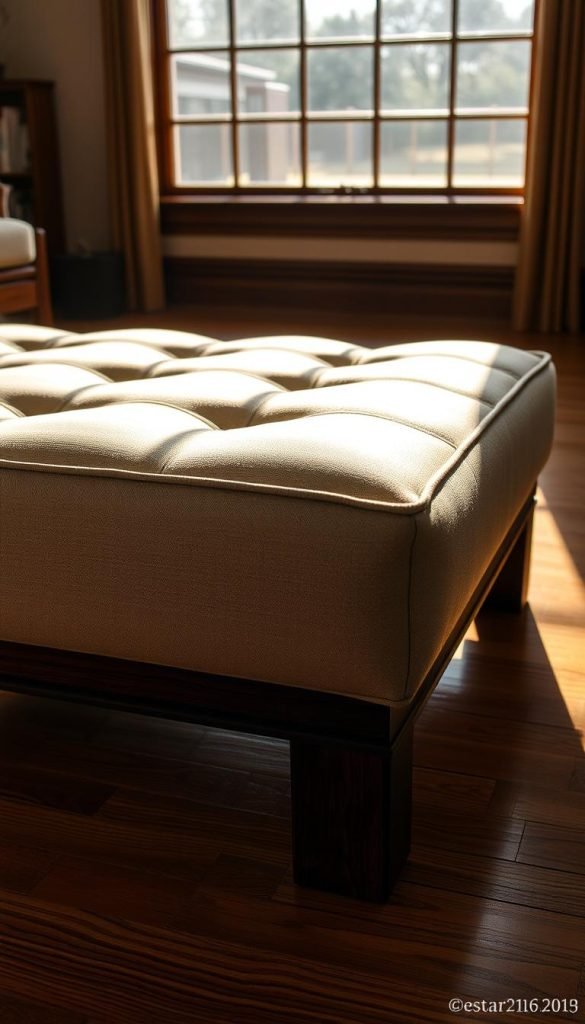
Easy-clean, spill-resistant fabrics for busy homes
Performance weaves resist stains and wipe clean fast. I prefer these when kids, pets, or high traffic make spills likely.
Tip: choose mid-tone colors and tight weaves to hide fur and wear.
Leather option: durable contrast with fabric sofas
A leather ottoman gives durability and ages with character. Mixing leather with a fabric sofa creates refined contrast that lifts decor.
Avoiding sharp edges and glass around kids and pets
I skip glass tops and hard corners in family rooms. Rounded edges and sturdy frames protect comfort and reduce accidents.
- I check frame and suspension because durability starts inside the furniture.
- If storage is planned, test hinge quality and lid weight for safe use.
- Match texture twice in a room to keep the palette cohesive.
Color and pattern: match, blend, or contrast for your design style
Color choices set the mood; I start by deciding whether to calm or energize the room.
Tonal cohesion keeps the living room calm. I pick shades within a few steps of the sofa and rug so the look reads as one thoughtful unit.
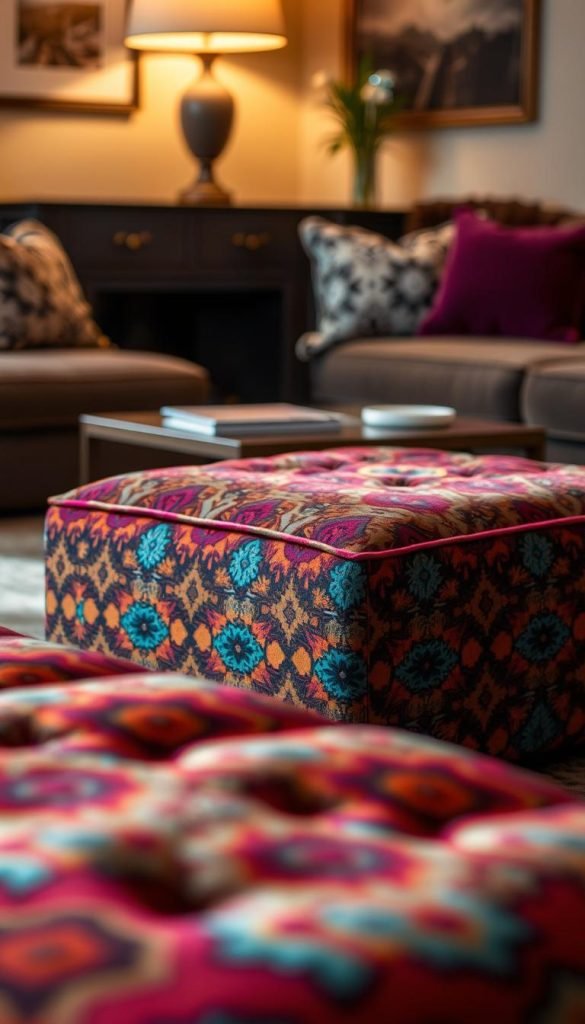
Two smart palettes: tonal cohesion vs bold accent pop
When I want energy, I use a patterned piece as the accent. A bold fabric or bright hue creates contrast against a solid sectional.
A leather ottoman pairs well with fabric seating. That mix adds tactile contrast and a tailored aesthetic without fighting other materials in the room.
Mixing textures to add depth without visual clutter
I layer bouclé, linen, and performance weaves so the design feels rich but steady. If the rug is loud, I keep the ottoman simple. If the room is quiet, the ottoman can carry a statement pattern.
- I test swatches in natural and evening light to confirm undertones match.
- I echo one material elsewhere—like a leather tray on fabric—to tie the decor together.
- Shapes matter: a round silhouette can soften a graphic pattern.
“Start neutral if unsure, then add color with pillows and throws you can swap seasonally.”
For more tips on matching pieces, see matching ottomans.
Small living rooms: space-saving sizing and layout tips
In tight layouts I favor pieces that keep traffic flowing and feet safe. A compact approach makes the area feel larger and keeps everyday use simple.
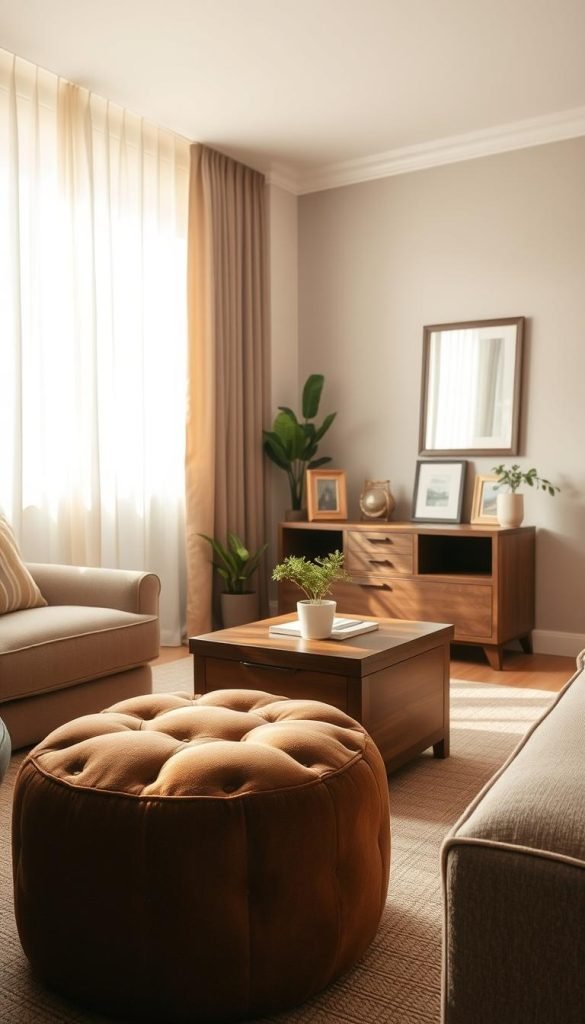
Go round or compact to keep walkways open. Round silhouettes ease movement and cut shin bumps. I cap depth around 24–28 inches when depth is the squeeze, and trim length toward the half-length target so the piece doesn’t crowd the room.
Use pairs of smaller ottomans instead of one large piece
Two small units can push together as a coffee table or split for extra seating. A single strong tray unifies them into a tidy tabletop moment.
- Keep 12–18 inches to seating—flow is non-negotiable even in compact spaces.
- Choose slim, hinged-top storage if you need storage; test clearance before buying.
- Light colors, raised legs, nesting pieces, or poufs help the living area feel airier.
- Smaller rug patterns and minimal decor on top prevent the space from feeling busy.
Large living rooms: go generous without overwhelming the space
When a living space is generous, I push scale thoughtfully to keep the seating grouping grounded.
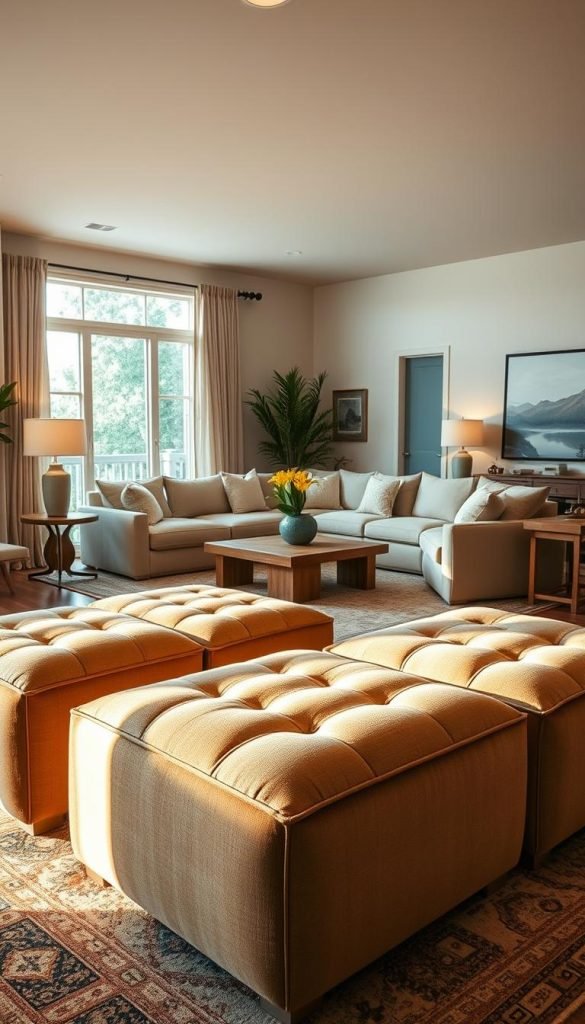
Maxing the two-thirds length rule for presence
I favor the upper bound of the two-thirds length rule so the main piece anchors a wide room. In practice, that means sizing toward that mark so the central surface reads intentional and balanced.
Styling multiple ottomans as a cohesive group
I often pair two units to form one large coffee surface. A rectangular ottoman echoes long sectionals and ties legs across a layout.
- Keep 12–18 inches to seating for reach and flow.
- Allow 24–30 inches to media or built‑ins to preserve sightlines.
- Align seams and gaps so pieces read as one composed element.
- Choose reconfigurable options to adapt for parties or movie nights.
Tip: larger fields handle bolder textures. I echo finishes from other furniture to unify design across wide spaces.
Modular and sectional-friendly ottoman options
Modular pieces let me reshuffle seating and surface in seconds without buying extra items. They plug into a layout, create more seating, or act as an instant table when topped with a tray.
I look for units that clip or slide over the frame so they sit flush with the sectional. Consistent seat height matters. If heights match, the piece reads like original furniture instead of an afterthought.
Add-on ottoman sofa seats that reconfigure with your layout
I use modular modules when my living space needs to change seasonally or for guests. They expand a chaise, form extra perches, or split into two seats for flexible seating.
- Broad trays convert modules into a table, then back to seating in seconds.
- Durable fabric and solid feet withstand frequent moves.
- Keep clearance rules in mind; flow still wins over density.
“A single modular buy often replaces multiple pieces, giving more utility from less furniture.”
| Feature | Best use | What I check |
|---|---|---|
| Clip-in module | Seamless seating extension | Matching seat height, secure latch |
| Slide-over module | Quick chaise or perch | Fabric durability, non-slip feet |
| Tray-ready top | Table when needed | Stability, tray lip, even surface |

Budget, build quality, and maintenance checklist
Budget choices should protect daily use—start with structure, then comfort and fabric. I focus on durability and easy upkeep so the living area stays useful without constant fuss.
Where I spend first
Frame, foam, and fabric
- I put most of my budget toward the frame: solid hardwood or quality engineered frames hold shape and last.
- High-resilience foam or layered cores keep cushions supportive and comfortable over years of use.
- Performance fabric resists spills and wipes clean; that material choice extends life in busy homes.
Longevity vs upfront cost
Higher initial cost can outlast cheaper options. I weigh long-term value over a low price tag.
- Check stitch quality, corner blocks, and hinge hardware on storage pieces.
- Match maintenance to lifestyle—removable covers help if your room sees daily activity.
- Read manufacturer care guidelines so cleaning stays realistic and simple.
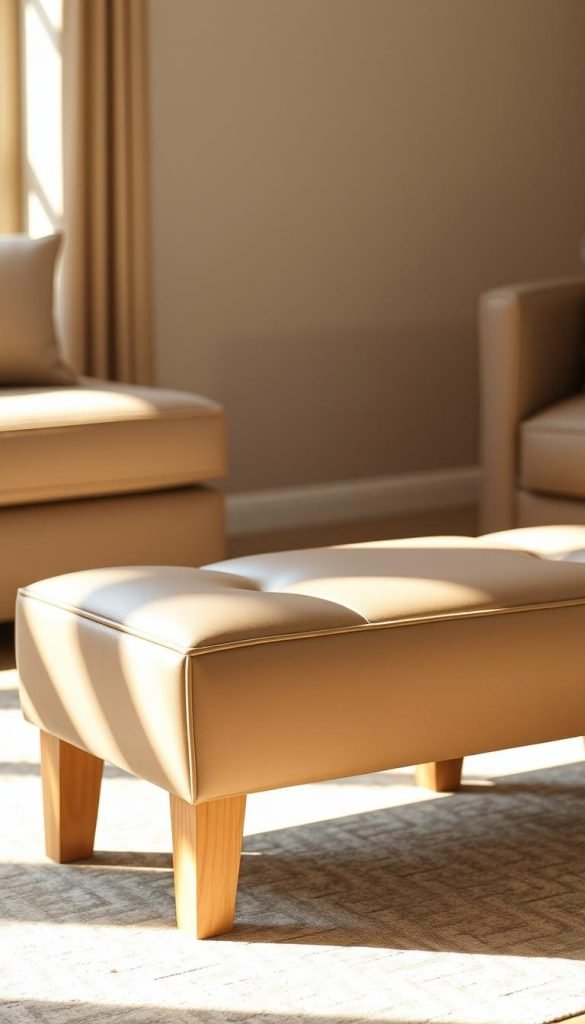
Common sizing and styling mistakes I help clients avoid
Before you buy, pause and check proportion, clearance, and daily use. Small missteps turn a thoughtful purchase into an annoyance fast. I walk clients through common errors so they avoid returns and regrets.
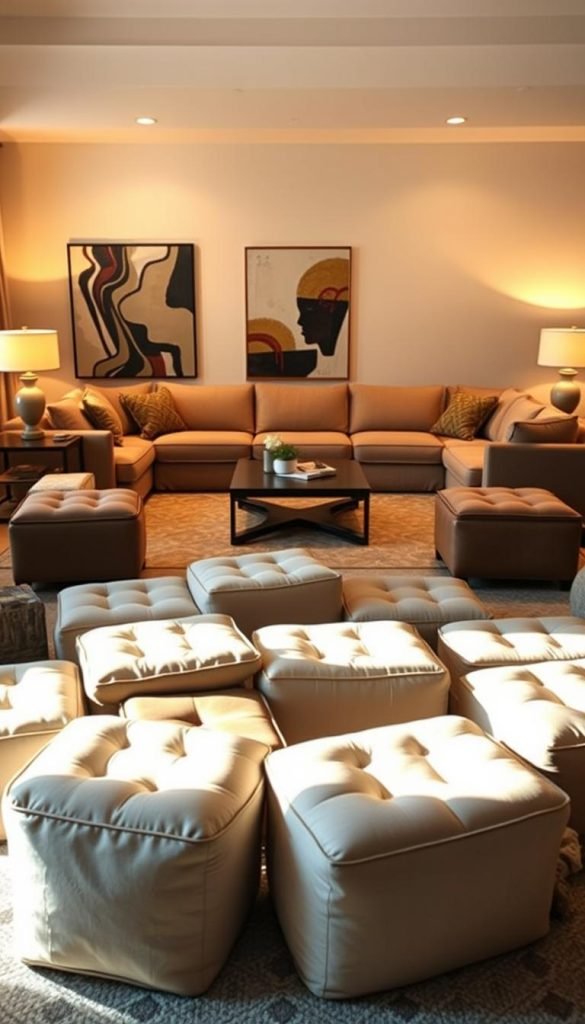
Too small to share, too big to circulate
Choosing a piece that’s too small makes it read like an afterthought. Guests end up leaning or overreaching because the surface doesn’t meet seating needs.
Oversizing can feel elegant but block paths. A large object that jams circulation will make the room feel cramped even when it looks great.
Ignoring clearance and seat-height alignment
Skip the 12–18 inch clearance and comfort vanishes. People bump knees or can’t reach a drink. I always measure this gap before committing.
Likewise, neglecting the 1–2 inch height offset below seat height leaves feet uncomfortably high or low. Small height errors add up nightly and change how you use the seating.
- Letting style outrank function often creates a look you won’t enjoy living with.
- Forgetting flow from doors to seats causes bottlenecks and bumped shins.
- Using a bold pattern without balancing it elsewhere can throw off the whole design.
- Neglecting a tray when you need a stable surface reduces usability.
- Copying dimensions from another room rarely fits—measure your own space first.
“Fixing these pitfalls usually means re-centering on proportion, clearance, and comfort first.”
Bottom line: I recommend starting with proportion and clearance, then layer in material and pattern. That sequence keeps the look intentional and the room usable.
Conclusion
Ultimately, my goal is one clear result: furniture that fits the room and supports real routines.
Keep measurements simple: aim near 45–60 inches in length, allow 12–18 inches to seating, and 24–30 inches to media or fireplace. Match height to seat minus about an inch for true comfort.
Choose shape to suit layout—rectangular for L plans, square for symmetry, round to ease traffic. Use a large tray when you need a hard coffee surface, then stow it to keep the piece relaxed.
Pick materials and fabric that handle daily life. Invest in frame, foam, and cover to balance budget and longevity so the living room stays useful and beautiful.