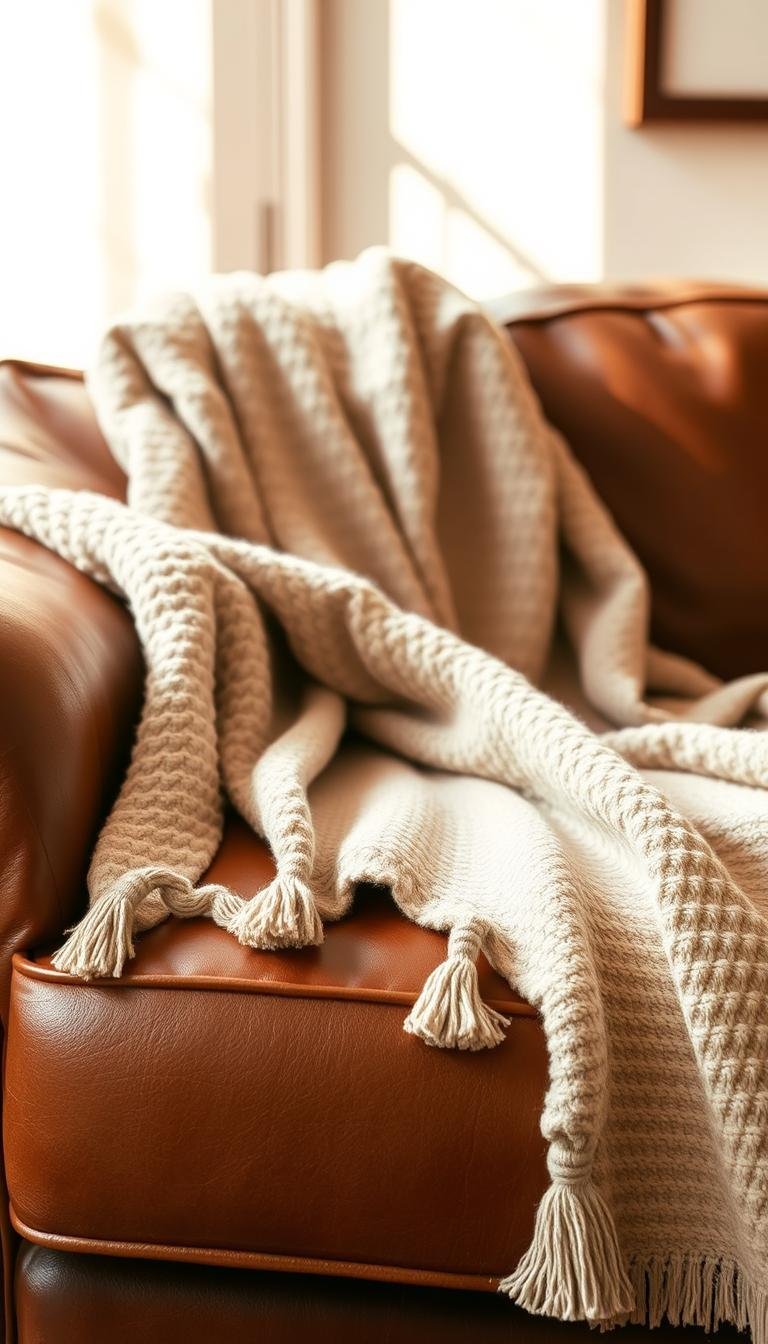
What’s the trick to keeping throw blankets from sliding off leather?
I’ll say it plainly: leather sofas look sleek but they can be slippery to work with. I keep a blanket and a throw in place on my sofa without sacrificing style or comfort by using simple, low-profile fixes.
In my home, throws add warmth in winter, shield upholstery from children’s spills, and update decor quickly. But smooth leather means a blanket will often drift when we sit, shift, or stand.
I’ll preview the plan: quick tucks, non-slip rollers and netting, Velcro or clipped attachments, and buttoned options for chunky knits. Each method protects the sofa finish and looks intentional.
Follow along and I’ll show exact placements and tactile steps that work on a single-seat sofa or a large sectional. For more care tips, see this helpful guide on maintaining throws and leather on my favorite site: leather throw care guide.
Key Takeaways
- Simple tucks and low-profile weights stop most movement.
- Non-slip foam rollers and silicone-nub throws add grip without damage.
- Velcro strips, elastic clips, or buttons give secure, no-sew results.
- Choose materials and sizes that naturally conform to your sofa.
- All methods prioritize leather care and easy daily use.
Why throws slip on leather sofas and how I fix the root cause
A smooth sofa surface and a light fabric set up a perfect storm for migration. I start by naming the problem, then I add simple friction and a mechanical tuck so the cover stays put.
Slick upholstery, smooth textures, and gravity: the real culprits
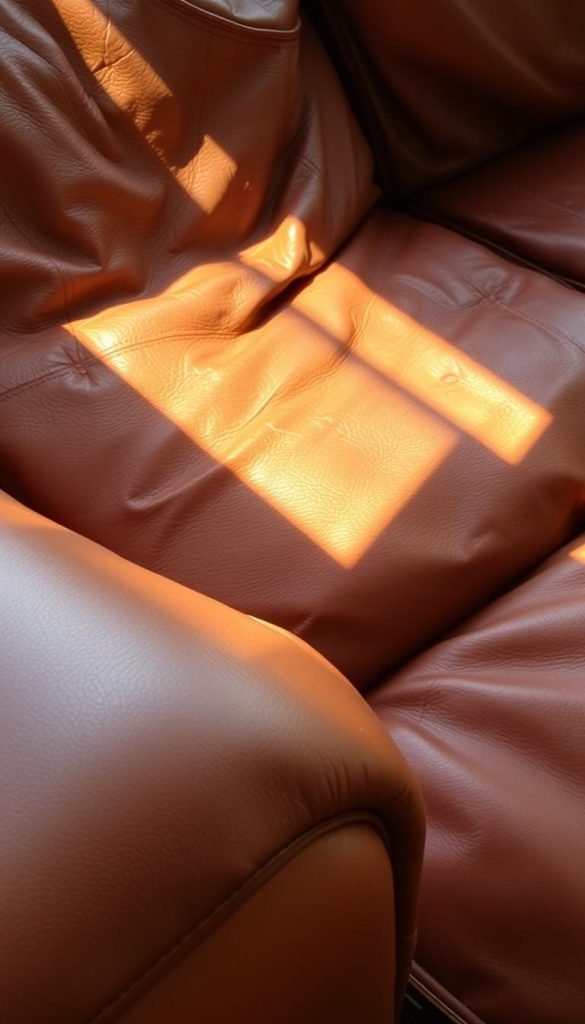
Leather and faux leather have low grip, so a blanket or throw quickly slides when someone sits or stands. Body movement stretches fabric over a seam until gravity pulls it down and out of place.
Choosing grip over slip: texture, fabric, and size basics
I add friction where it counts: a thin anti-slip layer or rug pad under the edge gives the fabric something to bite into. I also pick textured weaves and denser materials that resist motion.
- I use the seat crease as an anchor by tucking an edge into that channel.
- I match blanket and throw size so there’s no excess drape pooling at the front.
- I test by shifting my weight; if it moves, I change fabric or add a pad.
What’s the trick to keeping throw blankets from sliding off leather?
A few quick edits to fold, tuck, and weight a blanket make a huge difference on a slick sofa. I start with size and a neat fold, then add two low-effort anchors so the cover stays where I want it.
My quick-start checklist: size, fold, and strategic tuck along the seat and backrest
Fold first. I fold the blanket in half to add thickness and weight. This builds edge structure and improves grip before it even touches the cushion.
I place the folded throw across the seat with a straight edge against the cushions. Then I tuck 2–4 inches into the seat crease for an instant anchor. I run a slim portion up the backrest and press it gently into the gap behind the top cushions for extra hold.
Use throw pillows and cushions as low-profile weights for extra grip
I add two throw pillows where hips usually land to pin the edges without bulk. This keeps a tidy look and helps the blanket resist routine motion.
Finally, I test by sitting and shifting for a minute. If it moves, I tweak the tuck, rotate pillow placement, or add a tiny extra fold until the setup feels secure and deliberate.
No-sew, non-damaging solutions I use on leather couches
My go-to methods add friction and weight without altering the sofa or sewing a stitch.
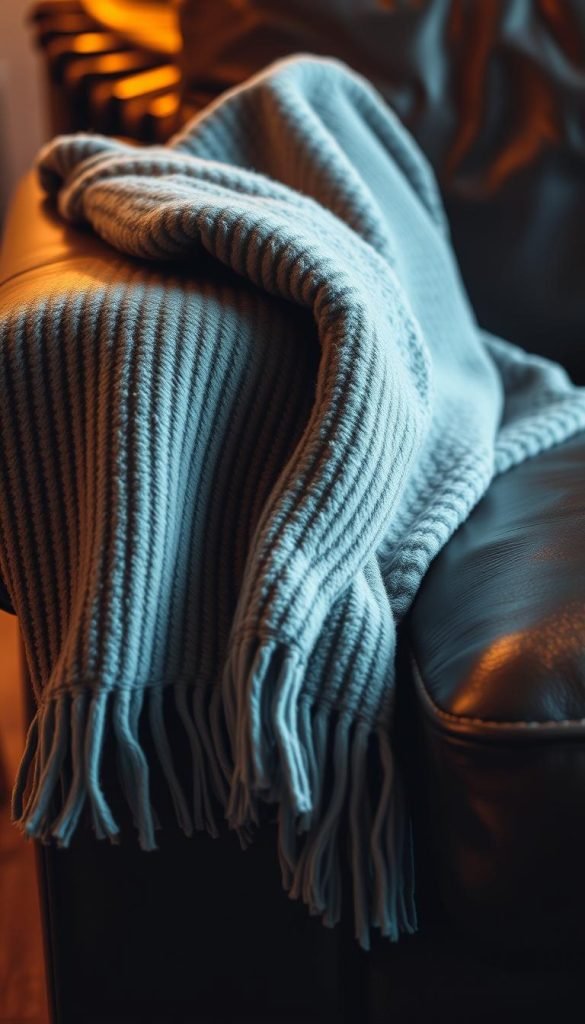
I slide a thin sheet of anti-slip rug pad or netting between leather and the blanket for instant grip. I trim it so it stays invisible from any place where guests sit. This netting works well under plush or wool throws and adds traction without adhesives.
I tuck non-slip foam rollers into the seat crease to lock edges. Draft stoppers or short pool noodles do the job and they are easy to cut to fit. That roller acts like a hidden wedge that resists pull-out when someone sits.
Small habits that make a big difference
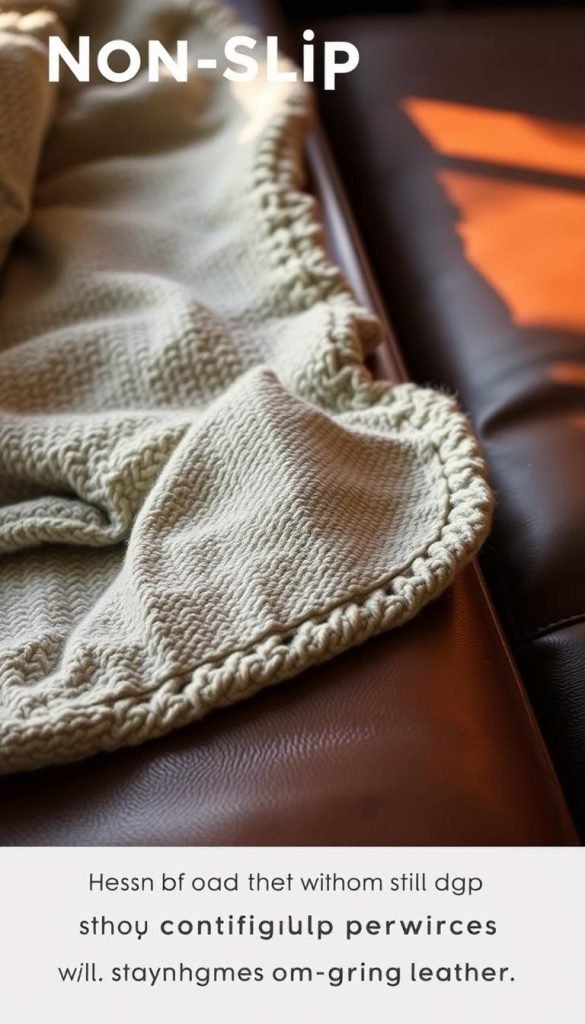
I pick thicker, weighted blankets for everyday use. Denser fabrics are less likely to move and smooth out better across cushions. When I need extra hold, I pair a weighted blanket with a short anti-slip strip under high-wear areas.
“Friction layers and rollers are my safest option; I avoid pins or screws that could damage leather.”
Quick comparison of my favorite options
| Option | How I use it | Why I like it |
|---|---|---|
| Anti-slip netting | Trim and slip under blanket edge | Adds grip without adhesives; invisible |
| Foam roller | Tuck into seat crease behind blanket | Locks edge; reversible and soft |
| Weighted / thicker blanket | Use daily or layer with strip | Less likely to scoot; looks neat |
| Corner triangle drape | Fold into triangle, anchor heavy point | Simple, no materials needed; hidden anchor |
- I trim foam rollers slightly narrower than the seat to avoid arm pressure.
- I test fine-mesh netting for grip that won’t show through the throw.
- I refresh the setup after cleaning to keep non-slip layers dust-free and working well.
Smart attachments and hardware (used carefully on upholstery)
For stubborn movement I add targeted attachments that protect my upholstery. I treat hardware as a helper, not a fix-all. Small anchors can hold a blanket in position while keeping a sofa looking neat.
Velcro and where I place it
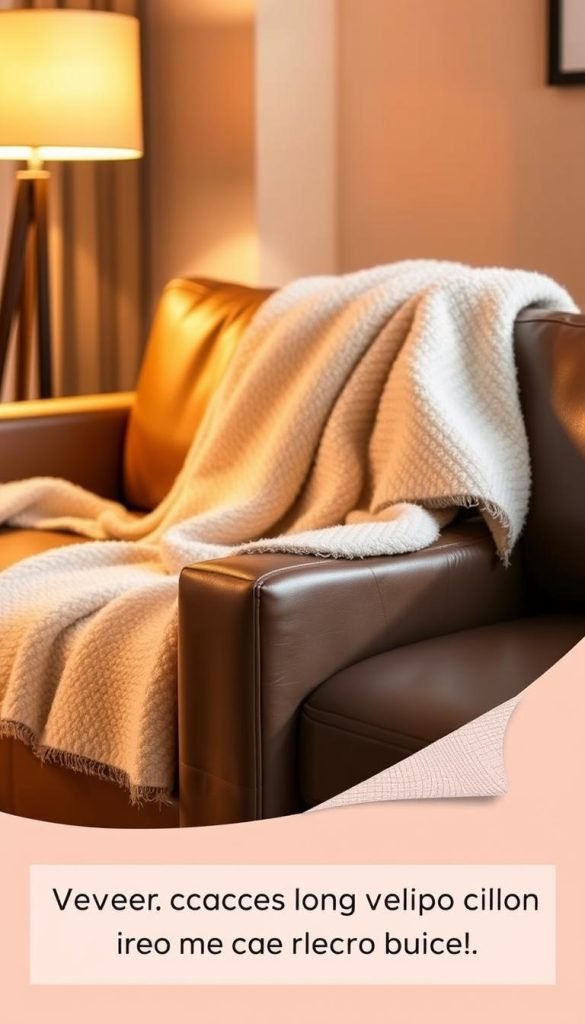
I use velcro sparingly. I sew the soft loop to a blanket edge and put the hook on a removable liner or protective strip. This avoids sticking anything directly to leather and keeps residue away.
I position velcro near critical edges, like the back top rail or seat lip. I always test on a hidden spot first to check for marks.
Clips, bands, and invisible holds
I favor wide, padded clips and elastic bands that loop around cushions or under the seat deck. These keep tension without visible hardware on the couch.
- I use blanket clips with soft jaws and a short elastic strap to route under cushions.
- I sew two elastic anchors to a throw’s top corners and loop them around the sofa back for steady support.
Buttons for chunky knits
Buttons work great on open-weave throws and chunky knits because they can fasten to the fabric itself. I avoid buttons on velvet, fleece, or high-pile faux fur.
“I never pierce leather—no twist pins or screw pins—because they can puncture and scar upholstery.”
Final note: place attachments out of sight when possible—behind cushions or under a fold. Remove hardware before deep cleaning and keep clip contact off delicate fibers for long-lasting results.
Pick the right throw: materials, texture, and size that actually stay put
The right combo of fiber, weave, and size keeps a cover anchored with minimal fuss.
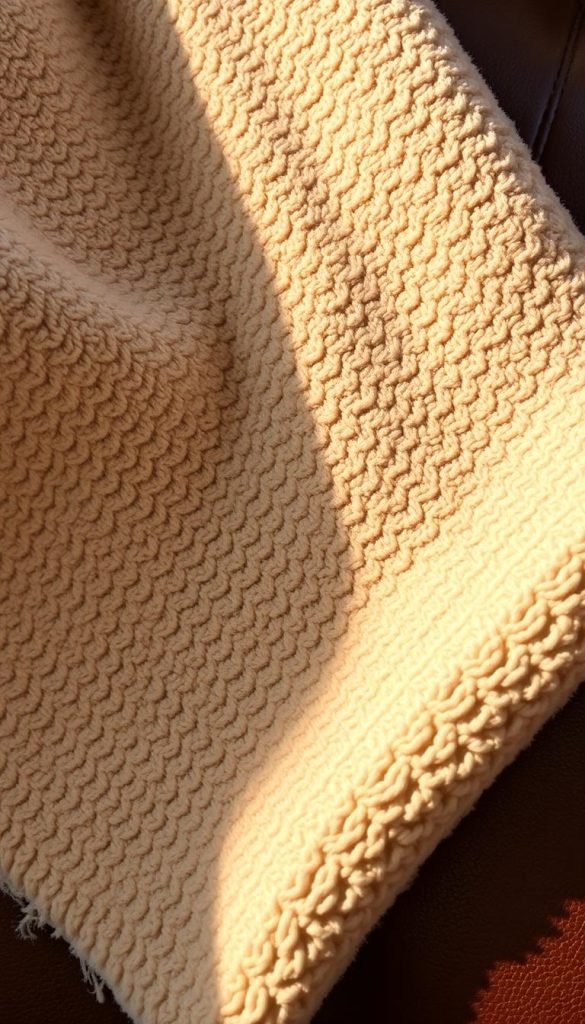
I shortlist fabric that balances comfort and control. Cotton and wool top my list for daily use because they feel soft and add natural grip.
I also use linen for breathability and fleece blends in winter for extra warmth and stickiness. A slightly nubby texture or a twill weave helps a piece resist motion on smooth seats.
Non-slip options and measuring for a tailored fit
Non-slip throws with silicone nubs are great when I want a plug-and-play solution. They add instant grip without pads or hardware.
I measure my sofa: width, seat depth, arm height, and back drop. Then I pick a size that covers main panels or wraps each cushion so overhang is easy to tuck and won’t puddle.
| Fabric | Feel | Grip | Best use |
|---|---|---|---|
| Cotton | Soft, breathable | Moderate | Year-round lounging |
| Wool | Warm, durable | High | Daily use, high-traffic sofas |
| Linen | Light, airy | Low-moderate | Summer or layered looks |
| Fleece blends | Cozy, heavy | High | Cold months, extra stability |
“I fold a new piece before I place it — that simple step adds edge structure and helps it sit flat.”
Stylish draping and layering ideas that look great and don’t slide
Thoughtful draping balances style and function so each layer helps hold the next in place. I use simple layers that add texture and grip while keeping a tailored look on my couch.
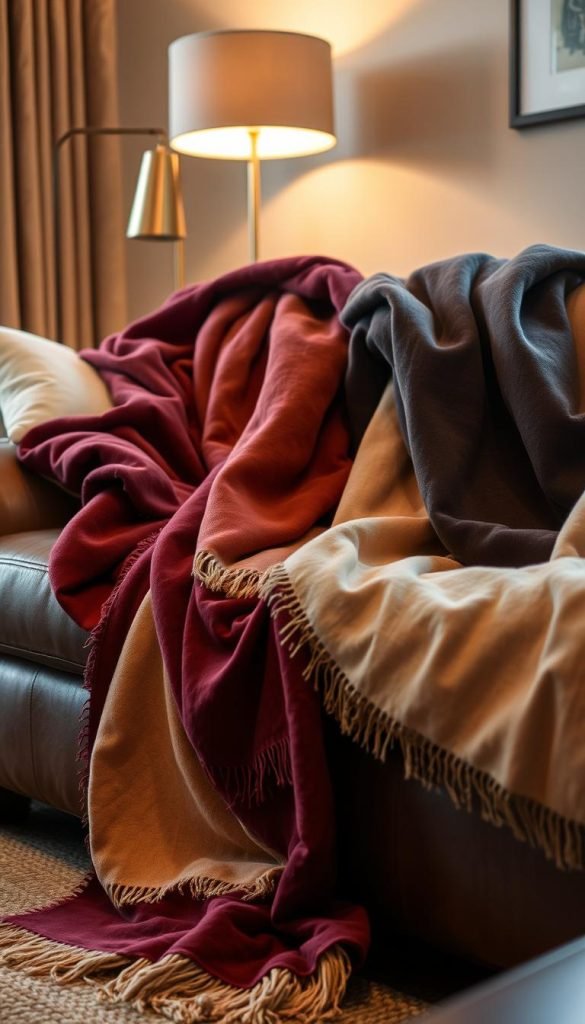
Layered looks: coverlets, sheepskin, and folded wraps per cushion
I start with a fitted cover over the base. That gives a steady foundation and hides wear where children sit most.
I add a small sheepskin across the back third for texture and extra friction. Then I place a folded blanket across the seat for a neat, cozy finish.
Wrap individual cushions or the seat base for a tailored, less likely to slip fit
Wrapping each cushion with a folded throw keeps panels in place and looks intentional. It is one of my favorite ways to stop movement without hardware.
- I tailor the seat base with a tight wrap tucked under the front lip so the couch reads crisp and stays put.
- I mix stripes, florals, and woven coverlets to add micro-grip between layers and visual interest.
- For real life, I use two coordinated blankets per seat in busy areas for better control and comfort.
“A quick sit test tells me if folds need tightening or if a pillow should act as an anchor.”
Conclusion
A reliable formula blends size, texture, and tiny anchors so a cover stays neat during daily life.
In this guide I summarize the best solution for a lived-in home: pick cotton or wool for fabric, match size and edges, then fold for structure and tuck at the backrest and seat.
I add a thin non-slip layer where needed and use weight from thicker blankets for extra grip. I use hardware sparingly — velcro with a protective strip, or blanket clips and elastic — to protect leather on a sofa or couch.
Wrap cushions when you want a tailored cover and choose material and texture that suit comfort and children-friendly bedding. Do a quick sit test; small tweaks make a big difference.