How do I stop my bamboo shades from warping in humidity?
I keep this simple: a practical plan focused on prevention, gentle cleaning, and smart upkeep so these window treatments hold their look and function.
I start by controlling indoor moisture and sunlight. I run a dehumidifier when needed, add ventilation, and use affordable UV film or liners to cut sun stress. These steps protect the natural materials and the room’s appearance.
I dust with a microfiber cloth or a low-suction vacuum and never soak or use harsh chemicals. I handle the blinds with two hands, avoid jerky pulls on cords, and check brackets and headrails regularly to prevent hidden damage.
For tougher stains, odors, or worn cords, I call a pro every 1–2 years. When I store a piece, I roll it into a breathable cover and keep it cool and dry to keep the handcrafted beauty intact.
Key Takeaways
- Control indoor moisture and limit direct sun to protect the materials.
- Dust gently and avoid water or harsh cleaners to preserve fibers.
- Handle blinds carefully and inspect hardware to prevent damage.
- Use UV film or liners as a low-cost protection option.
- Seek professional care for deep stains or mechanical issues every 1–2 years.
Why bamboo shades warp and how humidity accelerates damage
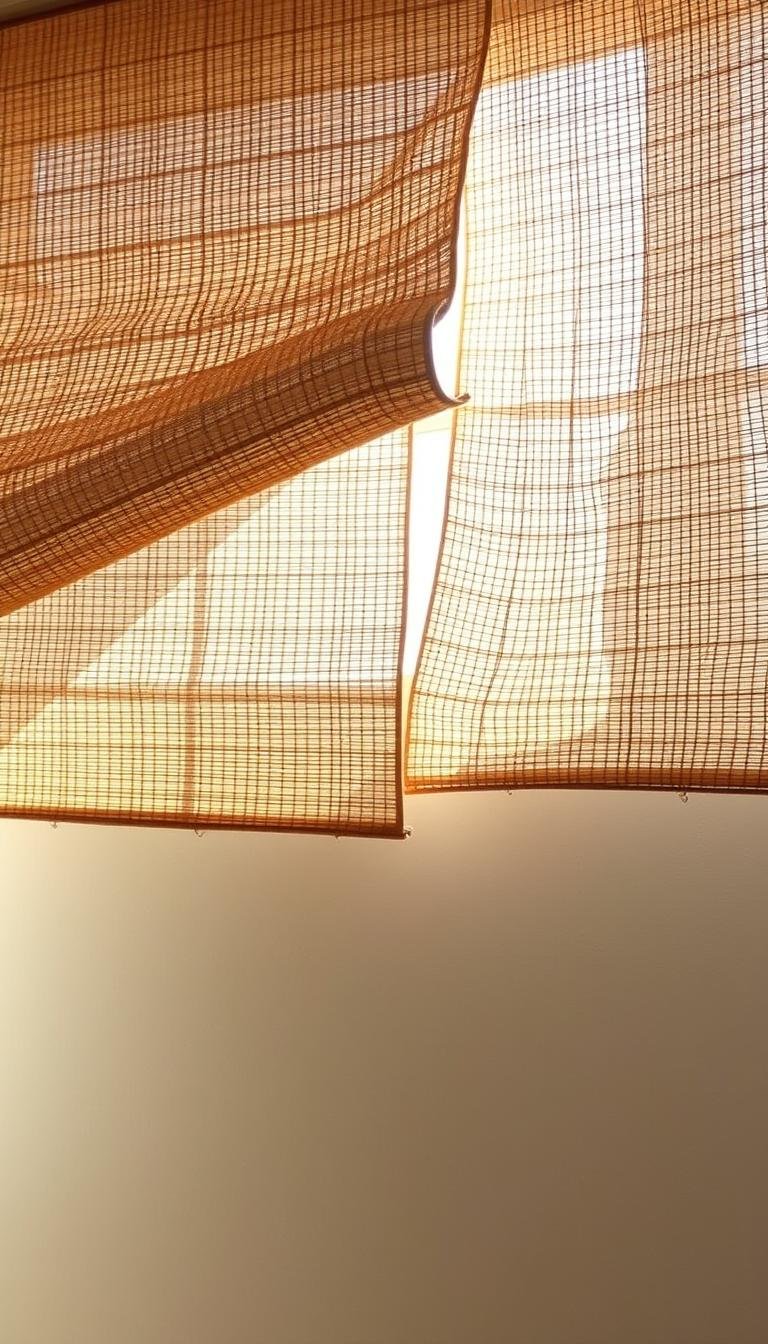
Fibers in natural reed and grass weaves react to moisture and heat, and that reaction causes most failures. Natural bamboo, reeds, jute, and grasses absorb ambient dampness. When fibers swell, the weave can warp, cup at the edges, or develop mold and discoloration.
Sunlight makes this worse. Bright sun and hot patches dry fibers unevenly, leaving brittle areas and patchy fading. Over time, the mix of wet then hot causes cracks and weaker joints in the wood components.
Dust and dirt matter too. Dust traps moisture against the weave like a sponge. That hidden dampness speeds deterioration and invites mildew in rooms with steam, cooking, or poor ventilation.
- I keep indoor humidity near or below 50% to limit swelling.
- I watch windows and areas prone to condensation and use exhaust fans when needed.
- I rotate or shift shades so sunlight exposure is even across the material.
Small checks now—spotting ripples, cup edges, or uneven color—save bigger repairs later.

How do I stop my bamboo shades from warping in humidity?
A steady, dry environment and smart placement keep natural weaves straight and strong. I focus first on air control, then on simple handling and quick drying when needed.
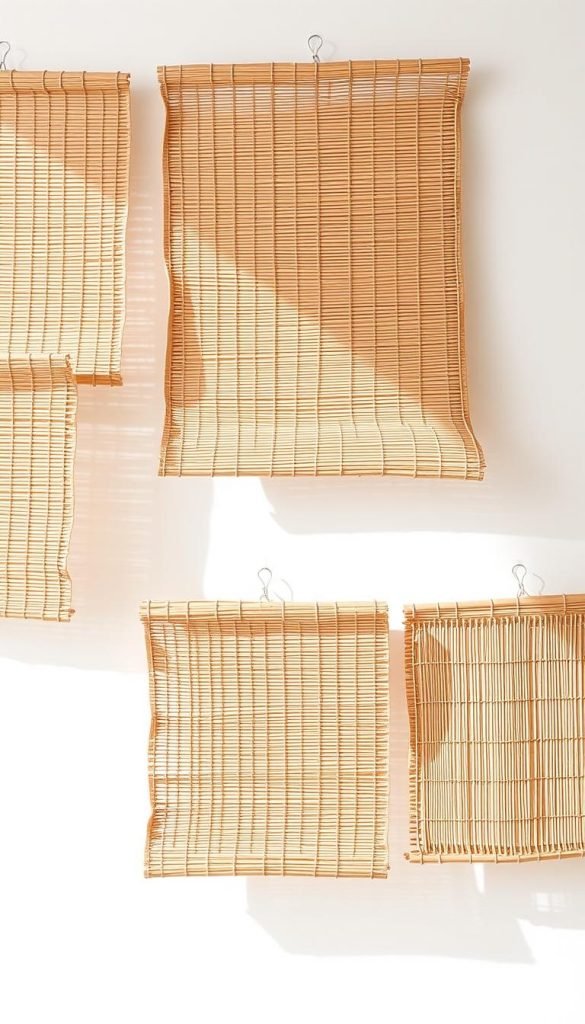
Control indoor humidity below 50%
I set a dehumidifier to keep levels under 50% and run exhaust fans after showers or cooking. Cross-ventilation helps, too, and moisture-absorbing packs add protection in persistently damp areas.
Keep window treatments away from direct water sources
Avoid installing near showers, sinks, or cold windows that sweat. For outdoor units, I use waterproof sealant and roll them up for heavy rain. Using window film or liners reduces rapid temperature swings that cause damage.
Air-dry fully if damp — never use heat tools
If a panel gets wet, I lower it fully and let it air-dry in a well-ventilated spot. I use a barely damp cloth for spot cleaning and dry immediately. Heat guns or hair dryers can embrittle wood and fibers, so I skip them.
Small habits—rotation, timely drying, and protective treatments—extend durability and style. For extra guidance, see how to extend the life of woven wood.
Cleaning routines that prevent moisture damage and mold
Keeping a simple cleaning routine prevents moisture buildup and keeps woven window treatments looking fresh. Weekly attention removes trapped dust that holds dampness and dulls the appearance. Small steps now save bigger repairs later.
Regular dusting and gentle vacuuming
I dust weekly with a microfiber cloth, working top-to-bottom so dust doesn’t resettle. For stubborn dirt, I use a vacuum on low suction with a soft brush attachment, following the weave to avoid stress on the materials and wood slats.
Spot cleaning with a barely damp cloth
For stains, I test a drop of mild dish soap on an unseen area first. I treat spots with a barely damp cloth and mild soap, then dry the area immediately so moisture won’t wick into fibers and cause discoloration.
What to avoid
Avoid soaking or harsh products. Natural fibers absorb water quickly, which can lead to warping, mold, and premature breakdown. I never use bleach, ammonia, or strong detergents, and I skip stiff brushes that fray edges.
“A few minutes each week keeps blinds clean and prevents moisture damage.”
- Make multiple light passes rather than pressing hard to preserve texture.
- Guide the cloth along the weave, not against it, to prevent snags.
- Clean the window frame and sill too, so less dust returns to the shades.
| Task | Frequency | Method |
|---|---|---|
| Dusting | Weekly | Microfiber cloth, top-to-bottom |
| Deeper clean | Monthly or as needed | Vacuum, low suction, soft brush |
| Spot treatment | As needed | Barely damp cloth, mild soap, dry immediately |
| Harsh products | Never | Avoid bleach, ammonia, strong detergents, stiff brushes |

Sunlight and UV strategies to stop warping, fading, and brittleness
Bright windows can age woven panels fast; small adjustments keep materials intact. UV rays fade color and dry reed and wood fibers, which leads to brittleness and cracking over time.

Rotate or adjust panels to even exposure
Rotate or shift shades every few weeks so the same spots do not take all the sunlight. This prevents patchy fading and worn edges and keeps the overall appearance consistent.
Add UV-blocking film or liners for extra protection
Window film reduces harmful rays while still letting natural light in. A privacy or blackout liner adds a barrier that lowers heat and UV stress, extending durability without losing style.
- I rotate panels and adjust positions during peak sun to cut hot spots.
- I apply UV film where sun is strongest to balance protection and appearance.
- I reinforce exposed edges with liners and clean gently after dusty days.
Gentle handling and hardware maintenance for long-term durability
A careful touch and regular hardware checks are the easiest insurance for durable blinds. I use simple routines so woven panels stay straight and functional without extra expense.

Operate smoothly with two hands; avoid jerking cords or edge pulling
I lift and lower with two hands at the center of the bottom rail to spread tension evenly across the weave. I raise and lower slowly to prevent jerks that strain cords and fibers.
Keeping cords aligned and secured on cord cleats helps control motion and improves safety. Gentle movement protects wood slats and preserves the panels’ style in the room.
Inspect cords, brackets, and headrails; tighten, clean, and replace as needed
I check brackets, headrails, and screws monthly and tighten anything loose so sagging or skew doesn’t set permanent creases. I watch for frayed lift cords or bent brackets and replace them before they cause damage.
- I clean tracks and pulleys with a soft brush or compressed air to stop grit from causing jerky operation.
- I coordinate handling and light cleaning so dust won’t grind into moving parts.
- I teach family members these simple tips to keep the window treatments lasting longer.
“A minute of routine care prevents bigger repairs later.”
Smart material choices, linings, and treatments for humid areas
Choosing the right weave and finish can make a big difference in damp rooms. I pick tightly woven natural materials because they block moisture better while keeping classic style.
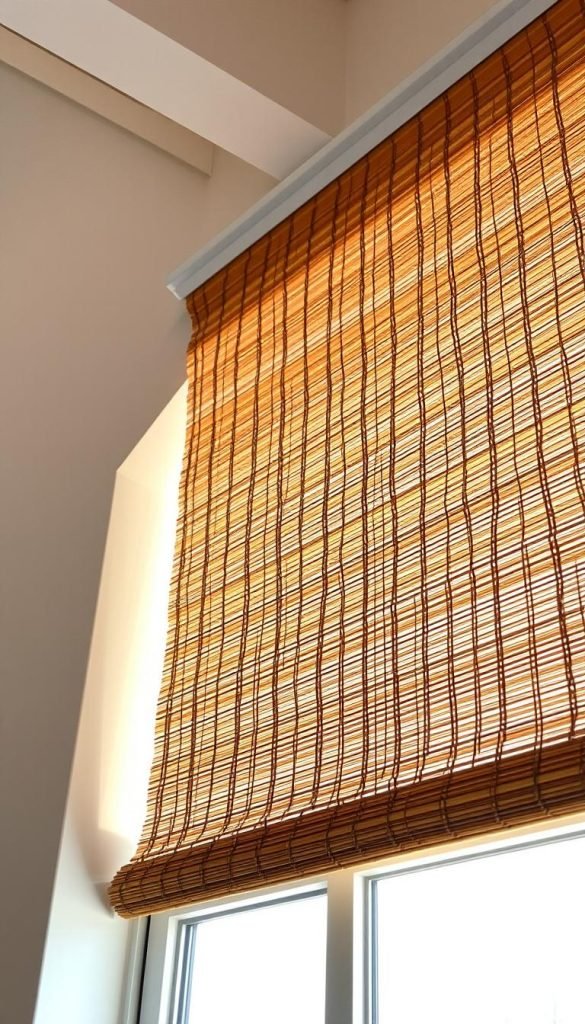
Quality weaves and protective coatings
I favor tightly woven bamboo, reeds, and grasses that resist moisture intrusion. Factory or aftermarket UV- and water-repellent treatments help the fibers resist swelling and sunlight fading.
Linings as a simple, effective layer
Privacy or blackout liners add a buffer between the weave and environmental stress. Liners also stabilize surface humidity and reduce direct light exposure, extending the life of the wood slats.
- Material choice: check edge finishing and headrail quality to avoid fraying and sagging.
- Treatments: look for UV- and water-repellent options on product specs.
- Options: choose replaceable liners so protection can be upgraded without replacing the whole shade.
“A little extra upfront on craftsmanship and protection saves replacements later.”
Room-by-room tips: bathrooms, kitchens, coastal and high-humidity spaces
Targeted care for each room keeps woven window treatments working and looking good. I adjust placement, ventilation, and material choices to match each space.

Pair with exhaust fans, dehumidifiers, and strategic placement
I always run exhaust fans during showers and when cooking. A compact dehumidifier in bathrooms and kitchens helps control spikes quickly.
Mount blinds a few inches from the steamiest spots. That gap reduces repeated wetting and limits fiber stress. For coastal areas, choose treated weaves and replaceable liners as solid options.
- Routine: wipe window sills so dirt and damp don’t transfer to the panels.
- Rotate: shift positions to spread sunlight and avoid hot spots after wet episodes.
- Watch: sniff-test for musty odors and check dark spots; increase airflow and dry early if you spot mold.
| Room | Best control | Placement | Material options |
|---|---|---|---|
| Bathrooms | Exhaust fan + small dehumidifier | Mount slightly off steam path | Water-repellent weaves, liners |
| Kitchens | Range hood + ventilation | Avoid splash zones; clear of sink | Close-weave bamboo or treated blinds |
| Coastal/high-humidity | Continuous dehumidifier, film | Protected windows, vent locks | UV/water-repellent finishes, liners |
Set a monthly reminderto review high-risk areas. Combining fans, film, and liners gives the best daily protection while keeping style consistent across the home.
Seasonal care, storage, and when to seek professional help
Seasonal checkups catch small issues before they become costly repairs. I set aside time each season to scan for warping, fraying, mold, and discoloration. This keeps durability high and helps me spot problem windows early.
Routine seasonal inspections
Check mounting screws, brackets, and the headrail mechanism. Tighten loose hardware and wipe dust from cords and tracks so grit won’t grind into parts.
Off-season storage tips
Clean and fully dry each panel before packing. Roll from the bottom with even tension and slip into a breathable cover.
A cool, dry, climate-controlled room keeps materials safe. Avoid attics and garages where temperature swings and dust raise mold and structural risks.
When to call a pro
If deep stains, lingering odors, frayed cords, or mechanism faults appear, I bring in experts. Schedule professional maintenance every 1–2 years to extend life and smooth operation.
“A short seasonal check and careful storage protect value and prevent bigger repairs.”
- I log maintenance time and note recurring issues by window so I can prioritize fixes.
- I keep a compact kit—microfiber cloth, mild cleaner, screwdriver—ready for quick fixes.
| Action | Frequency | Why it matters |
|---|---|---|
| Inspection for warping/discoloration | Seasonal | Catch early damage and preserve durability |
| Tighten hardware & clean headrails | Seasonal | Prevents mechanical failure and skewed installation |
| Clean, dry, roll, store | Off-season | Protects materials and reduces mold risk |
| Professional service | Every 1–2 years or as needed | Removes deep stains, odors, and fixes complex issues |
Conclusion
Simple, regular care keeps woven window coverings straight, attractive, and reliable. I keep humidity low, air-dry panels after damp exposure, and space them away from steam or splash zones to protect the wood and reed material.
I follow a routine of gentle dusting and low-suction vacuuming, avoid soaking or harsh products, and add UV film or liners where sun and light are strongest. I also operate panels gently, tighten hardware as needed, and roll stored pieces into breathable covers for cool, dry storage.
Professional service every 1–2 years handles deep stains, frayed cords, or mechanism issues so small problems don’t become costly. These small steps add up to lasting durability, refined style, and peace of mind across every window in the home.