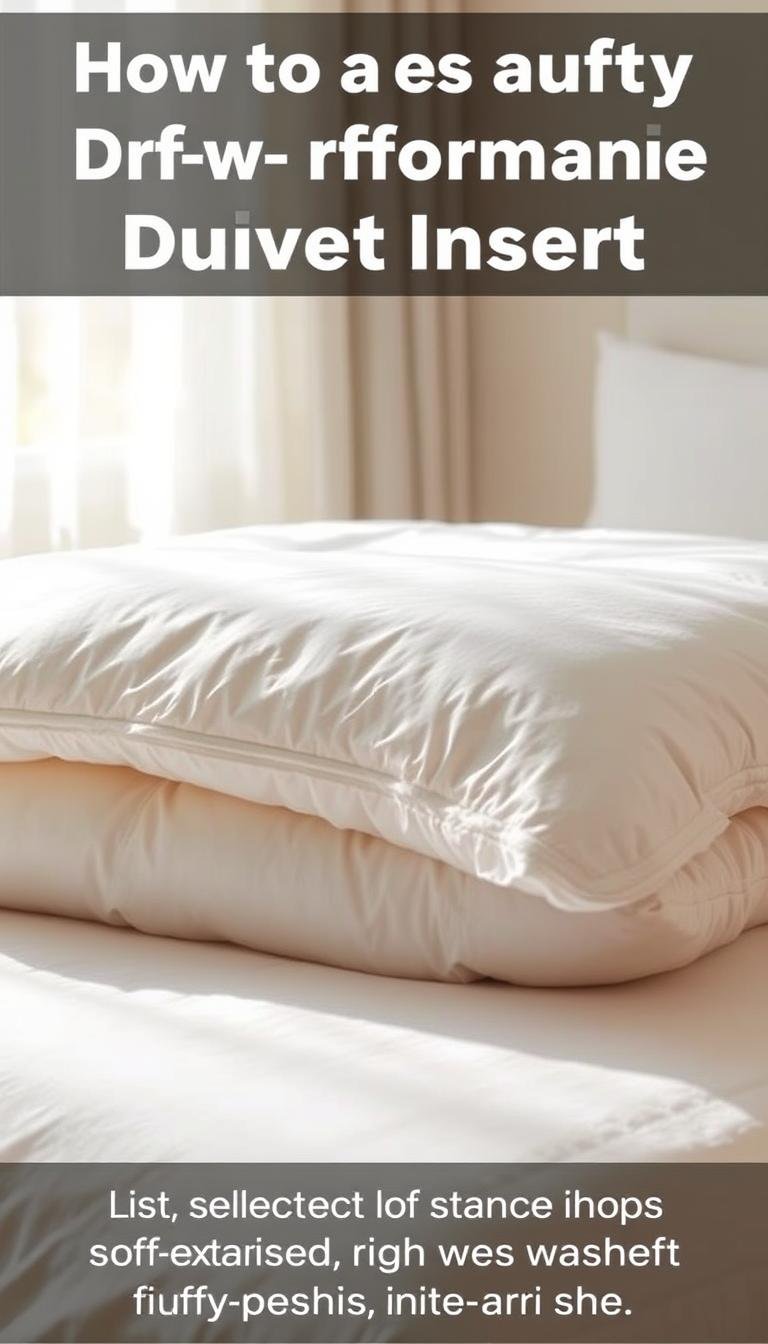
How do I pick a duvet insert that stays fluffy after 50 washes?
I test bedding the way people live with it: nightly use, frequent cycles, and real laundry. My goal is simple — help you choose an insert that keeps loft, resists clumps, and lasts years without constant fuss.
Start with fill and construction. Down, feathers, and modern down-alternatives all perform well when paired with tight baffles, durable shell fabric, and secure tie points. Those features guard loft and prevent shifting during washes.
I cover differences between a comforter and an insert, why a cover matters, and how shell strength and breathable materials affect long-term quality. I also explain why size and securement loops stop bunching and uneven wear.
Read on and you’ll get my vetted brand picks, a realistic care plan, and simple checks to judge value versus price per year. This short guide will leave you ready to choose with confidence.
Key Takeaways
- Choose fill plus baffle construction for loft retention.
- Use a quality cover and securement points to prevent clumping.
- Prefer breathable shells for comfort and durability.
- Compare price per year, not just sticker cost.
- Follow a simple, repeatable care routine to extend life.
My promise: I’ll help you pick a duvet insert that still feels cloud‑soft after 50 washes
I promise clear, no-nonsense guidance focused on durability, comfort, and real care routines—not marketing hype. Tests normally look at insulation, airflow, construction, pricing, and how well an insert secures to its cover. I turn those lab points into plain choices you can use today.
Practical matters matter most: a good comforter or insert should balance softness and structure so it keeps loft without matting. Using a cover reduces how often the core needs washing, which extends life (Sleep Foundation).

- Durability first: pick tight baffles and strong corner loops.
- Easy care: low-heat drying and gentle cycles protect shell and fill.
- Real results: I’ll flag mistakes like over-drying and skipping a cover that crush loft.
“Simple habits protect loft and stretch value over years.”
How do I pick a duvet insert that stays fluffy after 50 washes?
I focus on three core elements—fill quality, construction method, and daily care—to keep your bedding resilient over years. High-quality materials for both fill and shell are the starting point. Good choices reduce clumping and extend life.
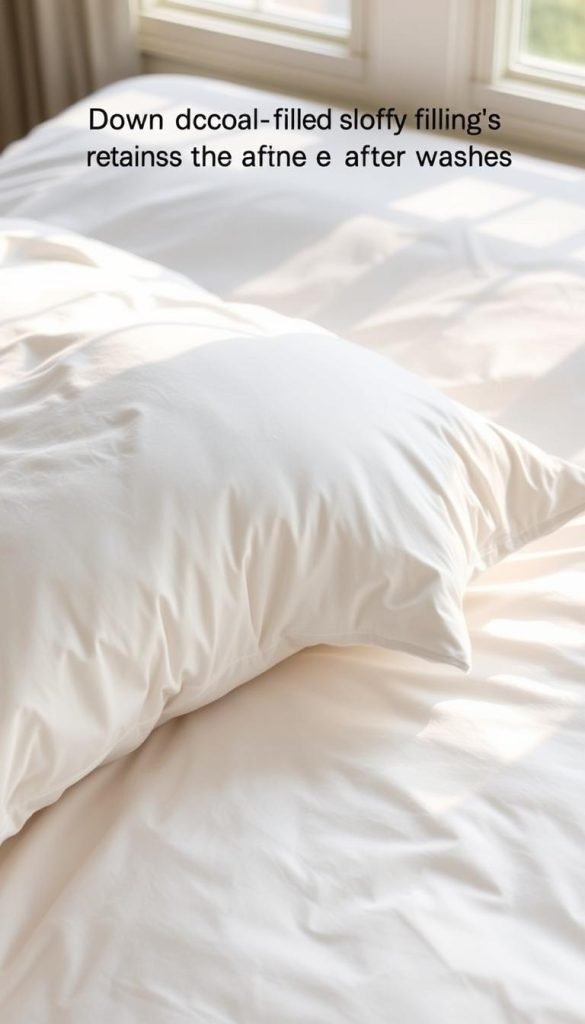
The three pillars of lasting loft: fill, construction, and care
Fill matters: down often outlasts synthetics for loft retention, while modern polyester clusters can match warmth and wash tolerance.
Construction matters just as much. Baffle-box layouts lock loft in place. Sewn-through patterns can work for lighter comforter weights, but horizontal boxes sometimes let fill migrate and create cold spots.
Care finishes the job: use a cover, wash on gentle cycles, and dry low with wool balls to rebuild loft without overheating fibers.
What “evenly distributed” really means night after night
Even distribution is not marketing fluff. It prevents clumps and thin zones that ruin sleep. Look for tight baffles, full-edge stitching, and a dense shell weave or higher thread count to limit leaks and abrasion.
“Small design choices—stitching and shell strength—determine whether loft survives repeated laundering.”
Comforter vs duvet insert: what I actually put inside a duvet cover
I detail the real differences between a single-piece comforter and the cover-plus-core system I often recommend. Choosing one changes cleaning, styling, and how warmth performs over years.

Comforters are ready to use and often come with decorative design built in. They can feel plush in one layer and are simple for guests or quick swaps.
Duvet systems use a removable cover over an inner core. The cover cuts down how often the core needs washing by blocking body oils and dust. That protects loft and extends life.
Key differences that affect warmth, feel, and long‑term care
- Care: I wash covers far more than cores. Covers take most stains, so the core sees less laundering.
- Feel and warmth: Comforters deliver one-piece warmth. A core plus cover lets me tune hand and breathability by mixing shell materials.
- Design flexibility: Swapping covers refreshes style without replacing the whole unit.
- Securement: Look for loops, ties, or snaps so the core stays aligned and warmth remains consistent.
- Cost-per-use: A durable core and washable cover often wins over time versus replacing decorative comforters.
“For long-term value, I favor a washable cover and a well-built core.”
How I test for fluff retention and durability in 2025
I use repeat wash‑and‑dry trials plus motion simulations to measure how well an insert keeps loft and resists clumping. My lab mimics nightly sleep, real laundry cycles, and the occasional tumble with a cover in place.

Loft and baffle integrity after repeated laundering
I run multiple gentle wash cycles, then dry low and let items rest before measuring recovery. I weigh the core before and after to quantify compression.
I also manually re‑fluff to gauge how much loft returns and to spot early clumps. Construction differences show quickly: true baffle‑box layouts hold loft better than shallow horizontal boxes.
Breathability for hot sleepers versus cold‑weather warmth
I simulate hot‑sleeper conditions and compare perceived warmth across seasons. Some comforter builds trap heat; others shed it while keeping core loft.
The goal: find balance so the shell and fill deliver comfort for both warm nights and cold months.
Shell abrasion, feather/fiber leaks, and corner loop strength
I inspect shells after laundering for abrasion and any feather or fiber escape at seams. I stress corner loops by tugging and shaking to simulate nightly movement inside a cover.
I also note noise and any residual odor on unboxing and after washing since both affect real‑world use.
- I track construction effects on cold spots and evenness.
- I measure clump formation and document fill resilience.
- I rate securement performance and shell durability for long life.
“Small construction choices show up fast in repeated laundering — those details decide whether a comforter still looks and feels good years later.”
Fill guide: down, polyester alternatives, wool, and silk—what holds up best
Choosing the right fill starts with understanding how fiber structure affects loft, weight, and long-term warmth. Down delivers exceptional loft because clusters trap air. Higher fill power gives more loft per ounce, so a lighter comforter can still feel very warm.
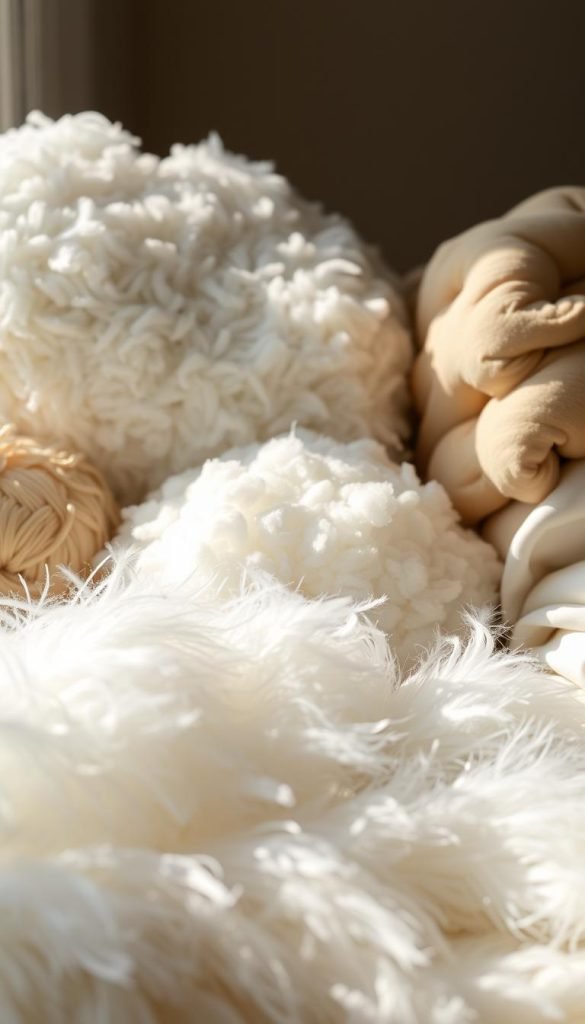
Down and fill power: light warmth with big performance
Down tends to last longest when housed in a tight‑weave shell. Hotel-style builds, like the brooklinen comforter and classic hotel picks, hit a warm-but-light feel by pairing high fill power with baffle-box construction.
Note: blends with feathers add weight but can include quills that poke if the shell is loose.
Down‑alternative clusters and microfibers
Synthetic clusters and microfiber polyester wash easily and resist allergens. They can mimic loft, but cheaper polyester often flattens faster under frequent laundering.
Natural options for temperature control
Wool offers moisture-wicking warmth and holds shape well for cooler climates. Silk and lyocell give breathable, lighter coverage for hot sleepers who need cooling without bulk.
- I recommend down or quality recycled synthetics for maximum durability.
- Choose wool or silk when breathability and temperature regulation are priorities.
- Ensure shell tightness to prevent fiber escape and protect long-term loft.
“Match fill to climate and care habits: the right material keeps loft longer and reduces replacements.”
Construction that keeps inserts fluffy: baffle‑box vs sewn‑through vs horizontal boxes
The internal design of an insert determines if fill moves or stays put. Small stitching choices change loft recovery, warmth mapping, and how the core behaves after repeated laundering.
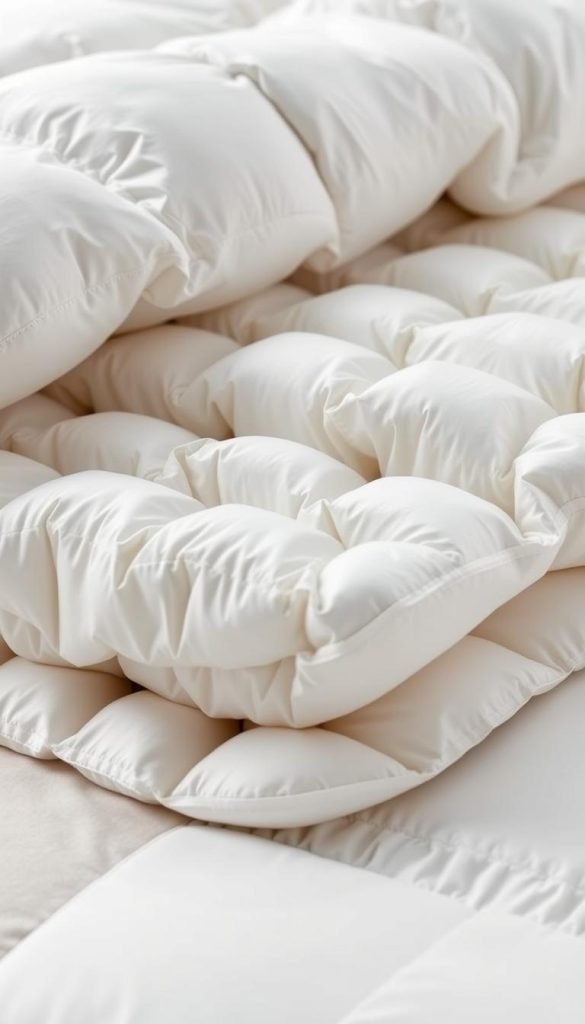
Why baffle boxes reduce clumps and cold spots
Baffle boxes create vertical walls inside the core so the fill can loft upward. That extra height keeps clusters from compressing flat and helps the fill remain evenly distributed over time.
Result: better warmth, fewer clumps, and longer life for down and many quality alternatives.
When sewn‑through is enough—and when it isn’t
Sewn‑through stitching is lighter and very breathable. I recommend it for low‑loft comforters in warm climates or for those who prefer a thin feel.
But sewn‑through limits loft height. For long‑term loft retention, especially with down, I favor baffle designs.
| Construction | Best use | Pros | Cons |
|---|---|---|---|
| Baffle‑box | High‑loft, long life | Maintains loft, reduces cold spots | Heavier, pricier |
| Sewn‑through | Lightweight comforters | Breathable, simple | Less loft recovery |
| Horizontal boxes | Some mid‑range cores | Simple appearance | Edge gaps can allow migration |
“Stitching quality and seam reinforcement are the unsung heroes of long‑lasting warmth.”
Quick decision rule: choose baffle‑box for maximum longevity, pick sewn‑through for lightweight comfort, and avoid grids that let fill migrate. Check product photos for true internal baffles versus decorative quilting before you buy a duvet or comforter.
Shell fabric matters: organic cotton vs polyester vs blends
Shell choice shapes breathability, noise, and how long your bedding holds up in regular laundry.
Cotton shells win for airflow and comfort. Percale feels crisp and breathes well for warm rooms. Sateen offers a silkier hand and a warmer sleep surface for cool nights.
Organic cotton adds softer touch and lower chemical exposure. It often pleases sensitive skin and aligns with eco preferences.

Polyester boosts abrasion resistance and can survive heavy wash cycles with less fraying. Blends marry cotton’s breathability with polyester’s toughness for frequent laundering.
- Watch for noisy shells, loose stitching, or pilling after a few washes—those signal low quality.
- Choose tight weaves to limit feather or fiber escape and protect long-term loft.
- Map choices to climate: breathable cotton for warm rooms; sturdy blends for heavy-use households.
| Shell | Best for | Pros | Cons |
|---|---|---|---|
| Cotton percale | Warm sleepers | Breathable, crisp hand | Can wear faster if thin |
| Cotton sateen | Cool rooms, luxury feel | Smooth, warmer touch | Less breathable than percale |
| Cotton‑poly blend | Frequent washing | Durable, balanced care | May be less natural-feeling |
“Pick a shell that complements your fill and construction for a complete, durable system.”
The best all‑season duvet inserts I’d buy right now
My shortlist focuses on cores that balance breathability, recovery, and easy care for year‑round comfort.

Balanced warmth, breathable materials, and easy care options
Saatva All‑Year Down Alternative Comforter — my top overall pick for steady warmth and simple washing. The shell breathes and the fill rebounds well.
- Brooklinen Down Comforter: warm without weight; great feel and day‑to‑day comfort.
- Luxome ClimaSense Comforter: comes in two weights so you can tune warmth to your climate.
- Quince Premium Down Alternative: plush feel with solid stitching and lasting loft.
- Silk & Snow / Utopia: best value picks — breathable shells and easy care for tight budgets.
Why these pass my all‑season test: tight baffles, durable shell materials, and fast loft recovery after machine cycles. Expect small caveats: some feel warmer on initial unboxing, and shell hand varies by brand.
“Pick covers that boost airflow — lightweight cotton or sateen keeps comfort and extends core life.”
Top picks for hot sleepers that won’t trap heat
If you run warm at night, focus on breathable fills and thin, moisture‑moving shells. I favor lightweight options with airy construction because they vent body heat faster than thick, heavy layers.

Cooling fills, moisture‑wicking shells, and lighter weights
Best cooling pick: Sijo AiryWeight Eucalyptus comforter — eucalyptus lyocell wicks moisture and feels light against skin.
Tech picks: Slumber Cloud Lightweight comforter uses temperature‑regulating materials, while The Company Store Cool Zzz adds phase‑change layers to store and release heat.
- Why lighter weight wins: low bulk and airy baffles let air circulate, reducing trapped heat more than high‑loft cores.
- Watchouts: Buffy Cloud and Breeze ran warm in testing and held moisture — avoid if you sweat easily.
- Cover pairing: crisp percale shells boost airflow and cut night sweats when used over cooling cores.
“Prioritize breathability and moisture control over maximum loft when you sleep hot.”
| Model | Cooling method | Best for | Care tip |
|---|---|---|---|
| Sijo AiryWeight | Eucalyptus lyocell wick | Hot, humid rooms | Cool wash, low heat dry |
| Slumber Cloud Lightweight | Temperature regulation tech | Variable night temps | Gentle cycle, tumble low |
| The Company Store Cool Zzz | Phase‑change material | Heavy night sweaters | Follow label; avoid high heat |
Final tips: choose the right size to avoid excess overhang that traps warmth. Wash cooling fabric on cool cycles and dry low to preserve heat‑managing performance.
Luxury and hotel‑style options with lofty feel and refined design
A well‑made comforter combines lofty fill with refined shell work to create that signature hotel silhouette.
My luxury picks include the Boll & Branch Down Alternative Duvet insert for elevated craftsmanship and the Brooklinen Down Comforter for true down plushness.
The Company Store Legends Hotel Organic Cotton Down Comforter nails the hotel look, though some yearly runs vary in construction. Verify baffle depth, thread count, and corner loops before buying.
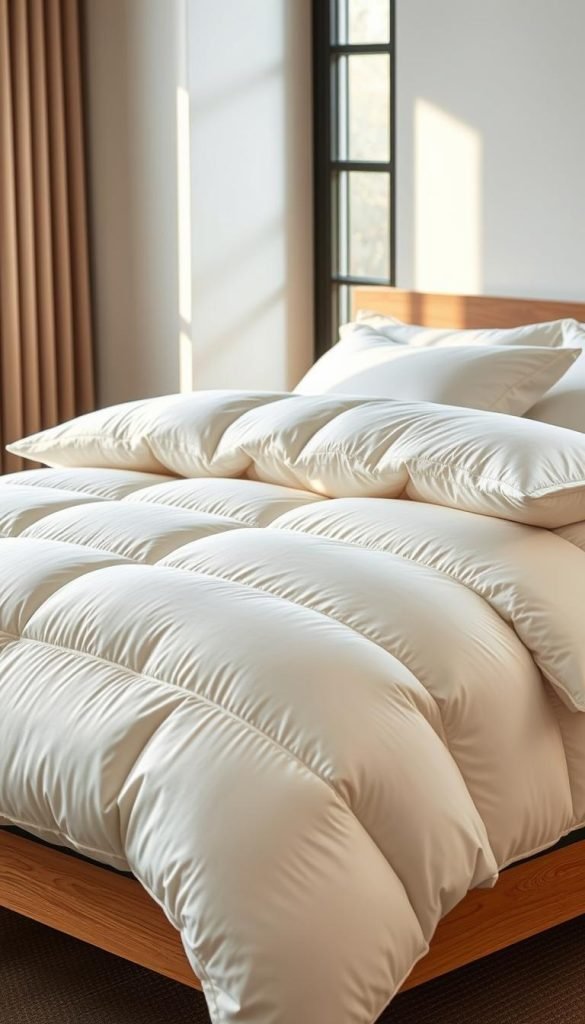
Stitching quality and shell finishes separate real luxury from lookalikes. Choose a sateen cover for buttery drape or percale for a crisp, resort feel.
“Warranty and return terms are part of the luxury purchase — they protect the investment and give confidence.”
- Materials: premium down or dense down‑alternative clusters give weightless loft.
- Design cues: deep baffles, piped edges, and strong loops matter.
- Care: plan for gentle washing and low‑heat drying to keep the piece pristine.
| Model | Best trait | Shell | Notes |
|---|---|---|---|
| Boll & Branch Down Alternative | Luxury craftsmanship | Organic sateen | Great for allergy‑friendly luxury; check loft spec |
| Brooklinen Down Comforter | Natural plush feel | Cotton sateen | Top down option; verify fill power and baffle build |
| The Company Store Legends Hotel | Hotel silhouette | Organic cotton | Usually excellent; quality can vary—inspect current specs |
Eco‑friendly and organic picks with low‑impact materials
I favor low‑impact bedding options that marry durable construction with verified sourcing claims. Look for cores and covers that list clear materials and certification details so you know what you bring into the bedroom.

Organic cotton shells breathe well and reduce exposure to harsh chemicals. Silk and wool offer natural temperature regulation for year‑round comfort without plastic‑heavy fills.
The Avocado Down Duvet insert is a good example of an eco‑forward core that uses responsible down and transparent sourcing. Bamboo/lyocell fills and recycled polyester clusters give greener options for those seeking easy care and low impact.
Practical care matters: gentle cycles and low‑heat drying preserve delicate fibers and keep the design intact. Buying durable pieces reduces the frequency of replacements and lowers long‑term waste.
I check labels for RDS, GRS, and certified organic cotton claims on product pages. Pair sustainable cores with breathable covers to keep the eco story consistent and the comforter performing well for years.
“Choose verified materials and care gently — it’s the fastest way to sleep greener and save money over time.”
Great value picks under $150 that still feel plush
You don’t need a luxury price tag to get a comforter that feels cozy and washes well. I focus on real value: cores that combine simple construction, a decent shell, and honest performance for the price.
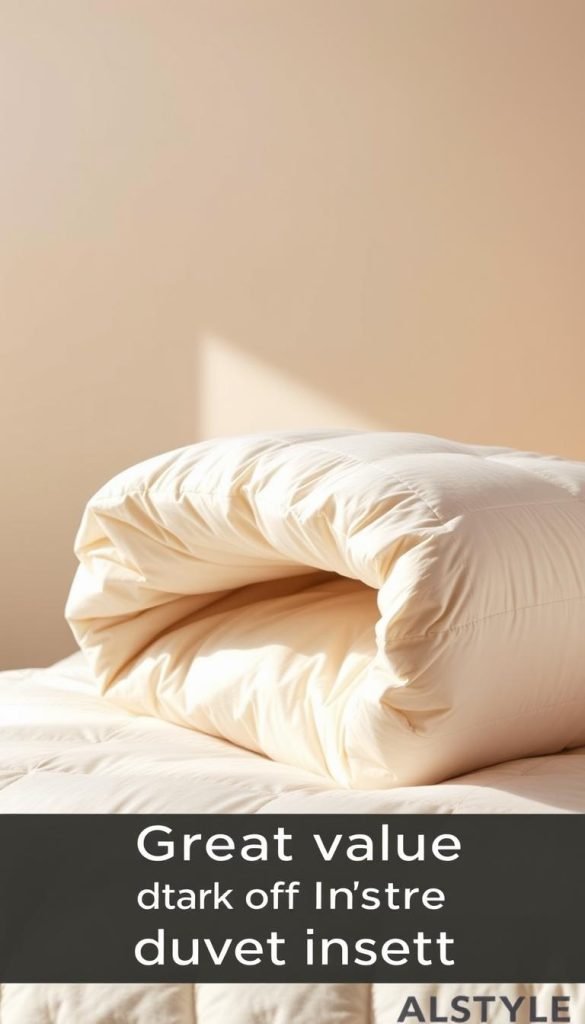
My short list: Utopia Down Alternative comforter stands out for breathability and easy laundering. Linenspa is the lowest-cost microfiber option; it can flatten sooner and some shells show noise or thin spots. Bedsure gives lightweight warmth and fast drying, though initial odors may fade after one wash.
What to watch for: prioritize box‑stitch patterns and corner attachments so fill stays even. Even at budget price, these small design choices make the biggest difference for long life.
- Use gentle wash cycles and wool dryer balls to help loft recover.
- Spend a little more on shell quality or stitching and you’ll get a clear upgrade without breaking $150.
- Pick size and warmth level to match your room—an overlarge core traps heat; a thin one won’t warm enough.
“Pairing an affordable insert with a good cover is the fastest way to boost feel and protect value.”
Sizing and fit: twin to California king, plus oversized queen/king
Sizing affects comfort as much as fill — the wrong fit can make a great comforter feel small or swamp the bed. I recommend starting with measurements: mattress width, length, and depth. That simple step prevents surprises across brands.

How to choose size for high-profile beds and shared sleep
Deep mattresses: if your mattress is thicker than standard, size up to ensure full drop and side coverage. This avoids constant tugging and keeps corner loops reachable.
Shared sleepers: couples often benefit from moving up one size to reduce tug‑of‑war. A larger comforter or comforter option gives each person more perimeter and cuts shifting at night.
- Twin XL: good for dorms or tall sleepers — it changes drop length and may need a longer cover.
- Oversized queen/king: these cores usually fit standard covers but check dimensions. You may want a matching oversized cover for full drape.
- Weight and warmth: larger cores hold more fill and can feel warmer; balance size with breathability to avoid overheating.
- Securement: use corner loops, ties, or snaps to keep bigger items aligned inside a cover.
“Measure your bed and compare brand specs — small differences in dimensions can change fit and feel.”
Corner loops, ties, snaps: how I keep the insert secure inside the duvet cover
Secure fastenings make nightly life simpler and keep fill even. Most cores use corner loops, ties, buttons, or snaps at the four corners. These small features stop the insert from rotating inside the cover.

For larger beds, I prefer eight-point attachment (corners plus mid‑sides). It cuts shifting on king and California king sizes and keeps warmth even across the surface.
- Ease: loops and ties are quickest to use nightly.
- Strength: reinforced corner seams survive shaking and rough sleep.
- Hack: if a cover lacks ties, small safety pins on the top corners secure the top edge without damage (Sleep Foundation).
| Fastening | Best for | Pros | Cons |
|---|---|---|---|
| Corner loops | Every size | Simple, durable | May need retying |
| Ties / buttons | Frequent washers | Low profile, secure | Can untie if loose |
| Snaps | Quick swaps | Fast, stable | Requires matched snap points |
Quick routine: lay cover inside out, align insert, fasten corners, shake once, zip or close. Once you do it twice, the process takes under a minute and the construction keeps fill spread evenly over time.
“Strong attachment reduces clumping and extends even fill distribution.”
Care, washing, and drying routines that preserve loft past 50 washes
The trick to lasting loft is a routine that matches fill and shell needs. Read the care label first: some comforter cores are machine‑washable, while others require dry cleaning. Larger sizes often need commercial machines to avoid seam stress and uneven agitation.

Machine wash versus professional cleaning
Machine washing works for many down‑alternative and durable shell combos. Use cool water, gentle cycle, and mild detergent. If the label lists dry cleaning only, follow it to avoid damage to delicate fill or shell coatings.
Drying and re‑lofting
Dry on low heat and add wool dryer balls to speed drying and break up clumps. Pause the dryer, shake and fluff the comforter, then continue. Repeat until fully dry—moisture left in the core crushes loft over time.
Seasonal rotation and storage
Rotate lighter weight cores for summer and warmer cores for winter to spread wear. Store fully dry in breathable bags; never vacuum‑compress for long stretches. Proper storage keeps fill resilient and the shell intact.
“A gentle routine, good covers, and proper drying protect loft so you sleep comfortably night after night.”
| Method | Best for | Pros | Care tip |
|---|---|---|---|
| Home machine wash | Washer‑safe comforter | Convenient, low cost | Cool wash, tumble low, use dryer balls |
| Commercial laundry | King/Cali king or bulky weight | Even agitation, room to move | Avoid overloading machines; inspect seams after |
| Dry cleaning | Delicate down or specialty shell | Preserves coatings and delicate fill | Follow label; clean only when needed |
Quick tips: use a cover to cut wash frequency, spot clean spills promptly, and adopt a simple re‑loft routine after drying: shake, pat, and air overnight. Those small steps preserve both shell and fill for years.
Price, warranties, and what “quality” really costs in a duvet insert
Price often masks the true cost: lifetime use, care, and construction matter more than the sticker.

I break down what drives cost so you can spend smarter. Fill type, shell fabric, and internal baffles raise the quality and the price. Synthetic fills sit at the low end; organic wool or ethically sourced down sits at the high end.
Think in cost per year. A good comforter or insert that lasts a decade with proper care can be cheaper over time than three cheap replacements.
- Warranties and returns: longer windows matter. They let you test feel and warmth at home.
- Tier expectations: budget comforters offer decent warmth; midrange gives better loft recovery; premium options add deep baffles and tighter shells for longer life.
- Certifications: responsible down or organic labels can justify higher cost if sourcing is a priority.
Smart savings: buy a simpler cover, but invest in better baffles and shell weave. Watch seasonal sales for real spec upgrades, not just higher prices.
“Even stitching, tight weave, strong loops, and even loft are the fastest ways to judge quality at a glance.”
Conclusion
The bottom line: choose tight baffle construction, a durable shell, and a simple care routine to keep loft and comfort for years.
Small choices matter: better fill and reinforced seams limit clumps. Corner loops and secure fastenings stop migration and keep warmth even.
Wash on gentle cycles, dry low with dryer balls, and use covers to cut laundry frequency. Those habits restore loft and protect materials so replacements come much later.
Final thought: invest in proven construction, follow basic care steps, and you’ll sleep on bedding that performs well season after season.