How do I stop my outdoor rug from mildewing under patio furniture?
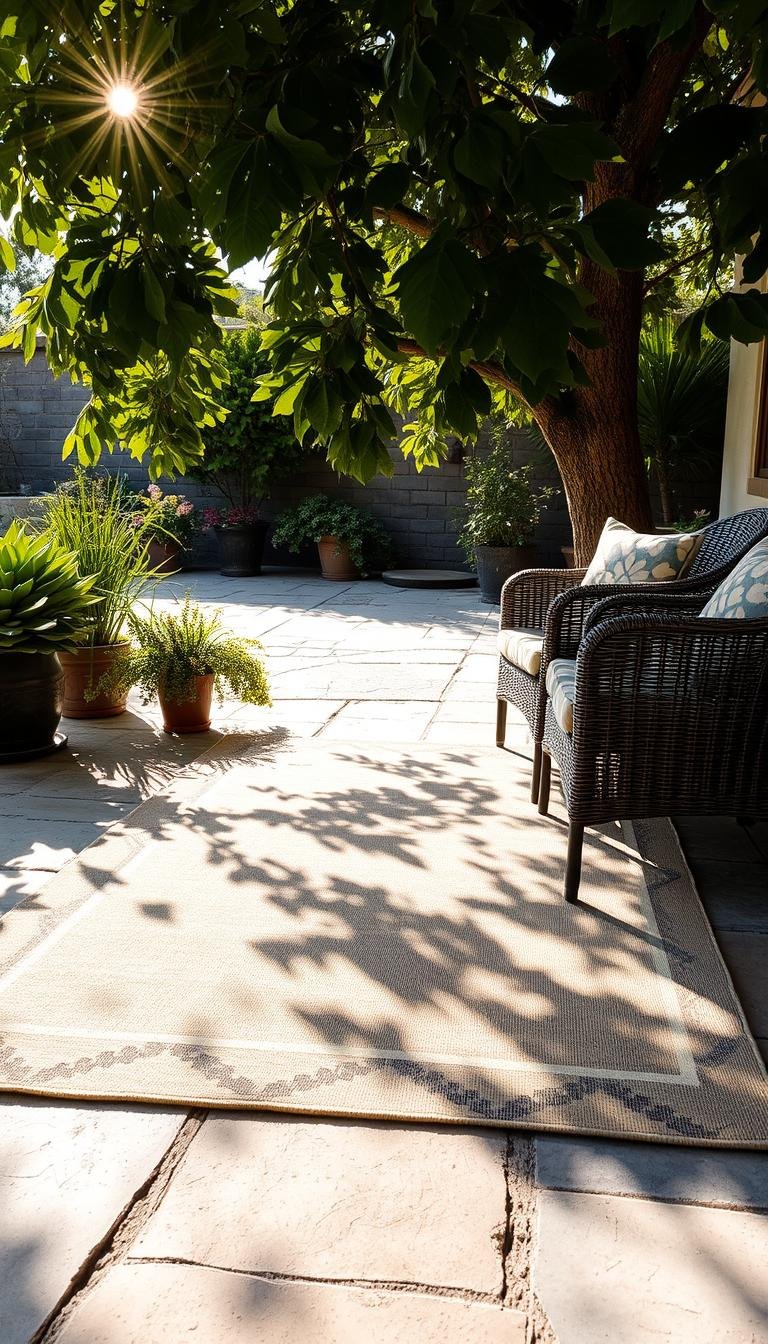
I treat outdoor rugs like easy-care gear. They make outdoor living feel like an extension of my home, but trapped moisture under outdoor furniture invites mold and mildew fast.
I begin with quick cleaning: sweep or shake loose grit, beat heavy rugs over a railing, then vacuum both sides. For spot cleaning, I mix a tablespoon of clear dish soap per gallon of water and test a small corner first.
When a full wash is needed, I scrub both sides with a soft brush, rinse on a slope so dirty water runs away, roll to shed extra water, then sun-dry top and bottom. For stubborn mold, I try diluted bleach only on synthetic fibers after a patch test, or use baking soda and white vinegar as a gentler solution.
Prevention matters most: choose polypropylene or well-vented backing, keep airflow under outdoor furniture, and store rugs clean and dry in a sealed bag during off-season. These simple steps save time and extend the life of rugs in any outdoor space.
Key Takeaways
- Clear debris and vacuum both sides to cut drying time.
- Use a mild soap solution for routine cleaning and test a corner first.
- Rinse on a slope and sun-dry both faces to prevent mold growth.
- Try baking soda and vinegar before bleach; reserve bleach for tested synthetics.
- Pick breathable materials and allow airflow under outdoor furniture.
- Store clean, dry rugs in sealed bags or under a waterproof tarp off-season.
Why outdoor rugs mildew under patio furniture and the fastest ways I cut moisture
When water collects and airflow is blocked, mildew gets the conditions it needs fast. The root cause is simple: trapped moisture, long-lasting shade, and dirt or dust that settles in the weave. That trio feeds mold and shortens the life of any outdoor rug.
Moisture + shade + trapped debris: the trio that fuels mold and mildew
Moisture lingering beneath heavy furniture won’t evaporate quickly in shaded spots. Leftover dust and dirt act as food for mold, so even a small wet patch can become a bigger problem.
Quick wins I use after rain: squeegee, lift corners, and let the sun do the work
After a downpour, my fastest move is a squeegee to clear pooled water so it doesn’t soak in. I lift corners and slide furniture a few inches to let air and sun reach hidden zones.
I rinse on a slope so water flows away from the surface. With a hose I use a flat stream about 12–18 inches away and work from the center out to push dirt off without harming fibers.
Flipping the rug breaks the moisture cycle and helps the sun finish the drying. I treat bindings gently to avoid fraying, and I spot-treat stains only after fibers are mostly dry—dry fibers resist mold much better than wet ones.
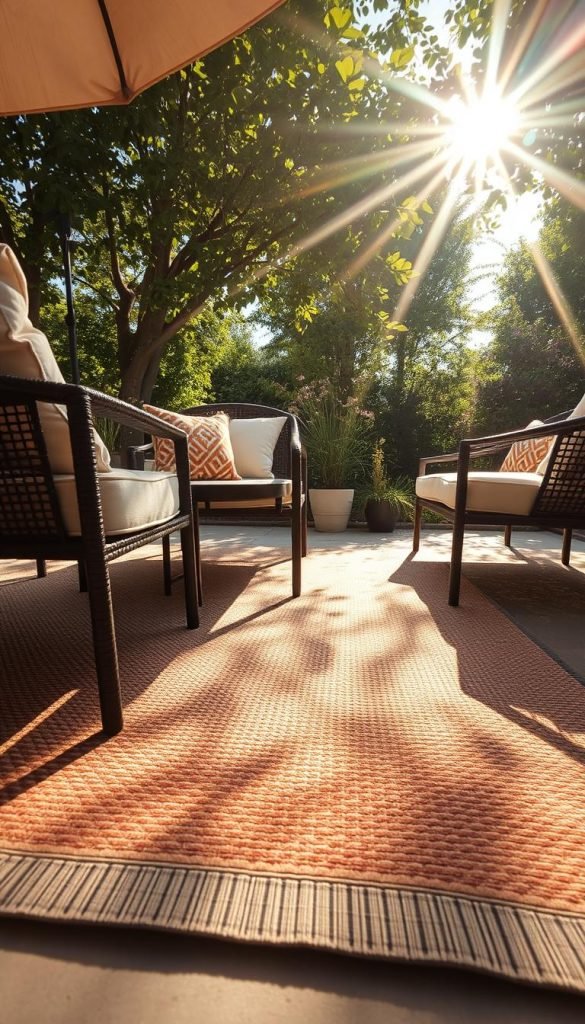
- Remove standing water with a squeegee.
- Lift corners and reposition furniture for airflow.
- Rinse on a slope and use a gentle flat stream from a hose.
- Flip the rug and let the sun and air finish the job.
How do I stop my outdoor rug from mildewing under patio furniture?
Keeping air moving beneath rugs prevents damp patches that invite spores to settle in. I lift seating with risers or pick slatted bases so air flows under mats. I also shift chairs and tables now and then so one spot does not stay damp for days.
Routine care saves time and hassle. I shake, sweep, then vacuum both sides to remove dust and dirt. When wet, I squeegee standing water, hose gently, and let gravity work on a sloped driveway so water runs away.
I roll to push out excess water, use a wet/dry vac if needed, then hang or lay the rug flat in full sun. Once the top is dry, I flip it so the underside dries completely and stays mold-free.
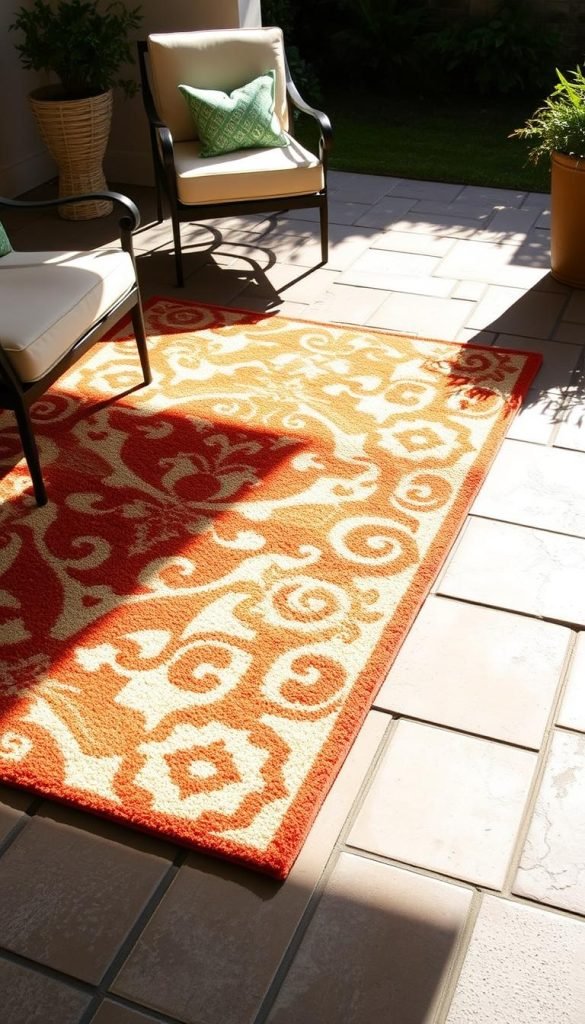
- Raise furniture for airflow and reposition often.
- Vacuum both faces and remove grit quickly.
- Squeegee, rinse on a slope, then dry completely in sun.
| Action | Benefit | Quick tip |
|---|---|---|
| Raise seating or use slatted bases | Improves airflow under rugs | Use 1–2″ risers for small breathability gains |
| Vacuum both sides & flip | Removes dust that holds moisture | Flip weekly after wet weather |
| Squeegee, roll, sun-dry | Speeds water removal and prevents mold | Rinse on a slope; use a wet/dry vac if needed |
For deeper cleaning tips, see cleaning and maintaining an outdoor rug. Keeping furniture feet dry also helps, and a quick vacuum plus a flip during busy weeks keeps my living areas fresh.
Choose the right outdoor rug and setup for a drier, cleaner patio
Start with materials that shrug off wet weather and a layout that lets edges breathe. Polypropylene is my go-to because it resists water, holds color, and lasts through sun and rain. That choice cuts cleaning time and gives the best outdoor performance for a busy garden or patio.
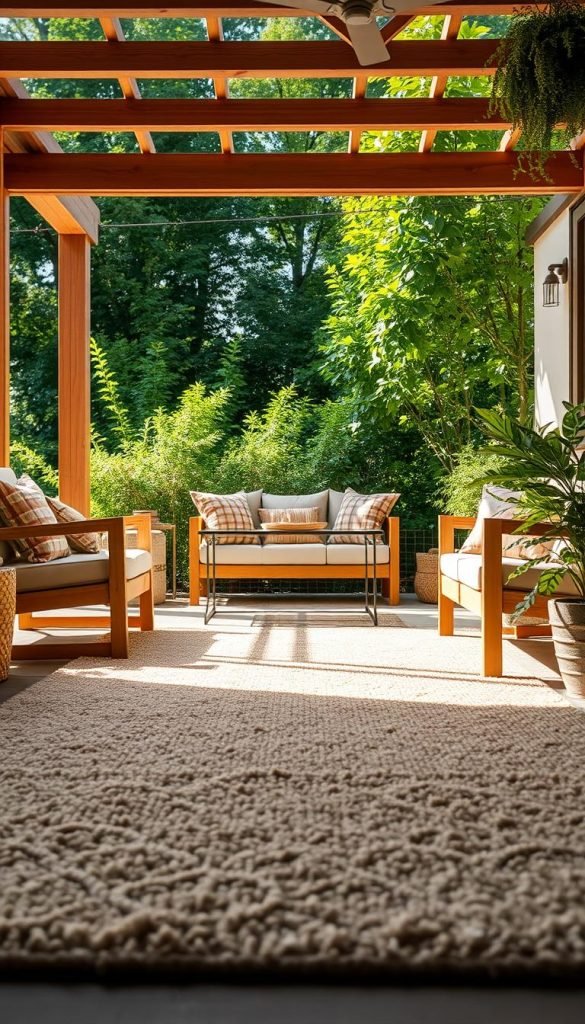
Materials that resist the elements: why I favor polypropylene
Polypropylene fibers dry fast and shrug off stains. They work well in indoor outdoor settings and tolerate UV exposure better than many naturals. Even so, any synthetic can grow moss or algae if dirt and moisture build up, so routine care matters.
Check bindings, borders, and backing
I always inspect the edges, backing, and any sewn bindings so one weak layer doesn’t trap water and lead to mold outlines. For protection, I pair a moisture-resistant rug with slatted furniture and space for airflow.
- Make sure the backing is water-shedding, not absorbent.
- Choose lightweight options for easy lifting and flipping.
- Use a breathable pad made for outdoor patio use to add cushion without trapping moisture.
My cleaning routine to prevent mold and remove stains before they set
I start by removing loose dirt and debris so any cleaning hits the fibers instead of grime. This step keeps moisture from locking into the weave and feeding mold.
Spot treatment comes next. I mix 1 tablespoon clear dish soap per gallon of water and test a small area for colorfastness. For fresh stains I blot with a sponge instead of rubbing. If a stain resists, club soda often lifts residue without harsh chemicals.
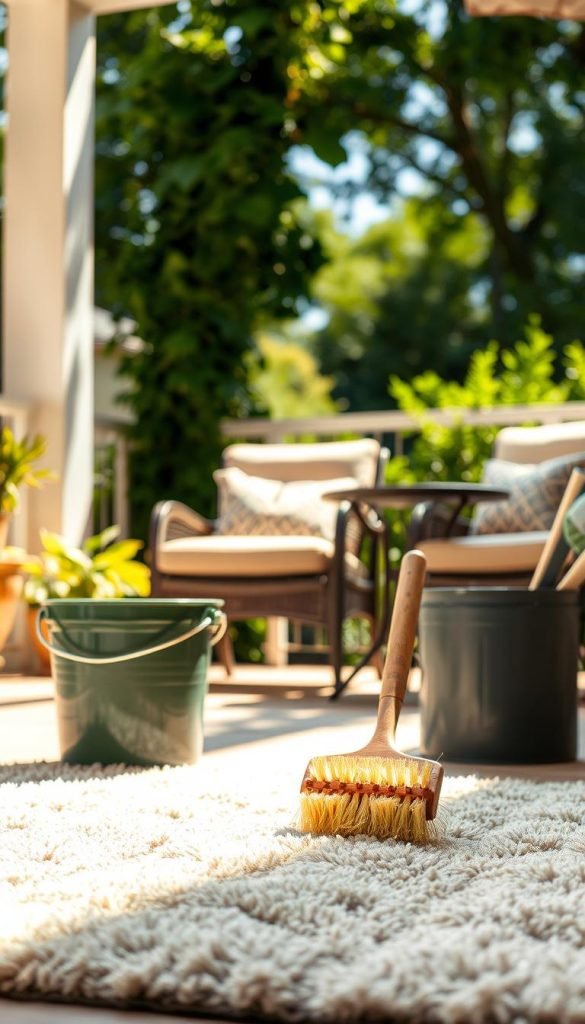
Scrub, rinse, and refresh
I scrub both sides with a soft or firm brush depending on pile and soil. Then I rinse until water runs clear, using a sloped surface so dirty water flows away.
Natural helpers and tougher options
For mildew odors I sprinkle baking soda, spray white vinegar, let it fizz, then rinse. If mold appears, I consider a diluted bleach test only on compatible synthetics, applied on concrete and kept away from plants.
- Vacuum or shake both faces before any wet work.
- Dry in full sun and flip to dry the underside.
- Speed drying with a wet/dry vac or roll-and-squeeze towels helps prevent new mildew.
Drying, weather smarts, and storage habits that extend rug life
Treat drying as its own job: remove standing water, then give both faces full sun and airflow so the weave can dry completely. After a rinse I hold the nozzle 12–18 inches away on a flat stream to avoid blasting edges and pushing dirt deeper into the surface.
Speed the process by rolling the rug to squeeze out water or using a wet/dry vac. Then hang it over a railing or lay it flat where sun and breeze reach both sides; flip it once the top is dry so the underside gets time in the sun too.
Right after rain I squeegee puddles so moisture won’t linger, and I avoid leaving heavy seating on saturated spots. For severe storms, I bring rugs indoors for protection from the elements and to cut cleaning time later.
Storage and simple maintenance
- Clean and let the rug dry completely before rolling for storage.
- Store rolled in a sealed bag or under a waterproof tarp in a dry space to block moisture and pests.
- Keep the patio surface clean to reduce dirt transfer back into fibers.
| Step | Why it helps | Quick tip |
|---|---|---|
| Rinse with wide, low-pressure spray | Removes soap and grit without harming edges | Hold nozzle 12–18″ away on a flat stream |
| Roll or use wet/dry vac | Expels excess water to shorten dry time | Work toward one edge, then hang to finish |
| Sun-dry both sides | Kills spores and dries fibers fully | Flip when top feels dry; avoid damp storage |
| Bring inside for storms | Protects from prolonged wetting and debris | Store clean and sealed until next season |
For extra guidance on a proper cleaning routine, see this short guide to clean outdoor rug.
Conclusion
A few simple habits keep rugs clean, dry, and ready for daily use.
Prevent moisture, clean smart, and dry thoroughly — that trio protects against mold and mildew more than any one-time treatment. Sweep or vacuum both sides, spot-treat with mild soap, then rinse on a slope and roll to push out excess water.
Choose materials like polypropylene and check bindings so hidden traps do not hold water. Store clean, dry outdoor rugs in sealed covers when not in use, and bring them inside during storms.
I follow quick routines and occasional deep cleaning to remove mold early. The result is a livable garden and home space that stays fresh, resists damage, and saves time over the long term.