What’s the best way to light a dark hallway without overhead wiring?
I had a narrow, dim corridor that felt unsafe until I tried plug-in and battery solutions. I focused on renter-friendly fixtures that need no new wiring. Small changes made the space look larger and safer.
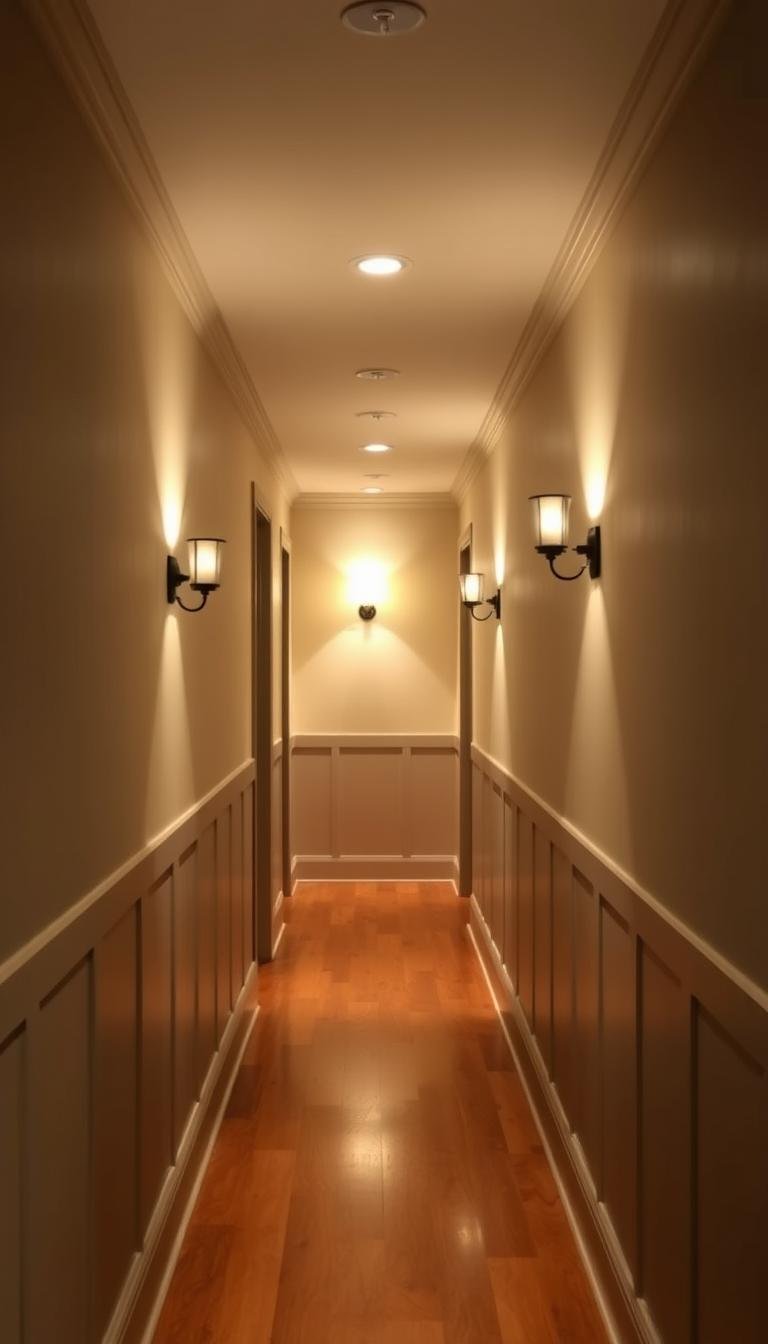
Layering matters: task, ambient, and accent elements reduce shadows and guide movement. I used a plug-in chandelier with a long cord, dual-globe sconces, and LED cove strips in warm tones.
I also added motion-sensing outlet lights and rechargeable designer lamps for hands-free use. For ideas on layout and product types, I referred to a trusted hallway guide and linked a helpful resource hallway lighting guide that matches my needs.
Quick wins I used: a motion night-light, two plug-in sconces at eye level, and string lights along a console. Cord clips kept everything tidy against the baseboard.
Key Takeaways
- Plug-in and battery fixtures brighten rooms without new wiring.
- Layer task, ambient, and accent lights for even coverage.
- Motion and smart controls add safety and convenience.
- Slim sconces and cove strips save floor space in narrow halls.
- Warm LEDs improve mood while keeping visibility high.
How I approach a dark hallway: goals, safety, and quick wins
I set a straightforward target—an even glow that guides movement without glare. My goal is a continuous, shadow-free walkway that feels calm at night and gives enough brightness for small tasks like grabbing keys.
Safety comes first. I place motion-activated outlet lights near turns, doorways, and steps and use dusk-to-dawn sensors so lights come on when needed. That cuts trips and keeps the path predictable.
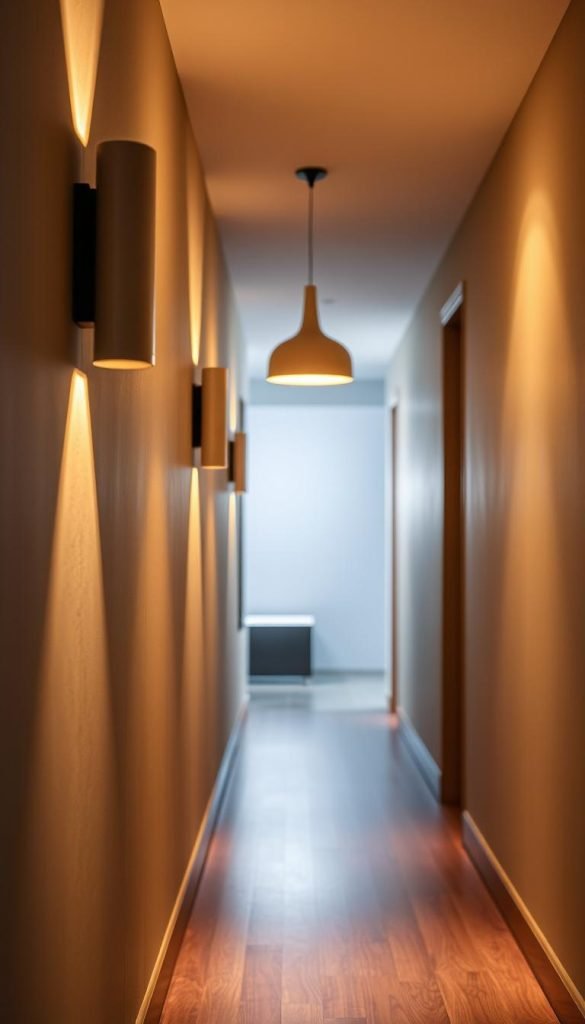
For fast wins I favor DIY options: adhesive puck lights in alcoves, peel-and-stick LED strips along baseboards, and a smart bulb in a nearby table lamp for instant control. Floor and table lamps with dimmers add layerable fill without rewiring.
- I map outlets and set a brightness target for task moments.
- I manage cords along baseboards so narrow space stays clear.
- I pick slim sconces and compact lamps to wash walls evenly.
- I use timers or schedules so lights are ready each night.
Plan before you plug in: brightness, color temperature, and layout
I begin by defining a warm, even glow that guides steps and avoids glare. That goal keeps the room safe and welcoming while preventing bright spots on walls and the ceiling.
Set the goal: aim for a shadow-free walkway that feels inviting. I pick a target mood first so fixture choices and control options follow naturally.
Pick the right bulbs and brightness
I favor warm 2700K–3000K bulbs for an inviting tone. Warm LED bulbs are efficient and dimmable, so I can tune brightness for day and night.
For long narrow rooms, I space multiple fixtures rather than relying on one source. This avoids glare and hot spots on walls and keeps the light even along the floor.
Map outlets, switches, and glare
I sketch outlet and switch locations, then plan plugs and cord runs so cords hide along baseboards. That keeps the corridor tidy and practical.
Wide diffusers—frosted globes or fabric shades—help spread light smoothly. I also add smart control with a plug or bulb for schedules and app control without new wiring.
- I document fixture types, lumen targets, and spacing in a simple plan.
- I avoid bare LEDs in sightlines and bounce light off walls or the ceiling for softness.
- I choose portable lamps and adjustable mounts for future flexibility.
| Item | Recommendation | Why it helps |
|---|---|---|
| Color temp | 2700K–3000K | Cozy mood with clear visibility |
| Bulb type | Warm LED, dimmable | Energy efficient, adjustable brightness |
| Fixture spacing | Multiple evenly spaced | Avoids hot spots and glare on walls |
| Control | Smart plug or smart bulb | Schedules, app control, no wiring changes |
What’s the best way to light a dark hallway without overhead wiring?
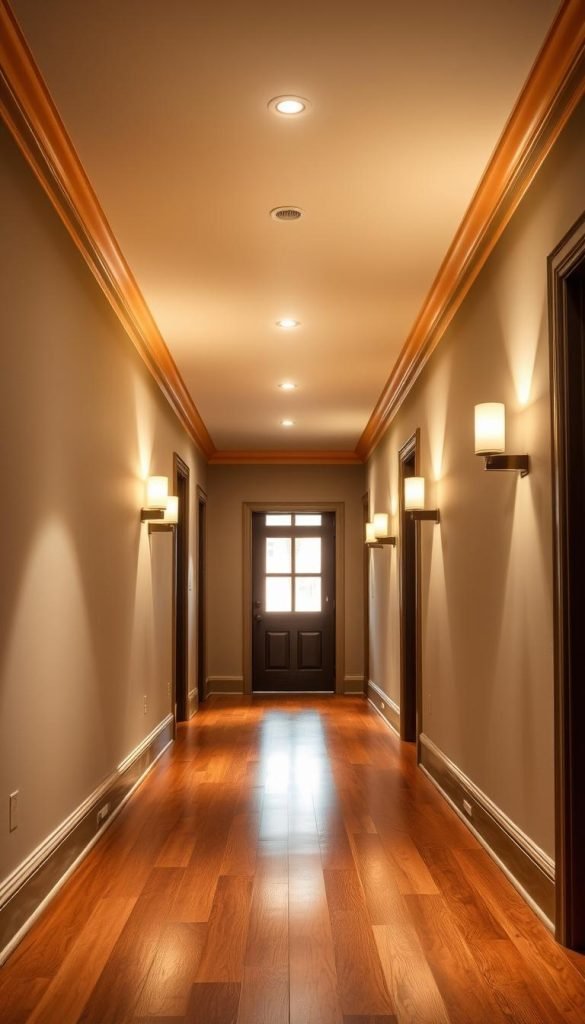
I lean on plug-in sconces and battery fixtures when I need even, eye-level glow down a narrow run. They mount quickly, plug into an outlet, and deliver flattering, wall-washing light without new wiring.
Plug-in or battery-powered sconces give consistent coverage. One dual-globe model can offer up to 80W worth of diffused illumination and is even damp-rated for bathroom-adjacent corridors.

Motion-activated outlet lights and puck lights
Motion outlet lights and adhesive puck lights add hands-free safety at entries and turns. I pick units with dusk-to-dawn sensors and adjustable timeout so they only run when needed.
LED strips for cove or baseboard glow
LED tapes tuck into coves, under rails, or along baseboards to bounce light and avoid glare. I use warm 2800K strips for a cozy tone and hide the source so the glow guides footsteps without blinding.
Smart plugs, dimmers, and timers
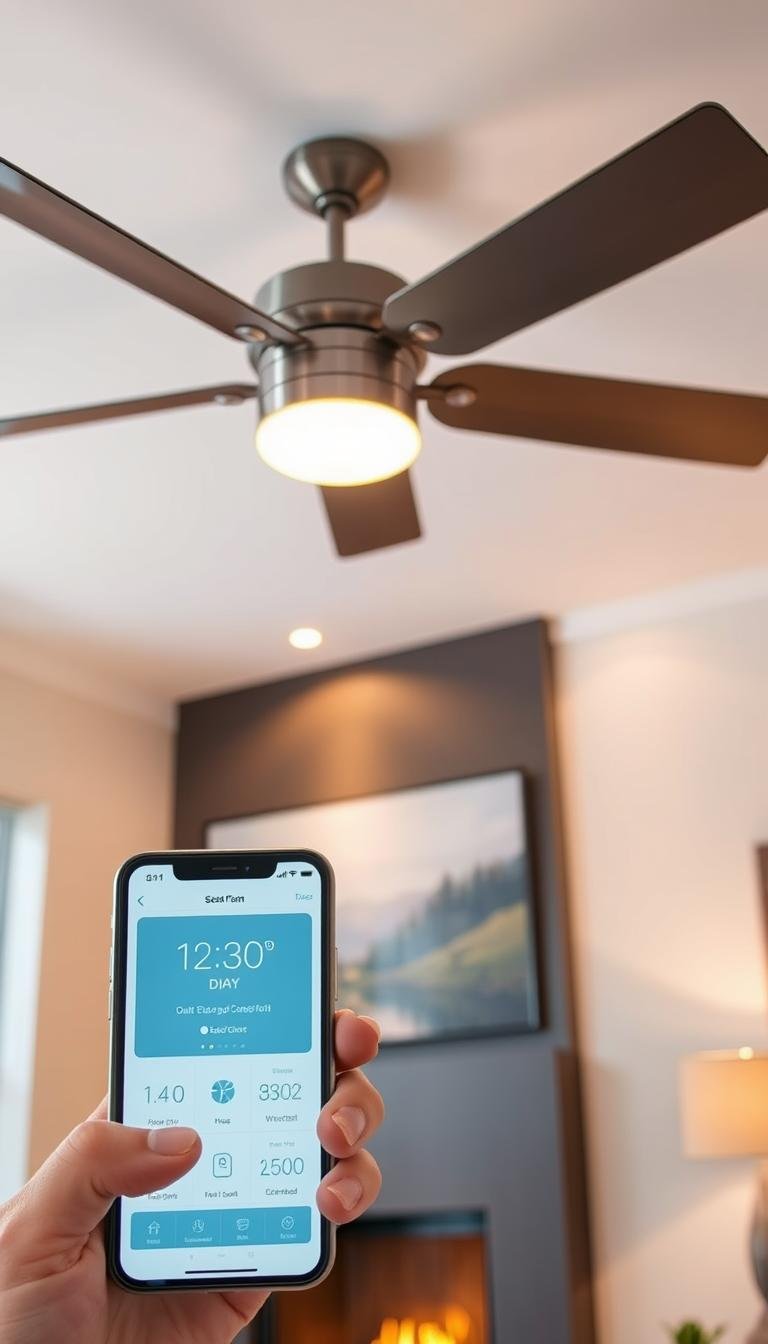
Smart control ties it all together. A smart plug or bulb gives schedules and presence routines so lights come on before I reach the room. Inline switches on swag pendants work well when I want manual control.
- I favor diffusers—frosted globes or fabric shades—to prevent harsh shadows.
- I include a subtle string lights accent only for mood, never as the main safety source.
- I choose UL-listed fixtures and secure cords with adhesive clips for a tidy look.
Plug-in and battery-powered sconces: the hallway MVPs
I rely on plug-in sconces when I want consistent, eye-level glow down a narrow run. They give even wall wash and feel like a permanent upgrade without new wiring.
Placement that works
I mount pairs about 60–66 inches high so the center of the light hits eye level. On long walls I stagger additional units to keep illumination continuous along the room.
Simple, tidy installation
Easy installation matters: install the backplate, swag the cord neatly, secure with clear clips, and plug into a nearby outlet. Inline switch or a smart plug makes on/off simple.
Style and performance choices
I pick frosted globes or fabric shades to soften beams and avoid scalloped shadows on walls. Dual-globe plug-in fixtures can deliver up to 80W of diffused light, and picture lights in 24–32 inch sizes work great over artwork or a console.
| Type | Finish / Size | Use |
|---|---|---|
| Dual frosted sconce | Brass / 12–16 in | Even wall wash; good near doorways |
| Plug-in picture light | Nickel / 24–32 in | Highlights art; dimmable 2700K bulbs |
| Battery sconce | Matte black / compact | Outlet-free rooms; same aesthetic, no wiring |

Motion-activated and outlet lights for night-safe navigation
I rely on motion-activated outlet units to light pathways before I step into a room. These fixtures wake the corridor only when needed, saving power and adding instant safety for late trips.
Best spots: near entries, turns, and stair landings
Place units at doorways, tight turns, and the top and bottom of stairs. That way the floor and wall are lit before you move, reducing trips and surprises in small space.

What to look for: dusk-to-dawn sensors, adjustable timeout, and downward glow
I pick models with dusk-to-dawn sensing and adjustable timeout so lighting runs only when useful. Downward-facing louvers aim light at the floor and avoid glare into eyes.
Faceplate-integrated options (like outlet inserts) keep both sockets free for vacuums or chargers while providing continuous path light. Where outlets are scarce, battery pucks stick with adhesive pads—perfect for DIY and rentals.
- I combine motion fixtures with a couple of always-on low-level lamps for redundancy at night.
- I pair key outlets with smart plugs for schedules and remote control when I need it.
- I test sensors at night and set a monthly battery check so performance stays reliable.
LED strips, cove lighting, and backlighting for indirect glow
A hidden row of warm LED tape can turn ceiling edges into soft, floating ribbons of glow. I use indirect methods when I want even, glare-free lighting that widens a narrow room without extra fixtures.
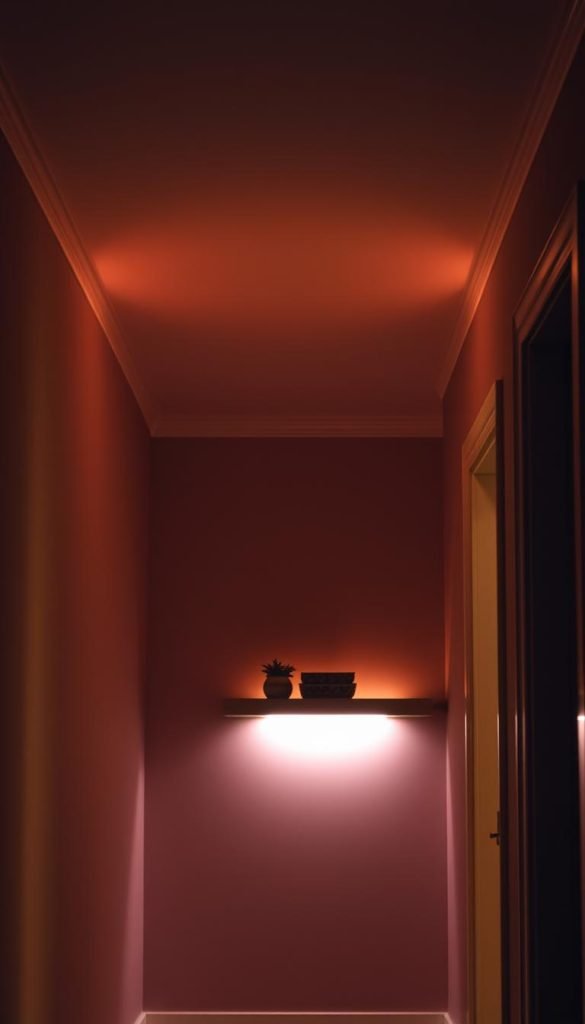
Create a floating line along crown, shelves, or handrails
I tuck tape into a crown ledge, shelf lip, or under a handrail so only reflected light shows. That bounce softens shadows on walls and makes the room feel taller.
Simple steps for quick, clean installation
Most LED strips come with adhesive backing for peel-and-stick installation. I clean the surface, stick the tape, and reinforce long runs with clips in warm spots.
- I pick warm 2800K strips and dimmable drivers so the lighting matches nearby lamps and sconces.
- I hide the source in aluminum channels or behind diffusers for a more architectural finish.
- I route leads along the baseboard and use low-profile cord covers to avoid floor trips.
- I add smart control or Philips Hue-style backlights for scenes and scheduled on/off without a switch.
Power planning matters: place the driver near an outlet and keep it accessible behind furniture. This keeps servicing simple and maintains a clean, renter-friendly setup.
Plug-in pendants, string lights, and portable lamps when space allows
A plug-in pendant over an entry or niche gives instant architectural interest and guiding light.
I hang swag pendants where ceilings are higher or where a niche needs focus. A ceiling hook, cord clips, and an inline switch make installation simple. I once bought a plug-in chandelier with a 15-foot cord and it let me place the canopy near an outlet without an electrician.
String lights work as a decorative second layer. Battery-operated fairy sets come with remotes, timers, and multiple color options. I tuck them into glass vases, along a shelf, or above a console in a room without overhead power.
Floor lamps and arc styles add task or ambient glow. I use drum-shade floor lamps to bounce light upward in wider sections and place compact table lamps on consoles for catch-all surfaces. Rechargeable cordless lamps, like sculptural designer models, move easily for art-spotting or temporary setups.
| Fixture | Best spot | Key feature | Typical price |
|---|---|---|---|
| Pendant / swag | Entry, niche, high ceiling | Inline switch, long cord (15 ft) | $111.67 (example at Lumens) |
| String lights | Shelf, vase, console | Battery, remote, timers | $15–$40 |
| Floor / arc lamp | Wider hall sections, bench area | Directional reach, dimmer option | $80–$250 |
| Rechargeable lamp | Art, temporary stations | Portable, sculptural, cordless | $100–$300 |
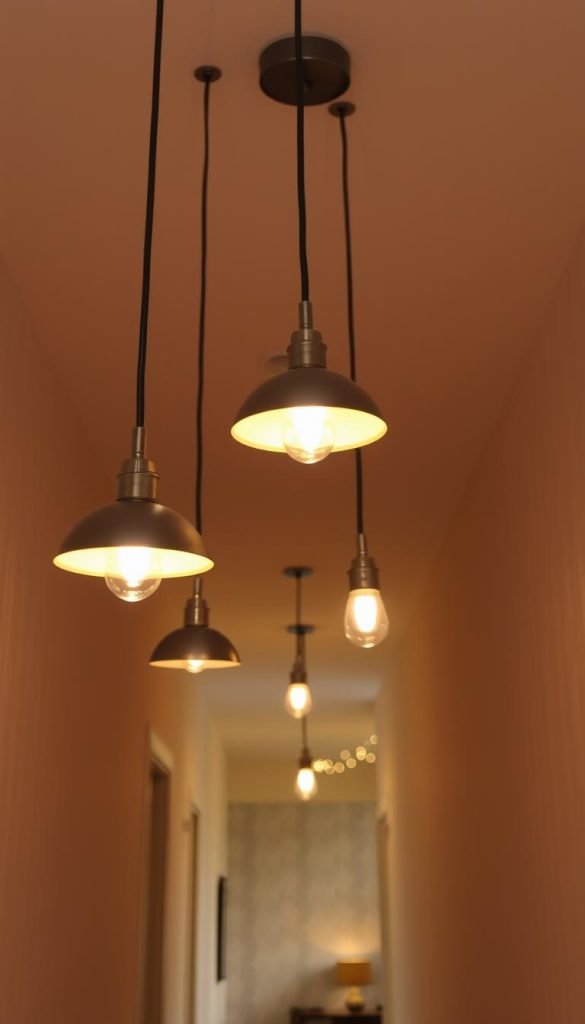
- I keep cords tight to the wall so furniture and passersby don’t snag them.
- I choose diffused shades on pendants and table lamps to avoid glare.
- I match materials—frosted glass, fabric, rattan—for cohesive finishes with nearby frames and hardware.
- For scale, pendants sit high enough for headroom; table and floor pieces stay proportionate to narrow spaces.
Conclusion
I found layering small plug-in fixtures and hidden LED tape makes the corridor feel wider and safer at once.
Keep it simple: pair eye-level sconces, warm LED strips, and a motion outlet for hands-free safety. I use dimmable bulbs and smart schedules so lights warm up before I arrive and fade after I pass.
Choose one pendant only where ceiling height allows, then fill the run with compact fixtures and adhesive tape. Plan cord routes, pick durable finishes, and test at night for real-world performance.
In short: with plug-in options, motion controls, and a few floor lamps or table lamps for accents, I brightened a dark room without an electrician and kept the result tidy, safe, and welcoming.