How do I choose a runner rug that won’t trip grandparents?
I set the goal up front: pick a runner rug that felt welcoming and stayed safe for elders in my house. I wanted low profile, firm grip, and the right scale so toes or canes would not catch.
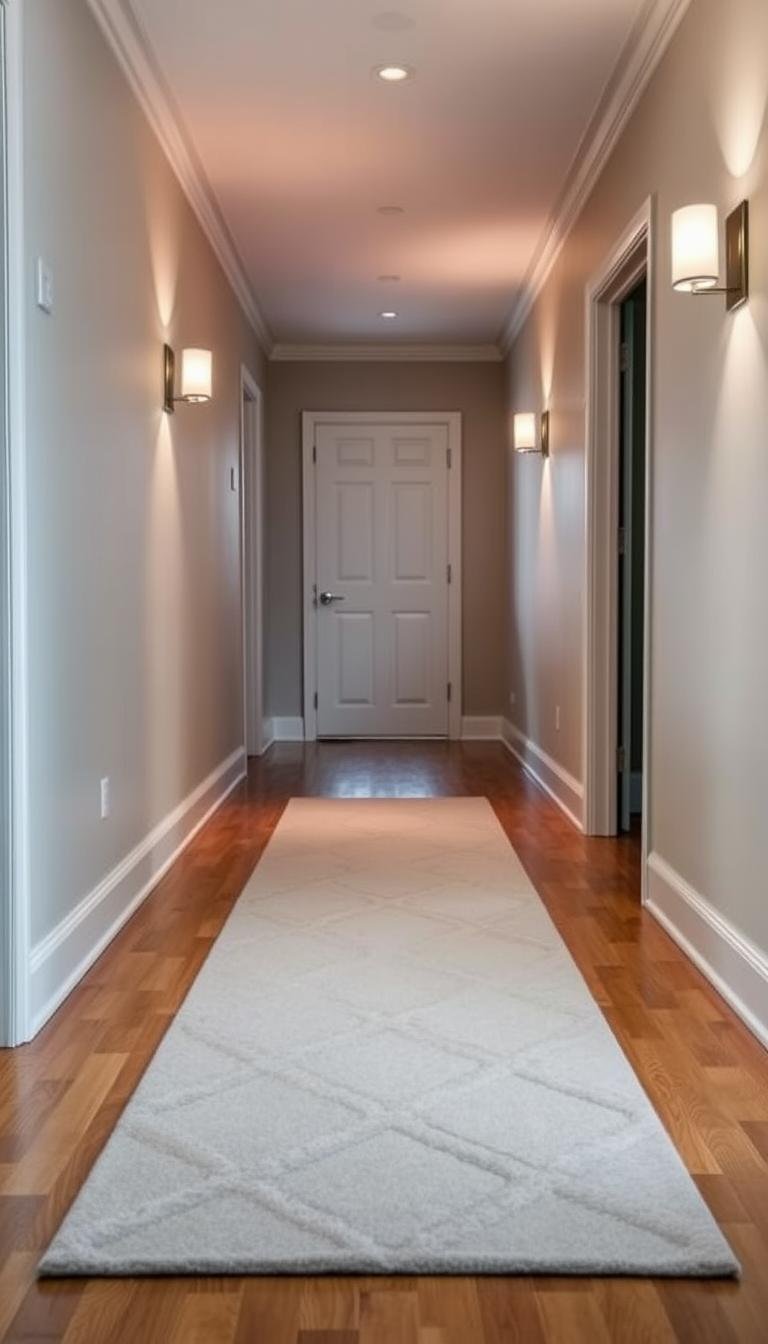
Why it mattered: runners protect flooring in high-traffic areas, soften sound in long hallways, and add comfort underfoot without creating a hazard. Leaving about 4–5 inches of visible floor on each side kept the look intentional and reduced edge snags.
I checked door swings and left about 18 inches bare at starts and ends so the entry would not catch on thicker materials. I tested flatweave wool, seagrass, sisal, and jute for stability and ease of cleaning.
What I promised to show: how to measure width and length, place a secure non-slip pad or perimeter tape, and pick color and pattern to guide the eye while keeping movement safe through hallways, living room pass-throughs, and kitchen ways.
Key Takeaways
- Keep 4–5 inches of floor visible on each side for scale and safety.
- Allow about 18 inches bare at the start and end to avoid door snags.
- Use a low-profile material and a non-slip pad on slick flooring.
- Measure door clearances before buying to prevent catching.
- Choose colors and patterns that widen the space without sacrificing stability.
Safety-first hallway checklist before you buy
Start with a quick walk-through. Before ordering, I mapped the path from entry through the hall to note doors, thresholds, and narrow turns. This helped me spot pressure points where edges could catch a cane or foot.
Door clearance and threshold risks to watch at the entry
I measure the door sweep first. If a door rubs, I either pick a lower-profile rug or start the runner beyond the full door swing so the floor stays clear.
Furniture legs, narrow turns, and lighting that affect trip hazards
- I keep furniture legs all on or all off the runner; if off, I leave a few inches so the edge won’t snag feet or walkers.
- I avoid seams on thresholds and never place the end of a runner directly on a threshold where traffic scuffs most.
- On slick flooring, I add a low-profile non-slip pad so rugs don’t slide during tight turns.
- I test the route at night and add warm, even light to reveal edges and reduce shadowed corners.

| Risk | What I did | Outcome |
|---|---|---|
| Door sweep | Measured and started runner past full swing | No scraping, clear entry |
| Threshold seam | Kept seams away from thresholds | Lower trip risk at transitions |
| Furniture feet | Left inches gap or put legs fully on rug | Stable edges, less curl |
| Lighting | Added warm fixtures to hall | Better edge visibility |
Measure and size your runner the safe way
Start with simple measuring, not shopping. I measured my hallway in several places and picked the narrowest reading to avoid surprises. Then I outlined the desired width and length with tape so the final size felt right when I walked through.
Width that breathes: keep visible floor on each side
Leave about 4–5 inches of floor on each side. For example, a 46-inch hallway worked well with a 3-foot-wide runner, which left roughly five inches per side.
In tighter halls a 32-inch option in a 39-inch space kept borders visible and avoided a wall-to-wall look that catches feet and scuffs the wall line.
Length that avoids snags: leave space at ends and avoid door seams
Stop short of doorways. I left roughly 18 inches of bare floor at both ends so doors swing freely and steps don’t meet an edge. Never place a seam on a threshold—that’s where most stumbles happen.
Extra-long halls: when to double without creating a seam hazard
If my hall needed two pieces, I offset the join away from any door zones. Mapping door swings and marking the split with tape helped me see traffic lines and avoid a seam where lots of feet cross.
- I measured width in multiple spots and picked a size that preserves 4–5 inches of visible floor.
- I used a tape outline to test turning radiuses and cane paths before buying.
- I marked final inches with painter’s tape and walked it in shoes to confirm clearances.

How do I choose a runner rug that won’t trip grandparents?
Start with profile and fiber—those two choices set the tone for safety and wear.
C. I looked for tight weaves and low piles so the path felt steady underfoot and doors glided past.
Go low-profile: flatweave or low-pile for easy door swing and stable footing
Flatweave or tight low-pile construction keeps edges thin and reduces the chance of catching canes or shoes.
- Flatter construction equals fewer edges to snag and smoother door clearance.
- A thin pad adds a bit of comfort without raising height.
- Avoid fringes and tall tassels—finished ends are safer in busy halls.
Pick durable, forgiving materials
Wool handled heavy traffic in my house. Dense tufting and higher knot counts lasted and cleaned well.
| Material | Strength | Care note |
|---|---|---|
| wool | Long-lasting, resilient | Spot clean, durable for high-traffic area |
| seagrass | Stain-resistant waxy fiber | Wipe spills quickly; avoid heavy moisture |
| jute / sisal | Jute: softer; Sisal: very tough | Jute wears faster; sisal needs gentler cleaning |
Non-slip from the start
I installed a low-profile pad in the center and added perimeter double-sided tape at the ends. This stopped creep without adding height that would interfere with the door sweep.
“A thin pad makes the runner hug the floor and keeps corners flat.”
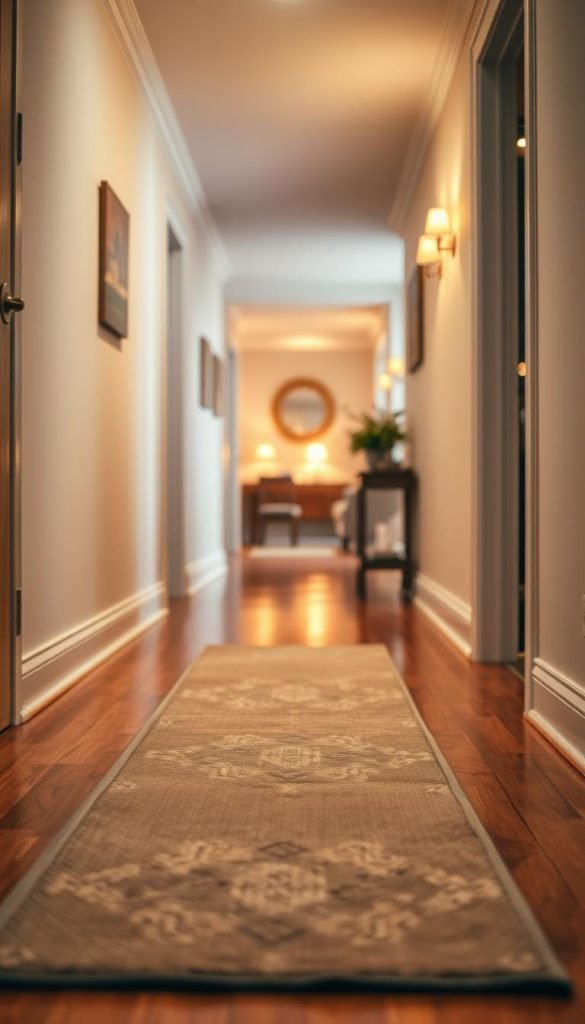
Final checklist: pick low-profile weave, favor wool when longevity matters, know seagrass and jute trade-offs, and secure the backing with a thin pad or tape.
Style smart: colors, patterns, and acoustics without sacrificing safety
Color and pattern steer sightlines; used well, they make a passage safer and more inviting.
Color that guides the eye and sets the tone at the entry. Bright hues reflect light and energize the entry while deeper tones make the space feel cozier. I kept walls and doors the same light shade to help the hallway read wider and reduce visual breaks.
Pattern direction and alignment with wall lines. I pick patterns that run lengthwise to guide the eye forward. Straight geometry or long stripes feel calmer than zigzag layouts, which can confuse older vision.
- I scale patterns and runner length to the area so the piece defines space and helps absorb sound on hard flooring.
- I avoid high-contrast micro patterns that create visual shimmer; clear, readable shapes are kinder to the eye.
- I favor tight low pile or flatweave in wool or mixed materials for style and safe footing.
- Consoles and benches sit fully on or fully off the rug with a small gap so edges stay visible and flat.
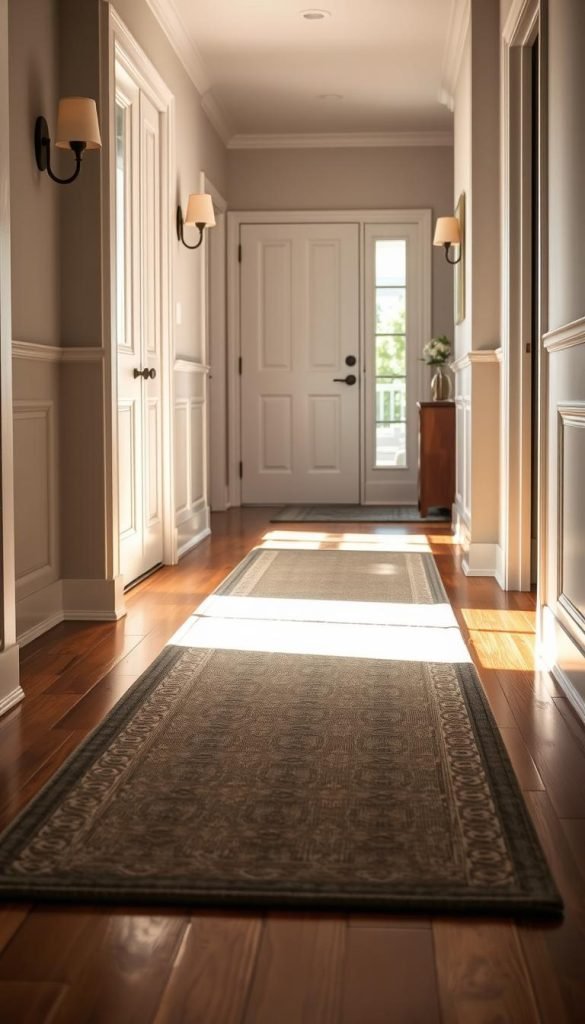
“A medium-value palette with subtle pattern keeps dust from glaring and keeps edges clear.”
Conclusion
Small choices made the hall feel safer and more inviting. I kept visible borders of about 4–5 inches on each side and left roughly 18 inches bare at both ends. That simple sizing beats most surprises in busy homes.
Material and grip matter: I favored wool for durability, used seagrass where stains were a worry, and chose sisal or jute only for lower-wear areas. A low-profile pad or perimeter tape kept everything flat and stable underfoot.
Test placement with tape, keep seams away from doors, and place furniture legs consistently on or off the piece. With these steps, your hallway becomes a clear, confident path that blends safety with style and long‑term comfort in the home.