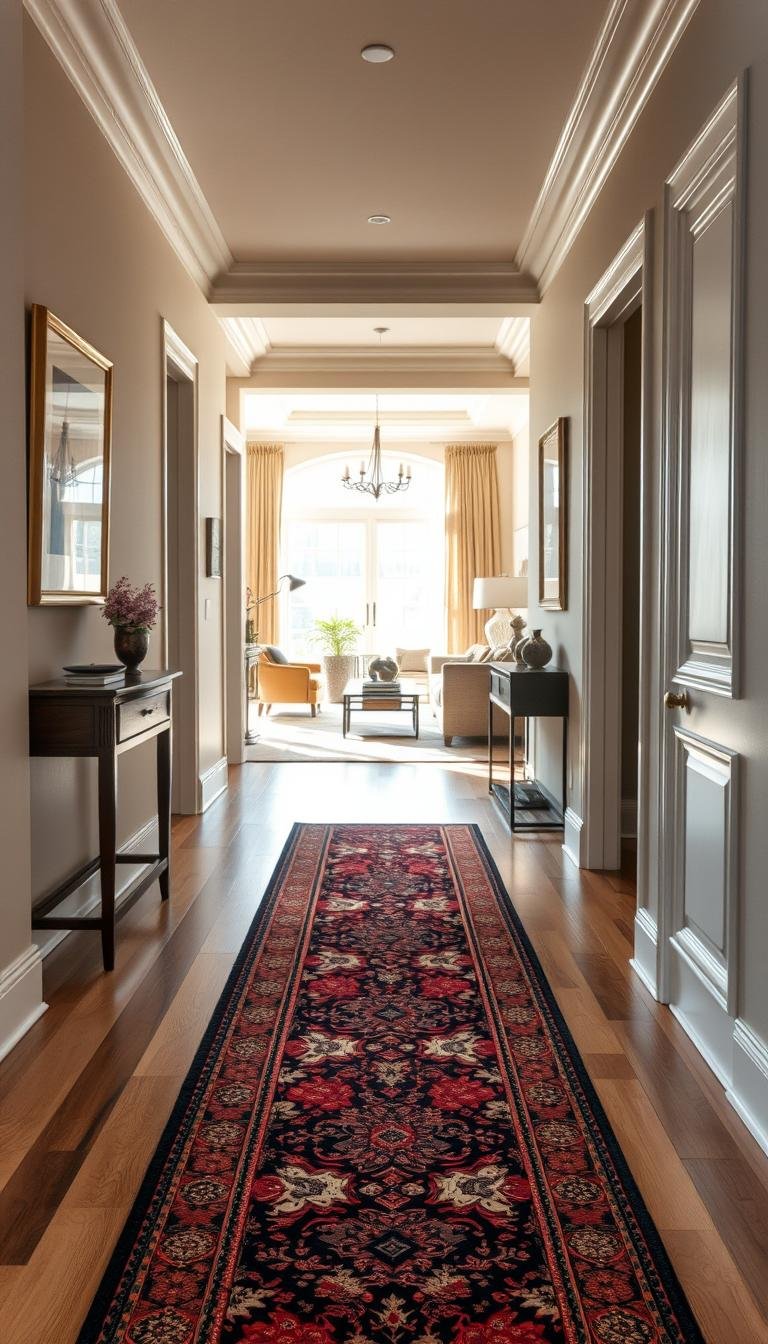
What’s the perfect width for a hallway runner that doesn’t look skimpy?
I’ve learned through personal experience that choosing the right hallway runner makes a huge difference. Getting the measurements correct transforms both the look and function of your space.
This comprehensive guide walks you through selecting an ideal runner rug. We’ll cover why these pieces matter beyond just decoration.
Runners protect floors from heavy foot traffic. They add warmth underfoot and can even improve safety in busy areas of your home.
The right choice turns a boring corridor into a stylish, welcoming passage. It helps tie your entire room’s decor together beautifully.
You’ll get practical tips from my own trial and error. I’ll share expert insights about what works in various hallway scenarios.
Whether you have a narrow apartment passage or a grand entrance, this resource helps. You’ll find the perfect fit that enhances rather than cramps your space.
Key Takeaways
- Proper runner width balances aesthetics with practical functionality
- Hallway runners provide floor protection in high-traffic areas
- The right rug adds warmth and improves safety underfoot
- Good measurements transform boring spaces into stylish passages
- Different hallway types require different sizing approaches
- Expert tips help avoid common sizing mistakes
- Correct proportions make your entire home decor feel cohesive
Why Getting the Right Hallway Runner Width Matters
My friend’s experience taught me a valuable lesson about hallway runners. He bought a beautiful entryway rug that seemed perfect online. When it arrived, the proportions were completely wrong for his space.
This mistake transformed his elegant foyer into something that felt cheap and unfinished. The piece simply didn’t work with his home’s design. I realized then how crucial proper sizing truly is.
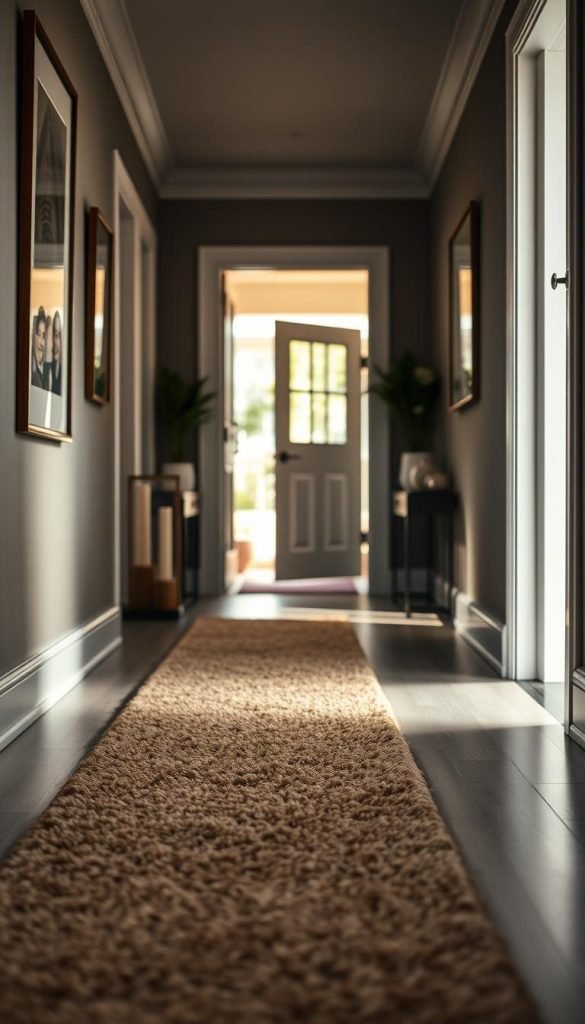
The problem with too narrow runners
Skinny runners create multiple issues in any home. They fail to protect floors in high-traffic areas. This leads to excessive wear on your actual flooring surfaces.
Safety becomes another concern with improperly sized rugs. I’ve noticed they can slip more easily, creating hazards. This is especially important for households with children or elderly residents.
My friend’s narrow runner made his spacious entryway feel cramped. Instead of welcoming warmth, it created an uncomfortable atmosphere. The visual effect was the opposite of what he wanted to achieve.
How the wrong width affects your hallway’s appearance
Improper rug size disrupts the visual flow between rooms. It makes your home’s design feel disjointed rather than cohesive. I’ve seen how this can throw off an entire decor scheme.
Too-wide runners present their own set of challenges. They can obstruct doorways and make furniture placement awkward. These oversize rugs even become tripping hazards in tight spaces.
The right width creates perfect balance in any corridor. It leaves just enough floor visible on each side to frame the runner beautifully. This careful placement makes the entire space feel intentional and designed.
| Width Issue | Visual Impact | Functional Problem |
|---|---|---|
| Too Narrow | Makes space feel cheap | Poor floor protection |
| Too Wide | Obstructs doorways | Creates tripping hazards |
| Just Right | Enhances room flow | Provides safety and protection |
Psychological impact matters too in home design. A well-proportioned runner makes your hallway feel carefully planned. It transforms ordinary passages into stylish elements of your decor.
Getting the width right affects both appearance and functionality. It ensures proper door clearance and easy movement through the space. The difference between right and wrong measurements is truly dramatic.
Measuring Your Hallway for the Perfect Runner Fit
Getting precise measurements changed everything about my rug shopping experience. I discovered that even small errors can lead to big problems with fit and function.
Proper measuring ensures your new piece enhances rather than cramps your space. It’s the foundation for finding that ideal balance between form and function.
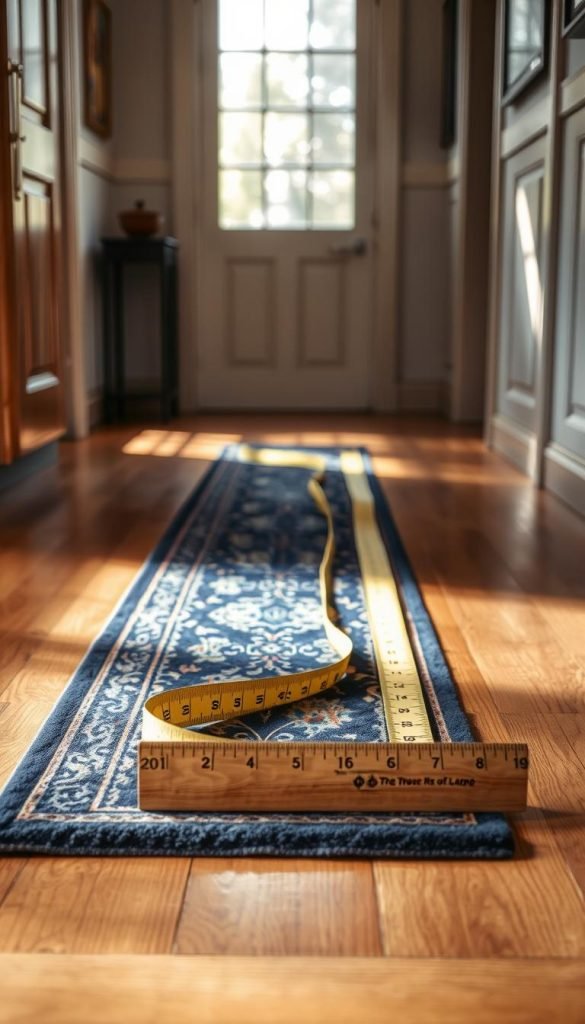
Tools you’ll need for accurate measurements
I always start with a simple tape measure. It’s the only essential tool for this job. A notepad and pencil help record numbers without confusion.
For tricky spaces, I sometimes use a laser measure. This gadget gives pinpoint accuracy for unusual layouts. A flashlight helps see into dark corners where walls meet.
Step-by-step measuring technique
My process begins with measuring the full length first. I stretch the tape from one end to the other, noting the longest point. Many corridors aren’t perfectly straight, so I check multiple spots.
Next, I measure the width at several points along the passage. Narrowest and widest points both matter for rug selection. I record all measurements to find the most consistent width.
Always measure twice – those few inches really impact the final fit. I’ve learned this lesson through expensive mistakes. Double-checking saves time and money in the long run.
Accounting for door swings and obstructions
Door clearance became my hard-learned lesson. I once bought a beautiful runner that got caught every time the door opened. Now I always measure door swings and account for their full arc.
Built-in features need special attention too. Benches, radiators, and architectural details affect rug placement. I measure around these obstructions to ensure proper clearance.
Unusual shapes require creative solutions. Curved walls, angled entries, and L-shaped layouts need extra measuring points. I take photos to remember these unique features when shopping.
“Measure twice, cut once” applies perfectly to rug shopping. Those extra minutes with your tape measure prevent years of frustration with ill-fitting floor coverings.
Final furniture placement matters more than empty space measurements. I always measure with furniture in position. Traffic patterns and natural light also influence my choices.
Taking time upfront prevents returns and awkward gaps. Proper measuring creates a seamless look that enhances daily life. Your future self will thank you for this careful preparation.
What’s the Perfect Width for a Hallway Runner That Doesn’t Look Skimpy?
After testing countless options in various homes, I discovered consistent sizing patterns. The right proportions transform any corridor from functional to fabulous.
Proper dimensions create visual harmony while serving practical needs. They balance floor protection with aesthetic appeal beautifully.
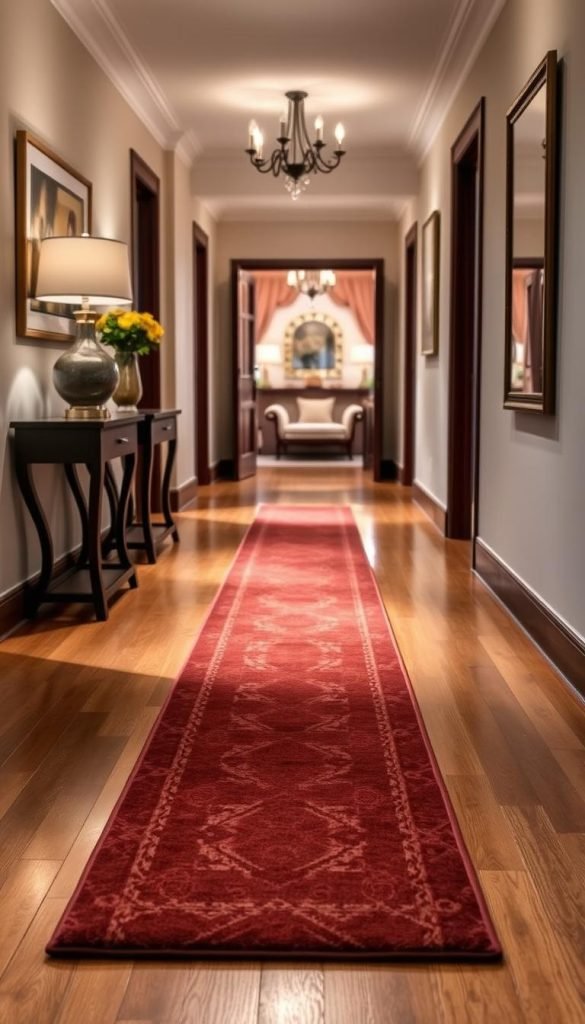
Standard width ranges explained
Most quality runner rugs measure between two and three feet across. This range suits the majority of residential spaces perfectly.
Manufacturers typically produce these sizes because they work well. My own collection includes pieces at 24, 27, and 36 inches wide.
These dimensions cover the main walking path effectively. They provide comfort underfoot while allowing proper border space.
The golden border rule
I always maintain four to six inches of visible flooring on each side. This framing technique makes rug placement look intentional.
That border creates a balanced, designer-approved appearance. It prevents that unfortunate skimpy effect everyone wants to avoid.
My personal hallway measures forty-six inches across. A three-foot runner leaves five inches on either side perfectly.
Adjusting for unusual spaces
Extra-narrow passages sometimes benefit from wider coverage. Surprisingly, more coverage can make tight areas feel less cramped.
For generous corridors, consider broader runners or dual placements. Two parallel runners create luxurious custom appeal in wide spaces.
Custom sizes solve unique layout challenges effectively. Many companies offer affordable made-to-order options now.
| Hallway Type | Recommended Width | Border Space | Visual Effect |
|---|---|---|---|
| Standard (3-4 feet) | 2.5 feet | 4-6 inches | Balanced and intentional |
| Narrow ( | 2-2.5 feet | 2-3 inches | Space-enhancing |
| Wide (>4 feet) | 3+ feet or dual | 6+ inches | Luxurious custom |
Always avoid wall-to-wall carpeting unless specifically desired. Runners should feel like deliberate design choices.
The right proportions make daily movement safer and more pleasant. They protect floors while elevating your entire home’s style.
Trust these guidelines to find your ideal fit. They work in traditional and modern interiors alike.
Determining the Ideal Length for Your Space
Finding the correct runner length transformed how my corridors feel and function. I used to think longer meant better, but experience taught me balance matters most.
Proper proportions create visual harmony while maintaining practical flow. The right measurements make daily movement safer and more pleasant.

How long should your runner be?
I’ve found that ideal lengths typically span six to fourteen feet. Most standard pieces work beautifully in average-sized homes.
Common runner sizes include 2.5×8 and 2.5×10 foot dimensions. These accommodate most residential passages perfectly.
My personal rule involves covering about two-thirds of the total corridor. This creates balanced coverage without overwhelming the area.
Leaving proper space at both ends
Always maintain four to six inches of exposed flooring at each end. This breathing room prevents that cramped, awkward feeling.
The gap makes your rug placement look intentional and designed. It frames the piece beautifully within your space.
I learned this lesson after buying a runner that touched both walls. The result felt cramped rather than welcoming.
Solutions for extra-long hallways
Custom lengths solve challenging layouts effectively. Many retailers offer affordable made-to-order options up to twenty feet.
Multiple runners with small gaps between them work wonderfully. Just ensure the split isn’t in a high-traffic area.
I’ve used this technique in long corridors with great success. The visual effect feels luxurious and custom-designed.
“The right length transforms a functional passage into a design statement. Those few inches at each end make all the difference in perceived quality.”
Consider furniture placement when determining your ideal rug size. Leave adequate space around console tables or benches.
For multiple doorways, stopping before door swings often creates the cleanest look. This prevents bunching and tripping hazards.
Shorter corridors sometimes benefit from slightly abbreviated lengths. This clever trick can make compact areas feel more spacious.
Choosing the Right Material and Pattern
Material selection became my secret weapon for creating durable, beautiful spaces. The right choices transform how your corridor functions and feels every single day.
Through testing various options, I discovered what truly works in busy areas. Your material impacts maintenance, comfort, and overall longevity.
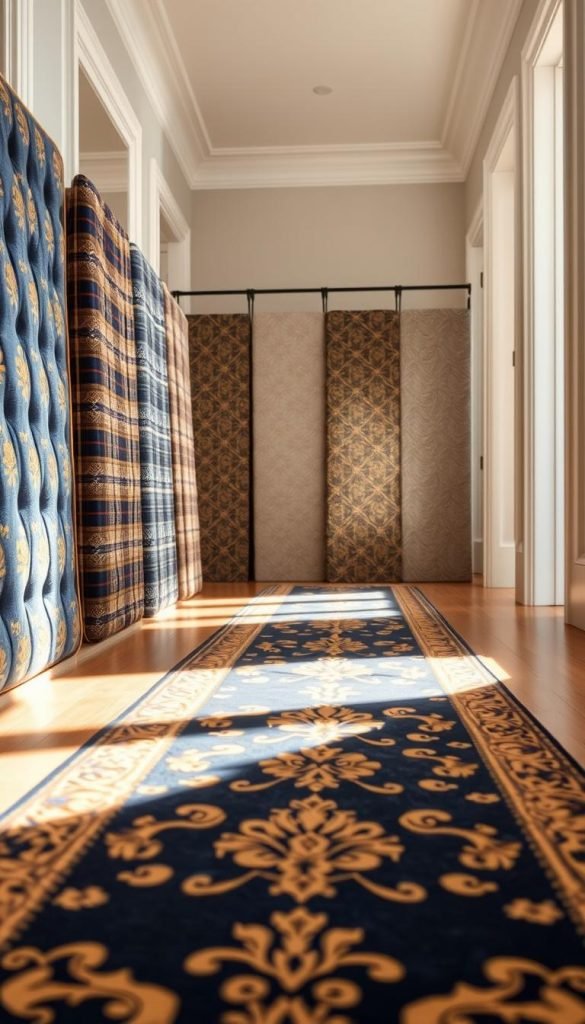
Durable materials for high-traffic areas
Polypropylene and nylon became my go-to choices for active households. These synthetic materials withstand heavy foot traffic beautifully.
They resist stains and clean easily with simple spot treatment. I’ve found them perfect for homes with children or pets.
Wool offers luxurious comfort underfoot with natural durability. Its fibers bounce back after compression and resist dirt naturally.
For easy maintenance, I often recommend indoor-outdoor materials. They handle spills and messes while maintaining stylish appeal.
How patterns affect perceived width
Strategic pattern use can visually expand your space. Lengthwise stripes create illusion of extra width in narrow passages.
Bold geometric designs work wonders in plain corridors. They add visual interest without overwhelming the area.
Traditional patterns bring elegance to formal entries. Contemporary designs suit modern homes with clean lines.
Neutral tones blend seamlessly with existing decor. They provide subtle enhancement without competing for attention.
Color considerations for different hallway sizes
Light colors make compact areas feel airy and open. They reflect light beautifully in spaces with limited windows.
Darker tones create cozy intimacy in generous corridors. They add richness and depth to expansive passages.
I always consider the existing color palette throughout my home. Coordinated hues create flow between rooms effortlessly.
Flatweave options solve door clearance issues perfectly. Their low profile slides under doors without obstruction.
“The right material and pattern combination transforms functional passages into design statements. It’s where practicality meets personal style perfectly.”
Don’t forget about rug pads for safety and protection. They prevent slipping and extend your runner’s life significantly.
Your choices should balance beauty with everyday functionality. The perfect combination enhances daily life while protecting your investment.
Practical Placement and Installation Tips
Through years of trial and error, I’ve perfected my approach to runner installation. Proper setup transforms how your corridor functions daily.
The right techniques ensure safety and maintain beautiful appearance. They prevent slipping hazards while keeping your space looking intentional.
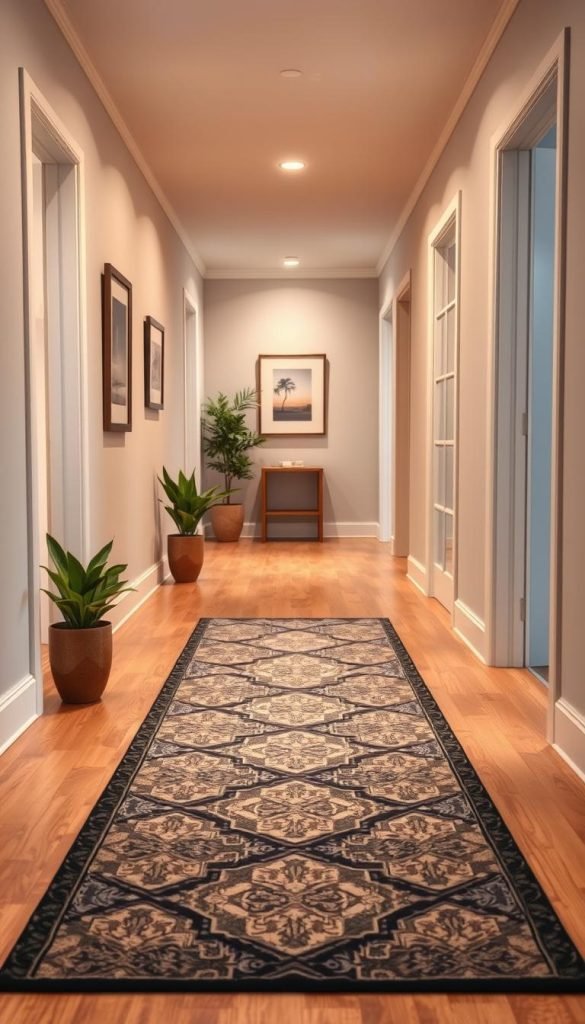
Centering your runner properly
My foolproof method starts with measuring from each wall. I ensure equal spacing on both sides for perfect balance.
Painter’s tape marks the ideal placement before unrolling. This visual guide prevents mistakes during final positioning.
I always maintain three to four inches of clearance along each edge. This framing creates that designer-approved look everyone wants.
Dealing with furniture and doorways
Furniture placement follows my “all or nothing” rule. Either all legs rest on the rug or none touch it.
I leave at least six inches around console tables and benches. This prevents crowding and maintains clean lines.
Door clearance remains non-negotiable in my process. I always check swing patterns before finalizing rug position.
For inward-opening doors, thickness matters significantly. Thinner materials work better in these tight spaces.
Using rug pads and tape for security
Rug pads revolutionized my installation approach. They prevent slipping while adding comfort underfoot.
These pads reduce noise and protect floors from scratches. They extend the life of both rug and flooring beautifully.
Double-sided tape works where pads aren’t possible. It keeps runners securely in place under doorways.
| Installation Challenge | Recommended Solution | Benefits |
|---|---|---|
| Uneven spacing | Painter’s tape markers | Perfect centering |
| Furniture placement | All-on or all-off rule | Clean appearance |
| Door clearance issues | Thinner rug materials | Smooth operation |
| Slipping hazards | Quality rug pads | Safety and protection |
| Under-door placement | Double-sided tape | Secure positioning |
Unusual features require creative solutions. Radiators, built-ins, and architectural details need special attention.
I always test placement with furniture in final position. This prevents last-minute adjustments after everything’s set.
For extra-long pieces, occasional repositioning prevents permanent indentations. It maintains both rug and floor integrity.
“Proper installation transforms functional pieces into design statements. Those extra minutes during setup prevent years of daily frustration.”
Taking time upfront ensures your investment pays off long-term. Secure placement makes daily life smoother and safer.
Your hallway deserves that polished, intentional look. These techniques deliver professional results every time.
Styling Your Hallway Runner for Maximum Impact
Creating visual harmony around my floor covering transformed ordinary passages into design statements. The right styling approach makes your piece feel like an intentional part of your home’s story.
Through experimentation, I discovered techniques that elevate rather than overwhelm. These methods work with various decor styles and room sizes.
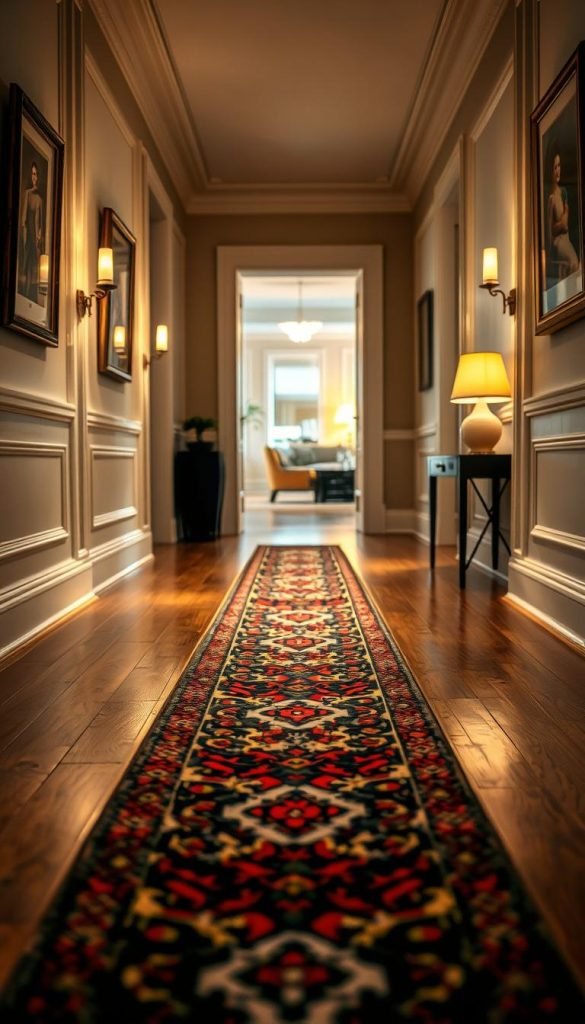
Coordinating with your home’s decor style
I treat my runner rugs as “siblings” to existing furnishings. They share similar style and color palette without matching exactly.
Mixing contrasting patterns like Moroccan with Persian creates visual chaos. Consistency in material and design language works better.
Traditional patterns bring elegance to formal entries. Contemporary designs suit modern homes with clean lines beautifully.
Neutral tones blend seamlessly throughout different rooms. They provide subtle enhancement without competing for attention.
Layering techniques for visual interest
Layering adds incredible depth to any space. I sometimes place a bold runner over a neutral natural fiber rug.
This technique creates extra texture and visual appeal. It works particularly well in larger entryways.
The 60-30-10 color rule never fails me. Using the piece as either dominant, secondary, or accent color ties everything together.
Bold patterns make wonderful statements in compact areas. They add personality without overwhelming the design.
Accessorizing around your runner
Wall art, lighting, and decorative pieces should complement rather than compete. I choose accessories that enhance the rug’s colors.
Baskets and art prints add welcoming texture. They create a collected, intentional look around the floor covering.
Seasonal styling keeps things fresh without changing the main piece. I switch out accessories to reflect different times of year.
The right design approach makes other elements pop beautifully. It creates balance and harmony throughout your home.
“The best styled spaces feel intentional but not over-designed. Your runner should feel like a natural extension of your home’s personality.”
Patterns that pick up colors from adjacent rooms create wonderful flow. This technique connects different areas seamlessly.
Don’t be afraid to make a statement in these often-overlooked spaces. Hallways perfect places to experiment with bold choices.
The right combination enhances daily life while protecting your investment. It transforms functional passages into design features.
Conclusion
Through my journey with floor coverings, I found selecting hallway runners involves both art and science. Getting the right proportions transforms any passage from merely functional to truly fabulous.
Remember that golden border rule. Keeping four to six inches on each side creates perfect framing. This simple guideline prevents that unfortunate skimpy appearance everyone wants to avoid.
Trust your eyes alongside measurements. Sometimes what works on paper needs slight adjustment in your actual space. Custom options exist for those unique layouts that demand special attention.
Investing in quality pieces pays off through floor protection and added warmth. Your choices should blend personal style with practical needs for high-traffic areas.
Have fun expressing your decor preferences. These often-overlooked spaces offer wonderful opportunities to enhance your entire home’s cohesive look.