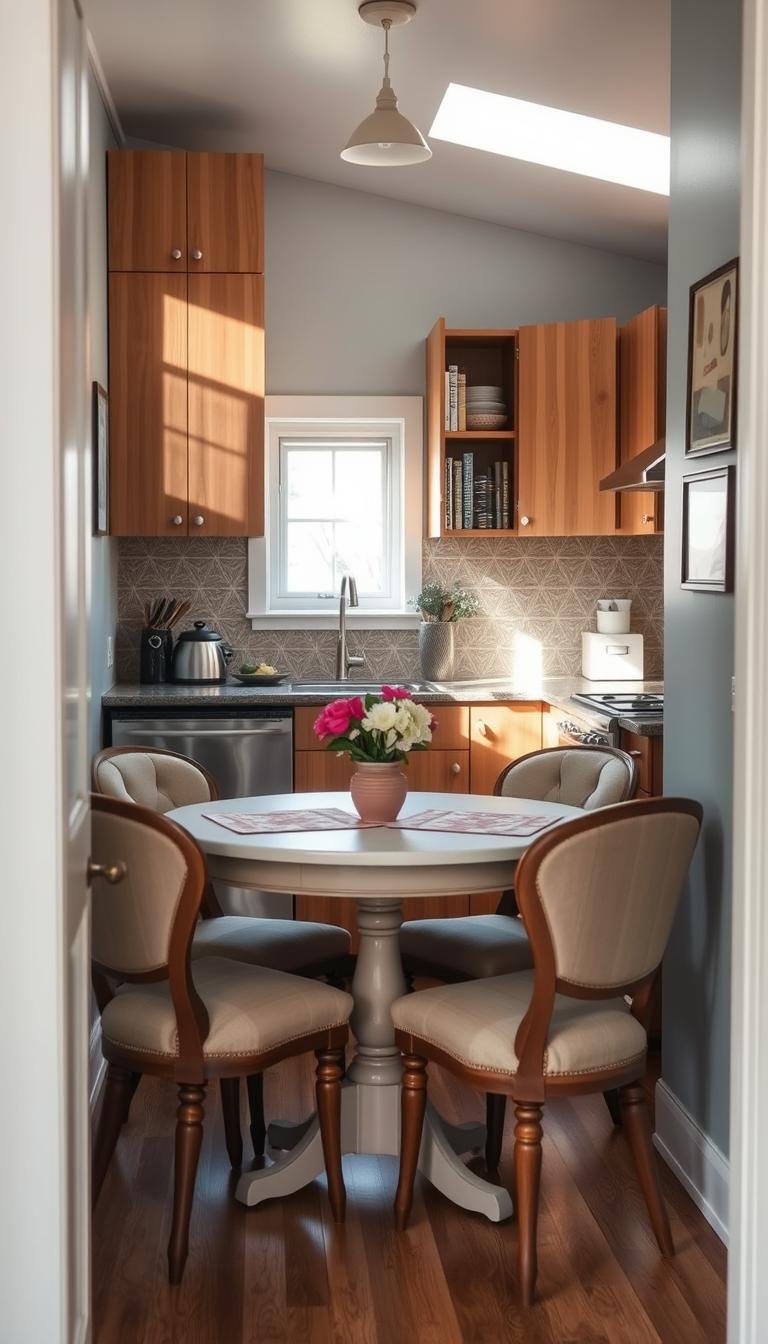
What’s the easiest way to add a breakfast nook in a galley kitchen?
I discovered how to transform my narrow galley kitchen into a multi-functional space with a cozy breakfast corner. This journey showed me that even compact layouts hold incredible potential for smart design solutions.
Galley kitchens present unique opportunities for creative dining areas. With proper planning, you can maximize every inch of available space while maintaining workflow efficiency.
A well-designed breakfast spot becomes the heart of your home. It serves as both a dining area and comfortable gathering place for family moments.
I’ll share how balancing practicality with style creates functional charm. Even the most limited kitchen space can accommodate beautiful and practical breakfast areas using smart design principles.
Key Takeaways
- Galley kitchens offer unique opportunities for space-efficient dining solutions
- Proper planning can transform even compact layouts into functional eating areas
- Breakfast nooks serve dual purposes as both dining and gathering spaces
- Smart design principles maintain kitchen workflow while adding functionality
- Practicality and style can coexist beautifully in limited kitchen spaces
- Creative solutions maximize every inch of available kitchen area
- Well-designed nooks become central gathering spots for family moments
Understanding Your Galley Kitchen’s Potential
Finding space for a cozy dining spot in my narrow kitchen felt impossible at first. But I learned every galley layout holds hidden potential waiting to be discovered.
Proper assessment transforms limitations into opportunities. You can create functional charm while maintaining your cooking workflow.

Assessing Your Available Space
Start by measuring your entire kitchen’s dimensions. Note door swings, appliance clearances, and walkways.
Traffic flow matters most in galley kitchens. Your breakfast area should never block primary work zones.
Consider table shapes during measurements. Round tables often work better than square ones in tight corners.
Natural light sources dramatically affect your spot’s appeal. Window placements can determine seating orientation.
Identifying Underutilized Corners and Walls
Look for dead spaces like the area under stairs. Cameron Schwabenton transformed such a corner in a historic guesthouse.
Empty walls become perfect banquette locations. Floating tables save precious floor space in narrow rooms.
Existing storage might be repurposed. Think about converting lower cabinets into hidden drawers for dining items.
Vertical space offers incredible potential. I learned from Dwelanor’s experts that floor-to-ceiling shelves maximize storage without sacrificing style.
Pull-out cabinetry provides easy access while maintaining clean lines. These solutions keep your dining area clutter-free.
Every corner holds possibility. With creative thinking, you’ll find the perfect place for your family’s new gathering spot.
Why a Breakfast Nook is Perfect for Galley Kitchens
My journey with compact kitchen design revealed something wonderful. These narrow spaces actually create the most charming dining spots when approached creatively.
Galley layouts naturally guide you toward efficient solutions. The linear design forces clever thinking about every square inch.
I found that breakfast corners transform how we use our kitchen. They become the heart of daily family moments and morning routines.
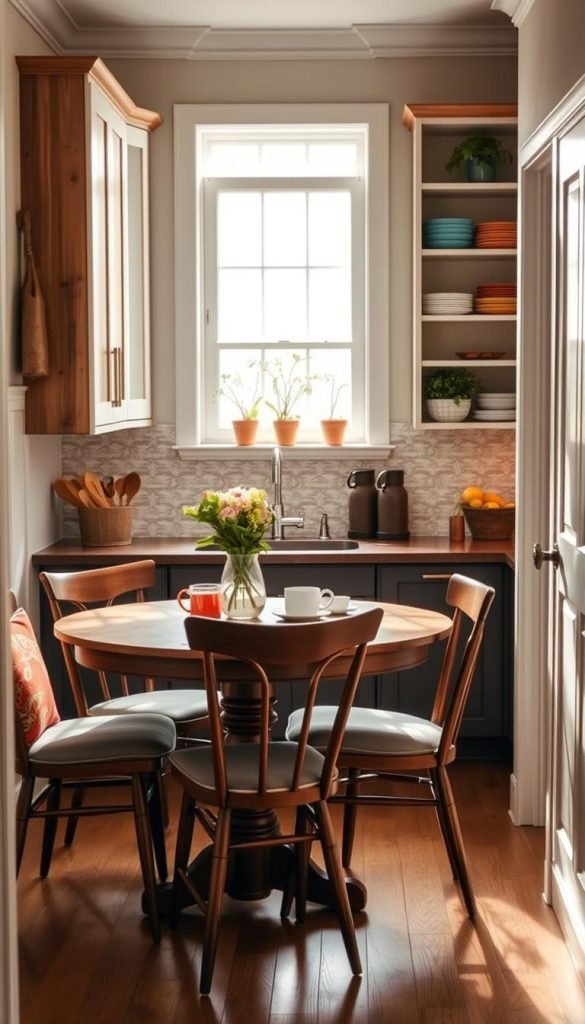
Maximizing Limited Square Footage
Small kitchens demand smart solutions. Wasted corners and empty walls become valuable real estate for dining areas.
Built-in seating makes incredible use of vertical space. Designer Erin Shakoor perfectly explained this advantage:
“A banquette allows you to sit longer, more comfortably—and with more people.”
I discovered hidden storage opportunities everywhere. Drawers under benches and shelves above seating keep items organized.
Every design choice serves multiple purposes. Your dining spot can also provide cabinet space and display areas.
| Space Challenge | Nook Solution | Benefits Gained |
|---|---|---|
| Wasted corners | Built-in banquette | Seating + hidden storage |
| Empty wall space | Floating shelves | Display + vertical storage |
| Limited floor area | Wall-mounted table | Dining surface + clear pathways |
| Poor natural light | Window seating | Bright dining + view enjoyment |
Creating Multi-Functional Areas
Modern homes need spaces that work overtime. Your breakfast spot can serve multiple family needs throughout the day.
Elizabeth Roberts demonstrated this beautifully. Her breakfast/office combo shows how one area can handle meals and work tasks.
Morning coffee transitions to afternoon homework sessions. Evening becomes family game time in the same cozy corner.
Traffic flow improves dramatically with designated zones. Cooking areas stay separate from dining and social spaces.
Natural light utilization becomes intentional. Window seating captures morning sun while creating a cheerful atmosphere.
These multi-purpose areas add real value to your home. They create additional functional living space without expanding your footprint.
Discover more inspiring kitchen ideas that transform small spaces into beautiful, functional areas for family living.
Planning Your Breakfast Nook Layout
Creating the perfect dining spot requires thoughtful arrangement of every element. I learned that proper planning turns even the most challenging kitchen corners into functional, beautiful spaces.
Different layout options work better for various galley configurations. The right choice depends on your available space and family needs.
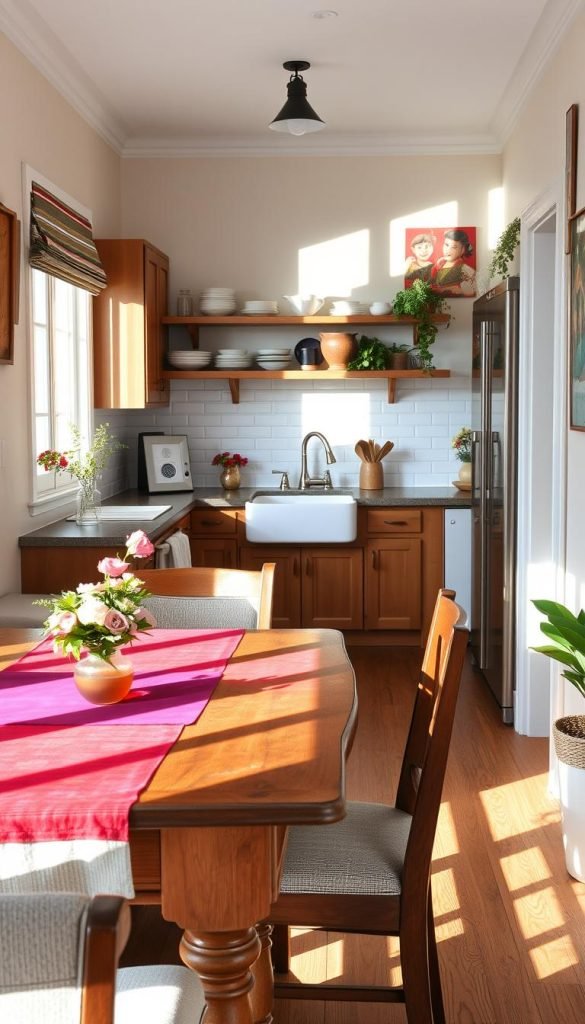
The Corner Banquette Solution
Awkward corners become valuable real estate with creative seating solutions. Built-in banquettes maximize every inch of unused space.
Cecilia Casagrande of Casagrande Studio demonstrated this beautifully. She transformed an awkward corner in a 1919 family home with a curved banquette painted sunny yellow.
The Hannah Banana color from Benjamin Moore created a cheerful breakfast spot. This design approach adds both function and personality to your kitchen.
Corner seating typically accommodates more people than freestanding options. It also provides hidden storage underneath the benches.
“A well-designed banquette turns dead space into the heart of your home”
Window-Seat Configurations
Natural light transforms any dining experience. Window seats capture morning sunshine while offering lovely views.
Emily Henderson’s approach emphasizes maximizing both light and functionality. Her designs often incorporate storage beneath seating areas.
Consider these window-seat benefits:
- Enhanced natural lighting for morning meals
- Additional storage compartments under seating
- Connection to outdoor views and scenery
- Comfortable reading nook functionality
Proper cushion selection ensures comfort during longer sitting periods. Choose fabrics that complement your kitchen’s color scheme.
Floating Table Arrangements
Wall-mounted tables offer incredible flexibility for compact kitchens. They provide dining surfaces without requiring built-in seating.
These arrangements work particularly well in narrow galley layouts. They maintain clear pathways while adding functional dining space.
Consider these floating table advantages:
| Feature | Benefit | Best For |
|---|---|---|
| Fold-down design | Saves space when not in use | Small families |
| Adjustable height | Adapts to different uses | Multi-purpose areas |
| Wall anchors | Provides stability | Active family homes |
| Integrated storage | Holds dining essentials | Compact kitchens |
Proper clearance planning ensures comfortable movement around your breakfast area. Maintain at least 36 inches of walking space around all sides.
Integrate your nook layout with existing kitchen features. Islands and counters can complement your dining space when planned correctly.
Family size determines seating requirements. Smaller families might prefer intimate two-seater arrangements, while larger families need expandable options.
For more detailed planning guidance, explore our comprehensive FAQ section on kitchen layout optimization.
Choosing the Right Seating Options
Selecting comfortable seating transforms your breakfast spot into a cherished family gathering place. I discovered that the right choices balance style with practical functionality in compact kitchens.
Your seating decisions impact both aesthetics and daily use. They determine how often your family actually enjoys meals together in this cozy corner.
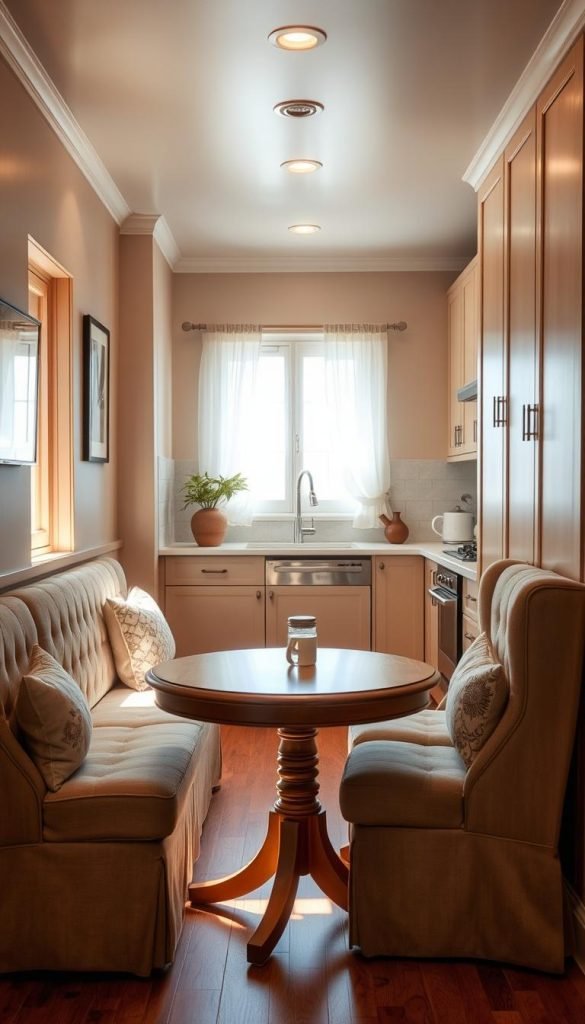
Built-in Banquettes vs. Freestanding Furniture
Built-in banquettes offer incredible storage solutions while maximizing every inch. Rob Stuart’s design for Donna Dotan demonstrates how hidden compartments keep dining essentials organized.
These custom solutions create a seamless look that complements your kitchen’s style. They turn awkward corners into functional dining areas with built-in charm.
Freestanding furniture provides flexibility for changing needs. You can rearrange pieces as your family grows or your style evolves.
Fitz Pullins taught me an innovative approach in a Florida home. He used a perfectly sized sofa instead of building a banquette, enhancing both flow and natural light.
“The right seating should invite lingering conversations while surviving daily family life”
Consider these comparison points when making your choice:
| Feature | Built-in Banquette | Freestanding Furniture |
|---|---|---|
| Storage capacity | High (hidden drawers) | Limited (unless multi-functional) |
| Space efficiency | Excellent (custom fit) | Variable (depends on pieces) |
| Flexibility | Permanent installation | Easy to move or replace |
| Cost consideration | Higher initial investment | Budget-friendly options |
| Style integration | Seamless with kitchen design | Eclectic mixing potential |
Space-Saving Bench Designs
Compact bench designs work wonders in galley kitchens. I found options that tuck completely under tables when not in use.
These solutions maintain clear pathways for cooking and movement. They disappear during food preparation times then slide out for meals.
Consider bench heights that accommodate different family members. Lower seats work better for children while higher options suit adults.
Materials matter for durability and maintenance. Choose fabrics that resist spills and clean easily in your kitchen environment.
Here are my favorite space-saving bench features:
- Fold-down designs that mount directly to walls
- Storage compartments inside seat bases
- Lightweight materials for easy moving
- Weather-resistant finishes for outdoor-indoor use
- Convertible designs that serve multiple purposes
Mixing seating types creates visual interest and flexibility. Combine a fixed bench with movable chairs for different occasions.
This approach accommodates varying numbers of guests. It also allows individual comfort preferences within your family.
For more innovative kitchen ideas that transform small spaces, explore our comprehensive design guides.
Remember that comfort extends beyond cushion thickness. Consider back support and leg room for extended family gatherings.
Your breakfast nook should welcome everyone from toddlers to grandparents. Thoughtful seating choices ensure years of happy meals together.
What’s the Easiest Way to Add a Breakfast Nook in a Galley Kitchen?
I found that transforming my kitchen didn’t require major renovations or professional help. Simple, clever approaches can create a beautiful dining area without breaking the bank or your schedule.
These methods work for homeowners and renters alike. You can achieve remarkable results with basic tools and creative thinking.
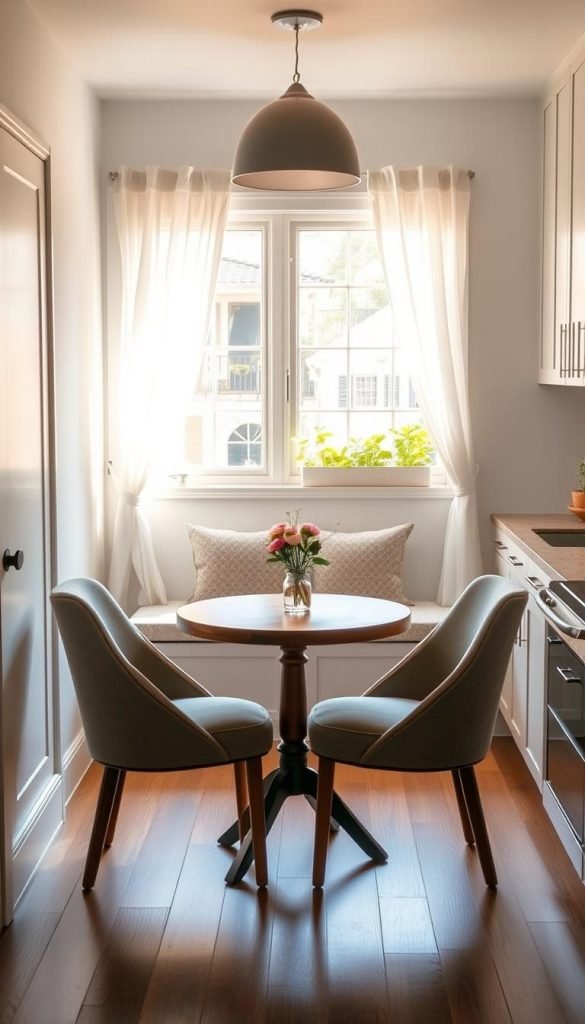
Simple DIY Solutions Anyone Can Implement
Basic carpentry skills open up wonderful possibilities. I created a custom banquette using pre-cut lumber and simple joinery techniques.
Off-the-shelf components make projects accessible. Ready-made bench kits and modular seating systems offer instant solutions.
Floating shelf tables provide excellent dining surfaces. They mount directly to walls and save precious floor space.
Emilie Munroe of Studio Munroe demonstrated brilliant simplicity. She added a corkboard above a breakfast nook in a San Francisco family home for displaying artwork.
This approach adds personality without permanent changes. It creates a focal point while serving practical purposes.
“The best DIY projects combine function with personal expression. They transform ordinary spaces into cherished family areas.”
Repurposing existing furniture brings instant charm. An old bench or small sofa can become perfect seating with some creative styling.
Consider these straightforward DIY approaches:
- Convert bookshelves into banquette bases with cushion tops
- Use storage cubes as modular seating components
- Install floating shelves that double as table surfaces
- Create window seats using basic platform construction
- Transform old drawers into hidden storage compartments
Quick Fixes for Immediate Impact
Weekend projects can completely transform your kitchen’s functionality. I discovered solutions that deliver maximum results with minimal effort.
Removable adhesive products work wonders for renters. They allow temporary installations without damaging walls or surfaces.
Folding furniture offers flexible dining options. Wall-mounted tables that drop down when needed save space beautifully.
Budget-friendly options deliver surprising impact. Thoughtful accessories and strategic placement create cozy atmospheres.
| Solution Type | Time Required | Skill Level | Estimated Cost |
|---|---|---|---|
| Floating shelf table | 2-3 hours | Beginner | $50-100 |
| Repurposed furniture seating | 1-2 hours | No skills needed | $0-50 |
| Removable wall decor | 30 minutes | Beginner | $20-40 |
| Modular seating system | 3-4 hours | Intermediate | $100-200 |
| Cushion and pillow refresh | 1 hour | Beginner | $30-60 |
Step-by-step guidance makes projects accessible. Even novice DIYers can accomplish beautiful transformations with clear instructions.
Lighting changes create immediate atmosphere shifts. String lights or plug-in sconces add warmth without electrical work.
Textiles bring comfort and color instantly. Throw pillows and seat cushions transform hard surfaces into inviting spots.
These approaches honor your kitchen’s existing layout. They enhance functionality while preserving workflow and movement patterns.
Discover more inspiring transformation ideas that celebrate creative problem-solving in compact spaces.
Your dream breakfast area might be closer than you think. Simple solutions often create the most meaningful improvements in daily living.
Maximizing Vertical Space for Storage
My kitchen transformation taught me that upward thinking creates incredible storage opportunities. I discovered that unused wall areas hold untapped potential for organizing dining essentials while maintaining a clean aesthetic.
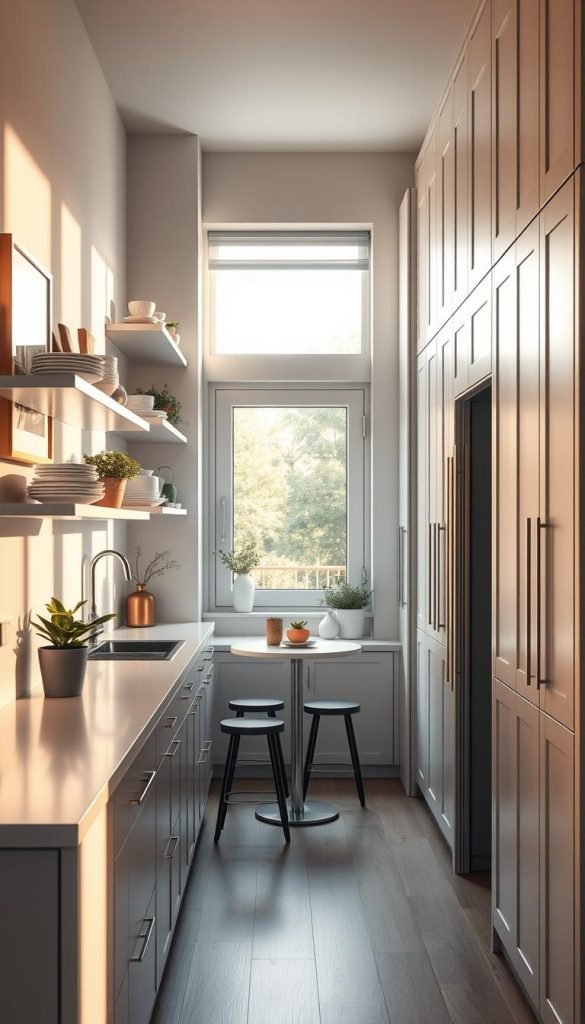
Galley layouts particularly benefit from smart vertical solutions. These approaches keep your breakfast area functional without sacrificing precious floor space.
Floor-to-Ceiling Cabinetry Ideas
Custom cabinetry transforms empty walls into organized storage zones. I designed units that blend seamlessly with my kitchen’s existing style while adding substantial capacity.
Tall cabinets create visual continuity from floor to ceiling. This approach makes rooms feel larger while providing ample space for dishes and serving items.
“Vertical storage isn’t just practical—it creates architectural interest and draws the eye upward, making compact spaces feel grander”
Consider these cabinet configuration options:
| Cabinet Style | Best Use | Space Impact |
|---|---|---|
| Glass-front upper cabinets | Display favorite dishware | Creates airy, open feeling |
| Full-height pantry units | Food storage and small appliances | Maximizes storage density |
| Integrated shelving nooks | Cookbooks and decorative items | Adds character and function |
| Corner tower units | Utilizes awkward spaces | Enhances workflow efficiency |
Materials and colors significantly affect perception. Lighter finishes make tall units feel less imposing in compact rooms.
Pull-Out Storage Solutions
Deep cabinets become effortlessly accessible with smart pull-out systems. I installed full-extension drawers that make every item visible and reachable.
These solutions eliminate frustrating blind spots in cabinetry. They transform unused depth into highly functional organized space.
My favorite pull-out features include:
- Spice rack integrations beside cooking areas
- Vertical tray dividers for baking sheets
- Integrated trash and recycling centers
- Custom dividers for cutting boards
- Slide-out pantry shelves with adjustable heights
Quality hardware ensures smooth operation for years. Soft-close mechanisms prevent slamming and protect your storage items.
Shelving above banquette seating offers perfect display space. I use floating shelves for decorative pieces and frequently used kitchenware.
This approach keeps essentials within arm’s reach during meals. It also adds personal charm to your dining spot.
Organization systems maintain tidy functionality. Clear containers and labeled bins make finding items effortless.
Vertical solutions work beautifully in galley kitchens. They provide substantial storage without encroaching on narrow walkways.
Your breakfast area can remain clutter-free and inviting. Smart vertical storage creates order while enhancing your kitchen’s overall design.
Color Strategies for Small Spaces
Color choices transformed my compact kitchen from functional to fabulous. I discovered that strategic color use creates visual magic in tight galley layouts.
The right palette makes your breakfast area feel both spacious and inviting. It defines your space’s personality while enhancing its practical function.
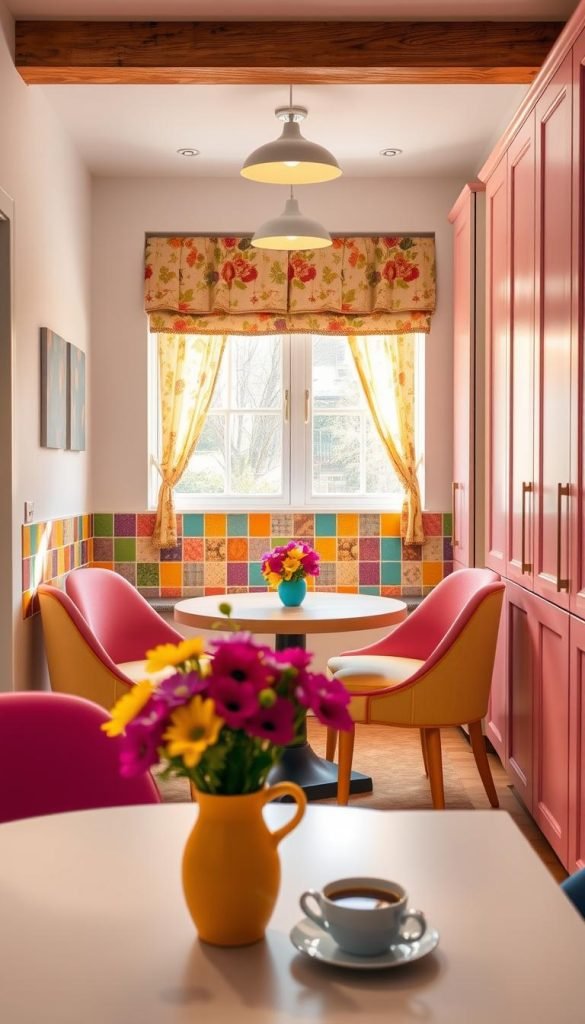
Using Statement Colors Like Donna Dotan’s Yellow Banquette
Bold colors create instant focal points in compact kitchens. Donna Dotan’s New Jersey home demonstrates this beautifully with a sunny yellow banquette.
Rob Stuart designed this coastal-style space with rattan accents. The vibrant cushion becomes the room’s cheerful centerpiece.
Statement colors draw attention to your dining spot. They make small areas feel intentional and designed rather than cramped.
“A single bold color choice can transform a functional corner into the heart of your home”
Consider these psychological impacts of color choices:
- Warm yellows create cheerful morning atmospheres
- Blue tones promote calm during family meals
- Green shades connect indoor and outdoor spaces
- Red accents stimulate conversation and appetite
Test colors in your actual space before committing. Paint large swatches and observe them at different times of day.
Light vs. Dark Color Palettes
Light colors make compact kitchens feel airy and expansive. They reflect natural light and create open sensations.
White and pale gray schemes work beautifully in narrow galley layouts. They maintain visual continuity along the kitchen’s length.
Dark colors add cozy sophistication to small spaces. Deep blues or charcoal create intimate dining atmospheres.
Consider your room’s natural lighting conditions. North-facing spaces benefit from warm tones while south-facing rooms handle cooler shades.
Here’s my light vs. dark comparison guide:
| Color Scheme | Best For | Visual Effect |
|---|---|---|
| Light neutrals | Small galley kitchens | Expands space visually |
| Pastel tones | Morning breakfast areas | Creates cheerful ambiance |
| Dark accents | Defining zones | Adds depth and contrast |
| Mixed palette | Multi-functional areas | Balances light and coziness |
Coordinate your nook colors with the overall kitchen design. Use accent shades from cabinets or countertops for cohesion.
Color defines different functional zones within your space. A distinct palette separates dining areas from cooking zones.
Accent colors highlight architectural features beautifully. They draw attention to windows or unique structural elements.
They can also minimize less desirable aspects. Strategic color placement distracts from awkward angles or limited space.
Materials interact differently with various colors. Glossy finishes reflect light while matte surfaces absorb it.
Your color choices should complement your family’s lifestyle. Consider maintenance and cleaning requirements for different finishes.
The perfect palette makes your breakfast spot feel both spacious and intimate. It transforms practical necessity into designed delight.
Lighting Your Breakfast Nook Perfectly
Proper illumination transformed my morning coffee ritual into a delightful experience. I discovered that strategic lighting creates both functionality and atmosphere in compact dining areas.
The right approach balances natural and artificial sources. It enhances your space while maintaining the kitchen’s workflow efficiency.
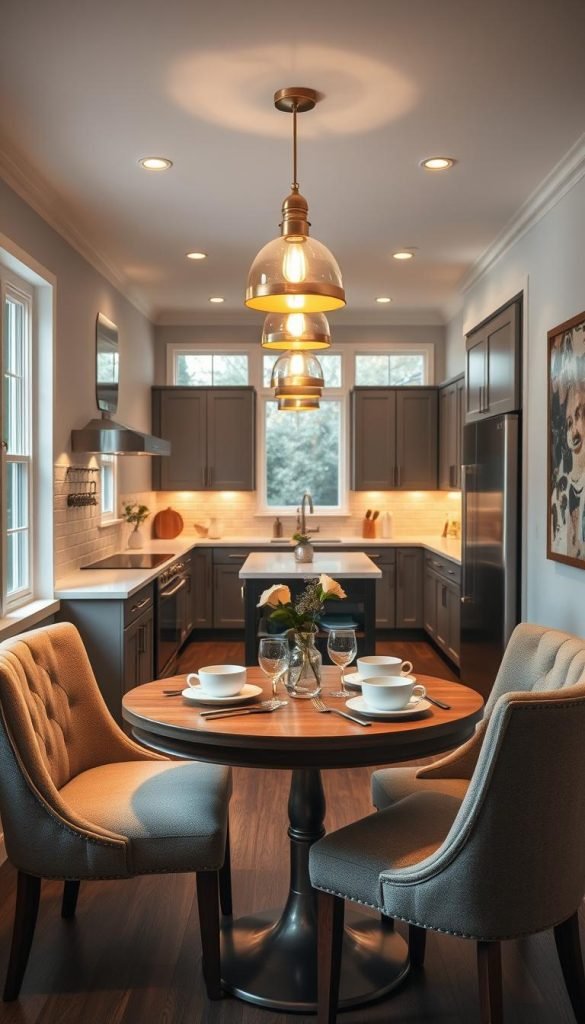
Natural Light Maximization
Window placement determines your morning ambiance. I positioned my seating to capture the best morning sunlight.
Sheer curtains soften harsh glare while maintaining brightness. They create a soft, inviting glow throughout the dining area.
Mirrors amplify available natural light beautifully. Strategic placement reflects sunlight into darker corners of the galley kitchen.
Light-colored walls enhance brightness significantly. They bounce sunlight around the compact space, making it feel more open.
Keep window treatments simple and functional. Roman shades or simple drapes maintain clean lines while controlling light levels.
Artificial Lighting Options
Layered lighting schemes provide both beauty and function. I combined different sources for optimal illumination throughout the day.
Pendant lights create focused task lighting over the table. They provide perfect illumination for morning meals and evening activities.
Wall sconces offer excellent ambient lighting solutions. They save valuable surface space in compact galley kitchens.
Dimmable options allow mood adjustments effortlessly. Transition from bright morning light to soft evening ambiance with simple controls.
“Lighting should serve multiple purposes—functional illumination, atmospheric enhancement, and stylistic expression all in one carefully chosen fixture”
Consider these lighting options for your space:
| Lighting Type | Best Placement | Primary Function | Style Impact |
|---|---|---|---|
| Pendant lights | Above table center | Task illumination | Focal point feature |
| Wall sconces | Flanking seating area | Ambient lighting | Architectural accent |
| Under-cabinet lights | Below upper cabinets | Task lighting | Subtle enhancement |
| Recessed lighting | Ceiling throughout | General illumination | Clean, minimalist |
| LED strip lights | Under banquette seats | Accent lighting | Modern ambiance |
Energy-efficient LED options reduce electricity costs dramatically. They provide excellent illumination while being environmentally friendly.
Position lights to avoid shadows during meal times. Overhead placement should illuminate the entire table surface evenly.
Choose fixtures that complement your nook’s style. Materials and finishes should coordinate with your overall kitchen design.
Lighting controls offer convenient operation. Smart systems allow adjustment from anywhere in your home.
The perfect lighting scheme transforms your breakfast experience. It creates a welcoming atmosphere that family and guests will love.
Incorporating Smart Storage Solutions
My galley kitchen transformation revealed that clever storage turns cramped spaces into organized havens. I discovered hidden compartments and smart systems that keep everything accessible yet out of sight.
These solutions maintain clean lines while adding incredible functionality. Your breakfast area can become both beautiful and practical with the right approach.
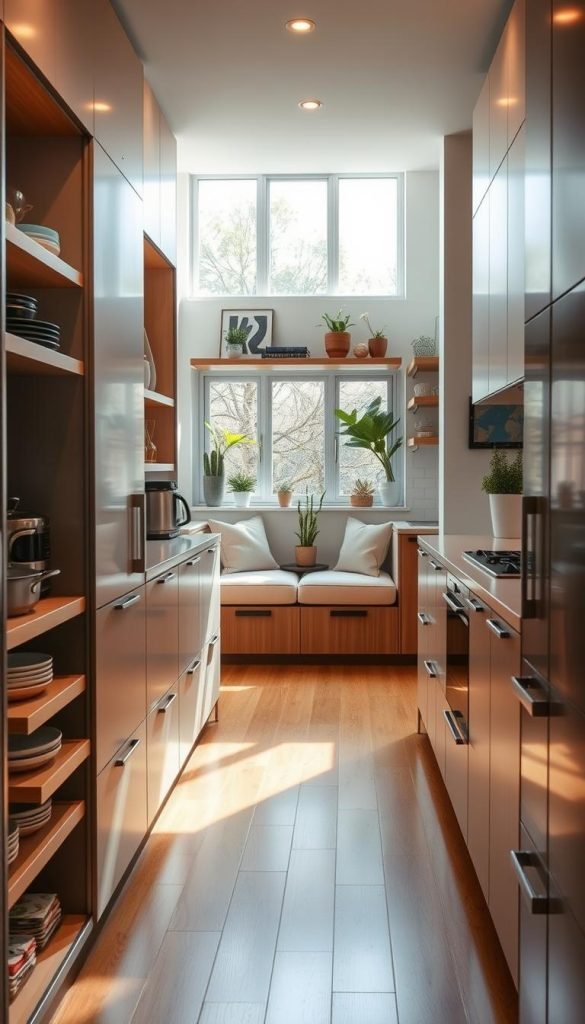
Hidden Drawers Like Rob Stuart’s Design
Rob Stuart’s work for Donna Dotan inspired my hidden storage approach. He designed built-in drawers that blend seamlessly with the banquette’s aesthetic.
These discreet compartments hold dining essentials perfectly. Table linens, placemats, and serving utensils stay organized yet completely concealed.
I implemented similar hidden drawers beneath my seating area. They utilize often-wasted space while maintaining a streamlined look.
Full-extension slides ensure easy access to every item. No more digging through deep cabinets to find what you need.
“Hidden storage should feel like discovering secret treasure—functional magic that maintains your space’s clean aesthetic”
Consider these hidden storage benefits:
| Storage Type | Best For | Space Required |
|---|---|---|
| Under-seat drawers | Table linens and flatware | Minimal vertical space |
| Flip-top bench lids | Bulky serving pieces | Bench interior space |
| Vertical dividers | Cutting boards and trays | Narrow wall space |
| Pull-out spice racks | Cooking essentials | Side cabinet space |
Built-in Shelving and Cabinets
Cameron Ruppert Interiors demonstrated brilliant built-in solutions. Their designs incorporate shelving that serves both display and storage purposes.
I created custom cabinets that reach the ceiling. This approach maximizes vertical space in my compact galley kitchen.
Open shelves showcase beautiful dishware while keeping essentials handy. They add personality to your dining spot.
Glass-front cabinets maintain visual lightness in small areas. They prevent the enclosed feeling that solid doors can create.
My favorite built-in features include:
- Adjustable shelving for changing storage needs
- Integrated lighting inside cabinets
- Soft-close mechanisms for quiet operation
- Custom dividers for specific item organization
- Corner units that utilize awkward spaces
Materials selection impacts both style and durability. I chose finishes that complement my kitchen’s existing elements.
These built-in solutions create a cohesive look throughout the space. They transform practical necessity into designed elegance.
Your breakfast nook can maintain its charm while serving multiple functions. Smart storage makes this balance possible.
Selecting the Perfect Table
Finding the ideal table transformed how my family enjoys meals in our compact kitchen. The right choice balances function with style while maximizing your available area.
I learned that table selection impacts daily comfort and movement flow. Proper sizing ensures comfortable dining without blocking essential pathways.
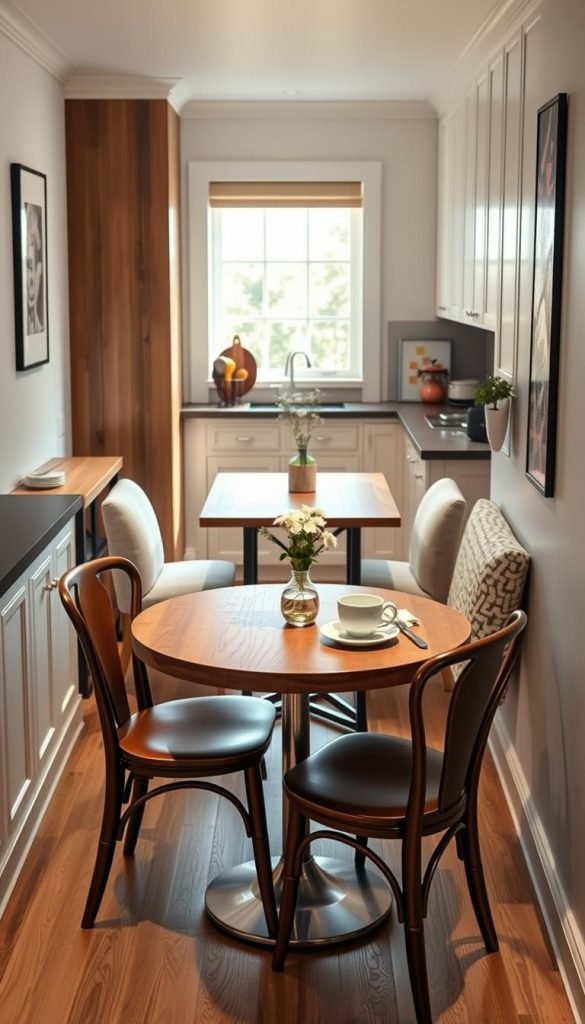
Space-Saving Drop-Leaf Tables
Drop-leaf designs offer incredible flexibility for compact areas. They expand for guest meals then contract for daily use.
These practical solutions maintain clear walkways during food preparation. I love how they provide surface space only when needed.
Wall-mounted versions save even more floor area. They fold completely flat against the wall when not in use.
“The most functional tables adapt to your life rather than demanding you adapt to them”
Round vs. Square Table Options
Round tables work beautifully in tight corners and narrow rooms. Their curved edges prevent bumped knees and improve traffic flow.
Square options maximize seating capacity against walls. They create efficient dining zones in galley kitchen layouts.
Consider these comparison points when choosing shapes:
| Table Shape | Best For | Space Efficiency | Seating Capacity |
|---|---|---|---|
| Round | Small corners and tight spaces | Excellent (no sharp corners) | 3-4 people comfortably |
| Square | Wall-mounted installations | Good (fits flush against walls) | 4 people optimally |
| Oval | Narrow galley kitchens | Very good (streamlined shape) | 4-6 people extended |
| Rectangular | Long wall spaces | Variable (depends on proportions) | 4-8 people |
Material selection affects both durability and maintenance. I prefer easy-clean surfaces for family dining areas.
Wood offers warm traditional appeal but requires regular care. Glass creates visual lightness but shows fingerprints easily.
Metal tables provide industrial charm with sturdy construction. They withstand daily use beautifully in active homes.
Dane Austin’s live-edge design demonstrates how unique materials add character. His craftsman-style piece brought organic warmth to a historic home.
This innovative approach transforms functional furniture into artistic statements. Natural wood edges create conversation-starting beauty.
Always measure your available space before selecting any table. Maintain at least 36 inches around all sides for comfortable movement.
Consider chair clearance when measuring your area. Pulled-out chairs need additional space beyond the table’s footprint.
Your table should complement your seating choice and overall kitchen style. Coordinated materials create cohesive design appeal.
The perfect table becomes the heart of your dining experience. It welcomes family gatherings and creates lasting meal memories.
Adding Personality with Decor
Decorating my breakfast area became the most rewarding part of the transformation. I discovered how personal touches turn functional spaces into cherished family spots.
The right decor elements create warmth and character in compact kitchens. They reflect your unique style while maintaining practical functionality.
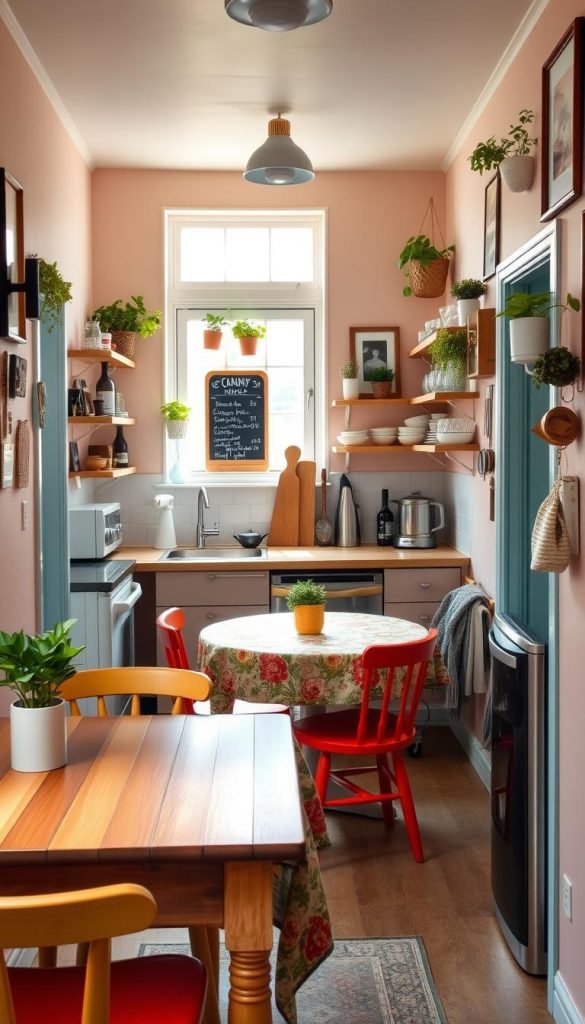
Artwork Display Ideas Like Ward + Gray’s Approach
Strategic artwork placement adds instant personality to your dining spot. Ward + Gray demonstrated this beautifully with Mike Perry’s “Sleep and Comets” painting.
I learned that one statement piece creates more impact than multiple small items. It becomes a conversation starter during family meals.
Consider these artwork placement tips:
- Eye-level hanging for comfortable viewing during seated meals
- Proper lighting to highlight your favorite pieces
- Coordination with your color scheme for visual harmony
- Appropriate sizing for your available wall space
Floating shelves offer flexible display options. They allow seasonal rotation of artwork and personal collections.
“Art should engage the senses and spark joy during everyday moments. Choose pieces that speak to your heart and enhance your daily experience.”
Textiles and Cushions for Comfort
Tamsin Johnson inspired my approach to seasonal textile changes. Her striped upholstery demonstrates how patterns refresh a space effortlessly.
Quality cushions transform hard seating into cozy spots. They add both comfort and visual interest to your breakfast area.
I discovered these textile selection principles:
| Fabric Type | Best Use | Maintenance Level | Durability |
|---|---|---|---|
| Cotton blends | Everyday cushion covers | Machine washable | High (multiple washes) |
| Performance fabric | Family homes with kids | Stain-resistant | Excellent (spill-proof) |
| Velvet | Luxurious accent pieces | Professional cleaning | Moderate (delicate care) |
| Outdoor fabric | High-use areas | Wipe clean | Superior (weather-resistant) |
Mix patterns carefully in small spaces. I combine one large-scale print with smaller coordinating patterns.
Texture adds depth and interest to your decor. Woven throws and knitted pillows create cozy layers.
Seasonal changes keep your space feeling fresh year-round. Light linens for summer transition to warm wools in winter.
Personal mementos make your space truly unique. Display family photos or travel souvenirs that spark happy memories.
The right materials withstand kitchen use beautifully. Choose fabrics that clean easily and maintain their appearance.
Your decor should reflect what makes your family special. These personal touches transform a functional area into your favorite room in the home.
Multi-Functional Nook Ideas
I discovered that the most valuable kitchen spaces serve multiple purposes throughout the day. My breakfast area transformed into a versatile hub that adapts to our family’s changing needs.
Smart design turns compact areas into functional zones. These solutions maximize every square inch while maintaining style and comfort.
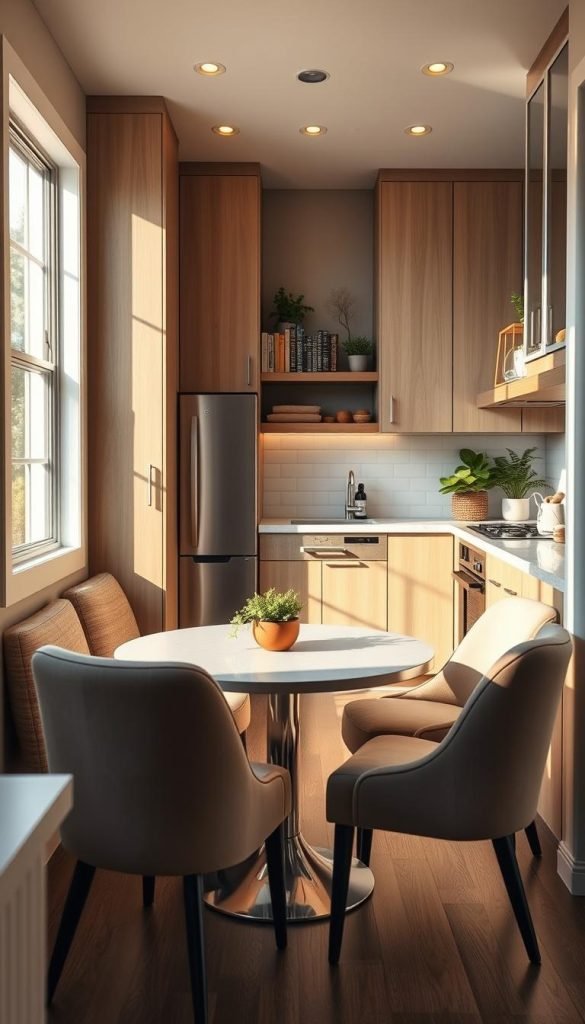
Creating a Breakfast/Office Combo Like Elizabeth Roberts
Elizabeth Roberts demonstrated brilliant dual-purpose design. Her work combines morning dining with productive workspace functionality.
I implemented built-in charging stations along the bench side. This keeps devices powered during homework sessions or remote work.
Adjustable lighting serves both meal times and focused tasks. Bright light for morning meals, softer illumination for computer work.
Hidden compartments store office supplies neatly. They keep the area tidy while providing quick access to essentials.
“A well-designed multi-purpose space should transition seamlessly between functions without sacrificing style or comfort”
Consider these essential features for dual-purpose areas:
| Feature | Breakfast Function | Office Function |
|---|---|---|
| Adjustable table height | Comfortable dining level | Proper typing position |
| Integrated power outlets | Device charging during meals | Computer and lamp power |
| Under-seat storage | Table linens and placemats | Office supplies and files |
| Task lighting | Morning meal illumination | Focused work light |
| Back support | Comfortable seating | Extended sitting comfort |
Kid-Friendly Design Solutions
Chango & Co. inspired my approach to family-friendly spaces. Their designs accommodate children while maintaining sophisticated style.
Durable materials withstand daily family use. I chose performance fabrics that clean easily after spills or art projects.
Rounded corners prevent bumps and bruises. This safety feature protects little ones during active play times.
Lower shelves give children access to their items. They can reach books or toys without assistance.
These kid-friendly features make family life easier:
- Wipe-clean surfaces for messy art projects
- Designated storage for school supplies
- Tablet holders for educational screen time
- Chalkboard or magnetic wall sections
- Sturdy construction for climbing and leaning
Safety considerations protect active children. Secure furniture to walls and choose non-toxic materials.
The space evolves as children grow. Flexible design accommodates changing needs over time.
Our nook now serves multiple generations comfortably. It welcomes toddlers and grandparents with equal warmth.
Family meals become cherished moments in this adaptable space. It supports our daily routines while creating beautiful memories.
Budget-Friendly Approaches
Creating a charming breakfast spot doesn’t require a huge investment. I discovered numerous clever approaches that deliver style and function without stretching your budget.
Smart planning and creative thinking transform basic materials into beautiful features. You can achieve a custom look using affordable solutions and some DIY spirit.
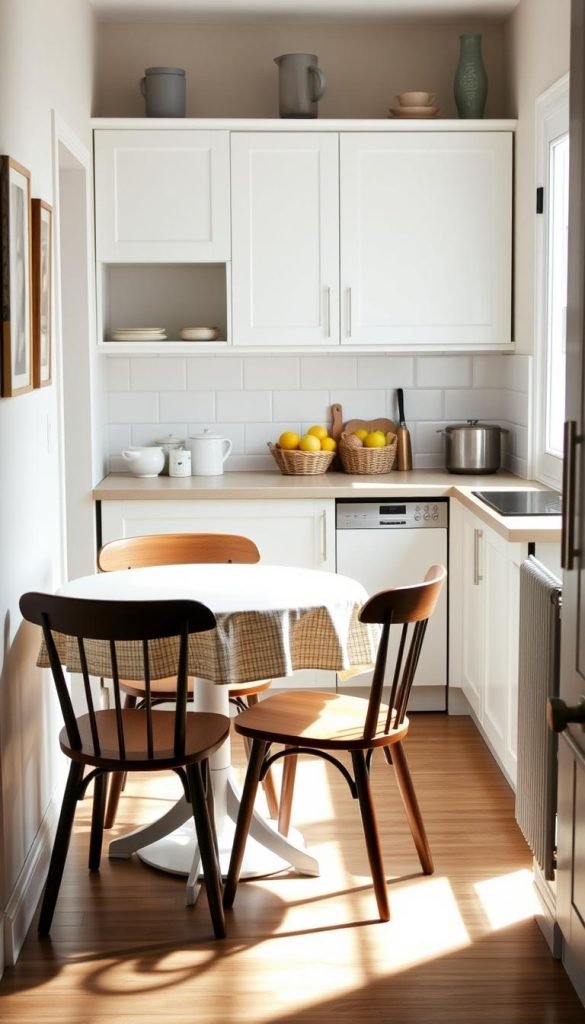
Repurposing Existing Furniture
Look around your home with fresh eyes before shopping. That old bench or small table might become perfect seating with minimal adjustments.
I transformed an unused bookshelf into a banquette base. Adding a cushion top created instant seating with built-in storage below.
Second-hand finds offer incredible value. Vintage stools or chairs can be refreshed with paint to match your kitchen’s color scheme.
Cameron Schwabenton demonstrated this approach beautifully. He used reclaimed pine for a table in a historic guesthouse update, proving that materials with character often cost less than new options.
Consider these repurposing ideas:
- Convert an old dresser into a storage bench
- Use wooden crates as modular seating components
- Transform a door into a wall-mounted table surface
- Repaint mismatched chairs for coordinated charm
Affordable DIY Projects
Basic woodworking skills open wonderful possibilities. I built a floating shelf table using inexpensive lumber from the local hardware store.
Prefabricated components make projects accessible. Ready-to-assemble bench kits offer custom looks without custom prices.
Paint creates dramatic transformations instantly. A fresh coat on walls or furniture completely changes your space’s feel.
“The most satisfying projects often combine creativity with practicality. They prove that beautiful spaces don’t require massive budgets.”
Here’s my cost comparison for different approaches:
| Project Type | Materials Cost | Time Investment | Skill Level |
|---|---|---|---|
| Floating shelf table | $40-80 | 2-3 hours | Beginner |
| Repainted chairs | $20-40 | 1-2 hours | No experience needed |
| Storage bench conversion | $60-100 | 3-4 hours | Intermediate |
| Wall-mounted folding table | $80-120 | 4-5 hours | Advanced beginner |
Focus spending on elements that make the biggest impact. Quality cushions or statement lighting elevate entire spaces.
Budget-friendly alternatives to custom built-ins exist everywhere. Open shelves cost less than cabinets but provide similar storage functionality.
Reclaimed materials add character while saving money. Visit local salvage yards for unique pieces with history and charm.
For more inspiration on transforming spaces affordably, explore our design philosophy that celebrates creative solutions.
Your dream breakfast area might be closer than you think. With some creativity and effort, you can create a beautiful, functional space that fits your budget perfectly.
Maintaining Your Kitchen Workflow
Maintaining kitchen workflow became my top priority when designing our breakfast nook. I learned that even the coziest dining spot must respect the kitchen’s functional needs.
Proper planning ensures your new seating area enhances rather than hinders daily cooking routines. The key lies in strategic placement and thoughtful design choices.

Preserving the Kitchen Triangle Layout
The classic kitchen triangle between stove, sink, and refrigerator remains essential for efficient workflow. I carefully positioned our nook to avoid disrupting this crucial relationship.
Professional designers emphasize maintaining clear pathways between these three points. Any breakfast area should complement rather than block access to these work zones.
I measured the distances between each appliance before finalizing our nook placement. This ensured the triangle remained functional while adding dining space.
“The work triangle should have clear pathways of at least 42 inches between each major appliance for optimal movement”
Consider these placement strategies for your space:
| Nook Location | Triangle Impact | Recommended For |
|---|---|---|
| End of galley run | Minimal disruption | Narrow kitchens |
| Opposite work zone | Clear separation | Wider galley layouts |
| Window alcove | Natural light benefit | Corner spaces |
| Island extension | Multi-purpose surface | Open concept areas |
Ensuring Easy Movement Around the Nook
Traffic flow considerations make or break a functional kitchen design. I ensured at least 36 inches of clearance around all sides of our breakfast area.
This clearance allows comfortable movement while carrying hot items or multiple plates. It also accommodates multiple people working in the kitchen simultaneously.
Safety considerations guided many of my decisions. I avoided placing seating near oven doors or sharp corner edges.
Testing different layouts before committing proved invaluable. I used painter’s tape to mark potential table and chair placements on the floor.
This temporary mockup helped visualize traffic patterns during actual meal preparation. We could adjust until finding the perfect balance between cozy and functional.
Maintaining cabinet and appliance access remained crucial throughout the process. No storage or work surface became difficult to reach after adding our nook.
Visual separation techniques helped define zones without physical barriers. Different lighting levels and color accents distinguished cooking and dining areas.
These strategies preserved our kitchen’s efficiency while adding a wonderful gathering spot. The space now serves multiple functions without compromising either purpose.
Final Touches That Make a Difference
These finishing elements transformed my breakfast corner from simply functional to truly special. The right details create warmth and personality while maintaining practical functionality.
Thoughtful accessories and natural elements bring life to compact spaces. They make your dining area feel inviting and uniquely yours.

Adding Plants and Greenery Like Francesca Grace
Francesca Grace showed me how nature enhances kitchen spaces beautifully. She incorporated florals in wallpaper, fresh bouquets, and hanging planters throughout her breakfast nook design.
Hanging planters save valuable counter space while adding vitality. They draw the eye upward, making the room feel larger and more open.
I discovered these plant-friendly solutions for compact areas:
- Wall-mounted herb gardens for fresh cooking ingredients
- Hanging fruit baskets that keep counters clear and organized
- Small succulents on windowsills that thrive in morning light
- Vertical plant walls that maximize unused wall space
Choose plants that suit your lighting conditions and lifestyle. Low-maintenance varieties work best for busy families.
“Living elements transform sterile spaces into vibrant living areas. They connect us to nature while adding beauty and freshness to our daily routines.”
Personalizing with Accessories
Meaningful accessories turn generic spaces into personal sanctuaries. I carefully selected items that reflect our family’s story and style.
Family photos and collected treasures create emotional connections. They spark conversations and memories during meal times.
Functional accessories serve dual purposes beautifully. They enhance aesthetics while improving daily usability.
| Accessory Type | Functional Benefit | Style Impact | Best Placement |
|---|---|---|---|
| Hanging fruit basket | Keeps counters clear | Rustic charm | Above table or island |
| Decorative trays | Organizes serving items | Adds texture | On table or shelves |
| Textured placemats | Protects surfaces | Color accent | Table setting |
| Artisanal ceramics | Daily use items | Handcrafted appeal | Open shelving |
| Seasonal centerpieces | Defines space | Fresh updates | Table center |
Seasonal changes keep your space feeling fresh throughout the year. Rotate accessories to reflect different seasons and holidays.
Editing prevents clutter in compact galley kitchens. Choose fewer meaningful pieces rather than many random items.
Consider scale when selecting accessories. Oversized pieces overwhelm small spaces while tiny items get lost.
Materials should complement your overall design scheme. Mixed textures add depth and interest to your breakfast area.
Lighting accessories enhance both function and mood. Table lamps or candle holders create cozy evening atmospheres.
These personal touches make your space truly special. They transform a functional area into your favorite spot in the home.
For more inspiration on refreshing your space with creative touches, explore our guide on never running out of design ideas.
Conclusion
Transforming my compact cooking space into a welcoming dining area completely changed how my family starts each day. This journey showed me that even the most challenging layouts hold incredible potential.
The simplest approaches often deliver the most impact. Creative seating solutions and smart storage can transform any corner into a functional spot for meals.
Prioritize projects based on your available room and skill level. Even small changes can dramatically improve your kitchen’s functionality and charm.
I encourage you to take that first step toward creating your dream dining area. The long-term benefits of having a cozy breakfast spot will enrich your family’s daily routine for years to come.
For more inspiration and guidance, explore our comprehensive design resources. Your perfect galley kitchen transformation awaits!