What are the best blackout liners I can sew into existing curtains?
Ready to upgrade a room without replacing full panels? I walk you through simple, practical choices for adding blackout lining to store-bought curtains so the front view stays neat and custom-looking.
Start by measuring with a 1/2–1 inch seam allowance. Align the lining to the curtain’s original stitch lines, sew the top and sides, and leave the bottom unstitched so the hem hangs naturally. This approach avoids puckering and keeps a smooth drape.
For quick installs, ready-made no-sew options use rings and hooks and take under 30 minutes. Light ironing and careful hook placement improve hang and fullness. Top material choices include heavier brushed fabric, warm gray options, and dramatic black backs that match different curtain looks and needs.
Beyond darkness, linings add insulation, privacy, and sound damping. Choose a lining weight and color that fits your fabric and room. A tailored sew-in gives a polished finish; a no-sew kit saves time while still blocking light.
Key Takeaways
- Measure with a 1/2–1″ seam allowance and follow original stitch lines for a smooth finish.
- Sew top and sides, leave bottom unstitched to preserve drape.
- No-sew kits attach quickly with rings and hooks for eyelet or tape heading curtains.
- Choose lining weight and back color to match fabric and desired darkness.
- Linings improve insulation, privacy, and reduce room noise.
Why add blackout lining to existing curtains right now

Upgrading a curtain with a blackout underlayer gives real benefits—warmer winters, cooler summers, and less street glare.
Insulation is the first win. A quality lining creates a barrier that cuts heat loss in cold months and limits heat gain in summer. That saves energy and makes rooms more comfortable.
Light control improves dramatically when a blackout material pairs with your panels. This is perfect for a bedroom or media room where near-total darkness helps sleep and better viewing.
“Adding a lining boosted my privacy and reduced outside noise more than I expected.”
- Quick upgrades: ready-made linings clip in with rings and hooks in under 30 minutes.
- Durable options resist moisture and mold and hold up through washes.
- Linings also protect curtain fabric from UV fade and extend panel life.
| Benefit | Result | Ideal room |
|---|---|---|
| Thermal barrier | Lower bills, steady temperature | Bedroom, living room |
| Light blocking | Darker nights, better sleep | Bedroom, media room |
| Privacy & sound | Fewer silhouettes, less street noise | Street-facing rooms |
What are the best blackout liners I can sew into existing curtains?
I focus on how a lining affects drape, insulation, and the back finish before buying.

Top lining types and when to use them
Brushed Fabric Full Blackout (≈280 gsm, white) gives true darkness and heft. It adds body so the curtain hangs with a tailored drape and resists moisture and mold after many washes.
High Precision Warm Gray (≈195 gsm)
This midweight option blocks about 80–85% alone and looks smooth against lighter face fabric. Pair it with a blackout drape when total darkness matters.
200g Blackout Cloth (≈200 gsm, black)
Use this when a dramatic back finish matters. It hits roughly 80–85% alone and reaches full blackout when layered. It also boosts structure and fullness.
- Match white backs for a uniform exterior, warm gray for a refined look, black for bold contrast.
- Choose full darkness for bedroom or media room; allow some daylight in living areas for thermal gains.
- All three improve insulation, privacy, and sound absorption for U.S. homes facing streets.
| Type | Weight (gsm) | Color | Best use |
|---|---|---|---|
| Brushed Fabric | ≈280 | White | Maximum block + rich drape |
| High Precision Warm Gray | ≈195 | Warm gray | Polished back, pair for full blackout |
| 200g Blackout Cloth | ≈200 | Black | Bold finish, layered blackout |
How I line existing curtains to block light: sewn and no-sew options
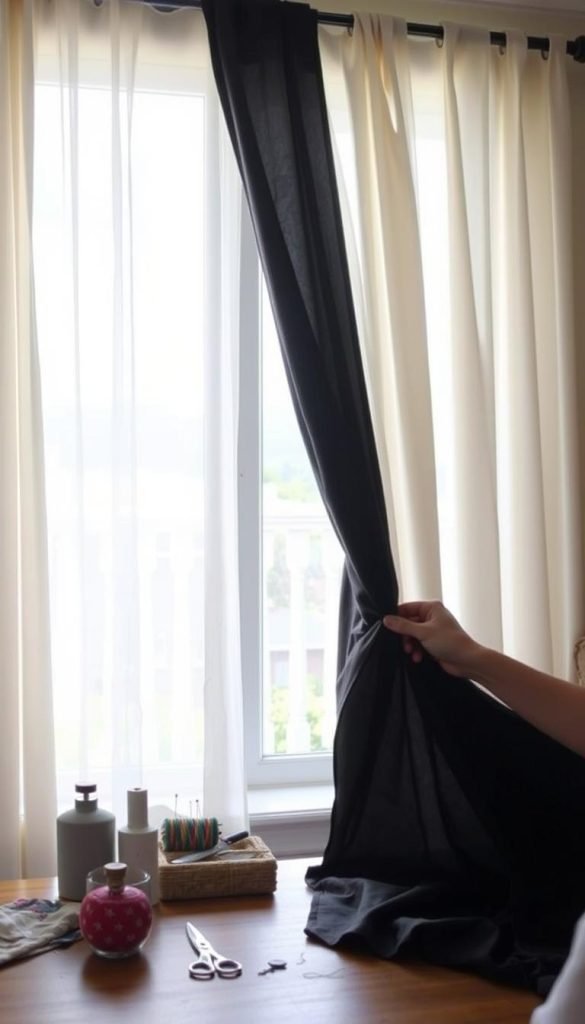
A sewn-in lining adds structure and longevity, while a no-sew insert gives instant darkness with minimal tools. Below I list supplies and step-by-step actions for both approaches so you can pick the right workflow for your room.
Supplies checklist
- Blackout lining, your curtains, scissors, cutting mat, ruler, rotary cutter.
- Sewing machine and matching thread for a tailored finish.
- For no-sew: small step ladder, iron, and rings/hooks from a ready-made kit.
Sewn-in method I use for a tailored look
I lay the curtain face down, measure the lining with a 1/2–1″ seam allowance, and align it to the original stitch lines.
Pin with the finished side facing out and stitch the top and both sides. Leave the bottom unstitched so the hem hangs naturally. Most blackout lining won’t fray, so you can skip serging.
No-sew ready-made linings with hooks/rings
Lightly iron the insert, insert hooks into the lining’s header tape, then hang by clipping to rings or slotting into tape heading. This works with eyelet and tape heading curtain heads and usually takes under 30 minutes.
“I often use a ready-made header kit when speed matters — a few adjustments at the top give a smooth drape fast.”
Pro tips for drape, finish, and a neat front look
- Follow the curtain’s original stitch lines at the top and sides to keep the front finish clean.
- Adjust hook placement after hanging to even out fullness and pleats.
- Extend lining at the top and along the sides to reduce edge light leaks; keep the bottom free for a natural break.
| Method | Time | Best result |
|---|---|---|
| Sewn-in | 1–2 hours per panel | Tailored drape, durable finish |
| No-sew | Under 30 minutes | Fast install, easy adjustments |
| Hybrid | 30–90 minutes | Quick hang, then fine-tune stitches if needed |
For a plug-and-play option, try a trusted no-sew header kit to add a lining without sewing.
Conclusion
Decide on your blackout goal first, then pair lining weight and back color with the curtain for a cohesive finish. A 280 gsm white brushed fabric gives body and full darkness when layered. The 195 gsm warm gray offers about 80–85% block with a smooth back. The 200g black delivers a dramatic back and similar block when layered.
For a tailored result, stitch the top and sides and leave the bottom free so the hem hangs naturally. For speed, ready-made inserts with rings and hooks fit eyelet or tape headings and let you tweak drape after hanging. Check header coverage and edge seals to keep out stray light, protect privacy, and ensure the finished look feels intentional with your curtains.