What’s the ideal height for a kitchen pendant over a sink?
Getting your pendant light placement just right makes a huge difference in your kitchen. It’s not just about looks—it’s about creating a space that works beautifully for you every day.
I love how the right lighting can turn a simple sink area into a stunning focal point. It adds personality and vertical interest, especially in open layouts.
Proper illumination makes tasks like washing dishes or prepping food much easier. According to guidelines from Dwelanor, hanging lights 30-40 inches above the counter ensures both functionality and style.
Finding that perfect balance between task and ambient light creates an inviting atmosphere. Let’s explore how to achieve this in your home!
Key Takeaways
- Proper pendant height improves both functionality and visual appeal
- Good lighting transforms the sink area into a kitchen focal point
- Correct height makes daily tasks like dishwashing easier and safer
- Pendant lights add vertical interest and help define kitchen zones
- Balancing task lighting with ambiance creates a more inviting space
- The right height contributes to overall kitchen design harmony
- Investing time in proper placement enhances everyday kitchen experience
Why a Pendant Light is a Brilliant Choice for Your Sink
I believe every kitchen deserves that perfect blend of function and beauty. A well-placed pendant light above your sink area achieves exactly that.
It transforms routine tasks into pleasant experiences. Washing dishes or prepping vegetables becomes easier with focused task lighting right where you need it.

This type of light fixture does more than just provide illumination. It creates a stunning visual anchor that draws the eye upward.
In open-concept layouts, pendants help define different zones. They visually separate the sink area from other kitchen spaces without physical barriers.
Even in smaller galley kitchens, these lights add valuable vertical dimension. They make the entire room feel more balanced and thoughtfully designed.
The style possibilities are endless! Whether your aesthetic is:
- Modern with clean lines and metallic finishes
- Farmhouse with rustic charm and warm glow
- Coastal with airy elements and light colors
- Eclectic with unique shapes and mixed materials
There’s a pendant that perfectly complements your kitchen’s personality. The right choice enhances both your design and daily experience.
According to Dwelanor’s design philosophy, lighting should serve both practical and emotional purposes. A well-chosen pendant does exactly that—it provides essential illumination while creating atmosphere.
I love how these fixtures can highlight beautiful backsplashes or window views. They turn functional areas into decorative focal points that showcase your style.
The direct downward glow ensures no shadows obscure your workspace. This makes food preparation safer and more efficient.
Beyond practicality, pendant lights contribute to the overall ambiance. They create warm pools of light that make your kitchen feel inviting and comfortable.
This simple addition makes a significant impact on how you experience your kitchen daily. It’s an investment that pays off in both functionality and aesthetic appeal.
Finding the Perfect Height: What’s the Ideal Height for a Kitchen Pendant Over a Sink?
I’ve seen many homeowners struggle with getting their lighting just right. The magic happens when you find that sweet spot between form and function.
Proper placement makes all the difference in your daily routine. It turns washing dishes into a pleasant experience rather than a chore.

The Standard 30- to 40-Inch Rule
Most design experts recommend hanging your fixture 30-40 inches above the counter surface. This range provides optimal task illumination without creating glare.
I always measure from the countertop, not the sink basin. This ensures consistent lighting across your entire workspace.
The bottom of the pendant should clear sightlines while directing light downward. This prevents shadows during food preparation.
Your own stature might require slight adjustments. Taller individuals may prefer fixtures hung slightly higher.
How to Adjust for Your Ceiling Height
Standard 8-foot ceilings typically work well with a 12-20 inch drop. This maintains good proportions in the room.
For higher ceilings, add about 3 inches of drop per additional foot. This keeps the scale balanced and visually appealing.
Vaulted or cathedral ceilings need special consideration. The fixture should feel connected to the space without floating too high.
Always ensure there’s enough clearance above the sink. You want to avoid bumping your head while working at the counter.
The right placement creates a beautiful glow that enhances your kitchen’s atmosphere. It makes every task easier and more enjoyable.
Getting the Placement and Centering Just Right
Perfect positioning transforms good lighting into great design. I find that proper placement creates both visual harmony and functional excellence.
Centering your fixture correctly ensures even illumination across the entire workspace. It also creates a balanced look that enhances your kitchen’s overall aesthetic.

Centering Over the Sink Basin
I always recommend aligning the fixture directly above the basin center. This provides optimal task lighting for washing dishes and food preparation.
For single-basin sinks, find the midpoint between the edges. Use the drain or faucet as a reference point for precision.
Double-basin configurations require careful consideration. Center the pendant between both basins for balanced illumination.
Unusual sink shapes need custom approaches. Measure from all edges to locate the true geometric center.
Accounting for Window and Wall Placement
Wall-mounted sinks present unique challenges. Keep the fixture within 6 inches of the wall to prevent shadows.
This close placement maintains functionality while creating visual interest. It helps the light feel integrated with the space.
Window above the sink requires special attention. Center the pendant within the window frame to preserve natural light.
This placement avoids blocking your view while maintaining symmetry. It creates a beautiful interplay between natural and artificial illumination.
Consider sightlines from different room angles. The fixture should enhance rather than obstruct your kitchen’s flow.
Proper placement contributes to both task efficiency and overall design harmony. It’s worth taking time to get this right.
Getting the Size and Scale Right for Your Space
I’ve helped countless homeowners discover that perfect balance between form and function. Choosing the right proportions for your lighting makes all the difference in creating a harmonious kitchen environment.
Scale matters tremendously in lighting design. A fixture that’s too small gets lost in the space, while an oversized one can overwhelm your entire kitchen layout.
Choosing the Right Width for Your Sink
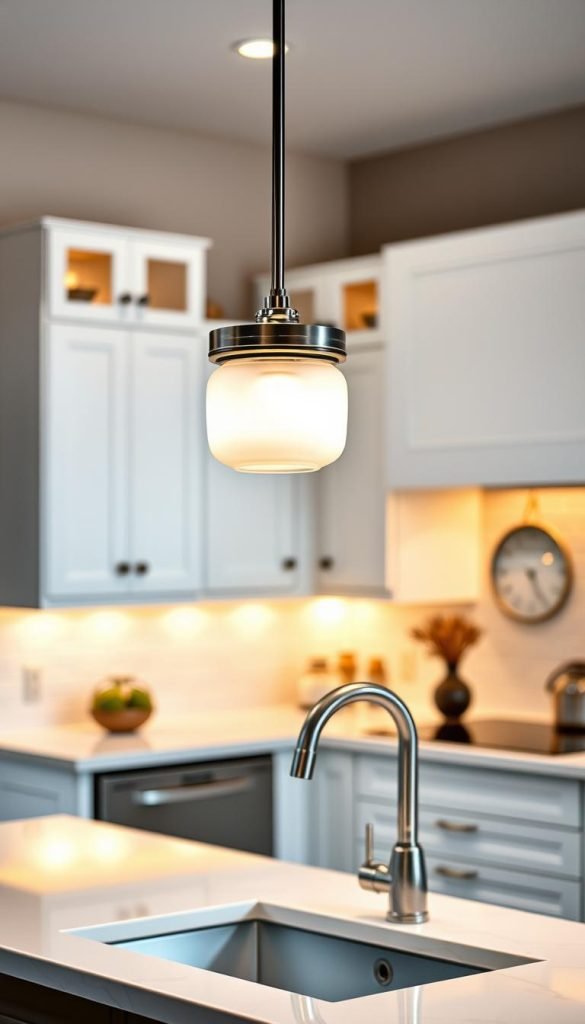
Selecting the proper width ensures both functionality and visual appeal. For standard sinks, I recommend a pendant measuring 6-12 inches wide.
This range provides adequate illumination without dominating the space. The fixture should complement your sink’s proportions rather than compete with them.
Farmhouse sinks typically handle larger pendants beautifully. You can comfortably go up to 12 inches wide with these spacious basins.
According to Dwelanor’s design guidelines, the pendant width should relate to your sink’s dimensions. This creates a balanced look that enhances your entire kitchen aesthetic.
Always consider surrounding cabinetry and window placements. Your chosen fixture shouldn’t obstruct views or interfere with other design elements.
Considering Mini Pendants for Double Sinks
Double sink configurations benefit from a different approach. Two smaller pendants often work better than one large fixture.
Mini pendants measuring 3-4 inches wide provide balanced illumination across both basins. This setup ensures no shadows obscure your workspace during dishwashing or food prep.
Space them approximately 20 inches apart for optimal coverage. This spacing prevents a cramped feel while maintaining visual harmony.
Multiple pendants create a sophisticated look that enhances your kitchen’s design. They provide even task lighting while adding decorative interest.
The bottom of each fixture should align perfectly. Consistent height maintains clean sightlines and professional appearance.
This configuration works particularly well above kitchen islands too. It creates a cohesive lighting scheme throughout your space.
Remember that scale affects both function and atmosphere. The right proportions make your sink area both practical and beautiful.
Selecting the Best Bulb for Task Lighting and Ambiance
I’ve found that choosing the right bulb makes all the difference in your kitchen experience. It transforms ordinary illumination into something truly special.
The perfect bulb balances practical needs with beautiful atmosphere. It turns washing dishes into a pleasant activity rather than a chore.

Great lighting combines brightness with warmth and flexibility. Let’s explore how to achieve this perfect balance.
Understanding Lumens and Brightness
Lumens measure how much light a bulb actually produces. Higher numbers mean brighter illumination for your workspace.
For single pendants, I recommend aiming for around 700 lumens. This provides excellent task lighting without creating harsh glare.
When using two fixtures above a double sink, choose 500 lumens each. This creates balanced illumination across both basins.
The right brightness makes food preparation safer and more enjoyable. It ensures you can see clearly while working at your sink.
Choosing the Right Color Temperature
Color temperature dramatically affects your kitchen’s feel and function. It’s measured in Kelvin (K) on the lighting scale.
I always recommend warm white bulbs between 2700K-3000K. This range creates a cozy, natural ambiance that feels inviting.
Cool white bulbs should generally be avoided above sinks. They can make the space feel sterile and clinical rather than welcoming.
“The warmth of your lighting directly influences how you experience your kitchen space. Natural tones create comfort while supporting practical tasks.”
This temperature range complements most kitchen finishes and materials. It enhances your overall design while providing functional illumination.
The Power of a Dimmable Switch
Dimmable switches offer incredible flexibility for your lighting needs. They let you adjust brightness based on different activities and times of day.
You might want brighter light for washing dishes or meal preparation. Softer illumination works better for evening ambiance or entertaining.
This control transforms your pendant from purely functional to multi-purpose. It becomes both a task light and mood setter.
Modern dimmers are easy to install and use daily. They’re one of my favorite upgrades for any kitchen lighting setup.
| Bulb Type | Best For | Lumens Range | Color Temperature |
|---|---|---|---|
| LED Edison | Vintage style kitchens | 600-800 | 2700K-3000K |
| Frosted LED | Glare-free illumination | 500-700 | 2700K-3000K |
| Standard LED | General purpose use | 700-900 | 2700K-3000K |
| Mini LED | Multiple pendant setups | 400-600 | 2700K-3000K |
Consider bulb types that match your kitchen’s personality. LED Edison bulbs work beautifully in farmhouse styles with their vintage appeal.
Frosted LEDs provide excellent glare-free illumination for task lighting. They distribute light evenly without harsh spots.
The right choice enhances both visibility and mood in your space. It makes every moment at the sink more pleasant and efficient.
According to insights from Dwelanor’s design philosophy, lighting should serve both practical and emotional purposes. The perfect bulb achieves exactly this balance.
You’ll appreciate how proper illumination transforms daily chores. It turns functional tasks into enjoyable moments in your kitchen.
By selecting the right combination of brightness, warmth, and control, you create lighting that works perfectly for every need. Your pendant will provide both practical task lighting and beautiful ambiance.
Choosing Your Pendant’s Style to Match Your Kitchen
I’ve always believed that selecting the perfect pendant light style transforms your entire kitchen experience. It’s not just about illumination—it’s about expressing your personality through design choices.
The right fixture becomes a beautiful focal point that ties your space together. It should complement your existing elements while adding its own unique character.
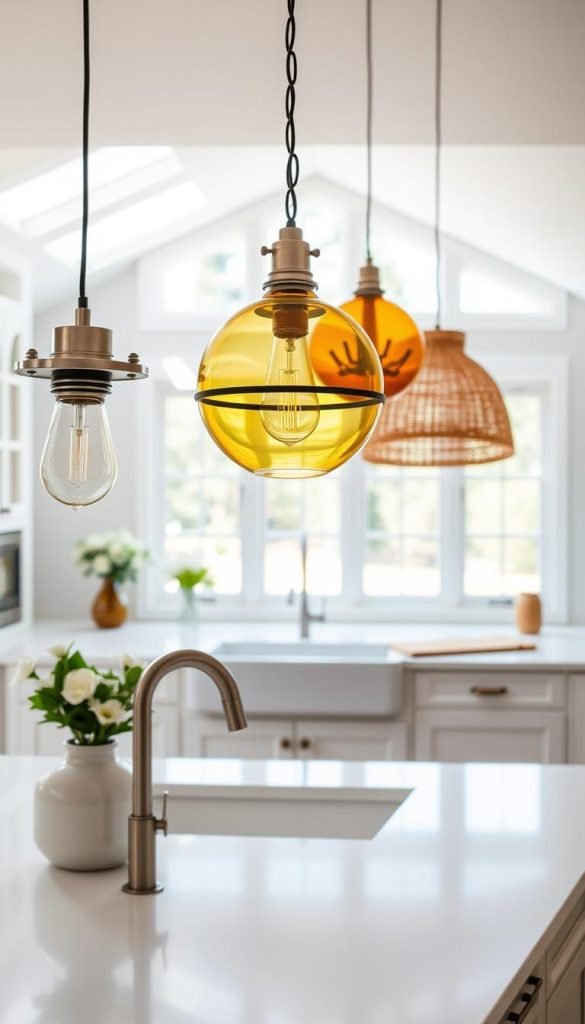
Modern and Minimalist Designs
Clean lines and sleek finishes define contemporary pendant lights. I love how matte black or chrome fixtures create sophisticated statements.
These designs work beautifully in updated spaces with simple color palettes. They provide excellent task lighting without visual clutter.
Geometric shapes and neutral tones maintain a timeless appeal. They blend seamlessly with various cabinet finishes and countertop materials.
Farmhouse and Rustic Charm
Wrought iron and seeded glass shades capture that cozy farmhouse feel. I adore how these pieces add warmth and character to any kitchen.
They create a soft, inviting glow that makes washing dishes feel pleasant. The rustic elements pair wonderfully with apron-front sinks and open shelving.
Natural materials like wood and iron bring organic texture to your space. They make the room feel lived-in and welcoming.
Industrial and Statement Pieces
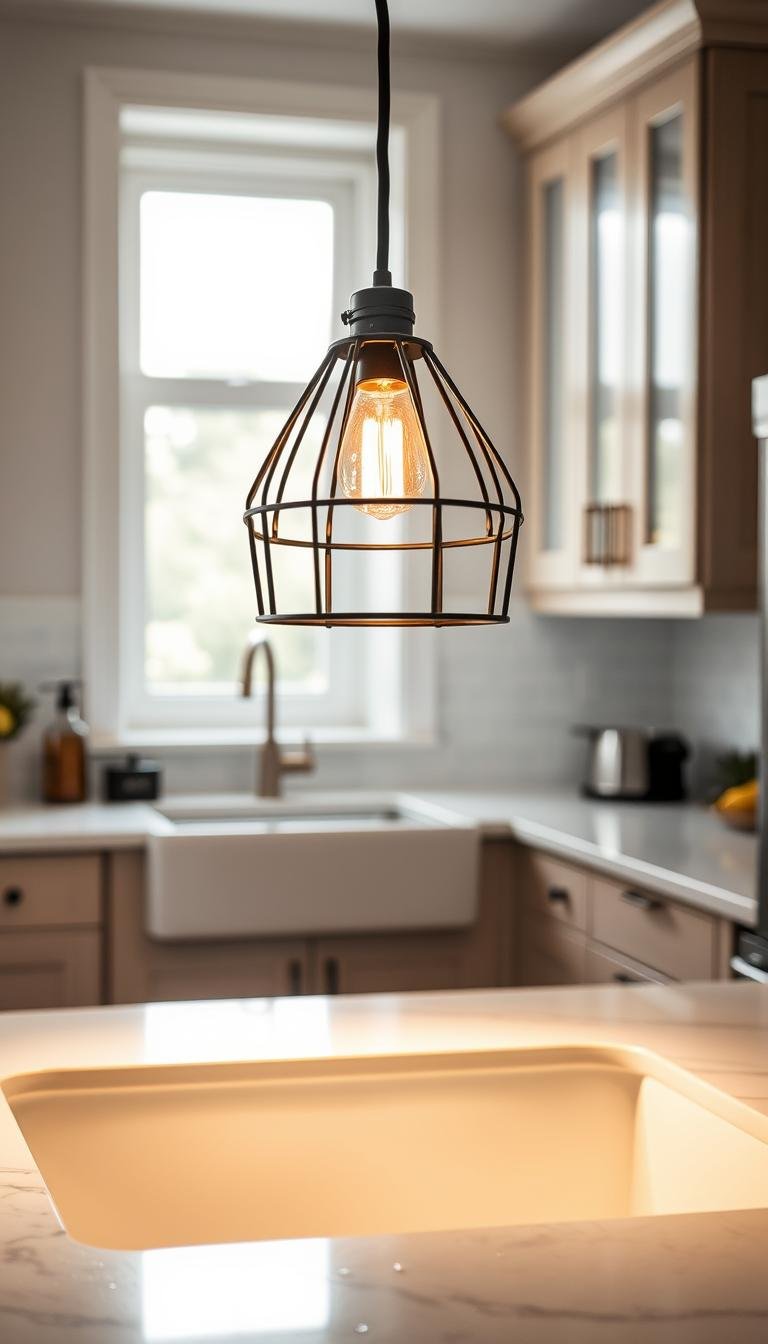
Exposed bulbs and metal cages make bold industrial statements. These fixtures work perfectly in urban lofts or eclectic spaces.
They become conversation starters while providing functional illumination. The raw materials add edge and personality to your design.
Wire baskets and unfinished metals create interesting visual texture. They contrast beautifully with smooth countertops and cabinetry.
Matching your pendant finish to cabinet hardware creates cohesive design. Brass fixtures complement brass handles for a pulled-together look.
Consider materials that reflect your overall aesthetic. Rattan works for coastal vibes while wood adds natural warmth.
The right style enhances your daily life while elevating your space. It should feel integrated rather than just decorative.
Your choice reflects personal taste and complements your kitchen’s character. It’s worth taking time to find that perfect match.
Common Mistakes to Avoid When Hanging Your Pendant
I’ve noticed even experienced DIYers can make simple errors that compromise both function and style. Getting your lighting right involves more than just following measurements—it’s about understanding how all elements work together.
These common pitfalls can turn a beautiful fixture into a daily frustration. Let me help you avoid them for a flawless installation.
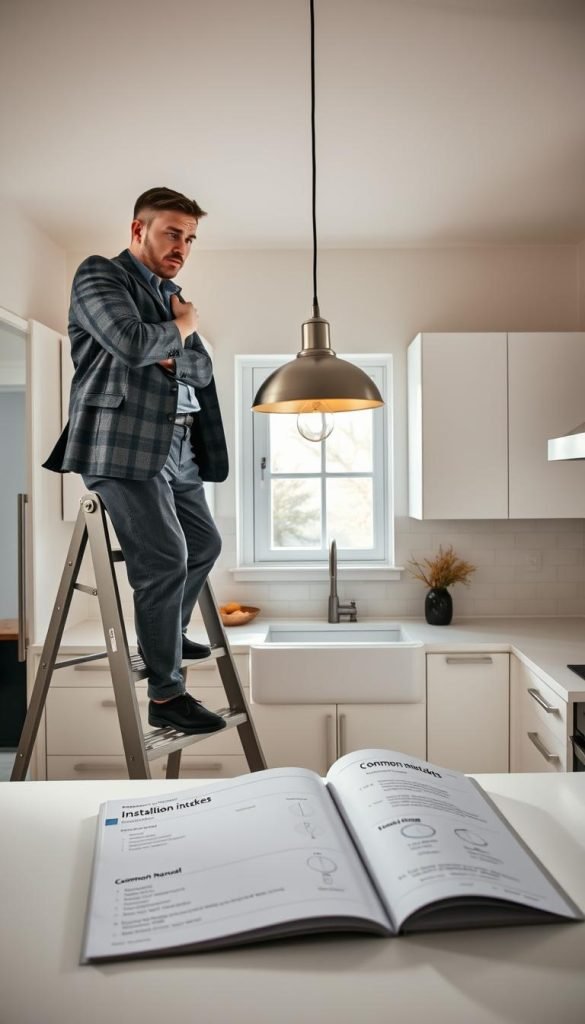
Hanging the Fixture Too Low or Too High
Improper height placement creates both practical and visual problems. A pendant hanging too low risks head bumps during dishwashing.
It also creates harsh shadows that make food preparation difficult. Conversely, hanging too high reduces its task lighting effectiveness.
Follow the general guideline of 30–36 inches above the countertop. For standard 8-foot ceilings, aim for 30–32 inches above your kitchen sink.
Taller ceilings around 9+ feet work better with 34–36 inches. Consider adjustable rods or chains for vaulted or sloped ceilings.
Choosing an Oversized Fixture
Scale matters tremendously in lighting design. An oversized light fixture can dominate a small sink area.
It makes the space feel cramped and visually unbalanced. Always measure your sink width plus surrounding clearance first.
The pendant should complement rather than overwhelm your kitchen layout. For most standard sinks, 6-12 inches wide works perfectly.
Farmhouse sinks can handle slightly larger pendants, but maintain good proportions. The right scale ensures both functionality and aesthetic appeal.
Blocking a Window View
This common error reduces valuable natural light and spoils your view. A poorly placed fixture can obstruct beautiful window scenes.
Choose airy, open-frame pendant lights or transparent shades instead. These designs maintain sightlines while providing adequate illumination.
Consider the number and type of lights carefully above windowed areas. Sometimes recessed lighting works better for preserving your view.
According to Zepboo’s design tips, maintaining natural light flow should always be a priority in your planning.
Other considerations often overlooked include:
- Matching finishes with existing hardware for cohesive design
- Ensuring proper clearance from the wall and surrounding elements
- Considering the bottom of the fixture in relation to your sightlines
- Accounting for multiple sinks or unusual configurations
Taking time to measure carefully prevents these common errors. Your kitchen deserves both beautiful lighting and practical functionality.
Avoiding these mistakes ensures your pendant lights enhance rather than detract from your space. You’ll enjoy both the glow and the practicality every day.
Conclusion
Finding that perfect lighting balance transforms how you experience your kitchen daily. I love how a well-placed pendant light makes washing dishes feel pleasant rather than chore-like.
Remember these simple guidelines: position your fixture 30-40 inches above the counter, center it over the basin, and choose the right scale for your space. The proper illumination creates both functionality and beautiful atmosphere.
Consider your room’s unique layout and ceiling height when selecting fixtures. Avoid blocking windows or choosing pieces that overwhelm your design.
With careful planning, your sink area becomes a stunning focal point. Enjoy the warm glow and improved task lighting that makes every moment in your kitchen more enjoyable!