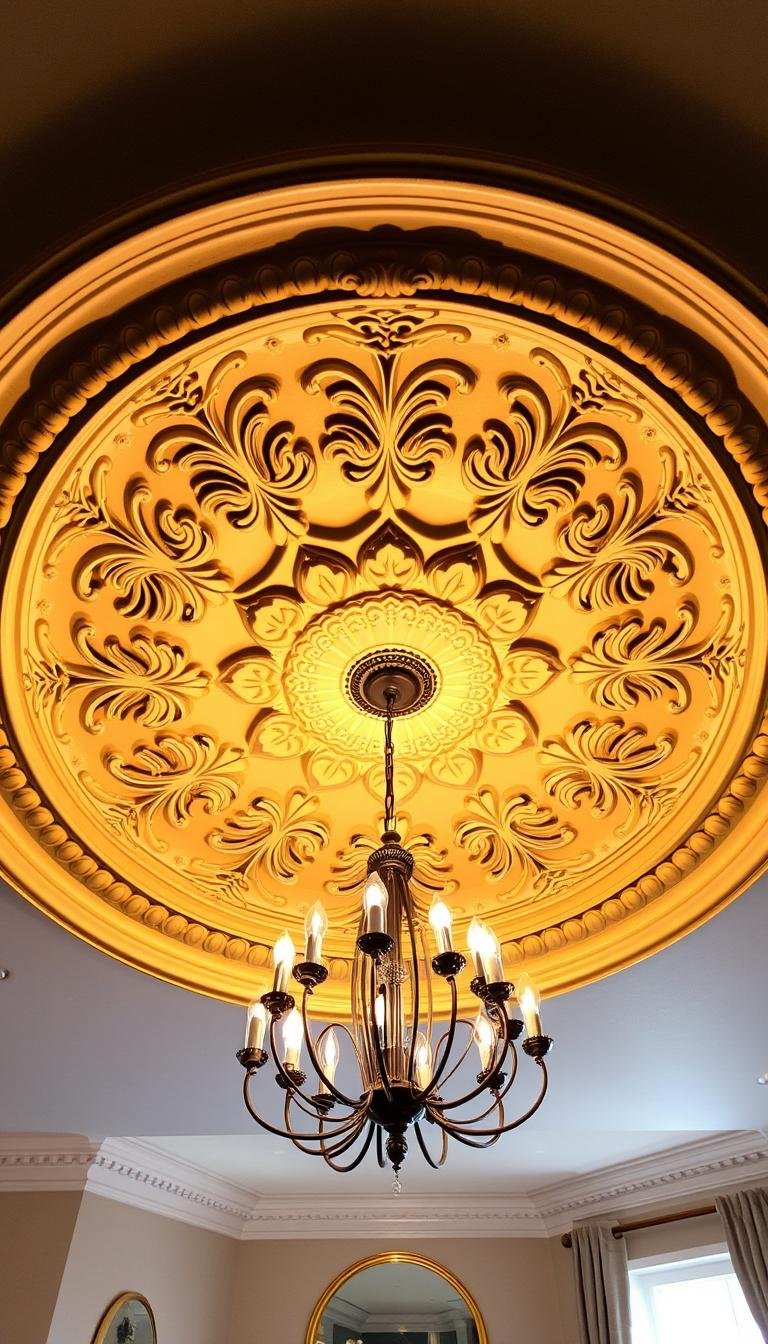
How do I pick a ceiling medallion that fits my 2026 chandelier?
I often start by explaining what a medallion does. It draws the eye to the center, anchors the light fixture, and finishes the junction between hardware and architecture so the result reads as intentional.
Historically, medallions masked soot rings in Baroque and Victorian rooms. Today they still work when scaled right. Materials range from classic plaster to lightweight polyurethane foam, and prices vary from about $25 to $1,000+ depending on size and detail.
For a simple size rule, I divide the room’s square footage by seven to get an inches diameter ballpark. Then I adjust for fixture scale, ceiling height, and the room’s overall design so the piece feels like part of the home, not an afterthought.
I also weigh installation and safety: turn power off, use adhesive like construction caulk, and add mechanical fasteners when needed. That way the medallion supports your light and the space with confidence.
Key Takeaways
- Medallions anchor the fixture and finish the ceiling visually.
- Estimate diameter: room square footage ÷ 7, then refine.
- Choose material by detail and weight—plaster or polyurethane foam work well.
- Budget varies widely; size and detail drive cost.
- Secure with adhesive and fasteners; shut power off before work.
How do I pick a ceiling medallion that fits my 2026 chandelier?
I begin with the room’s built-in details—those elements steer the medallion’s style. Read moldings, door casings, and crown to decide whether a classical or clean-lined piece will feel natural.
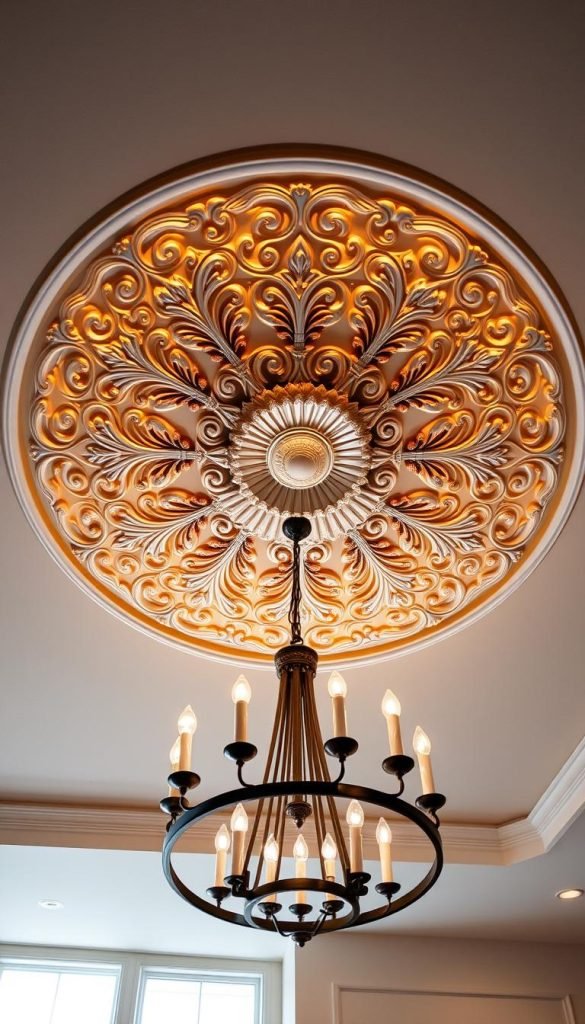
Match the medallion to your interior cues. Traditional homes work well with neoclassical motifs. Contemporary spaces prefer geometric rings or shallow reliefs. Use crown patterns as a compass: echo acanthus or egg-and-dart when present, or keep the profile restrained with square-edge trim.
Choose materials for budget and scope
I choose plaster when crisp carving and heritage detail matter. For lighter installs and faster painting, polyurethane or urethane are smart picks. Both come paint-ready and span wide price ranges.
Decide ornate, minimalist, or modern profiles
- Pair classical fixtures with detailed motifs; modern chandeliers suit streamlined rings.
- Let the medallion’s depth and negative space frame the fixture canopy, not crowd it.
- Reserve ornate pieces for centerpiece rooms and choose slimmer medallions for secondary rooms to keep continuity across the home.
Get the size right: room, fixture, and ceiling height all matter
Start with a simple measurement and a clear intent. I measure the room, do a quick conversion, and use that as my guide before testing options on the ceiling.

Use room size as a starting point
Quick rule: room square footage ÷ 7 gives a starting inches diameter. This gives me an easy target to refine for scale and proportion.
Balance diameter with your fixture or fan
I compare the medallion size to the light fixture canopy and overall span. In generous rooms the medallion can match or exceed the canopy; in a smaller room I keep the medallion smaller than the fixture to avoid visual heaviness.
Scale for taller ceilings and larger rooms
With 9-foot ceilings and higher I feel comfortable scaling up diameter and relief. For 8-foot ceilings I choose leaner profiles so the plane stays open and the lighting reads balanced.
Explore shapes and sizes
- Round works for most arrangements; square or rectangular echoes linear architecture.
- Scalloped or unique forms add softness or drama depending on the room’s style.
- Test sizes with paper templates or painter’s tape on the ceiling before you buy.
Finish strong: materials, color, and installation basics that elevate the look
Small choices in material and color change how the ornament reads with your light fixture and overall room. I focus on choices that balance detail with practical install one steps so the finished piece feels intentional.
Plaster vs urethane and foam: weight, durability, paintability
Plaster offers crisp relief and takes paint beautifully, but it adds weight and calls for careful handling. I use it for hero rooms where detail matters.
Urethane and polyurethane foam are lightweight, affordable, and easy to install with construction adhesive. They suit most rooms and reduce labor without sacrificing style.
| Material | Weight & durability | Best use |
|---|---|---|
| Plaster | Heavy, durable, crisp detail | Formal rooms, historic restores |
| Urethane | Light, impact-resistant | Everyday rooms, fast installs |
| Polyurethane foam | Very light, affordable, paint-ready | Large diameters, easy install one |
Color strategies
I often choose classic white to let molding read as architecture. A tonal accent color can outline relief and add depth.
For drama, mirrored or stained-glass inlays reflect lighting and create personality. Either treatment should relate to other accents in the space.
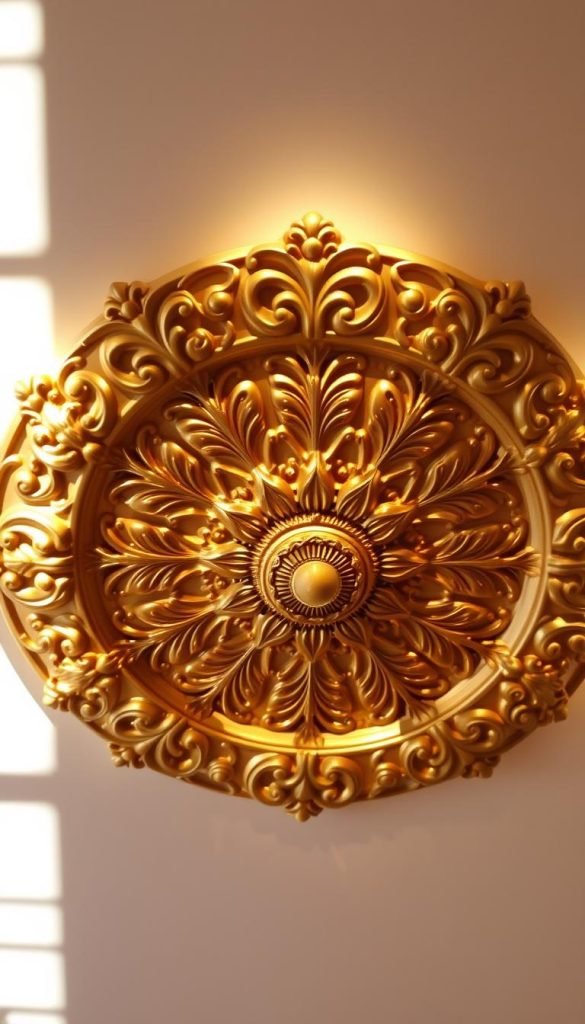
Installation essentials
I prep by turning off power at the breaker and removing the old fixture. Dry-fitting confirms canopy coverage and alignment before any adhesive.
“Always make sure wiring is secure and fasteners pass through the medallion into the box for a safe, neat finish.”
- Apply construction adhesive to the back, press in place, and make sure mechanical fasteners back the glue.
- Use longer screws through the fixture and medallion into the box; add finishing nails for large pieces, then fill and paint.
- Confirm clearance for a fan and check that thickness won’t interfere with blade sweep.
Conclusion
Bring the plan together by confirming style, diameter, and secure mounting for a lasting result.
Start by defining a style that belongs to the interior and the crown or trim nearby. Then estimate size from the room using the simple square-foot ÷ 7 rule and refine for fixture spread and ceiling height.
Choose materials in the range you can install and finish well. Verify clearances, turn power off, and fasten through the piece into the box so the light and the medallion read as one part of the home.
When unsure, go slightly larger to avoid an islanded look. And remember: restraint is fine—some modern rooms work best without extra ornament.