What are the quietest range hoods that actually vent outside?
I know how frustrating a noisy kitchen can be. A loud range hood disrupts peaceful cooking and conversations. It’s time to find a better solution for your home.
Vented models offer superior performance over recirculating types. They push smoke, grease, and odors directly outside. This keeps your kitchen air fresh and clean.
Modern designs focus on powerful yet silent operation. Key features include variable speed controls and insulated blowers. These elements drastically reduce sound levels during use.
Choosing the right size and style matters for both function and noise. Proper installation ensures optimal airflow and quiet performance. Let me guide you through the best options available.
Key Takeaways
- Vented range hoods provide better air quality by removing pollutants outside
- Noise levels are measured in sones – lower numbers mean quieter operation
- Variable speed controls allow you to adjust fan power based on cooking needs
- Proper sizing and installation are crucial for both performance and noise reduction
- Insulated blowers and quality filters contribute to quieter operation
- Multiple styles are available including under-cabinet, wall-mounted, and island models
- Stainless steel construction offers durability and easy cleaning
Why Your Kitchen Needs a Quality Vented Range Hood
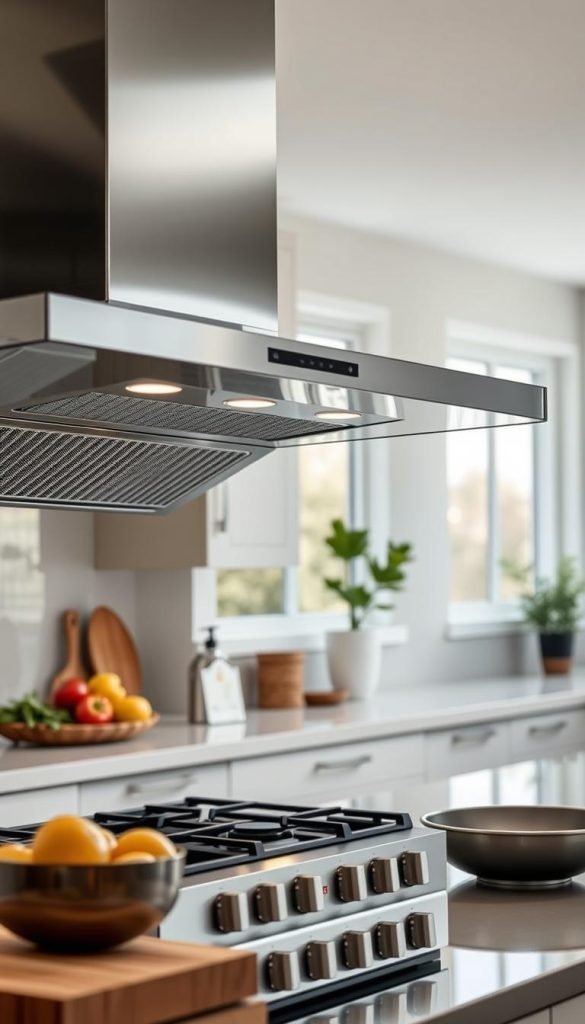
Many homeowners overlook kitchen ventilation until they face lingering smells or greasy surfaces. I believe a proper exhaust system transforms your cooking experience. It creates a healthier environment while you prepare meals.
The Health Benefits of Proper Kitchen Ventilation
Cooking generates invisible pollutants that affect your well-being. These particles circulate in your home’s air. A good range hood captures them before they spread.
Effective ventilation removes harmful compounds from your living space. This is crucial for families with allergy sufferers or respiratory concerns. Clean air matters for everyone’s comfort and health.
How Vented Range Hoods Improve Indoor Air Quality
These models pull contaminated air through advanced filters. They trap grease, smoke, and cooking odors efficiently. The system then expels everything outside your home.
This process prevents recirculation of polluted air. Your kitchen stays fresh without stubborn smells. It’s a smart solution for maintaining clean indoor environments.
Why Gas Stove Owners Need Effective Ventilation
Gas cooktops release concerning compounds during use. Nitrogen oxides and carbon monoxide pose particular risks. Proper ventilation reduces these potential health hazards.
Combining a vented range hood with an open window enhances protection. This dual approach helps maintain safer air quality levels. It’s especially valuable for frequent cooks using gas appliances.
Investing in quality ventilation protects your family’s health. It also keeps your kitchen cleaner by preventing grease buildup. The right system makes cooking more pleasant and worry-free.
Key Factors That Determine Range Hood Noise Levels
Ever wonder why some kitchen exhaust systems whisper while others roar? I’ve discovered that several engineering elements work together to create peaceful cooking environments. Understanding these factors helps you choose the right model for your home.
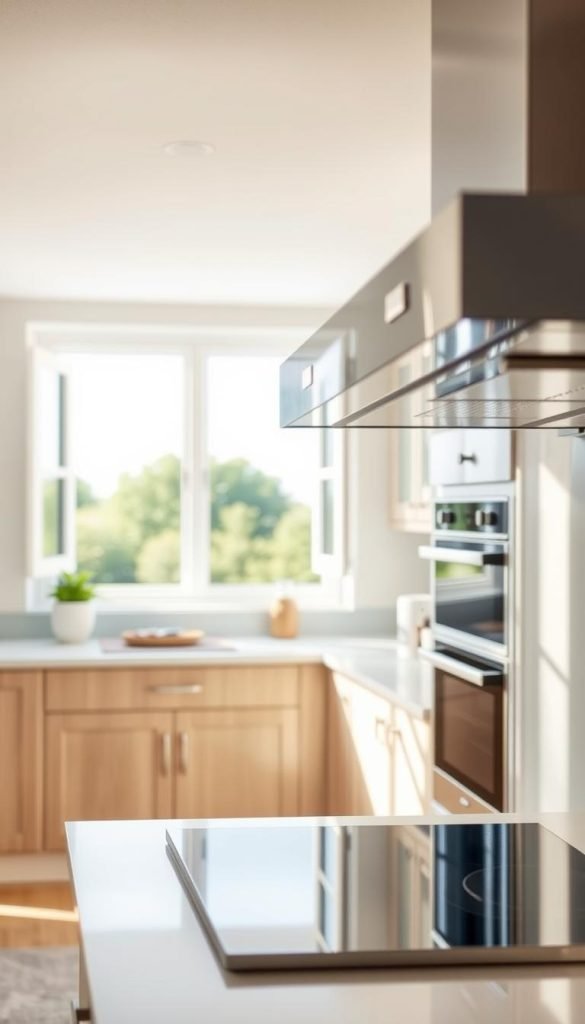
Understanding Sones: How Range Hood Noise Is Measured
Manufacturers use sones to measure sound output from ventilation systems. This scale helps compare different models objectively. Lower numbers mean quieter operation.
A quiet refrigerator runs at about one sone. Most range hoods operate between 6-10 sones during normal use. Premium models can achieve 3-4 sones on lower settings.
The Importance of Variable Speed Controls
Variable speed controls let you match fan power to cooking needs. This feature significantly reduces unnecessary noise. You can choose low settings for simmering or high for searing.
Three speed settings generally provide sufficient flexibility. Gentle settings handle light steam and odors. Maximum power tackles heavy smoke and grease.
Baffle Filters vs. Other Filter Types for Quiet Operation
Baffle filters outperform charcoal and mesh alternatives for quiet efficiency. Their angled design captures grease while allowing smooth airflow. This reduces turbulence and noise during operation.
Many baffle filters are dishwasher-safe for easy maintenance. Regular cleaning prevents grease buildup that can increase sound levels. Proper maintenance keeps your system running quietly for years.
How Duct Size Affects Noise Production
Larger ductwork reduces air resistance and noise generation. I recommend 6-inch or larger ducts for optimal performance. Proper installation minimizes vibration and sound transmission.
Ducted models are generally quieter than ductless alternatives. The blower sits farther from the cooktop, reducing perceived noise. Correct sizing ensures efficient airflow without straining the system.
Regular maintenance preserves quiet operation over time. Clean filters monthly and check for loose components. Tighten blower screws periodically to prevent rattling sounds.
What are the quietest range hoods that actually vent outside? My Top Picks
After testing numerous models, I’ve found exceptional performers that combine powerful ventilation with whisper-quiet operation. These selections represent the pinnacle of kitchen exhaust technology.
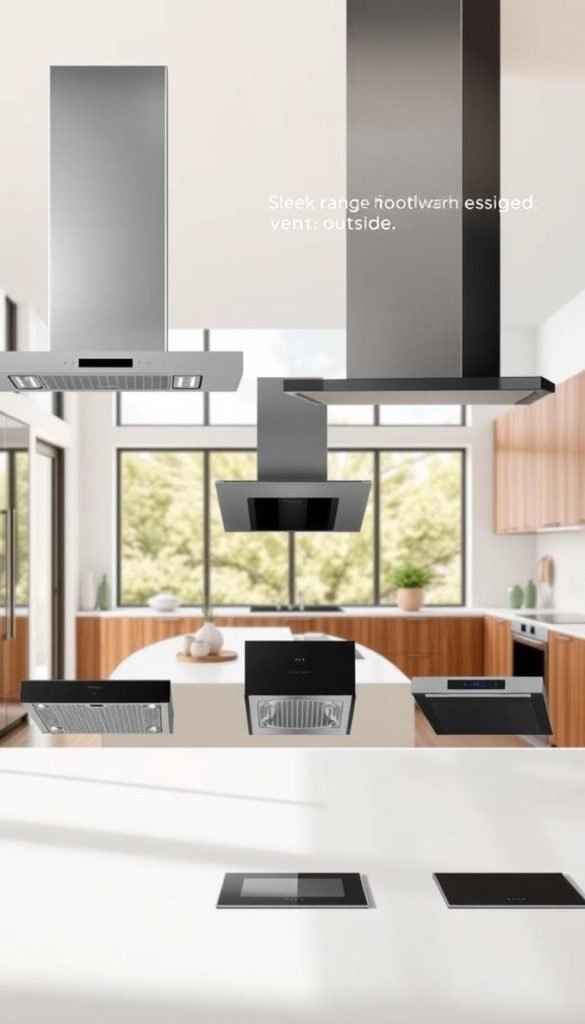
Under-Cabinet Models With Superior Noise Control
Under-cabinet units offer excellent noise reduction in compact spaces. Many feature advanced baffle filters and multiple speed settings.
These models fit seamlessly beneath your cabinets. They provide strong suction without overwhelming sound. Perfect for smaller kitchens where every inch matters.
Wall-Mounted Range Hoods With Quiet Technology
Wall-mounted designs incorporate innovative sound-dampening features. Brands like KOBE offer QuietMode™ technology that significantly reduces operational noise.
These units maintain powerful ventilation while keeping sound levels low. Their stylish appearance enhances your kitchen’s aesthetic. Many feature stainless steel construction for durability.
“The difference a quiet range hood makes in daily cooking is remarkable. You can actually hear yourself think while keeping your kitchen air fresh.”
Island Range Hoods That Combine Power and Quiet Operation
Island models deliver impressive performance with minimal sound output. Some achieve up to 1200 CFM while maintaining peaceful operation.
These units often feature ECO Mode technology. This setting runs automatically to remove moisture and odors. It operates quietly for 10 minutes every hour.
Features to Look For: QuietMode™ and ECO Mode Technology
Advanced features make modern range hoods exceptionally quiet. QuietMode™ reduces fan noise during regular operation. ECO Mode maintains air quality without disruption.
These technologies automatically adjust settings based on cooking needs. They ensure optimal performance while minimizing sound. Many award-winning models incorporate these innovations.
| Model Type | CFM Range | Noise Level | Best For |
|---|---|---|---|
| Under-Cabinet | 290-600 | 3-5 sones | Small to medium kitchens |
| Wall-Mounted | 400-900 | 2-4 sones | Standard to large kitchens |
| Island | 600-1200 | 4-6 sones | Open concept kitchens |
When selecting your perfect model, consider both CFM ratings and noise levels. Lower sones mean quieter operation. Adjustable settings allow customizing power based on cooking intensity.
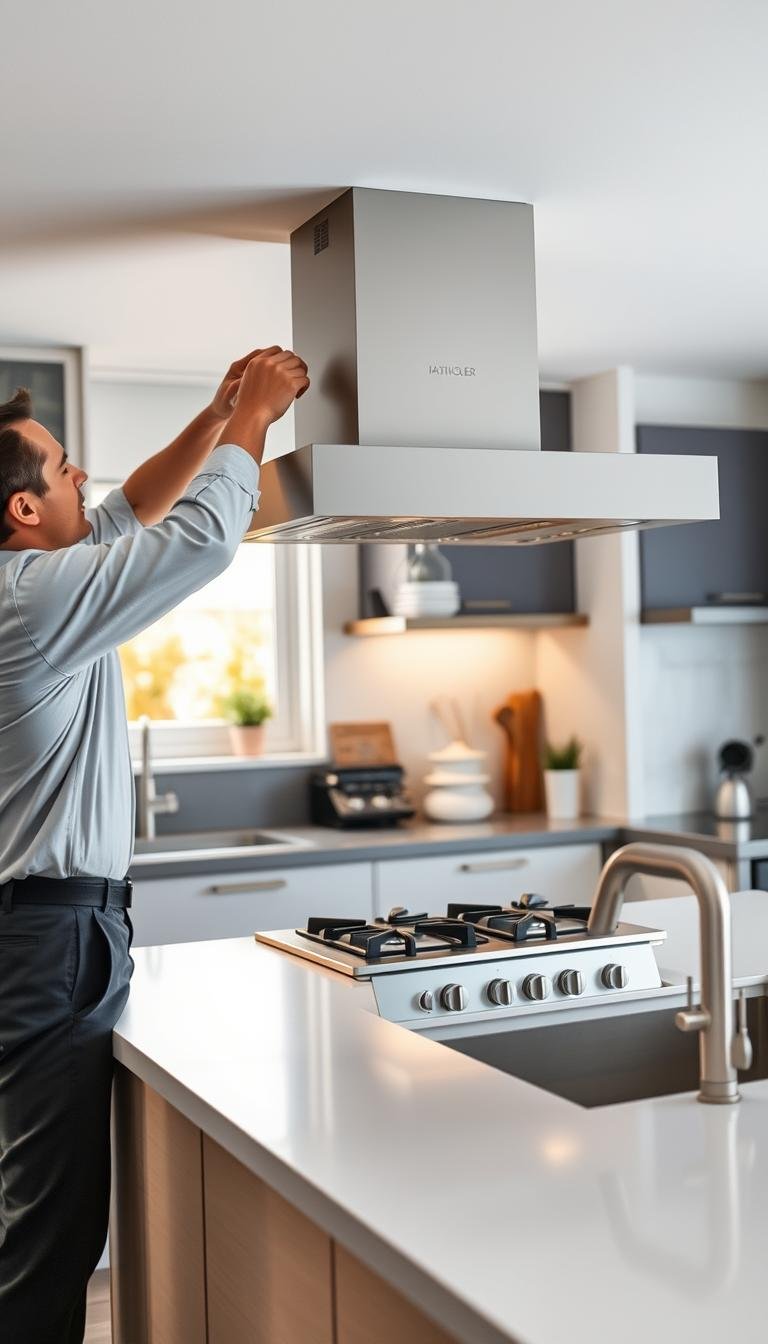
Proper installation ensures your unit performs at its best. Always match hood size to your cooktop dimensions. This guarantees efficient smoke and grease removal.
Installation Tips for Maximum Performance and Minimum Noise
Proper installation transforms your range hood from just another appliance into your kitchen’s silent guardian. I’ve learned that even the best models underperform with poor setup. These guidelines ensure optimal function and peaceful operation.
Attention to detail during installation pays off every time you cook. You’ll enjoy cleaner air and quieter meals. Let me share the key factors that matter most.
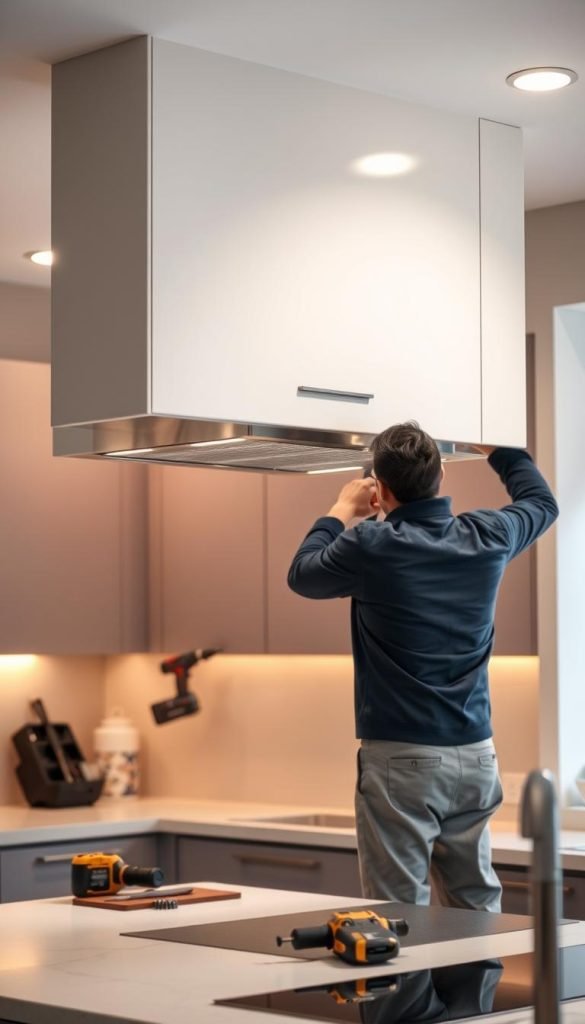
Proper Sizing: Matching Your Range Hood to Your Cooktop
Correct sizing is crucial for effective ventilation. Your range hood should match or exceed your cooktop width. This ensures complete coverage of cooking surfaces.
A 36-inch cooktop requires at least a 36-inch hood. Larger models provide better capture of smoke and odors. Proper sizing reduces strain on the system, which minimizes noise.
Optimal Mounting Height for Efficient Ventilation
Mounting height significantly affects performance and sound levels. The ideal range is typically 24-30 inches above your cooking surface. This balance ensures efficient airflow without safety concerns.
Too close risks heat damage and increased noise. Too far reduces effectiveness against grease and smoke. Follow manufacturer specifications for your specific model.
Ensuring Proper Ductwork for Quiet Operation
Ductwork quality directly impacts operational quietness. Larger ducts facilitate smoother airflow and reduce resistance. I recommend 6-inch or larger diameters for best results.
Avoid sharp bends that create turbulence and noise. Straight, short runs provide the most efficient exhaust path. Proper sealing prevents air leaks that can cause whistling sounds.
Maintenance Tips to Keep Your Range Hood Running Quietly
Regular maintenance preserves quiet operation over time. Clean baffle or mesh filters frequently to prevent grease buildup. Clogged filters force the system to work harder and louder.
Check for loose screws in the blower assembly monthly. Tighten any that may cause rattling during fan operation. Wipe down stainless steel surfaces to maintain appearance and function.
For island installations, extend the hood 3-6 inches beyond the cooktop on each side. This provides better fume capture while maintaining quiet performance. Always follow manufacturer guidelines to preserve your warranty.
| Installation Factor | Ideal Specification | Noise Impact |
|---|---|---|
| Hood Width | Match cooktop + 0-6 inches | Reduces strain on motor |
| Mounting Height | 24-30 inches above range | Optimizes airflow efficiency |
| Duct Size | 6-inch minimum diameter | Reduces air resistance |
| Filter Maintenance | Clean monthly | Prevents overload noise |
These installation tips ensure your system operates at its best. Proper setup enhances both performance and quietness. You’ll enjoy a more peaceful cooking experience for years to come.
Remember that professional installation often provides the best results. Experts understand how to optimize all these factors. Your investment in quality installation pays dividends in daily comfort.
Conclusion: Finding Your Perfect Quiet Range Hood
Finding the ideal kitchen ventilation solution transforms your cooking experience. I believe the right choice balances powerful performance with peaceful operation.
Focus on models with advanced noise reduction features. Look for variable speed controls and quality baffle filters. These elements ensure efficient smoke and odor removal without disruptive sound.
Proper installation matters just as much as your selection. Correct sizing and ductwork maintain optimal airflow. Regular cleaning preserves your system’s quiet efficiency over time.
Explore our guide to quiet range hood options for detailed recommendations. Your perfect match awaits to create a healthier, more enjoyable kitchen environment.