What are the quietest garbage disposals that won’t wake the baby?
I wrote this guide to answer the exact question on your mind and to help you pick a unit that blends hush-level control with dependable performance in a busy home.
I test noise with decibel meters and mimic under-sink cabinet buffering to see how a disposal behaves in a real kitchen. Heavier models usually stay quieter thanks to added insulation, and batch-feed styles often cut sound further while adding safety.
My goal is to show which designs, insulation methods, and operating styles keep sound low without losing food grinding power. I compare quiet-first picks across budgets so you can choose a best garbage option or a compact model that still feels whisper quiet.
Below I preview the testing criteria I use—from noise to particle fineness—and offer quick tips on when premium quiet tech is worth the cost.
Key Takeaways
- I focus on real-world noise testing and cabinet buffering for accurate results.
- Heavier, insulated units usually run quieter than lightweight models.
- Batch-feed disposals often reduce sound and improve safety.
- You can find quiet performance at midrange prices; premium buys add extra hush.
- Look for good grinding power and insulation for best kitchen peace.
Why I went searching for whisper-quiet garbage disposals
Late-night sink noise pushed me to hunt for a disposal that runs with near-silent confidence. In my kitchen, the goal was simple: a unit that handles everyday food cleanup while keeping sound low enough to protect bedtime routines.
I started after late-night cleanup risked waking people at home. Some units sounded smooth, others rattled and sent vibrations through cabinets. I learned to listen for grinders that produced fewer harsh tones and less plate‑clanking feedback.

I paid attention to how units age. The average disposal lasts about 12 years, but models that grow louder, take longer to grind, or need frequent resets often need replacing sooner.
- I prioritized fit under the sink because tight installation reduces cabinet noise.
- I focused on models that worked consistently with minimal fiddling and fewer resets over years.
- Ultimately, I found that quiet performance comes from smarter engineering, better materials, and simple habits that extend life and keep operation calm.
Quick picks: The best quiet garbage disposals for different kitchens
I prioritized units that finish cleanup quickly while keeping sound low so evening routines stay calm. Below are five models that cover tight spaces, value budgets, batch-feed safety, and higher power needs.
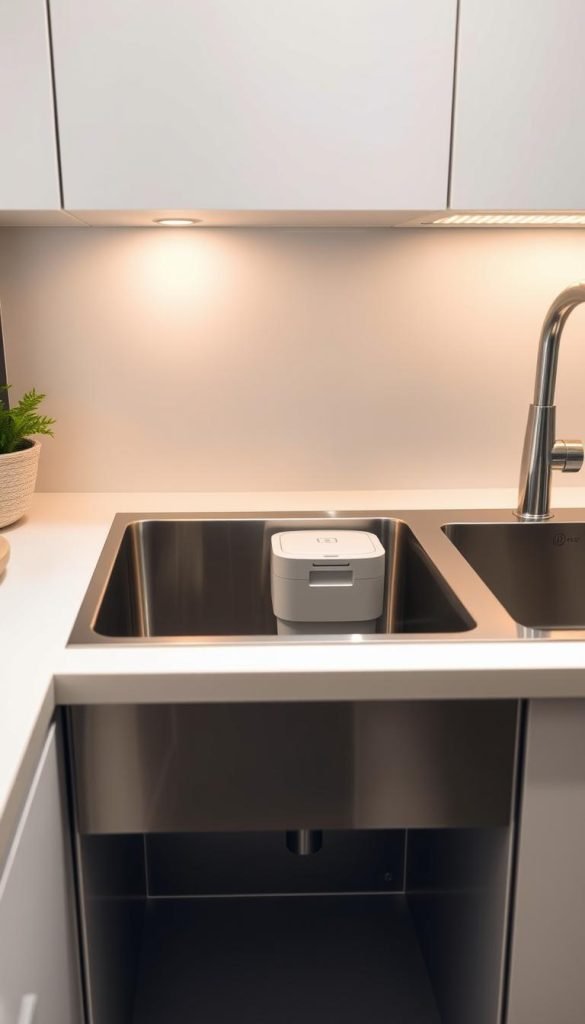
Best overall quiet pick: InSinkErator Evolution Advanced Series
Why I like it: compact, heavily insulated, 1 HP motor with multi-stage grinding at about 1,725 RPM. It grinds fast and stays muted, though some units ship without a power cord.
Quietest batch-feed pick: Moen Host Series
Why I like it: 3/4 HP, roughly 2,700 RPM vortex motor plus sound-shield insulation. Batch-feed operation adds safety and often includes a pre-connected power cord and long warranty.
Best value for quiet performance: Waste Maid standard series
Why I like it: 1/2 HP, ~2,600 RPM, stainless steel grinding components and anti-jam design. It’s a solid value when price matters and you want reliable, quiet-enough daily use.
Best compact quiet choice: InSinkErator Badger 5/5XP
Why I like it: Space-friendly 0.75 HP unit, 1,725 RPM, stainless components and a quick-lock mount. It fits small cabinets and can connect to a switched outlet for easy control.
Most powerful that’s still reasonably quiet: Bone Crusher BC-1000
Why I like it: 1.25 HP and ~2,800 RPM with a balanced grinding system and anti-jam impellers. Great for heavier food waste and occasional bones without excessive vibration.
- Tip: Check insulation, motor HP, and whether a power cord is included before you buy.
- Note: Stainless steel components help keep long-term noise down as parts wear.
“I picked these models to match different kitchens—small spaces, budget installs, or high-use homes—so you can choose based on noise, space, and price.”
What actually makes a garbage disposal quiet?
I listen closely to how vibration and tone change when a unit grinds a mix of bones and vegetables. That hands-on check helps me separate marketing claims from real hush performance.
Sound insulation and cabinet buffering
Thick insulation around the unit and a closed cabinet make a big difference. In my tests, heavier units with insulated wraps lowered measured decibels and softened sharp ringing.
Motor design and grinding components
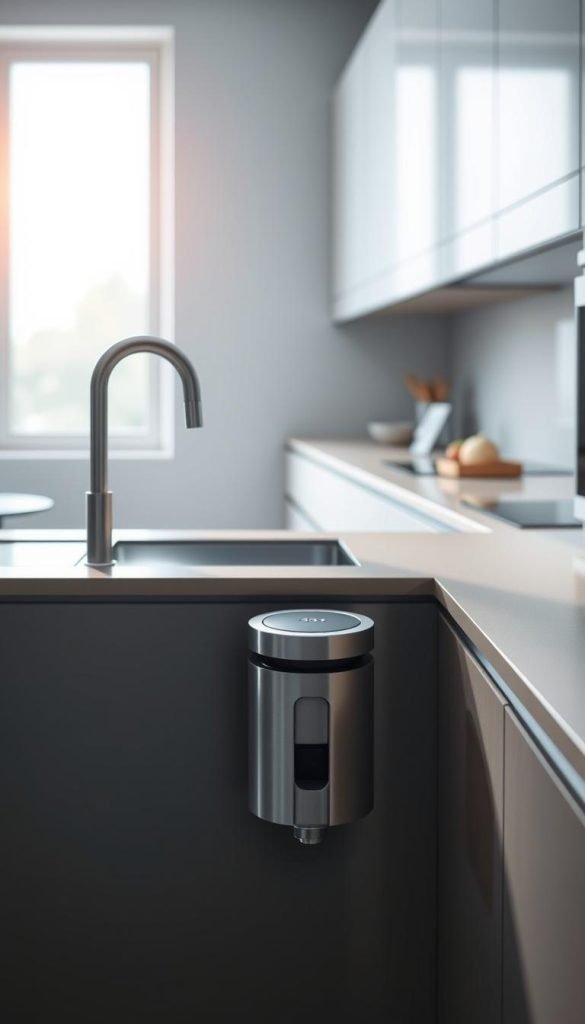
A balanced motor and precision grinding components cut rattles. Multi-stage grinding also creates finer particles and smoother operation, which reduces strain and occasional loud bursts.
Weight, housing materials, and anti-vibration mounts
Weight often signals more insulation and sturdier housing. Anti-vibration mounts and better flange designs decouple the unit from the sink so less vibration travels into surrounding space.
| Feature | How it reduces sound | What I look for |
|---|---|---|
| Insulation | Absorbs high and mid frequencies | Thick wraps, closed cabinet fit |
| Motor & components | Reduces rattles and growl | Balanced plates, multi-stage grind |
| Mounts & weight | Limits vibration transfer | Anti-vibe mounts, heavy housing |
Continuous feed vs. batch feed: Which is quieter in real life?
I listen for how sound leaves the sink opening and how a stopper or cover changes that path. My tests show these two feed styles behave differently in a real kitchen. One style seals the opening, while the other runs on demand from a wall switch and lets you feed scraps as you work.

How batch-feed stoppers cut noise and boost safety
Batch-feed units are quieter in my experience because the stopper acts as a built-in guard and muffles airborne sound. The cover also prevents accidental contact with rotating parts, which adds safety.
Why continuous-feed models dominate and how to use them quietly
Continuous-feed disposals are the most common option. They run via a switch on the wall and let you feed trash while the unit spins. That makes them fast and flexible across price points.
- Run steady cold water and add scraps gradually to avoid loud spikes.
- Use a well-fitted stopper or baffle when available to reduce noise escape.
- Pick models with heavy insulation and balanced internals for gentler operation.
| Feature | Batch-feed | Continuous-feed |
|---|---|---|
| Typical noise | Lower (stopper muffles sound) | Higher if uninsulated; steady with good damping |
| Safety | High (won’t run without cover) | Standard (depends on splash guard) |
| Convenience | Slower, staged loading | Fast, hands-free feeding via wall switch |
| Price & options | Fewer models; similar to high-end continuous | Many options across budgets |
Horsepower and RPM: Finding the sweet spot for quiet power
I focus on how motor size and rpm change runtime and perceived noise during everyday use. Matching power to household needs keeps run time short and helps the unit stay calm under load.
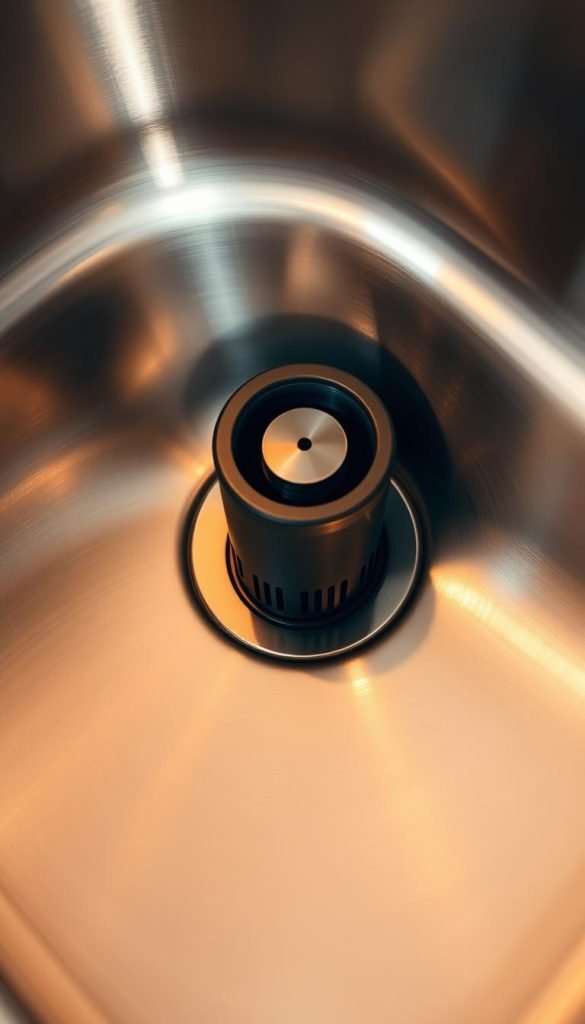
1/2 HP: Good for light kitchens and occasional use. It saves cost but can sound harsher when forced to grind tougher scraps.
3/4 HP: My top pick for most homes. It balances horsepower, speed, and quiet operation when paired with solid insulation.
1 HP and up: Best for larger families or heavy cooking. Higher power often means shorter runs and less motor strain, which can reduce noisy bursts.
How rpm and multi-stage grinding change results
Faster speed usually makes finer particles, lowering clog risk and finishing jobs quicker. Multi-stage grinding chops food into smaller pieces, so the drain stays happier and operation feels smoother.
- My rule: pick at least 3/4 HP for daily cooking.
- For bones or tough scraps: move to 1 HP+ so the motor doesn’t struggle.
- Quietest powerful setups pair higher horsepower with heavy insulation and balanced internals.
Space and installation: Quiet models that fit under your sink
I map the under-sink area before I pick a unit. That small step saves time and prevents awkward installs where a well-insulated unit won’t clear pipes or shelving.
I measure height, diameter, and flange depth. Compact picks like the InSinkErator Badger 5XP sit about 12.63 inches tall with an 8.75-inch diameter. That fits tighter cabinets while heavier, insulated models can be shorter yet wider.
Decide on power delivery early. Many disposals can be hardwired or fitted with a plug-in power cord. A plug-in is easiest if you already have a switched outlet under the sink.
Plan the wall switch for continuous-feed units so you have control at the counter. Also fit a snug baffle or splash guard; it cuts airborne sound and tames minor splash during use.
| Concern | What I check | Why it matters |
|---|---|---|
| Clearance | Height, diameter, flange depth | Ensures unit fits and allows service access |
| Power type | Hardwired vs. plug-in cord | Simpler installs with a switched outlet; hardwire for hidden wiring |
| Sink opening | Baffle / splash guard fit | Reduces noise escape and limits splash |
- I always measure cabinet space first to choose between slim or insulated bodies.
- In tight layouts, a narrower body preserves storage and eases plumbing alignment.
- When comparing a model, I confirm service access so maintenance stays simple later.
My top quiet picks and why I chose them
I narrowed my shortlist to units that blend low vibration, steady tone, and reliable grind under real kitchen loads.
InSinkErator Evolution Advanced Series
Why it stands out: 1 HP with multi-stage grinding and heavy insulation. It runs at ~1,725 RPM and stays muted even under varied food loads.
Note: Some units ship without a power cord, so check before installation.
Moen Host Series GXB/GXS
Why it stands out: 3/4 HP vortex motor at ~2,700 RPM, sound-shield insulation, and batch-feed safety. The included cord and long warranty make installation easier.
InSinkErator Badger 5/5XP
Why it stands out: Space-friendly profile (12.63″ H x 8.75″ dia), 0.75 HP, stainless steel components, and a quick-lock mount for simple installs.
Waste Maid WM-658/158 series
Why it stands out: Value-forward models with stainless steel parts and anti-jam logic. Good speed options (~2,600 RPM) for budget-conscious buyers.
Bone Crusher BC-1000
Why it stands out: 1.25 HP and ~2,800 RPM with balanced grinding internals, anti-jamming impellers, and extra capacity for heavier food loads.
“Across these models I listen for low, steady tones and minimal vibration through the sink.”
- I weigh inclusion of a power cord, ease of installation, and warranty when I pick a model.
- Good insulation and stainless components help keep sound and wear low over time.
What are the quietest garbage disposals that won’t wake the baby?
I compare units by running typical food scraps while noting how little sound escapes the cabinet. Night tests show which models mask sharp tones and keep a steady hum so evening routines stay calm.
Noise-first shortlist with use-case matches
InSinkErator Evolution Advanced 1 HP — My go-to for late-night runs. The insulated housing and multi-stage grind cut re-grinds and produce fine particles with a low, steady tone.
Moen Host Series (3/4 HP, batch-feed) — Best when you want extra hush and safety. The stopper muffles airborne noise while keeping food scraps contained between cycles.
Badger 5XP (0.75 HP) — Fits tight cabinets and stays reasonably quiet for quick nightly tidy-ups in small kitchens.
Bone Crusher BC-1000 (1.25 HP) — For heavier waste, its balanced system reduces vibration and keeps output steady under load.
Waste Maid value series — Budget-friendly options that still tame operational sounds for routine nighttime use.
Why insulation and multi-stage grinding matter most at night
Insulation stops high-frequency ringing and softens the sound that reaches the room. A well-wrapped unit makes a big difference when your goal is minimal disturbance.
Multi-stage grinding reduces the need to re-run scraps. Fewer re-grinds mean less runtime and less chance of spikes in noise while you finish cleaning.
“I reach for an insulated, multi-stage unit for bedtime cleanup — it finishes jobs with fewer starts and a smoother tone.”
| Model | Best use | Key quiet feature | Typical power |
|---|---|---|---|
| InSinkErator Evolution Advanced | Nighttime, general use | Thick insulation + multi-stage grind | 1 HP |
| Moen Host Series | Maximum hush & safety | Batch-feed stopper + sound-shield | 3/4 HP |
| Badger 5XP | Small kitchens | Compact profile, balanced motor | 0.75 HP |
| Bone Crusher BC-1000 | Heavy loads | Balanced internals, anti-vibe design | 1.25 HP |
Noise, grind fineness, and clog risk: How performance ties to peace and quiet
My tests sift output through multiple sieves so I can match decibel readings to real particle fineness. That data shows how finer particles reduce drain blockage and keep a unit sounding steady.
Quieter models usually produce smaller particles when given a mix of bones and vegetables. I measure noise with cabinet buffering to mimic a real kitchen and note steady tones versus choppy spikes.
I find more power and the right speed shorten run time. That lowers perceived noise and cuts the chance of noisy re-cycling when large chunks remain.

Multi-stage grinding excels here, breaking food into finer fragments that pass the drain with less water and less fuss.
- I pay close attention to grind fineness because finer particles move through the drain with less resistance.
- Run cold water steadily and feed food scraps gradually to avoid sudden spikes in sound.
- When grinding sounds choppy, expect larger fragments and higher clog risk down the line.
“Finer particles mean smoother runs, fewer clogs, and quieter kitchens.”
| Test metric | What it shows | Result to look for |
|---|---|---|
| Decibel with buffering | Perceived noise in a kitchen | Lower steady db, fewer spikes |
| Particle sieves | Fineness of ground waste | High pass rate through fine mesh |
| Run time | Motor strain and re-grinds | Short cycles with smooth tone |
Pricing, value, and warranty: Getting quiet performance without overspending
When I compare models, I focus on how price buys insulation, better metals, and longer coverage. Most units sit in a $75–$300 range. Batch-feed options are fewer and often price similar to higher-end continuous units.
What you get as you move up: entry models keep cost low but can sound harsher under load. Mid-tier units add thicker insulation and better housings. Premium picks usually include stainless steel internals and longer life while keeping noise down as parts age.

Warranties, service, and total cost
Warranties typically run 5–8 years. Premium brands sometimes offer 10–15 years or limited lifetime coverage. I always read the fine print for parts coverage and in-home service options.
Factor in installation: pro installs often cost $400–$500 depending on labor and complexity. That raises the true price, so plan for total cost including any new wiring or drain work.
“I lean toward models with longer coverage and clear parts support — it pays off with fewer surprises.”
| Tier | Typical price | Key advantage |
|---|---|---|
| Entry | $75–$150 | Low cost; basic performance |
| Mid | $150–$250 | Better insulation; quieter aging |
| Premium | $250–$400+ | Stainless steel internals; long warranty |
- I value stainless steel guts and solid warranty length when I choose a unit.
- If your budget is tight, pick a value model with sensible power to handle food waste without excess noise.
- Include pro install and any drain work in your budget so the final cost matches real home needs.
How I test disposals for quiet performance and real-world use
My lab simulations time each run and capture remaining fragments after a one-minute grind under steady cold water. I use a repeatable bones-and-vegetable mix so results stay consistent across models.
Bones, vegetables, and food scraps: speed and fineness testing
I grind a fixed mix for 60 seconds, then sieve the output to gauge particle fineness. That shows how much food waste clears and how often a unit needs re-runs.
Measuring decibels with cabinet buffering
I record noise in decibels while the unit runs behind a panel that mimics an under-sink cabinet. This helps me see how sound and vibration transfer to the sink and counter.
- I run repeatable cycles with bones and vegetables to check clearing speed and fragment size.
- I measure noise with cabinet buffering to reflect typical under-sink conditions.
- I monitor water flow and drain clearing to spot lingering rattles or clogs.
- I compare models to find units that keep steady tone and few large fragments.
- I check vibration transfer through mounts and housing to assess perceived sound.
“I design each test to mirror everyday cleanup so results match real kitchens, not just lab numbers.”
| Test | Method | What it shows |
|---|---|---|
| One-minute grind | Standard bones & veg mix | Clearing speed and need for re-runs |
| Sieve analysis | Multiple mesh sizes | Particle fineness and clog risk |
| Decibel read | Buffered cabinet setup | Perceived noise in a real kitchen |
Care, use, and maintenance tips to keep your disposal quiet
I follow a simple routine to keep noise low and prevent jams during everyday kitchen cleanup. Small actions during use preserve quiet performance and reduce long-term wear.
What to grind — and what to skip
I feed small amounts of food scraps at a time and break large pieces into halves or quarters. This lowers stress on the motor and cuts loud surges caused by big chunks.
I avoid non-food trash, stringy fibrous bits, and large bones. These items can wedge the chamber or clang against metal and create sharp, loud noises.

Splash guard care, deodorizing, and clearing jams safely
Run a steady stream of cold water before, during, and after grinding to flush particles down the drain and keep operation smooth.
Clean the splash guard regularly; a dirty guard can flap and amplify sound, while a clean guard muffles better.
For odors, I grind small citrus peels with cold water to freshen and help keep stainless steel parts cleaner.
- When a jam occurs: cut power at the breaker, then use the anti-jam hex key or pliers to free stuck trash safely.
- I never reach in with bare hands; I use tongs or insulated tools instead.
- Mindful, steady feeding and routine cleaning equal longer life and quieter work.
| Action | Why it helps | Quick tip |
|---|---|---|
| Feed small batches | Prevents spikes and motor strain | Cut large scraps into smaller pieces |
| Run cold water | Flushes particles and limits clogs | Keep steady flow for 10–15 seconds after |
| Clean splash guard | Reduces flap noise and buildup | Wipe weekly with mild soap |
| Citrus deodorize | Freshens and polishes internals | Use lemon or orange peels sparingly |
“Steady habits — small feeds, cold water, and a clean guard — keep a unit quieter and working longer.”
Installation: DIY versus pro help for a quieter, safer setup
I weigh installation choices by how they affect vibration, alignment, and long-term quiet operation. A neat fit under the sink matters as much as model choice. Poor mounting or loose drains can turn a quiet unit into a noisy one.
Many modern units use three-bolt or quick-lock mounts that make an easy install possible for a careful DIYer. If a disposal includes a pre-installed power cord and there is a switched outlet under the sink, I often tackle the swap myself.
Three-bolt mounts, EZ systems, and when to call a pro
- I consider DIY when the unit has an EZ or three-bolt mount and a plug-in power cord is ready.
- If hardwiring is required or there is no wall switch, I weigh safety and time before hiring an electrician.
- Proper alignment of mount, trap, and drain reduces vibration and prevents leaks that cause noisy operation.
- Easy install systems help first-time users get a snug, rattle-free fit that sounds quieter in daily work.
- I budget for pro help—typically $400–$500—when electrical or tight clearances risk voiding warranty or creating future issues.
“A careful, correct install pays off in lower vibration, fewer rattles, and a calmer operating tone every time you flip the switch.”
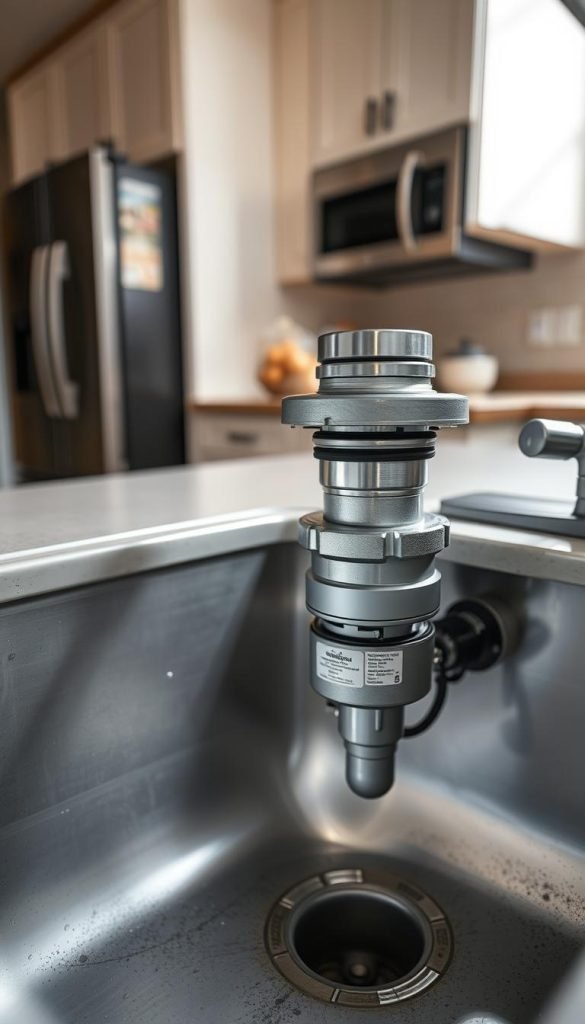
| Situation | DIY | Call a pro |
|---|---|---|
| Mount type | EZ/three-bolt | Unusual flange or retrofit |
| Electrical | Plug-in to switched outlet | Hardwire or new wall switch |
| Risk | Low with clear access | High when space or warranty concerns exist |
Conclusion
My final take draws on model tests, install notes, and years of real kitchen use, and it comes down to balance.
I recommend insulated, multi-stage units like InSinkErator Evolution and batch-feed Moen Host when calm matters most. For tight cupboards, Badger 5XP fits well. For heavy cooking, Bone Crusher BC-1000 gives power without harsh vibration.
Pick a unit with stainless steel internals, the right horsepower, and matched speed so grinding stays smooth over years. Match the model to your space, wiring, and habits, and use steady feeding and cold water to keep sound low.
With the right model choices and a few smart habits, your kitchen can handle daily waste quietly and reliably — it’s easier on your home and on your mind.