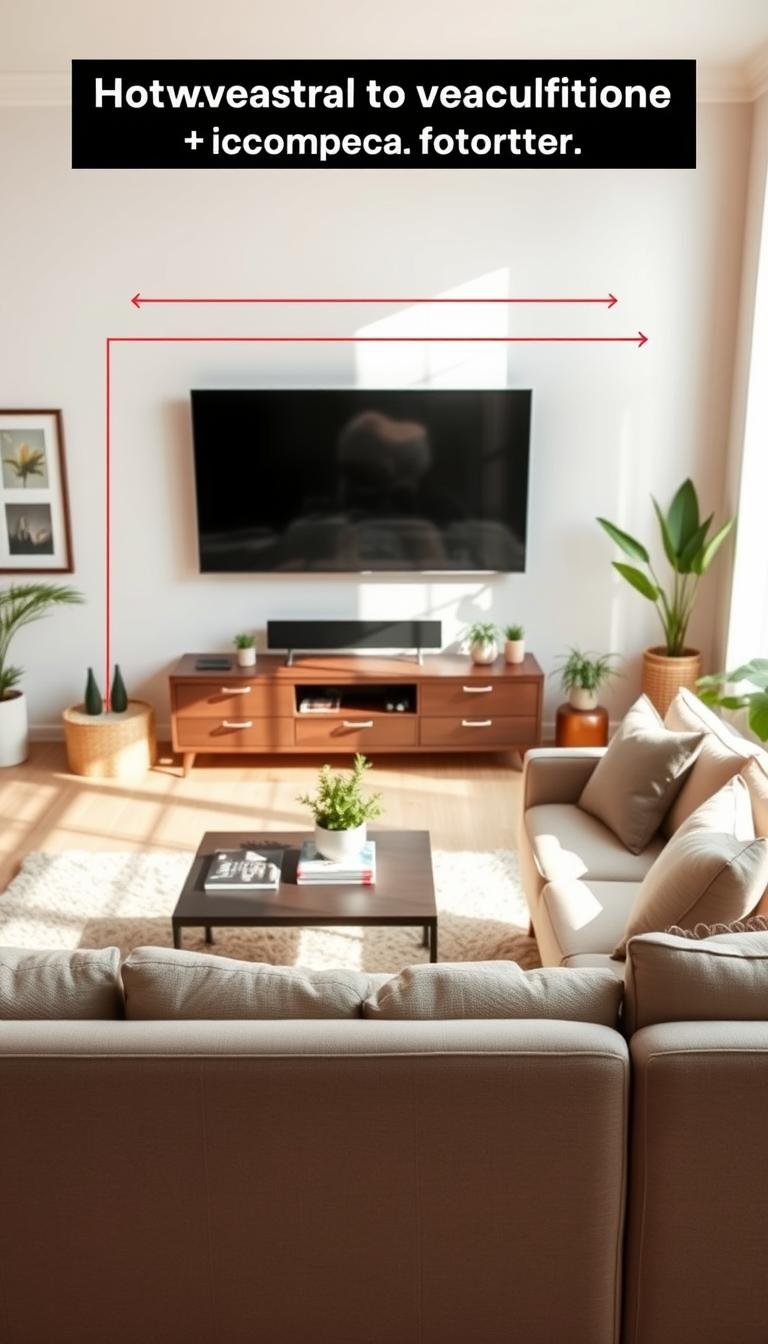
What’s the ideal distance between a sofa and a wall-mounted TV?
Getting your sofa and TV placement right transforms your viewing experience. It’s about more than just measurements – it’s creating a comfortable space where you can truly relax.
Proper distance prevents eye strain and neck discomfort. It also enhances picture quality and makes movies more immersive. Your room layout and screen size play crucial roles in finding that sweet spot.
Wall mounting gives you flexibility in positioning. You can adjust the height and angle for perfect viewing. This setup helps achieve better alignment than traditional TV stands.
I’ll help you understand the key factors for your space. We’ll explore how to balance comfort with an awesome entertainment experience. Let’s create a setup where every show feels just right.
Key Takeaways
- Correct distance prevents eye strain and improves viewing comfort
- Screen size and room dimensions determine optimal placement
- Wall mounting offers better positioning flexibility than stands
- Proper alignment enhances picture quality and immersion
- Personal comfort preferences matter as much as measurements
- Good setup creates a more enjoyable entertainment experience
- Balance between distance and viewing angle is crucial
Why Proper TV-to-Sofa Distance Matters for Your Viewing Experience
The relationship between your viewing position and television placement determines whether movie night feels like a cinema experience or causes discomfort. Getting this spacing right transforms how you enjoy entertainment in your living space.

Many people don’t realize how much their seating arrangement affects their overall enjoyment. The right setup can make your favorite shows more immersive and comfortable.
The connection between distance and eye comfort
Sitting too close to your television can cause real physical discomfort. The American Optometric Association found that 59% of U.S. adults experience digital eye strain from screens.
Prolonged exposure to bright displays at close range leads to symptoms like dryness, fatigue, and headaches. Your eyes work harder when they’re too near the action.
According to experts, “improper viewing distance reduces overall experience quality” and can make watching TV uncomfortable rather than enjoyable.
Here’s what happens when you’re positioned incorrectly:
| Viewing Position | Eye Comfort Impact | Recommended Action |
|---|---|---|
| Too Close | Eye strain, dryness, headaches | Move seating further back |
| Too Far | Reduced immersion, squinting | Adjust seating closer |
| Optimal Distance | Comfortable viewing, no strain | Maintain current setup |
Bright screens viewed from short distances particularly exacerbate these issues. Modern televisions with high brightness levels demand careful positioning.
How improper positioning affects your viewing quality
Distance doesn’t just impact your eyes – it changes how you perceive the picture. Sitting too close makes the image appear pixelated and overwhelming.
You might find yourself moving your head to see the entire screen. This constant motion breaks the immersion and reminds you you’re watching a display, not experiencing content.
The Society of Motion Picture and Television Engineers notes that 64% of U.S. households report discomfort from poorly positioned televisions. This statistic shows how common this issue really is.
Proper spacing allows you to appreciate the screen size and resolution fully. You’ll notice details you might miss when sitting too close or too far.
For those looking to optimize their viewing setup, understanding these principles is crucial. The right distance creates that cinematic feel at home.
Testing your current arrangement is simple. Notice if you feel any discomfort after long viewing sessions. Check if you need to move your head to see different parts of the screen.
Remember, this isn’t just about avoiding negatives. The perfect spacing enhances your overall entertainment experience, making every show more enjoyable.
Understanding the Basic Formula for Ideal Viewing Distance
Finding that perfect spot for your couch doesn’t require complex math. I’ll show you a simple formula that works for most living rooms. This approach considers both comfort and picture quality.
Let me walk you through the basic calculation method. You’ll need just two measurements: your TV’s diagonal screen size and your room dimensions.
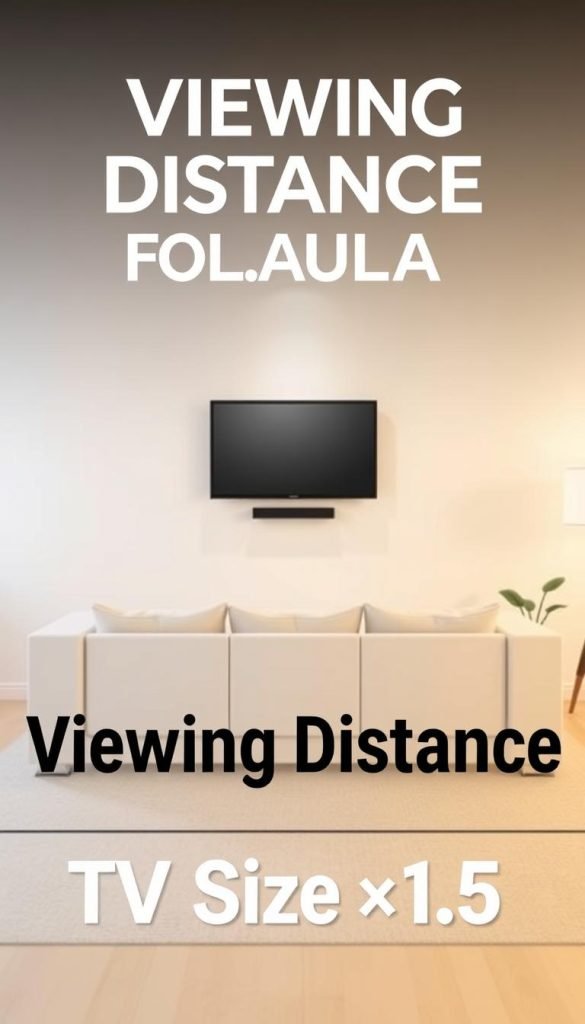
The 1.5 to 2.5 times screen size rule
Here’s the golden rule I always recommend. Multiply your TV’s diagonal measurement by 1.5 and 2.5. This gives you the ideal range in feet for your seating position.
For a 55-inch television, the math works like this:
- 55 inches × 1.5 = 82.5 inches (6.9 feet)
- 55 inches × 2.5 = 137.5 inches (11.5 feet)
Your couch should sit between 6.9 and 11.5 feet away. This range ensures comfortable viewing without straining your eyes.
This formula works because it matches human visual capabilities. Your eyes can comfortably take in the entire screen within this distance.
How TV resolution impacts viewing distance
Modern televisions change the game completely. Higher resolution screens like 4K and 8K allow much closer viewing.
You can sit nearer to these advanced displays without seeing pixels. The increased pixel density creates sharper images at shorter distances.
Compare these two scenarios for the same 55-inch screen:
| TV Type | Minimum Viewing Distance | Maximum Viewing Distance |
|---|---|---|
| 4K Ultra HD | 5 feet | 11.5 feet |
| Standard HD | 8 feet | 11.5 feet |
4K models let you enjoy the action from just 5 feet away. Standard HD requires more space to avoid visible pixelation.
This flexibility is fantastic for smaller rooms. You can choose larger screens without sacrificing picture quality.
Remember to measure your TV’s diagonal size accurately. Use a tape measure from corner to corner for the correct dimension.
These guidelines provide an excellent starting point. Adjust based on your personal comfort and room layout for the best experience.
TV Size Guidelines: Finding Your Perfect Distance
Choosing the right television for your space makes all the difference in creating that perfect entertainment zone. I’ll help you match screen dimensions to your room layout for maximum enjoyment.
Different sizes work better in various spaces. Smaller models fit cozy apartments while larger screens transform open areas into home theaters.
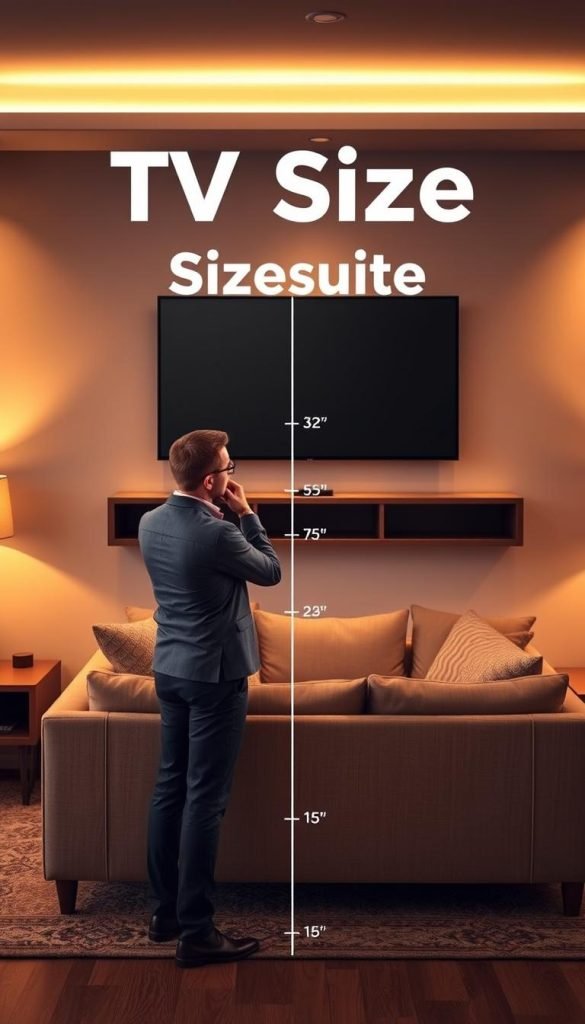
32-42 inch TVs: The compact space solution
These smaller screens work beautifully in bedrooms, kitchens, or compact living areas. They provide excellent viewing without dominating the room.
For standard HD models, here are my recommended distances:
- 32-inch: 4.5 feet away
- 36-inch: 5 feet from your couch
- 42-inch: 6 feet for optimal viewing
4K models allow even closer seating. You can sit about 25% nearer without losing picture quality.
These sizes keep your space feeling open and airy. They’re perfect when you want entertainment without the bulk.
50-60 inch TVs: The sweet spot for most living rooms
This range offers the best balance for typical family spaces. You get immersion without overwhelming your room.
Here’s what works best for these popular sizes:
| Screen Size | Recommended Distance | Best For |
|---|---|---|
| 50-inch | 7 feet | Medium living rooms |
| 55-inch | 7.5 feet | Standard family spaces |
| 60-inch | 8.5 feet | Larger entertainment areas |
These measurements create that theater-like experience at home. You’ll appreciate the larger screen without straining your eyes.
As one home design expert noted, “Mid-size televisions provide the perfect balance between presence and practicality in most American homes.”
70+ inch TVs: Creating a home theater experience
Big screens make movie nights truly spectacular. They transform your living area into a personal cinema.
For these larger models, you’ll need more space:
- 70-inch: 10 feet viewing distance
- 75-inch: 11 feet from your seating
- 80-inch+: 12 feet or more
Remember that 4K technology changes these numbers. You can sit closer with higher resolution screens.
These massive displays work best in open concept rooms. They need space to breathe and shine.
Here’s a simple trick I always recommend: measure your room first. Take your sofa-to-wall measurement and divide by two.
A 12-foot space suggests about a 72-inch television. This calculation helps match screen size to your actual room dimensions.
Most homes find 42 to 75 inches works well. It’s about balancing screen presence with comfortable living space.
The right choice depends on your room size and viewing preferences. Smaller spaces benefit from compact screens while open areas can handle larger displays.
Consider your resolution too. 4K TVs offer more flexibility in positioning your couch.
Ultimately, you want a setup that feels both cozy and functional. Whether you’re in a compact apartment or spacious home, these guidelines help create your perfect viewing experience.
What’s the Ideal Distance Between a Sofa and a Wall-Mounted TV for Different Screen Sizes?
Let’s explore specific viewing distances for popular television sizes to create your perfect entertainment setup. Different displays require tailored spacing solutions for maximum comfort and immersion.
I’ll break down the exact measurements you need for three common screen dimensions. These guidelines help you achieve that theater-like experience right in your living room.
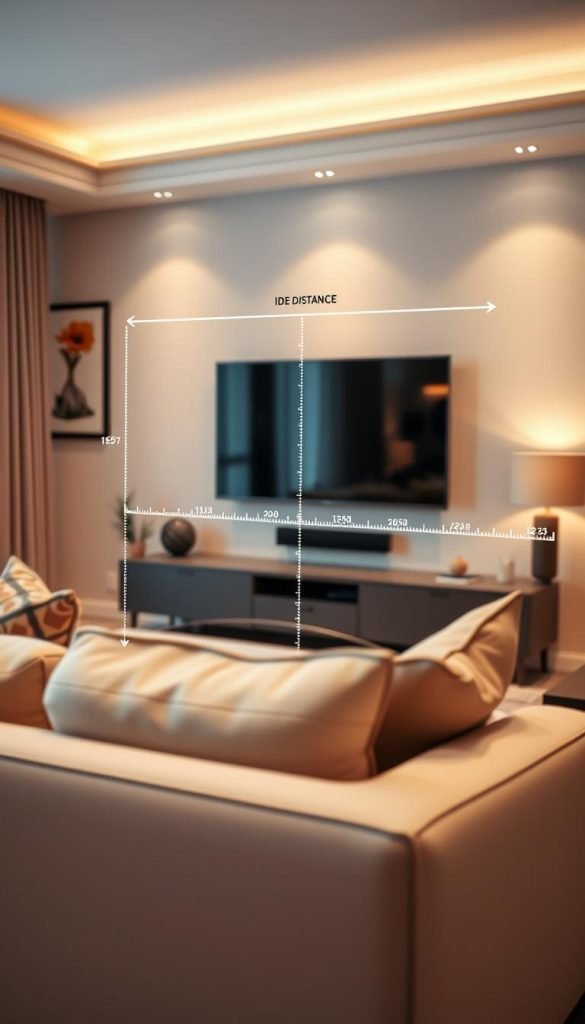
55-inch TV: 6.9 to 11.5 feet viewing range
This popular size works beautifully in most living spaces. The sweet spot falls between 6.9 and 11.5 feet from your seating position.
That’s approximately 213 to 350 centimeters for those who prefer metric measurements. This range provides excellent viewing without eye strain.
The Society of Motion Picture and Television Engineers recommends your display occupy about 30 degrees of your field of vision. For a 55-inch model, this translates to roughly 7-8 feet as an ideal starting point.
Wall mounting gives you flexibility to adjust height and tilt. You can perfect your angle for comfortable viewing sessions.
65-inch TV: 8 to 13.5 feet optimal distance
Larger screens need more space to shine. Position your couch 8 to 13.5 feet away from a 65-inch television.
In metric measurements, that’s 244 to 411 centimeters. This spacing allows you to appreciate the bigger picture without overwhelming your space.
Many homeowners find this size perfect for family movie nights. The increased screen real estate creates more immersive experiences.
Remember that 4K resolution models allow closer seating. You can reduce these distances by about 25% with higher-resolution displays.
75-inch TV: 9.5 to 15.5 feet for immersive viewing
Big screens transform your room into a personal cinema. For 75-inch models, aim for 9.5 to 15.5 feet between your seating and the display.
That’s 290 to 472 centimeters for precise setup. These massive screens need room to breathe and deliver their full impact.
You’ll notice how content becomes more engaging at this scale. Movies and sports events feel like you’re right in the action.
Always consider your room layout when working with larger displays. Proper spacing ensures comfortable viewing from all seating positions.
Here’s a quick reference table for these popular sizes:
| Screen Size | Minimum Distance | Maximum Distance | Ideal Starting Point |
|---|---|---|---|
| 55-inch | 6.9 feet (213 cm) | 11.5 feet (350 cm) | 7-8 feet |
| 65-inch | 8 feet (244 cm) | 13.5 feet (411 cm) | 9-10 feet |
| 75-inch | 9.5 feet (290 cm) | 15.5 feet (472 cm) | 11-12 feet |
Measuring accurately makes all the difference. Use a tape measure or laser distance meter for precise placement.
Smaller rooms might require sitting at the closer end of these ranges. You can still achieve great immersion with proper positioning.
As one home theater expert noted, “The right spacing transforms how you experience content, making every viewing session more enjoyable and comfortable.”
Consider your room configuration when planning your entertainment setup. The layout affects how you experience your television from different angles.
These guidelines help create that perfect balance between screen presence and viewing comfort. Your space will feel both functional and inviting.
Setting Up Your Sofa for Maximum Comfort and Viewing Pleasure
Comfortable seating transforms good viewing into great experiences. Your sofa choice directly impacts how you enjoy movies and shows in your living space.
The right furniture setup prevents physical discomfort during long sessions. It also enhances your overall entertainment quality at home.
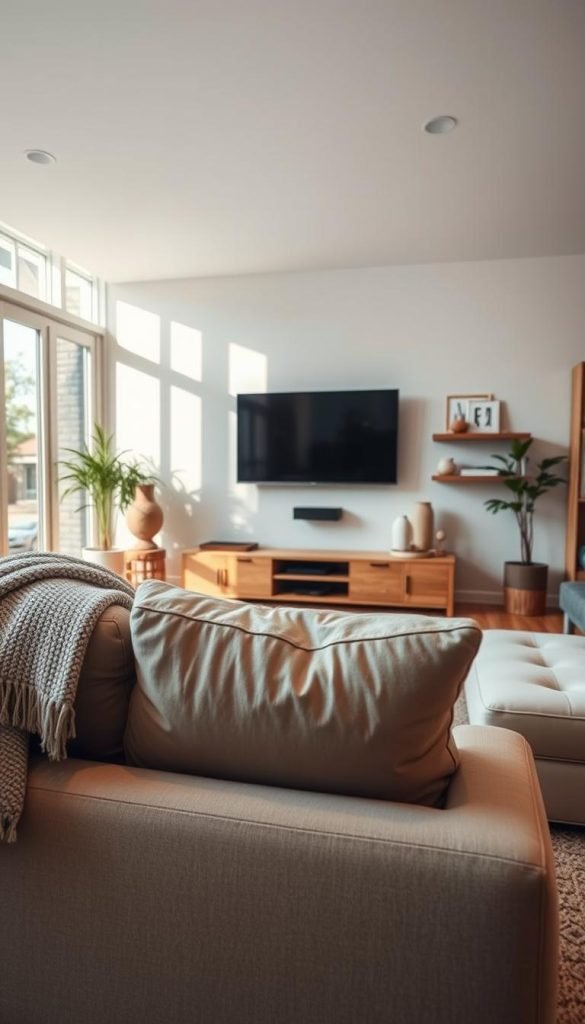
Choosing the right sofa height and depth
Standard sofa height measures about 18 inches from the floor. This positions your eyes at the perfect level when the TV center hangs at 42 inches.
Proper alignment reduces neck strain and keeps your viewing comfortable. You won’t need to crane or slouch to see the screen clearly.
Depth matters just as much as height for lounging comfort. While 21-24 inches works for most people, deeper options provide better relaxation.
The Owen Chaise Sectional offers around 30 inches of depth. This extra space lets you stretch out during extended movie nights.
Optimal sofa configurations for different room sizes
Small spaces need compact solutions that maximize available area. Loveseats or L-shaped sectionals work beautifully in cozy rooms.
The Marlow Performance Boucle Armless 2-seater fits perfectly in tight layouts. It provides comfortable seating without overwhelming your space.
Larger rooms can handle more substantial furniture arrangements. Sectionals with chaises create inviting entertainment zones for groups.
Always measure your space before selecting any furniture. Test different configurations to find what works best for your needs.
The benefits of recliner sofas for extended viewing
Recliners offer adjustable comfort positions for various activities. You can sit upright for games or recline for movies.
These sofas need proper spacing for full functionality. Leave 12-18 inches between the furniture and wall for smooth reclining.
Position recliners about 8.5 feet from a 60-inch television. This distance provides optimal viewing without eye strain.
Recliner sofas transform your living area into a personal theater. They provide customized comfort for every type of content.
Your sofa arrangement affects room flow and aesthetic appeal. Keep pathways clear and maintain the television as your focal point.
I’ve helped many friends create perfect entertainment setups. The right furniture choices make all the difference in viewing pleasure.
Remember to consider both comfort and visual appeal. Your space should feel inviting while supporting extended viewing sessions.
These tips complement the distance guidelines we discussed earlier. Together they create an exceptional home entertainment experience.
Additional Factors That Impact Your Viewing Setup
Beyond just measurements, several elements work together to create your perfect entertainment space. I’ve discovered that paying attention to these details makes a huge difference in daily enjoyment.
Your room’s configuration affects how you experience content. Lighting, furniture arrangement, and mounting options all contribute to that cinema-like feel at home.
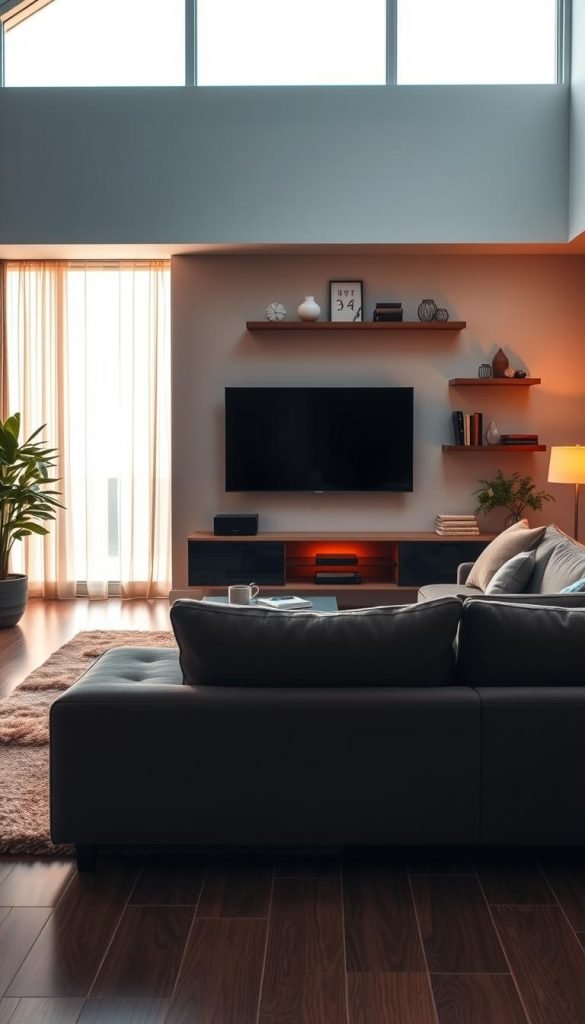
Room layout and furniture placement considerations
Position your television perpendicular to windows whenever possible. This simple trick dramatically reduces glare and improves picture quality.
I recommend leaving 12-18 inches between your couch and the wall. This gap allows proper airflow and prevents furniture scuffing.
Smaller spaces can reduce this to 6-8 inches. The key is maintaining comfortable movement around your seating area.
According to Feng Shui principles, this space encourages positive energy flow. It makes your room feel more open and inviting.
Here’s a quick reference for different room sizes:
| Room Size | Sofa-Wall Gap | Recommended TV Size |
|---|---|---|
| Small (under 12×12 ft) | 6-8 inches | 32-50 inches |
| Medium (12×16 ft) | 12-15 inches | 55-65 inches |
| Large (over 16×20 ft) | 15-18 inches | 70+ inches |
Lighting conditions and glare reduction techniques
Natural light can create frustrating reflections on your screen. Quality blinds or curtains help control unwanted glare throughout the day.
For evening viewing, I suggest layered lighting solutions. Combine ambient ceiling lights with focused task lighting.
This approach reduces eye strain during long movie nights. It creates a comfortable atmosphere for all types of content.
Anti-glare screen protectors offer another effective solution. They work particularly well in bright rooms with large windows.
Wall mounting advantages for optimal positioning
Wall mounting provides incredible flexibility for your setup. You can adjust both height and viewing angle with precision.
This method helps achieve perfect eye level alignment. Most viewers find the center of the screen should sit at eye height when seated.
Mounting also saves valuable floor space in smaller rooms. It creates a cleaner look while improving your overall experience.
Proper viewing angles make content more immersive and comfortable. Horizontal angles should stay within 30-40 degrees.
Vertical angles work best within 15 degrees of eye level. These ranges prevent neck strain during extended viewing sessions.
Adjustable mounts let you fine-tune positioning based on room conditions. They’re worth the investment for serious entertainment enthusiasts.
Remember that every space has unique characteristics. Test different configurations to find what works best for your living area.
These tips help create a functional and comfortable environment. Your viewing experience will improve dramatically with these adjustments.
Common Mistakes to Avoid When Positioning Your TV and Sofa
Even with perfect measurements, simple errors can ruin your viewing experience. I’ve seen many people make these common setup mistakes that cause discomfort and reduce enjoyment.
Let me walk you through the most frequent positioning errors I encounter. These simple adjustments can transform your entertainment space from frustrating to fantastic.
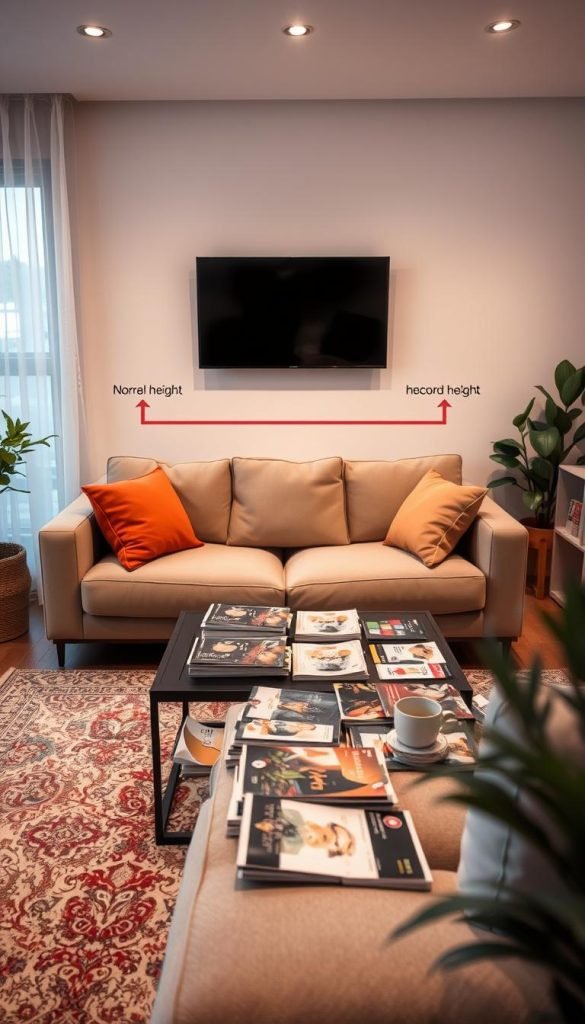
Placing the TV too high or too low
Mounting your television at the wrong height creates immediate problems. The screen center should align with your eye level when seated comfortably.
This typically means about 42 inches from the floor to the middle of your display. Proper height prevents neck strain during long viewing sessions.
I often see televisions mounted above fireplaces or too low on stands. Both positions force uncomfortable viewing angles that lead to physical discomfort.
Correct height placement ensures natural viewing without craning or slouching. Your eyes should meet the screen center directly when sitting upright.
Ignoring viewing angles and sight lines
Viewing angle mistakes distort your picture quality and cause eye strain. The ideal horizontal range falls between 30-40 degrees from center.
Vertical angles should stay within 15 degrees of eye level. These ranges maintain image integrity and viewing comfort.
Test sight lines from every seating position in your room. Ensure everyone has a clear view without obstructions or extreme angles.
Furniture placement affects these angles dramatically. Arrange your seating to maximize comfortable viewing positions for all viewers.
Overlooking room flow and space constraints
Many people push their sofa flush against the wall without considering consequences. This mistake limits functionality and disrupts room flow.
Leave 12-18 inches between your couch and the wall in standard rooms. Smaller spaces can reduce this to 6-8 inches while maintaining comfort.
This gap allows proper reclining space and improves air circulation. It also creates a more open feeling in your entertainment area.
Balance furniture size with your room dimensions for optimal flow. Oversized pieces in small rooms create cramped, uncomfortable spaces.
Consider these spacing guidelines for different room sizes:
| Room Size | Sofa-Wall Gap | Furniture Size |
|---|---|---|
| Small (under 12×12 ft) | 6-8 inches | Compact sectionals |
| Medium (12×16 ft) | 12-15 inches | Standard sofas |
| Large (over 16×20 ft) | 15-18 inches | Expansive sectionals |
Lighting position often gets overlooked during setup. Avoid placing your television where glare from windows or lamps affects the screen.
Anti-glare treatments help when repositioning isn’t possible. They maintain picture quality in challenging lighting conditions.
Testing your setup from multiple positions reveals potential issues. Sit in every seat and check for comfortable viewing without strain.
These adjustments create a space that works beautifully for entertainment and daily living. Your room will feel both functional and inviting.
Remember that proper furniture placement enhances both comfort and aesthetic appeal. It’s worth taking time to get right.
Avoiding these common mistakes ensures your entertainment space delivers maximum enjoyment. You’ll appreciate the difference during every viewing session.
Conclusion: Creating Your Perfect Viewing Environment
Crafting your ultimate entertainment space brings together all we’ve explored. Proper spacing prevents eye strain and enhances picture quality for immersive movie nights.
Remember that golden rule: multiply your screen size by 1.5 to 2.5 for optimal feet away measurements. This formula adapts beautifully to various room layouts and television resolutions.
Your sofa setup plays a crucial role in viewing comfort. Ensure the center of your display sits at eye level when seated. This simple adjustment prevents neck strain during long sessions.
Lighting conditions and furniture placement complete the experience. Position your television to avoid glare while maintaining comfortable viewing angles from all seats.
I encourage you to experiment with these guidelines. Every space has unique characteristics that influence your perfect setup. Trust your comfort preferences alongside these recommendations.
Share your success stories or questions about creating that ideal viewing environment. Your living area can become a personal cinema with thoughtful planning and measurement.
Your perfect entertainment haven awaits with these practical tips. Enjoy transforming your space into a comfortable retreat for all your viewing pleasures.