What’s the best height to mount a 65-inch TV above a fireplace?
I start each project by defining “best” as the most comfortable viewing that keeps the fireplace as a focal point. I usually aim for the screen center near 40 inches from the floor because that lines up with most seated eye level.
I note that for a typical 65-inch set this baseline often places the bottom edge around 24 inches off the floor. When a mantel is present, I place the bottom of the screen about 3–4 inches above the mantel so the view stays clear and the install looks intentional.
Mounting over a fireplace can strain the neck, so I prefer a tilt or pull-down mount to bring the image closer to a natural gaze. I also weigh mantel height, heat and clearances first so I don’t sacrifice safety or screen life.
Key Takeaways
- Use a 40-inch center baseline for relaxed viewing from seated positions.
- For a 65-inch set, expect the bottom edge near 24 inches from the floor.
- Place the screen 3–4 inches above a reasonable mantel when possible.
- Choose a tilt or pull-down mount to reduce upward neck strain.
- Balance size, seating distance, and design so the installation fits the space.
The quick answer for a 65-inch TV above a fireplace (and why I recommend it)
My quick rule is simple: if your mantel allows, I set the bottom edge about 3–4 inches above it. That keeps the screen tidy and keeps viewing comfortable for most people seated in the room.
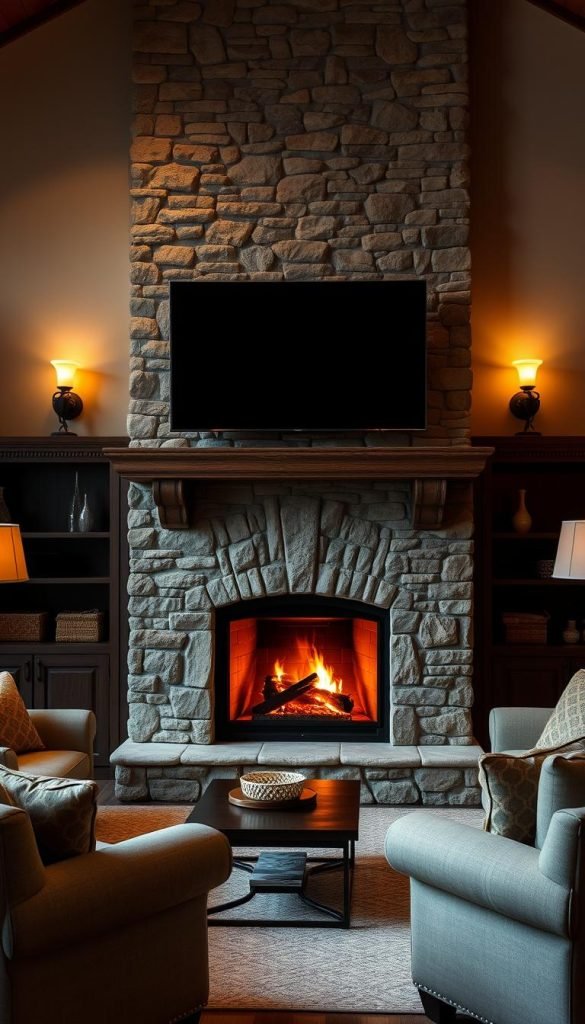
When no mantel limits placement, I center the screen near 40 inches from the floor as my baseline. This baseline maps well to typical eye lines and avoids a high mount that strains the neck.
- I specify a tilting or pull-down bracket when mantel height forces an elevated install.
- I always test sightlines from primary seats; if your gaze tilts upward, I add angle or change the wall location.
- Safety and clearances come first — if fireplaces create extreme elevation, choose a nearby wall or a retracting mount for daily comfort.
Why this works: It’s quick to measure in inches, easy to explain, and flexible across different fireplaces and room layouts.
How I calculate comfortable viewing height at eye level
I begin by measuring where your seated gaze naturally lands, then I mark the wall for the center line. This quick sit-test keeps decisions tied to actual use instead of guesswork.

My baseline: center of screen near 40 inches from the floor for seated viewing
I use a 40-inch center baseline because it aligns with typical seated eye level. For many 65-inch sets that places the bottom about 24 inches above the floor. That combo gives a relaxed view across most sofas.
Neck comfort: when high mounts strain and how tilt helps
Neck comfort is my guardrail. When the center rises above your natural gaze, I add tilt so the image aims back at your eyes. Mount-It! and other pros recommend tilt brackets for this reason.
Adjusting for seating distance and room layout
Seating distance matters. Closer seats can handle a lower center; longer distances sometimes need the center slightly higher for balance. In tight living rooms I check sightlines from the main seat and adjust a few inches so the view feels natural.
- Measure while seated and set the center to your eye target.
- Re-measure against mantel or fireplace dimensions and pick the least straining option.
Fireplace and mantel realities that change the “ideal” height
My first step is to treat the mantel as the primary reference for screen placement and for safety checks.
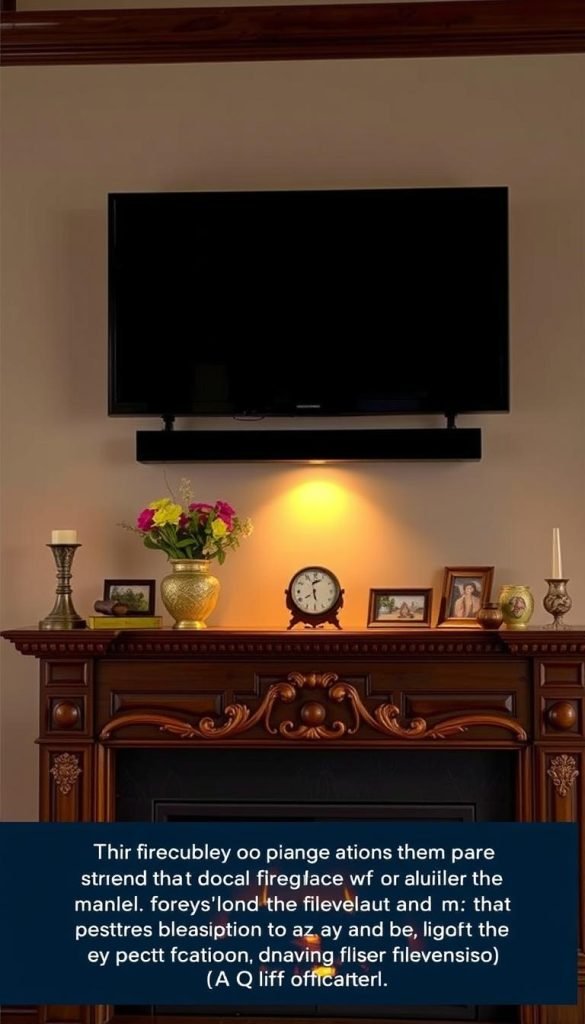
The mantel rule of thumb
I usually place the TV bottom about 3–4 inches above the mantel. That gap keeps trim and stonework from crowding the screen while keeping sightlines tidy.
Heat and electronics
Before I drill, I run a thermometer test taped above the mantel for at least an hour with a fire. Most TVs list safe temps near 104°F, so if readings approach that, I change plans.
Mantel depth and deflecting heat
Mantel depth between 6 and 12 inches helps kick heat forward into the room instead of straight up the wall toward the electronics.
Clearances, warranties, and risky units
With gas or wood-burning units I check clearances and manuals. I may add a heat shield, use a blower, or advise against installing there to protect your home and the screen.
| Issue | Typical guidance | Action I take | Notes |
|---|---|---|---|
| Mantel gap | 3–4 inches | Set TV bottom above mantel | Keeps trim clear |
| Temp test | Run 1+ hour | Measure near mantel | Watch for ~104°F |
| Mantel depth | 6–12 inches | Prefer deeper mantels | Deflects heat forward |
| Fire type | Gas/wood caution | Use shield or choose another wall | Warranties may be void |
I document clearances and temps for warranties and I often recommend a pull-down mount when mantel height forces an elevated install. For more detailed mounting guidance, see my recommended resource: mounting guidance.
Step-by-step: how I mount a TV above a fireplace at the right height
I prepare by checking tools, stud positions, and the bracket specs so the install is predictable. I lay out a stud finder, drill, level, tape, and both television and mount manuals before I measure the wall.
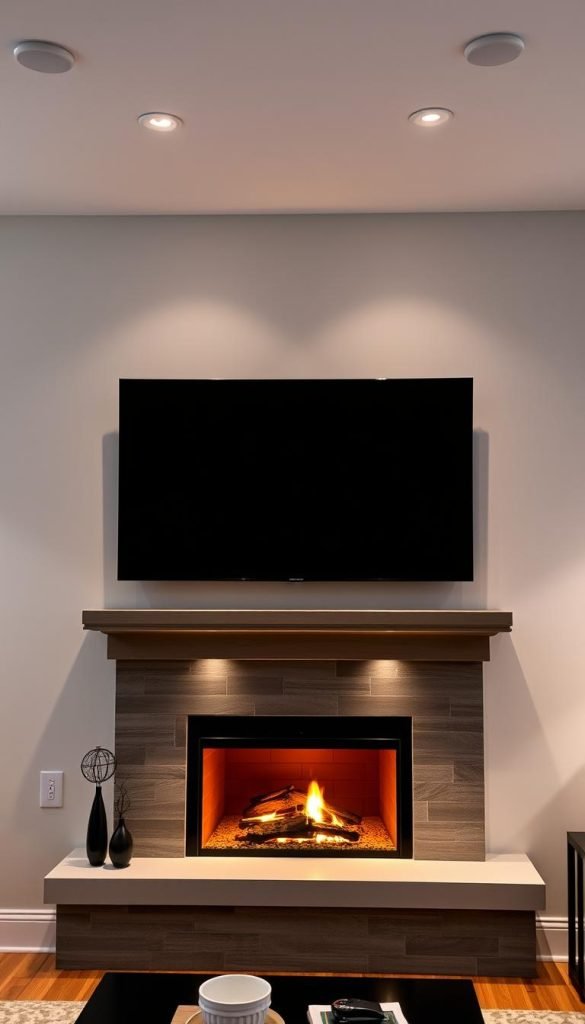
The tools and safety prep I don’t skip
Safety first: I confirm weight ratings, VESA pattern, and clearances from heat sources. I also review manufacturer guidance to protect warranties.
Finding studs and anchoring for a 65-inch television
I map studs and mark solid points for lag bolts. If studs miss the ideal center, I use reinforced blocking behind the wall for a secure installation.
Bracket placement math and hang
I mark my target center from the floor, then subtract the mount’s center-to-plate distance to find the wall plate height. I level the plate, drive fasteners into studs, and test pull force before hanging the screen.
Final adjustments and cable routing
Once hung, I fine-tune tilt to reduce upward gaze and glare. For cables I prefer in-wall rated runs with a power bridge where code allows. If not, I use low-profile covers and label each cable for tidy service paths that keep heat and clearance in mind.
| Step | Action | Key check | Why |
|---|---|---|---|
| Prep | Gather tools and manuals | Verify mount weight/VESA | Matches television size and bracket |
| Studs | Locate and mark | Anchor points on studs | Prevents pull-out and sag |
| Measure | Target center → plate height | Leveling and offset math | Ensures correct center from floor |
| Cabling | In-wall or cover | Code and heat checks | Keeps finish clean and safe |
What’s the best height to mount a 65-inch TV above a fireplace?
I balance two clear targets: eye-level comfort for viewers and mantel clearance rules set by fireplace trim.
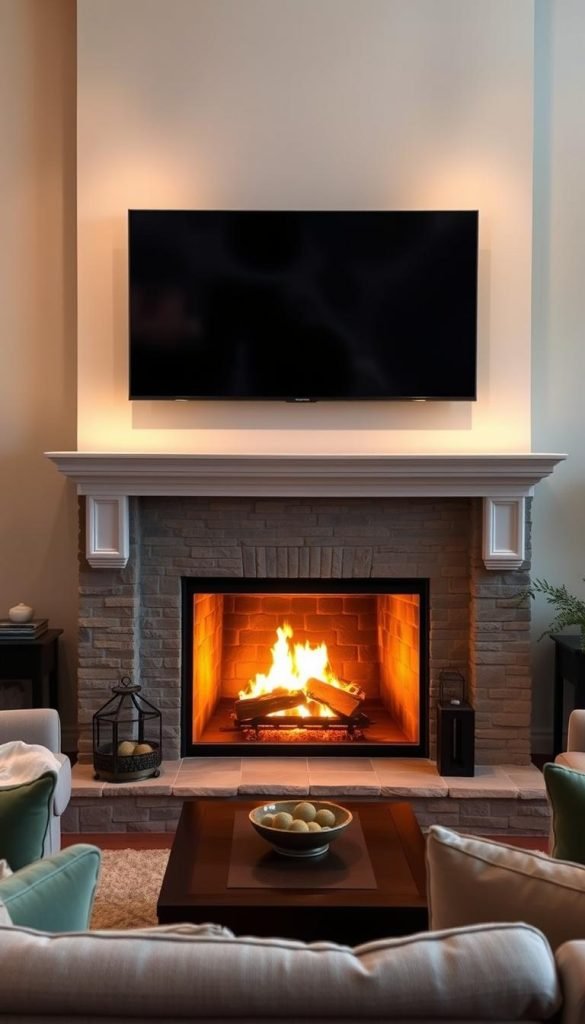
My practical ranges: eye level vs. mantel-driven placement
I use a center near 40 inches from the floor as my eye-level guideline. For a 65-inch size that often puts the bottom of the screen near 24 inches.
When a mantel sits in the way, I follow the mantel rule: leave about 3–4 inches between mantel top and TV bottom.
Reconciling center near 40 inches with real mantel heights
If those two targets clash, I measure both placements in inches and sit in the main seat. I check whether a slight tilt corrects the view or if a pull-down mount is needed.
When I choose pull-down to bring the screen back to eye level
For tall mantels or a persistent high mount, I prefer a pull-down bracket. It lets you pull the screen down for comfortable night viewing and stow it higher when off-screen.
“If a simple tilt passes the seated test, I keep it simple and stick to mantel clearance.”
- Quick rule: balance eye level and mantel clearance.
- Prefer pull-down when tilt can’t recover natural gaze.
- If a high mount forces chronic neck strain, consider another wall.
Picking the right mount: tilt, full-motion, and pull-down options I trust
I start the hardware choice by thinking about seating layout, mantel height, and how often you’ll adjust the screen.
Tilt mounts are my go-to when the goal is simple angle correction. They pull the top of the screen back and reduce upward strain without moving the panel far from the wall. For modest over-fireplace setups a tilt solves most sightline problems quickly.

Tilt vs. full-motion: what improves viewing angles in your space
Full-motion brackets add reach and swivel. I use them when seating is staggered or glare shifts during the day. They let me pull the TV off the wall and point it toward multiple seats for flexible viewing.
Pull-down and motorized mounts for high mantels and larger rooms
For very tall mantels I recommend pull-down mounts like Mount-It! MI-384 (42″-65″, 55 lbs) or MI-395 (43″-70″, 72 lbs). They bring the picture down for comfort and stow away when off-screen.
When premium convenience matters, motorized options such as MI-386 or the MI-302 with recessed base provide smooth, remote positioning for larger rooms and heavier setups.
Weight ratings, tv size ranges, and installation considerations
I always match VESA patterns, weight ratings, and size ranges before buying hardware. That protects the screen and keeps warranties intact.
For mounting over fireplaces I verify studs, use proper lag bolts, and follow the manual closely. If fireplaces and heat are a concern, I favor mounts with robust tilt or pull-down action so a high mount doesn’t become a daily strain.
“Match the mount to your room and your screen — it’s the difference between a useful installation and constant discomfort.”
| Mount type | Use case | Typical size/weight |
|---|---|---|
| Tilt | Modest angle correction | up to 70″ / common VESA |
| Full-motion | Multiple seating positions | up to 75″ / medium-heavy |
| Pull-down / Motorized | High mantels, premium rooms | 42″-80″, up to 110 lbs |
- I pick tilt when small angle fixes heal viewing comfort.
- I choose full-motion for flexible room layouts and multiple seats.
- Pull-down or motorized mounts save necks with high mount situations.
- Always confirm installation anchors and keep heat checks in mind.
Room-by-room nuances that affect final placement
How close people sit and how the space flows often dictates my screen position more than rigid rules. I treat each living room as unique and pick placement that fits daily use, not just math.
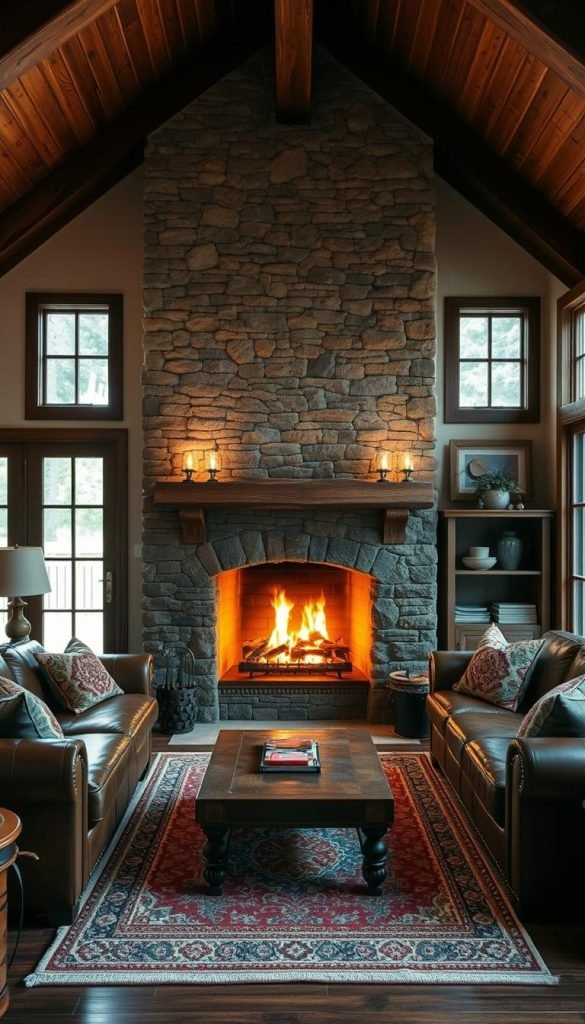
Small living rooms and close seating: size, distance, and height tweaks
In compact living spaces I often recommend a slightly smaller size or a lower center so the picture feels natural at short distance.
If seating is tight, a lower mount reduces neck strain and keeps the image comfortable for longer viewing sessions.
When people sit off-axis, I favor a full-motion bracket so you can swing the screen toward primary seats and reclaim a proper angle.
Tall mantels, tall ceilings, and when I choose an alternate wall
Tall mantels and high ceilings change proportions. If the screen would sit too high, I reassess whether the fireplace should stay the main spot.
Sometimes I suggest lowering a mantel during remodeling or picking an adjacent wall for ergonomics and cleaner design lines.
For rooms with many windows, glare is a real issue; I often combine tilt mounts or anti-glare panels so clarity stays high without raising center height.
- Design balance: I weigh symmetry against comfort and may recommend a thinner surround or small mantel alteration.
- Distance matters: Longer rooms can support a larger screen, but I avoid raising the center so high that viewing becomes tiring.
- Flexible seating: Tilt for mild fixes, full-motion for multi-seat setups, pull-down for tall mantels.
| Room type | Common issue | My fix | Why it works |
|---|---|---|---|
| Small living room | Close distance | Smaller screen or lower center | Reduces neck strain and keeps image comfortable |
| Multi-seat living | Off-axis viewers | Full-motion mount | Reclaims viewing angle for several people |
| Tall mantel / high ceiling | Screen sits very high | Alternate wall or pull-down mount | Improves ergonomics and daily comfort |
If the fireplace stays the focal point, I fine-tune placement above the mantel while checking heat, proportions, and everyday comfort. For design ideas and modern fireplace wall tips, see my guide on designing a modern fireplace wall.
Conclusion
My closing advice is simple: plan around comfort, heat, and durable hardware so the finished piece works and looks intentional.
I aim the center near 40 inches from the floor when I can, which usually puts the bottom near 24 inches. Over a mantel, I leave about 3–4 inches of clearance and add tilt if viewers strain their neck or eye level is off.
I never skip a quick heat check. If temps near the screen approach ~104°F, that wall is risky and may void warranties. Mantel depth and airflow matter.
When a high mount is unavoidable, a pull-down option often solves the problem. Proper anchoring, clean cable runs, and following the installation manual finish the piece right.
Follow those measured inches, verify from your seat, and you’ll end up with a safe, comfortable installation that keeps the fireplace a focal point.