How can I hide an ugly thermostat with something that actually looks chic?
I know the device is practical and often sits at eye level on a main wall so it reads the room and stays easy to reach.
My goal is to show a friendly, art-forward way to make the unit less of a focal point while keeping comfort and function. I prefer tweaks that feel intentional, not tacked on.
Sometimes a streamlined smart model is the best fix. Other times I add a floating shelf, lean a small frame, or place a tall plant nearby to change the sight line without blocking airflow.
In short, I’ll share practical decor moves, trim-plate ideas, and gallery treatments that help the device read as part of the display rather than the main event. These are simple ways to shift what you notice first across the room.
Key Takeaways
- Keep placement for accurate readings and quick access.
- Choose a sleeker unit when possible for a cleaner look.
- Use art, frames, and shelves to integrate the device into decor.
- Place plants or mirrors to soften the sight line without blocking airflow.
- Trim kits and color-matched plates help the unit feel intentional on the wall.
Before I hide it: airflow, access, and accuracy come first
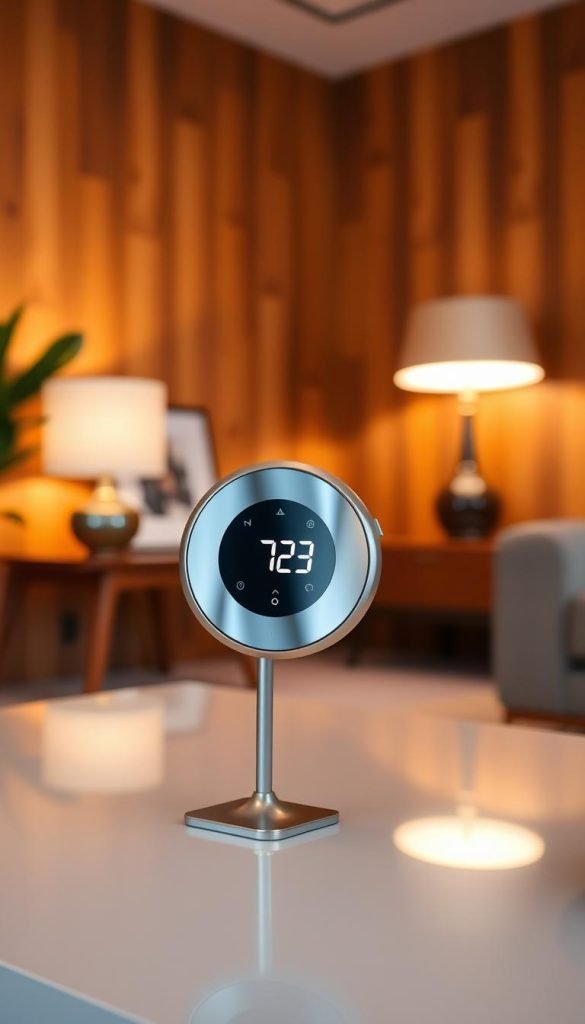
My priority is keeping sensors and airflow free before I add any decor. That means I plan the look around the wall device without ever smothering its sensing area. A unit depends on room air moving across its sensors to report a true temperature for the space.
Simple rule: never place a solid-faced object over the face. Perforated covers or screens with holes are a smart way to disguise the face while still letting air pass.
Why I never block the thermostat’s airflow or sensors
“Blocking airflow makes readings wrong and the room feel off.”
I keep a few inches of clear wall around the unit so circulating air can reach it. I also watch for nearby heat sources or drafts that might fool the sensor.
How I keep it easy to reach for quick temperature changes
- I make sure I never cover controls with heavy decor; access must be fast.
- I choose hinged or swing-open screens so the face is easy to reach.
- I remember that smart thermostats are remote-friendly but still need open air to sense the room properly.
In short, a tidy, function-forward approach protects comfort while still letting you create a look you like.
Chic ways I disguise a thermostat without hurting performance
I often treat the unit as a starting point for a mini gallery rather than a problem to cover. Small edits to the wall and careful layering shift attention while keeping air and access clear.
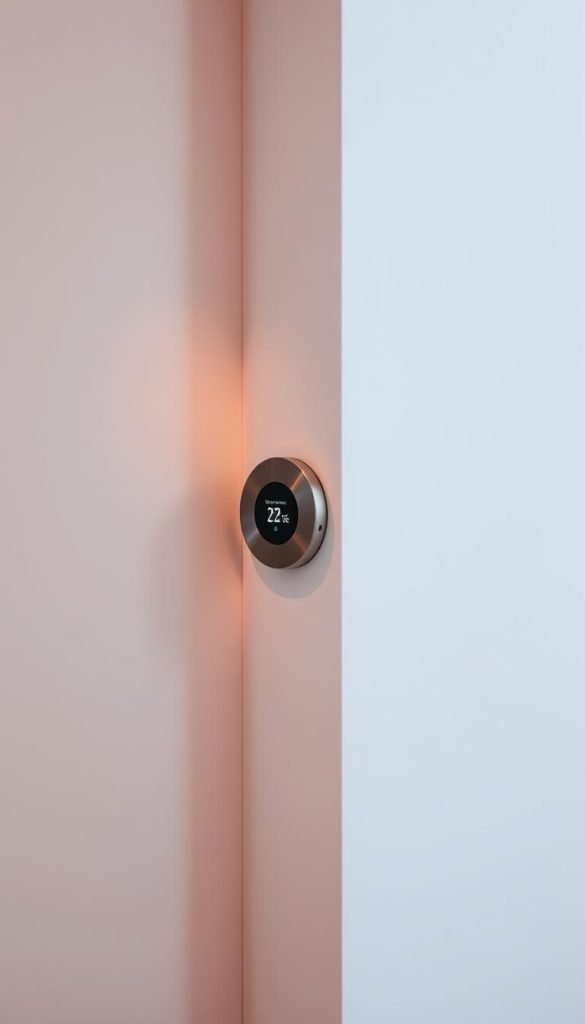
Floating shelf styling
Install a slim shelf just beneath the device. I lean a small piece of art, stack a couple of books, and add a compact LED lamp so the eye settles on the vignette instead of the device.
Gallery wall camouflage
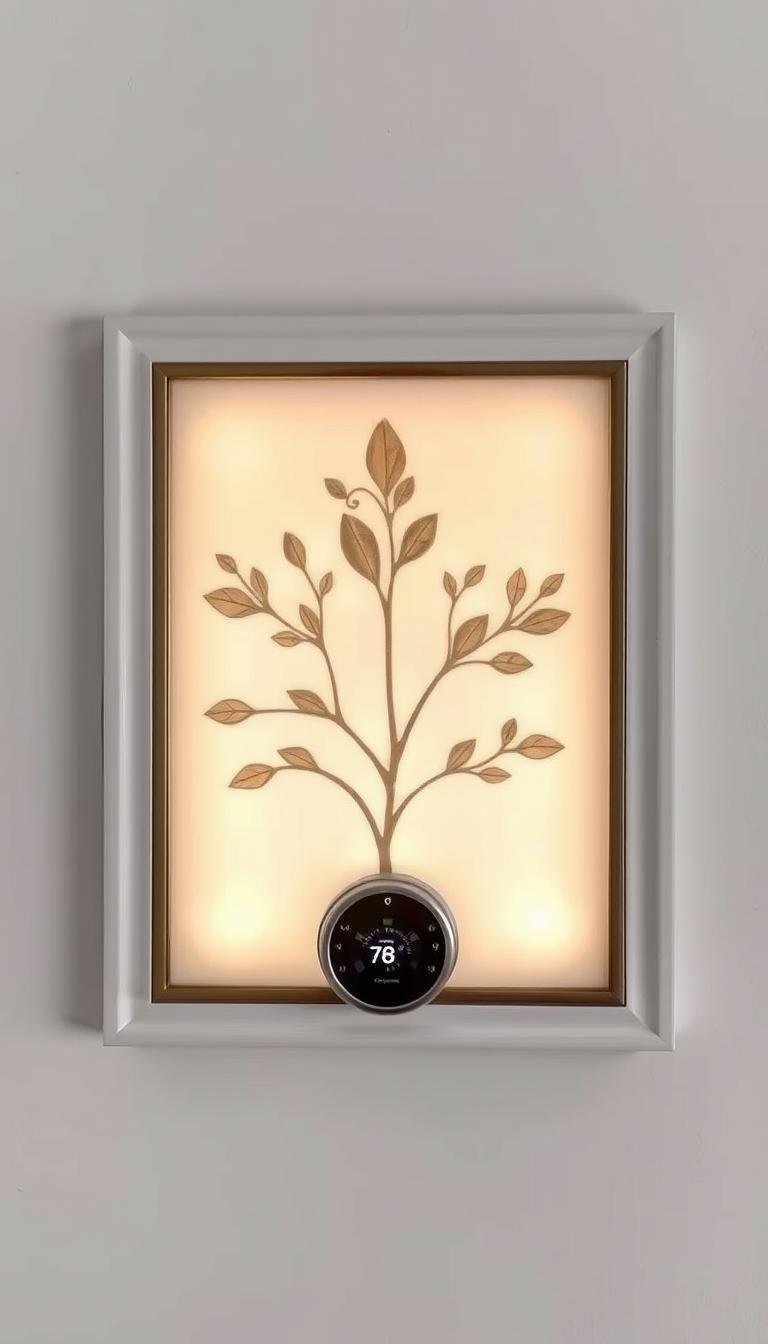
I build a composition of artwork, mirrors, and frames that share a color story. An empty frame around the device helps it vanish into the arrangement without blocking air.
Frame it on purpose
An ornamental frame turns the unit into intentional decor. I keep the opening clear so controls stay reachable and the air can move freely.
Hinged art or two-way mirror
Mount a panel on side hinges so it swings open for instant access. This gives a polished, functional cover while preserving sensor accuracy.
Plants and perforated covers
- I place a tall leafy plant nearby—ferns or a potted tree—that softens the sight line but leaves breathing space.
- For a true cover, I pick perforated metal or a wood lattice so the unit stays hidden but air still passes through.
“Keep color and materials consistent so the wall reads as a single, intentional composition.”
For step-by-step styling ideas, see this short guide on ways to disguise a thermostat while protecting air flow and access.
How can I hide an ugly thermostat with something that actually looks chic?
A small trim plate and a considered palette go a long way toward making the device feel like part of the wall. I start by reading the room so the finish feels deliberate, not tacked on.
My quick wins by room and wall color: decide if the thermostat should match the paint, coordinate with nearby frames, or act as a subtle accent. For quiet rooms I echo the wall color; in lively rooms I pick a contrasting tone that reads like design, not a mistake.
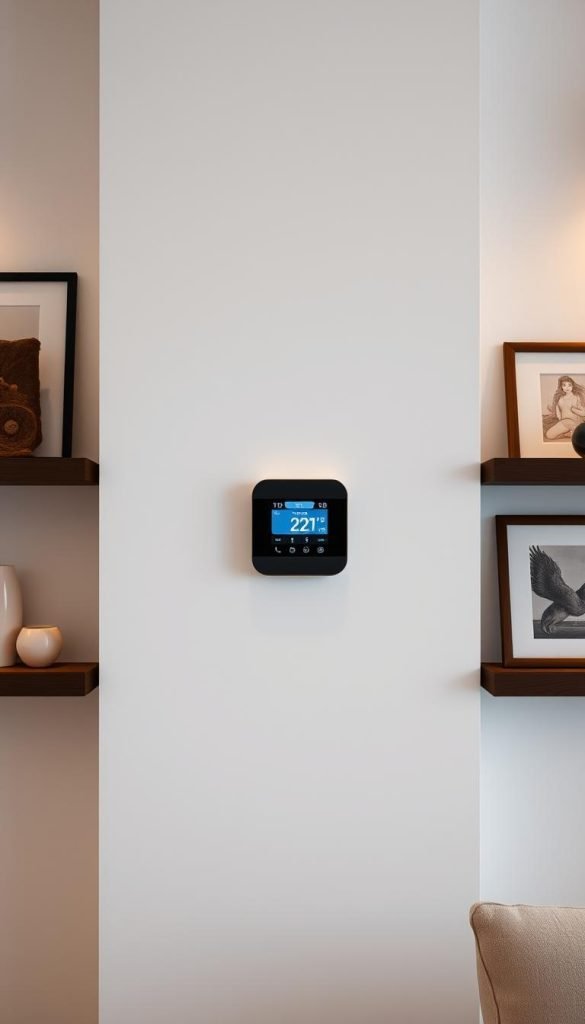
Trim kits and color-matched plates for a polished, intentional look
Trim kits are an easy fix—they cover old screw holes and surface scars and make the new faceplate sit flush and finished. I favor manufacturer plates so vents and sensors remain clear.
“A matched plate turns a retrofit into a design choice, not a repair.”
- I pick finishes that echo nearby metal tones or wood species so the unit blends with frames and artwork.
- I make sure surrounding frames relate in scale and centerlines align for tidy sight lines.
- I leave breathing room so airflow and access stay unaffected, and I prefer matte finishes to cut glare.
Smart vs. traditional thermostats: what I do differently
My approach splits by function: devices that need hands-on use get one treatment, and connected models get another.
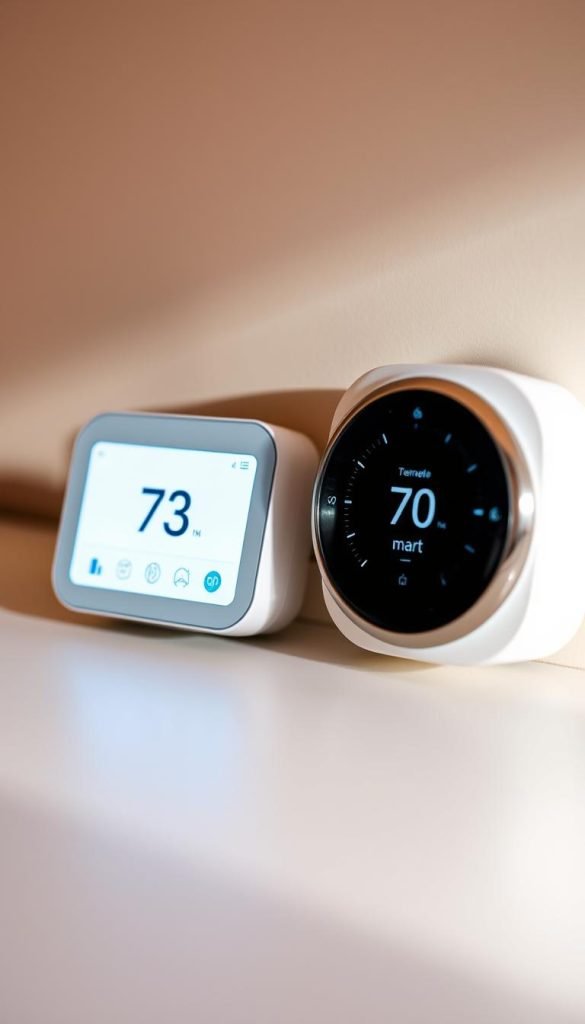
Traditional units: airflow and manual access are non-negotiable
Traditional units require a clear way to reach buttons or dials. I leave a finger-friendly gap so adjustments feel instant and natural.
Airflow matters: I avoid deep shelves or tight frames that trap air. Restricted flow leads to temperature overshoots and wasted cycles.
Smart thermostats: remote control helps, but sensor blocking is still a no
Smart models let me change settings from my phone, yet they still need honest room sensing.
- I never seal the face; perforated covers or hinged panels keep the look soft and the sensors exposed.
- I keep lamps and heat sources away from the wall area so readings stay true for the whole home.
- After styling, I run a quick comfort test—if the system cycles oddly, I tweak the arrangement.
“Both types can disappear visually, but neither should be sealed off from the room.”
Seasonal and DIY ideas I love (that don’t wreck efficiency)
For seasonal styling, I favor temporary covers that stay light and easy to lift. If you have separate units for heating and cooling, a quick swap lets the off-duty device sit behind a decorative piece for months at a time.
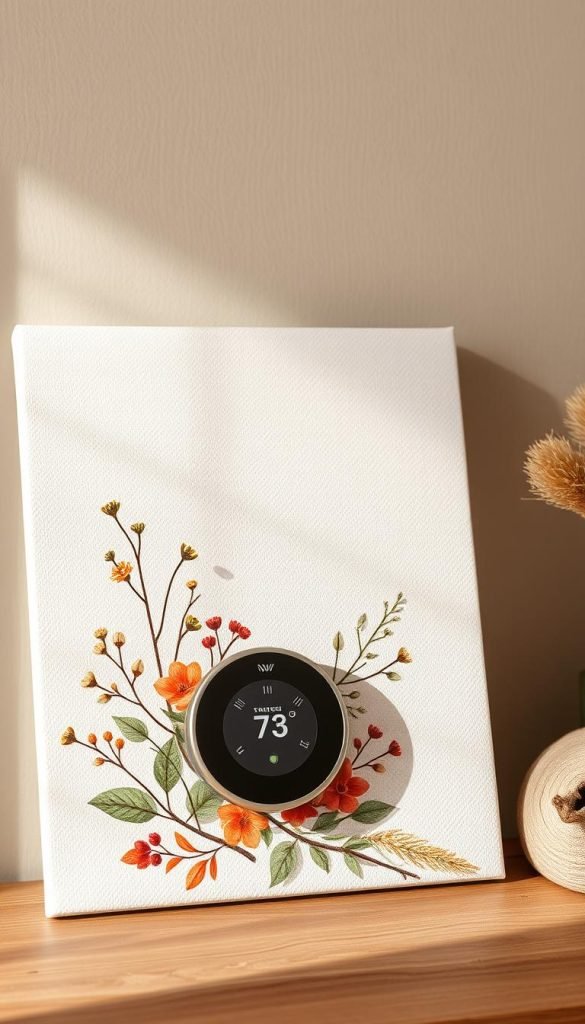
Seasonal cover strategy: I hang a lightweight canvas photograph or DIY artwork over the inactive unit in warm months, then remove it when the system comes back online. This keeps the wall cohesive without sealing the sensors.
Wallpapered shadow box as a temporary summer disguise
I build a shallow box lined with wallpaper so it rests over a small, inactive unit. The box reads like built-in trim and is easy to pull away when the thermostat is needed again.
Simple rules I follow:
- I keep any box airy—no solid enclosures that trap heat.
- I use removable hooks and felt pads so the wall and device stay scratch-free.
- I place a shallow shelf nearby to change the room’s sight line without blocking airflow.
“Treat off-season covers as temporary decor, not permanent fixtures.”
These DIY ways let me layer art and function. Small moves—a canvas, a lightweight box, a slim shelf—make the wall feel intentional and keep comfort intact.
Conclusion
strong, A focused vignette—one slim shelf or a small gallery—often solves the visual issue while keeping function intact.
My closing idea is simple: treat the device like a planned piece of art on the wall. Use a petite frame or a tight cluster of artwork and frames so the unit reads as part of the decor rather than the main event.
Keep airflow and access safe with hinged panels, a perforated cover, or a two-way mirror. For off-season disguise use a lightweight canvas or a wallpapered box and remove it when the system runs. Add a plant or two to soften the sight line, trim kit the rough edges, and pick one DIY idea you will keep. Often the easiest way is the best way for a home to feel finished and calm.