How do I turn a boring IKEA Billy bookcase into a built-in look for $40?
I took one flat-pack shelf and made it feel like it had always belonged in my home. I worked with four ikea billy units, reused existing baseboards, and added simple trim to hide seams. The goal was clear: get a custom look without custom prices.
My approach focused on smart prep and small finishes. I built the billy bookcase, anchored each unit to studs, shimmed for uneven floors, and closed gaps with 1×2 poplar strips. For paint adhesion, I used a shellac-based primer before topcoat.
Safety and timing mattered. I wore a mask during priming, protected nearby furniture, and waited 7–14 days before loading shelves so the finish would cure. Styling and lighting then made the installation read like built-ins rather than separate pieces.
Key Takeaways
- Plan first: measure walls, locate studs, and map gaps before assembly.
- Anchor and shim: secure to studs and level with shims for a flush fit.
- Use low-cost trim: 1×2 poplar hides seams and looks custom.
- Prime properly: shellac-based primer helps paint stick to factory finishes.
- Be patient: allow full cure time before loading shelves for durability.
Why this Billy bookcase hack works and how I kept it to a $40 makeover
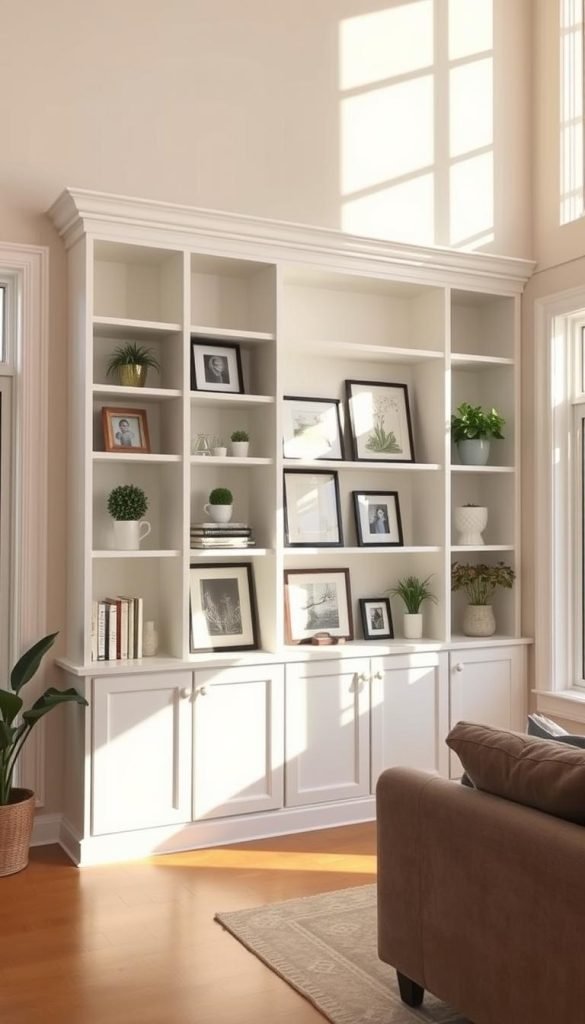
This trick works because the units fit like puzzle pieces against a wall, so they read as one seamless cabinet. I used four 15 3/4″ × 93 1/4″ units to flank a 72″ sofa and added a whitewood bridge shelf to tie the center together.
Modular sizing and flat faces make it simple to add trim. I reused room skirting and small pieces of baseboard to hide seams and close tiny gaps. That saved cash and kept the finish cohesive.
Material choices mattered: 1×2 poplar for seams, color-matched budget paint, and shellac-based primer to make the finish durable. I borrowed a nail gun and sander so my outlay stayed low.

- I limited new materials and used scraps to hold costs near $40.
- Caulk and wood filler erased factory holes and shadow lines.
- Planning shelf placement first prevented wasted cuts or trim.
| Item | Why it matters | Approx. cost |
|---|---|---|
| 1×2 poplar trim | Hides seams between units and wall | $12 |
| Color-matched paint | Creates a unified surface across shelves and wall | $15 |
| Caulk & filler | Erases gaps and factory holes | $8 |
| Borrowed tools | Lowered one-time tool expenses | $0 (borrowed) |
Plan the built-in: measure your wall, ceiling height, and sofa or room layout
Start by measuring the wall, ceiling, and openings so nothing surprises you during installation. I measured width, height, and the depth available to make sure the units would sit flush without blocking vents or door swings.

Map the width, height, and depth for a snug, wall-to-wall fit
I used 93 1/4″ tall units at 15 3/4″ wide each. Two units per side wrapped around a 72″ sofa and left room for a whitewood bridge shelf in the center.
Measure twice and sketch where seams and trim will land. Decide if you’ll remove or reuse baseboard; keeping the original base often helps the faces read as one plane.
Decide on shelf spacing and whether to include a middle bridge shelf
- Set shelf spacing before drilling to avoid redoing holes.
- Plan a tiny reveal at the walls so you can caulk for a seamless finish.
- Do a dry fit of frames to confirm the step-by-step layout works in your room.
| Detail | Why it matters | Quick note |
|---|---|---|
| Width & depth | Ensures flush fit without blocking outlets | Measure outlet/vent locations |
| Height | Makes units sit near ceiling for built-in feel | 93 1/4″ suits ~8′ ceilings |
| Bridge shelf | Visually ties both sides into one piece | Optional but highly effective |
“Careful measuring and a quick dry fit saved me time and made the finish look custom.”
Budget-friendly tools and materials: my $40 substitutions and what to borrow
I relied on a short tool list and thrifted pieces to keep this project under budget.
Core tools I used were simple: a drill with assorted bits, a level, and an electric sander. A miter saw made clean trim angles, though a circular saw works fine for straight cuts. I borrowed a nail gun to speed the trim install; hand nailing would have been fine too.

Low-cost materials kept the build under $40. A tube of caulk, a small tub of wood filler, a few screws, and short trim offcuts closed seams and sharpened edges. I reused skirting and shopped the scrap bin for extra wood pieces.
- I set up a cutting station on a table so cuts stayed square and I avoided wasted pieces.
- I bought only what I needed and color-matched a budget paint sample to save cash.
- Shellac-based primer, small fasteners, and minimal filler did most of the work.
| Item | Role | Notes |
|---|---|---|
| Drill | Pilot holes & anchors | Essential |
| Nail gun / gun | Fasten trim | Borrow if possible |
| Trim & wood | Hide seams | Scrap pieces work well |
How do I turn a boring IKEA Billy bookcase into a built-in look for $40?
A tight, thoughtful dry fit made the difference between a wobbly row and a seamless wall of storage. I followed assembly instructions, left the adjustable shelves out at first, and did a full test fit to map where trims and seams would land. The ikea billy bookcase frames sat in place so I could mark low spots and plan shims.
Assemble and place
I set each bookcase on the wall, checked level, and slipped in thin shims where the floor dipped. That simple step kept tops aligned across the run.
Secure safely
Where possible I used a drill to find studs, then tied units together with screws so the bank behaved like one piece. Anchoring outer cases to side walls added strength.
Close gaps and finish the base
- Vertical 1×2 poplar hid seams so the fronts read as one continuous frame.
- Small strips at the top and sides closed any tight gap to the wall or ceiling.
- I reattached the room base to create a grounded base detail that sells the built-in illusion.
Prime and paint for durability: shellac-based primer is the secret sauce
Prepping the surfaces and choosing the right primer turned this shelf bank from temporary to permanent. I treated this step as its own mini project so the final work would last.

Sanding strategy: scuff laminate, wipe clean, protect your space
I scuff-sanded every laminate face lightly to give the primer some tooth. Then I wiped dust away with a damp cloth and followed with a dry cloth so nothing interfered with adhesion.
Before priming I masked furniture, laid down drop cloths, and opened windows. Ventilation and a mask kept me safe while working.
Why shellac-based primer bonds where others fail
Shellac-based primer grabs slick factory surfaces that ordinary primers often slip off. I rolled thin coats, let each coat dry fully, and spot-checked corners for complete coverage.
Paint choices for a durable, high-end finish
I painted the wall area in matte to give depth and used satin on the shelves for easy cleaning. That contrast helps the unit read taller and matches the top shelf height visually across the run.
- I watched for drips and sanded small imperfections between coats.
- I waited 7–14 days before loading the bookcase and added felt pads under decor to prevent sticking.
- Patient priming and careful paint work made this budget diy post look custom and durable.
Trim that sells the “built-in” illusion: crown, vertical seams, and shelf details
Trim is the single detail that immediately sells the finished units as custom cabinetry. I used thin 1×2 poplar to cover vertical seams and to frame outer edges so the faces read as one plane.

Simple profiles work best. I ran crown across the top to meet the ceiling and added shoe molding at the base to hide small transitions and shadow lines.
Simple trim choices
- I picked 1×2 poplar for clean edges and low cost to hide vertical seams between the units.
- The crown at the top created an intentional termination so the run felt built into the room.
- Shoe molding finished the base and masked tiny gaps where the floor or skirting varied.
Finish work
I fastened trim with a nail gun for speed; hand-driven nails work too if you lack the gun. I aligned pieces flush with the front plane so no shadow revealed the layers behind.
After installation I filled nail holes and hairline seams with wood filler, caulked joints that might move, then sanded the cured filler smooth. Finally, I painted trim with the shelves so the top face read as one seamless surface.
| Trim piece | Role | Quick tip |
|---|---|---|
| 1×2 poplar | Hide vertical seams, frame faces | Dry-fit long runs before cutting |
| Crown molding | Meets ceiling, unifies top | Check for ceiling crown irregularities |
| Shoe molding | Hide floor transitions | Install after base is painted if reusing skirting |
Style and function: arranging books, art, and lighting so it looks high-end
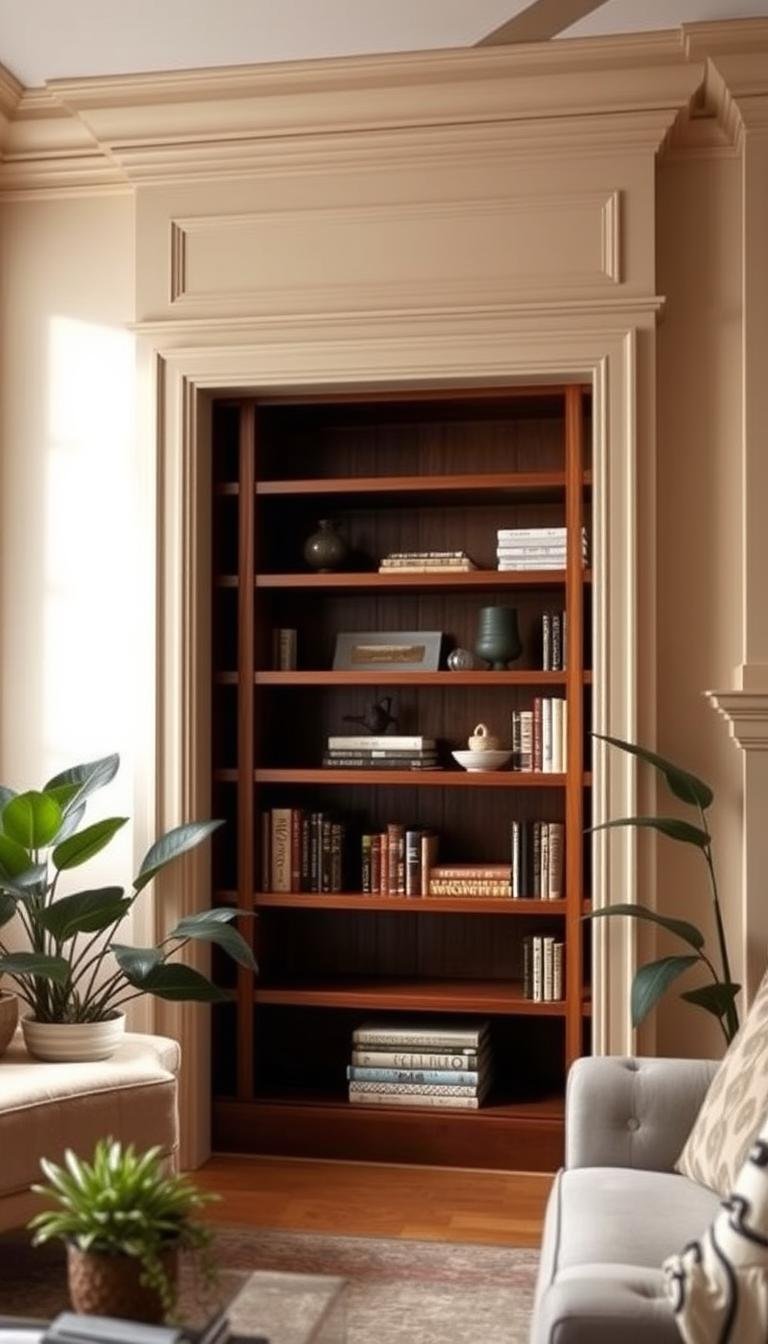
A centered focal piece and balanced stacks brought rhythm to the wall of storage. I placed a large vintage lithograph between the flanking bookshelves and added matching sconces for symmetry. That single decision made the run read as intentional and refined.
Next, I mixed vertical groups of books with horizontal stacks and left breathing room around sculptural pieces. Keeping everyday items at eye level made the space useful and calm.
For balance, lighter objects went on the higher shelves so the top of the installation never felt heavy. I repeated small finishes, like brass frames and hardware, to tie the bookcase into the rest of my home.
Some friends added Oxberg doors on lower bays to hide clutter. Others swapped the flush ceiling fixture for a mid-century pendant to lift the whole room. I used felt pads under decor to protect the freshly painted finish during the first weeks.
Design rhythm: mix books, closed storage, and a focal art or sconces
- I created a focal point by centering large art between the shelves to anchor the run.
- I alternated vertical and horizontal stacks and added sculptural pieces for movement.
- Lighting—sconces or an updated ceiling fixture—added warmth and presence to the space.
- Lower doors keep visual clutter hidden while upper shelves remain open for display.
- I edited items so the best pieces could shine and the overall finish stayed pristine.

| Element | Purpose | Quick tip |
|---|---|---|
| Focal art | Anchors the run and creates a top visual stop | Center between shelves; scale matters |
| Lighting | Adds warmth and highlights objects | Use matching sconces for symmetry |
| Open vs. closed | Balance display and hidden storage | Add doors to lower bays for clutter control |
| Styling repeat | Ties the built-in to the rest of the home | Use recurring finishes like brass or wood tones |
Time and cost breakdown: how I kept this IKEA Billy bookcase hack under $40
A lean shopping list and a clear weekend plan kept costs low and stress down. I limited purchases to consumables and reused my existing baseboard so the run read like one built piece.

Where the $40 went vs. what I already had or borrowed
I spent roughly $40 on caulk, wood filler, a handful of screws, and two short trim pieces. I color-matched paint from a budget line I already owned.
I borrowed a nailer and used tools I owned. That choice kept new costs to a minimum and let me focus spend on visible finishes.
Weekend workflow: realistic timelines for each step
Day 1: assembly, dry-fit, shimming, and anchoring to studs. That first day sets all major alignment points for the base and faces.
Day 2: trim, fill, and light sanding. Primer and paint were staged across the next few evenings to allow proper dry time between coats.
- I batched messy tasks first: sanding and priming, then paint and touch-ups.
- I tracked small pieces so offcuts could close seams without extra purchase.
- I kept a small buffer for one more bead of caulk or an extra filler pass.
| Item | Role | Approx. cost / time |
|---|---|---|
| Caulk, filler, screws | Close gaps, hide nail holes, fasten pieces | $20 / Day 2 |
| Short trim pieces | Hide vertical seams, frame faces at base | $12 / Day 2 |
| Paint & primer (on hand) | Unify surface; durable finish | $0 (used existing) / Evenings |
| Borrowed tools | Speed install, lower costs | $0 / Day 1–2 |
My point: reuse the base, borrow what you can, and buy only essential materials. This small plan saved money and kept the project on a realistic schedule.
- Assemble and dry-fit (Day 1).
- Trim, fill, sand (Day 2).
- Primer and paint with proper dry time over the following evenings.
Conclusion
Conclusion
Finishing touches make the difference. With four units around a 72″ opening, securing to studs, and adding a simple bridge at the top, the run reads like custom cabinetry. I used 1×2 poplar, crown, and the original base to mask seams and anchor the bottom.
Key steps: assemble and test fit, shim and drill into studs, connect cases, add wood strips, reattach base, fill holes and gaps, then prime and paint. Shellac-based primer plus careful paint and 7–14 days cure kept the finish durable.
Borrow a nailer if you can, use a miter saw for clean trim, and style the shelves to seal the bookcase hack. Thoughtful planning and small materials turn these bookcases into a cohesive wall that lifts the whole room.