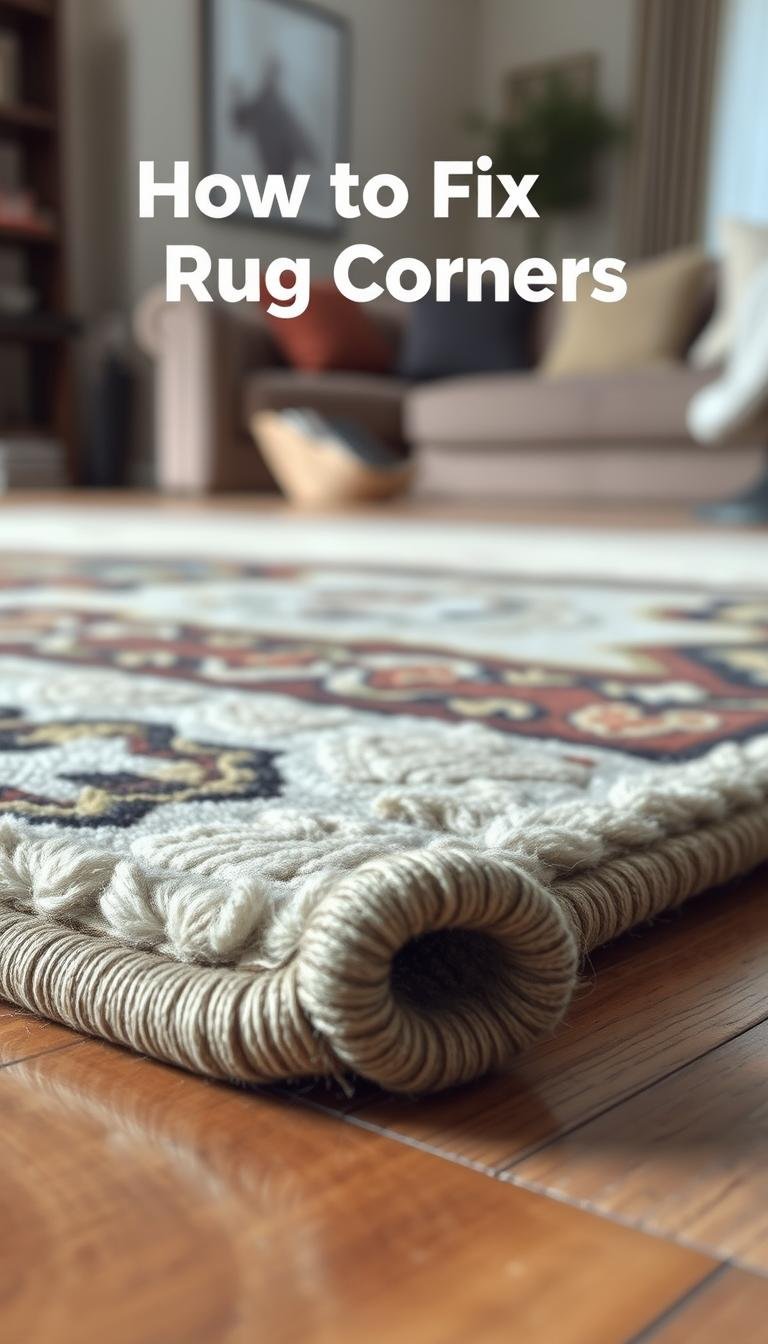
How can I stop my area rug corners from curling forever?
Few things disrupt a room’s harmony like a rug with rebellious corners. Those stubborn, upturned edges create tripping hazards and spoil your decor’s clean lines. I know this frustration well and want to help you solve it for good.
Understanding why this happens is the first step. Often, it’s due to the rug’s fiber memory from being rolled during shipping. Humidity changes and poor placement also play a role. But don’t worry—effective solutions exist.
In this guide, I’ll share my favorite techniques to flatten those corners. We’ll explore natural methods, moisture tricks, and secure anchoring options. You’ll learn how to achieve a smooth, safe floor covering that enhances your home.
Key Takeaways
- Curling corners are often caused by fiber memory and environmental factors.
- Proper rug sizing and placement reduce the likelihood of edges lifting.
- Natural methods like reverse rolling can relax fibers without chemicals.
- Moisture-based techniques help stubborn areas lay flat safely.
- Adhesive solutions and rug pads provide long-term security against curling.
- Addressing this issue improves both safety and room aesthetics.
Why Rug Corners Curl and Why It Matters
That stubborn upward curl at the edges of your floor covering is more than just annoying. It’s a sign of deeper issues that affect both safety and style in your living space. Understanding the root causes helps you choose the right solution.
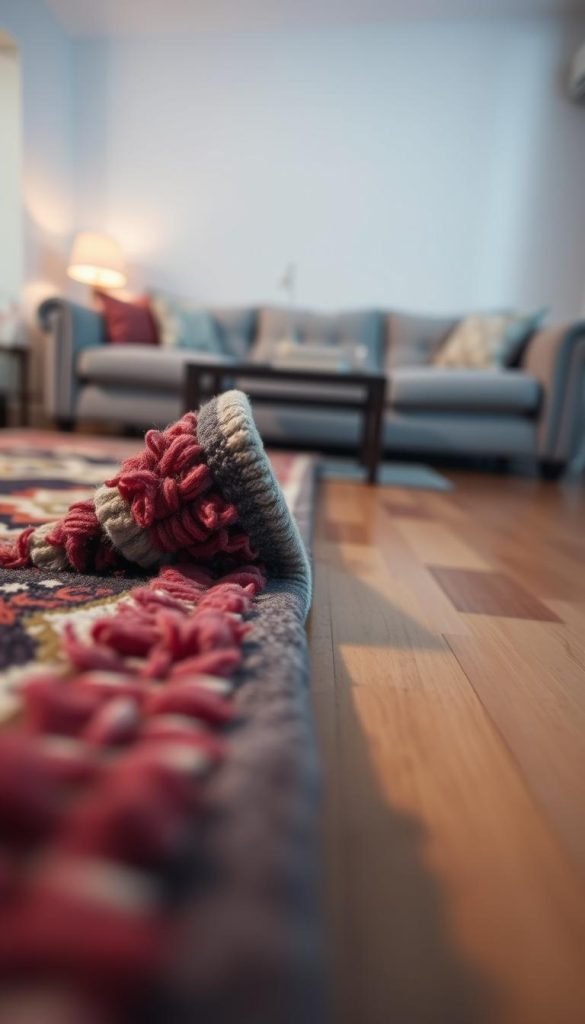
The Frustrating Reality of Curled Rug Corners
I’ve battled with this problem myself. No matter how much you straighten them, those edges just won’t stay down. It feels like a never-ending struggle against the rug’s will.
This issue often starts with the rug’s construction and storage. During manufacturing and shipping, rugs get tightly rolled. This creates a fiber memory that wants to return to that curved shape.
Safety Hazards and Aesthetic Concerns
Curled edges create serious tripping hazards. This is especially dangerous for children, elderly family members, or pets moving through the room. A simple stumble could lead to injuries.
Aesthetically, upturned corners ruin your room’s appearance. They draw attention away from your beautiful decor and make the space look messy. No amount of furniture arrangement can hide this problem completely.
According to experts at Dwelanor’s FAQ, curled corners can also suffer damage from vacuum cleaners or pet chewing if left unaddressed.
Common Causes of Curling Corners
Several factors contribute to this frustrating issue. The main culprit is usually the rug’s memory from being rolled during storage and transport. New rugs often arrive with this built-in curvature.
Environmental conditions play a role too. Warm temperatures can relax fibers in the wrong way, making curling worse. High traffic areas experience more lifting over time as people step on the edges.
Some rugs might naturally flatten within two weeks. But waiting that long isn’t practical when safety is at risk. The good news is that understanding these causes helps you pick the perfect fix.
Whether you choose natural methods or adhesive solutions, addressing the root cause ensures lasting results. Your floor covering will finally lay flat and stay that way.
Start Right: Choosing the Perfect Rug Size
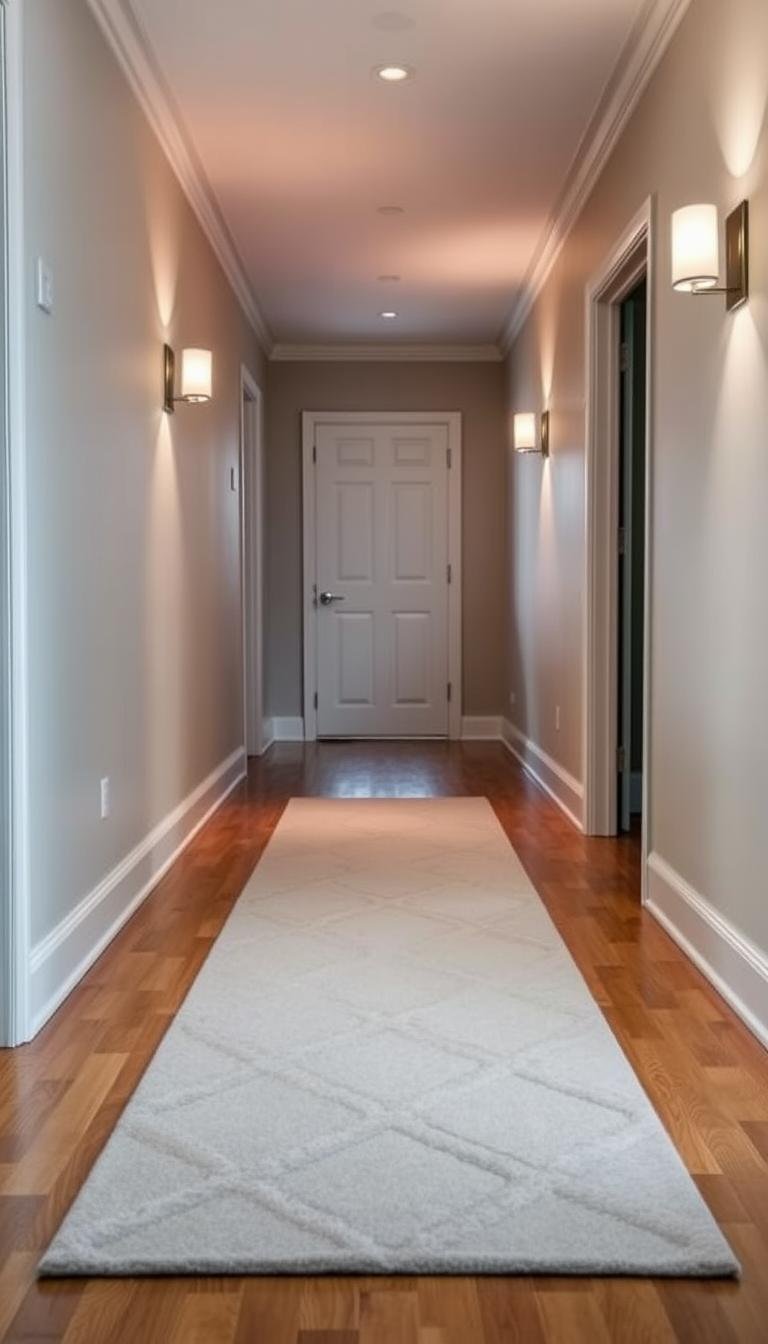
Proper sizing creates a foundation that naturally resists edge curling issues. When your floor covering fits correctly, it stays in place better and maintains its beautiful appearance. This proactive approach saves you time and frustration down the road.
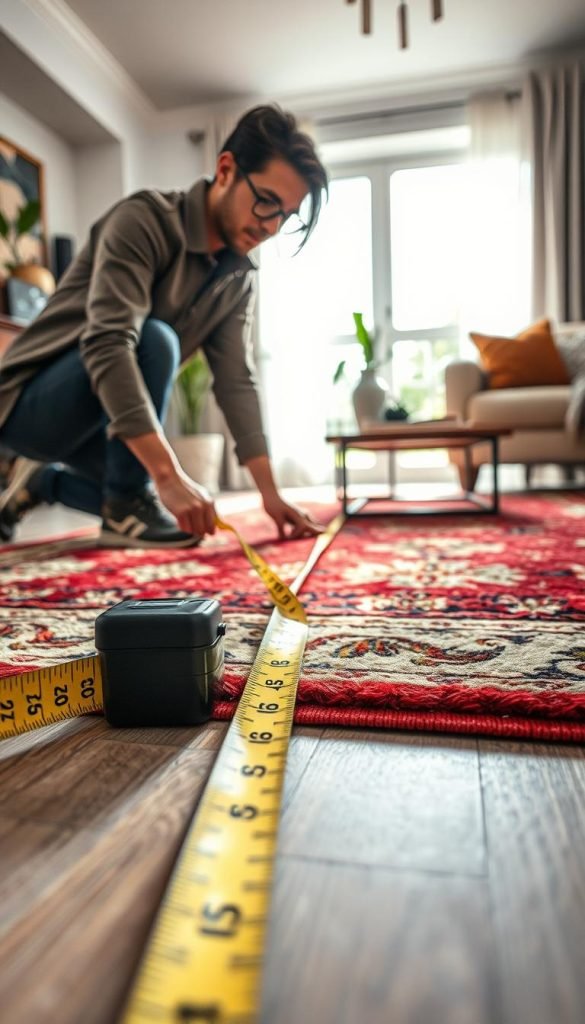
I’ve learned that measurement is the most important first step. Taking a few minutes with a tape measure can prevent years of corner problems. It’s worth doing right from the beginning.
Measuring your space for optimal rug placement
Always measure your room before shopping for any floor covering. Note the dimensions and consider furniture layout. Leave about 18 inches of bare flooring around the edges for visual balance.
This breathing room allows your beautiful hardwood or tile to show while keeping the rug secure. Proper measurement ensures your choice enhances rather than overwhelms the space.
How furniture placement affects rug corners
Furniture acts as natural weight to keep edges down. When heavy pieces like sofas or beds sit on the rug, they anchor corners effectively. This simple trick prevents lifting in high-traffic areas.
In living spaces, I prefer having all furniture legs on the rug. For smaller rooms, just the front legs work well too. Either way, the weight distribution helps maintain flatness.
This approach not only looks professional but also reduces tripping hazards. Your room feels more put together and safer for everyone.
Avoiding too-small and too-large rug mistakes
Oversized rugs can develop ripples in unused areas. These eventually lead to corner problems. Undersized options slide around, causing edges to curl up constantly.
I recommend erring toward slightly larger rather than smaller. A bigger rug gives you flexibility in placement adjustments. It’s easier to work with excess than struggle with constant corner issues.
Remember that proportional sizing creates stability. Your floor covering will lay flat and stay beautiful for years when you get this right from the start.
Natural Methods to Flatten Those Stubborn Corners
Mother Nature offers some brilliant solutions for pesky rug corners that refuse to stay down. These techniques work with your floor covering’s natural properties rather than fighting against them. I always start here because they’re gentle, effective, and require no special products.

Each method targets the fiber memory causing the problem. Heat, pressure, and time work together to relax those stubborn edges. Best of all, these approaches cost nothing and work with any rug type.
Using Sunlight to Relax Rug Fibers
Sunlight provides natural warmth that helps fibers relax. Choose a warm day with moderate temperatures. Lay your floor covering outside on a clean, flat surface.
Leave it for a few hours, flipping once. The gentle heat works like natural ironing. Always check weather conditions first to avoid damaging synthetic materials.
The Reverse Rolling Technique
This method counteracts the original rolling direction from storage. Roll your rug tightly in the opposite way it was curled. Secure it with gentle ties and leave it for 24-48 hours.
This process retrains the fibers to lay flat. It’s particularly effective for new rugs with strong memory from shipping. According to experts at Dwelanor’s blog, this technique works well for most natural fiber types.
Manual Bending and Tucking Methods
For persistent corners, try gentle manual manipulation. Fold the problem area under itself, creating a smooth curve. Place a heavy book or weight on top for 24 hours.
This constant pressure encourages fibers to stay in their new position. Be careful not to create sharp creases while bending. The goal is a natural, gradual curve that blends with the rest of your flooring.
| Method | Best For | Time Required | Success Rate |
|---|---|---|---|
| Sunlight Treatment | Natural fiber rugs | 2-4 hours | 85% |
| Reverse Rolling | New rugs with shipping curl | 24-48 hours | 90% |
| Manual Bending | Stubborn single corners | 24 hours | 80% |
These natural approaches solve most minor curling issues. They’re safe for your floors and preserve your rug’s integrity. For tougher problems, moisture techniques provide the next level of solution.
How Can I Stop My Area Rug Corners From Curling Forever Using Moisture Techniques
Water-based techniques can work wonders on stubborn curled edges that resist other methods. These approaches use moisture to relax fibers, making them more pliable and responsive to flattening. I find them particularly effective for persistent problems that natural methods can’t solve.
Each technique has its strengths depending on your floor covering type and curl severity. The key is using just enough moisture without damaging materials or your underlying surface. Always test on a small, hidden area first.
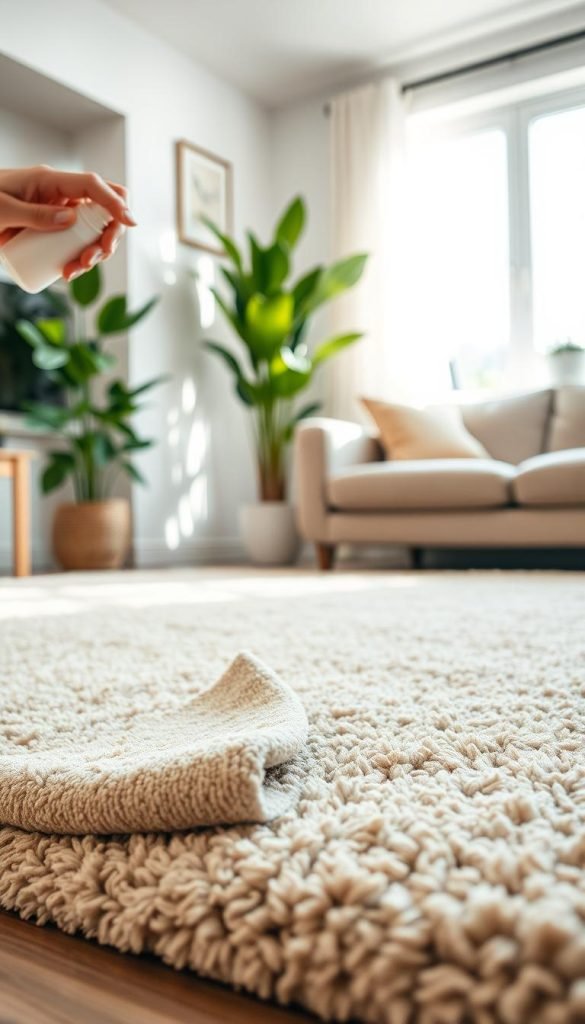
The Ice Cube and Weight Method
This simple approach works beautifully for gradual correction. Place a few ice cubes directly on the problem area, leaving about an inch exposed. The melting process slowly introduces moisture deep into the fibers.
Add a heavy object like a book or planter on top. Leave it for 48-72 hours to work its magic. The weight combined with moisture encourages fibers to relax into a flat position.
Always place a protective towel underneath to shield your flooring from potential water damage. This method is especially gentle on delicate materials.
Steam Treatment for Stubborn Curls
For quicker results, steam provides deep penetration that really relaxes resistant fibers. Use a handheld steamer on its highest setting, holding it about six inches from the surface. Move slowly across the affected area to distribute moisture evenly.
Immediately place weight on the treated section while it dries. Allow at least 24 hours for complete drying before use. Steam works particularly well for synthetic materials that respond well to heat.
“The combination of heat and moisture can transform even the most stubborn curled edges when applied correctly and safely.”
Low-Heat Ironing With Protective Layers
This method requires careful execution but delivers excellent results. First, turn your floor covering over to access the backing. Place a damp cotton towel over the problem area as a protective barrier.
Use an iron on low heat setting with steam function enabled. Apply in 15-second intervals, checking progress between sessions. Never iron directly on the surface to avoid fiber damage.
This technique works well for many synthetic types but avoid high heat on delicate materials. The controlled heat helps reset fiber memory effectively.
| Method | Best For | Treatment Time | Drying Period |
|---|---|---|---|
| Ice Cube Technique | Delicate materials & gradual correction | 48-72 hours | Overnight |
| Steam Treatment | Synthetic fibers & quick results | 5-10 minutes | 24 hours |
| Low-Heat Ironing | Stubborn curls & backed materials | 2-3 minutes | 4-6 hours |
These moisture methods are effective yet gentle enough for repeated application if needed. They address the root cause by relaxing fiber memory rather than just masking the symptom. According to experts at Dwelanor’s mission page, proper technique preservation ensures long-lasting results.
Always allow complete drying before returning furniture or walking on treated areas. This final step ensures your efforts create permanent solutions rather than temporary fixes. Your space will maintain its beautiful appearance without tripping hazards.
Adhesive Solutions for Persistent Corners
Sometimes natural approaches need extra help for truly stubborn edges. When gentle methods don’t fully solve the issue, adhesive options provide that final security. These solutions create a strong bond that keeps problem areas firmly in place.
I’ve found these methods work wonders in high-traffic zones. They’re perfect for spots where family members frequently walk or where furniture doesn’t provide enough weight. The right adhesive choice makes all the difference.
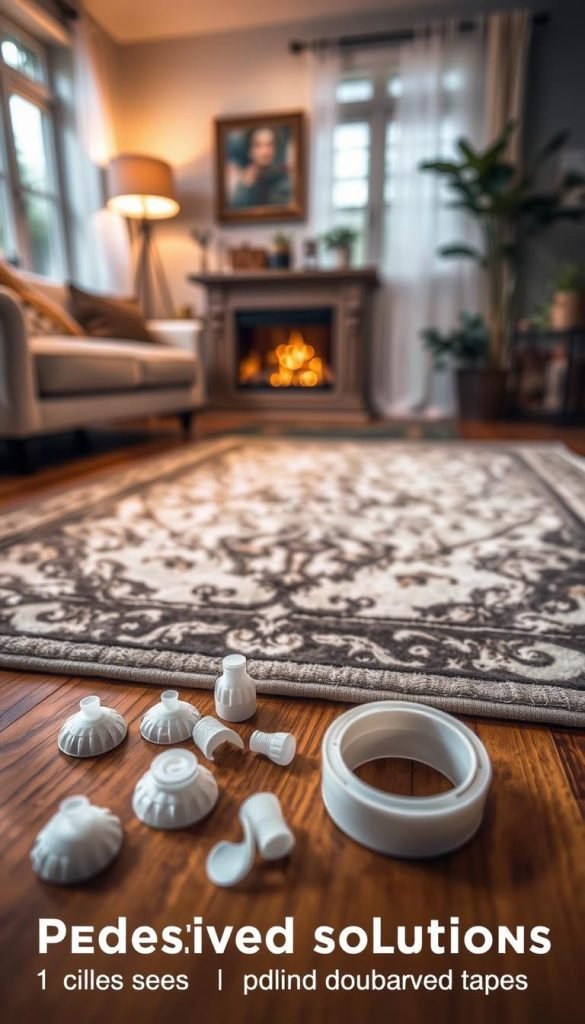
Double-Sided Rug Tape Applications
This is my go-to solution for quick, reliable results. The tape creates an invisible bond between your floor covering and the surface beneath. It’s surprisingly strong yet removes cleanly when needed.
Cut strips to match your problem area’s size. Press firmly onto both the corner and your clean flooring surface. The bond strengthens over time, creating lasting security.
Always test a small hidden area first to check for residue or surface damage. This tape works beautifully on hardwood, tile, and other hard surfaces. Avoid using it directly on carpet unless specifically designed for that purpose.
Velcro Rug Anchors and Grippers
For flexible security, hook-and-loop pads offer brilliant convenience. These reusable anchors stick to both your floor covering and the surface below. They’re perfect when you need to remove and clean your textile frequently.
The strong grip prevents edges from lifting while allowing easy removal. Most types are machine washable and maintain their effectiveness through multiple uses. You can find affordable packs online or at local home improvement stores.
According to experts at Dwelanor, these anchors work particularly well when combined with a quality rug pad. The combination provides maximum stability and protection for your flooring.
Peel-and-Stick Vinyl Tile Solutions
This budget-friendly option delivers professional results. Individual tiles cost about a dollar each at hardware stores. Cut them diagonally to create triangular pieces that fit perfectly under problem edges.
The adhesive backing creates a strong bond with your textile’s underside. The rigid tile surface provides a flat foundation that resists upward curling. It’s an ingenious solution that looks professional but costs very little.
Clean your flooring thoroughly before application for best adhesion. These work best on hard surfaces and provide long-lasting protection against edge lifting. The low profile makes them virtually invisible once installed.
| Solution | Best Surface | Cost Range | Ease of Removal |
|---|---|---|---|
| Double-Sided Tape | Hardwood, Tile | $5-15 per roll | Easy |
| Velcro Anchors | All Hard Surfaces | $5-15 per pack | Very Easy |
| Vinyl Tiles | Hard Flooring | $1-2 per tile | Moderate |
These adhesive methods solve the most persistent edge problems. They provide that final assurance your floor covering will stay perfectly flat. No more worrying about tripping hazards or unsightly lifted corners.
The right choice depends on your specific needs and surface type. Each option offers reliable performance for long-term satisfaction. Your space will maintain its beautiful appearance with complete safety.
Weight-Based and Mechanical Fixes
When gentle methods need extra reinforcement, weight-based solutions provide reliable results. These approaches add physical stability that keeps problem areas securely in place. I find them particularly effective for high-traffic zones where other methods might struggle.
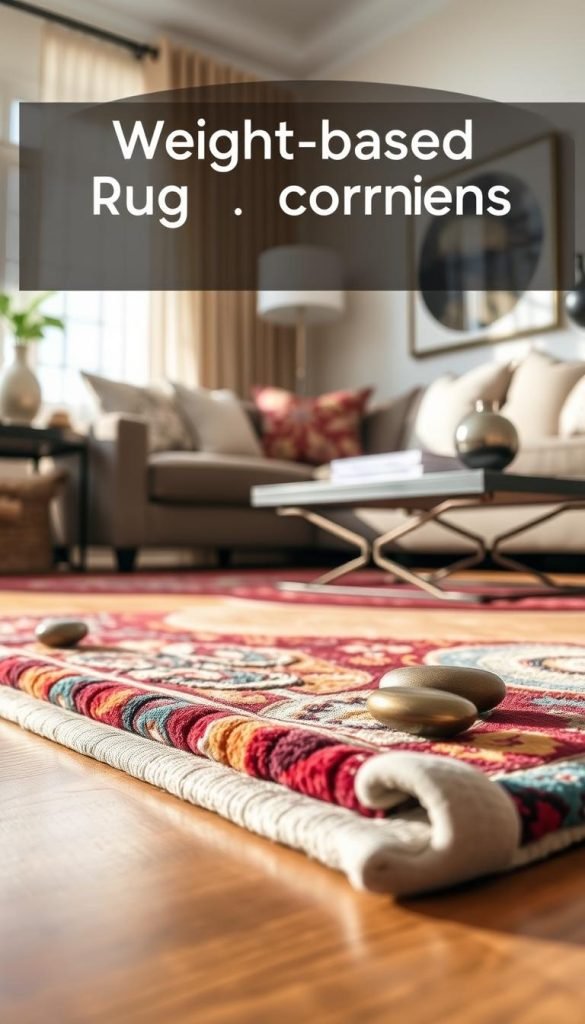
Mechanical options create lasting security against edge lifting. They work by counteracting the natural tendency of fibers to return to their curled position. The right choice depends on your flooring type and specific needs.
Rug Pads and Grippers for Overall Stability
A quality underlay creates the foundation for a flat, secure surface. I always begin with a non-slip pad like those from Mohawk Home. These provide cushioning and grip that keeps the entire textile in position.
For hard surfaces, felt and rubber combinations work beautifully. They cling to both the floor covering and the surface beneath. This dual action prevents slipping and reduces edge curling significantly.
According to experts at Dwelanor’s about page, proper padding extends your textile’s life while improving safety. The investment pays off through years of trouble-free use.
Rug Corner Weights and Anchors
When specific edges remain problematic, targeted weights offer perfect solutions. These adhesive-backed devices cost between $15 and $50 online. They feature anti-slip material on one side for secure placement.
Simply peel and stick them to the backing of troublesome areas. The added mass encourages fibers to stay flat without visible top-side appearance. They’re ideal for spots where furniture doesn’t provide sufficient pressure.
“Strategic weight distribution solves persistent edge issues while maintaining aesthetic appeal.”
When to Consider Rug Pins or Screws
For carpeted surfaces, pins provide excellent security. These specialized tacks push through at a 45-degree angle for maximum hold. Their blunt tops make them safe for walking while preventing upward movement.
Pins cost around $20 per pack and work well in high-traffic zones. They’re particularly useful where adhesives might fail over time. Always ensure proper placement to avoid creating new tripping hazards.
As an absolute last resort, screws can secure to subflooring beneath carpet. I only recommend this for extreme cases with appropriate subfloor material. Never use screws on hard surfaces to prevent permanent damage.
| Solution | Best Application | Investment Range | Installation Ease |
|---|---|---|---|
| Rug Pads | Overall Stability | $20-100 | Very Easy |
| Corner Weights | Targeted Areas | $15-50 | Easy |
| Rug Pins | Carpeted Floors | $15-25 | Moderate |
These mechanical approaches deliver long-term satisfaction. They ensure your floor covering remains perfectly flat through years of use. Your space maintains its beautiful appearance with complete safety for all occupants.
The right combination of weight and mechanical hold prevents shifting and curling effectively. You’ll enjoy a hazard-free environment that looks professionally installed. These solutions provide peace of mind along with visual appeal.
Conclusion: Enjoying Your Perfectly Flat Rug
You now have a complete set of solutions for those frustrating lifted edges. From natural approaches to adhesive options, these methods address the root cause of the problem.
Starting with proper sizing and simple techniques often yields quick results. For persistent issues, moisture-based approaches or weight solutions provide reliable fixes.
Always check care instructions first and test methods in hidden spots. With patience and the right approach, your floor covering will stay beautifully flat.
Your space will look more polished and become safer without tripping hazards. I’d love to hear about your success with these techniques!
Happy decorating and enjoy your hazard-free home!