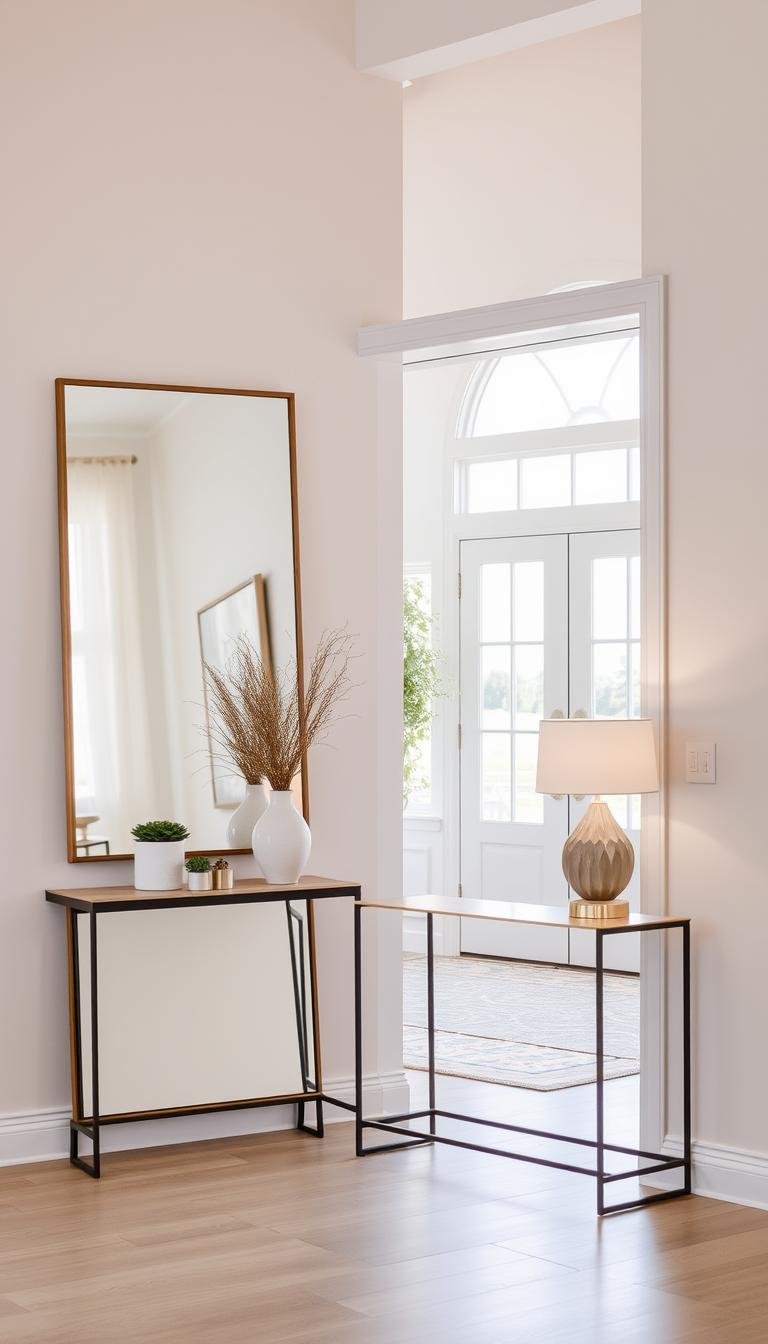
What’s the best height to hang a full-length mirror in an entryway?
Welcome to your guide on creating the perfect first impression in your home. I’m excited to share my professional approach to finding that ideal mirror placement for your entry space.
Getting this element right transforms how your room functions and feels. Proper positioning affects both daily practicality and overall visual appeal.
Throughout this comprehensive guide, we’ll explore why mirror height matters so much. I’ll explain how it can elevate your space from merely functional to truly fabulous.
We’ll cover everything from basic principles to creative solutions for challenging layouts. You’ll learn to balance aesthetics with functionality perfectly.
My experience with various entryway designs and mirror types will provide valuable insights. Let’s create a welcoming atmosphere that reflects your personal style.
Key Takeaways
- Proper mirror placement enhances both function and aesthetics in your entry space
- The right height can completely transform your room’s appearance and feel
- Balance visual appeal with practical daily use when positioning your mirror
- Different entryway layouts may require customized hanging solutions
- Mirror placement significantly impacts the overall flow of your space
- This guide provides professional techniques for optimal positioning
- Creative solutions exist for even the most challenging spaces
What’s the Best Height to Hang a Full-Length Mirror in an Entryway? Let’s Find Out
Getting your entryway mirror position just right creates a magical transformation. It’s not simply about mounting a reflective surface on your wall. This element becomes a functional design feature that elevates your entire home’s welcome experience.

Why proper mirror placement matters in your entryway
Strategic mirror positioning achieves three crucial goals. It creates visual balance throughout your entry space. The right placement enhances the room’s proportions beautifully.
Your mirror serves practical purposes while improving aesthetics. Everyone can check their appearance quickly before heading out. Guests feel welcomed by a thoughtfully arranged entry area.
Proper installation makes your space appear larger and brighter. Light reflection adds depth to even compact entryways. The overall effect feels both functional and inviting.
My approach to finding the perfect height for your space
I developed a comprehensive method that blends design principles with real-world needs. Standard guidelines provide a solid starting point. Your specific space requirements determine the final decision.
Several factors influence the ideal positioning. I always consider traffic patterns and existing furniture. Lighting conditions and user heights play important roles too.
The mirror should complement your entryway’s style perfectly. It must serve practical checking purposes effectively. My approach ensures both visual appeal and daily functionality.
| Consideration Factor | Impact on Placement | Practical Solution |
|---|---|---|
| User Height Variations | Ensures comfortable use for all household members | Find average eye level between tallest and shortest users |
| Existing Furniture | Affects visual balance and proportion relationships | Maintain 6-12 inches between mirror and furniture tops |
| Lighting Conditions | Determines reflection quality and visual clarity | Position to avoid direct glare while maximizing natural light |
| Traffic Flow | Influences safety and practical accessibility | Ensure clear pathway without obstruction from open doors |
| Room Dimensions | Affects perceived space and proportional balance | Larger walls can handle bigger mirrors; compact spaces need careful scaling |
This balanced approach creates harmonious results every time. Your entryway will feel both beautiful and functional. The mirror becomes an integral part of your home’s welcoming atmosphere.
The Fundamental Rules of Mirror Placement
Establishing core principles for mirror positioning creates a solid foundation for your entryway design. I’ve developed these guidelines through years of working with various spaces and client needs.
These fundamental concepts ensure both visual harmony and practical functionality. They provide a reliable starting point for any entryway project.
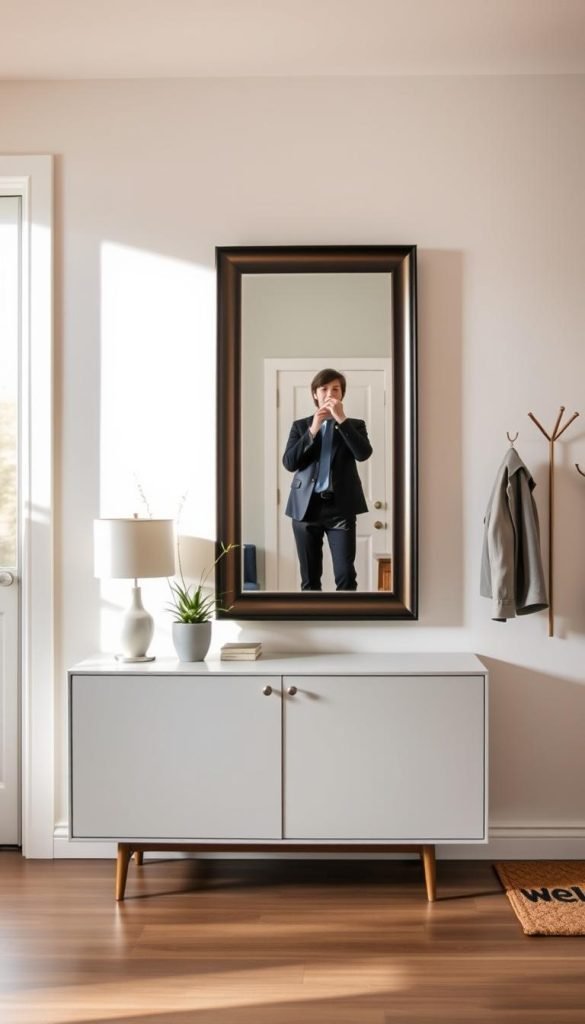
The eye-level principle: 57-65 inches from floor to center
I always begin with the eye-level principle when placing mirrors. This approach centers the reflective surface between 57-65 inches from the floor.
This range accommodates most adults comfortably. It allows for quick appearance checks without straining or bending.
The sweet spot typically falls around 60 inches from the ground. This measurement aligns perfectly with average sight lines.
- Optimal viewing experience for daily use
- Comfortable accessibility for various users
- Natural positioning that feels instinctive
- Adjustable within the range based on specific needs
Considering proportion and balance in your space
Proportion plays a crucial role in successful mirror placement. The reflective surface should relate appropriately to your wall area.
I consider the relationship between mirror size and available wall space. A well-proportioned installation enhances rather than overwhelms.
Balance involves visual weight distribution throughout the room. The mirror should complement other elements harmoniously.
Both vertical and horizontal alignment matters greatly. I ensure the placement creates cohesive visual flow.
How ceiling height affects your placement decisions
Ceiling dimensions significantly influence mirror positioning strategies. Higher ceilings often require adjustments to maintain proper proportion.
Standard height rooms typically work well with the 57-65 inch guideline. Elevated ceilings might necessitate raising the placement slightly.
The relationship between wall height and mirror size becomes more critical. I maintain appropriate spacing from both floor and ceiling.
Every space presents unique considerations. These fundamental rules provide adaptable guidance for various scenarios.
Exact Height Measurements for Different Scenarios
Let’s explore specific measurement guidelines for various entryway situations. I’ve developed these precise recommendations through countless successful installations.
Each scenario requires slightly different approaches. Your space’s unique characteristics determine the perfect placement.

When hanging above console tables
I recommend maintaining 6-12 inches between the tabletop and mirror bottom. This spacing creates visual harmony between furniture and reflective surface.
The distance prevents that awkward floating effect. It establishes a clear connection between elements.
This range works beautifully for most console table designs. You achieve both aesthetic balance and practical functionality.
For empty walls
Centering at 57-65 inches from the floor ensures optimal viewing. This eye level placement feels natural and accessible.
The mirror becomes instantly functional upon entering your space. Everyone can check their appearance comfortably.
This measurement works perfectly for various user heights. It creates a welcoming focal point in your entry area.
Full-length mirror specifics
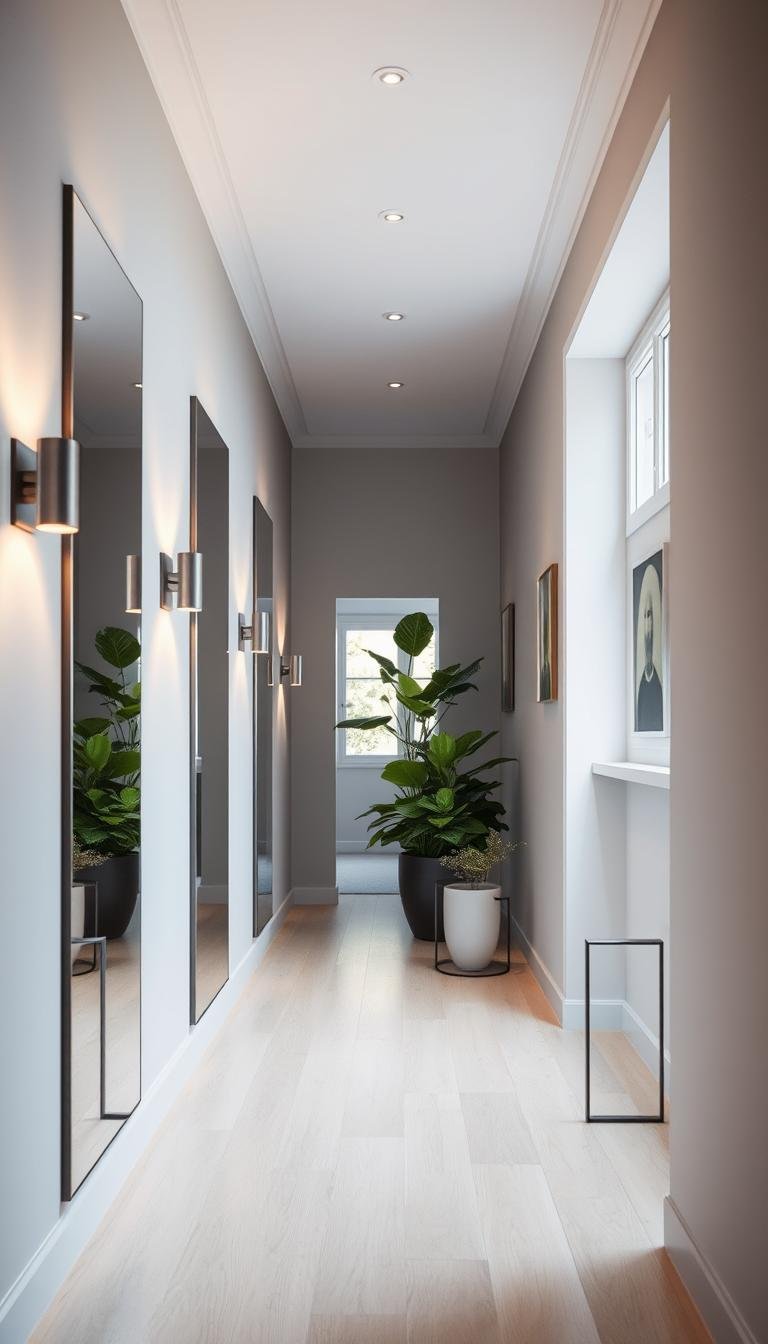
Position the bottom edge 8-12 inches from the floor for complete reflection. This placement captures your entire body beautifully.
The spacing provides clearance from potential floor hazards. It maintains visual balance while ensuring practical use.
These measurements work for most full-length mirror sizes. I adjust based on specific dimensions and household needs.
- Console table placement requires 6-12 inches above surface
- Empty wall centering works best at 57-65 inches from floor
- Full-length mirrors need bottom edge 8-12 inches from floor
- Measurements ensure complete body reflection
- Adjust based on specific mirror dimensions
- Consider user heights in your household
- Maintain visual balance throughout space
These guidelines form the foundation of successful mirror placement. They combine practical functionality with aesthetic appeal perfectly.
Remember that every space has unique characteristics. These measurements provide excellent starting points for your project.
For more design inspiration, explore our approach to creating harmonious living spaces that blend form and function.
Working With Existing Furniture and Layout
Integrating your mirror with current furnishings creates a polished, intentional design. I approach this challenge with careful attention to visual relationships.
The goal is achieving harmony between all elements. Your furniture and reflective surface should work together beautifully.

The equal spacing rule with benches or tables below
I always apply the equal spacing principle when working with existing pieces. This creates balanced visual weight throughout your space.
The method involves matching distances above and below your reflective surface. This prevents that disconnected, floating feeling many homeowners experience.
For most console table arrangements, I recommend maintaining approximately 6 inches between the top and mirror bottom. This gap establishes perfect visual connection.
Creating visual cohesion between mirror and furniture
Successful integration makes your arrangement feel like an intentional composition. Every element should relate harmoniously to others.
I consider both proportions and visual weight during placement. The reflective surface should complement rather than overwhelm accompanying pieces.
True cohesion happens when all components work together seamlessly. Your eye moves naturally through the entire arrangement without hesitation.
Avoiding the “floating” mirror effect
That disconnected appearance occurs when reflective surfaces lack proper grounding. I ensure your installation feels firmly connected to surrounding elements.
The relationship between mirror top and ceiling space affects how anchored everything appears. Proper spacing creates stability throughout your room.
Sometimes I adjust based on the complete look rather than strict measurements. The final arrangement should appear composed and intentional.
“Great design is achieved when all elements work in concert, creating visual harmony that feels both intentional and effortless.”
These techniques ensure your mirror placement enhances existing furnishings perfectly. For additional guidance on creating cohesive arrangements, explore this strategic approach to mirror placement throughout your home.
Design Considerations for Different Entryway Styles
Your entryway’s design style dramatically influences how you position your reflective surface. I approach each project by first understanding the overall aesthetic vision.
Different decor styles create unique opportunities for creative placement. The right approach enhances both function and visual appeal.
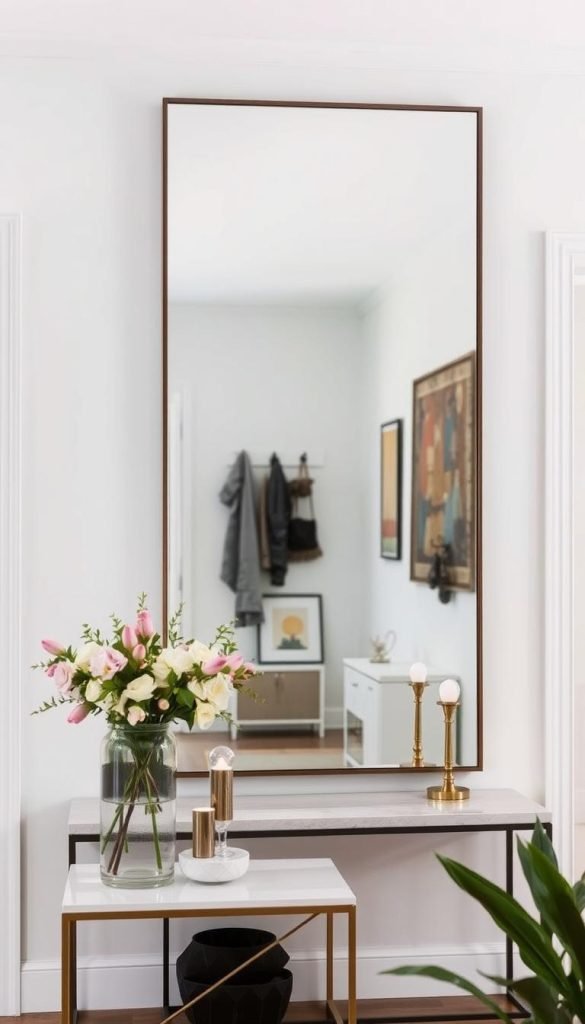
Modern and minimalist approaches
Clean lines and simplicity define modern minimalist spaces. I often recommend geometric shapes with thin, simple frames.
Precise placement becomes crucial in these designs. Intentional negative space around the reflective surface creates sculptural impact.
I position these pieces with mathematical precision. The result feels both intentional and effortlessly elegant.
Traditional and vintage styling techniques
Ornate frames and classic proportions characterize traditional spaces. I typically center these pieces as focal points.
Symmetrical arrangements work beautifully in vintage-inspired entryways. The placement feels formal yet welcoming.
I pay close attention to proportional relationships in traditional settings. Every element should feel harmoniously connected.
Maximizing small spaces with strategic placement
Compact entryways benefit tremendously from thoughtful positioning. I use reflective surfaces to create illusion of depth.
Strategic placement enhances natural light reflection throughout the room. This technique makes tight spaces feel more open.
I consider sight lines from multiple angles in small areas. The goal is maximizing perceived space without sacrificing function.
- Modern designs favor clean lines and geometric precision
- Traditional styles often use ornate frames with centered placement
- Small spaces benefit from light-enhancing positioning strategies
- Overall decor style guides both frame selection and height decisions
- Sometimes breaking standard rules creates desired aesthetic effects
- Modern spaces treat reflective surfaces as sculptural elements
- Traditional arrangements often feature symmetrical focal points
- Compact areas need placement that enhances light and space perception
- The reflective surface should complement your style while remaining functional
I always consider the complete design vision when determining placement. Your reflective surface should enhance rather than compete with other elements.
The right approach depends on your specific aesthetic goals. Different styles may require customized solutions beyond standard guidelines.
Safety and Practical Considerations
I believe beautiful design should always prioritize safety and functionality. Let’s explore how proper installation techniques protect both your investment and your household.
These practical measures ensure your reflective surface remains secure and beautiful for years. They transform your decorative piece into a safe, functional element.

Proper mounting hardware and wall anchors
I always select hardware rated for at least 50% more weight than your mirror. This safety margin prevents accidents and ensures long-term security.
Wall anchors must match your specific wall type perfectly. Drywall, masonry, and plaster each require different installation approaches.
Securing to wall studs provides maximum strength when possible. I center installations on studs for optimal stability and support.
For oversized pieces, I recommend additional safety straps. These prevent tipping hazards and provide extra security.
Keeping mirrors away from high-traffic areas
Strategic placement avoids congestion points in your home. I identify spots where people naturally move through spaces.
This prevents accidental bumps and potential damage from daily activities. Your reflective surface remains protected from casual contact.
Clearance around the installation allows safe passage and maintenance access. I ensure proper spacing from furniture and doorways.
Preventing smudges and damage from daily use
I position reflective surfaces to minimize contact during regular use. Avoiding leaning spots reduces fingerprint marks and smudges.
The bottom edge should allow easy cleaning access while preventing floor contact. This spacing protects against moisture damage and simplifies maintenance.
Rubber padding under freestanding bases prevents sliding on smooth surfaces. This added security keeps everything firmly in place.
| Safety Feature | Purpose | My Recommendation |
|---|---|---|
| Weight Rating | Ensures secure installation | Hardware rated for mirror weight plus 50% |
| Wall Anchors | Provides stability | Type-specific anchors for your wall material |
| Stud Mounting | Maximum strength | Center installation on wall studs when possible |
| Safety Straps | Prevents tipping | Additional security for large or heavy pieces |
| Traffic Avoidance | Reduces accidents | Place away from natural movement pathways |
| Clearing Access | Simplifies maintenance | Allow space around all edges for cleaning |
Proper installation techniques ensure your mirror stays securely in place. They prevent hazards while maintaining beautiful appearance.
I always consider these practical aspects during placement decisions. Safety and functionality complement aesthetic appeal perfectly.
For detailed guidance on specific height measurements, explore this comprehensive resource about proper positioning from the floor.
Remember that good design balances beauty with practical considerations. Your space should feel both inviting and completely secure.
Adjusting for Your Specific Needs
Every home has unique requirements that demand personalized solutions. I approach each project with fresh eyes to accommodate your household’s particular circumstances.
Standard guidelines provide excellent starting points. Your actual installation needs thoughtful customization for optimal results.
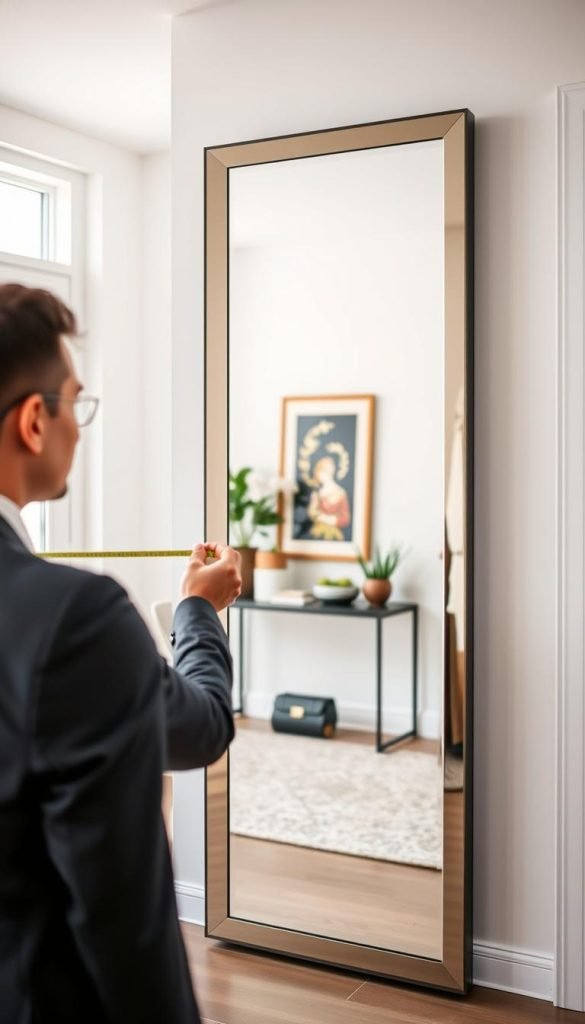
Accounting for different user heights in your household
I always measure the eye level of everyone who will regularly use the reflective surface. This ensures comfortable viewing for all family members.
Households with significant variations between 5’2″ and 6’2″ require compromise placement. I find the average viewing height that serves most people effectively.
Extreme differences might require tilting the surface slightly. This technique improves visibility for both shorter and taller users.
When to consider custom solutions
Standard approaches may not work for unusual spaces or special requirements. Custom solutions become necessary in these situations.
Adjustable mounting systems offer excellent flexibility for changing needs. They allow height modifications without complete reinstallation.
Specially sized reflective surfaces can solve challenging placement issues. Sometimes unconventional proportions work better than standard dimensions.
Professional installation versus DIY approaches
The installation method depends on several important factors. I consider weight, wall type, and your comfort with tools.
Professional help ensures proper mounting for large or heavy pieces. Experts know exactly which hardware and anchors to use.
DIY approaches work well for standard installations with careful measurement. Always make sure you have the right equipment before starting.
- Measure all users’ eye levels for compromise placement
- Consider adjustable systems for households with height variations
- Custom sizes solve unique spatial challenges effectively
- Professional installation recommended for heavy pieces
- DIY works for standard weights with proper hardware
- Safety always comes first in mounting decisions
- The right approach depends on your specific situation
I prioritize both safety and functionality in every installation. Your reflective surface should serve your needs while remaining securely in place.
The perfect placement combines practical considerations with aesthetic appeal. Your space will feel both beautiful and perfectly functional.
Creative Solutions and Alternative Placements
Sometimes standard guidelines don’t fit your unique situation. I love exploring innovative approaches that solve tricky placement challenges while adding character to your home.
Creative thinking often produces the most memorable results. These solutions blend function with artistic expression beautifully.
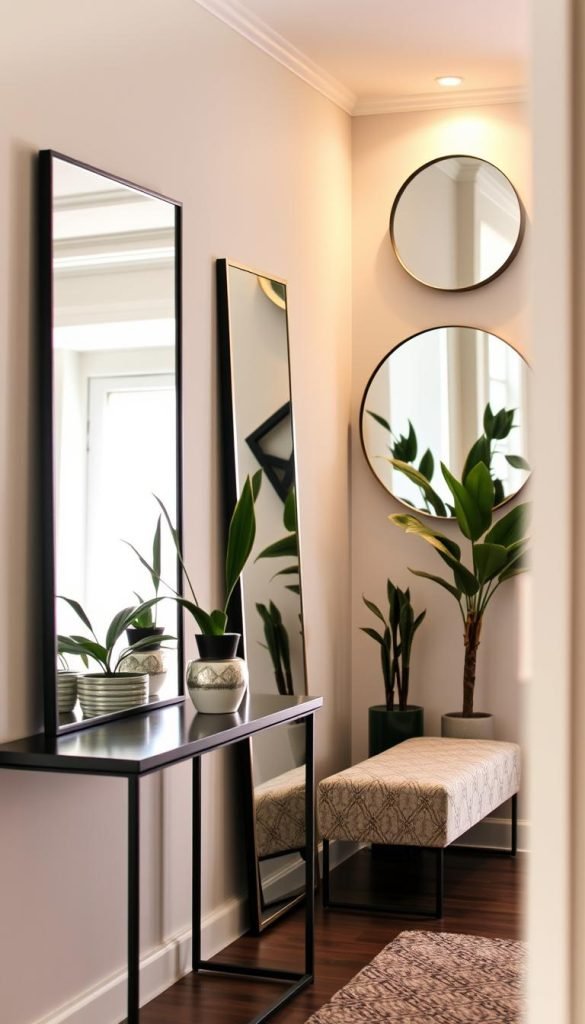
Using decorative elements to balance height issues
I often incorporate tall decorative pieces to address height challenges. Tall vases or sculptures create visual balance around your reflective surface.
Artwork placed strategically can anchor the entire composition. These elements work together to create harmony on your wall.
The right decor pieces make everything feel intentional. They transform potential problems into design features.
Unexpected locations that work beautifully
Angled hallway corners often surprise people with their potential. These spaces can expand light reflection throughout your home.
I sometimes position reflective surfaces opposite windows. This placement maximizes natural light in darker areas.
Unexpected spots become conversation starters. They demonstrate thoughtful design beyond conventional thinking.
When to break the rules for dramatic effect
Standard placement rules sometimes limit creative expression. I encourage intentional rule-breaking for dramatic impact.
Grouping multiple reflective surfaces creates stunning visual interest. This approach works particularly well in larger spaces.
Unconventional mounting angles can produce fascinating results. The key is ensuring every choice serves a specific design purpose.
| Creative Solution | Best Application | Visual Impact |
|---|---|---|
| Decorative Anchoring | Height imbalance issues | Creates balanced composition |
| Unexpected Placement | Underutilized spaces | Adds surprise element |
| Rule Breaking | Statement designs | Creates dramatic focal point |
| Mirror Groupings | Large wall areas | Adds depth and dimension |
| Angled Mounting | Unique architectural features | Enhances spatial perception |
I always consider the complete wall composition during planning. Alternative placements can transform problem areas into stunning features.
Creative approaches often solve issues that standard placement cannot address. The best solutions combine practicality with artistic vision.
Your space should reflect your personal style while remaining functional. Sometimes the most unconventional choices produce the most beautiful results.
Conclusion: Finding Your Perfect Mirror Height
Finding that ideal mirror placement creates harmony between function and beauty in your home. I believe the perfect position balances standard guidelines with your unique space requirements.
Start with the 57-65 inch center principle as your foundation. Then adjust based on your room’s specific characteristics and how you use the space daily.
Proper installation ensures both safety and stunning visual impact. Large pieces need secure mounting while maintaining that flawless appearance.
Trust your eye when assessing the final look. Sometimes the right placement feels instinctively correct once everything comes together.
The transformation happens when reflection meets practicality perfectly. Your space becomes both welcoming and completely functional for everyone.
Remember these guidelines help rather than restrict your design choices. The best results combine measured precision with personal preference.