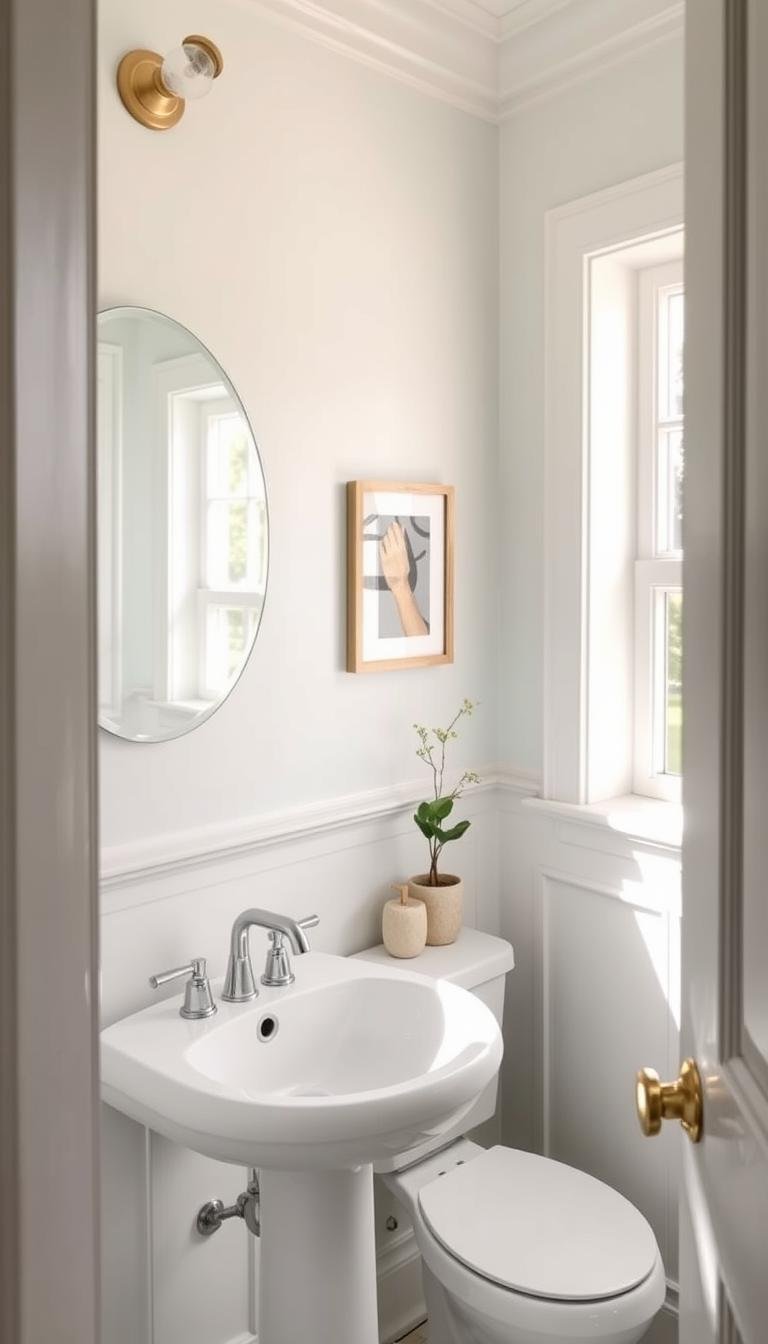
How can I make a tiny powder room feel bigger with paint tricks?
Small powder rooms often feel cramped and closed in. But they don’t have to stay that way. A fresh coat of paint offers a powerful, budget-friendly solution to open up the space.
I’ve spent over twenty years living in and designing cozy homes. Our first house was just 1,000 square feet. I learned that even the tiniest room should feel welcoming and like home.
You can create a wonderful sense of openness with the right approach. Light colors, smart techniques, and thoughtful design choices work together beautifully. These are all practical, tested methods I’ve used myself.
You can achieve a more expansive look without any major construction. Let’s explore how to make your small bathroom feel airy and inviting.
Key Takeaways
- Paint is a powerful, affordable tool to create the illusion of more space.
- Light and bright colors are your best friends in a small room.
- Strategic techniques can draw the eye upward and enhance the feeling of height.
- Complementary design elements maximize the impact of your color choices.
- These methods are practical, tested, and require no structural changes.
- Even the smallest room can feel like a comfortable and welcoming part of your home.
- For more design inspiration, explore our home decor guides and DIY tutorials.
How I Use Paint to Create Space in a Small Powder Room
Transforming a compact bathroom begins with understanding paint’s magical properties. The right choices can completely alter perception. This approach works wonders even in the most challenging spaces.
My favorite technique combines science with psychology. It creates an optical illusion that expands boundaries. The results often surprise homeowners with their effectiveness.

Understanding Light Reflectance Value (LRV) for Small Spaces
Light Reflectance Value measures how much light paint reflects. It uses a simple 0-100 scale. Higher numbers mean more brightness in your space.
I always recommend aiming for LRV between 65-94. This range maximizes light reflection beautifully. It’s particularly crucial in rooms without natural light sources.
Our previous home had a windowless bathroom. Choosing a high-LRV color transformed it completely. The difference in brightness was immediately noticeable.
Why Cool, Light Colors Work Best for Expansion
Cool tones create psychological distance on walls. They seem to recede from the viewer’s eye. This effect makes compact areas appear more spacious.
Benjamin Moore Gray Owl exemplifies this principle perfectly. Its light, cool gray tone pushes boundaries outward. Sherwin Williams Fleur de Sel achieves similar results with elegance.
Highly saturated colors don’t recede effectively. Adding gray creates muted, space-enhancing shades. These tones work magic in confined areas.
Light cool colors offer a double advantage. They reflect available illumination while creating depth. This combination maximizes the feeling of openness.
Personal perception varies among individuals. However, these design principles work for most people. They provide reliable results for expanding visual space.
Choosing the Right Color Palette for Your Powder Room
Selecting the perfect color scheme transforms your compact bathroom dramatically. The right palette creates visual expansion and enhances natural illumination. This choice sets the foundation for your entire design approach.
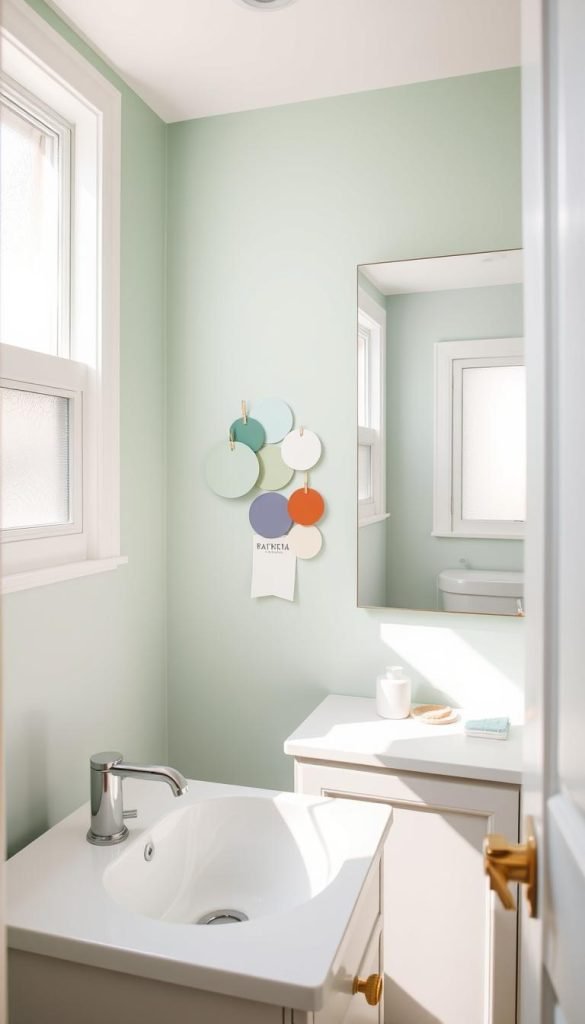
I’ve found that cohesive color stories work best in confined areas. They create flow and prevent visual interruptions. This continuity makes the entire space feel more open and connected.
Best Light and Cool Paint Colors for Small Bathrooms
Light, cool tones work wonders for expanding visual space. They reflect available light while creating depth perception. These colors seem to recede from the viewer’s eye.
My top recommendations include soft grays and pale blues. Benjamin Moore Dove Wing offers a warm white option. Sherwin Williams Alabaster provides a clean, bright foundation for any design.
Consider these excellent choices for your project:
| Color Family | Specific Shades | Best For | Light Reflection |
|---|---|---|---|
| Light Grays | Benjamin Moore Gray Owl | Modern elegance | High LRV (75-85) |
| Pale Blues | Sherwin Williams Rain | Serene atmosphere | Excellent reflection |
| Soft Greens | Benjamin Moore Healing Aloe | Spa-like feeling | Bright and airy |
| Creams | Sherwin Williams Alabaster | Warm brightness | Maximum light bounce |
| Blush Tones | Benjamin Moore First Light | Subtle warmth | Soft reflection |
Semi-gloss or high-gloss finishes enhance these effects beautifully. They reflect more light than matte options. This creates additional depth and brightness in your space.
According to Martha Stewart’s design experts, light gray walls create wonderful illumination. They make compact bathrooms feel more expansive when chosen thoughtfully.
Colors to Avoid in Compact Powder Rooms
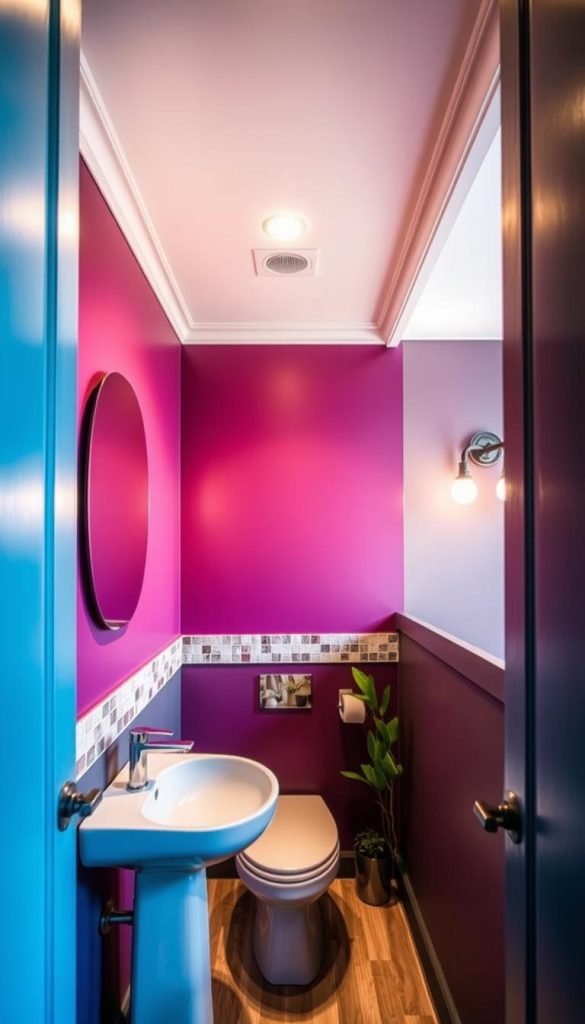
Dark, saturated hues typically diminish perceived space. They absorb light rather than reflecting it. This makes walls appear closer than they actually are.
Navy blues and deep reds advance toward the viewer. They create a cozy but confined atmosphere. While comfortable, they don’t achieve that open feeling we want.
Benjamin Moore Steel Wool offers a beautiful dark option. It works well for creating intimacy in larger rooms. For small bathrooms, it reduces the sense of openness.
High-contrast color combinations break up visual continuity. They create boundaries that emphasize the room’s limits. Stick to monochromatic or tonal schemes instead.
Remember that personal preference always matters most. If you love bold colors, consider using them as accents. Keep main surfaces light and bright for maximum expansion.
In our previous home’s foyer, switching from medium beige to white made a dramatic difference. The space immediately felt brighter and more open. This simple change transformed the entire entry experience.
Strategic Painting Techniques for Visual Expansion
Beyond color selection, specific application methods dramatically enhance spatial perception. These professional approaches create optical illusions that expand boundaries. They transform even the most compact bathroom into a more open-feeling space.
I’ve used these techniques in numerous projects with remarkable results. They require no structural changes yet deliver significant visual impact. The right application method can make walls appear to recede and ceilings seem higher.
Painting Walls and Ceiling the Same Color
Color drenching creates incredible visual continuity throughout your space. This approach involves using identical hues on walls, trim, and overhead surfaces. Sherwin Williams Alabaster works beautifully for this unified look.
Different sheens add subtle dimension while maintaining color consistency. I typically use eggshell on walls and semi-gloss on trim. The ceiling usually gets a flat finish in the exact same color.
This method eliminates harsh visual breaks between surfaces. Your eye flows smoothly from wall to ceiling without interruption. The space feels more expansive and thoughtfully designed.
Reduced contrast plays a key role in this optical expansion. Strong color differences emphasize boundaries and limitations. Monochromatic schemes make rooms appear larger by unifying all surfaces.
Using Vertical Stripes to Elevate the Space
Vertical elements naturally draw the eye upward toward the ceiling. This directional emphasis creates wonderful height illusion. Stripes can be painted directly or achieved through patterned wallpaper.
I recommend subtle tonal variations rather than high-contrast combinations. Soft gray stripes on a light blue background work beautifully. The effect should suggest height without overwhelming the space.
In our primary bedroom, I applied this principle with curtain placement. Hanging drapes near the crown molding elongated the entire wall. The vertical lines made the room feel substantially taller.
Consider these effective approaches for vertical emphasis:
- Painted stripes using subtle tonal variations
- Vertical patterned wallpaper with light colors
- Floor-to-ceiling paneling or board and batten
- Tall, narrow artwork that draws the eye upward
- Vertical tile patterns in shower or accent areas
Direction matters tremendously in spatial perception. Horizontal elements emphasize width while vertical lines highlight height. For low ceilings, always prioritize vertical orientation.
Large-format tiles create fewer grout lines for cleaner appearance. Extending floor tiles up the wall blurs boundaries beautifully. This seamless look enhances the feeling of openness throughout the space.
These techniques work by minimizing visual interruptions and breaks. Continuous surfaces allow the room to flow without segmentation. The effect makes compact areas feel more generous and inviting.
Combine paint methods with other design elements for maximum impact. High-hung curtains complement vertical stripe patterns perfectly. Consistent color stories throughout the space enhance the expansive feeling.
Small details significantly affect perceived dimensions. Stripe width, color contrast, and pattern scale all contribute to the final result. Test samples in your actual lighting conditions before committing.
For more design continuity ideas, explore our home decor guides. These resources offer additional techniques for creating flow throughout your home.
Creating Accent Walls That Enhance Space
Strategic focal points transform compact bathrooms beautifully. An accent wall draws attention to specific areas while expanding visual perception. This technique creates depth without overwhelming the limited square footage.
I’ve used this approach in numerous small bathroom designs. The right accent wall adds personality while maintaining openness. It’s one of my favorite methods for creating visual interest.

Selecting the Right Wall for Emphasis
Choose walls with natural architectural focus points. The wall behind the toilet often works perfectly. This placement creates a natural focal point upon entering the space.
According to paint experts, the ideal accent wall serves a clear purpose. It should be the first surface visible when entering. This strategic placement directs attention effectively.
Avoid walls with irregular features or slanted ceilings. These can emphasize limitations rather than spaciousness. Flat, unobstructed surfaces work best for creating expansion.
Using Light Colors in Accent Features
Light hues maintain brightness while adding visual interest. Pale blues and soft grays create wonderful receding effects. These colors seem to push boundaries outward.
In Chelsea’s farmhouse renovation, a light accent wall transformed everything. Faux shiplap with shelving created depth against white walls. The narrow space immediately felt more expansive.
Higher sheen finishes enhance light reflection beautifully. Semi-gloss or satin finishes bounce illumination around the room. This amplifies the sense of openness throughout the space.
Consider these effective light accent color options:
- Benjamin Moore Healing Aloe for spa-like serenity
- Sherwin Williams Rain in soft blue tones
- Benjamin Moore First Light for subtle warmth
- Sherwin Williams Alabaster for clean brightness
Pair accent walls with mirrors or light sources strategically. Reflective surfaces multiply the space-enhancing effect. This combination creates wonderful visual expansion.
Our design philosophy emphasizes maintaining brightness in compact areas. Light accent walls achieve this while adding personality. They provide focus without reducing the expansive feel.
Avoid dark or warm tones on feature walls. These colors advance toward the viewer and diminish space. Stick to light, cool hues for maximum openness.
Accent walls add visual interest without clutter. They eliminate the need for multiple decorations. This maintains clean lines and an open atmosphere.
The goal is creating focus without confinement. Light colors achieve this balance perfectly. They transform small bathrooms into inviting, spacious-feeling retreats.
Complementary Design Tricks to Enhance Your Paint Job
The right paint choices create a wonderful foundation for your small bathroom. Strategic lighting and reflective surfaces amplify these effects beautifully. They work together to transform the entire space.
I always consider these elements as part of a complete design system. Each component supports the others in creating visual expansion. The results often exceed expectations.
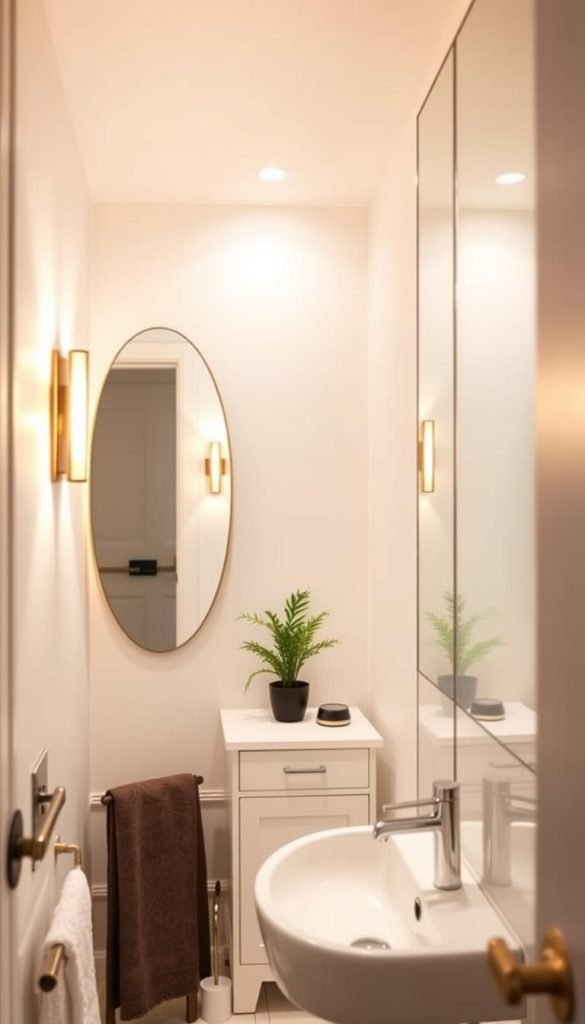
Maximizing Natural and Artificial Light
Light transforms how we perceive any room. It works with your paint color to create depth and brightness. Both natural and artificial sources play crucial roles.
For windows, I recommend frosted glass or privacy film. These options maintain illumination while providing privacy. Light-filtering shades offer another excellent solution.
Trim outdoor foliage that blocks sunlight. Clean windows regularly for maximum light transmission. Every bit of natural illumination helps.
Artificial lighting requires thoughtful planning. Dimmer switches provide wonderful control over ambiance. They allow adjustment throughout the day.
Vanity lights on both sides of mirrors eliminate shadows. Cool white bulbs (3,000K-4,000K) create bright, clean illumination. LED strip lighting adds ambient glow.
In our old laundry room, removing dark blinds made a dramatic difference. Combined with light colors, the space felt completely transformed. Brightness and perceived size increased significantly.
Layered lighting creates depth throughout the bathroom. Combine ambient, task, and accent sources. This approach makes the room feel more expansive.
Incorporating Mirrors to Amplify Space
Mirrors work magic in compact bathrooms. They reflect both light and visual space beautifully. The effect creates wonderful openness.
Large wall-to-wall options maximize this illusion. They effectively double the view and available light. Position them to reflect windows or attractive features.
Strategic placement enhances the entire room. Angling mirrors toward light sources boosts brightness. Reflecting accent walls extends their impact.
Mirrored accessories provide subtle reflection. Soap dispensers, trays, or tiles add sparkle without overwhelming. They complement rather than dominate the design.
These techniques expand visual boundaries dramatically. They work with your paint color to create cohesion. The combined effect feels both intentional and spacious.
For more design inspiration, explore our home decor guides. These resources offer additional ways to enhance your space.
Light and reflection complete your paint transformation. They elevate good design into something truly special. Your small bathroom will feel open, bright, and welcoming.
Practical Considerations Before You Start Painting
Proper planning ensures your painting project delivers maximum visual impact. Testing colors and preparing surfaces might seem tedious but yield professional results. These steps transform good intentions into stunning reality.
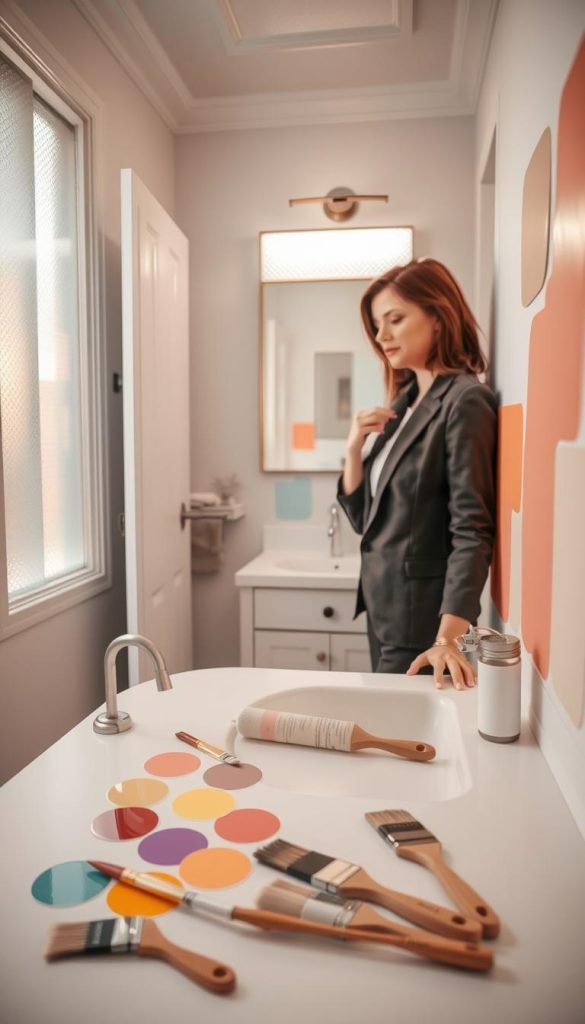
Testing Paint Colors in Your Actual Space
Light changes dramatically throughout the day in any room. Natural and artificial illumination affect how colors appear on walls. Testing samples prevents disappointing surprises after completion.
Purchase sample pots of your top two or three choices. Apply large swatches to different walls in the bathroom. Observe them during morning, noon, and evening hours.
Artificial lighting creates different effects than daylight. Check colors under your vanity lights and overhead fixtures. This reveals how they’ll look during actual use.
Colors interact with existing elements in surprising ways. Tile, countertops, and fixtures influence perceived hue. Testing ensures harmony with your permanent features.
Preparing Your Powder Room for Painting
Proper surface preparation creates the perfect canvas for transformation. Clean walls ensure paint adheres properly and lasts longer. Repairing imperfections prevents them from showing through later.
Follow this systematic approach for best results:
| Step | Action | Purpose | Time Required |
|---|---|---|---|
| 1 | Remove all items and decor | Clear workspace and protect belongings | 30 minutes |
| 2 | Clean walls with TSP solution | Remove grease and dirt for better adhesion | 45 minutes |
| 3 | Repair cracks and holes | Create smooth surface for professional finish | 1-2 hours |
| 4 | Apply primer to repaired areas | Ensure even color absorption and coverage | 30 minutes |
| 5 | Protect fixtures and floors | Prevent accidental drips and splatters | 20 minutes |
Small bathrooms present unique storage challenges during projects. Over-the-toilet organizers keep essentials accessible but out of the way. Recessed cabinets offer temporary storage without consuming floor space.
Quality primer makes a significant difference in final appearance. It helps light colors achieve their full brightness potential. This step maximizes the space-enhancing effect of your chosen palette.
Taking time for proper preparation always pays off. Our projects demonstrate that careful planning prevents frustration later. The extra effort results in a finish that looks professionally done.
Even compact areas deserve thorough attention to detail. Thoughtful preparation ensures your paint job creates the desired illusion of space. You’ll enjoy beautiful results that last for years.
Conclusion: Transforming Your Powder Room With Paint
Your compact bathroom can achieve remarkable openness through thoughtful paint choices. Light, cool colors with high LRV expand visual space beautifully. Strategic techniques like color drenching and vertical stripes enhance this effect.
These approaches are affordable and highly effective. They create wonderful illusions without renovation. Testing colors in your actual lighting ensures perfect results.
From my experience, these changes transform cramped areas into spacious-feeling retreats. Even small adjustments impact perception dramatically. Your powder room becomes a welcoming part of your home.
Experiment confidently with these methods. Paint offers flexible, reversible enhancement. You’ll create a functional, inviting space that feels open and bright.