What are the quietest blinds for a light sleeper’s bedroom?
I test and compare window treatments with one goal: help you sleep through the night without stray glow or rustle. I focus on how little noise each option makes when you move, close, or when wind hits the sash, plus how well it blocks edge glow that kills melatonin.
Fabric shades like cellular, roller, and Roman with blackout liners often beat slatted wood at darkening and muffling sound. Cellular designs add insulation and hush; roller gives a clean fit with tight edge control; lined Roman shades bring softness and elegant style while still delivering blackout performance.
I also check the hardware that matters—side channels, cassette valances, and bottom-rail seals—and test outside mounting and layered drapery for added darkness and quieter frames. I cover cordless and low-noise motor options for safety and silence, plus practical fits for bays and sliders. Read on and I’ll show a clear path: pick a quiet-first shade, then add the right mount and accessories to fine-tune darkness and calm.
Key Takeaways
- Fabric-based shades usually beat slatted options for silence and blackout.
- Cellular shades add insulation and noise dampening.
- Roller shades offer sleek fit and strong edge control upgrades.
- Roman shades with blackout liners combine softness with darkening.
- Side channels, cassettes, and outside mounts reduce edge glow and sound.
- Cordless or low-noise motors improve safety and quiet.
Buyer’s guide overview: how I define “quietest” for better sleep
I rate window treatments by how quietly they perform in real bedrooms, not just on a spec sheet. My tests aim to show which choices cut noise and stop stray glow that disrupts sleep. I focus on practical results you can hear and see at night.

Noise sources that matter: fabric rustle, slat rattle, and motor hum
I listen for three main sounds: fabric rustle when you move a shade, slat rattle in hard-slat systems, and motor hum with powered lifts. Fabric construction and secure mounts often mute movement. Hard slats need tight fit or they vibrate in wind.
Why darkness helps sleep: blackout vs. room darkening vs. light filtering
Light leaking into a room lowers melatonin and fragments sleep. True blackout materials block 95–100% through fabric, but edge gaps still leak unless you use outside mounts, side channels, or valances. Room-darkening cuts brightness but rarely removes dawn glow completely.
My evaluation pillars: light control, privacy, noise reduction, and energy efficiency
I judge any option on four pillars: light control, privacy, noise reduction, and energy savings. Cellular (honeycomb) constructions score high across the board by trapping air, damping sound, and reducing heat loss.
| Feature | Cellular | Roller | Roman |
|---|---|---|---|
| Light control | Excellent with blackout and side channels | Very good with outside mount | Good with blackout liner |
| Noise reduction | High (air trapping) | Medium (depends on fabric) | Medium-high (soft folds) |
| Energy efficiency | Best (insulating cells) | Good (tight fit helps) | Fair (liner improves) |
| Privacy | Strong | Strong | Strong |
Top picks at a glance: the best shade styles for light sleepers
My first pass focuses on which designs deliver calm and near-total darkness in real rooms. Below I name the three styles I shortlist and why each works so well at night.
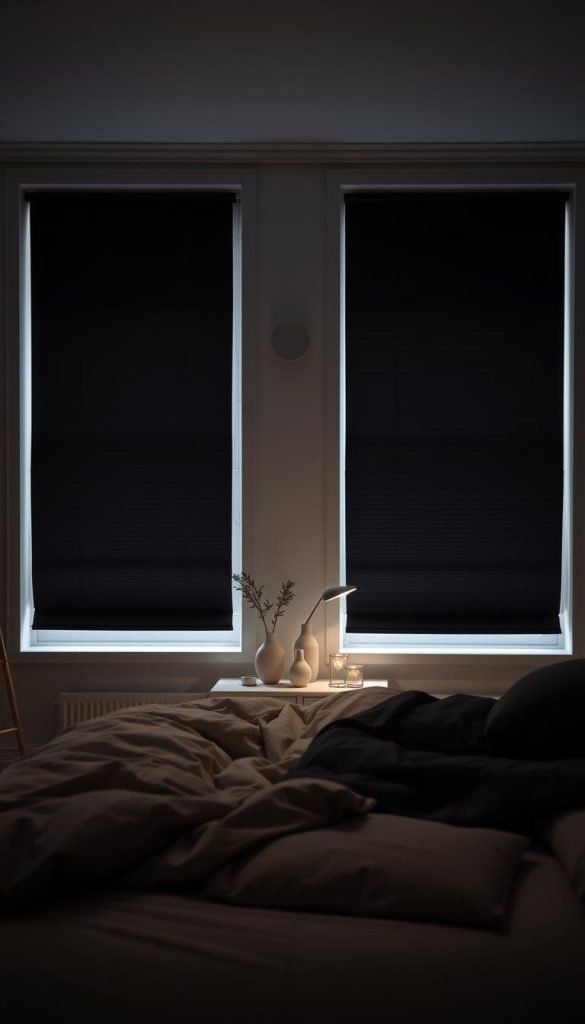
Blackout cellular (honeycomb) shades: maximum darkness and sound dampening
Blackout cellular shades give near-total darkness and top insulation. The honeycomb pockets trap air and reduce noise from traffic and wind.
Blackout roller shades: sleek look with edge-control upgrades
Blackout roller options deliver a clean modern look and tight edges. Add side channels or a cassette valance to stop top and sidelight bleed.
Room-darkening Roman shades with blackout lining: softer, quieter fabric feel
Roman shades with a true blackout liner combine a tailored look with thicker folds that muffle rustle. Layering with drapery improves edge coverage and acoustics.
- I recommend cellular if insulation and hush are top priorities.
- Choose roller for a minimalist profile and precise light control.
- Pick Roman when cozy style matters but you still need strong darkness.
Tip: Use cordless or low-hum motors and outside mounts when possible. For more on measuring and choices, see my guide to best window options for restful sleep at bedroom shades.
Cellular shades for quiet and comfort
A well-made honeycomb shade gives you two wins: it softens outside noise and steadies indoor temperature. I favor this design when silence and stable sleep conditions matter most.
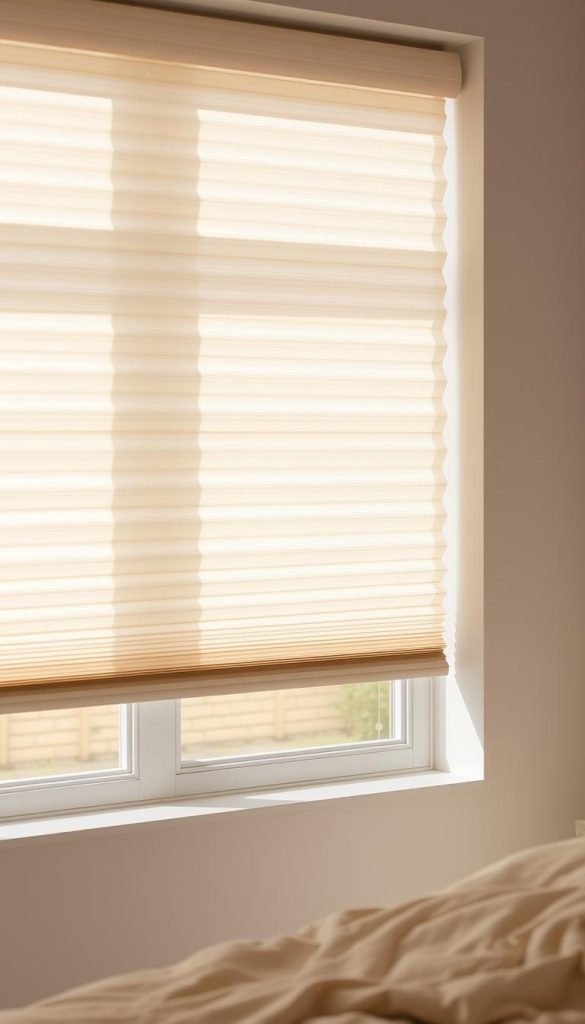
How honeycomb cells trap air to reduce noise and improve insulation
Honeycomb pockets create tiny air pockets that absorb sound waves and slow heat flow. That buffer helps lower street noise and keeps the room from swinging between hot and cold.
When to choose single-, double-, or larger-cell constructions
Single-cell works well on small windows with modest sun. Double-cell and larger cells step up both thermal and acoustic performance. For street-facing installs I usually pick a double or a deeper cell.
“Cellular builds are the quiet, energy-saving choice when blackout and comfort are priorities.”
Top-down/bottom-up for daytime privacy without sacrificing natural light
Top-down bottom-up lets light in from the top while keeping privacy at eye level. Use outside mounts and good overlap with the frame to better block light around edges.
| Build | Insulation | Noise control |
|---|---|---|
| Single-cell | Good | Moderate |
| Double-cell | Better | High |
| Larger/deeper cell | Best | Best |
Tip: Choose neutral, tightly woven blackout fabric and low-noise cordless or motorized lifts for steady energy efficiency and a calmer night.
Roller shades that block light without the rattle
When you want silence and a sleek look, a well-fit roller shade with the right hardware is hard to beat. I focus first on fabric opacity, then lock down edges so the room goes truly dark.
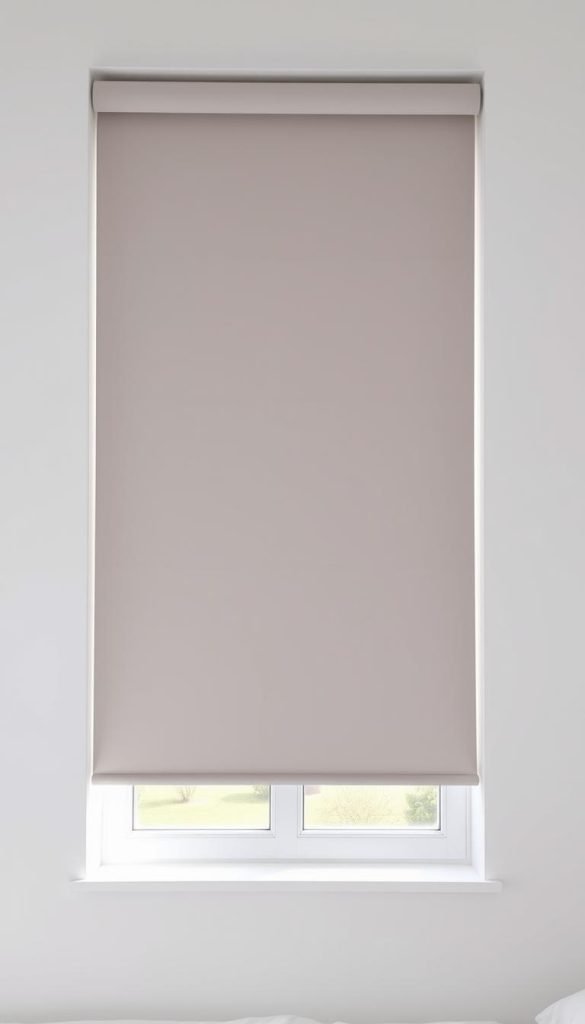
Choosing true blackout fabrics and snug inside or outside mounts
True blackout roller fabrics stop 95–100% of light through the material. Still, fabric alone won’t stop halo around the edges.
I prefer an inside mount only when the window frame is perfectly square and deep enough. Otherwise, an outside mount increases overlap and will block more stray light.
Side channels, cassette valances, and bottom-rail seals to stop edge glow
Edge control hardware is the real secret. Install side channels and a cassette valance sized with proper returns to shroud the roll and cut top bleed.
- Use side channels to eliminate side gaps.
- Pick a cassette with deeper returns to shroud the headbox.
- Add a bottom-rail seal or soft bumper to reduce panel bounce and keep lowering quiet.
| Item | Why it matters |
|---|---|
| Side channels | Stop side light and improve blackout |
| Cassette valance | Blocks top halo and hides roller |
| Bottom-rail seal | Prevents bounce and seals lower edge |
Pro tip: Pair an inside-mounted blackout roller with outside drapery for hotel-level darkness while keeping a clean interior look. I always confirm true square and depth before recommending an inside fit.
Roman shades for a soft, quiet bedroom aesthetic
Roman shades bring a tailored, calming presence that helps quiet a sleep space while keeping a refined look. I like them when I want a softer alternative to slatted options that still gives strong darkening when paired with the right liner.
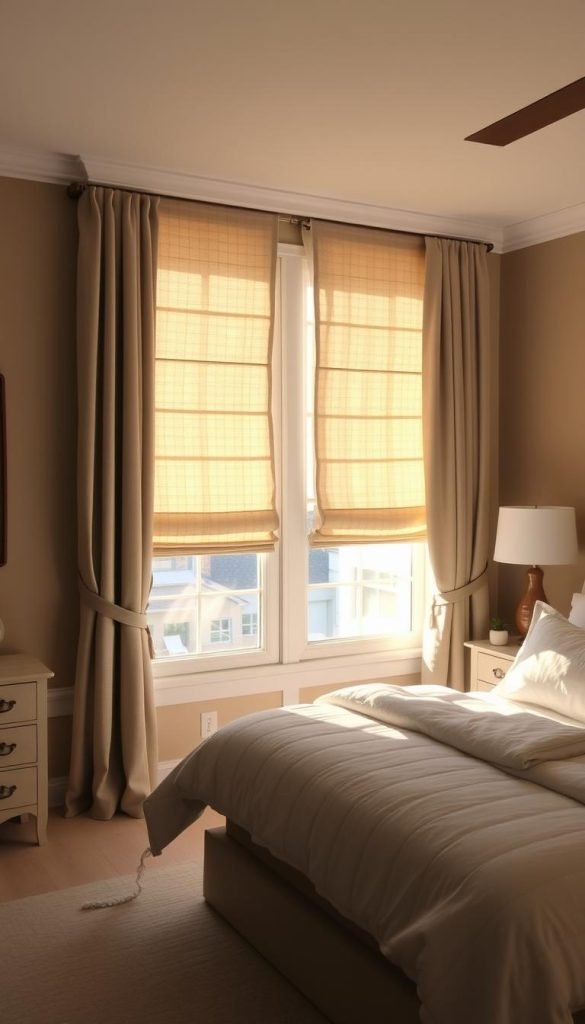
Blackout liners and tightly woven fabrics for stronger darkening
Blackout liners turn decorative folds into true blackout shades. I choose tightly woven fabric that reduces pinholes and boosts nighttime privacy on ground-level rooms.
Tip: Mid to deeper tones hide tiny gaps and add a serene, refined look that reads upscale at night.
Layering Romans with drapery to further reduce light and noise
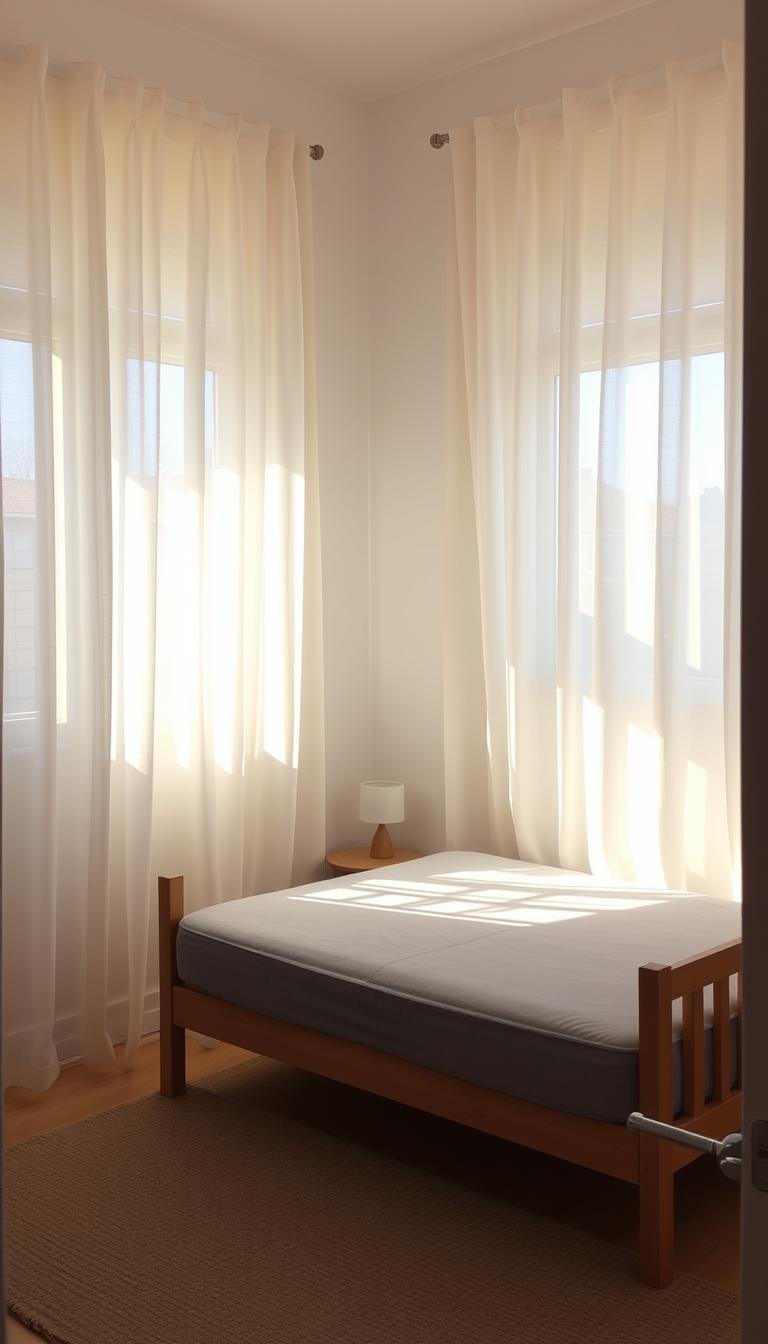
Outside-mounted drapery paired with Romans improves edge coverage and softens reflections. That combo gives near-hotel blackout and extra acoustic damping around the window wall.
- Pick flat, hobbled, or relaxed folds based on your design and how much bulk you want.
- Use cordless or low-noise motors for quiet, effortless operation at night.
- Outside mounts usually beat inside mounts for stronger light control.
I often match shade color to bedding and upholstery so the whole room reads cohesive and sleep-friendly.
What are the quietest blinds for a light sleeper’s bedroom?
My go-to picks deliver calm: insulated fabric, a tight roller, or a lined soft fold. Each choice balances silence, blackout, and style so you can sleep without stray glow or rustle.
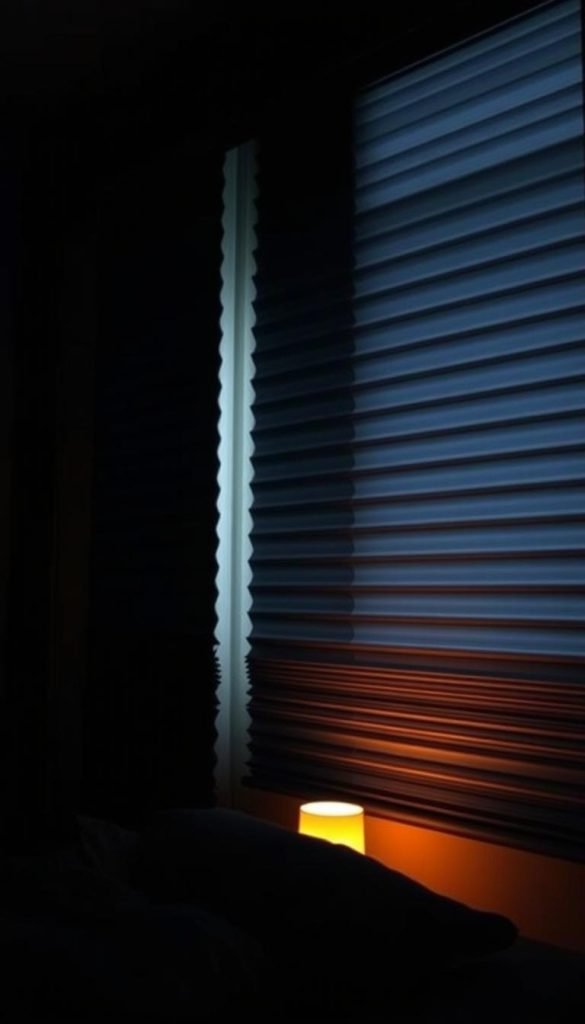
Short list and why I pick each
- blackout cellular — best at damping street noise and boosting insulation. Ideal when sound and temperature swing are issues.
- blackout roller — sleek and precise. Add side channels or a cassette for tight edge control and near-total darkness.
- roman shades with blackout liner — a soft, cocooning solution that reduces rustle while keeping a warm, refined look.
Who each option fits
I match picks to rooms: cellular works well on street-facing windows and nurseries. Roller suits shift workers who need strict lights-out. Roman fits master suites that want luxury hush and layered privacy.
Tip: Use cordless lifts in nurseries, outside mounts and channels if you’re highly light-sensitive, and layer drapery when you need the ultimate darkness and sound absorption. Every space and window needs a final fit check to make the solution work.
Mounting and fit: the make-or-break details for darkness and quiet
Mount choice and precise measurements often decide whether a room goes truly dark or lets dawn creep in.

Inside mount vs. outside mount: which blocks more light
Outside mounts usually win for blackout because they overlap trim and shrink edge gaps before any hardware is added. An outside placement that extends 1–2 inches past each side cuts much of the side and top glow.
Professional measurement tips
Verify squareness and depth for inside installs. Measure sill tilt, handles, and any crank that could stop a tight fit. Plan returns and deeper cassettes when headroom is shallow.
Layering strategy and bay/corner solutions
Use side channels, deeper cassette valances, and bottom-rail seals to tame leaks and reduce movement that causes rustle.
For bay or corner windows, tighter side clearances or dress panels eliminate angle gaps that simple inside fits miss. Layering stationary drapery over an inside-mounted blackout unit gives near-hotel darkness while keeping a tailored look.
| Problem | Fix | Why it helps |
|---|---|---|
| Top halo | Deeper cassette valance | Shrouds roll and blocks headlight bleed |
| Side gaps | Side channels / extra overlap | Eliminates edge light and reduces slat vibration |
| Sill leaks | Bottom-rail seal | Closes lower gap and softens contact noise |
Smart, safe, and quiet operation
I focus on how automation can keep a room dark, calm, and hands-free from dusk through wake time.

Motorized and cordless systems: quieter operation and child-safe design
Cordless lifts remove dangling cords, cutting a common tapping noise and an important hazard in nurseries. I choose cordless for quiet, safety, and simplicity.
Low-hum motorized drives run smoothly and rarely add background noise. Battery-powered or low-voltage wired power options fit most homes and renovations.
Scheduling and voice control to automate your sleep routine
I set schedules so shades close before bedtime and open softly at wake time. That keeps privacy and blackout timing consistent without fuss.
I also link units to smart assistants for voice control and routines. One command shifts from daytime privacy to full blackout in seconds.
- I choose cordless for quiet operation and child safety.
- I prefer low-hum motors and pre-set schedules for steady nightly routines.
- Rechargeable batteries or low-voltage wiring are reliable power options.
- Motorized dual systems switch between light-filtering and blackout modes with one touch.
| Feature | Benefit | Best use |
|---|---|---|
| Cordless lift | Safer, quieter | Nurseries, master room |
| Low-hum motor | Less noise | Night use |
| Scheduled control | Hands-free routine | Consistent sleep cycle |
Tip: Tuck power and remotes out of sight and pre-set privacy modes so you never fumble in low light. Quiet operation preserves calm in nurseries and adult rooms alike.
Daytime comfort: privacy without losing natural light
I prefer solutions that invite warm natural light without compromising privacy at street height. With the right setup you can enjoy bright, airy days and full darkness at night.
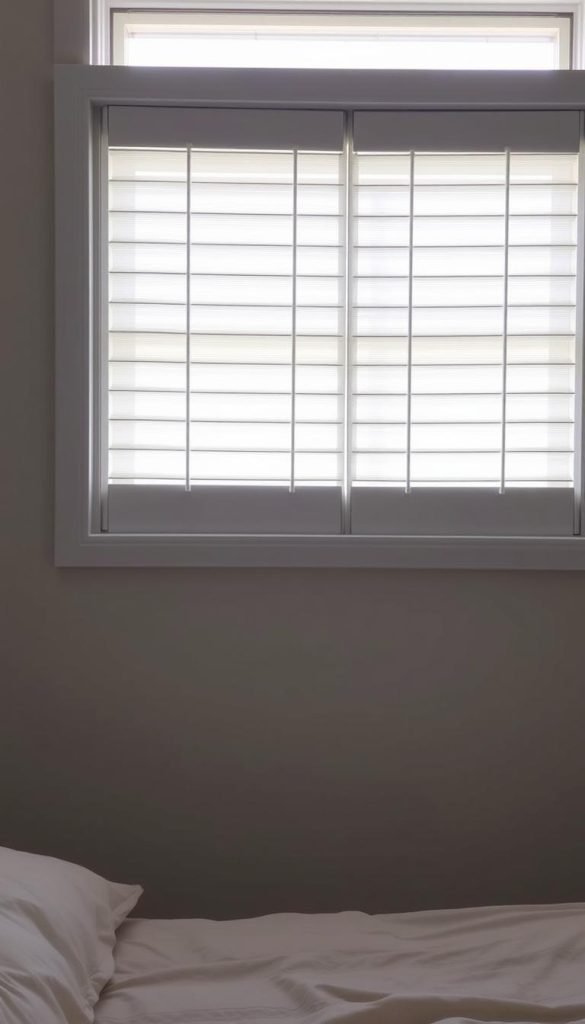
Dual (layered) systems for day/night control
Dual headrail systems pair a light-filtering layer with a blackout panel on one track. I use this when I need quick transitions from daytime glow to night blackout.
Motorized units let me schedule automatic switches so the room shifts modes without fuss.
Top-down/bottom-up cellular and sheer-with-vanes
Top-down bottom-up cellular lets daylight pour from the top while keeping privacy at eye level. I drop the top during the day for soft, even light.
Sheer-with-vanes diffuses glare and blocks direct views. I choose this when I want bright interiors that still feel private.
- I often pair an outside-mounted blackout with an inside light-filtering layer when ultimate darkness matters.
- Prioritize frame overlap on street-facing windows to cut edge glow and reduce silhouette risks at night.
- Pick fabrics with enough substance to avoid backlit silhouettes but keep texture and color calming, not clinical.
Special window challenges I plan for
I map problem windows before choosing fabric, hardware, or automation to avoid late surprises.
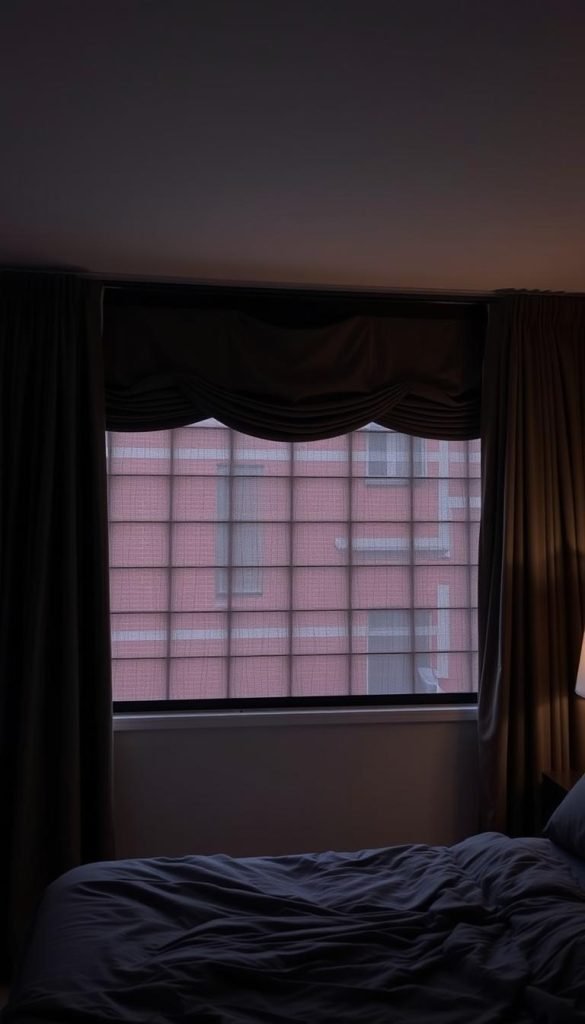
I handle large spans, sliding doors, and bay corners with tailored solutions. Big openings often need roller or cellular systems and motorized lifts to keep operation smooth and quiet.
For sliding doors I pick vertical cellular or panel track systems so blackout coverage moves with the door. That keeps motion natural and keeps blackout performance consistent.
Bay and corner window geometry calls for tight side clearances, returns, or layered dress panels. I favor outside mounts to increase overlap and cut angle light leaks.
- Motorization: smooth control on wide spans and fewer vibrations.
- Fit and hardware: prevent panels from clattering on handles or walls.
- Style cohesion: match door and nearby window treatments so rooms feel calm and unified.
| Problem | Recommended system | Why it helps |
|---|---|---|
| Sliding doors | Vertical cellular / panel track | Moves side-to-side, gives true blackout and quiet operation |
| Large spans | Motorized roller or wide cellular | Smooth control, fewer manual pulls, minimal vibration |
| Bay / corner | Outside mounts, returns, layered dress panels | Eliminates angle gaps and reduces edge light and noise |
Tip: I always check that hardware clears obstructions and that fabrics hold shape on wide spans. That keeps shade movement silent and preserves blackout performance in tight spaces.
Budget, durability, and maintenance considerations
Choosing window treatments is partly about upfront cost and partly about long-term value. I weigh immediate price against how a material performs over years. That helps you decide which options actually save money while keeping the room quiet and dark.
Cost trade-offs: cellular vs. roller vs. Roman
Cellular shades often cost more up front but deliver superior energy efficiency and noise reduction. Those savings show over years in lower heating and cooling bills and better sleep quality.
Roller shades are budget-friendly and offer broad material choices. They are easy to clean and replace if you want a fresh design later.
Roman shades sit in the middle to higher price range depending on fabric and construction. They give a tailored look while still performing well with a quality blackout liner.
Fabric care, UV protection, and long-term savings
Proper care extends lifespan. Vacuum cellular fabrics with a brush attachment. Wipe roller panels gently. Spot-clean Roman folds as needed.
Pick UV-resistant materials to limit fading of floors and furnishings from direct light. Durable construction resists warping and fraying in sunny rooms.
| Option | Typical lifespan (years) | Maintenance |
|---|---|---|
| Cellular | 7–15 | Light vacuuming; occasional professional cleaning |
| Roller | 5–12 | Wipe clean; replace fabric if sun-damaged |
| Roman | 6–12 | Spot-clean; periodic linen care |
- I recommend matching styles and options to your priorities: maximum darkness, quieter operation, or a specific look.
- Check warranties and expected years of use to understand total cost of ownership.
- Choose durable material that resists sun damage in high-exposure windows.
Conclusion
Start with the right shade type, then fine-tune installation so your window becomes a quiet, dark refuge.
For deep rest pick blackout cellular for hush and insulation, a blackout roller for precise edge control, or Roman with a blackout liner for a soft, serene finish.
Remember: blackout performance comes from fabric plus edge control. Use outside mounts, side channels, and a cassette valance to block top and side glow and stop rustle.
Measure carefully for a tight fit and add cordless or low-hum motorized drives for silent, safe operation. Consider top-down/bottom-up or dual systems if you want daytime privacy while keeping natural light.
Next step: choose your solution, plan mount and edge features, and enjoy deeper rest for years to come.